TOPIC
What Anime Teaches
Japanese vocabulary and phrases pulled from lines and tropes you'll recognize from anime.
18 articles
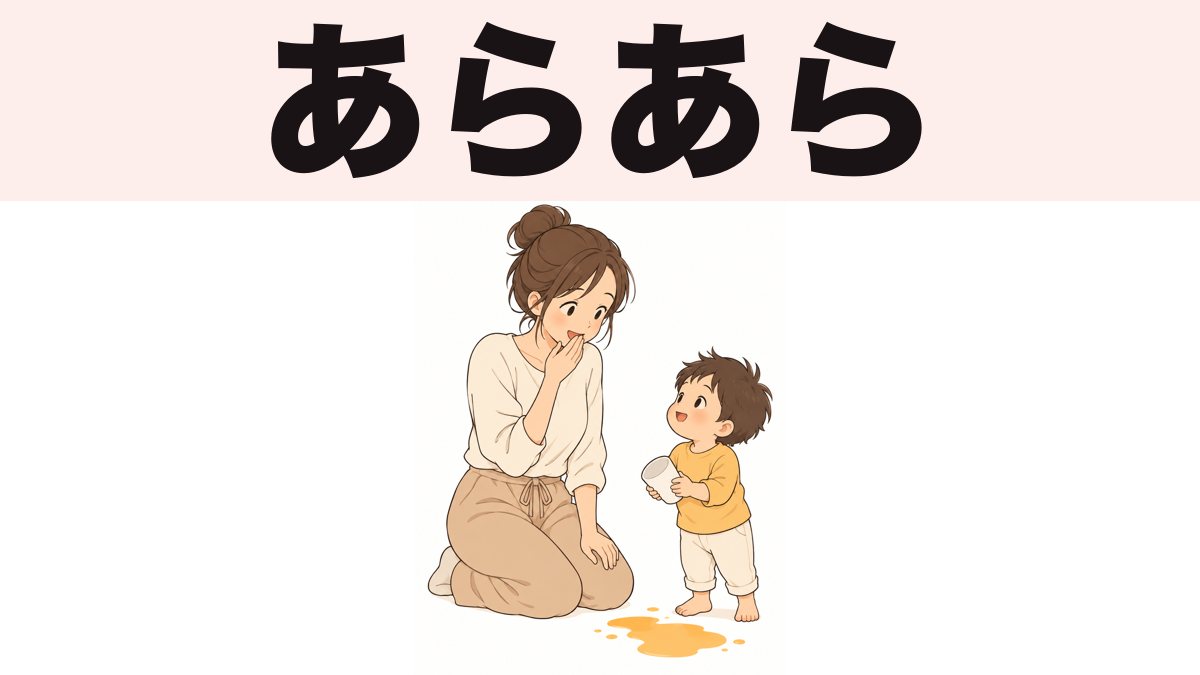
Ara ara meaning: what あらあら really says, and who actually says it
Ara ara (あらあら) means "oh my" or "my, my": a soft sound of surprise, mostly used by women. Why anime gave it a teasing image, plus あら, あらら, おやおや and まあまあ.
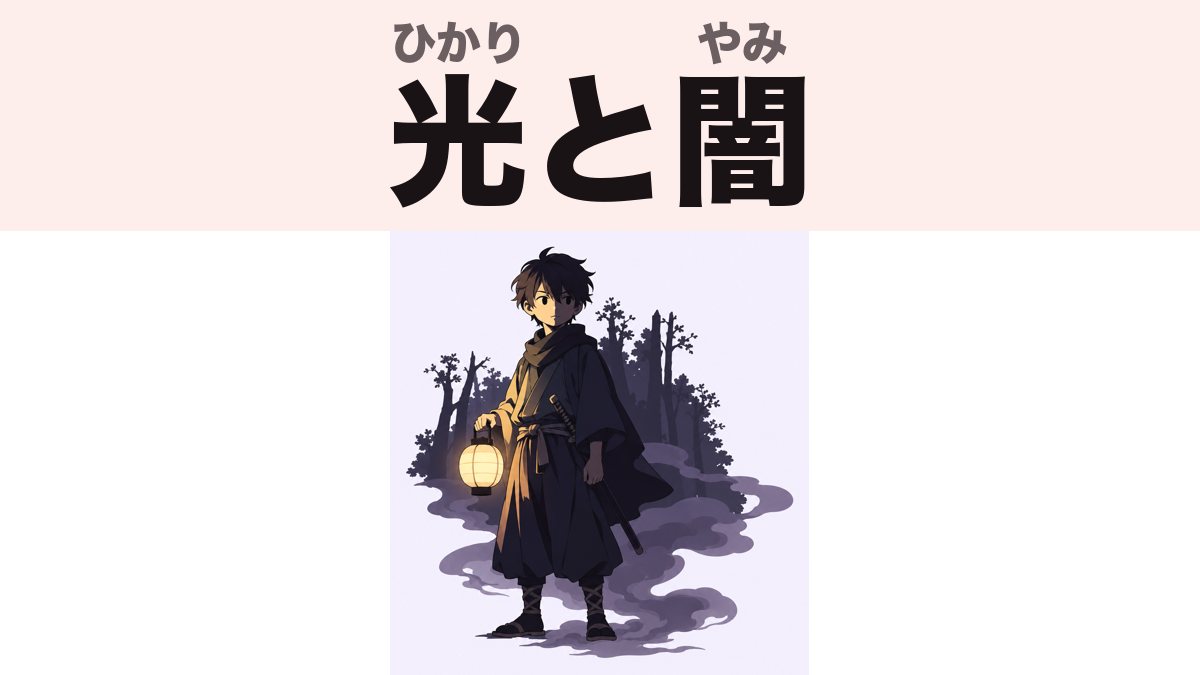
Darkness in Japanese: 闇 (やみ), 暗い, and what it means when a character goes 闇落ち
Darkness in Japanese is 闇 (やみ, yami); "dark" is 暗い (くらい). Learn 真っ暗 and 暗闇, light 光 as the opposite, 心の闇, and the anime word 闇落ち.
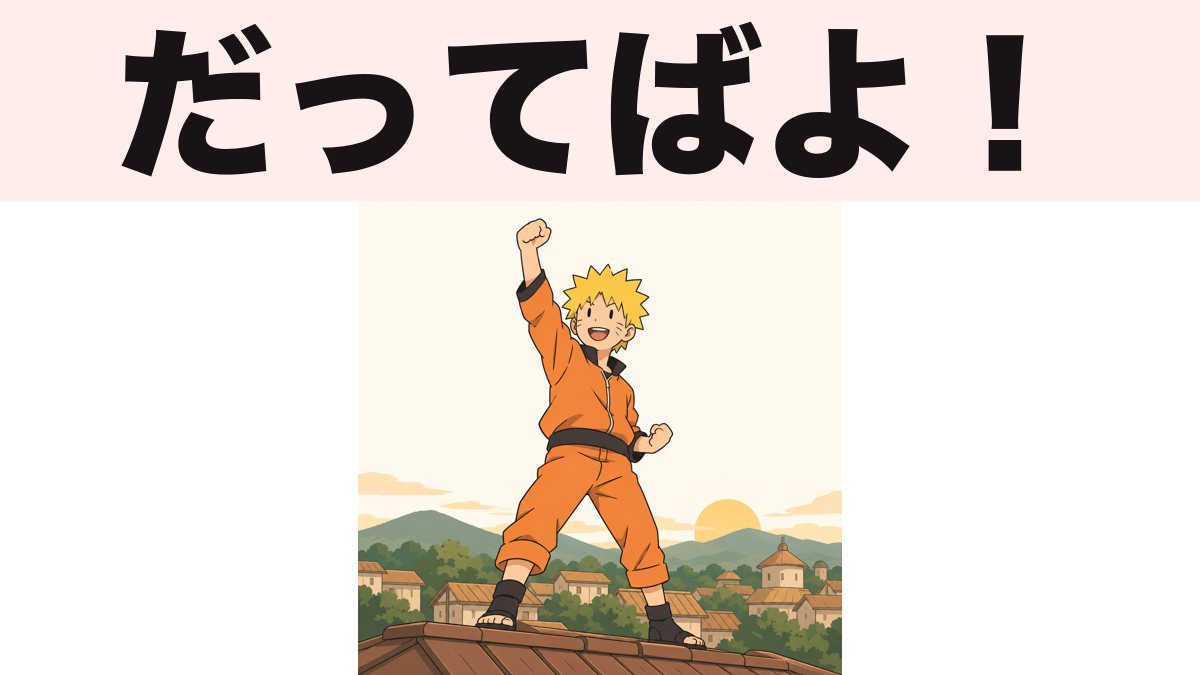
Dattebayo meaning: Naruto's だってばよ, and the real Japanese ってば inside it
Dattebayo (だってばよ) is Naruto's catchphrase, a pushy "I'm telling you!" on the end of his lines. What each part means, the real ってば, and other anime tics.
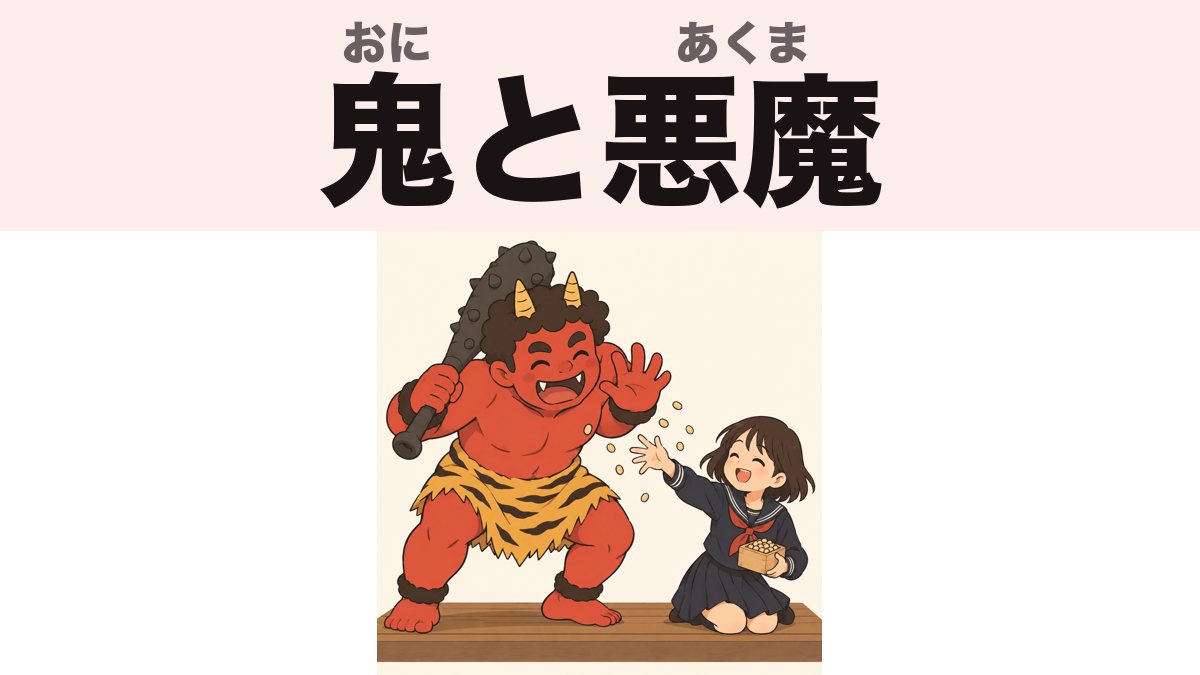
Demon in Japanese: 鬼 (おに), 悪魔 (あくま) and the 魔王 of isekai
Demon in Japanese is 鬼 (oni) for the horned demon of folklore and 悪魔 (akuma) for the Western devil. Learn 魔王, 妖怪, 鬼滅の刃, slang like 鬼かわいい and 小悪魔.
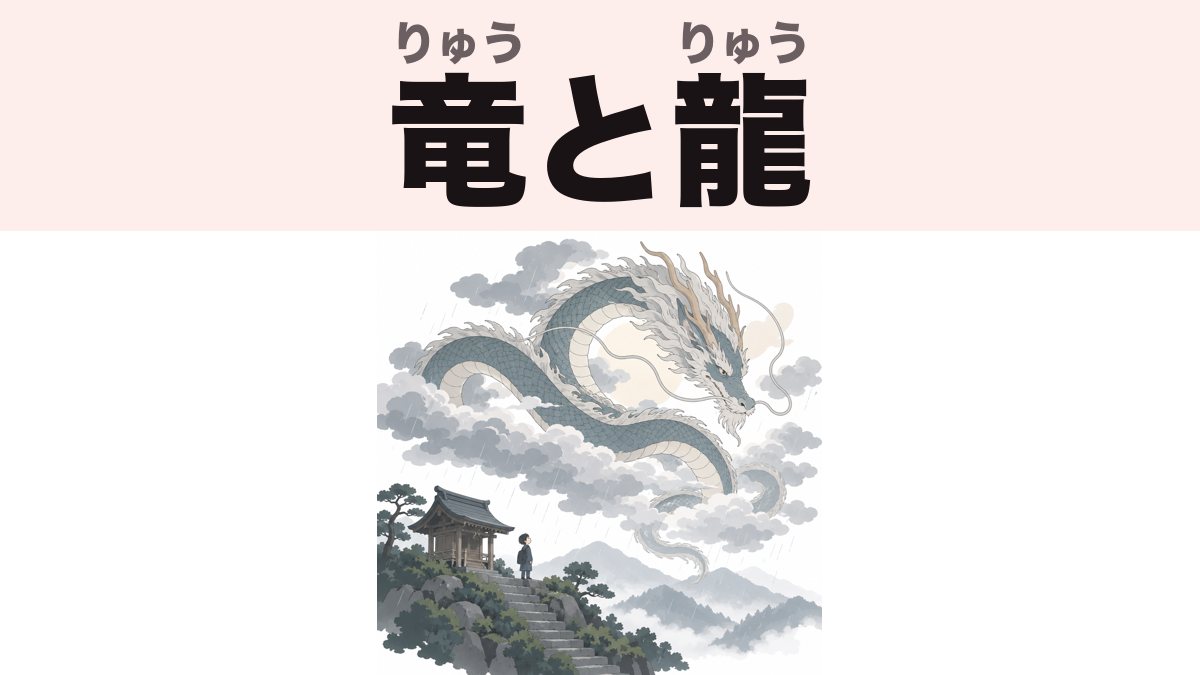
Dragon in Japanese: 竜 and 龍 (りゅう / たつ), plus ドラゴン
Dragon in Japanese is 竜 or 龍, read りゅう or たつ. Learn which kanji to use, when anime says ドラゴン instead, the 辰 zodiac year, and words like 恐竜 and 竜巻.
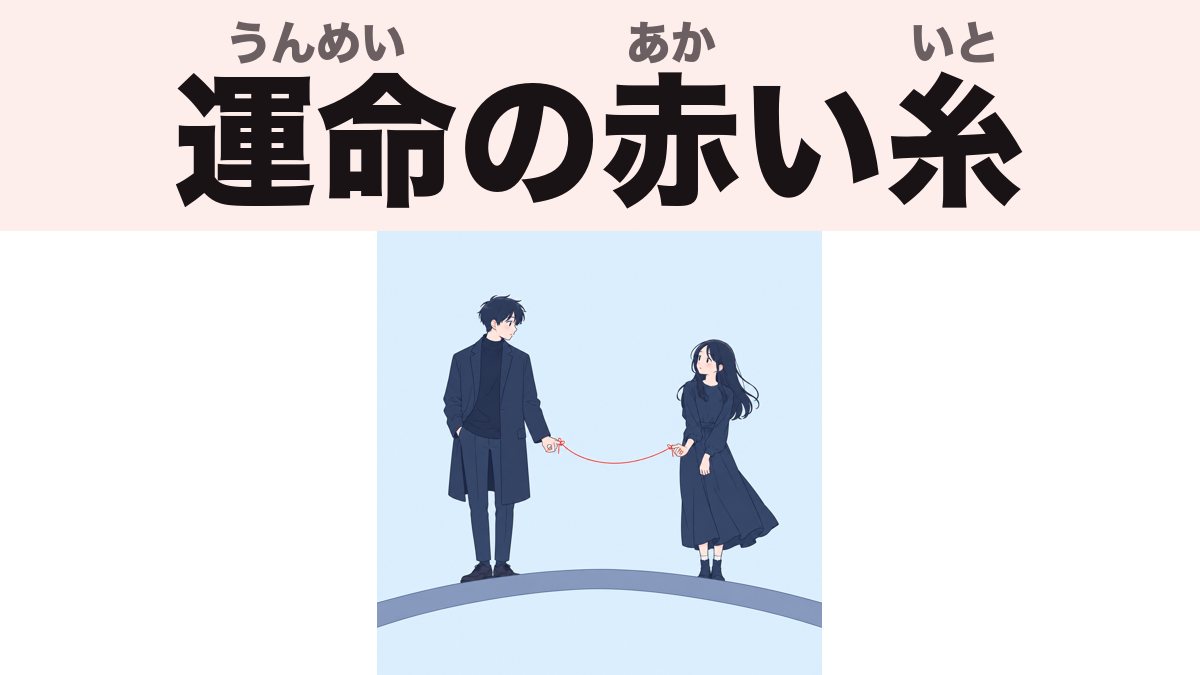
Fate in Japanese: 運命 (うんめい), 宿命, 縁, and the red string of fate
Fate in Japanese is 運命 (うんめい). Learn 運命の人, 運命に逆らう, how 宿命 and さだめ differ, 縁 for meant-to-be connections, 赤い糸, and 自分の運命は自分で決める.
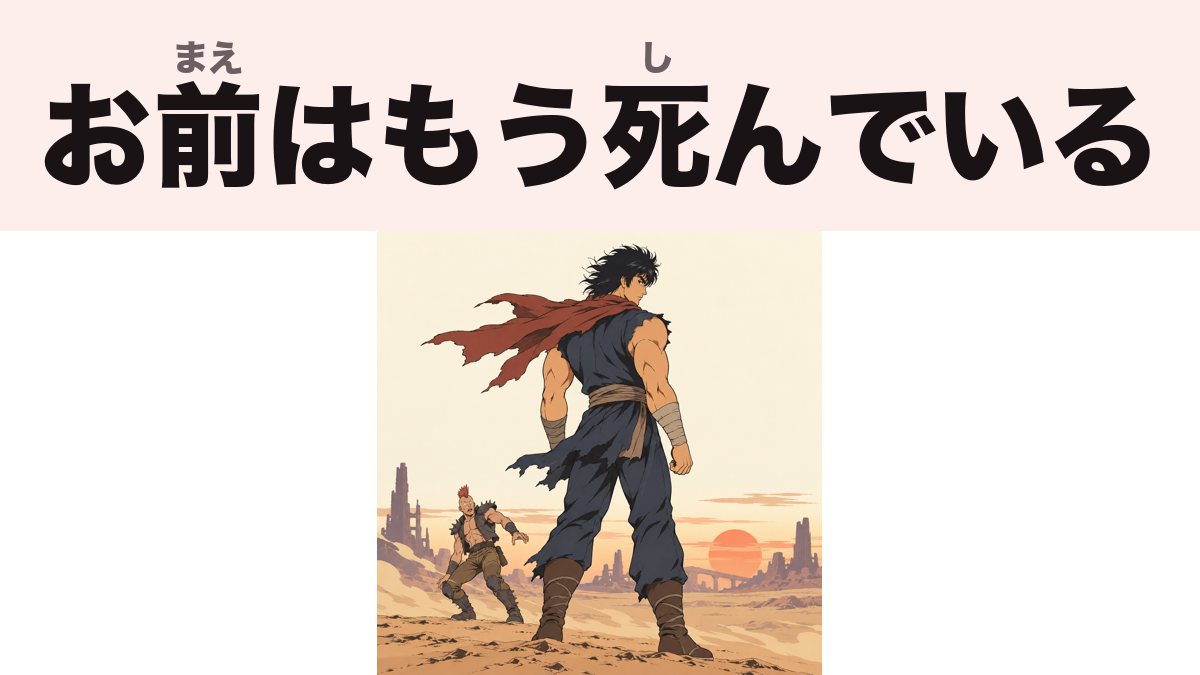
Omae wa mou shindeiru meaning: お前はもう死んでいる
Omae wa mou shindeiru (お前はもう死んでいる) means "You are already dead", from Fist of the North Star. Word by word, why ている means "is dead", and the NANI meme.
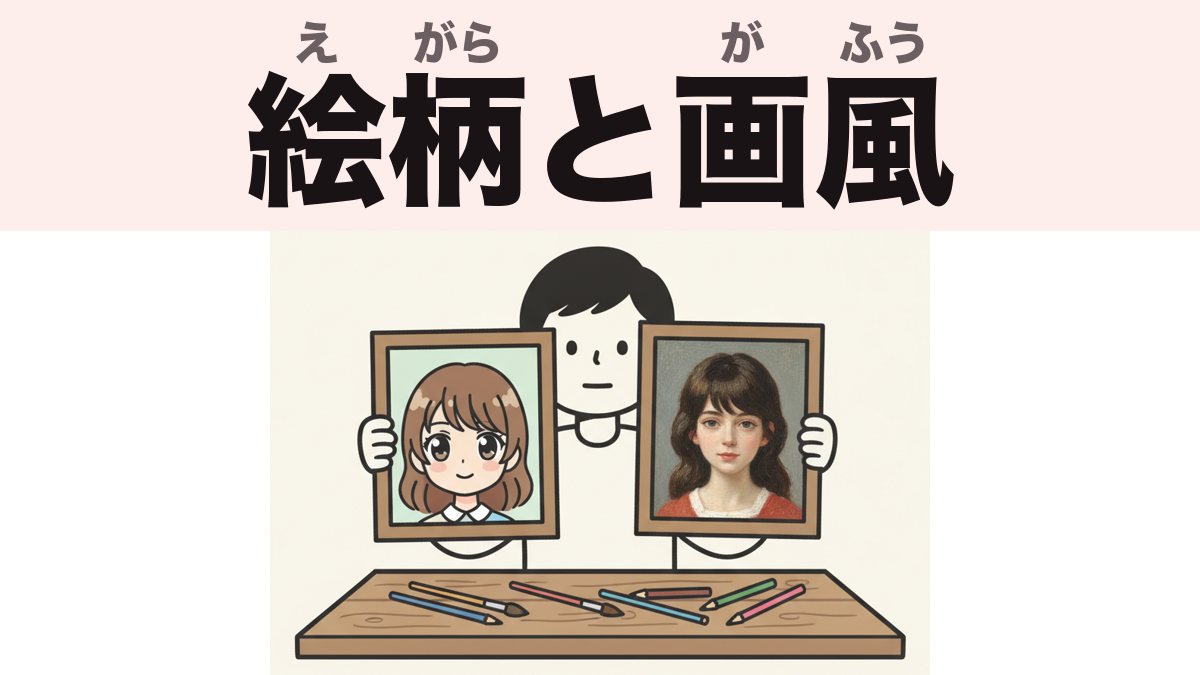
Art style in Japanese (画風 英語): 絵柄, 画風, 作風 and 作画
Art style in Japanese is 絵柄 (egara) for manga and anime drawings, 画風 for a painter, 作風 for a creator's whole style including story, and 作画 for animation.
Japanese honorifics: さん, くん, ちゃん, さま and when to use nothing at all
さん is the safe default, くん and ちゃん are warmth with a direction, さま is distance upward — dropping all of them is its own loud statement. How the set works.
〜なし: the short, hard way to say "without" in Japanese
なし is the noun form of ない, and it ends sentences with a flatness that ありません cannot. Here is なし, なしで, なしに, ぬきで, and why anime uses the short one.
ぜんかい: 前回 and 全開 are different words, and the episode set they belong to
Learn zenkai, konkai, and jikai for last time, this time, and next time in Japanese, and distinguish zenkai from its sound-alike meaning full power.
ネタバレ: how to say "spoiler" in Japanese, and how to ask people not to
ネタバレ is the Japanese word for a spoiler — literally "the material leaked". Here is how to use it, how to warn people, and the fandom words that sit next to it.
先輩 and 後輩: the relationship anime is built on, and how to use the words
Learn how senpai, kouhai, and douki describe relationships in Japanese, how to address each person, and when polite speech fits school or work.
声優 (seiyuu): what the word means, and why Japan has a separate word for it
Explore what seiyuu means, how Japanese voice acting differs from dubbing elsewhere, and the vocabulary for discussing who voices each character.
Why the Japanese you learned from anime sounds rude
Anime is full of real Japanese — spoken by characters who are allowed to be rude. Here is what to keep, what to soften, and how to tell which is which.
The best anime to learn Japanese from — and how to study a scene
Choose anime that builds useful Japanese, compare six shows, avoid copying character speech, and turn short scenes into everyday conversation practice.
How to watch anime with Japanese subtitles without burning out
Learn a manageable Japanese subtitle routine for anime: study one short scene, choose useful lines, and practise speaking without losing the fun.
Yare yare meaning: what does this anime phrase mean?
Learn what yare yare means, how tone changes eight familiar anime phrases, and how to use them naturally in everyday Japanese conversations.