しかたがない and しょうがない: the Japanese shrug, and the two other things it does「しかたがない」と「しょうがない」: 日本語の肩をすくめる言葉
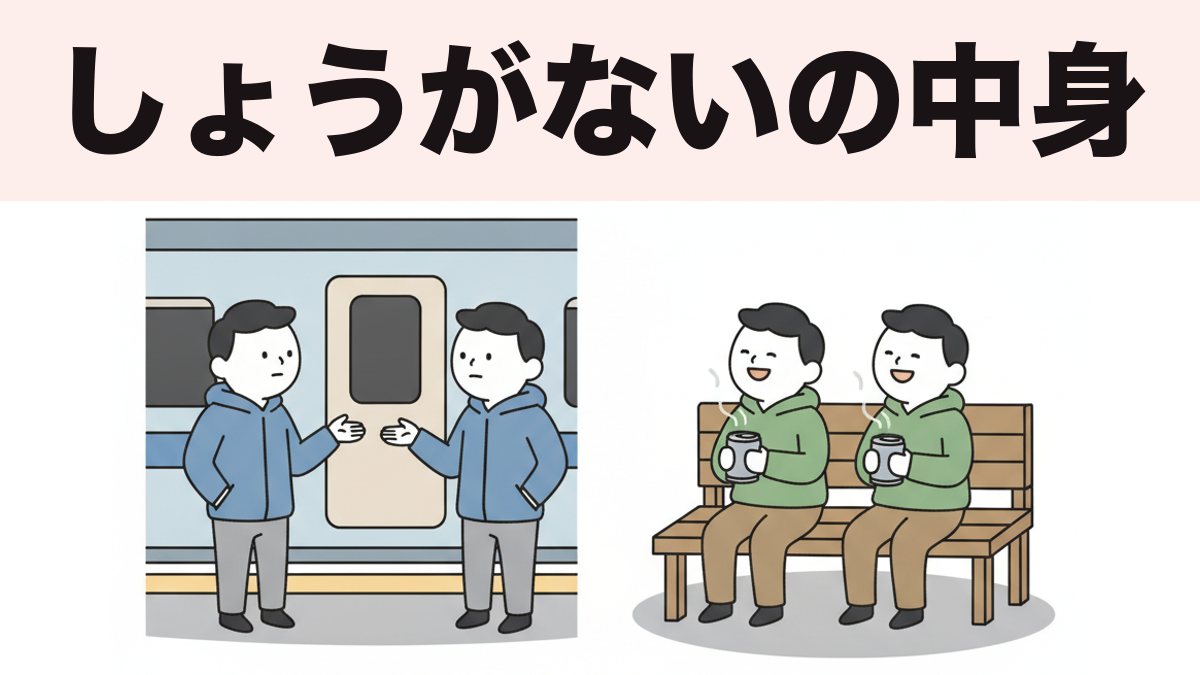
しかたがない is not "I give up." It literally says "there is no method," and what follows is usually a decision to carry on anyway.
「しかたがない」は「あきらめた」ではありません。「やり方がない」という意味です。そして、そのあとはたいてい「だから先に進む」です。
Learners meet it as a vocabulary item glossed "it can't be helped," which makes it sound passive and a little sad. In use it is closer to a shrug that clears the table: the thing is settled, stop spending energy on it. And the same four words do two other jobs that have nothing to do with resignation, which is where it gets genuinely useful.
The basics
What does しかたがない literally mean?
Three pieces:
- 仕方 (しかた) — way of doing, method. From 仕る + 方, "the manner of doing."
- が — the subject particle
- ない — does not exist
So: a method does not exist. Not "I don't want to," not "I failed" — there is no available course of action, therefore the matter is closed.
電車が遅れているから、しかたがない。 — The train is delayed, so there's nothing to be done. (casual — stating a fact, not complaining) 雨だから、しかたがないですね。 — It's raining, so it can't be helped. (polite — closing a topic)
That second example is worth noticing: しかたがないですね is how a conversation about a cancelled plan ends. It is a social move as much as a feeling.
しかたがない vs しょうがない — which do I use?
Same meaning. しょうがない is the worn-down spoken form of 仕様がない (しようがない), where 仕様 also means "method." It is more casual and vastly more common in speech.
| Form | Register | Where you hear it |
|---|---|---|
| 仕方がありません | Formal, polite | Business, written |
| 仕方がないです / 仕方ありません | Polite | Ordinary polite speech |
| 仕方がない | Plain | Writing, careful speech |
| しょうがない | Casual | Everyday conversation — the default |
| しゃあない | Very casual, Kansai-flavoured | Friends, comedy |
In conversation, しょうがない. In an email, 仕方がありません. The が also drops freely: 仕方ない and しょうがない are both fully normal.
しょうがないよ、忘れちゃったんだから。 — It's fine, you forgot, that's all. (casual — forgiving someone) 申し訳ありませんが、仕方がございません。 — I'm sorry, but there is nothing to be done. (very formal, service register)
Is it negative?
Less than the translation suggests. English "it can't be helped" has a defeated tone. しょうがない is often warm — it is the standard way to let someone off the hook.
遅れてごめん。 — しょうがないよ、事故だったんでしょ? — "Sorry I'm late." "Don't worry about it, there was an accident, right?" (casual — absolution, not disappointment)
Used about yourself it can carry mild self-criticism, and used about someone else it is usually generous. Same words, opposite temperature, decided entirely by who the subject is.
Beyond the basics
〜てもしょうがない — "there's no point"
Attach it to a te-form plus も and the meaning shifts from nothing can be done to doing that would achieve nothing. This is the form you will actually produce most often, and most learners never learn it.
今さら怒ってもしょうがない。 — There's no point getting angry now. (casual) 心配してもしょうがないよ。 — Worrying won't help. (casual — comforting someone) 考えても仕方がないので、寝ます。 — There's no use thinking about it, so I'm going to sleep. (polite)
Note what this does socially: it is a way of telling someone to stop an emotion without telling them the emotion was wrong. 心配してもしょうがない does not say your worry is silly — it says worry has no work to do here.
〜てしかたがない — "unbearably"
This one surprises people, because the meaning is not remotely about resignation. Attach a te-form directly, with no も, and it becomes an intensifier: the feeling is so strong that there is no way to handle it.
眠くてしかたがない。 — I'm unbearably sleepy. (casual) お腹が空いてしょうがない。 — I'm starving. (casual) 気になってしかたがない。 — I can't stop thinking about it. (casual)
The presence or absence of a single も flips the meaning completely:
| Pattern | Meaning | Example |
|---|---|---|
| 〜てもしょうがない | There's no point doing it | 泣いてもしょうがない — no use crying |
| 〜てしょうがない | Unbearably, can't help it | 泣けてしょうがない — I can't stop crying |
This is a real production trap, and a good reason to drill the two side by side rather than learning them a year apart.
It is used with feelings and states, not with deliberate actions — 眠い, お腹が空く, 気になる, 寂しい, 嬉しい all work. The near-synonym 〜てたまらない means the same thing and sounds slightly more literary.
しょうがない人 — "hopeless"
As a modifier in front of a noun, it becomes a judgement about a person, usually affectionate.
しょうがない人ね。 — You're hopeless. (casual — said with a sigh and usually a smile)
A parent says this to a child who has done something predictable. It is closer to "oh, you" than to genuine criticism.
Does しかたがない mean Japanese people are passive?
You will see this claim a lot in writing about Japan, usually with the word offered as evidence of fatalism. It is worth being careful with. The phrase draws a line between what you can act on and what you cannot, and then closes the second category so you can get on with the first. That is not the same as giving up, and the same distinction exists in every language — English just spends more words on it.
What is true is that Japanese closes the topic more explicitly. A conversation about something unfixable is expected to end with しょうがない or a near-equivalent, rather than trailing off. It is punctuation as much as sentiment. For the general habit of settling a topic rather than leaving it open, see 本音 and 建前.
Related phrases you will hear in the same moment
どうしようもない。 — There's nothing anyone can do. (casual — stronger, bleaker) まあ、いいか。 — Ah well, fine. (casual — lighter, letting it go) やむを得ない。 — It is unavoidable. (formal, written — announcements and news)
やむを得ない is the one to recognize rather than use: it is what a company writes when cancelling something, and what a news report says about an unavoidable decision.
Common mistakes
- Confusing 〜てもしょうがない with 〜てしょうがない. One も changes "no point crying" into "I can't stop crying." Check which one you mean before the word leaves your mouth.
- Using it to refuse a request. しょうがない closes a topic that is already settled. Saying it when someone asks you for something sounds like you are grudgingly agreeing — which is sometimes what people mean, but rarely what a learner intends. For actual refusals see how to say no in Japanese.
- Writing しょうがない in a formal email. It is spoken register. 仕方がありません or やむを得ません instead.
- Saying it about someone else's serious misfortune. To someone who has just lost something important, しょうがないですね can read as dismissive — you are closing a topic they have not finished. お気の毒に or 大変でしたね first.
- Assuming 仕方 always appears in this phrase. 仕方 is an ordinary noun: 使い方 ("how to use"), やり方 ("way of doing") are the same 方. 仕方がない is just that noun plus ない.
FAQ
Is しょうがない slang? No — it is a contraction, not slang. 仕様がない → しょうがない is the same kind of wearing-down that produced すみません from 済みません. It is casual, but it is standard Japanese that you will hear from anyone.
What is the difference between しょうがない and どうしようもない? どうしようもない is stronger and darker: "there is no way to do anything about it at all." しょうがない accepts and moves on; どうしようもない is closer to hopeless. It is also used about people (どうしようもない人 is a genuine insult, unlike the affectionate しょうがない人).
Can I use it as a one-word response? Yes. しょうがない by itself, or しょうがないね, is a complete and very common reply to bad news that nobody can fix.
Is 仕方がない or 仕方ない correct? Both. Dropping が is normal in speech and increasingly normal in casual writing. Keep が for formal writing.
How does it relate to 〜てしまう? They often appear together, because 〜てしまう marks something as done and irreversible, which is exactly the condition that makes しょうがない apply. 忘れちゃったからしょうがない — "I went and forgot it, so there's nothing to be done."
Does しょうがない ever mean "okay, fine"? Effectively yes, with a sigh. しょうがないな、行くよ means "fine, I'll go" — you have decided the resistance is pointless. The literal meaning still holds; only the tone makes it an agreement.
Practice
Questions 3 and 4 are a pair. One も is the whole difference.
1. Your train is delayed and nobody can do anything. Close the topic, politely.
Show answer
電車が遅れているので、仕方がないですね。 — The matter is settled and unfixable, which is exactly when the phrase belongs.
2. A friend apologises for being late because of an accident. Let them off the hook, casually.
Show answer
しょうがないよ。 — Used about someone else, it is generous rather than defeated. This is absolution, not disappointment.
3. Tell someone worrying will not help, casually.
Show answer
心配してもしょうがないよ。 — 〜てもしょうがない means the action would achieve nothing. The も is doing all of that work.
4. Say you cannot stop worrying, casually.
Show answer
心配でしょうがない。 — Without も, the pattern is an intensifier. Same four words, opposite meaning.
5. Say you are unbearably sleepy.
Show answer
眠くてしかたがない。 — The い-adjective takes its te-form 眠くて. This pattern works with feelings and states, not deliberate actions.
6. Write in a business email that the schedule change is unavoidable.
Show answer
やむを得ず、日程を変更いたします。 — or 仕方がありません. しょうがない is spoken register and would read as too casual in writing.
7. Say "there's no point getting angry now," casually.
Show answer
今さら怒ってもしょうがない。 — 今さら ("at this late stage") is the adverb that almost always travels with this pattern.
8. Sigh at a friend who has done something predictable.
Show answer
しょうがない人だね。 — In front of a noun it becomes a mild, affectionate judgement — closer to "oh, you" than to criticism.
9. Agree reluctantly to go somewhere, casually.
Show answer
しょうがないな、行くよ。 — The literal meaning still holds: resisting has no method, so you go. Tone turns it into agreement.
10. Fix this: 泣いてもしょうがないほど悲しい。
Show answer
悲しくてしょうがない。 — The original says "so sad that crying is pointless," which is not what was meant. Drop the も and use the adjective's te-form to get "unbearably sad."
Vocabulary from this article
Tap the block to select all of it, then copy. In Anki: File → Import, note type Basic, separator Tab — the first column becomes the front, the second the back.
仕方	しかた — way of doing, method
仕方がない	しかたがない — it can't be helped
しょうがない	しょうがない — it can't be helped (casual)
どうしようもない	どうしようもない — nothing can be done at all
やむを得ない	やむをえない — unavoidable (formal)
今さら	いまさら — at this late stage
心配	しんぱい — worry
眠い	ねむい — sleepy
悲しい	かなしい — sad
怒る	おこる — to get angry
遅れる	おくれる — to be late, to be delayed
事故	じこ — accident
日程	にってい — schedule
変更	へんこう — change, alteration
気になる	きになる — to be on one's mind
たまらない	たまらない — unbearable
I'm Yuuki, a Japanese teacher based in Tokyo. I've taught on italki as a Top 1% teacher and watched over 1,500 anime. Students usually arrive with しょうがない filed under "sad words," and are surprised to find it is mostly used to forgive people — including yourself.
Sources: the author's own lessons and standard reference grammars.
学習者は「it can't be helped」という意味で覚えます。だから、暗い言葉に見えます。でも、実際は「この話はこれで終わり、もう力を使わなくていい」という感じです。そして、同じ言葉が、あきらめとは関係のない仕事を二つしています。そこがいちばん役に立ちます。
基本
「しかたがない」の意味
三つの部分です。
- 仕方(しかた)— やり方、方法
- が — 主語の助詞
- ない — ありません
つまり「方法がない」です。「したくない」でも「失敗した」でもありません。できることがないから、この話は終わり、という意味です。
電車が遅れているから、しかたがない。 — The train is delayed, so there's nothing to be done. (casual — stating a fact, not complaining) 雨だから、しかたがないですね。 — It's raining, so it can't be helped. (polite — closing a topic)
二つ目の文に注意してください。「しかたがないですね」は、中止になった予定の話を終わらせる言い方です。気持ちだけでなく、会話の道具でもあります。
「しかたがない」と「しょうがない」
意味は同じです。「しょうがない」は「仕様がない(しようがない)」が短くなった形です。「仕様」も方法という意味です。会話ではこちらの方がずっと多いです。
| 形 | どんな場 | どこで聞くか |
|---|---|---|
| 仕方がありません | とてもていねい | 仕事・書く時 |
| 仕方がないです/仕方ありません | ていねい | ふつうのていねいな話 |
| 仕方がない | ふつう | 書く時・ていねいに話す時 |
| しょうがない | カジュアル | ふだんの会話(いちばん多い) |
| しゃあない | とてもカジュアル・関西 | 友だち・お笑い |
会話なら「しょうがない」。メールなら「仕方がありません」。「が」はよく落ちます。「仕方ない」も「しょうがない」もふつうです。
しょうがないよ、忘れちゃったんだから。 — It's fine, you forgot, that's all. (casual — forgiving someone) 申し訳ありませんが、仕方がございません。 — I'm sorry, but there is nothing to be done. (very formal, service register)
暗い言葉ですか
英語の訳より明るいです。「しょうがない」は、相手を許す時によく使います。
遅れてごめん。 — しょうがないよ、事故だったんでしょ? — "Sorry I'm late." "Don't worry about it, there was an accident, right?" (casual — absolution, not disappointment)
自分のことに使うと、少し反省の感じになります。人のことに使うと、たいてい優しい言葉になります。同じ言葉でも、だれのことかで温度が変わります。
もう少し先
「〜てもしょうがない」」しても意味がない
て形+も を付けると、「方法がない」から「それをしても何にもならない」に変わります。学習者がいちばんよく使う形ですが、あまり習いません。
今さら怒ってもしょうがない。 — There's no point getting angry now. (casual) 心配してもしょうがないよ。 — Worrying won't help. (casual — comforting someone) 考えても仕方がないので、寝ます。 — There's no use thinking about it, so I'm going to sleep. (polite)
この形は、気持ちを止めてもらう時に便利です。「心配してもしょうがない」は「あなたの心配は変だ」とは言っていません。「その心配には仕事がない」と言っています。
「〜てしかたがない」=がまんできないほど
こちらは意味が全然ちがいます。「も」を付けないでて形を付けると、気持ちが強すぎる、という意味になります。
眠くてしかたがない。 — I'm unbearably sleepy. (casual) お腹が空いてしょうがない。 — I'm starving. (casual) 気になってしかたがない。 — I can't stop thinking about it. (casual)
「も」が一つあるかないかで、意味が正反対になります。
| 形 | 意味 | 例 |
|---|---|---|
| 〜てもしょうがない | しても意味がない | 泣いてもしょうがない |
| 〜てしょうがない | がまんできないほど | 泣けてしょうがない |
これは本当に間違えやすいところです。二つを並べて練習してください。
気持ちや状態に使います。自分で決めてする動作には使いません。「眠い」「お腹が空く」「気になる」「寂しい」「嬉しい」はみんな使えます。「〜てたまらない」も同じ意味で、少し書き言葉の感じです。
「しょうがない人」」どうしようもない人(やさしい意味)
名詞の前に置くと、人についての言い方になります。たいてい優しい気持ちです。
しょうがない人ね。 — You're hopeless. (casual — said with a sigh and usually a smile)
親が子どもに言うような言葉です。本当に怒っているのではありません。
日本人はあきらめやすい、という話
「しかたがない」を「日本人は運命を受け入れる証拠だ」と書く記事があります。気をつけてください。この言葉は、自分でできることと、できないことの線を引いて、できないことの話を閉じる言葉です。あきらめとは違います。どの言語にも同じ考えはあります。英語は言葉の数が多いだけです。
ただ、日本語は話を閉じる合図をはっきり出します。直せないことの話は、「しょうがない」などで終わるのがふつうです。気持ちであり、句点でもあります。
同じ場面で聞く言葉
どうしようもない。 — There's nothing anyone can do. (casual — stronger, bleaker) まあ、いいか。 — Ah well, fine. (casual — lighter, letting it go) やむを得ない。 — It is unavoidable. (formal, written — announcements and news)
「やむを得ない」は、自分で使うより、読めればいい言葉です。会社が中止のお知らせを書く時や、ニュースで使います。
よくある間違い
- 「〜てもしょうがない」と「〜てしょうがない」を混ぜる。 「も」一つで「泣いても意味がない」が「泣くのが止まらない」になります。
- 断る時に使う。 「しょうがない」は、もう決まった話を閉じる言葉です。お願いされた時に言うと、いやいや同意している感じになります。
- 仕事のメールに「しょうがない」と書く。 話し言葉です。「仕方がありません」「やむを得ません」にします。
- 人の大きな不幸に言う。 大事なものをなくした人に「しょうがないですね」と言うと、話を勝手に閉じることになります。まず「お気の毒に」「大変でしたね」です。
- 「仕方」はこの言葉専用だと思う。 「使い方」「やり方」の「方」と同じです。ふつうの名詞です。
よくある質問
「しょうがない」はスラングですか。 いいえ。短くなった形です。「済みません」が「すみません」になったのと同じです。カジュアルですが、ふつうの日本語です。
「しょうがない」と「どうしようもない」の違いは。 「どうしようもない」の方が強くて暗いです。「しょうがない」は受け入れて先に進みます。人に使うと、「どうしようもない人」は本当の悪口です。「しょうがない人」は優しい言葉なので、違います。
一語だけで返事に使えますか。 はい。「しょうがない」「しょうがないね」だけで、だれにも直せない悪い知らせへの返事になります。
「仕方がない」と「仕方ない」はどちらが正しいですか。 両方です。話す時は「が」を落とすのがふつうです。書く時は「が」を入れます。
「〜てしまう」との関係は。 よく一緒に出ます。「〜てしまう」は、終わってしまって戻せない、という印です。それがまさに「しょうがない」が使える場面です。「忘れちゃったからしょうがない」。
「わかった、いいよ」の意味になりますか。 なります。ため息つきで。「しょうがないな、行くよ」は「じゃあ行くよ」です。もとの意味は残っています。声の調子が同意に変えているだけです。
練習
3と4は組です。「も」一つが全部の違いです。
1. 電車が遅れて、だれにも直せません。ていねいに話を閉じてください。
答えを見る
電車が遅れているので、仕方がないですね。 — 決まっていて直せないことなので、この言葉が合います。
2. 友だちが事故で遅れて、あやまりました。カジュアルに許してください。
答えを見る
しょうがないよ。 — 人のことに使うと、がっかりではなく、許す言葉になります。
3. 「心配しても意味がない」とカジュアルに言ってください。
答えを見る
心配してもしょうがないよ。 — 「〜てもしょうがない」は「しても何にもならない」です。「も」がその仕事をしています。
4. 「心配が止まらない」とカジュアルに言ってください。
答えを見る
心配でしょうがない。 — 「も」がないと、強調の形になります。同じ言葉で意味が逆です。
5. 「がまんできないほど眠い」と言ってください。
答えを見る
眠くてしかたがない。 — い形容詞は「眠くて」の形にします。気持ちや状態に使い、自分で決めてする動作には使いません。
6. 仕事のメールで「日程の変更はやむを得ない」と書いてください。
答えを見る
やむを得ず、日程を変更いたします。 — または「仕方がありません」。「しょうがない」は話し言葉なので、書くとカジュアルすぎます。
7. 「今から怒っても意味がない」とカジュアルに言ってください。
答えを見る
今さら怒ってもしょうがない。 — 「今さら」はこの形といつも一緒に出る副詞です。
8. いつも通りのことをした友だちに、ため息をついてください。
答えを見る
しょうがない人だね。 — 名詞の前に置くと、軽くて優しい言い方になります。悪口ではありません。
9. しかたなく出かけることに同意してください。カジュアルに。
答えを見る
しょうがないな、行くよ。 — もとの意味は残っています。「ことわる方法がない」から行くのです。声の調子が同意に変えています。
10. 直してください: 泣いてもしょうがないほど悲しい。
答えを見る
悲しくてしょうがない。 — もとの文は「泣くのが意味がないほど悲しい」になってしまいます。「も」を取って、形容詞のて形にすると「がまんできないほど悲しい」になります。
この記事に出た単語
このブロックをタップして全部選び、コピーしてください。Anki では File → Import、ノートタイプ 基本、区切り タブ を選びます。1列目が表、2列目が裏になります。
仕方	しかた — way of doing, method
仕方がない	しかたがない — it can't be helped
しょうがない	しょうがない — it can't be helped (casual)
どうしようもない	どうしようもない — nothing can be done at all
やむを得ない	やむをえない — unavoidable (formal)
今さら	いまさら — at this late stage
心配	しんぱい — worry
眠い	ねむい — sleepy
悲しい	かなしい — sad
怒る	おこる — to get angry
遅れる	おくれる — to be late, to be delayed
事故	じこ — accident
日程	にってい — schedule
変更	へんこう — change, alteration
気になる	きになる — to be on one's mind
たまらない	たまらない — unbearable
More drills like the ones above, plus a timed JLPT-style mock test: Practice · N4上のような練習問題と、時間つきのJLPT形式のもぎ試験: 練習ページ · N4
Want to try this in a real conversation?
本当の会話で、ためしてみませんか?
30-minute trial lesson, $13. Times shown in your own timezone.
30分の体験レッスン、$13。時間はあなたのタイムゾーンで表示されます。
Book a trial lesson · $13