How to say no in Japanese: the word exists, and almost nobody uses it「いいえ」の言い方: ことばはあるのに、ほとんど使いません
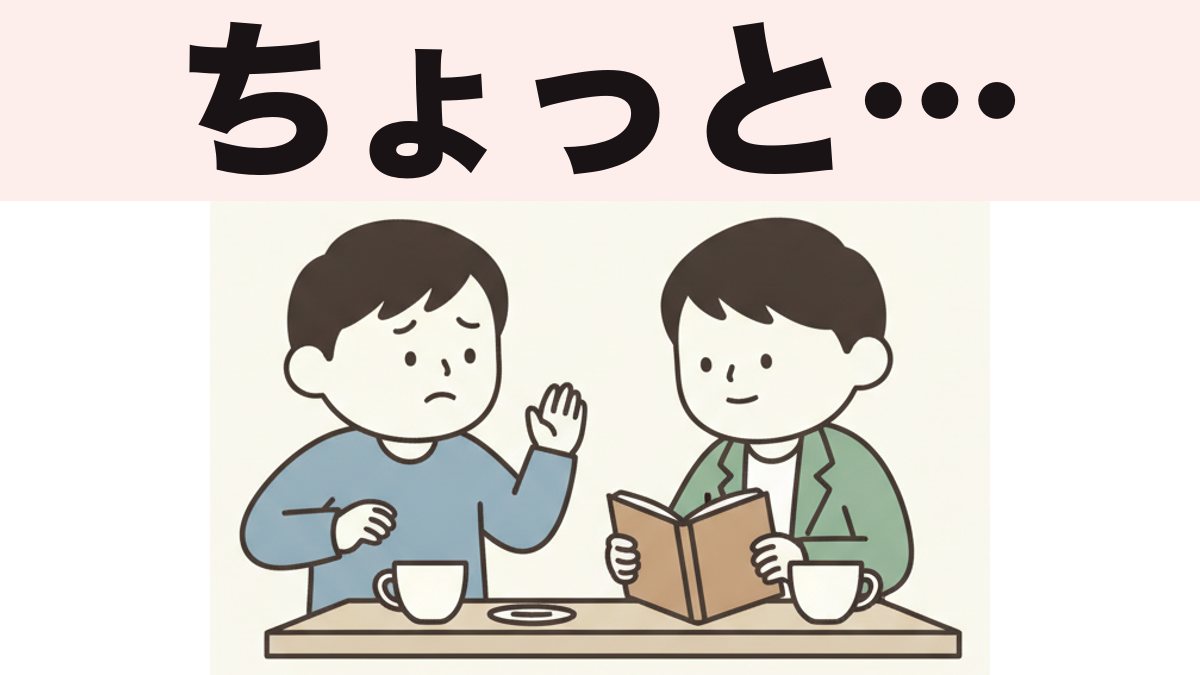
いいえ is the dictionary word for "no", and you will almost never hear it used to refuse something. Real refusals in Japanese are built from ちょっと (trailing off), 大丈夫です (I'm fine), and 難しいです (that would be difficult) — and learning to *hear* those is more urgent than learning to say them.
「いいえ」は辞書の「no」です。でも、何かをことわる時には、ほとんど使いません。本当のことわり方は「ちょっと…」「大丈夫です」「難しいです」です。そして、**言う**より**聞き取る**ほうが先に必要です。
This is the single most common source of genuine misunderstanding for visitors, in both directions. A learner says いいえ and lands harder than intended; a Japanese speaker says ちょっと難しいですね and the learner walks away thinking the answer was maybe.
The basics
What いいえ is actually for
Correcting a factual error, not declining an offer:
「田中さんですか。」「いいえ、山田です。」 — "Are you Tanaka?" "No, I'm Yamada." (polite; correcting a fact)
That is its natural habitat. Used on an invitation or a request, いいえ is abrupt in a way that is hard to convey in English — closer to "negative" than to "no thanks".
The three refusals you will actually use
| Phrase | Literally | Function |
|---|---|---|
| ちょっと… | a little... | The universal soft no |
| 大丈夫です | I'm fine | Declining something offered |
| 難しいです | it's difficult | No, for a request or a plan |
すみません、ちょっと… — Sorry, it's a bit... (polite; the complete refusal — the sentence is not meant to be finished) 大丈夫です。 — I'm fine, thanks. (polite; declining a bag, a refill, help) 今週はちょっと難しいですね。 — This week would be difficult. (polite; declining a plan)
The key thing about すみません、ちょっと… is that the trailing off is the message. Leaving the sentence unfinished is not evasion or weakness — it is the polite form. Finishing it ("...because I don't want to") would be the rude version.
大丈夫です is both yes and no
Asked 袋はいりますか ("do you need a bag?"), 大丈夫です means "no, thanks". Asked 手伝いましょうか ("shall I help?"), it means "I'm okay". Asked 大丈夫ですか ("are you okay?"), it means "yes, I'm fine".
Context and tone carry it. If you need to be unambiguous when declining, add a gesture — a small hand wave — or use いえ、結構です (polite but slightly firm).
Beyond the basics
How do you hear a no that contains no "no"?
Listen for these five signals. Any one of them, in answer to a request, is a refusal:
- A trailing sentence. ちょっと…, それはちょっと…, 今は…
- 難しい. "Difficult" almost never means "difficult but possible". It means no.
- 考えておきます. "I'll think about it" — a polite close, not a plan to think.
- 検討します. The business version of the same thing.
- A pause and an intake of breath. The そうですねぇ… delay before an answer is itself the answer.
考えておきます。 — I'll think about it. (polite; in practice, a refusal) 前向きに検討します。 — We'll consider it positively. (formal business; still usually no)
None of these is dishonesty. The refusal is fully communicated and everyone Japanese in the room has received it — the information is carried by form and hesitation rather than by a word. This is the same mechanism as the soft "no" in asking permission, where a request gets ここはちょっと… rather than だめです.
When can you be direct?
More often than the reputation suggests:
- Facts — いいえ、違います ("no, that's wrong") is fine and normal.
- Allergies and safety — 食べられません ("I can't eat that") should be flat and clear. Do not soften a medical no.
- Sales pressure and street touts — 結構です ("no thank you") delivered once, without stopping, is correct and expected.
- With close friends — いや、いい ("nah, I'm good") is completely normal.
すみません、卵が食べられません。 — Sorry, I can't eat eggs. (polite, direct — the right way to handle an allergy)
The softness is about protecting the relationship, not about avoiding information. When the information matters more than the relationship, Japanese is as direct as any language.
だめ, 無理, 嫌 — the blunt end
- だめ (dame) — no good, not allowed. Fine from a parent or between friends; blunt otherwise.
- 無理 (muri) — impossible, I can't. Very common casually, quite strong.
- 嫌 (iya) — I don't want to / I dislike it. Emotional, close-range only.
無理、今日は行けない。 — No way, I can't go today. (casual, to a friend)
These are the words anime supplies in quantity, which is exactly why learners overuse them. They are real, and they are close-range — the same trap as copying character speech generally.
Saying no to your boss
The formal pattern keeps the refusal but pads both ends: acknowledge, apologise, give a soft reason, offer an alternative.
申し訳ありませんが、今週は難しいです。来週でしたら対応できます。 — I'm sorry, but this week would be difficult. If next week works, I can handle it. (formal; refuse, then offer)
Offering the alternative is the part learners skip, and it is what makes a Japanese refusal feel cooperative rather than obstructive.
What about 結構です?
結構です means "that's fine / no thank you" and is polite but slightly firm — useful when 大丈夫です has not been understood as a no. Note that it can also mean "quite / considerably" (結構おいしい = "pretty good"), so tone and context do the disambiguating.
Common mistakes
- Using いいえ to decline an invitation. It is for correcting facts. Use すみません、ちょっと…
- Hearing 難しいです as "difficult but possible". It is a refusal.
- Waiting for a follow-up after 考えておきます. There usually is not one.
- Softening an allergy or a medical restriction. Be direct: 食べられません.
- Using 無理 or 嫌 outside close friendships. Both are strong and casual.
- Finishing the sentence after ちょっと. The incompleteness is the politeness.
The refusal ladder
| Register | Phrase | Feel |
|---|---|---|
| Formal | 申し訳ありませんが、難しいです | Apologetic, final, cooperative |
| Polite | すみません、ちょっと… | The everyday soft no |
| Polite, declining an offer | 大丈夫です / 結構です | "I'm fine" / "no thank you" |
| Casual | ごめん、無理 | Direct, friends only |
| Blunt | だめ / 嫌 | Parents, close friends, or conflict |
Practice
Say each answer out loud first. Questions 2 and 3 are a pair: the same word, opposite jobs.
1. Someone asks if you are Tanaka. You are not. What do you say?
Show answer
いいえ、〜です — correcting a fact is exactly what いいえ is for.
2. A shop assistant asks if you need a bag. You don't. What do you say?
Show answer
大丈夫です — here it means "no thank you". いいえ would be oddly blunt.
3. Someone asks if you are okay after you trip. What do you say?
Show answer
大丈夫です — the same phrase, now meaning "yes, I'm fine". Context does all the work.
4. A colleague invites you out and you do not want to go. What do you say?
Show answer
すみません、ちょっと… — and stop there. The unfinished sentence is the polite form.
5. Your manager asks if a deadline this week is possible. It isn't. What do you say?
Show answer
申し訳ありませんが、今週は難しいです。来週でしたら対応できます。 — refuse, then offer an alternative. The offer is the cooperative part.
6. A supplier says 前向きに検討します。 What have they said?
Show answer
Almost certainly no — "we'll consider it positively" is a polite close, not a commitment.
7. You are allergic to eggs. How direct should you be?
Show answer
Completely direct: 卵が食べられません — do not soften medical information. Indirectness protects relationships, not health.
8. Your friend asks you out tonight and you cannot go. Casual answer?
Show answer
ごめん、今日は無理 — 無理 is strong but normal between friends.
9. What does それはちょっと… mean?
Show answer
No — "that's a bit..." trailing off. One of the most common refusals in the language.
10. Someone says 考えておきます about your proposal. What do you do next?
Show answer
Treat it as a no and move on — chasing it puts the other person in the position of having to say it outright, which is what the phrase exists to avoid.
FAQ
Is it true that Japanese people never say no? No — they refuse constantly, just not with the word. The refusal is carried by form, hesitation and set phrases. Calling it indirectness is accurate; calling it evasiveness is not.
How do I refuse a street tout or a pushy salesperson? 結構です, once, while continuing to walk. You do not owe an explanation, and stopping to give one is what keeps the conversation alive.
Will a Japanese person understand if I just say いいえ? Yes — you will be understood, and you will sound blunt. It is not a catastrophe, and most people make allowances for learners. It is still worth replacing early.
What is the difference between 大丈夫です and 結構です? 大丈夫です is softer and more common; 結構です is a touch firmer and clearer as a refusal. Use the second when the first was taken as a yes.
Is 難しい ever literal? Yes, when describing an actual difficulty — この漢字は難しい. As an answer to a request, treat it as a refusal.
How do I say no to a friend without sounding cold? Give a reason and an alternative: ごめん、今日は無理。来週は? The alternative does the same work as in formal Japanese, which is why the pattern is worth learning once and reusing everywhere.
Vocabulary from this article
Tap the block to select all of it, then copy. In Anki: File → Import, note type Basic, separator Tab — the first column becomes the front, the second the back.
いいえ	いいえ — no (correcting a fact)
ちょっと	ちょっと — a little; the soft refusal
大丈夫	だいじょうぶ — fine, okay; no thanks
結構	けっこう — fine, no thank you; quite
難しい	むずかしい — difficult; (as an answer) no
無理	むり — impossible, I can't
だめ	だめ — no good, not allowed
嫌	いや — unwilling, dislike
検討	けんとう — consideration, review
断る	ことわる — to refuse, decline
誘う	さそう — to invite
対応	たいおう — handling, dealing with
来週	らいしゅう — next week
今週	こんしゅう — this week
卵	たまご — egg
袋	ふくろ — bag
違う	ちがう — to be wrong, differ
手伝う	てつだう — to help
I'm Yuuki, a Japanese teacher based in Tokyo. I've taught on italki as a Top 1% teacher and watched over 1,500 anime. Hearing a refusal is the skill I spend most time on with students who already speak well — the sentence they miss is almost never complicated, it is just the one that stopped halfway.
Sources: the author's own lessons and standard reference grammars.
これは、日本に来た人がいちばん誤解する所です。学習者が「いいえ」と言うと強すぎ、日本人が「ちょっと難しいですね」と言うと、学習者は「まだ分からない」と思ってしまいます。
基本
「いいえ」を使う場面
さそいを断る時ではなく、事実を直す時です。
「田中さんですか。」「いいえ、山田です。」 — "Are you Tanaka?" "No, I'm Yamada." (correcting a fact)
さそいや お願いに使うと、とても強く聞こえます。
よく使う3つ
| 言い方 | もとの意味 | 仕事 |
|---|---|---|
| ちょっと… | 少し… | いちばんふつうの断り方 |
| 大丈夫です | 平気です | 出されたものを断る |
| 難しいです | むずかしい | お願いや予定を断る |
すみません、ちょっと… — Sorry, it's a bit... (the complete refusal — the sentence is not finished) 大丈夫です。 — I'm fine, thanks. (declining a bag, a refill, help) 今週はちょっと難しいですね。 — This week would be difficult. (declining a plan)
大事なのは、最後まで言わないことが答えだということです。「〜だから行きたくないんです」と続けるほうが失礼になります。
「大丈夫です」は yes にも no にもなる
「袋はいりますか」→「大丈夫です」」いりません。 。「手伝いましょうか」→「大丈夫です」」いりません。 。「大丈夫ですか」→「大丈夫です」」はい、平気です。
はっきり断りたい時は、手を軽くふるか、「いえ、結構です」と言います。
もう少し先へ
「no」と言わない「no」の聞き方
この5つは、お願いへの答えなら、断りです。
- 文が途中で終わる。 「ちょっと…」「それはちょっと…」「今は…」
- 「難しい」。 「むずかしいけどできる」ではありません。no です。
- 「考えておきます」。 考えません。
- 「検討します」。 仕事版の同じことばです。
- 間(ま)。 「そうですねぇ…」の長い間が、もう答えです。
考えておきます。 — I'll think about it. (in practice, a refusal) 前向きに検討します。 — We'll consider it positively. (business; still usually no)
うそではありません。日本人には、もう十分に伝わっています。「〜てもいいですか」の「ここはちょっと…」と同じしくみです。
はっきり言っていい場面
- 事実 — 「いいえ、違います」でOK。
- アレルギー・安全 — 「食べられません」とはっきり言ってください。
- しつこいセールス・客引き — 「結構です」と1回言って、歩き続けます。
- 仲のいい友だち — 「いや、いい」でふつうです。
すみません、卵が食べられません。 — Sorry, I can't eat eggs. (direct — the right way for an allergy)
やわらかく言うのは「関係」を守るためで、「情報」をかくすためではありません。
「だめ」「無理」「嫌」
- だめ — いけない。親や友だちには自然、ほかでは強い。
- 無理 — できない。カジュアルでよく使い、強いです。
- 嫌(いや) — いやだ。気持ちの言葉で、近い人だけ。
無理、今日は行けない。 — No way, I can't go today. (casual, to a friend)
アニメに多い言葉なので、使いすぎる人が多いです(日本語の「わたし」と同じわなです)。
上司への断り方
断りを、前と後ろでつつみます。あやまる → 理由 → 代わりの案。
申し訳ありませんが、今週は難しいです。来週でしたら対応できます。 — I'm sorry, but this week would be difficult. If next week works, I can handle it. (formal)
最後の「代わりの案」を忘れる人が多いです。これがあると、断りが「協力」になります。
「結構です」
「いりません」という、少しはっきりした断りです。「大丈夫です」が yes に取られた時に使えます。「結構おいしい」」「けっこうおいしい」の意味もあるので、言い方で分かれます。
よくあるまちがい
- さそいに「いいえ」と言う。 「すみません、ちょっと…」です。
- 「難しいです」を「できるかも」と思う。 断りです。
- 「考えておきます」のあとの返事を待つ。 来ません。
- アレルギーをやわらかく言う。 はっきり言ってください。
- 「無理」「嫌」を親しくない人に使う。 強すぎます。
- 「ちょっと」のあとを続ける。 続けないのがていねいです。
断りのはしご
| ていねいさ | 言い方 | 感じ |
|---|---|---|
| かたい | 申し訳ありませんが、難しいです | あやまり+代わりの案 |
| ふつう | すみません、ちょっと… | いちばんよく使う |
| 出されたもの | 大丈夫です/結構です | いりません |
| カジュアル | ごめん、無理 | 友だちだけ |
| 強い | だめ/嫌 | 家族・けんか |
練習
まず声に出してから、答えを見てください。2番と3番はペアです。
1. 「田中さんですか」と聞かれました。ちがいます。
答えを見る
いいえ、〜です — 事実を直す時が「いいえ」です。
2. 店で「袋はいりますか」と聞かれました。いりません。
答えを見る
大丈夫です — ここでは「いりません」の意味です。
3. ころんだあと「大丈夫ですか」と聞かれました。
答えを見る
大丈夫です — 同じことばで「はい、平気です」。場面で決まります。
4. 同僚にさそわれましたが、行きたくありません。
答えを見る
すみません、ちょっと… — そこで止めます。続けないのが ていねいです。
5. 上司に「今週できますか」と聞かれました。できません。
答えを見る
申し訳ありませんが、今週は難しいです。来週でしたら対応できます。 — 断り+代わりの案。
6. 取引先が「前向きに検討します」と言いました。
答えを見る
ほぼ no です — ていねいな終わり方で、やくそくではありません。
7. 卵アレルギーです。どのくらいはっきり言いますか。
答えを見る
はっきり: 卵が食べられません — 体のことは、やわらかくしません。
8. 友だちのさそいを、今日は断ります。
答えを見る
ごめん、今日は無理 — 友だちには自然です。
9. 「それはちょっと…」の意味は?
答えを見る
no — いちばんよく使う断りの形です。
10. 「考えておきます」と言われました。次に何をしますか。
答えを見る
断りとして、次に進みます — 追いかけると、相手にはっきり言わせることになります。
よくある質問
日本人は「no」と言わないのですか。 言います。ただ、そのことばを使わないだけです。形と間で伝えます。
しつこいセールスの断り方は? 「結構です」と1回言って、歩き続けます。説明はいりません。
「いいえ」と言ったらどうなりますか。 通じます。ただ、強く聞こえます。学習者にはみんな やさしいですが、早く直したほうがいいです。
「大丈夫です」と「結構です」のちがいは? 「大丈夫です」はやわらかく、「結構です」は少しはっきりしています。
「難しい」は本当に「むずかしい」の意味の時もありますか。 あります。「この漢字は難しい」など。お願いの答えなら、断りです。
友だちに冷たくならない断り方は? 理由と代わりの案です。「ごめん、今日は無理。来週は?」
この記事に出た単語
下のブロックをタップして全部えらび、コピーしてください。Anki では ファイル → 読み込み、ノートの種類は 基本、区切りは タブ です。
いいえ	いいえ — no (correcting a fact)
ちょっと	ちょっと — a little; the soft refusal
大丈夫	だいじょうぶ — fine, okay; no thanks
結構	けっこう — fine, no thank you; quite
難しい	むずかしい — difficult; (as an answer) no
無理	むり — impossible, I can't
だめ	だめ — no good, not allowed
嫌	いや — unwilling, dislike
検討	けんとう — consideration, review
断る	ことわる — to refuse, decline
誘う	さそう — to invite
対応	たいおう — handling, dealing with
来週	らいしゅう — next week
今週	こんしゅう — this week
卵	たまご — egg
袋	ふくろ — bag
違う	ちがう — to be wrong, differ
手伝う	てつだう — to help
私はユウキです。東京で日本語を教えています。 italki の Top 1% の先生で、アニメは1,500本以上見ました。上手になった生徒といちばん時間を使うのは、「断りを聞き取る」練習です。聞きのがす文は、むずかしい文ではありません。とちゅうで止まった文です。
More drills like the ones above, plus a timed JLPT-style mock test: Practice · N4上のような練習問題と、時間つきのJLPT形式のもぎ試験: 練習ページ · N4
Want to try this in a real conversation?
本当の会話で、ためしてみませんか?
30-minute trial lesson, $13. Times shown in your own timezone.
30分の体験レッスン、$13。時間はあなたのタイムゾーンで表示されます。
Book a trial lesson · $13