てしまう and ちゃった: the grammar of "oops, I did itてしまう と ちゃった: 「やってしまった」の文法
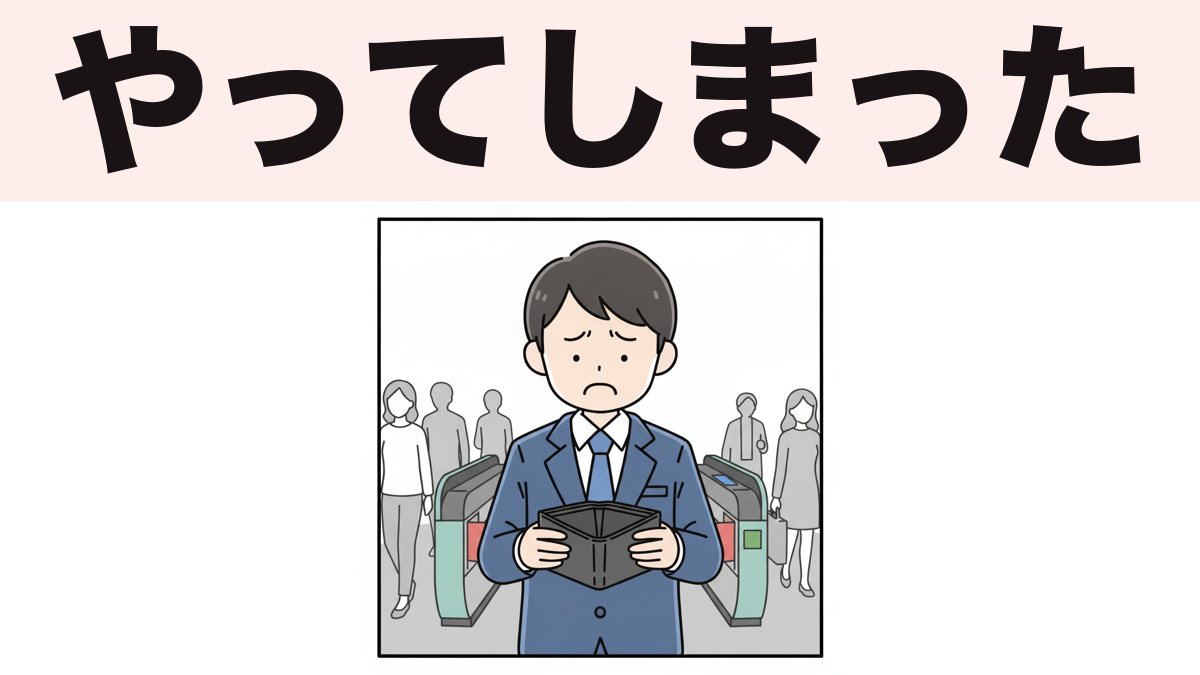
〜てしまう marks an action as finished and done with — and depending on the verb, that finality either means "completely" or "oh no, I did it."
〜てしまう は、その動作が「終わって、もう戻せない」ことを表します。動詞によって、その意味は「全部やり切った」になるか、「やってしまった…」という後悔になります。
Textbooks usually give you one of those two meanings and leave the other for a later chapter. That is why learners hear 食べちゃった in a show, translate it as "I ate it," and miss the entire emotional point of the line. The regret is not in the words around it. The regret is in the grammar.
The basics
What does てしまう actually mean?
しまう on its own means "to put away" — to close something up, to finish with it. Attached to a te-form verb, it keeps exactly that feeling: the action is not just done, it is shut. There is no going back.
That single idea splits into two readings depending on what kind of action it is:
- Completion — the action was carried all the way through. Nothing left.
- Regret — the action is finished and it cannot be undone, which is bad news.
宿題を全部やってしまいました。 — I finished all my homework. (completion — neutral, even a little satisfied) 財布をなくしてしまいました。 — I lost my wallet. (regret — the finality is the problem)
Same grammar. Opposite mood. The verb decides.
How do you build it?
Take the te-form of the verb and attach しまう. Then conjugate しまう normally, like any う-verb.
| Form | Shape | Example |
|---|---|---|
| Polite present | 〜てしまいます | 忘れてしまいます |
| Polite past | 〜てしまいました | 忘れてしまいました |
| Plain past | 〜てしまった | 忘れてしまった |
| Contracted past | 〜ちゃった | 忘れちゃった |
| Contracted (で verbs) | 〜じゃった | 飲んじゃった |
| Negative | 〜てしまわない | 忘れてしまわない |
Because it is built on the te-form, verbs that take で instead of て give you でしまう — 読んでしまう, 飲んでしまう, 死んでしまう. Nothing new to learn there; the te-form rules already decided it for you.
切符をなくしてしまいました。 — I lost my ticket. (polite past — the standard "I've done something bad" sentence) ケーキを食べてしまいました。 — I ate the cake. (polite past — with the clear implication that I shouldn't have)
Which meaning is it — completion or regret?
Ask whether the action is the kind of thing a person would want to undo.
Verbs of achievement — 終わる, やる, 読む, 書く, 片付ける — pull toward completion. Verbs of loss, breakage, error, or forgetting — なくす, 忘れる, 壊す, 落とす, 間違える — pull toward regret. And a neutral verb like 食べる can go either way, decided entirely by the situation.
この本を一日で読んでしまいました。 — I read this whole book in one day. (completion — mildly impressed with myself) お母さんのケーキを食べてしまいました。 — I ate my mother's cake. (regret — she was saving it)
This is why translation alone will not teach you this grammar point. "I ate the cake" is the same English sentence in both directions.
What is ちゃった?
It is てしまった, worn down by speech. ては → ちゃ is the same contraction you see in 〜てはいけません becoming ちゃいけない, and it works identically here.
遅れちゃった。 — I'm late. (casual — the ちゃった carries the "sorry!") 全部見ちゃった。 — I watched the whole thing. (casual — binge-watched, completion with a hint of "I couldn't stop") 壊しちゃった。 — I broke it. (casual — apologetic)
ちゃった is the form you will hear most in anime, in real conversation, and from anyone who is not currently writing a report. Learn to recognize it before you learn to produce it.
Beyond the basics
Why does ちゃった sound softer than しまいました?
Both say the same thing, but the contraction makes the whole sentence smaller — and a smaller sentence sounds like a smaller problem. 遅れちゃった lands like "ah, I'm late"; 遅れてしまいました lands closer to "I have arrived late, and I acknowledge this." Which one you pick depends on the same polite-or-casual switch that governs everything else, but there is a second layer: the contracted form also downgrades how serious you are making the mistake sound.
That cuts both ways. If you actually broke something expensive at work, ちゃった is the wrong choice, because the grammar itself will make you sound like you don't care.
How is it different from just using the past tense?
The plain past reports. てしまう reports and editorializes.
| Sentence | What it says |
|---|---|
| 財布をなくしました | I lost my wallet. (a fact) |
| 財布をなくしてしまいました | I lost my wallet. (a fact, plus: this is bad, and it's final) |
| 宿題をしました | I did my homework. (a fact) |
| 宿題をしてしまいました | I got the homework done. (a fact, plus: it's fully finished, off my plate) |
Learners often ask which one is "correct." Both are. Dropping てしまう is never a grammar error — it just deletes the feeling.
What about てしまおう and てしまえ?
Push しまう into the volitional and you get "let's just get this over with," which is a very natural way to talk about an unpleasant task.
今のうちにやってしまおう。 — Let's just get it done now, while we can. (casual volitional — "while there's time") 食べちゃおう。 — Let's just eat it. (casual contracted volitional — the "why not" version)
The imperative てしまえ exists too, and it is aggressive: 忘れてしまえ = "just forget it (and I mean it)." You will hear it in anime during a dramatic moment far more often than you will ever need to say it.
Does it work with the negative?
Two different negatives here, and learners mix them up constantly.
- 〜てしまわない — negates しまう itself. Rare, and usually appears in warnings: 忘れてしまわないように = "so that you don't end up forgetting."
- 〜ないでしまう — not a thing. Do not build this.
If you want to say "I didn't do it," you do not need this grammar at all. しませんでした is the whole answer. てしまう is for things that did happen.
忘れてしまわないように、メモしておきます。 — I'll write it down so I don't end up forgetting. (polite — a purpose clause, very common in the workplace)
Why do sad scenes in anime always have てしまう?
Because 死んでしまう is not the same sentence as 死んだ. The grammar adds the irreversibility, and irreversibility is what makes the line hurt.
彼は死んでしまった。 — He died. (and there is nothing to be done about it) みんな行ってしまった。 — Everyone left. (and they're not coming back)
If you watch with Japanese subtitles, this is one of the easiest patterns to start noticing on purpose. The English subtitle almost never shows it, because English carries that weight with tone of voice instead of grammar. Which means the subtitle is not wrong — it just lost the part you are trying to learn.
Common mistakes
- Using the dictionary form. 食べるしまった is not a sentence. It has to be the te-form: 食べてしまった. If your te-form is shaky, that is the real bottleneck, not this grammar point.
- Forgetting that で verbs give じゃった. 飲んでしまった contracts to 飲んじゃった, not 飲んちゃった. The te-form already told you which one; the contraction just follows it.
- Adding てしまう to good news. 合格してしまいました sounds like you are apologizing for passing the exam. For genuinely good outcomes, plain 合格しました is correct. The exception is bragging-as-a-joke, which is exactly as risky in Japanese as it is in English.
- Using ちゃった in a formal apology. The contraction shrinks the apology along with the sentence. In an email to a client, you want てしまいました, or something stronger.
- Reading every てしまう as regret. 読んでしまった after a good book is not regret. Check the verb before you assume the mood.
Practice
Each answer is hidden — decide on your version first, then open it. Questions 4 and 5 are a pair: the only difference is the verb, and it changes the whole meaning.
1. Put 忘れる into 〜てしまいました form.
Show answer
忘れてしまいました — 忘れる is a る-verb, so the te-form is 忘れて, then attach しまいました.
2. Contract 落としてしまった into casual speech.
Show answer
落としちゃった — てしまった becomes ちゃった. The て disappears into the ちゃ.
3. Contract 飲んでしまった into casual speech.
Show answer
飲んじゃった — this verb takes で in the te-form, so the contraction is じゃった, not ちゃった. Compare with question 2, where the te-form was て.
4. Is this completion or regret? 部屋を片付けてしまいました。
Show answer
Completion — 片付ける (to tidy up) is an achievement verb, so the finality is a good thing: the room is fully done. No regret implied.
5. Is this completion or regret? 部屋を汚してしまいました。
Show answer
Regret — 汚す (to make dirty) is a verb of damage, so the same finality becomes bad news: I made the room dirty and now it is done. Same grammar as question 4, opposite mood, decided only by the verb.
6. Something is wrong here: 切符をなくすしまいました。
Show answer
切符をなくしてしまいました — しまう attaches to the te-form, never the dictionary form. なくす → なくして → なくしてしまいました.
7. Turn 今日やる into "let's just get it done today" using this grammar.
Show answer
今日やってしまおう — the volitional of しまう is しまおう. Casual contracted version: 今日やっちゃおう.
8. Which is more appropriate in an email to your boss: 遅れちゃいました or 遅れてしまいました?
Show answer
遅れてしまいました — the contraction ちゃ makes the whole sentence casual, which makes the apology sound smaller than it should. Keep the full form when the mistake matters.
9. What is the difference between 財布をなくしました and 財布をなくしてしまいました?
Show answer
Only the feeling — both mean "I lost my wallet." The second one adds that it is final and this is bad. Neither is more correct; dropping てしまう just removes the emotion.
10. Why does 死んでしまった hit harder than 死んだ?
Show answer
Because てしまう adds irreversibility — しまう means to close something away. It marks the death as something that cannot be undone, which is why anime uses it in the scenes that are supposed to hurt.
FAQ
Can I always replace てしまう with ちゃう? In casual speech, yes — the meaning is identical. In writing, formal speech, or a real apology, no: use the full form. And remember that で verbs take じゃう, not ちゃう.
Does てしまう always mean something bad happened? No. With verbs of achievement it simply means the action was completed all the way through, with no negative feeling at all. 全部読んでしまった is a normal, slightly pleased thing to say.
What is the difference between てしまう and ておく? ておく means doing something in advance, for later benefit. てしまう means finishing something off, done with it. 買っておく = "I'll buy it ahead of time"; 買ってしまう = "I went and bought it (and now it's done)."
Why do I hear しまった on its own? しまった as a standalone exclamation means "damn it" / "oh no" — the same grammar, with the verb dropped entirely because the situation makes it obvious. It is the single most useful word in this article.
Is 〜てしまいました rude? Not at all — it is the standard polite form and appropriate everywhere. If anything it sounds more responsible than the plain past, because it acknowledges that what happened matters.
Vocabulary from this article
Tap the block to select all of it, then copy. In Anki: File → Import, note type Basic, separator Tab — the first column becomes the front, the second the back.
しまう	しまう — to put away, to finish with
忘れる	わすれる — to forget
なくす	なくす — to lose (something)
落とす	おとす — to drop
壊す	こわす — to break (something)
汚す	よごす — to make dirty
片付ける	かたづける — to tidy up, to clear away
間違える	まちがえる — to make a mistake
遅れる	おくれる — to be late
死ぬ	しぬ — to die
飲む	のむ — to drink
読む	よむ — to read
食べる	たべる — to eat
財布	さいふ — wallet
切符	きっぷ — ticket
宿題	しゅくだい — homework
部屋	へや — room
合格する	ごうかくする — to pass (an exam)
メモする	メモする — to jot down a note
全部	ぜんぶ — all, everything
I'm Yuuki, a Japanese teacher based in Tokyo. I've taught on italki as a Top 1% teacher and watched over 1,500 anime, and this is the grammar point where students most often understand the form perfectly and still miss the meaning — because the textbook sentence and the anime line look identical on the page.
Sources: the author's own lessons and standard reference grammars.
教科書は、ふたつの意味のうち片方だけを教えて、もう片方を後の章に置きます。だから学習者はアニメで「食べちゃった」を聞いて、「食べた」と訳して、気持ちの部分を全部おとします。後悔は、まわりの言葉にはありません。文法の中にあります。
基本の形
てしまう の意味は?
「しまう」は、もともと「片付ける」「中に入れて閉める」という意味です。て形につくときも、その感じは同じです。動作は終わっただけではなく、「閉まった」のです。もう戻せません。
この1つの考えが、動作の種類で2つに分かれます。
- 完了 — 最後までやり切った。もう残っていない。
- 後悔 — 終わってしまって、もう戻せない。それが困る。
宿題を全部やってしまいました。 — I finished all my homework. (完了。少しうれしい感じ) 財布をなくしてしまいました。 — I lost my wallet. (後悔。戻せないことが問題)
文法は同じです。気持ちは反対です。動詞が決めます。
どう作りますか?
動詞のて形に「しまう」をつけます。そのあと「しまう」を、ふつうのう動詞のように変えます。
| 形 | かたち | 例 |
|---|---|---|
| ていねい・現在 | 〜てしまいます | 忘れてしまいます |
| ていねい・過去 | 〜てしまいました | 忘れてしまいました |
| ふつう・過去 | 〜てしまった | 忘れてしまった |
| 短い形 | 〜ちゃった | 忘れちゃった |
| 「で」の動詞 | 〜じゃった | 飲んじゃった |
| 否定 | 〜てしまわない | 忘れてしまわない |
て形が「で」になる動詞は「でしまう」になります。読んでしまう、飲んでしまう、死んでしまう。新しく覚えることはありません。て形のルールがもう決めています。
切符をなくしてしまいました。 — I lost my ticket. (ていねい・過去) ケーキを食べてしまいました。 — I ate the cake. (ていねい・過去。食べてはいけなかった、という感じ)
完了ですか、後悔ですか?
「その動作を、人はもとに戻したいと思うか」を考えてください。
やり終える動詞 — 終わる・やる・読む・書く・片付ける — は完了になります。なくす・忘れる・壊す・落とす・間違える のような動詞は後悔になります。「食べる」のような中間の動詞は、場面で決まります。
この本を一日で読んでしまいました。 — I read this whole book in one day. (完了) お母さんのケーキを食べてしまいました。 — I ate my mother's cake. (後悔)
だから、英語の訳だけではこの文法は覚えられません。英語はどちらも "I ate the cake" です。
ちゃった は何ですか?
「てしまった」が、話すときに短くなった形です。「ては」が「ちゃ」になるのと同じです。
遅れちゃった。 — I'm late. (ふつうの話し方。「ごめん」の気持ちが入る) 全部見ちゃった。 — I watched the whole thing. (完了。「止まらなかった」感じ) 壊しちゃった。 — I broke it. (あやまる気持ち)
アニメでも、ふだんの会話でも、聞くのはほとんど「ちゃった」です。まず聞いて分かるようにしてください。自分で使うのは、そのあとで大丈夫です。
もう少し先へ
ちゃった は、なぜやさしく聞こえますか?
意味は同じですが、文が短くなります。短い文は、小さい問題のように聞こえます。「遅れちゃった」は軽く、「遅れてしまいました」は重く聞こえます。
これは反対にも働きます。仕事で高いものを壊したときに「ちゃった」を使うと、気にしていない人のように聞こえます。
ふつうの過去形と、どうちがいますか?
ふつうの過去形は、事実を言います。てしまう は、事実と気持ちの両方を言います。
| 文 | 意味 |
|---|---|
| 財布をなくしました | 財布をなくした(事実だけ) |
| 財布をなくしてしまいました | 財布をなくした。そして、それは困る・もう戻せない |
| 宿題をしました | 宿題をした(事実だけ) |
| 宿題をしてしまいました | 宿題を全部終わらせた。もう手元にない |
「どちらが正しいですか」とよく聞かれます。どちらも正しいです。てしまう を使わないと、気持ちが消えるだけです。
てしまおう と てしまえ は?
「しまう」を意志形にすると「もう今やってしまおう」になります。いやな仕事について話すとき、とても自然です。
今のうちにやってしまおう。 — Let's just get it done now. (ふつうの話し方) 食べちゃおう。 — Let's just eat it. (短い形)
「てしまえ」もあります。これは強い命令です。「忘れてしまえ」」もう忘れろ。自分で使うことは少ないですが、アニメの強い場面でよく聞きます。
否定はありますか?
2つあって、よく混ざります。
- 〜てしまわない — 「しまう」を否定します。「忘れてしまわないように」」忘れないように。
- 〜ないでしまう — ありません。作らないでください。
「しなかった」と言いたいときは、この文法はいりません。「しませんでした」で十分です。てしまう は、起きたことに使います。
忘れてしまわないように、メモしておきます。 — I'll write it down so I don't end up forgetting. (ていねい)
アニメの悲しい場面に、なぜ てしまう が多いのですか?
「死んでしまった」は「死んだ」と同じ文ではありません。文法が「もう戻せない」を足します。その「戻せない」が、せりふを痛くします。
彼は死んでしまった。 — He died. (もうどうにもできない) みんな行ってしまった。 — Everyone left. (もう帰ってこない)
英語の字幕には、たいてい出てきません。英語は、その重さを声の調子で運びます。字幕がまちがっているのではありません。ただ、あなたが勉強したい部分が消えているのです。
よくある間違い
- 辞書形を使う。 「食べるしまった」は文になりません。「食べてしまった」です。
- 「で」の動詞を「ちゃった」にする。 「飲んでしまった」は「飲んじゃった」です。「飲んちゃった」ではありません。
- いいことに使う。 「合格してしまいました」は、合格をあやまっているように聞こえます。いいことは「合格しました」です。
- 正式なあやまりに「ちゃった」を使う。 短い形は、あやまりも小さくします。仕事のメールでは「てしまいました」です。
- 全部を後悔だと思う。 いい本を読み終わった「読んでしまった」は後悔ではありません。まず動詞を見てください。
練習
答えはかくれています。まず自分の答えを作って、それから開いてください。4番と5番は対になっています。動詞だけがちがって、意味が反対になります。
1. 「忘れる」を「〜てしまいました」の形にしてください。
答えを見る
忘れてしまいました — 「忘れる」はる動詞なので、て形は「忘れて」。そこに「しまいました」をつけます。
2. 「落としてしまった」を短い形にしてください。
答えを見る
落としちゃった — 「てしまった」が「ちゃった」になります。「て」が「ちゃ」の中に消えます。
3. 「飲んでしまった」を短い形にしてください。
答えを見る
飲んじゃった — この動詞のて形は「で」なので、短い形は「じゃった」です。「ちゃった」ではありません。2番とくらべてください。
4. 完了ですか、後悔ですか。部屋を片付けてしまいました。
答えを見る
完了 — 「片付ける」はやり終える動詞なので、「終わった」はいいことです。後悔の意味はありません。
5. 完了ですか、後悔ですか。部屋を汚してしまいました。
答えを見る
後悔 — 「汚す」は悪いことをする動詞なので、同じ「終わった」が困ることになります。4番と文法は同じで、動詞だけがちがいます。
6. まちがいがあります。切符をなくすしまいました。
答えを見る
切符をなくしてしまいました — 「しまう」はて形につきます。辞書形にはつきません。なくす → なくして → なくしてしまいました。
7. 「今日やる」を、この文法で「もう今日やってしまおう」の形にしてください。
答えを見る
今日やってしまおう — 「しまう」の意志形は「しまおう」です。短い形は「今日やっちゃおう」。
8. 上司へのメールでは、どちらがいいですか。「遅れちゃいました」か「遅れてしまいました」か。
答えを見る
遅れてしまいました — 「ちゃ」は文全体をふつうの話し方にします。あやまりが小さく聞こえます。大事なときは長い形を使います。
9. 「財布をなくしました」と「財布をなくしてしまいました」のちがいは何ですか。
答えを見る
気持ちだけ — 意味はどちらも「財布をなくした」です。2つめは「もう戻せない・それが困る」が入ります。どちらも正しく、てしまう を使わないと気持ちが消えるだけです。
10. 「死んでしまった」は、なぜ「死んだ」より重いのですか。
答えを見る
てしまう が「戻せない」を足すから — 「しまう」は中に入れて閉めるという意味です。もうどうにもできないことを表すので、アニメの悲しい場面で使われます。
よくある質問
いつでも「てしまう」を「ちゃう」にできますか。 ふつうの会話ではできます。意味は同じです。書くときや、本当にあやまるときは長い形を使ってください。「で」の動詞は「じゃう」です。
てしまう は、いつも悪い意味ですか。 いいえ。やり終える動詞では「全部やり切った」という意味だけです。「全部読んでしまった」は、ふつうの、少しうれしい文です。
てしまう と ておく のちがいは何ですか。 「ておく」は、あとのために先にしておくことです。「てしまう」は、終わらせてしまうことです。「買っておく」」先に買う。「買ってしまう」」買ってしまった。
「しまった」だけで使うのはどうしてですか。 「しまった」だけで「あっ、やってしまった」という意味になります。動詞は場面で分かるので、言わなくていいのです。この記事でいちばん役に立つ言葉です。
「〜てしまいました」は失礼ですか。 いいえ。ていねいな形で、どこでも使えます。むしろ、起きたことを大事に思っている感じが出ます。
この記事に出た単語
ブロックをタップすると全部選べます。そのままコピーしてください。Anki では ファイル → 読み込み、ノートタイプ 基本、区切り タブ。1列目が表、2列目が裏になります。
しまう	しまう — to put away, to finish with
忘れる	わすれる — to forget
なくす	なくす — to lose (something)
落とす	おとす — to drop
壊す	こわす — to break (something)
汚す	よごす — to make dirty
片付ける	かたづける — to tidy up, to clear away
間違える	まちがえる — to make a mistake
遅れる	おくれる — to be late
死ぬ	しぬ — to die
飲む	のむ — to drink
読む	よむ — to read
食べる	たべる — to eat
財布	さいふ — wallet
切符	きっぷ — ticket
宿題	しゅくだい — homework
部屋	へや — room
合格する	ごうかくする — to pass (an exam)
メモする	メモする — to jot down a note
全部	ぜんぶ — all, everything
私はユウキです。東京で日本語を教えています。 italki の Top 1% の先生で、アニメは1,500本以上見ました。この文法は、形は完ぺきに作れるのに意味を取りちがえる人がいちばん多いところです。教科書の文とアニメのせりふが、紙の上では同じに見えるからです。
More drills like the ones above, plus a timed JLPT-style mock test: Practice · N4上のような練習問題と、時間つきのJLPT形式のもぎ試験: 練習ページ · N4
Want to try this in a real conversation?
本当の会話で、ためしてみませんか?
30-minute trial lesson, $13. Times shown in your own timezone.
30分の体験レッスン、$13。時間はあなたのタイムゾーンで表示されます。
Book a trial lesson · $13