Studying Japanese with anime: two traps to avoidアニメで日本語を勉強するときの注意点 ふたつ
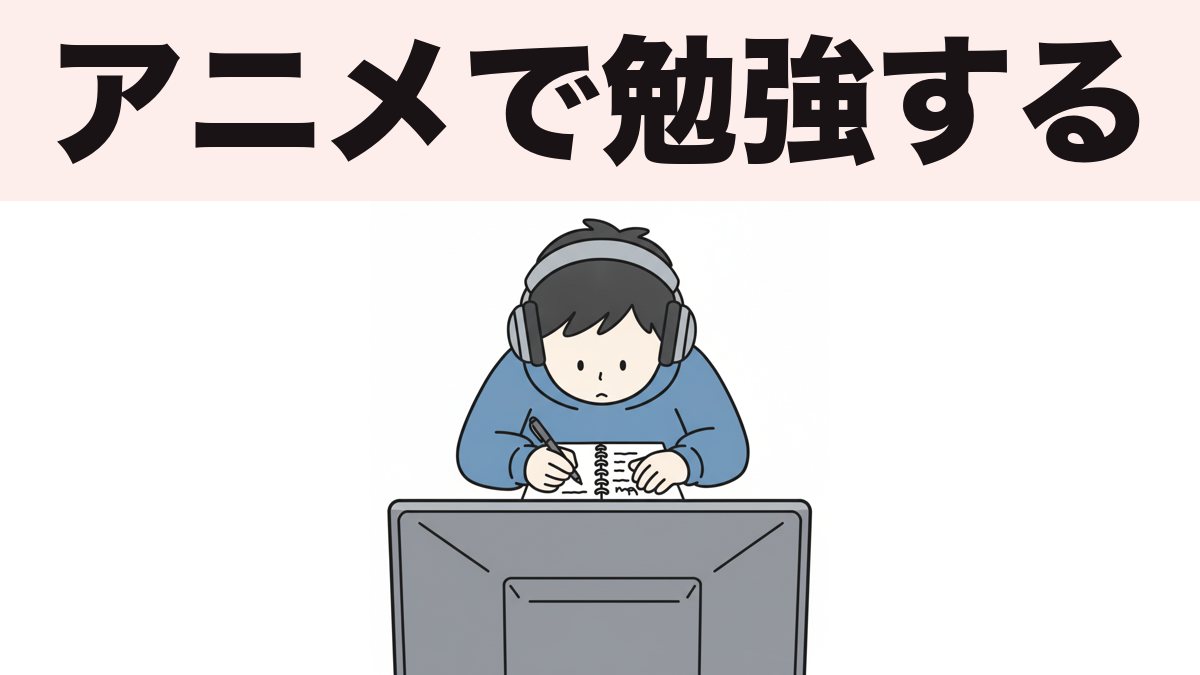
Yes, you can study Japanese with anime, and interest beats method every time. But two things go wrong: some genres teach vocabulary and registers that do not exist in daily life, and anime voices are so clear that they leave you unable to follow real conversation. Fix both by choosing slice-of-life shows and mixing in live-action.
アニメで日本語の勉強はできます。大事なのは「どれだけ自分が興味を持てるか」です。ただし、気をつけることがふたつあります。ジャンルによっては、日常で使わない日本語が身についてしまうこと。そして、声優の声がきれいすぎて、本物の日本語が聞き取れなくなることです。
Students and Discord members have asked me "can I use anime to study Japanese?" more times than any other question. This was episode 43 of my NihonGO podcast, recorded in August 2021. Here is the longer answer.
Does studying with anime actually work?
Answer — It works, and the reason is boring: repetition. No material teaches you anything on one viewing. Anime is the material you will willingly watch six times, which is why it beats a textbook you will open twice.
Whatever you use — novels, dramas, games, anime — the question is not which one is theoretically richest. It is which one you will come back to. If you love a show, you will rewatch it, and on the fourth pass you start hearing the grammar instead of just reading the subtitles. That is the whole mechanism.
So the real selection rule is: pick the thing you already love, then manage its specific weaknesses. Anime has two.
Trap 1: the genre decides what Japanese you learn
Answer — Shonen, fantasy, horror and historical anime are full of words and speech styles that no one uses in an office, a shop or a conversation with a friend. Learn from them and you will produce Japanese that is accurate and wrong for the room.
A battle anime will give you vocabulary for techniques, fates and resolve, and almost none for making an appointment. Worse than the vocabulary is the register: a lot of the most quotable characters speak in a blunt, dominant style that in real life reads as rude or, from a learner, as strange.
The specific offenders:
| What anime gives you a lot of | What it sounds like in real life |
|---|---|
| おれ as a default first person | Fine among male friends, too blunt in most other rooms |
| 〜だろ / 〜だぜ / 〜かよ sentence endings | Aggressive or theatrical |
| 貴様, てめえ, お前 for "you" | Anywhere from rude to a threat |
| Dropped particles and shouted verbs | Reads as a fight scene, not a conversation |
None of it is fake Japanese. It is real Japanese from a narrow register, delivered by characters written to be dramatic. The problem is that if it is 90% of your input, it becomes 90% of your output. I wrote about which parts to keep and which to quarantine in why anime Japanese sounds rude, and the pronoun half of it in ore, boku, watashi: which "I" should you use.
What to watch instead: slice-of-life. 『ゆるキャン△』 (Laid-Back Camp) and 『ばらかもん』 (Barakamon) were the two I named in the original episode, and I still name them. Everyday settings force everyday Japanese: shopping, cooking, being slightly late, asking a favour. Add 『けいおん!』, 『あのはな』, anything where the plot is people talking to each other in ordinary rooms. More picks in the best anime to learn Japanese from.
Trap 2: anime voices are too good
Answer — Voice actors are trained to be intelligible. Their articulation, pacing and pitch range are far clearer than an average Japanese speaker's. Train only on that and real conversation will sound like it is underwater.
This is the one nobody expects. A seiyuu enunciates every mora, never mumbles, never trails off, never talks over someone else, and is mixed to sit on top of the music. Real Japanese, in a real izakaya, is fast, reduced, overlapping, and half-swallowed. 「なにをしているんですか」 becomes 「なにしてるの」, then 「なにしてんの」, and by the time it actually reaches you the の is barely there at all.
If your listening diet is 100% anime, the first real conversation is a shock — not because your grammar failed, but because you have never trained on the actual signal.
The fix is cheap: keep the anime, add live action. A Japanese drama, a variety show, a YouTube vlog, a podcast with two people interrupting each other. Twenty percent of your listening time on messy input is enough to stop the problem.
So what does a good anime study routine look like?
The version I give students:
- Pick one show you have already seen and love. Rewatching beats new episodes for study.
- First pass: enjoy it. English subtitles, no notes. You are establishing the story so your brain has somewhere to hang the words.
- Second pass: Japanese subtitles. This is where the actual learning happens — see the Japanese subtitles method.
- Mine five lines, not fifty. Five sentences you could plausibly say yourself. Skip anything a normal person would not say.
- Say them out loud to a human. Untested output is where anime learners stall.
- Once a week, watch something live-action with no subtitles for ten minutes, on purpose, to keep your ear honest.
Step 5 is the one people skip, and it is the one that decides whether any of the rest converts into speaking. That is most of what happens in my 1-on-1 lessons: you bring the lines you mined, we find out which ones survive contact with a real conversation.
Frequently asked questions
Is subbed or dubbed better for study? Subbed, always — you need the Japanese audio. Whether the subtitles are English or Japanese depends on the pass you are on.
Can I learn Japanese from anime alone? You can build enormous passive vocabulary and a good ear for one register. You will not get reliable polite speech, writing, or the ability to follow unclear speakers. Those need other input.
How long until I can watch without subtitles? It depends far more on hours than on months, and on whether you are watching actively. Students who mine lines get there years earlier than students who just watch. I wrote about the honest timeline in how long it takes to learn Japanese.
Which genres are safest for a beginner? Slice-of-life, school comedy, anything set in a normal town in the present day. Avoid fantasy, historical, and anything with a formal military or noble setting — the speech styles are deliberately archaic.
Bring your show to a lesson
If you already have a favourite, you already have your material. The part you cannot do alone is find out which lines are safe to say.
I am Yuuki, an online Japanese teacher and an Akihabara anime tour guide in Tokyo. I have watched over 1,500 anime series, which is mostly why students bring me their shows: I usually know the character whose Japanese you should not copy.
Sources: this article is a rewrite and expansion of episode 43 of my NihonGO podcast (recorded 2021-08-21). Titles named are the ones I recommended in that episode and still recommend; register judgements are my own as a Japanese teacher, not measured data.
レッスンの生徒さんや Discord のメンバーから、「アニメを使って日本語の勉強はできますか?」と聞かれることが、いちばん多いです。これは、僕の Podcast「NihonGO」の第43回です。2021年8月に録音しました。ここでは、もう少しくわしく書きます。
アニメで勉強すると、本当にできるのか
答え — できます。理由はかんたんです。くり返すからです。どんな作品も、一度見ただけでは勉強になりません。アニメは、自分から 6回見られる材料です。2回しか開かない教科書より強いのは、そこです。
小説でもドラマでもゲームでもアニメでも、問題は「どれがいちばん内容が濃いか」ではありません。「自分がまた見るのはどれか」です。好きな作品なら、何度も見ます。4回目で、字幕を読むのではなく、文法が聞こえてきます。これがぜんぶの仕組みです。
だから、選び方のルールは 1つです。もう好きなものを選んで、その弱いところを自分でおさえる。 アニメの弱いところは、ふたつです。
ひとつめ アニメのジャンルによっては参考にならない
答え — 少年、ファンタジー、ホラー、時代物には、会社や店や友だちとの会話でぜんぜん使わないことばと、話し方が多いです。そこから覚えると、正しいけれど、その場に合わない日本語になります。
バトルもののアニメは、技や運命や決意のことばをたくさんくれます。でも、予約を取るためのことばは、ほとんどくれません。ことばより問題なのは、話し方です。かっこいいセリフを言うキャラクターの多くは、強くて、ぶっきらぼうな話し方をします。実際の生活では、失礼に聞こえます。日本語を勉強している人が使うと、へんに聞こえます。
| アニメに多いもの | 実際に聞こえ方 |
|---|---|
| いつでも「おれ」 | 男の友だちの中ならいい。ほかの場所では強すぎる |
| 「〜だろ」「〜だぜ」「〜かよ」 | けんかか、お芝居に聞こえる |
| 「貴様」「てめえ」「お前」 | 失礼から、おどしまで |
| 助詞を落とす・動詞をさけぶ | 会話ではなく、戦いの場面 |
うその日本語ではありません。せまい場所の、本物の日本語です。ただ、それが入ってくるものの 9割になると、出すものの 9割にもなります。どこを残して、どこを分けておくかは アニメの日本語が失礼に聞こえる理由 に書きました。一人称の話は おれ・ぼく・わたし、どれを使うか です。
かわりに見るもの。 日常系です。もとの回では『ゆるキャン△』と『ばらかもん』を出しました。今でも同じです。日常の場面では、日常の日本語しか出てきません。買いもの、料理、少しおくれること、お願いすること。『けいおん!』や、人がふつうの部屋で話しているだけの作品を足してください。もっと知りたいときは 日本語の勉強にいちばんいいアニメ です。
ふたつめ アニメの声優は声が良すぎる
答え — 声優は、聞き取りやすく話す練習をした人たちです。日本人の平均より、はっきりしていて、速さも音の高さもととのっています。それだけで練習すると、本物の会話が水の中のように聞こえます。
これは、だれも思っていないことです。声優は、すべての音をはっきり言います。口ごもりません。声が消えません。人の声にかぶせません。そして、音楽の上にのるように録音されています。本物の日本語は、居酒屋では、速くて、短くなって、かぶって、半分のみこまれます。「なにをしているんですか」は「なにしてるの」になり、「なにしてんの」になり、こちらに届くときには「の」がほとんど消えています。
聞くものがぜんぶアニメだと、はじめての本物の会話でおどろきます。文法が足りないからではありません。本物の音で練習したことがないからです。
直し方は安いです。アニメはそのままで、実写を足す。 日本のドラマ、バラエティ、YouTube、2人が話をかぶせている Podcast。聞く時間の 2割をきたない音にすれば、それで足ります。
アニメで勉強するときの流れ
生徒にわたしている形です。
- もう見たことがある、好きな作品を 1つ選ぶ。 新しい話より、見直すほうが勉強になります。
- 1回目は楽しむ。 英語字幕、メモなし。話がわかっていないと、ことばをかける場所がありません。
- 2回目は日本語字幕。 ここで本当に勉強が始まります。→ 日本語字幕のやり方
- 50個ではなく 5個ひろう。 自分が言いそうな文を 5つだけ。ふつうの人が言わない文は、とばします。
- 人に向かって声に出す。 ここで止まる人がいちばん多いです。
- 週に 1回、実写を 10分、字幕なしで見る。 耳を正直にしておくためです。
5番をとばす人が多くて、5番が「話せるようになるか」を決めます。1対1のレッスン でやっているのは、ほとんどこれです。ひろった文を持ってきて、どれが本物の会話で生きのこるかを見ます。
よくある質問
字幕と吹き替え、どちらがいいですか。 字幕です。日本語の音が必要です。字幕を英語にするか日本語にするかは、何回目かで変わります。
アニメだけで日本語を覚えられますか。 聞いてわかることばは、とても増えます。1つの話し方の耳もできます。でも、ていねいな話し方、書くこと、はっきり話さない人を聞くことは、できません。
字幕なしで見られるまで、どのくらいですか。 月の数より、時間の数で決まります。そして、ただ見るか、ひろいながら見るかで決まります。→ 日本語の習得にかかる本当の時間
初級の人に安全なジャンルはどれですか。 日常系、学校のコメディ、今の時代のふつうの町の話です。ファンタジー、時代物、軍や貴族が出てくる作品はさけてください。話し方がわざと古いです。
好きな作品をレッスンに持ってくる
好きな作品があるなら、材料はもうあります。1人でできないのは、「どのセリフなら言っても安全か」を知ることです。
僕はユウキです。東京でオンラインの日本語教師と、秋葉原のアニメツアーガイドをしています。アニメは 1,500作品以上見ました。だから生徒は作品を持ってきます。「この人の日本語はまねしないほうがいい」というキャラクターが、だいたいわかるからです。
More drills like the ones above, plus a timed JLPT-style mock test: Practice上のような練習問題と、時間つきのJLPT形式のもぎ試験: 練習ページ
Want to try this in a real conversation?
本当の会話で、ためしてみませんか?
30-minute trial lesson, $13. Times shown in your own timezone.
30分の体験レッスン、$13。時間はあなたのタイムゾーンで表示されます。
Book a trial lesson · $13