Why the Japanese you learned from anime sounds rudeアニメで覚えた日本語が失礼に聞こえる理由
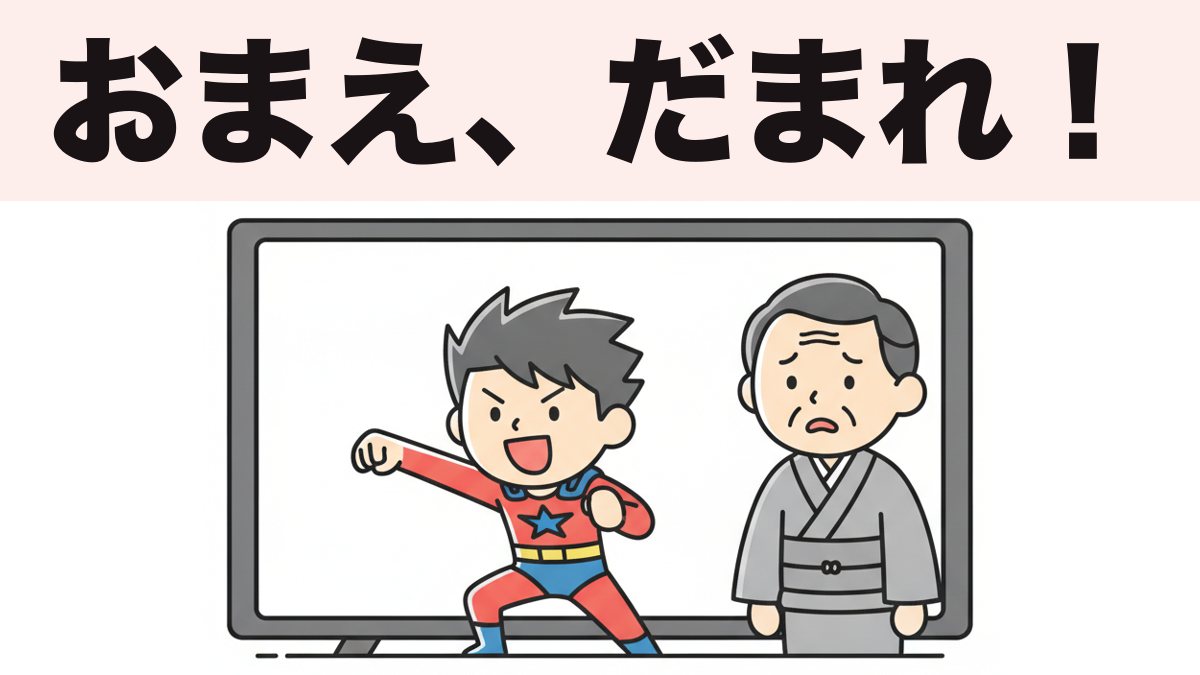
Anime does not teach bad Japanese. It teaches Japanese spoken by people who are allowed to be rude.
アニメは、悪い日本語を教えているわけではありません。失礼な話し方をしてもいいキャラクターの日本語を教えているだけです。
There is a difference, and it matters. A shounen protagonist yelling at his rival is using real, grammatical, native Japanese. He is also fourteen, fighting someone, and written to sound like it. Copy him at a convenience store and you will get a look.
The good news: you do not have to unlearn anything. You have to learn where each line belongs.
The three dials
Almost everything that sounds rude comes down to three dials, not vocabulary.
Dial 1 — the ending. Japanese marks politeness at the end of the sentence, which means you can keep every word you know and change only the last two syllables.
行く → I'm going. (flat, friends) 行きます → I'm going. (polite, everyone else)
Same verb. Same meaning. Completely different room.
Dial 2 — the pronoun. おれ, ぼく, わたし and あんた all mean roughly what English does with one word. Anime picks the loudest option because it tells you who a character is in one syllable.
Dial 3 — what you leave out. Rude Japanese is often just fast Japanese. うるさい is not a slur; it means "noisy." Shouted at someone, with no ending and no cushion, it becomes "shut up."
Lines that are fine everywhere
Take these straight from anime and use them today:
ありがとう — thanks わかった — got it すごい — amazing たぶん — probably 本当? — really?
These are casual, not rude. With friends they are perfect. With a stranger, add です or ですね and they turn polite without changing the word.
Lines to keep in your head, not your mouth
おまえ — you (fine between close friends, aggressive otherwise) やめろ / 来るな — stop it / don't come (command forms; they are orders) ふざけるな — are you kidding me しね — you know this one. Never.
None of these are wrong. They are just loaded, and the load is invisible if you learned them from subtitles that rendered おまえ as "you."
The trick for telling which is which
When a line lands and you want to use it, ask one question: would this character say it to their teacher?
Not to their rival. Not to their friend. To a teacher, or a shopkeeper, or someone's parent.
If yes, it is safe. If you cannot picture it, keep the line and change the ending — you will almost always land somewhere usable.
The part that actually helps you
Here is what most learners miss: sounding too polite is also a mistake. If you speak to a friend entirely in ですます, you sound like you are keeping them at arm's length. Learners who only study textbooks have the opposite problem to anime fans, and it is the harder one to fix, because nobody tells you.
Anime gave you the casual register for free. That is a real head start. You just need the other dial.
In a lesson
This is the fastest thing to fix out loud and the slowest thing to fix alone, because it needs someone to tell you the temperature of what you just said.
Bring me a line from something you are watching. I will tell you exactly who you can say it to — and what to change if the answer is "not many people."
これは大事なちがいです。少年マンガの主人公がライバルにさけんでいるとき、それは本物の、文法的に正しい日本語です。でも、そのキャラクターは14歳で、けんかの最中で、そう聞こえるように書かれています。同じ話し方をコンビニでしたら、変な顔をされます。
いいニュースがあります。覚えたことを忘れる必要はありません。それぞれの言い方が、どこで使えるかを知ればいいだけです。
3つのつまみ
失礼に聞こえる理由のほとんどは、単語ではなく3つの「つまみ」で決まります。
つまみ1 — 文の最後。 日本語はていねいさを文の最後で決めます。だから、知っている単語はそのままで、最後の2文字だけ変えればいいのです。
行く → I'm going. (ふつう、友だちに) )行きます → I'm going. (ていねい、それ以外の人に)
同じ動詞、同じ意味。でも、まったくちがう場面で使われます。
つまみ2 — 「わたし」に当たることば。 おれ、ぼく、わたし、あんた。どれも英語の"I"や"you"と同じような意味ですが、アニメはいちばん強いことばを選びます。そのほうが、1文字でそのキャラクターがどんな人かわかるからです。
つまみ3 — 何を省くか。 失礼な日本語は、じつは早口な日本語であることが多いです。うるさい は悪いことばではなく「音が大きい」という意味です。でも、人に向かって、最後に何もつけずにさけべば「うるさい!!黙れ」になります。
どこでも使って大丈夫なことば
これらは、アニメからそのまま持ってきて、今日から使えます。
ありがとう — thanks わかった — got it すごい — amazing たぶん — probably 本当? — really?
これらはカジュアルなだけで、失礼ではありません。友だちには完ぺきです。知らない人には、です や ですね をつければ、ことばを変えずにていねいになります。
頭に入れておくだけで、口に出さないことば
おまえ — you (仲のいい友だち同士なら大丈夫、それ以外はきつく聞こえる) )やめろ/来るな — stop it / don't come (命令の形。命令です) )ふざけるな — are you kidding me しね — 知っていると思いますが、絶対に使わないでください。
どれもまちがったことばではありません。ただ、重さがあります。おまえ を「you」と訳す字幕で覚えると、その重さが見えなくなってしまいます。
見分け方のコツ
あることばを使いたくなったら、1つだけ質問してください。このキャラクターは、これを先生に言うだろうか?
ライバルにではなく、友だちにでもなく、先生や、お店の人や、だれかの親に対してです。
言えそうなら、安全です。想像できないなら、そのことばの雰囲気は覚えておいて、最後の形だけ変えてください。だいたい、それで使えるようになります。
ここがいちばん役に立つところ
多くの学習者が気づかないことがあります。ていねいすぎるのも、じつはまちがいだということです。友だちに、ずっと です・ます で話すと、きょりを置かれているように聞こえます。教科書だけで勉強した人は、アニメファンとは反対の問題を持っています。そして、こちらのほうが直しにくいです。だれも教えてくれないからです。
アニメは、ふつうの話し方をただで教えてくれました。それは本当に大きなスタートです。あとは、もう1つのつまみを覚えるだけです。
レッスンでは
これは、声に出しながらだと一番早く直せて、1人だと一番直しにくいことです。今言ったことばの「温度」を、だれかに教えてもらう必要があるからです。
今見ている作品から、セリフを1つ持ってきてください。それをだれに言っていいか、はっきり教えます。もし「あまり多くの人には言えない」という答えなら、どう変えればいいかも教えます。
More drills like the ones above, plus a timed JLPT-style mock test: Practice · N4上のような練習問題と、時間つきのJLPT形式のもぎ試験: 練習ページ · N4
Want to try this in a real conversation?
本当の会話で、ためしてみませんか?
30-minute trial lesson, $13. Times shown in your own timezone.
30分の体験レッスン、$13。時間はあなたのタイムゾーンで表示されます。
Book a trial lesson · $13