How long does it really take to learn Japanese?日本語を身につけるのに本当はどれくらいかかるか
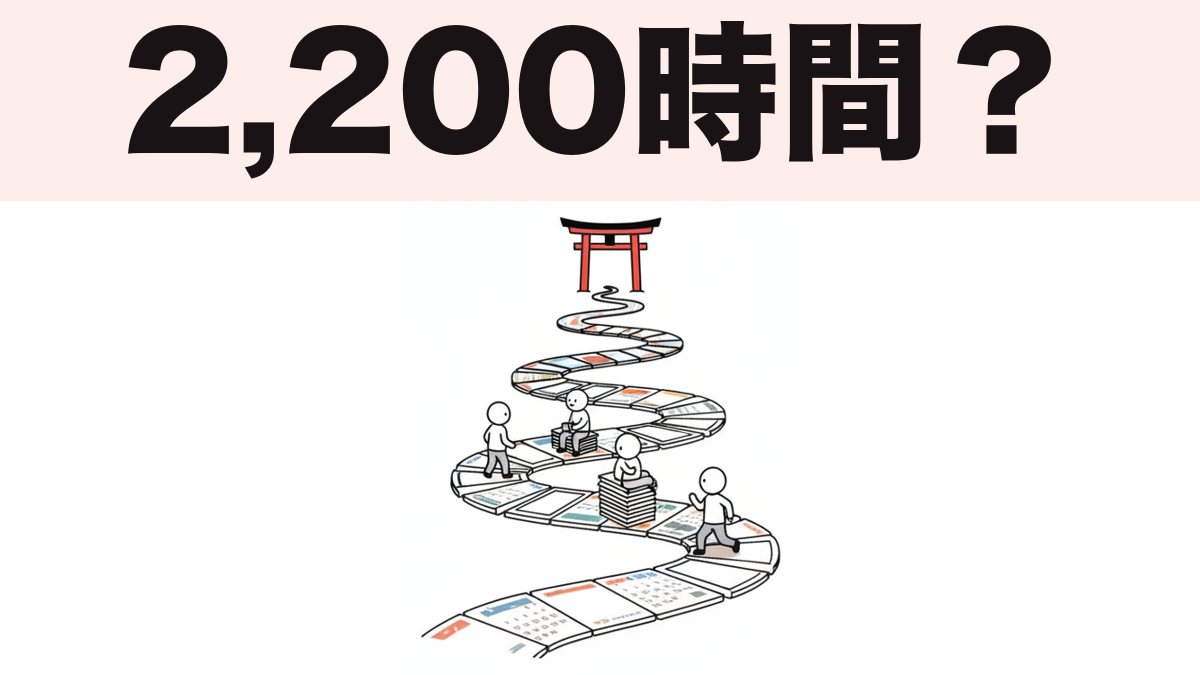
日本語の勉強でよく出てくる数字は2,200時間です。
The number people quote is 2,200 hours. It comes from the US Foreign Service Institute, which puts Japanese in its hardest category alongside Chinese, Korean and Arabic.
It is a real number, and it answers a question you are not asking. You do not want to know when you will be a diplomat. You want to know when you will be able to talk to someone.
That answer is much shorter, and much more encouraging.
The stages, honestly
Hours 0–50 — "I can say things at people." Greetings, self-introduction, ordering food, numbers. You can be understood in short bursts. You cannot understand the reply. This stage feels great and ends abruptly.
Hours 50–200 — the wall. You know enough to start conversations and not enough to survive them. Every real exchange runs out after two turns. Most people quit here, and they quit believing they are bad at languages. They are not — this stage is structurally miserable for everyone.
Hours 200–500 — conversation starts. Something shifts. You stop translating and start recognising. You can hold a ten-minute conversation about a familiar topic with someone willing to speak clearly. This is the payoff, and it arrives far earlier than 2,200 hours. For most of my students it is somewhere between six months and two years, depending entirely on how often they speak.
Hours 500–1,200 — comfortable. You can follow a conversation between two Japanese people, mostly. You watch anime and catch real sentences without subtitles. You can handle an unfamiliar topic by asking your way through it.
Hours 1,200+ — the long tail. Reading, keigo, work, nuance. This is where the FSI number lives, and it is genuinely long. It is also completely optional depending on why you started.
What moves you fastest
Three things, in order:
1. Speaking hours, not study hours. Time with your own mouth moving is worth several times the same time spent reading. This is the single biggest predictor I see in students.
2. Frequency over duration. Three thirty-minute sessions a week beat one ninety-minute session, and it is not close. Language lives on repetition intervals, not marathons.
3. Material you care about. A student learning to understand their favourite show will out-study a student working through a textbook chapter on the post office, because they will actually do it.
What slows people down
Waiting until you are ready to speak. You will never feel ready. Speaking badly, early and often is the whole method.
Kanji-first study. Kanji is essential eventually and enormously demotivating first. It is a reading skill, and it does not make you conversational.
App streaks as a proxy. Twenty minutes a day on an app for a year feels like real progress and produces a learner who cannot hold a conversation. The gap is that apps almost never make you produce a full sentence under time pressure with a human on the other end.
A realistic promise
If you speak Japanese for thirty minutes twice a week, and you do a little on your own between lessons:
- Month 1: introduce yourself, order, ask basic questions
- Month 3: short conversations about your life, with help
- Month 6: a real conversation about something you care about
- Year 1: comfortable, if slow, with a patient speaker
- Year 2: you stop calling yourself a beginner
That is not 2,200 hours. That is roughly two hours a week and some consistency.
In a lesson
The honest answer to "how long" is "how often." Whatever you can sustain forever beats whatever you can sustain for six weeks.
Come and find out what your sustainable version looks like — a trial lesson is thirty minutes, which is exactly the unit I am talking about.
これはアメリカ国務省の研究所が出した数字で、日本語を中国語・韓国語・アラビア語と同じ、いちばん難しいグループに入れています。
本物の数字ですが、あなたが本当に知りたいことの答えではありません。外交官になるまでの時間を知りたいわけではないはずです。知りたいのは、いつになったら人と話せるようになるか、です。
その答えは、もっと短くて、もっと元気が出るものです。
正直に言うと、こんな段階です
0〜50時間 ― 「相手に向かって、ことばを言えるようになる」 あいさつ、自己紹介、注文、数字。短い言葉なら、通じるようになります。でも、返事は理解できません。この段階は気持ちよく感じますが、すぐに終わります。
50〜200時間 ― 壁の時期。 会話を始めるだけの力はついていますが、続けるほどの力はまだありません。本物のやりとりは、2往復で止まってしまいます。多くの人がここでやめてしまい、「自分は語学の才能がない」と思ってしまいます。でもそうではありません。この段階は、だれにとっても、つらいようにできているだけです。
200〜500時間 ― 会話が始まる。 何かが変わります。頭の中で訳すのをやめて、そのまま分かるようになってきます。やさしく話してくれる相手となら、なじみのある話題で10分間、会話ができるようになります。これがごほうびの時期で、2,200時間よりずっと早く来ます。 わたしの生徒の多くは、半年から2年くらいでここに届きます。どれだけの頻度で話したかによって変わります。
500〜1,200時間 ― 楽になる時期。 日本人同士の会話も、だいたい聞き取れるようになります。アニメを字幕なしで見て、本物の文が聞き取れることもあります。知らない話題でも、質問をしながらなんとか進められます。
1,200時間以上 ― 長く続く道のり。 読むこと、敬語、仕事、微妙なニュアンス。ここがFSIの数字が意味する部分で、本当に長い道のりです。でも、なぜ日本語を始めたかによっては、ここまで進む必要はまったくありません。
いちばん上達が早くなること
大事な順に、3つあります。
1. 話した時間。勉強した時間ではありません。 自分の口を動かした時間は、同じ時間を読むことに使うよりも、何倍も価値があります。わたしが生徒を見ていて、いちばん上達を予測できるのがこれです。
2. 続けた回数。1回の長さではありません。 週に30分を3回のほうが、週に90分を1回よりも、はっきり効果があります。語学は、まとめて詰め込むより、くり返しの間隔で身につきます。
3. 自分が好きな題材。 好きな作品を理解したくて勉強している生徒は、郵便局についての教科書の章を進めている生徒より、たくさん勉強します。ただ単に、実際に取り組む量が多いからです。
上達を遅くすること
準備ができるまで待つこと。 準備ができたと感じる日は、永遠に来ません。早いうちから、何度も、下手に話すこと。それがすべてです。
漢字から先に勉強すること。 漢字はいずれ欠かせませんが、最初にやるとやる気をとても消耗します。漢字は「読む力」で、会話ができるようにはなりません。
アプリの継続記録に頼りすぎること。 アプリを1年間毎日20分やると、進歩しているように感じますが、それだけでは会話ができない学習者になってしまいます。アプリはほとんどの場合、時間制限のある中で、目の前の人に向かって完全な文を作らせてくれないからです。
現実的な見通し
週に2回、30分ずつ日本語を話して、レッスンの合間に少し自分でも勉強するなら:
- 1か月目: 自己紹介、注文、簡単な質問ができる
- 3か月目: 助けを借りながら、自分の生活について短い会話ができる
- 6か月目: 自分が興味のあることについて、本物の会話ができる
- 1年目: ゆっくりでも、やさしい相手となら、心地よく話せる
- 2年目: 自分を「初心者」と呼ばなくなる
これは2,200時間ではありません。だいたい週2時間と、それを続けることです。
レッスンでは
「どれくらいかかりますか」の正直な答えは、「どれくらいの頻度でやりますか」です。6週間で燃え尽きるやり方より、ずっと続けられるやり方のほうが、最後には勝ちます。
自分にとって続けられるやり方がどんなものか、見つけに来てください。体験レッスンは30分。ちょうど、今話した「単位」と同じ長さです。
More drills like the ones above, plus a timed JLPT-style mock test: Practice上のような練習問題と、時間つきのJLPT形式のもぎ試験: 練習ページ
Want to try this in a real conversation?
本当の会話で、ためしてみませんか?
30-minute trial lesson, $13. Times shown in your own timezone.
30分の体験レッスン、$13。時間はあなたのタイムゾーンで表示されます。
Book a trial lesson · $13