Ore, boku, watashi: which "I" should you actually use?おれ ぼく わたし 実際にはどれを使えばいい
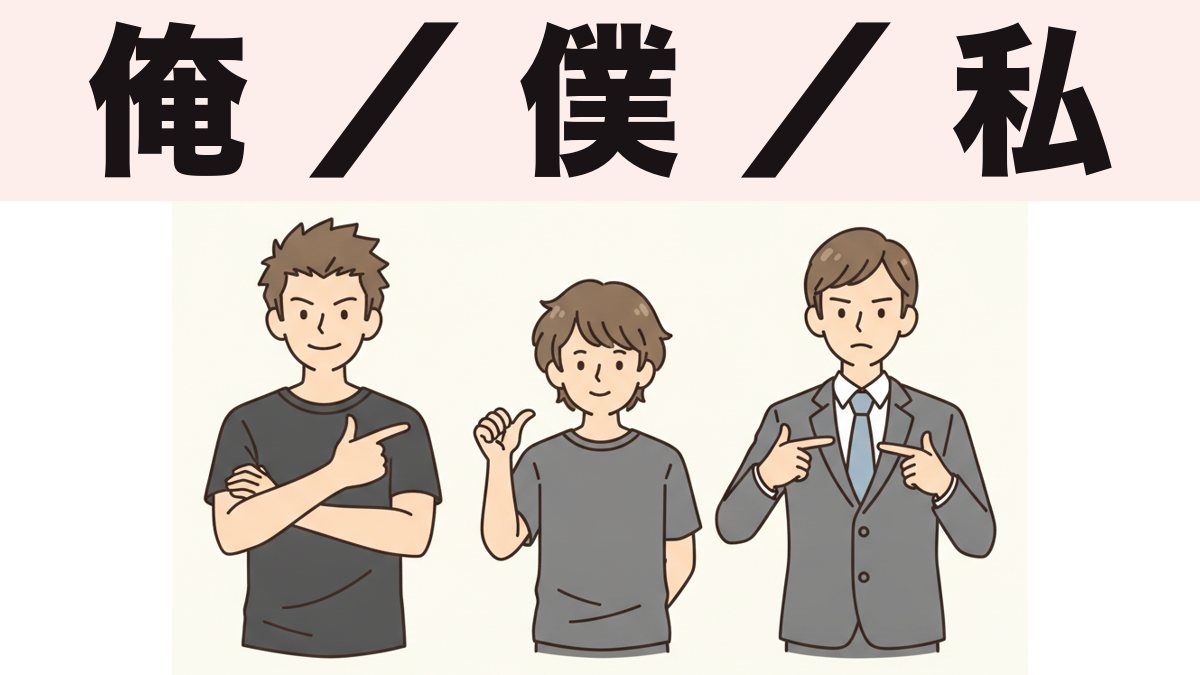
In English you get one "I". In Japanese you pick one, and the pick says something about you before your sentence even starts.
英語の「I」は1つだけです。日本語では自分で選びます。そして、文が始まる前から、その選び方があなたのことを語ります。
Anime makes this loud on purpose — a character's pronoun is characterisation. In real life the choice is much smaller than anime suggests. Here is the version you actually need.
The three that matter
わたし — neutral, polite, works for everyone ぼく — soft, modest, used by men and boys おれ — blunt, casual, used by men with friends
If you are learning Japanese to talk to people, わたし is the correct answer roughly ninety percent of the time. It is not boring. It is not feminine. In business, every man in the room says わたし.
What each one actually signals
わたし is the default in any situation with a hierarchy: work, shops, teachers, someone you met five minutes ago. Men sometimes read it as stiff among friends, which is where ぼく comes in.
ぼく reads as gentle and slightly younger. Adult men use it with friends, in interviews when they want to sound approachable, and in writing. It is safe. If おれ feels like too much, ぼく is always available.
おれ is close-range only. Between friends it is warm — it means we do not need the distance. Aimed at someone senior to you it is a small act of aggression. This is the one anime overuses, because half the protagonists in shounen are written to be a bit of an act of aggression.
The ones you will hear but should not use yet
あたし — casual, feminine, common in real speech わし — old men, and characters written as old men おれさま — "I, the magnificent" — a joke or a villain わたくし — extremely formal; ceremonies, apologies, service staff
あたし is genuinely common; the others are costume pieces.
The thing nobody tells you
Most of the time you should use no pronoun at all.
Japanese drops the subject whenever it is obvious, and it is obvious far more often than English speakers expect.
わたしは 行きます。 — I'm going. (correct, slightly heavy) 行きます。 — I'm going. (natural)
Saying わたし in every sentence is a stronger accent marker than picking the "wrong" pronoun. Native speakers reach for it mainly for contrast — I'm going, as opposed to you.
So the real progression is: pick わたし, then learn to leave it out.
If you are a woman learning from anime
The trap runs the other way. Anime hands you わたし and あたし early, which is fine, but it also hands you sentence endings — わ, かしら, のよ — that sound noticeably older or more theatrical than how women actually speak now. The pronoun is rarely the problem; the ending usually is.
In a lesson
We will find your default in about five minutes, and then I will spend the rest of the lesson getting you to drop it. Bring the character whose speech you like — that tells me more about the Japanese you want than any placement test.
アニメは、これをわざと目立たせます。キャラクターの一人称は、そのキャラクターらしさを表す道具です。でも、実際の生活では、アニメが見せるよりも、選ぶはばはずっとせまいです。ここでは、本当に必要な部分だけを紹介します。
大事な3つ
わたし — 中立、ていねい、だれにでも使えます ますぼく — やわらかく、ひかえめ。男性・男の子が使います ますおれ — ぶっきらぼうで、カジュアル。男性が友だちの間で使います
人と話すために日本語を勉強しているなら、「わたし」がだいたい9割は正解です。 つまらないことばではありませんし、女性らしいことばでもありません。ビジネスの場では、男性もみんな「わたし」を使います。
それぞれが伝えること
わたし は、上下関係がある場面での基本形です。仕事、お店、先生、会ったばかりの人。男性は友だち同士で使うと、かたく感じることがあり、そこで「ぼく」が出てきます。
ぼく は、やさしく、少し若い印象があります。大人の男性も、友だちの間や、親しみやすく見せたいインタビュー、文章で使います。安全なことばです。「おれ」がきつすぎると感じたら、「ぼく」がいつでも使えます。
おれ は、近い関係だけで使います。友だち同士なら、あたたかいことばです。「わたしたちの間に、かたい言い方はいらない」という意味です。でも、目上の人に向けると、小さな攻撃になります。アニメではこれが使われすぎです。少年マンガの主人公の半分くらいは、少しとがった感じに書かれているからです。
聞くけれど、まだ使わないほうがいいことば
あたし — カジュアルで女性的、実際の会話でもよく使われます れますわし — おじいさん、または、おじいさんとして書かれたキャラクター キャラクターおれさま — 「われこそは、すばらしい私」冗談か、悪役の言い方 言い方わたくし — とてもかたい。式典、あやまるとき、接客業の人
あたしは実際によく使われますが、それ以外はほとんど「衣装」のようなことばです。
だれも教えてくれないこと
ほとんどの場合、一人称は何もつけないのが正しいです。
日本語は、はっきりしている主語を省きます。そして、英語話者が思う以上に、多くの場面ではっきりしています。
わたしは 行きます。 — I'm going. (正しいけれど、少し重い) )行きます。 — I'm going. (自然)
「わたし」を毎回言うのは、「まちがった一人称」を選ぶより、はっきりと外国人だと分かってしまう話し方です。ネイティブが「わたし」を使うのは、たいてい対比するときです。「わたしは」行く、あなたはどうする、というように。
だから本当の順番はこうです。まず「わたし」を選ぶ。そのあと、それを省く練習をする。
アニメから学んでいる女性へ
反対方向のわなもあります。アニメは、「わたし」や「あたし」を早くから教えてくれますが、それは問題ありません。でも同時に、「わ」「かしら」「のよ」のような文末表現も教えてしまいます。これらは、今の実際の女性の話し方より、はっきりと古い感じ、または芝居がかった感じがします。問題は一人称ではなく、たいてい文末のほうです。
レッスンでは
5分くらいで、あなたが自然に使う一人称を見つけます。そのあと、残りの時間は、それを省く練習に使います。好きなキャラクターの話し方を持ってきてください。それが、どんなレベル分けテストよりも、あなたが求めている日本語を教えてくれます。
More drills like the ones above, plus a timed JLPT-style mock test: Practice · N5上のような練習問題と、時間つきのJLPT形式のもぎ試験: 練習ページ · N5
Want to try this in a real conversation?
本当の会話で、ためしてみませんか?
30-minute trial lesson, $13. Times shown in your own timezone.
30分の体験レッスン、$13。時間はあなたのタイムゾーンで表示されます。
Book a trial lesson · $13