〜なくてもいい: how to say "you don''t have to" in Japanese〜なくてもいい: 「しなくてもだいじょうぶ」の言い方
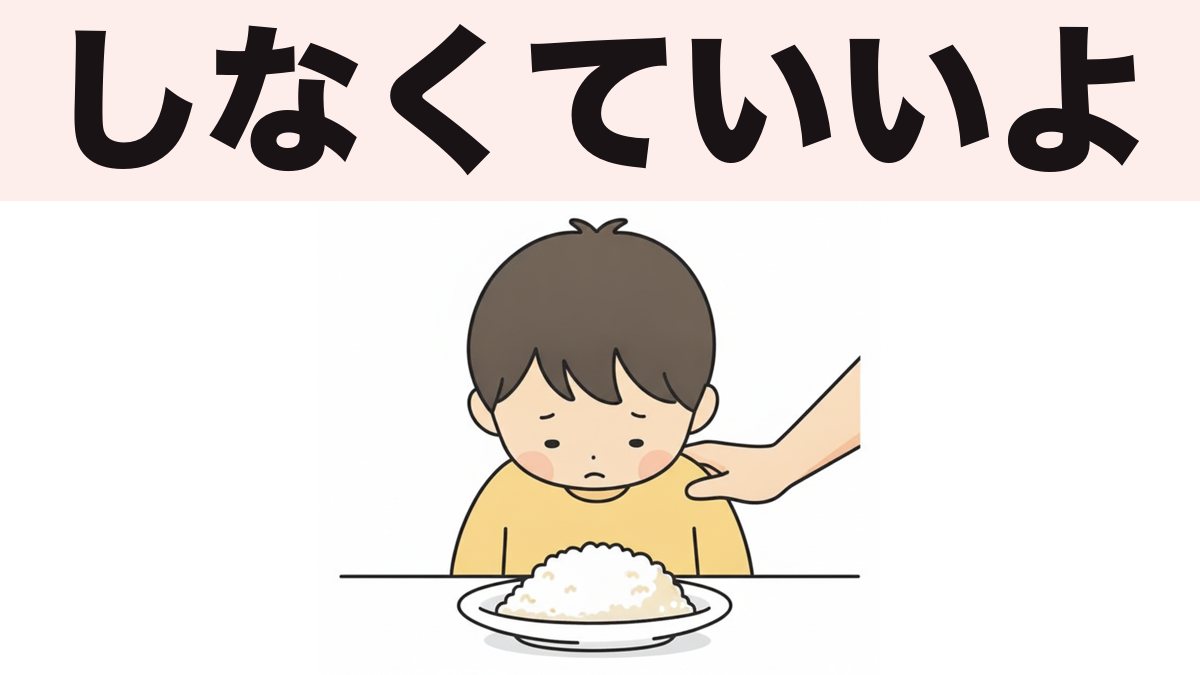
〜なくてもいい means "you don't have to" — literally "even if you don't do it, it's fine." It is the missing fourth corner of the permission-and-obligation square, and it is the one learners reach for last even though it is the kindest thing in the set.
「〜なくてもいい」は「しなくてもだいじょうぶ」という意味です。もとの形は「しなくても、いい」」「しない場合でも、いいです」です。4つの形の、最後の1つです。
Japanese builds four sentences out of the same small parts, and every learner meets them out of order and in separate chapters: may, must not, must, need not. Once you see them as one square, three of them stop needing memorisation at all.
The basics
How do you build it?
Take the negative form, drop the final い, add くてもいい.
| Verb | Negative | 〜なくてもいい |
|---|---|---|
| 行く | 行かない | 行かなくてもいい |
| 食べる | 食べない | 食べなくてもいい |
| する | しない | しなくてもいい |
| 来る | 来ない | 来なくてもいい |
| い-adj 高い | 高くない | 高くなくてもいい |
| Noun 学生だ | 学生じゃない | 学生じゃなくてもいい |
The middle step is worth naming: ない → なくて is just the te-form of a negative. Everything that attaches to the te-form attaches here too — which is why the pattern looks familiar the moment you notice it.
明日は来なくてもいいです。 — You don't have to come tomorrow. (polite) 心配しなくてもいいですよ。 — You don't need to worry. (polite, reassuring) 全部食べなくてもいいよ。 — You don't have to eat all of it. (casual, kind)
What does it literally mean?
も is "even," and いい is "fine." So 行かなくてもいい unpacks as "even in the case of not going, it's fine." This is exactly the same architecture as 〜てもいいですか for permission — the only difference is that the verb in front is negative.
That is worth sitting with for a second, because it means you are not learning a new grammar point. You are learning that a grammar point you already have works with negatives too.
How do you ask it as a question?
Add ですか. This is how you check whether something is optional.
これ、書かなくてもいいですか。 — Is it okay if I don't write this? (polite, asking whether it's required) 靴を脱がなくてもいいですか。 — Do I have to take my shoes off? (literally: is it fine if I don't?)
Note the shape of the English: Japanese asks "is not-doing okay?" where English asks "do I have to?" Learners often translate "do I have to?" as 〜しなければなりませんか, which is grammatical but lands heavier — it sounds like you are asking about a rule rather than about permission.
Beyond the basics
The square this completes
These four are the same two dice thrown different ways: is the verb positive or negative, and is the ending いい or いけない?
| ending in いい | ending in いけない | |
|---|---|---|
| Positive verb | 〜てもいい — you may | 〜てはいけない — you must not |
| Negative verb | 〜なくてもいい — you need not | 〜なくてはいけない — you must |
Read the bottom-right cell literally and the famous double negative stops being confusing: 行かなくてはいけない = "as for not going, that won't do" = you have to go. That is the same construction as 〜なければならない, just built on the te-form instead of the ば-form.
And the top-right cell is 〜てはいけません, prohibition. Four cells, two choices, one square. Most learners carry these as four unrelated phrases for a year before anyone draws the box.
Why does も vanish in real speech?
Because it does almost no work, and Japanese drops what it can. In conversation you will hear なくていい far more often than なくてもいい.
気にしなくていいよ。 — Don't worry about it. (casual — literally "you don't have to mind it") 謝らなくていい。 — You don't have to apologise. (casual) 無理しなくていいからね。 — Don't push yourself, okay? (casual, warm)
Keep も when you write, and especially in anything formal. Drop it freely when you speak. Nobody will think you have made a mistake either way — but a written 心配しなくていいです in a business email reads slightly casual where 心配なさらなくても大丈夫です would not.
What are the more formal and softer versions?
いい is the neutral middle. You can swap it out in both directions:
書かなくても大丈夫です。 — It's fine not to write it. (softer, warmer than いい) 書かなくても構いません。 — It doesn't matter if you don't write it. (formal, business) お書きにならなくても結構です。 — There's no need for you to write it. (very formal, customer-facing)
構いません and 結構です are the ones you will hear in shops, offices and announcements far more than you will say them. Recognising them is the point.
How does it sound in anime?
This is one of the warmest patterns in the language, so it turns up in exactly the scenes you would expect — someone telling someone else to stop carrying something alone:
一人で全部やらなくていい。 — You don't have to do it all alone. 泣かなくていいよ。 — You don't have to cry. 説明しなくていい。分かってる。 — You don't need to explain. I know.
Notice that all three drop も, and the last two drop です entirely. Spoken Japanese strips this pattern down to its bones, and the bones are still perfectly clear.
Common mistakes
- 行かないでもいい. Tempting, because ないで exists elsewhere, but the pattern needs the negative te-form: 行かなくてもいい.
- Mixing up なくてもいい and なくてはいけない. One character apart, opposite meanings. も+いい = you need not. は+いけない = you must. If you can only remember one anchor, remember that は is the particle of the strict one.
- Translating "you don't have to" as 〜する必要がないです and stopping there. 必要がない is correct but flat and factual — it states an absence of necessity. なくてもいい gives permission, which is what you usually mean when you are being kind.
- Forgetting the negative is an adjective. ない conjugates like an い-adjective, so it is なくて, never ないて.
- Using it to refuse. いいです on its own in reply to an offer means "no thank you" — but 食べなくてもいいです said to someone who just offered you food means "you don't have to eat," not "no thanks." To decline, use 結構です or いいえ、大丈夫です.
Practice
Answers are hidden — build yours first, then open. Questions 4 and 5 are a pair: one particle moves and the meaning flips to its opposite.
1. Make 行く into "you don't have to go."
Show answer
行かなくてもいい — negative 行かない, drop the い, add くてもいい. Politely: 行かなくてもいいです.
2. Make する into "you don't have to do it."
Show answer
しなくてもいい — する becomes しない, then しなくてもいい. This is the base of 心配しなくてもいい and 無理しなくてもいい.
3. Something is wrong here: 来ないでもいいです。
Show answer
来なくてもいいです — the pattern needs the negative te-form なくて. ないで is a different connector and does not work here.
4. What does 行かなくてもいい mean?
Show answer
You don't have to go — negative verb plus も plus いい. Going is optional.
5. What does 行かなくてはいけない mean?
Show answer
You have to go — same negative verb, but は plus いけない. "As for not going, that won't do." This is the pair to question 4: one particle, opposite meaning.
6. Ask politely whether you need to take your shoes off.
Show answer
靴を脱がなくてもいいですか — Japanese asks "is not-doing fine?" where English asks "do I have to?" Adding ですか to the pattern is the whole question.
7. What is 気にしなくていい missing, and does it matter?
Show answer
も, and no — も is dropped constantly in speech. 気にしなくてもいい and 気にしなくていい are the same sentence; the second is what you will actually hear.
8. Turn 書かなくてもいいです into business-formal.
Show answer
書かなくても構いません — 構いません replaces いいです for formal register. 結構です is a step above that again.
9. Make the い-adjective 新しい into "it doesn't have to be new."
Show answer
新しくなくてもいい — the negative of an い-adjective is 新しくない, which becomes 新しくなくて. Adjectives and nouns take this pattern too, not just verbs.
10. A friend is apologising too much. Say "you don't have to apologise" casually.
Show answer
謝らなくていいよ — 謝る → 謝らない → 謝らなくて, も dropped for speech, よ added to soften. This is one of the most useful sentences in the whole pattern.
FAQ
Is 〜なくてもいい the same as 〜する必要はない? Close, but not identical in feel. 必要はない states a fact: there is no need. なくてもいい gives permission: it's fine either way. When comforting someone, なくてもいい is warmer; in a manual or a rule, 必要はない is more precise.
Can I use it with nouns and adjectives? Yes. 学生じゃなくてもいいです ("you don't have to be a student"), 新しくなくてもいい ("it doesn't have to be new"). The pattern works on anything that has a negative form.
What is 〜ないでもいい — is that ever correct? You will occasionally see it, and some speakers use it, but it is not the standard form and it is not what a textbook or a test will accept. Produce なくてもいい.
How do I say "you don't have to, but you can if you want"? Stack the two halves of the square: 来なくてもいいですが、来てもいいですよ. It sounds exactly as balanced in Japanese as it does in English, and it is a very common way to make an invitation low-pressure.
Does 〜なくてもいい ever sound cold? It can, with the wrong tone. 来なくてもいいです said flatly can land as "don't bother coming." Adding よ (来なくてもいいですよ) or 大丈夫 keeps it firmly on the kind side, which is where this grammar normally lives.
Why does the negative use くて instead of ないで? Because ない is an い-adjective, not a verb, and い-adjectives make their te-form by changing い to くて (高い → 高くて). ない behaves the same way: ない → なくて. Once you see ない as an adjective, this stops being an exception.
Vocabulary from this article
Tap the block to select all of it, then copy. In Anki: File → Import, note type Basic, separator Tab — the first column becomes the front, the second the back.
明日	あした — tomorrow
来る	くる — to come
心配	しんぱい — worry
全部	ぜんぶ — all, everything
書く	かく — to write
靴	くつ — shoes
脱ぐ	ぬぐ — to take off (clothes, shoes)
気にする	きにする — to mind, to worry about
謝る	あやまる — to apologise
無理	むり — overdoing it, the impossible
大丈夫	だいじょうぶ — fine, all right
結構	けっこう — fine, "that's quite all right"
一人	ひとり — alone, one person
泣く	なく — to cry
説明	せつめい — explanation
必要	ひつよう — necessity, need
新しい	あたらしい — new
学生	がくせい — student
I'm Yuuki, a Japanese teacher based in Tokyo. I've taught on italki as a Top 1% teacher and watched over 1,500 anime. In lessons I draw the four-cell square on the screen more often than any other diagram — learners almost always arrive holding these as four unrelated phrases, and the square takes about ninety seconds to erase a year of confusion.
Sources: the author's own lessons and standard reference grammars.
日本語には、同じ部品でできた文が4つあります。「してもいい」「してはいけない」「しなければならない」「しなくてもいい」です。教科書では、べつべつのページに出ます。でも1つの四角にすると、3つは覚えなくてよくなります。
基本の形
どう作りますか?
否定の形を作って、最後の「い」をとって、「くてもいい」をつけます。
| 動詞 | 否定 | 〜なくてもいい |
|---|---|---|
| 行く | 行かない | 行かなくてもいい |
| 食べる | 食べない | 食べなくてもいい |
| する | しない | しなくてもいい |
| 来る | 来ない | 来なくてもいい |
| い形容詞 高い | 高くない | 高くなくてもいい |
| 名詞 学生だ | 学生じゃない | 学生じゃなくてもいい |
まん中の「ない → なくて」は、否定の「て形」です。「て形」につくものは、ここにもつきます。
明日は来なくてもいいです。 — You don't have to come tomorrow. 心配しなくてもいいですよ。 — You don't need to worry. 全部食べなくてもいいよ。 — You don't have to eat all of it.
もとの意味は何ですか?
「も」は「even」、「いい」は「fine」です。だから「行かなくてもいい」は「行かない場合でも、いいです」になります。
これは「〜てもいいですか」(きょかをもらう形)とまったく同じつくりです。前の動詞が否定になっただけです。新しい文法ではありません。
質問の形はどうなりますか?
「ですか」をつけます。「しなくてもいいか」を聞く形です。
これ、書かなくてもいいですか。 — Is it okay if I don't write this? 靴を脱がなくてもいいですか。 — Do I have to take my shoes off?
英語は「しなければいけませんか」と聞きます。日本語は「しなくてもいいですか」と聞きます。向きが反対です。
もう少し先へ
4つの四角
2つの選たくだけです。動詞が肯定か否定か。おわりが「いい」か「いけない」か。
| おわりが いい | おわりが いけない | |
|---|---|---|
| 肯定の動詞 | 〜てもいい — してもいいです | 〜てはいけない — してはいけません |
| 否定の動詞 | 〜なくてもいい — しなくてもいいです | 〜なくてはいけない — しなければいけません |
右下をそのまま読むと、有名な二重否定が分かります。「行かなくてはいけない」」「行かない、それはだめだ」」「行かなければならない」です。
4つのマス、2つの選たく、1つの四角です。多くの人は、1年くらいこれを「関係のない4つの言い方」として覚えています。
なぜ話す時に「も」が消えますか?
「も」はほとんど仕事をしていないからです。会話では「なくてもいい」より「なくていい」の方をよく聞きます。
気にしなくていいよ。 — Don't worry about it. 謝らなくていい。 — You don't have to apologise. 無理しなくていいからね。 — Don't push yourself, okay?
書く時は「も」を入れてください。話す時は落としていいです。
もっとていねいな形、やわらかい形はありますか?
「いい」はまん中です。両方へ動かせます。
書かなくても大丈夫です。 — It's fine not to write it. (やわらかい) 書かなくても構いません。 — It doesn't matter if you don't write it. (仕事の場面) お書きにならなくても結構です。 — There's no need for you to write it. (とてもていねい)
「構いません」と「結構です」は、お店や会社でよく聞きます。自分で言うより、聞いて分かることの方が大事です。
アニメではどう聞こえますか?
これは日本語でいちばんやさしい形の1つです。だから、そういう場面に出ます。
一人で全部やらなくていい。 — You don't have to do it all alone. 泣かなくていいよ。 — You don't have to cry. 説明しなくていい。分かってる。 — You don't need to explain. I know.
3つとも「も」がありません。後の2つは「です」もありません。それでも意味ははっきり分かります。
よくある間違い
- 行かないでもいい。 「ないで」は別のつなぎ方です。「行かなくてもいい」にします。
- 「なくてもいい」と「なくてはいけない」を混ぜること。 1文字ちがいで、意味が反対です。「は」がつく方がきびしい方です。
- 「必要がないです」だけで終わること。 正しいですが、事実を言うだけです。「なくてもいい」はきょかをあげるので、やさしく聞こえます。
- 「ない」を動詞だと思うこと。 「ない」は「い形容詞」なので、「なくて」です。「ないて」ではありません。
- ことわる時に使うこと。 食べ物をすすめられて「食べなくてもいいです」と言うと、「あなたは食べなくていい」になります。ことわる時は「結構です」「大丈夫です」です。
練習
答えはかくれています。まず自分の答えを作ってから開いてください。4番と5番は対になっています。
1. 「行く」を「行かなくてもいい」の形にしてください。
答えを見る
行かなくてもいい — 「行かない」の「い」をとって「くてもいい」をつけます。ていねいには「行かなくてもいいです」。
2. 「する」を同じ形にしてください。
答えを見る
しなくてもいい — 「する」は「しない」になります。「心配しなくてもいい」「無理しなくてもいい」のもとの形です。
3. 直してください: 来ないでもいいです。
答えを見る
来なくてもいいです — この形には否定の「て形」(なくて)が必要です。「ないで」は別のつなぎ方です。
4. 「行かなくてもいい」はどんな意味ですか。
答えを見る
行かなくてもだいじょうぶ — 否定+「も」+「いい」です。行くのは自由です。
5. 「行かなくてはいけない」はどんな意味ですか。
答えを見る
行かなければならない — 同じ否定の動詞ですが、「は」+「いけない」です。「行かない、それはだめだ」という意味です。4番と反対になります。
6. 「靴を脱ぐ必要がありますか」をこの形で聞いてください。
答えを見る
靴を脱がなくてもいいですか — 日本語は「しなくてもいいですか」と聞きます。「ですか」をつけるだけです。
7. 「気にしなくていい」には何がありませんか。問題はありますか。
答えを見る
「も」がありません。問題はありません — 話す時はよく落とします。どちらも同じ文です。
8. 「書かなくてもいいです」を仕事の場面の形にしてください。
答えを見る
書かなくても構いません — 「構いません」が「いいです」のかわりになります。もっとていねいなら「結構です」です。
9. 「新しい」を使って「新しくなくてもだいじょうぶ」と言ってください。
答えを見る
新しくなくてもいい — 「い形容詞」の否定は「新しくない」なので、「新しくなくて」になります。動詞だけの形ではありません。
10. 友だちがあやまりすぎています。やさしく止めてください。
答えを見る
謝らなくていいよ — 「謝る」→「謝らない」→「謝らなくて」。話す形なので「も」を落として、「よ」でやわらかくします。
よくある質問
「〜なくてもいい」と「〜する必要はない」は同じですか。 近いですが、気もちがちがいます。「必要はない」は事実を言います。「なくてもいい」はきょかをあげます。人をなぐさめる時は「なくてもいい」の方がやさしいです。
名詞や形容詞にも使えますか。 使えます。「学生じゃなくてもいいです」「新しくなくてもいい」。否定の形があるものなら使えます。
「〜ないでもいい」は正しいですか。 見ることはありますが、ひょうじゅんの形ではありません。試験でも×になります。「なくてもいい」を使ってください。
「しなくてもいいけど、してもいい」と言いたい時は? 四角の2つを並べます。「来なくてもいいですが、来てもいいですよ」。さそいを軽くする、とても自然な言い方です。
「〜なくてもいい」が冷たく聞こえることはありますか。 声によってはあります。「来なくてもいいです」を平らに言うと「来なくていいよ(来るな)」に聞こえます。「よ」や「大丈夫」をつけると、やさしいままです。
なぜ「ないで」ではなく「なくて」ですか。 「ない」は動詞ではなく「い形容詞」だからです。「い形容詞」の「て形」は「い」を「くて」にします(高い → 高くて)。「ない」も同じで「なくて」になります。
この記事に出た単語
ブロックをタップすると全部選べます。そのままコピーしてください。Anki では ファイル → 読み込み、ノートタイプ 基本、区切り タブ。1列目が表、2列目が裏になります。
明日	あした — tomorrow
来る	くる — to come
心配	しんぱい — worry
全部	ぜんぶ — all, everything
書く	かく — to write
靴	くつ — shoes
脱ぐ	ぬぐ — to take off (clothes, shoes)
気にする	きにする — to mind, to worry about
謝る	あやまる — to apologise
無理	むり — overdoing it, the impossible
大丈夫	だいじょうぶ — fine, all right
結構	けっこう — fine, "that's quite all right"
一人	ひとり — alone, one person
泣く	なく — to cry
説明	せつめい — explanation
必要	ひつよう — necessity, need
新しい	あたらしい — new
学生	がくせい — student
私はユウキです。東京で日本語を教えています。 italki の Top 1% の先生で、アニメは1,500本以上見ました。レッスンでは、この4つの四角をいちばんよく画面に書きます。みんな「関係のない4つの言い方」として持ってきますが、四角にすると1分半で1年分のまよいが消えます。
More drills like the ones above, plus a timed JLPT-style mock test: Practice · N4上のような練習問題と、時間つきのJLPT形式のもぎ試験: 練習ページ · N4
Want to try this in a real conversation?
本当の会話で、ためしてみませんか?
30-minute trial lesson, $13. Times shown in your own timezone.
30分の体験レッスン、$13。時間はあなたのタイムゾーンで表示されます。
Book a trial lesson · $13