てはいけません: how strong is "you must not" in Japanese?てはいけません: 「だめ」の強さのちがい
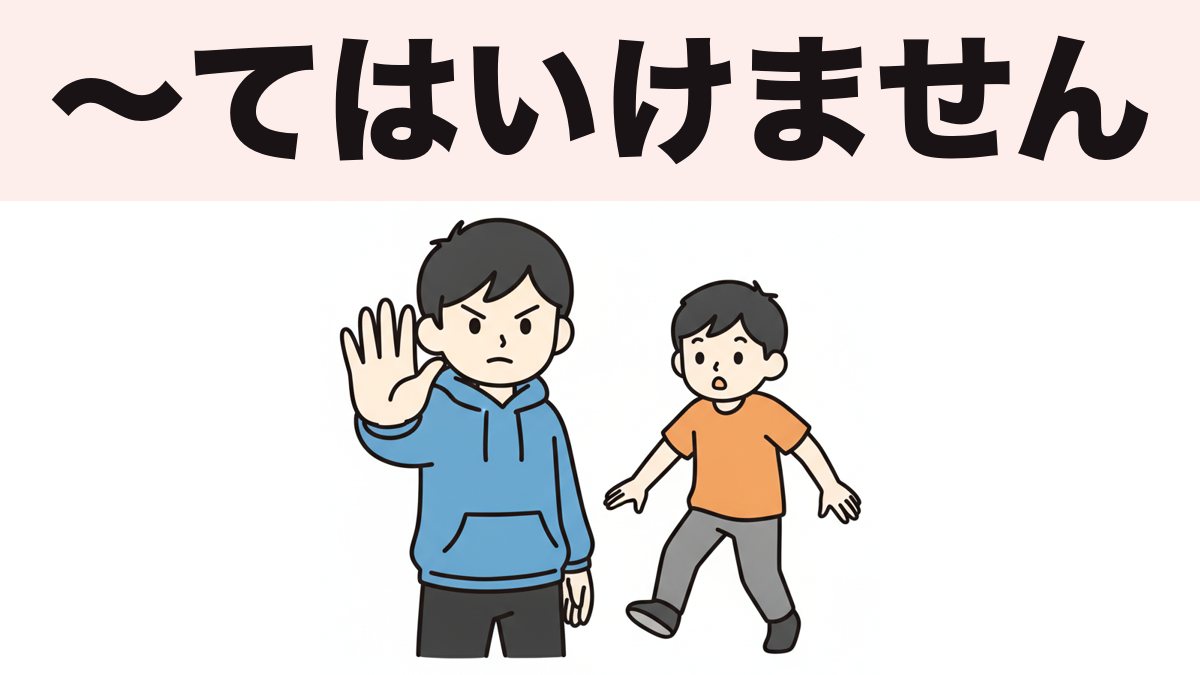
〜てはいけません says an action is not permitted — it's a rule, not a request, and which ending you attach decides exactly how heavy that rule lands.
〜てはいけません は、してはいけないことを伝える形です。お願いではなく、ルールです。文の終わり方によって、その強さが変わります。
English mostly has one lever for this: "don't," maybe dressed up with "please" or "must." Japanese has a whole ladder, from a sign on a museum wall down to a character screaming at their rival mid-fight, and mixing up the rungs is one of the more noticeable mistakes a learner can make — not wrong, exactly, just tonally off.
The basics
What does てはいけません literally mean?
Take it apart the same way as its cousin てもいいですか:
- て — te-form, connecting the action
- は — a topic marker here, putting weight on the verb
- いけません — literally "cannot go," used to mean "is not permissible"
Together: "as for doing this — it cannot go" → "you must not do this." It's grammatically the mirror image of てもいいですか, which is exactly why the two are usually taught side by side.
ここで写真を撮ってはいけません。 — You must not take photos here. (a posted rule, formal) 廊下を走ってはいけません。 — You mustn't run in the hallway. (a school rule)
How do you build it from any verb?
Te-form of the verb + はいけません. Same mechanism as the permission form, opposite meaning.
お酒を飲んではいけません。 — You are not allowed to drink alcohol. (formal, a stated rule) うそをついてはいけません。 — You must not lie. (a moral rule, can be said to anyone)
Where will you actually see and hear it?
Signage, school rules, legal or official language, and parents laying down the law. It is the register of a rulebook, not a conversation between friends.
芝生に入ってはいけません。 — Do not walk on the grass. (park sign) 携帯電話を使ってはいけません。 — Mobile phones must not be used. (posted rule, e.g. in a theater or hospital)
Beyond the basics
How does it shrink in casual speech?
てはいけません contracts hard when spoken casually — は almost disappears into ちゃ (or じゃ after a nasal-ending verb), and いけません drops to だめ.
ここに座っちゃだめだよ。 — You can't sit there. (casual, てはいけない → ちゃだめ) 忘れちゃだめ。 — Don't forget. (casual reminder, not a formal rule — just insistence) うそをついちゃいけないよ。 — You shouldn't lie, you know. (casual, softer moral nudge, not a courtroom)
だめ on its own is the word you'll hear the most in daily life by a wide margin — parents to kids, friends to friends, pets included. It is not rude; it's just the ordinary version of "no, don't."
What's a softer, more polite way to say "please don't"?
〜ないでください asks someone not to do something — it's a request, not a proclamation of a rule, and it reads as noticeably gentler than てはいけません.
ここに触らないでください。 — Please don't touch this. (polite request, e.g. in a gallery) 心配しないでください。 — Please don't worry. (polite, reassuring — not a prohibition at all in feel)
The difference in weight matters: てはいけません sounds like it's citing a rule that exists whether you're there or not. ないでください sounds like a specific person asking you, right now, for this one thing.
What about the imperative you hear anime characters shout?
The bare negative imperative — verb (dictionary form) + な — is the sharpest, least filtered "don't" in the language, and it shows up constantly in anime because characters yell it at each other mid-crisis.
来るな! — Don't come! (shouted, imperative, no cushioning at all) 死ぬんじゃない! — Don't you dare die! (んじゃない as an emphatic command, not a question)
That んじゃない is worth flagging on its own: outside this pattern, んじゃない usually softens a statement into "isn't it...?" Attached to an imperative-feeling context like this, it flips into something closer to a furious command. Context, not the words themselves, tells you which one you're hearing — a pattern that shows up across Japanese that sounds rude in anime generally.
Does てはいけません ever sound gentle?
Rarely — but it softens slightly with いけません replaced by いけないよ, or with an explanation tacked on afterward, which turns a bare rule into something closer to reasoning with someone.
無理してはいけないよ。体を大事にしてね。 — You mustn't push yourself too hard. Take care of yourself, okay.
The よ at the end and the caring follow-up do the softening — the grammar itself stays exactly as firm as ever. This is worth noticing: in Japanese, tone often lives in what surrounds a sentence, not in the core grammar of the sentence itself.
How to practise it
Pick five household or classroom rules you already know in English — no shoes inside, no phones during class, don't feed the cat — and build each one twice: once as the formal てはいけません and once as casual ちゃだめ. Say them out loud in both registers so your mouth learns which one fits which relationship before you need it in the moment.
Then listen for it the next time a scene in anime gets tense. A shouted な or んじゃない almost always marks the emotional peak of the scene — once you can hear it as grammar rather than noise, those moments land with much more weight.
Common mistakes
- Confusing てはいけません with なくてはいけません. These look almost identical and mean close to opposite things. てはいけません = must not do it (prohibition). なくてはいけません = must do it (obligation — a double negative that cancels out). 行ってはいけません is "you must not go"; 行かなくてはいけません is "you must go." This single extra なく flips the entire sentence, and it is the single most common trip-up with this grammar point.
- Treating だめ as rude. It isn't. だめ is the everyday word; てはいけません is the formal one. Using the formal version with a close friend is the actual tonal mistake — it sounds like you're reading them a rulebook.
- Using てはいけません for a one-off personal request. "Please don't touch my bag" is ないでください territory, not てはいけません — that phrasing is reserved for standing rules, not situational asks.
- Missing that the polarity flips with the negative form. Because てもいいですか and なくてもいいですか (optional) look so similar to てはいけません and なくてはいけません (obligatory), it's easy to answer the wrong question entirely if you're translating word by word instead of reading the whole pattern.
- Assuming だめ needs an explanation attached every time. It doesn't. だめ! shouted on its own, with no verb at all, is a perfectly complete sentence in Japanese — the equivalent of a sharp "no!" in English. Learners often keep reaching for the full grammatical form out of habit, when native speakers would just say the one word.
The strength ladder
| Form | Feel | Example |
|---|---|---|
| 〜てはいけません | Formal, stated rule | 走ってはいけません |
| 〜てはだめです | Standard polite, still firm | 走ってはだめです |
| 〜ちゃだめ | Casual, everyday | 走っちゃだめ |
| 〜ないでください | Polite request, softer | 走らないでください |
| verb + な | Shouted, no cushioning at all | 走るな! |
FAQ
What's the actual difference between てはいけません and だめです? Mostly formality. てはいけません sounds like it's quoting a written or spoken rule; だめ is what you'd actually say out loud to someone in front of you. Both mean the same thing underneath.
Is てはいけません too stiff to say to a friend? For a one-off situation, yes — it can sound like you're scolding them. だめ or ちゃだめ covers the same ground far more naturally between friends.
How is なくてはいけません different? It's obligation, not prohibition — "must do," not "must not do." The なく in the middle is a negative attached to the verb itself (行か-なく, "not going"), and the whole construction negates that negative back into a requirement: 行かなくてはいけません = "you must go."
What does 〜んじゃない mean when it's shouted? Normally んじゃない softens a statement into something closer to "isn't it...?" But attached after an imperative-feeling verb form in a high-emotion moment, as in 死ぬんじゃない, it reads as an urgent, emphatic command rather than a question.
Is ないでください the same thing as てはいけません? No — ないでください is a specific, polite request aimed at one person in one moment. てはいけません sounds like a standing rule that would apply to anyone, said or unsaid.
Can you use てはいけません about yourself? Yes — 忘れてはいけない ("I must not forget") is a completely normal way to remind yourself of something, usually in the plain form rather than the polite ですます one.
Does adding よ at the end make it softer or harsher? Softer, usually. だめだよ said to a friend reads as caring rather than scolding — the よ signals "I'm telling you this because I mean it kindly," not "I'm laying down the law." Tone of voice still matters more than the grammar here.
I'm Yuuki, a Japanese teacher based in Tokyo. I teach on italki as a Top 1% teacher and I've watched over 1,500 anime, which is where most students first hear this ladder in action — usually as a character screams な at someone mid-episode.
Sources: the author's own lessons and standard reference grammars.
英語では「don't」1つで、だいたい済みます。日本語には、はしごのような段階があります。美術館のかべに貼ってある注意書きから、アニメでキャラクターが戦いながら叫ぶ言葉まで。この段階をまちがえると、まちがいというより、少し変な空気になります。
基本の形
てはいけません の意味は?
てもいいですかと同じように分けてみます。
- て — て形。動作をつなぐ
- は — ここでは、その動作を強調する働き
- いけません — 直訳すると「行けません」。「してはならない」という意味
合わせると、「これをすることは、行けない」→「してはいけない」という意味になります。文法的には、てもいいですか のちょうど反対で、だからこの2つはいつもセットで教えられます。
ここで写真を撮ってはいけません。 — You must not take photos here. (貼り紙・ていねい) 廊下を走ってはいけません。 — You mustn't run in the hallway. (学校のルール)
どんな動詞にも使える作り方は?
動詞の「て形」に「はいけません」をつけます。許可の形と同じ作り方で、意味は反対です。
お酒を飲んではいけません。 — You are not allowed to drink alcohol. (ていねい・ルール) うそをついてはいけません。 — You must not lie. (道徳的なルール・誰にでも言える)
どこで実際に見たり聞いたりする?
貼り紙、学校のルール、法律的な文章、親が子どもに言うときなどです。友だち同士の会話の言い方ではありません。
芝生に入ってはいけません。 — Do not walk on the grass. (公園の注意書き) 携帯電話を使ってはいけません。 — Mobile phones must not be used. (劇場や病院の注意書き)
もっと深く
カジュアルにすると、どう変わる?
話しことばでは、「は」が「ちゃ」(鼻音の後は「じゃ」)に変わり、「いけません」が「だめ」に変わります。
ここに座っちゃだめだよ。 — You can't sit there. (カジュアル・てはいけない→ちゃだめ) 忘れちゃだめ。 — Don't forget. (カジュアルな念押し・正式なルールではない) うそをついちゃいけないよ。 — You shouldn't lie, you know. (カジュアル・やわらかい注意)
「だめ」だけで、日常でいちばんよく聞く言い方です。親が子どもに、友だちが友だちに、ペットにも使います。失礼な言葉ではなく、ただの「してはいけない」のふつうの形です。
もっとやわらかい「しないでください」は?
〜ないでください は、相手に「しないで」とお願いする形です。ルールを宣言する言い方より、はっきりやわらかく聞こえます。
ここに触らないでください。 — Please don't touch this. (ていねいなお願い・ギャラリーなど) 心配しないでください。 — Please don't worry. (ていねい・むしろ禁止という感じではない)
重さのちがいに注目してください。てはいけません は、その人がいてもいなくても存在する「ルール」を言っているように聞こえます。ないでください は、今この瞬間、目の前の人が1つのことをお願いしているように聞こえます。
アニメで叫ぶ形は?
動詞の辞書形+「な」は、いちばん強く、いちばんやわらげていない「するな」です。アニメでキャラクターが緊迫した場面で叫ぶときによく出てきます。
来るな! — Don't come! (叫ぶ・やわらげなし) 死ぬんじゃない! — Don't you dare die! (んじゃない が強い命令になる)
この「んじゃない」は特に注目です。ふつう「んじゃない」は「〜じゃない?」「〜だよね?」のように文をやわらげます。でも、こういう命令のような場面では、怒った命令に近くなります。ことば自体ではなく、場面が、どちらの意味かを教えてくれます。この考え方は、アニメの日本語が失礼に聞こえる理由の記事全体にも通じます。
てはいけません が、やさしく聞こえることはある?
めったにありませんが、「いけません」を「いけないよ」に変えたり、後ろに理由を足したりすると、ルールというより、相手を思って伝えている感じに近づきます。
無理してはいけないよ。体を大事にしてね。 — You mustn't push yourself too hard. Take care of yourself, okay.
やわらかくしているのは「よ」と、後ろの気づかいのことばです。文法自体は、いつもと同じ強さのままです。日本語では、やわらかさが文の中心ではなく、まわりのことばに乗っていることが多いのです。
練習のしかた
自分がすでに知っている家や学校のルールを5つ選んでください(家の中は土足禁止、授業中はスマホ禁止、猫にエサをあげない、など)。それぞれを2回作ってみてください。ていねいな「てはいけません」と、カジュアルな「ちゃだめ」です。声に出して両方言うと、どちらがどの関係に合うか、体で覚えられます。
次に、アニメの緊迫した場面を見るとき、耳をすませてください。叫ばれる「な」や「んじゃない」は、たいていその場面のいちばん盛り上がるところです。ノイズではなく文法として聞こえるようになると、そのシーンがもっと重く感じられます。
よくあるまちがい
- てはいけません と なくてはいけません を混同する。 形が似ていますが、意味はほぼ反対です。てはいけませんてはいけませんしてはいけない(禁止)。なくてはいけませんなくてはいけませんしなければならない(義務・二重否定)。「行ってはいけません」は「行ってはだめ」、「行かなくてはいけません」は「行かなければならない」です。この「なく」が1つ入るだけで、文の意味がひっくり返ります。いちばんよくあるまちがいです。
- だめ を失礼な言葉だと思ってしまう。 そんなことはありません。だめ は日常のことばで、てはいけません は正式なことばです。親しい友だちに正式な形を使うほうが、実は変に聞こえます。まるでルールブックを読み上げているようです。
- てはいけません を、1回だけのお願いに使ってしまう。 「私のかばんに触らないで」は、ないでください の場面であって、てはいけません の場面ではありません。てはいけません は、ずっと続くルールのための言い方です。
- 否定の形で意味が反対になることを忘れる。 てもいいですか と なくてもいいですか(してもしなくてもいい)が、てはいけません と なくてはいけません(しなければならない)とよく似ているので、単語ごとに訳していると、まったくちがう質問に答えてしまうことがあります。
- だめ には毎回説明が必要だと思ってしまう。 そんなことはありません。「だめ!」だけで、動詞なしでも完全な文です。英語の「no!」と同じです。学習者は、つい正式な形を使いたくなりますが、実際の話者は、ひとことで済ませます。
強さの段階
| 形 | 感じ | 例 |
|---|---|---|
| 〜てはいけません | 正式・宣言されたルール | 走ってはいけません |
| 〜てはだめです | 標準のていねい・まだ強い | 走ってはだめです |
| 〜ちゃだめ | カジュアル・日常 | 走っちゃだめ |
| 〜ないでください | ていねいなお願い・やわらかい | 走らないでください |
| 動詞+な | 叫ぶ・まったくやわらげない | 走るな! |
FAQ
てはいけません と だめです の本当のちがいは? 主にていねいさのレベルです。てはいけません は、書かれた、または言われたルールを引用しているように聞こえます。だめ は、目の前の人に実際に口で言うことばです。意味そのものは同じです。
友だちに てはいけません は堅すぎる? その場だけの状況なら、はい。叱っているように聞こえることがあります。だめ や ちゃだめ のほうが、友だち同士では自然です。
なくてはいけません はどうちがう? 禁止ではなく義務です。「してはだめ」ではなく「しなければならない」です。真ん中の「なく」は動詞自体につく否定(行か-なくなく「行かない」)で、全体としてその否定をもう一度否定して、必要だという意味になります。行かなくてはいけませんなくてはいけません「行かなければならない」。
叫ばれる「んじゃない」はどういう意味? ふつう「んじゃない」は文をやわらげて「〜じゃない?」に近づけます。でも、感情が高まった場面で命令のような形の後につくと、死ぬんじゃない のように、質問ではなく、強い命令に聞こえます。
ないでください は てはいけません と同じ? ちがいます。ないでください は、その瞬間、1人の相手に向けた具体的なお願いです。てはいけません は、言っても言わなくても誰にでも当てはまる、ルールのように聞こえます。
自分自身について てはいけません を使える? 使えます。「忘れてはいけない」(忘れちゃいけない)は、自分に何かを思い出させる、ごくふつうの言い方です。ていねいな「ですます」形より、ふつう形で使われることが多いです。
最後に「よ」をつけると、やわらかくなる?きつくなる? たいていやわらかくなります。友だちに「だめだよ」と言うのは、叱っているというより、気づかっている感じです。「よ」は「大事だから言ってるよ」というサインで、「規則だから」というサインではありません。声のトーンのほうが、文法より大事です。
More drills like the ones above, plus a timed JLPT-style mock test: Practice · N5上のような練習問題と、時間つきのJLPT形式のもぎ試験: 練習ページ · N5
Want to try this in a real conversation?
本当の会話で、ためしてみませんか?
30-minute trial lesson, $13. Times shown in your own timezone.
30分の体験レッスン、$13。時間はあなたのタイムゾーンで表示されます。
Book a trial lesson · $13