なければならない: the three ways Japanese says "I have toなければならない: 「〜しなければいけない」の3つの言い方
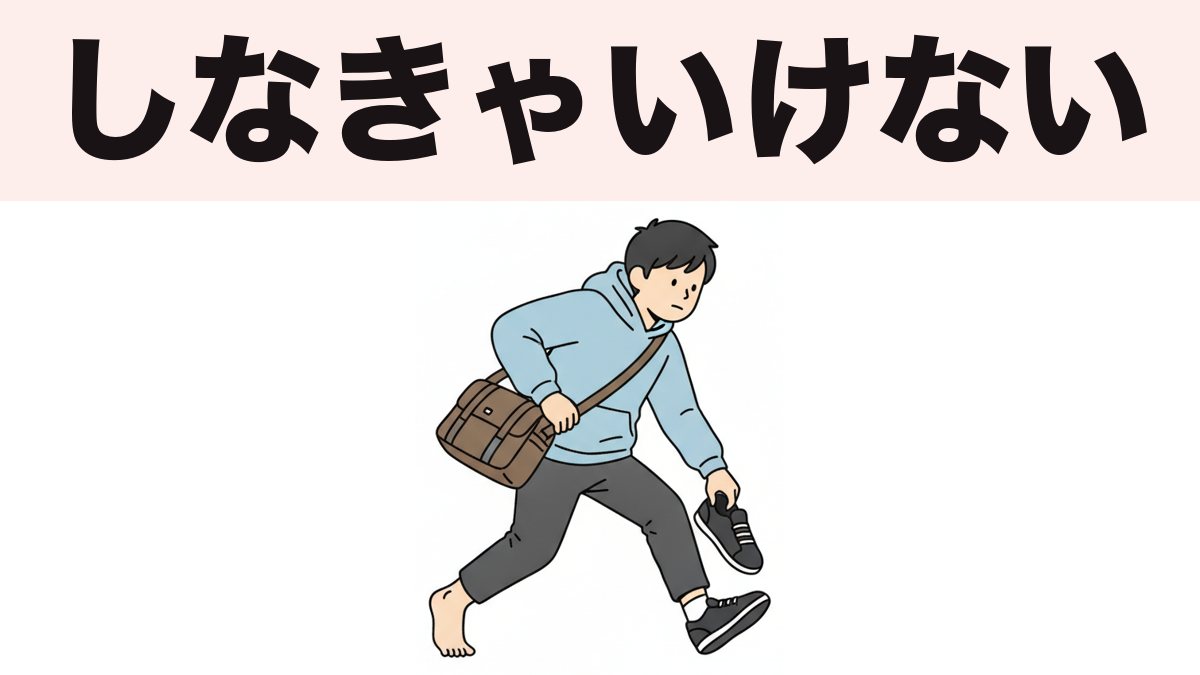
なければならない means "must," but it is built as a double negative — literally "if you do not do this, it will not do" — and in real speech it almost always shrinks to なきゃ.
「なければならない」は「〜しなければいけない」という意味です。でも作りは二重否定で、「しなければ、だめになる」という形です。そして会話では、ほとんど「なきゃ」に短くなります。
There are three standard ways to say "I have to" in Japanese, textbooks usually introduce them on the same page, and learners come away assuming they are interchangeable. They mostly are — but not entirely, and the differences are exactly the kind that make a sentence sound off without anyone being able to say why.
The basics
What does なければならない literally mean?
Pull it apart and the logic is not "must" at all:
- 〜なければ — the conditional form of the negative: "if [you] don't..."
- ならない — "it won't become / it won't do"
So 行かなければならない is literally "if I don't go, it won't do." Japanese expresses obligation by describing the unacceptability of the alternative, which is why it feels so long for such a simple idea.
明日、早く起きなければなりません。 — I have to get up early tomorrow. (polite, everyday obligation) ビザを申請しなければなりません。 — I have to apply for a visa. (polite, rule imposed from outside)
How do you build it from any verb?
Take the negative form, drop the final い, and add ければならない.
行く → 行かない → 行かなければならない 食べる → 食べない → 食べなければならない する → しない → しなければならない
The polite version swaps ならない for なりません. That is the whole formula — and note that the conjugation work all happens in the negative form, so if your negatives are solid, this costs you nothing new.
薬を飲まなければなりません。 — I have to take my medicine. (polite) 明日までに終わらせなければなりません。 — I have to finish it by tomorrow. (polite, deadline)
What is the difference between ならない and いけない?
Almost nothing in meaning, and a little in register: ならない is stiffer and more written, いけない is the everyday spoken choice.
Both 行かなければならない and 行かなければいけない mean "I have to go." If you hear a difference at all, it is that ならない leans toward rules and general truths (signage, contracts, "one must...") while いけない leans toward this specific situation and this specific person. Nobody will misunderstand you either way.
Beyond the basics
How does it shrink in real speech?
Almost nobody says the full form in conversation. なければ contracts to なきゃ, and then the whole second half tends to fall off the end.
行かなきゃ。 — I gotta go. (casual, second half dropped entirely) もう寝なきゃ。 — I really should sleep. (casual, said to yourself) 宿題やらなきゃいけないんだ。 — I've got homework I have to do. (casual, second half kept for emphasis)
Dropping なりません/いけません and stopping at なきゃ is not sloppy — it is the normal spoken form, and it is what you will hear in nearly every anime scene where a character has to leave. The same happens with the なくては branch, which contracts to なくちゃ: 食べなくちゃ. When to use these versus the full polite form is the usual register question — see casual vs. polite Japanese.
なければ, なくては, ないと — which one?
All three mean "have to." They differ in how tightly they attach to the moment.
| Form | Feel | Typical use |
|---|---|---|
| 〜なければならない | Formal, written, rule-like | Signage, documents, general obligations |
| 〜なければいけない | Standard polite, situation-specific | Talking about your own schedule |
| 〜なくてはいけない | Same as above, slightly softer | Everyday conversation |
| 〜なきゃ (contraction) | Casual, spoken | Talking to yourself or a friend |
| 〜なくちゃ (contraction) | Casual, spoken, a bit softer | Same, slightly lighter tone |
| 〜ないと | Casual, implies a bad consequence | "I have to, or else..." |
ないと is the one with its own flavour. It carries an unspoken "...or something bad happens," which is why 急がないと lands as "we'd better hurry" rather than a neutral statement of obligation.
急がないと、電車に乗り遅れます。 — If we don't hurry, we'll miss the train. (polite, consequence stated) 急がないと。 — We'd better hurry. (casual, consequence left implied)
How is this different from 〜方がいい?
なければならない is obligation; 〜方がいい is advice. The gap between them is wider than the English "have to" and "should" suggests.
病院に行かなければなりません。 — I have to go to the hospital. (no real choice) 病院に行った方がいいですよ。 — You should go to the hospital. (recommendation, choice remains)
Learners tend to overuse なければならない on other people, which comes out heavier than intended — telling someone 勉強しなければなりません sounds like you are quoting a regulation at them. For suggestions to another person, 方がいい is almost always the right register. Comparing options rather than obliging them is a different structure again, covered in AよりBの方が.
Where will you actually read the full form?
In writing aimed at everyone rather than at you — which is exactly the register where ならない beats いけない.
Because ならない states a general truth rather than a personal situation, it is the default in rules, contracts, notices, and station signage. Once you know the shape, public Japanese becomes noticeably more readable: the long obligation ending is a signal that you are being told a rule, not given advice.
利用者は身分証を提示しなければならない。 — Users must present identification. (written rule, plain form, no ます) 申請は3月末までに提出しなければなりません。 — Applications must be submitted by the end of March. (polite written notice)
Note the plain ending on the first one. Written rules drop ます entirely, which can read as blunt to a learner used to polite speech — it is not rudeness, it is the register of documents.
What is the negative — how do you say "I don't have to"?
This is where the double negative catches people. "I don't have to" is not made by negating ならない — it is a separate pattern: 〜なくてもいい.
明日は行かなくてもいいです。 — I don't have to go tomorrow. (the action is optional) 靴を脱がなくてもいいですか。 — Is it okay if I don't take my shoes off? (asking whether it is optional)
And the opposite of permission is prohibition, not obligation — "you must not" is 〜てはいけません, a different construction entirely. Three separate ideas that English blurs together with "have to," "don't have to," and "must not" each get their own grammar in Japanese, which is genuinely easier once the wires are untangled.
Common mistakes
- Negating ならない to mean "don't have to." 行かなければなりません doesn't flip; "I don't have to go" is 行かなくてもいいです.
- Dropping the い before ければ. It is 行かなければ, not 行かないければ — the negative い is replaced, not kept.
- Using it on other people freely. 〜方がいい is the polite way to suggest. なければなりません aimed at someone else reads as citing a rule.
- Mixing the branches. なければ + いけない and なくては + いけない are both fine; なければ + なくちゃ is not a thing.
- Using the full form in casual speech. Saying 行かなければなりません to a friend is like announcing "I am obliged to depart." The answer is 行かなきゃ.
- Assuming なきゃ is incomplete. A sentence that ends at なきゃ is finished. Nothing is missing.
How to practise it
Narrate your actual day in the casual form: 起きなきゃ, メール送らなきゃ, 買い物行かなきゃ. Because the pattern is built on the negative form, this drill quietly strengthens your negatives too — and the contraction is the version you will actually need in conversation, so practising the full form exclusively is backwards.
Then, once a day, convert one of them into the polite full form as if telling a stranger why you can't stay. That is the register you need for a landlord, a doctor, or a manager, and it needs to be available on demand rather than assembled from parts.
Practice
Answers are hidden — build yours first, then open. Questions 4 and 5 are a pair: the same obligation, two registers.
1. Build the なければならない form of 行く, step by step.
Show answer
行く → 行かない → 行かなければならない — take the negative, drop the final い, add ければならない. All the conjugation work happens in the negative form.
2. Say "I have to get up early tomorrow," politely.
Show answer
明日、早く起きなければなりません — the polite version swaps ならない for なりません.
3. What does 行かなければならない literally say?
Show answer
"If I don't go, it won't do" — Japanese expresses obligation by describing the unacceptability of the alternative, which is why the form is so long.
4. Say "I have to go," politely and in full.
Show answer
行かなければなりません — the full form, for writing and formal speech.
5. Say the same thing to a friend.
Show answer
行かなきゃ — なければ contracts to なきゃ and the second half falls off entirely. This is the pair to question 4, and the casual one is what you will actually hear.
6. What is the なくては branch's contraction?
Show answer
なくちゃ — 食べなくちゃ. The same collapse, on the other branch of the form.
7. What is the difference between ならない and いけない here?
Show answer
Register, not meaning — ならない is stiffer and leans toward rules; いけない is the everyday spoken choice for this situation and this person.
8. Say "I have to take my medicine."
Show answer
薬を飲まなければなりません — 飲む → 飲まない → 飲まなければ.
9. Say "I have to finish it by tomorrow."
Show answer
明日までに終わらせなければなりません — までに for a deadline, and the causative 終わらせる because you are the one bringing it to an end.
10. Why is this form so long for such a simple idea?
Show answer
Because it is a double negative — "if not X, it will not do." The length is the structure, not decoration.
FAQ
Is なければならない too formal for conversation? For talking with friends, yes — it sounds like reading from a manual. It is correct and appropriate in writing, announcements, and formal explanations. In speech, なきゃ or なくちゃ do the job.
Can I always replace it with なきゃ? In casual speech, yes. Not in writing, and not in a polite conversation with someone senior to you, where you want 〜なければなりません or 〜なくてはいけません.
Does it work with adjectives and nouns? Yes. 安くなければならない ("it has to be cheap"), 学生でなければならない ("you have to be a student"). The pattern runs off the negative form, so anything that has a negative can take it.
What is the past tense? Change the ending: 行かなければならなかった / 行かなきゃいけなかった — "I had to go." The first half never changes tense; the obligation word carries it, exactly like other te-form-based patterns.
Is 〜ないといけない the same thing? Close, with a nudge of consequence. ないと implies "...or there's trouble," so it suits urgency — 急がないと — better than neutral scheduling.
Why does such a simple idea need such a long form? Because Japanese states obligation by ruling out the alternative rather than naming the duty. It is the same instinct behind asking permission with 〜てもいいですか — go around the direct statement, and let the structure carry the politeness.
Vocabulary from this article
Tap the block to select all of it, then copy. In Anki: File → Import, note type Basic, separator Tab — the first column becomes the front, the second the back.
行く	いく — to go
食べる	たべる — to eat
明日	あした — tomorrow
早く	はやく — early
起きる	おきる — to get up
申請	しんせい — application
薬	くすり — medicine
飲む	のむ — to drink, to take (medicine)
終わる	おわる — to finish
宿題	しゅくだい — homework
寝る	ねる — to sleep
出す	だす — to submit
I'm Yuuki, a Japanese teacher based in Tokyo. I've taught on italki as a Top 1% teacher and watched over 1,500 anime, and this is a grammar point where students almost always learn the long polite form first and then can't recognize なきゃ when they hear it — so I teach both directions from day one.
Sources: the author's own lessons and standard reference grammars.
日本語で「〜しなければいけない」を言う形は、標準で3つあります。教科書は、だいたい同じページで3つ全部を出します。だから多くの人は「どれも同じ」と思います。ほとんど同じです。でも、全部同じではありません。そして、そのちがいは「なんとなく変」に聞こえるタイプのちがいです。
基本の形
「なければならない」の意味は?
分けて考えると、「〜しなければいけない」という意味の言葉は入っていません。
- 〜なければ — 否定の「〜ない」の条件の形。「しなければ」
- ならない — 「だめになる」「よくない」
だから「行かなければならない」は、そのままの意味だと「行かなければ、だめだ」です。日本語は、「しない」ほうがだめだと言って、やるべきことを表します。だから、かんたんな意味なのに長いのです。
明日、早く起きなければなりません。 — I have to get up early tomorrow. (ていねい・ふつうの用事) ビザを申請しなければなりません。 — I have to apply for a visa. (ていねい・外から決められたこと)
どんな動詞でも作れる作り方は?
否定の形を作って、最後の「い」をとって、「ければならない」をつけます。
行く → 行かない → 行かなければならない 食べる → 食べない → 食べなければならない する → しない → しなければならない
ていねいな形は「ならない」を「なりません」にします。これで全部です。形を変える仕事は「否定の形」が全部やっているので、否定がしっかりできる人には、新しく覚えることはありません。
薬を飲まなければなりません。 — I have to take my medicine. (ていねい) 明日までに終わらせなければなりません。 — I have to finish it by tomorrow. (ていねい・しめきり)
「ならない」と「いけない」のちがいは?
意味はほとんど同じです。かたさだけが少しちがいます。「ならない」はかたくて、書く日本語向き。「いけない」は話す日本語のふつうの形です。
「行かなければならない」も「行かなければいけない」も、「行かなければいけない」という意味です。ちがいを感じるとしたら、「ならない」はルールや一般の話に近くて、「いけない」は「今のこの場合」「この人」に近い、というくらいです。どちらでも、意味は通じます。
もっと深く
会話では、どう短くなる?
会話で長い形を言う人は、ほとんどいません。「なければ」は「なきゃ」になって、そのあと、後半がなくなります。
行かなきゃ。 — I gotta go. (カジュアル・後半が全部なくなっている) もう寝なきゃ。 — I really should sleep. (カジュアル・自分に言っている) 宿題やらなきゃいけないんだ。 — I've got homework I have to do. (カジュアル・後半を残して強くしている)
「なりません/いけません」を落として「なきゃ」で止めるのは、だらしないのではありません。話す日本語のふつうの形です。アニメで「行かなきゃ」と言う場面は、たくさんあります。「なくては」のほうも同じように「なくちゃ」になります。「食べなくちゃ」です。どれをどこで使うかは、ていねいな日本語とタメ口の記事 を見てください。
「なければ」「なくては」「ないと」、どれ?
3つとも「〜しなければいけない」です。ちがいは、「今この場」にどれくらい近いかです。
| 形 | 感じ | よく使う場面 |
|---|---|---|
| 〜なければならない | かたい・書く日本語・ルール | お知らせ、書類、一般のきまり |
| 〜なければいけない | ていねい・今の場合の話 | 自分の予定の話 |
| 〜なくてはいけない | 同じ・少しやわらかい | ふつうの会話 |
| 〜なきゃ (短い形) | カジュアル・話す形 | 自分や友だちに |
| 〜なくちゃ (短い形) | カジュアル・少し軽い | 同じ、少し軽い感じ |
| 〜ないと | カジュアル・わるいことが起きる感じ | 「しないと、まずい」 |
「ないと」だけは、少し味がちがいます。「…しないと、わるいことが起きる」という気持ちが入っています。だから「急がないと」は、「急いだほうがいい」より「まずいことになる」に近く聞こえます。
急がないと、電車に乗り遅れます。 — If we don't hurry, we'll miss the train. (ていねい・結果を言っている) 急がないと。 — We'd better hurry. (カジュアル・結果は言わない)
「〜方がいい」とは、どうちがう?
「なければならない」は「やらなければいけないこと」。「〜方がいい」は「アドバイス」です。この2つのちがいは、英語の "have to" と "should" より、はっきりしています。
病院に行かなければなりません。 — I have to go to the hospital. (えらぶ余地がない) 病院に行った方がいいですよ。 — You should go to the hospital. (すすめている・えらぶのは相手)
学習者は、人に対して「なければならない」を使いすぎることがあります。思っているより重く聞こえます。人に「勉強しなければなりません」と言うと、きまりを読み上げているように聞こえます。人にすすめるときは、ほとんどの場合「方がいい」が正しいです。2つをくらべて言うときは、また別の形です。AよりBの方が を見てください。
長い形は、どこで読む?
自分ではなく、みんなに向けて書いた文の中です。ここでは「ならない」が「いけない」より合います。
「ならない」は、一般のきまりを言う形なので、ルール、契約、お知らせ、駅の案内でよく使います。この形を知ると、まちの日本語が読みやすくなります。長い形が出てきたら、「アドバイスではなく、きまりを言っている」というサインです。
利用者は身分証を提示しなければならない。 — Users must present identification. (書いたきまり・「ます」がない形) 申請は3月末までに提出しなければなりません。 — Applications must be submitted by the end of March. (ていねいなお知らせ)
1つ目には「ます」がありません。書いたきまりは「ます」を使いません。ていねいな話し方になれていると、つめたく感じます。でも、しつれいではありません。書類の形です。
「しなくてもいい」はどう言う?
ここで、二重否定に引っかかる人が多いです。「しなくてもいい」は、「ならない」を否定して作るのではありません。別の形です。「〜なくてもいい」です。
明日は行かなくてもいいです。 — I don't have to go tomorrow. (してもしなくてもいい) 靴を脱がなくてもいいですか。 — Is it okay if I don't take my shoes off? (しなくていいか聞いている)
そして「してはいけない」は、また別です。〜てはいけません を見てください。英語では "have to" / "don't have to" / "must not" が近い形ですが、日本語では3つとも別の文法です。分けて覚えると、かえって楽になります。
よくある間違い
- 「ならない」を否定して「しなくてもいい」にする。 「行かなければなりません」はうら返せません。「行かなくてもいいです」です。
- 「ければ」の前の「い」を残す。 「行かなければ」です。「行かないければ」ではありません。否定の「い」は、なくなります。
- 人に向けて気軽に使う。 人にすすめるときは「方がいい」です。人に「なければなりません」と言うと、きまりを読んでいるように聞こえます。
- 形をまぜる。 「なければ+いけない」も「なくては+いけない」も正しいです。「なければ+なくちゃ」はありません。
- 会話で長い形を使う。 友だちに「行かなければなりません」と言うのは、かたすぎます。「行かなきゃ」です。
- 「なきゃ」を途中の形だと思う。 「なきゃ」で終わる文は、それで完成しています。
練習の仕方
自分の1日を、カジュアルな形で言ってみます。「起きなきゃ」「メール送らなきゃ」「買い物行かなきゃ」。この形は否定の形の上に立っているので、この練習をすると、否定の形も強くなります。そして、会話でほんとうに必要なのは短い形です。長い形だけを練習するのは、順番が逆です。
そのあと、1日1回だけ、それをていねいな長い形に直します。「行かなければなりません」。大家さん、お医者さん、上司に「今日は帰らなければなりません」と言う場面のためです。これは、その場ですぐ出てこないと困る形です。
練習
答えはかくれています。まず自分で作ってから開いてください。4番と5番が対です。同じぎむで、ていねいさがちがいます。
1. 「行く」から「なければならない」の形を、じゅんばんに作ってください。
答えを見る
行く → 行かない → 行かなければならない — うちけしにして、さいごの「い」をとって「ければならない」。活用はぜんぶ、うちけしの形でやります。
2. 「明日は早く起きなければなりません」を作ってください。ていねいな形は何をかえますか。
答えを見る
「ならない」を「なりません」にかえます
3. 「行かなければならない」を字のとおりに読むと?
答えを見る
「行かなければ、ならない(だめだ)」 — 日本語は「しなかったらだめだ」と言ってぎむを表します。だから長いです。
4. 「行かなければなりません」— これはどんな場めんですか。
答えを見る
書きことば・ていねいな話し方
5. 友だちに同じことを言ってください。
答えを見る
行かなきゃ — 「なければ」が「なきゃ」になって、後ろが落ちます。4番と対で、会話ではこちらです。
6. 「なくては」はどうちぢまりますか。
答えを見る
なくちゃ — 「食べなくちゃ」。
7. 「ならない」と「いけない」のちがいは?
答えを見る
意味ではなく、かたさ — 「ならない」はかたくてルールより、「いけない」は会話でこの場めん・この人の話です。
8. 「薬を飲まなければなりません」を作ってください。
答えを見る
飲む → 飲まない → 飲まなければ
9. 「明日までに終わらせなければなりません」の「までに」は何ですか。
答えを見る
しめきり — 「まで」ではなく「までに」です。
10. どうしてこの形はこんなに長いのですか。
答えを見る
二重のうちけしだから — 「しなければ、だめだ」。長さは、かざりではなく形そのものです。
FAQ
「なければならない」は会話にはかたすぎますか。 友だちとの会話では、かたすぎます。説明書を読んでいるように聞こえます。でも、書く文、お知らせ、かたい説明では正しくて、自然です。話すときは「なきゃ」「なくちゃ」で十分です。
いつでも「なきゃ」にしていいですか。 カジュアルな会話なら、いいです。書く文ではだめです。年上の人へのていねいな会話でもだめで、そこでは「〜なければなりません」「〜なくてはいけません」を使います。
形容詞や名詞にも使えますか。 使えます。「安くなければならない」(安くないとだめ)、「学生でなければならない」(学生じゃないとだめ)。否定の形がある言葉なら、全部使えます。
過去の形は? 最後を変えます。「行かなければならなかった」「行かなきゃいけなかった」で、「行く必要があった」という意味です。前半はずっと同じで、後ろの言葉だけが時間を持ちます。
「〜ないといけない」は同じですか。 近いです。でも「わるいことが起きる」感じが少し入ります。だから、急ぐ場面に合います。「急がないと」です。
こんなにかんたんな意味なのに、なぜ長いのですか。 日本語は、「やるべきこと」を直接言わずに、「しないほうがだめだ」と言って表すからです。〜てもいいですか と同じ考え方です。まっすぐ言わないで、形にていねいさをさせています。
この記事に出た単語
ブロックをタップすると全部選べます。そのままコピーしてください。Anki では ファイル → 読み込み、ノートタイプ 基本、区切り タブ。1列目が表、2列目が裏になります。
行く	いく — to go
食べる	たべる — to eat
明日	あした — tomorrow
早く	はやく — early
起きる	おきる — to get up
申請	しんせい — application
薬	くすり — medicine
飲む	のむ — to drink, to take (medicine)
終わる	おわる — to finish
宿題	しゅくだい — homework
寝る	ねる — to sleep
仕事	しごと — work
時間	じかん — time
今日	きょう — today
書く	かく — to write
出す	だす — to submit
私はユウキです。東京で日本語を教えています。 italki の Top 1% の先生で、アニメは1,500本以上見ました。この文法は、長いていねいな形を先に習って、そのあと「なきゃ」が聞き取れない人がとても多いです。だから私は、最初の日から両方いっしょに教えます。
More drills like the ones above, plus a timed JLPT-style mock test: Practice · N4上のような練習問題と、時間つきのJLPT形式のもぎ試験: 練習ページ · N4
Want to try this in a real conversation?
本当の会話で、ためしてみませんか?
30-minute trial lesson, $13. Times shown in your own timezone.
30分の体験レッスン、$13。時間はあなたのタイムゾーンで表示されます。
Book a trial lesson · $13