〜はず: the "should" that is a prediction, not an obligation〜はず: 「するべき」ではない方の「should」
〜はず means "it should be the case," based on evidence or reasoning you already have. It is a prediction, never an instruction. English uses "should" for both, which is exactly why learners say 行くはずです when they mean 行くべきです and accidentally predict someone's movements instead of advising them.
「〜はず」は「そのはずです」」「知っていることから考えると、そうなります」です。よそうであって、めいれいではありません。英語はどちらも "should" なので、「行くべきです」と言いたい時に「行くはずです」と言ってしまいます。それだと、その人の動きをよそうしていることになります。
Once the split is clear, はず becomes one of the most natural-sounding things you can add to your Japanese — it is how speakers signal "I have grounds for saying this" without claiming certainty.
The basics
What attaches to はず?
はず is a noun, so everything in front of it takes the noun-modifying shape:
| Word type | Form | Example |
|---|---|---|
| Verb | plain form | 来るはず / 来たはず |
| い-adjective | plain form | 高いはず |
| な-adjective | な | 便利なはず |
| Noun | の | 休みのはず |
彼は今日来るはずです。 — He should be coming today. (polite — I have reason to expect it) 明日は休みのはずです。 — Tomorrow should be a day off. (polite — noun takes の)
The な and の are the same ones you need before とき and any other noun. Dropping them is the most common formal error with はず.
It always rests on evidence
はず is not a guess. It carries the sense "given what I know, this follows."
メールを送ったので、もう届いているはずです。 — I sent the email, so it should have arrived by now. (polite — a conclusion from a fact) この時間なら、まだ開いているはずです。 — At this hour, it should still be open. (polite — reasoning from a schedule)
If you have no grounds at all, はず is the wrong word — use でしょう or かもしれません instead.
The negative has two forms and they differ
来ないはずです。 — He shouldn't be coming. (polite — I expect him not to) 来るはずがありません。 — There's no way he's coming. (polite — I reject the possibility)
The first negates the event; the second negates the expectation itself, and it is much stronger. はずがない is close to "impossible." In casual speech it is はずない, and そんなはずはない ("that can't be right") is a line you will hear in every other anime episode.
Beyond the basics
はず vs べき: the split English hides
| Form | Meaning | Example |
|---|---|---|
| 〜はずだ | It should be so (prediction) | 彼は知っているはずだ |
| 〜べきだ | One should do it (obligation) | 彼に言うべきだ |
もっと早く言うべきでした。 — I should have said something sooner. (polite past — regret about an obligation) もう着いているはずでした。 — They should have arrived by now. (polite past — an expectation that failed)
Both translate as "should have," and they say completely different things. The first is about what was right; the second is about what was expected. If you can decide which English "should" you mean before you speak, you will never mix them again. For the softer, friendlier kind of advice, 〜ほうがいい is usually a better choice than べき, which can sound preachy.
はずだった: it was supposed to happen
Put はず in the past and you get an expectation that did not come true — a very useful and slightly rueful pattern:
今日は休みのはずだったんですけど… — Today was supposed to be my day off, but… (polite, trailing — something went wrong)
Attaching んです and letting the sentence trail off is the standard way to complain gently about a plan that collapsed.
The certainty ladder
はず sits at a specific point on a scale, and knowing its neighbours makes it easier to pick:
| Form | Confidence | Basis |
|---|---|---|
| 〜かもしれない | Maybe | Possibility, no evidence needed |
| 〜でしょう | Probably | General likelihood |
| 〜はずだ | Should be | Specific evidence or reasoning |
| 〜に違いない | Must be | Strong conviction |
雨が降るかもしれません。 — It might rain. (polite — pure possibility)
Note that はず is not stronger than に違いない — it is more grounded. に違いない is emotional certainty; はず is logical expectation. That difference matters in writing.
はず vs そう and よう
はず is about your reasoning. そうです and ようです are about appearance and reported information. 雨が降りそうです is "it looks like rain" from the sky; 雨が降るはずです is "it should rain" from the forecast you read. Same conclusion, different route.
The polite hedge: 〜はずなんですけど
This combination is what fluent speakers reach for constantly when reality has failed to match expectation:
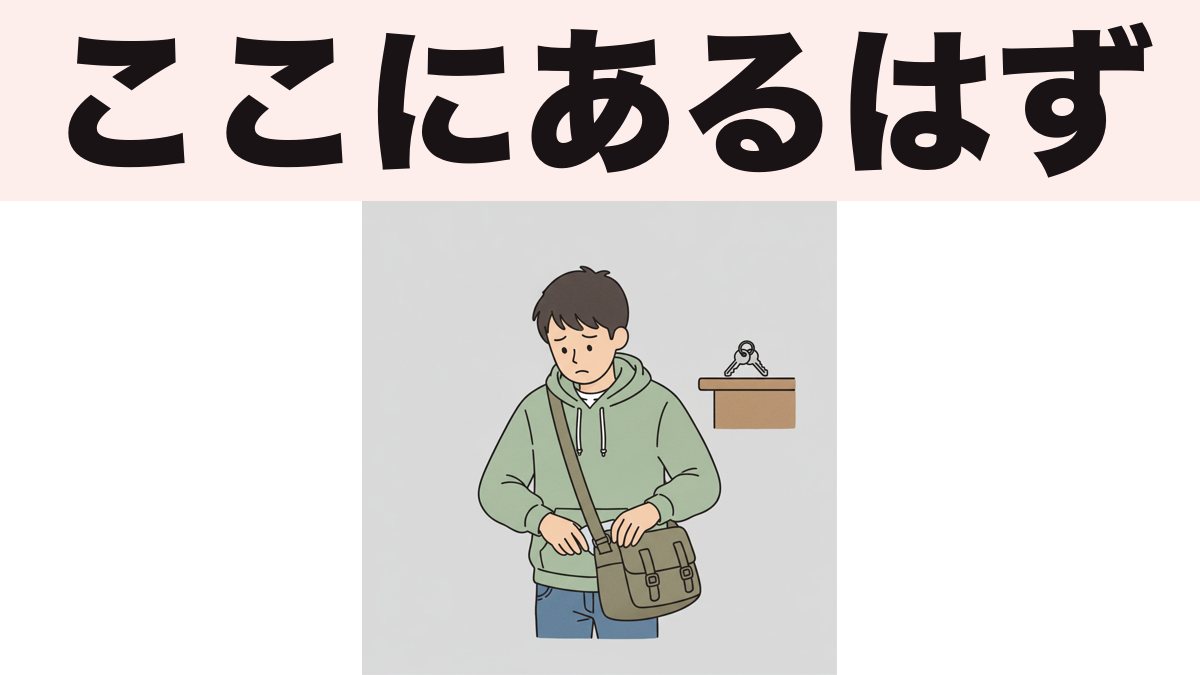
ここにあるはずなんですけど… — It should be here, but… (polite, trailing — searching for something)
はず gives you grounds, んです frames it as an explanation, けど leaves room for being wrong. It is three grammar points doing one very human job.
Common mistakes
- Using はず for advice. 早く寝るはずです does not mean "you should go to bed early." It means "he is expected to go to bed early."
- Dropping な and の. 便利はず and 休みはず are broken. Use 便利なはず, 休みのはず.
- Using はず with no evidence. If you are just guessing, use かもしれません.
- Using はず about your own intentions. 私は行くはずです sounds like you are predicting your own behaviour from the outside. For plans, say 行く予定です.
- Confusing はずがない with はずではない. はずがない is "there's no way." はずではない is rare and awkward — avoid it.
Practice
Answers are hidden — build yours first, then open. Questions 4 and 5 are a pair: two English "should have"s, two different Japanese sentences.
1. Say "he should be coming today," politely.
Show answer
彼は今日来るはずです — plain form + はず. You have grounds for expecting it.
2. Something is wrong here: 明日は休みはずです。
Show answer
休みのはずです — はず is a noun, so a noun in front of it needs の.
3. Say "there's no way he's coming."
Show answer
来るはずがありません — はずがない negates the expectation itself, which is far stronger than 来ないはず.
4. Say "I should have said something sooner" (regret about what was right).
Show answer
もっと早く言うべきでした — べき, because this is obligation, not prediction.
5. Say "they should have arrived by now" (an expectation that failed).
Show answer
もう着いているはずでした — はず, because this is prediction. This is the pair to question 4: English says "should have" for both.
6. Say "today was supposed to be my day off, but…"
Show answer
今日は休みのはずだったんですけど… — past はず is an expectation that did not come true, and the trailing けど does the complaining for you.
7. You are searching for something you are sure you left there. Say it.
Show answer
ここにあるはずなんですけど… — はず gives grounds, んです frames it as explanation, けど admits you might be wrong.
8. You have no evidence at all, just a feeling it might rain. Which form?
Show answer
雨が降るかもしれません — はず needs grounds. With none, かもしれない is the honest choice.
9. Something is wrong here: 早く寝るはずですよ。(intended: "you should go to bed early")
Show answer
早く寝たほうがいいですよ — はず would predict their bedtime. For advice, ほうがいい is friendlier than べき.
10. What is the difference between 雨が降りそうです and 雨が降るはずです?
Show answer
The sky vs the forecast — そう reports appearance, はず reports reasoning. Same conclusion, different route to it.
FAQ
Is はず written in kanji? 筈 exists but is almost never used. Write it in kana.
Can I use はず about the past? Yes, in two ways: 来たはずです ("he should have come" — I expect that he did) and 来るはずでした ("he was supposed to come" — and didn't).
Is はずだ rude? No, but it can sound blunt when you are contradicting someone. そんなはずはない is quite forceful; そのはずなんですけど softens it considerably.
What is はずみ — is it related? No. はずみ means "momentum" or "impulse" and is unrelated vocabulary.
How do I say "as expected"? やっぱり in speech, or 思ったとおり. はず is for stating the expectation, not for confirming it afterwards.
Can はず follow a potential form? Yes: 読めるはずです ("you should be able to read it"). Potential forms are plain verbs and behave normally here.
Vocabulary from this article
Tap the block to select all of it, then copy. In Anki: File → Import, note type Basic, separator Tab — the first column becomes the front, the second the back.
来る	くる — to come
今日	きょう — today
明日	あした — tomorrow
休み	やすみ — day off, holiday
便利	べんり — convenient
送る	おくる — to send
届く	とどく — to arrive, to be delivered
時間	じかん — time
開く	あく — to open
言う	いう — to say
早く	はやく — early, quickly
着く	つく — to arrive
雨	あめ — rain
降る	ふる — to fall (rain)
知る	しる — to know
寝る	ねる — to sleep
予定	よてい — plan, schedule
読む	よむ — to read
高い	たかい — expensive, high
I'm Yuuki, a Japanese teacher based in Tokyo. I've taught on italki as a Top 1% teacher and watched over 1,500 anime. Upper-intermediate learners tend to arrive with 〜はずなんですけど already working, which is a good sign — it means they have stopped translating "should" and started hearing what the word actually does.
Sources: the author's own lessons and standard reference grammars.
このちがいが分かると、「はず」はとても自ぜんに使えるようになります。「根きょがあって言っています」と、言いきらずに伝えられるからです。
基本
「はず」の前の形
「はず」は名詞です。だから前は、名詞につく形にします。
| しゅるい | 形 | れい |
|---|---|---|
| 動詞 | ふつうの形 | 来るはず / 来たはず |
| い形容詞 | ふつうの形 | 高いはず |
| な形容詞 | な | 便利なはず |
| 名詞 | の | 休みのはず |
彼は今日来るはずです。 — He should be coming today. 明日は休みのはずです。 — Tomorrow should be a day off.
「な」と「の」を落とすのが、いちばん多い間違いです。
いつも根きょがあります
「はず」はあてずっぽうではありません。「知っていることから、そうなる」です。
メールを送ったので、もう届いているはずです。 — I sent the email, so it should have arrived by now. この時間なら、まだ開いているはずです。 — At this hour, it should still be open.
根きょが何もない時は「でしょう」「かもしれません」を使います。
うちけしは2つ
来ないはずです。 — He shouldn't be coming. 来るはずがありません。 — There's no way he's coming.
1つ目は、来ないとよそうしています。2つ目は、そのかのうせいそのものを打ち消していて、ずっと強いです。会話では「はずない」。「そんなはずはない」はアニメでよく聞きます。
もう少しくわしく
「はず」と「べき」
| 形 | 意味 | れい |
|---|---|---|
| 〜はずだ | そうなるはず(よそう) | 彼は知っているはずだ |
| 〜べきだ | そうするべき(ぎむ) | 彼に言うべきだ |
もっと早く言うべきでした。 — I should have said something sooner. もう着いているはずでした。 — They should have arrived by now.
英語ではどちらも "should have" です。でも、1つ目は「そうするのが正しかった」、2つ目は「そうなるはずだった」です。言う前に、どちらの "should" かを決めれば、もう間違えません。
「はずだった」=そのはずだったのに
今日は休みのはずだったんですけど… — Today was supposed to be my day off, but…
「んですけど」をつけて、言い終わらないのが定番です。よていがくずれた時の、やわらかい文くの言い方です。
かくしんのはしご
| 形 | どのくらい | 何をもとに |
|---|---|---|
| 〜かもしれない | たぶん半分 | かのうせいだけ |
| 〜でしょう | たぶん | ふつうそうだから |
| 〜はずだ | そのはず | 根きょ・すじ道 |
| 〜に違いない | ぜったい | 強い思いこみ |
雨が降るかもしれません。 — It might rain.
「はず」は「に違いない」より弱いのではなく、根きょがあるのがちがいです。「に違いない」は気もちのかくしん、「はず」はすじ道のよそうです。
「はず」と「そう」「よう」
「はず」は自分の考えです。「そうです」「ようです」は見た目や聞いた話です。「雨が降りそうです」は空を見て。「雨が降るはずです」は天気よほうを読んで。同じけつろんでも、道がちがいます。
「〜はずなんですけど」
じょうずな人がよく使う形です。
ここにあるはずなんですけど… — It should be here, but…
「はず」で根きょ、「んです」でせつめい、「けど」で「ちがうかもしれない」。3つの文法が1つの人間らしい仕事をしています。
よくある間違い
- アドバイスに使う。 「早く寝るはずです」は「早く寝るとよそうされます」です。
- 「な」「の」を落とす。 「便利なはず」「休みのはず」。
- 根きょがないのに使う。 ただのかんなら「かもしれません」です。
- 自分のよていに使う。 「私は行くはずです」はへんです。「行く予定です」と言います。
- 「はずがない」と「はずではない」をまぜる。 「はずがない」が正しいです。
練習
答えはかくれています。まず自分で作ってから開いてください。4番と5番が対です。英語ではどちらも "should have" です。
1. 「彼は今日来ると思います(根きょあり)」を「はず」で言ってください。
答えを見る
彼は今日来るはずです — ふつうの形+はず。根きょがあるときの言い方です。
2. 直してください: 明日は休みはずです。
答えを見る
休みのはずです — 「はず」は名詞なので、前の名詞に「の」がいります。
3. 「彼が来るわけがない」を「はず」で言ってください。
答えを見る
来るはずがありません — かのうせいそのものを打ち消すので、「来ないはず」よりずっと強いです。
4. 「もっと早く言えばよかった」を「べき」で言ってください。
答えを見る
もっと早く言うべきでした — ぎむの話なので「べき」です。
5. 「もう着いていると思っていたのに」を「はず」で言ってください。
答えを見る
もう着いているはずでした — よそうの話なので「はず」です。4番と対です。
6. 「今日は休みのつもりだったのに」を「はず」で言ってください。
答えを見る
今日は休みのはずだったんですけど… — かこの「はず」は、そうならなかったよそうです。
7. さがしものをしています。「ぜったいここに置いた」と言ってください。
答えを見る
ここにあるはずなんですけど… — 根きょ+せつめい+「ちがうかも」の3つが入っています。
8. 根きょが何もないけれど、雨がふりそうな気がします。どの形ですか。
答えを見る
雨が降るかもしれません — 「はず」には根きょがいります。
9. 直してください: 早く寝るはずですよ。(早く寝た方がいいですよ)
答えを見る
早く寝たほうがいいですよ — 「はず」だとその人のねる時間をよそうしています。
10. 「雨が降りそうです」と「雨が降るはずです」のちがいは?
答えを見る
空を見て/天気よほうを読んで — 「そう」は見た目、「はず」はすじ道です。
この記事に出た単語
ブロックをタップすると全部選べます。そのままコピーしてください。Anki では ファイル → 読み込み、ノートタイプ 基本、区切り タブ。1列目が表、2列目が裏になります。
来る	くる — to come
今日	きょう — today
明日	あした — tomorrow
休み	やすみ — day off, holiday
便利	べんり — convenient
送る	おくる — to send
届く	とどく — to arrive, to be delivered
時間	じかん — time
開く	あく — to open
言う	いう — to say
早く	はやく — early, quickly
着く	つく — to arrive
雨	あめ — rain
降る	ふる — to fall (rain)
知る	しる — to know
寝る	ねる — to sleep
予定	よてい — plan, schedule
高い	たかい — expensive, high
私はユウキです。東京で日本語を教えています。 italki の Top 1% の先生で、アニメは1,500本以上見ました。中上級の人は「〜はずなんですけど」がもう使えていることが多いです。いいしるしです。"should" をやくすのをやめて、このことばが何をしているかを聞き取れている、ということだからです。
More drills like the ones above, plus a timed JLPT-style mock test: Practice · N4上のような練習問題と、時間つきのJLPT形式のもぎ試験: 練習ページ · N4
Want to try this in a real conversation?
本当の会話で、ためしてみませんか?
30-minute trial lesson, $13. Times shown in your own timezone.
30分の体験レッスン、$13。時間はあなたのタイムゾーンで表示されます。
Book a trial lesson · $13