そうです has two meanings: "it looks like" and "I heard「そうです」は2つある: 「〜みたい」と「〜と聞きました」
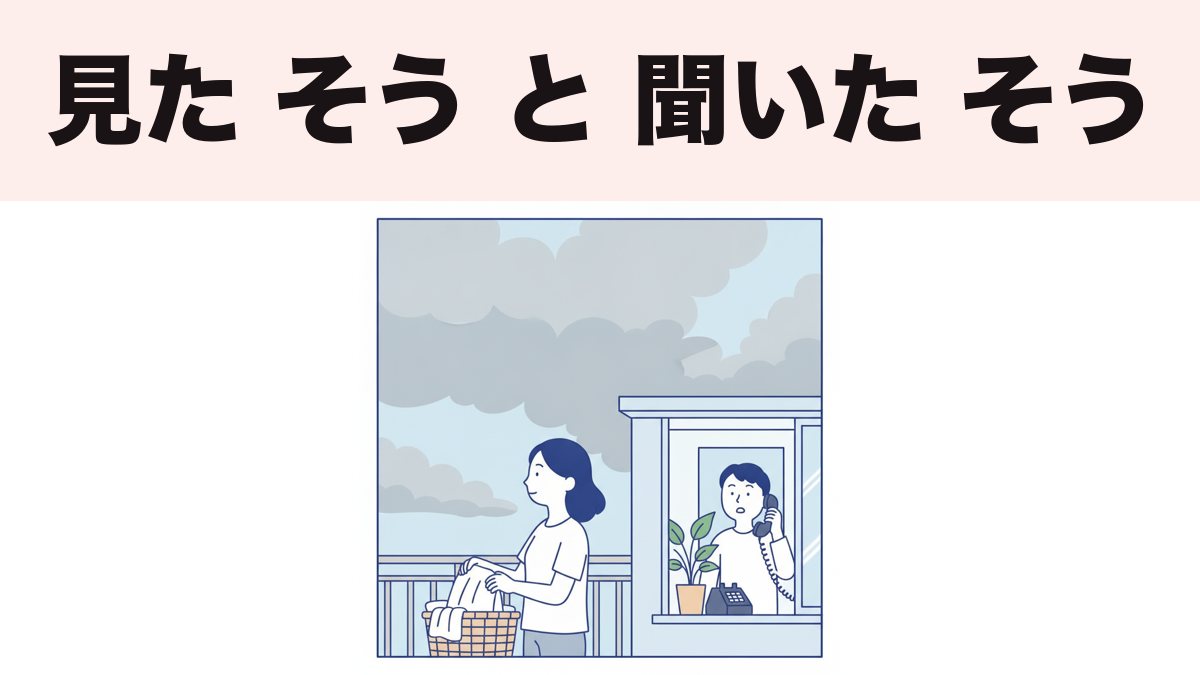
There are two completely separate そう in Japanese: one says "it looks like it's about to," the other says "I heard that." They are told apart by what shape the word in front takes — not by context, and not by tone.
日本語の「そう」は2つあります。1つは「そう見える」、もう1つは「そう聞いた」です。見分け方は、前のことばの形だけです。場面でも、声でもありません。
雨が降りそうです。 — It looks like it's going to rain. (I'm looking at the sky) 雨が降るそうです。 — I hear it's going to rain. (someone told me)
One syllable apart. Different evidence, different meaning, and no way to recover if you pick the wrong one. This is one of the few places in Japanese grammar where a small slip produces a sentence that is fully grammatical and simply says something you did not mean.
The basics
The first そう: "it looks like"
This one reports what your eyes are telling you. You are looking at something and making a guess from its appearance.
How to attach it:
| Word type | Rule | Example |
|---|---|---|
| Verb | ます-stem + そう | 降る → 降りそう |
| い-adjective | drop い + そう | おいしい → おいしそう |
| な-adjective | attach directly | 元気 → 元気そう |
| いい | irregular | → よさそう |
| ない | irregular | → なさそう |
おいしそうですね。 — That looks delicious. (you haven't tasted it yet) この本、難しそう。 — This book looks hard. (casual, judging by the cover) 元気そうですね。 — You look well. (polite, a normal greeting to someone you haven't seen in a while)
With verbs it usually means "about to happen" rather than "appears to be":
雨が降りそうです。 — It looks like it's about to rain. 泣きそう。 — I'm about to cry. (casual)
This そう behaves like a な-adjective afterwards, which is the second thing to learn about it:
おいしそうな料理。 — Food that looks delicious. (before a noun: そうな) おいしそうに食べる。 — To eat as if it's delicious. (before a verb: そうに)
The second そう: "I heard"
This one reports information you received. You are not guessing — you are passing something on.
How to attach it: take the plain form of the sentence, in any tense, and add そうです. Nothing changes shape.
| Word type | Example |
|---|---|
| Verb | 降る → 降るそうです |
| Verb, past | 降った → 降ったそうです |
| い-adjective | 高い → 高いそうです |
| な-adjective | 静かだ → 静かだそうです |
| Noun | 学生だ → 学生だそうです |
田中さんは来ないそうです。 — I hear Tanaka isn't coming. あの店は高いそうです。 — I hear that shop is expensive. 天気予報によると、明日は雪だそうです。 — According to the forecast, tomorrow will be snow.
Notice that な-adjectives and nouns keep their だ here. 静かだそうです, 学生だそうです. That だ is exactly what tells you this is the hearsay そう — the plain form is the giveaway.
And unlike the first そう, this one never conjugates. There is no 〜そうな料理 meaning "food I heard about," and no 〜そうに. If you see そうな or そうに, it is always the "looks like" そう.
The one test that separates them
Look at the word immediately in front of そう and ask what shape it is in.
| In front of そう | Which そう | Meaning |
|---|---|---|
| ます-stem (降り, 食べ, 泣き) | Appearance | about to / looks like |
| Plain form (降る, 食べる, 泣く) | Hearsay | I heard |
| い-adjective without い (高, おいし) | Appearance | looks |
| い-adjective with い (高い, おいしい) | Hearsay | I heard |
| Noun / な-adj with だ (学生だ, 静かだ) | Hearsay | I heard |
| Noun / な-adj without だ (元気, 静か) | Appearance | looks |
That is the entire distinction. It is mechanical, and once you can see it, the two stop blending together.
Beyond the basics
Why is it よさそう and not いいそう?
いい is irregular almost everywhere in Japanese, and this is one of those places. The old form よい is what actually conjugates, so:
この店、よさそうですね。 — This shop looks good. 時間がなさそうです。 — It looks like there's no time.
ない follows the same pattern for the same reason: なさそう, not なそう. If you say いいそうです, a listener will parse it as hearsay — "I heard it's good" — which may not be what you meant.
How do you make the "looks like" version negative?
Three options, and they are not interchangeable.
おいしくなさそう。 — It doesn't look tasty. (negative adjective + そう) 雨は降りそうにない。 — It doesn't look like it will rain. (そうにない — the standard negative for verbs) 間に合いそうもない。 — There's no way we'll make it in time. (そうもない — stronger, more resigned)
For verbs, 降らなそう exists in casual speech but 降りそうにない is the form to produce. For adjectives, move the negative into the adjective itself: おいしくなさそう, not おいしそうじゃない — that last one means "it doesn't appear delicious" in a much narrower, odder sense.
When can you not use the "looks like" そう?
When the quality is directly visible. そう is for inference about something you cannot see straight on.
✗ このりんごは赤そうです。 。○ このりんごは赤いです。 — This apple is red.
Redness is not an inference — it is right there. Tastiness, difficulty, health, weight, expense: those are all inferred from appearance, so they take そう. Colour, shape, and size do not.
What about ようだ, みたい and らしい?
They overlap, and the differences are about where your evidence comes from:
| Form | Evidence | Example |
|---|---|---|
| 〜そう (appearance) | What it looks like right now | 雨が降りそう |
| 〜ようだ | Reasoning from several clues | 雨が降ったようだ (the ground is wet) |
| 〜みたい | Same as ようだ, casual | 雨が降ったみたい |
| 〜らしい | Hearsay or reputation | 雨が降るらしい |
| 〜そうだ (hearsay) | A specific report you received | 天気予報によると雨が降るそうだ |
らしい and hearsay そうだ are close. The difference is commitment: そうだ passes on a specific source faithfully, らしい is vaguer — "apparently," "from what I gather." A weather forecast gives you そうだ; an overheard rumour gives you らしい.
How does it sound in anime?
The "looks like" そう is everywhere in dialogue, usually shortened and emotional. If you watch with the sound on, these three will come up within the first episode of almost anything:
おいしそう! — That looks so good! 死にそう。 — I'm dying. (literally "about to die" — exhaustion, not danger) 泣きそうだった。 — I was about to cry.
死にそう is worth flagging: it almost never means actual danger. It is the standard exaggeration for hot, tired, hungry, or embarrassed, in exactly the way English uses "I'm dead."
Common mistakes
- 降りそう vs 降るそう. ます-stem = you are looking at the sky. Plain form = someone told you. Getting this backwards produces a correct sentence with the wrong meaning, which nobody will correct.
- いいそう for "looks good." It has to be よさそう. いいそう will be read as hearsay.
- Dropping だ in hearsay. 学生そうです is wrong. Hearsay takes the plain form, so a noun keeps its だ: 学生だそうです.
- Conjugating the hearsay そう. There is no そうな or そうに for hearsay. Those endings only exist on the appearance そう.
- そう for visible qualities. 赤そう, 大きそう for something right in front of you sounds strange — you can just see it. Use そう for what you are inferring, not for what you are observing.
- おいしそうじゃない as the negative. Put the negative in the adjective: おいしくなさそう.
Practice
Answers are hidden — build yours first, then open. Questions 1 and 2 are a pair: one syllable moves, and the whole meaning goes with it.
1. What does 雨が降りそうです mean, and what is your evidence?
Show answer
It looks like it's going to rain — you are looking at the sky — 降り is the ます-stem, which is the appearance そう. Your own eyes are the source.
2. What does 雨が降るそうです mean, and what is your evidence?
Show answer
I hear it's going to rain — someone told you — 降る is the plain form, which is the hearsay そう. This is the pair to question 1: same words, different attachment, opposite source.
3. Say "this cake looks delicious."
Show answer
このケーキ、おいしそうです — drop the い from おいしい and add そう. You have not eaten it, so appearance is exactly right.
4. Something is wrong here: この店はいいそうです(「よく見える」の意味で)。
Show answer
この店はよさそうです — いい is irregular and becomes よさ before そう. いいそうです would be read as "I hear it's good."
5. Fill in: 田中さんは学生( )そうです。("I hear Tanaka is a student.")
Show answer
だ — 学生だそうです。Hearsay attaches to the plain form, and a noun's plain form keeps だ. 学生そうです is not possible.
6. Say "it doesn't look like it's going to rain."
Show answer
雨は降りそうにありません / 降りそうにない — for verbs, the negative of appearance そう is そうにない, not そうじゃない.
7. Put おいしそう in front of a noun: "food that looks delicious."
Show answer
おいしそうな料理 — appearance そう behaves like a な-adjective, so it takes な before a noun. Hearsay そう can never do this.
8. Why is このりんごは赤そうです strange?
Show answer
Redness is directly visible, not inferred — appearance そう is for guessing at something you cannot see straight on. Just say 赤いです.
9. What does 死にそう usually mean in conversation?
Show answer
Exhausted, boiling, starving — not actual danger — 死に is the ます-stem, so it is "about to die," used exactly the way English says "I'm dead."
10. What is the difference between 雨が降るそうだ and 雨が降るらしい?
Show answer
How firm the source is — そうだ passes on a specific report faithfully (a forecast, something you were told). らしい is vaguer — "apparently", from reputation or a rumour you cannot fully vouch for.
FAQ
Can I use だ with the appearance そう? Yes, and it is normal in casual speech: おいしそうだ, 降りそうだ. The polite version is おいしそうです. What you cannot do is add だ to the front of the appearance そう the way hearsay does.
Does hearsay そう have a past tense? The tense lives in the clause in front, not on そう: 降ったそうです ("I heard it rained"). 降るそうでした is not used — you report what you heard in the present, and the reported event carries its own tense.
How do I name the source of hearsay? 〜によると at the front: 天気予報によると, ニュースによると, 友達の話によると. It is optional, but it makes the sentence much more natural in writing.
Is そうに different from ように? Yes. おいしそうに食べる means "eat in a way that looks delicious" (real enjoyment, visible on your face). おいしいように食べる is not a natural sentence. ように compares to something: 子供のように食べる = "eat like a child."
Can appearance そう be used about myself? For feelings and physical states, constantly: 泣きそう, 倒れそう, 眠そう… though 眠そう about yourself is odd, since you know whether you are sleepy. Use it for things that are about to happen to you, not for describing your own inner state you already know.
Is there a そう that means "that's right"? Yes, and it is unrelated to both of these — そうです as an answer means "that's correct," and そうですね means "let me think" or "you're right" depending on tone. Same sound, different word entirely.
Vocabulary from this article
Tap the block to select all of it, then copy. In Anki: File → Import, note type Basic, separator Tab — the first column becomes the front, the second the back.
雨	あめ — rain
降る	ふる — to fall (rain, snow)
おいしい	おいしい — delicious
難しい	むずかしい — difficult
元気	げんき — well, healthy, energetic
泣く	なく — to cry
料理	りょうり — food, cooking, a dish
天気予報	てんきよほう — weather forecast
雪	ゆき — snow
静か	しずか — quiet
学生	がくせい — student
高い	たかい — expensive, tall
時間	じかん — time
間に合う	まにあう — to make it in time
赤い	あかい — red
店	みせ — shop
死ぬ	しぬ — to die
倒れる	たおれる — to collapse
眠い	ねむい — sleepy
友達	ともだち — friend
I'm Yuuki, a Japanese teacher based in Tokyo. I've taught on italki as a Top 1% teacher and watched over 1,500 anime. In lessons this one hides for months, because a mixed-up そう is never a broken sentence — it is a perfectly polite sentence that quietly says you saw something you were actually only told about.
Sources: the author's own lessons and standard reference grammars.
雨が降りそうです。 — It looks like it's going to rain. (空を見ています) 雨が降るそうです。 — I hear it's going to rain. (だれかが言いました)
ちがいは1文字です。でも、根きょも意味もまったくちがいます。ここは日本語でめずらしい場所です。まちがえても文は正しいので、だれも直してくれません。
基本の形
1つめの「そう」: 「そう見える」
目で見て、思ったことを言います。
つけ方:
| 種類 | ルール | 例 |
|---|---|---|
| 動詞 | ますの形+そう | 降る → 降りそう |
| い形容詞 | い をとって そう | おいしい → おいしそう |
| な形容詞 | そのまま | 元気 → 元気そう |
| いい | とくべつ | → よさそう |
| ない | とくべつ | → なさそう |
おいしそうですね。 — That looks delicious. (まだ食べていません) この本、難しそう。 — This book looks hard. 元気そうですね。 — You look well.
動詞につくと、「もうすぐ〜する」という意味になります。
雨が降りそうです。 — It looks like it's about to rain. 泣きそう。 — I'm about to cry.
この「そう」は、後で「な形容詞」のように動きます。これが2つめのポイントです。
おいしそうな料理。 — Food that looks delicious. (名詞の前は そうな) おいしそうに食べる。 — To eat as if it's delicious. (動詞の前は そうに)
2つめの「そう」: 「そう聞いた」
自分が聞いた話を、そのまま伝えます。思ったことではありません。
つけ方: 文のふつうの形に「そうです」をつけます。時制は何でもいいです。形は変わりません。
| 種類 | 例 |
|---|---|
| 動詞 | 降る → 降るそうです |
| 動詞・過去 | 降った → 降ったそうです |
| い形容詞 | 高い → 高いそうです |
| な形容詞 | 静かだ → 静かだそうです |
| 名詞 | 学生だ → 学生だそうです |
田中さんは来ないそうです。 — I hear Tanaka isn't coming. あの店は高いそうです。 — I hear that shop is expensive. 天気予報によると、明日は雪だそうです。 — According to the forecast, tomorrow will be snow.
「な形容詞」と名詞は「だ」が残ります。静かだそうです、学生だそうです。この「だ」が、聞いた話の「そう」だというしるしです。
それから、この「そう」は形が変わりません。「そうな」も「そうに」もありません。「そうな」「そうに」を見たら、いつも1つめの「そう」です。
見分け方のテスト
「そう」のすぐ前のことばが、どんな形かを見てください。
| そう の前 | どちらの そう | 意味 |
|---|---|---|
| ますの形(降り・食べ・泣き) | 見た感じ | もうすぐ〜しそう |
| ふつうの形(降る・食べる・泣く) | 聞いた話 | 〜と聞きました |
| い形容詞から い をとった形(高・おいし) | 見た感じ | 〜に見える |
| い形容詞そのまま(高い・おいしい) | 聞いた話 | 〜と聞きました |
| 名詞・な形容詞+だ(学生だ・静かだ) | 聞いた話 | 〜と聞きました |
| 名詞・な形容詞でだ なし(元気・静か) | 見た感じ | 〜に見える |
これだけです。きかい的に分かります。
もう少し先へ
なぜ「よさそう」で、「いいそう」ではないのですか?
「いい」は日本語のあちこちでとくべつな動きをします。古い形の「よい」が形を変えるからです。
この店、よさそうですね。 — This shop looks good. 時間がなさそうです。 — It looks like there's no time.
「ない」も同じ理由で「なさそう」です。「いいそうです」と言うと、聞いた話の意味になってしまいます。
「見た感じ」の否定はどう作りますか?
3つあります。同じではありません。
おいしくなさそう。 — It doesn't look tasty. 雨は降りそうにない。 — It doesn't look like it will rain. 間に合いそうもない。 — There's no way we'll make it in time. (もっと強い・あきらめ)
動詞は「そうにない」を使ってください。形容詞は、否定を形容詞の中に入れます。「おいしくなさそう」です。
「見た感じ」の「そう」が使えないのはどんな時ですか?
見ればすぐ分かることには使えません。「そう」は、まっすぐには見えないことを想ぞうする形です。
✗ このりんごは赤そうです。 。○ このりんごは赤いです。 — This apple is red.
赤いのは想ぞうではありません。目の前にあります。おいしさ、むずかしさ、元気さ、重さ、高さは想ぞうなので「そう」を使います。色・形・大きさはちがいます。
「ようだ」「みたい」「らしい」はどうですか?
にていますが、根きょがちがいます。
| 形 | 根きょ | 例 |
|---|---|---|
| 〜そう(見た感じ) | 今の見た目 | 雨が降りそう |
| 〜ようだ | いくつかのしるしから考える | 雨が降ったようだ (地面がぬれている) |
| 〜みたい | ようだ と同じ・くだけた形 | 雨が降ったみたい |
| 〜らしい | うわさ・評ばん | 雨が降るらしい |
| 〜そうだ(聞いた話) | はっきりした情報 | 天気予報によると雨が降るそうだ |
「らしい」と「そうだ」は近いです。ちがいは強さです。「そうだ」ははっきりした話をそのまま伝えます。「らしい」はあいまいです。
アニメではどう聞こえますか?
「見た感じ」の「そう」は、せりふにたくさん出ます。だいたい短くて、気もちが入っています。
おいしそう! — That looks so good! 死にそう。 — I'm dying. (つかれた・あつい・おなかがすいた) 泣きそうだった。 — I was about to cry.
「死にそう」は本当のきけんではありません。「つかれた」「あつい」「はずかしい」の大げさな言い方です。
よくある間違い
- 降りそう と 降るそう。 ますの形なら空を見ています。ふつうの形ならだれかから聞きました。反対にすると、正しい文で、ちがう意味になります。
- 「よく見える」の意味で「いいそう」。 「よさそう」です。
- 聞いた話で「だ」を落とすこと。 「学生そうです」は間ちがいです。「学生だそうです」にします。
- 聞いた話の「そう」を形を変えること。 「そうな」「そうに」はありません。
- 見れば分かることに「そう」。 「赤そう」「大きそう」は変です。見えているからです。
- 否定を「おいしそうじゃない」にすること。 「おいしくなさそう」です。
練習
答えはかくれています。まず自分の答えを作ってから開いてください。1番と2番は対になっています。
1. 「雨が降りそうです」はどんな意味で、根きょは何ですか。
答えを見る
もうすぐ雨が降りそう・自分の目 — 「降り」はますの形なので、見た感じの「そう」です。
2. 「雨が降るそうです」はどんな意味で、根きょは何ですか。
答えを見る
雨が降ると聞いた・だれかの話 — 「降る」はふつうの形なので、聞いた話の「そう」です。1番と同じことばで、つけ方だけがちがいます。
3. 「このケーキはおいしそうに見える」と言ってください。
答えを見る
このケーキ、おいしそうです — 「おいしい」から「い」をとって「そう」をつけます。まだ食べていないので、見た感じの形が合っています。
4. 直してください: この店はいいそうです。(「よく見える」の意味で)
答えを見る
この店はよさそうです — 「いい」は「よさ」になります。「いいそうです」だと「いいと聞きました」になります。
5. 入れてください: 田中さんは学生( )そうです。(「聞きました」の意味で)
答えを見る
だ — 学生だそうです。聞いた話はふつうの形につきます。名詞のふつうの形には「だ」があります。
6. 「雨は降らないと思う(見た感じ)」と言ってください。
答えを見る
雨は降りそうにありません/降りそうにない — 動詞の否定は「そうにない」です。「そうじゃない」ではありません。
7. 「おいしそう」を名詞の前に置いてください。
答えを見る
おいしそうな料理 — 見た感じの「そう」は「な形容詞」のように動くので「な」がつきます。聞いた話の「そう」にはできません。
8. 「このりんごは赤そうです」はなぜ変ですか。
答えを見る
赤いのは見れば分かるからです — 見た感じの「そう」は、まっすぐ見えないことに使います。「赤いです」でいいです。
9. 会話の「死にそう」はどんな意味ですか。
答えを見る
つかれた・あつい・おなかがすいた — 「死に」はますの形なので「もうすぐ死ぬ」です。本当のきけんではなく、大げさな言い方です。
10. 「雨が降るそうだ」と「雨が降るらしい」はどうちがいますか。
答えを見る
話のはっきりさ — 「そうだ」ははっきりした情報をそのまま伝えます。「らしい」はあいまいで、うわさや評ばんです。
よくある質問
「見た感じ」の「そう」に「だ」はつきますか。 つきます。くだけた形でふつうです。おいしそうだ、降りそうだ。ていねいな形は「おいしそうです」です。
聞いた話の「そう」に過去形はありますか。 時制は前の文が持ちます。「降ったそうです」で「雨が降ったと聞きました」です。「降るそうでした」とは言いません。
聞いた話の出どころはどう言いますか。 文のはじめに「〜によると」をつけます。天気予報によると、ニュースによると、友達の話によると。
「そうに」と「ように」はちがいますか。 ちがいます。「おいしそうに食べる」は「おいしそうな顔で食べる」です。「ように」は何かとくらべます。「子供のように食べる」。
自分のことに「見た感じ」の「そう」を使えますか。 気もちや体のことには使います。泣きそう、倒れそう。でも自分が知っていることには使いません。
「そうです」には「その通りです」の意味もありますか。 あります。これはまったく別のことばです。答えの「そうです」は「正しいです」、「そうですね」は「うーん」や「そうですよね」です。
この記事に出た単語
ブロックをタップすると全部選べます。そのままコピーしてください。Anki では ファイル → 読み込み、ノートタイプ 基本、区切り タブ。1列目が表、2列目が裏になります。
雨	あめ — rain
降る	ふる — to fall (rain, snow)
おいしい	おいしい — delicious
難しい	むずかしい — difficult
元気	げんき — well, healthy, energetic
泣く	なく — to cry
料理	りょうり — food, cooking, a dish
天気予報	てんきよほう — weather forecast
雪	ゆき — snow
静か	しずか — quiet
学生	がくせい — student
高い	たかい — expensive, tall
時間	じかん — time
間に合う	まにあう — to make it in time
赤い	あかい — red
店	みせ — shop
死ぬ	しぬ — to die
倒れる	たおれる — to collapse
友達	ともだち — friend
私はユウキです。東京で日本語を教えています。 italki の Top 1% の先生で、アニメは1,500本以上見ました。この文法は何か月もかくれています。まちがえても文はこわれないからです。ていねいで正しい文のまま、「聞いただけのこと」を「自分で見たこと」として言ってしまいます。
More drills like the ones above, plus a timed JLPT-style mock test: Practice · N4上のような練習問題と、時間つきのJLPT形式のもぎ試験: 練習ページ · N4
Want to try this in a real conversation?
本当の会話で、ためしてみませんか?
30-minute trial lesson, $13. Times shown in your own timezone.
30分の体験レッスン、$13。時間はあなたのタイムゾーンで表示されます。
Book a trial lesson · $13