たことがあります: how to say "I have done this before" in Japaneseたことがあります: 「前にしたことがある」の言い方
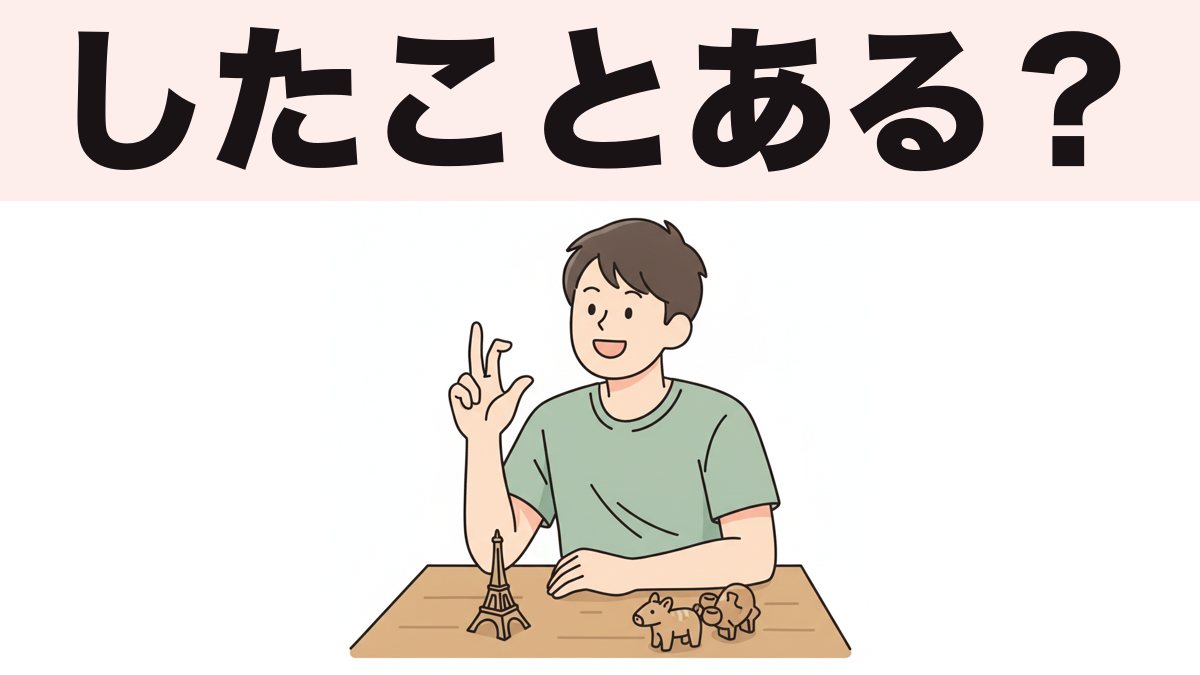
〜たことがあります is not another past tense — it literally says "there exists a time when I did this," which is why it works for "I've been to Japan" but not for "I went to Japan last week."
〜たことがあります は、もう1つの過去形ではありません。「それをした時が、ある」という意味です。だから「日本に行ったことがあります」には使えますが、「先週、日本に行った」には使えません。
This is one of the few grammar points where students get the form right on the first try and the usage wrong for months. The construction is easy. The line between "experience" and "event" is the part that needs explaining, and it is a line English does not draw in the same place.
The basics
What does たことがあります literally mean?
Three pieces, and none of them mean "have":
- 〜た — the plain past form of the verb
- こと — a nominalizer: turns the verb into "the thing/occasion of doing it"
- がある — "exists"
So 行ったことがあります is "an occasion of having gone exists." It reports that something is part of your history, without saying anything about when. That vagueness is the entire point of the pattern — and the reason it collides with specific dates.
日本に行ったことがあります。 — I have been to Japan. (polite, experience, no time given) 納豆を食べたことがありますか。 — Have you ever eaten natto? (polite, the standard "have you ever" question)
How do you build it?
Take the plain past form (the た-form), add ことがあります.
行く → 行った → 行ったことがあります ことがあります食べる → 食べた → 食べたことがあります ことがありますする → した → したことがあります
If the た-form is shaky, that is the real bottleneck — and it is the same set of endings as the te-form, so the fix helps two grammar points at once. See the te-form for the six godan rules; swap て/で for た/だ and you have the た-form.
富士山に登ったことがあります。 — I've climbed Mount Fuji. (polite) その映画は見たことがありません。 — I've never seen that movie. (polite negative — ありません, not なかった)
When do you use this instead of plain past tense?
Use it when the point is whether something has ever happened. Use plain past when the point is that particular time it happened.
寿司を食べたことがあります。 — I have eaten sushi (at some point in my life). (experience) 昨日、寿司を食べました。 — I ate sushi yesterday. (a specific event)
Both sentences are about eating sushi in the past. Only the first one is making a claim about your experience as a whole.
Beyond the basics
Why does it break with "last week"?
Because a specific time contradicts the structure. The pattern exists to say "a time exists" — pinning that time down makes the sentence argue with itself.
「先週、日本に行ったことがあります」is wrong, and not in a small way. If you have a date, you want plain past tense: 先週、日本に行きました.
The reliable test: if you can attach "ever" in English, たことがある is right. If the sentence has a date, a day, or a specific occasion in it, use the plain past.
子どもの頃、京都に行ったことがあります。 — I went to Kyoto when I was a child. (vague enough to be experience — "in my childhood" is a period, not an occasion) 去年、京都に行きました。 — I went to Kyoto last year. (specific — plain past only)
The middle ground is real: 子どもの頃 works, 去年の3月 does not. The vaguer the time frame, the more comfortable the pattern.
How does it shrink in casual speech?
ことがある loses pieces the same way most polite patterns do — が goes first, then the ending relaxes.
富士山、登ったことある? — Have you climbed Fuji? (casual, が dropped, です/ます gone) 一回もないよ。 — Not even once. (casual, the verb implied by context) 聞いたことある。 — I've heard of it. (casual, extremely common — and note the English needs "of it" while the Japanese doesn't)
聞いたことある in particular is worth drilling as a set phrase. It is the everyday way to say "that rings a bell," and dropping it into a conversation at the right moment does a lot of work for how fluent you sound. Which of these forms fits which situation is the usual register question — see casual vs. polite Japanese.
What about ことがある with a non-past verb?
Different grammar point, same shape — and the meaning shifts from experience to frequency.
たまに、電車が遅れることがあります。 — Sometimes the train is late. (occasional occurrence, not a personal experience) 彼は遅刻することがある。 — He is sometimes late. (casual, a tendency)
The only difference is 遅れた vs 遅れる. Past form = "I have experienced this"; non-past = "this happens from time to time." Textbooks often separate these by a hundred pages, which makes them look unrelated — they are the same こと + ある skeleton with different tense inside.
How do you say you have never done something?
Negate ある, not the verb — and if you want emphasis, add a count.
海外に行ったことがありません。 — I've never been abroad. (polite) 一度も行ったことがない。 — I've never been, not once. (casual, 一度も adds emphasis) そんな話、聞いたことがない。 — I've never heard anything like that. (casual, often said with some feeling)
Note that 一度も requires a negative to follow it. It cannot appear in a positive sentence, the way English "even once" can't either.
| Form | Register | Meaning |
|---|---|---|
| 〜たことがあります | Polite | I have done it |
| 〜たことがありません | Polite | I have never done it |
| 〜たことがある | Casual | I have done it |
| 〜たことある? | Casual question | Have you ever...? |
| 〜たことない | Casual | I've never done it |
| 一度も〜たことがない | Casual, emphatic | Not once in my life |
| 〜ることがある (non-past) | Either | It happens sometimes |
Common mistakes
- Adding a specific date. 先週、行ったことがあります → 先週、行きました. A date and this pattern cannot share a sentence.
- Negating the verb instead of ある. 行かなかったことがあります does not mean "I've never gone" — it means "there was an occasion when I didn't go," which is a strange thing to say. The negative goes on ある: 行ったことがありません.
- Using the dictionary form by mistake. 行くことがあります means "sometimes I go," not "I have been." One syllable, completely different claim.
- Forgetting that ある is the verb being conjugated. Past experience in the past — "I had been there at that point" — is 行ったことがありました, changing ある, never the first verb.
- Over-using it for recent events. If it happened this morning, it is not an "experience" yet. Plain past.
How to practise it
Build a list of ten things you have done and ten you haven't — foods, countries, movies, sports — and say them out loud in both registers: 食べたことがあります and 食べたことある. Then turn every one into a question, because in real conversation this pattern shows up as a question far more often than as a statement. 〜たことある? is one of the highest-value conversation openers a beginner can own.
Then set yourself one rule for a week: any time you want to mention something you did, decide first whether you are reporting an event or claiming an experience. Choosing consciously ten times is worth more than reading the explanation again. For more on turning this into actual back-and-forth, see two questions that keep a conversation alive.
Practice
Answers are hidden — build yours first, then open. Questions 4 and 5 are a pair: same sushi, and one of them has a date in it.
1. Build たことがあります from 行く.
Show answer
行く → 行った → 行ったことがあります — the plain past form, then ことがあります.
2. What does 行ったことがあります literally say?
Show answer
"An occasion of having gone exists" — た for the past, こと to make it a thing, ある to say it exists.
3. Ask someone whether they have ever eaten natto.
Show answer
納豆を食べたことがありますか — the standard "have you ever" question, with no time attached.
4. Say "I have eaten sushi" — meaning at some point in your life.
Show answer
寿司を食べたことがあります — a claim about your experience as a whole.
5. Say "I ate sushi yesterday."
Show answer
昨日、寿司を食べました — plain past. This is the pair to question 4: a date means you are talking about one occasion, not your history.
6. Something is wrong here: 先週、日本に行ったことがあります。
Show answer
先週、日本に行きました — a specific time contradicts the structure, which exists to say only that "a time exists."
7. What is the reliable test for which one to use?
Show answer
Can you attach "ever" in the English? — if yes, たことがある. If there is a date or a specific occasion, plain past.
8. Say "I've never seen that film."
Show answer
その映画は見たことがありません — the negative goes on ある: ありません, not なかった.
9. Say "I've climbed Mount Fuji."
Show answer
富士山に登ったことがあります — 登る is Group 1, so the た-form is 登った.
10. Your た-form is shaky. Which other grammar point does fixing it also fix?
Show answer
The te-form — same six endings, swapping て/で for た/だ. One drill, two grammar points.
FAQ
Is たことがある the same as English present perfect? Close, but not identical. English happily says "I have been there last week" in some dialects; Japanese never allows a specific time with this pattern. Treat it as "have you ever" rather than "have you."
Can I use it about something I did once this week? Grammatically it won't crash, but it sounds odd — like calling this morning's coffee a life experience. Use plain past for anything recent and specific.
Why is it が and not は? Because ある is an existence verb and こと is its subject: "an occasion exists." が marks that subject. Swapping in は is possible for contrast — 行ったことはあります, "well, I have been (but...)" — and that は immediately signals a "but" is coming.
How do I answer 〜たことありますか? Short answers are normal: はい、あります / いいえ、ありません, or casually うん、ある / ううん、ない. Repeating the whole verb is unnecessary and sounds textbook-ish.
Does it work with adjectives? Not directly — こと attaches to verbs here. For "have you ever been busy," you'd reach for a different structure entirely rather than forcing this one.
What is the polite past — 〜たことがありました? It shifts the reference point into the past: "at that time, I had already done it." Useful when telling a story, rare otherwise. The first verb stays た; ある carries the extra tense.
Vocabulary from this article
Tap the block to select all of it, then copy. In Anki: File → Import, note type Basic, separator Tab — the first column becomes the front, the second the back.
日本	にほん — Japan
行く	いく — to go
納豆	なっとう — natto
食べる	たべる — to eat
富士山	ふじさん — Mt Fuji
登る	のぼる — to climb
映画	えいが — film, movie
見る	みる — to see, to watch
寿司	すし — sushi
昨日	きのう — yesterday
先週	せんしゅう — last week
一度	いちど — once
子ども	こども — child
聞く	きく — to hear, to ask
話す	はなす — to speak
I'm Yuuki, a Japanese teacher based in Tokyo. I've taught on italki as a Top 1% teacher and watched over 1,500 anime, and this pattern is the one I most often have to un-teach — students learn the form in ten minutes and then spend three months attaching dates to it until someone points out why that breaks.
Sources: the author's own lessons and standard reference grammars.
この文法は、形はすぐできるのに、使い方を何か月もまちがえる、めずらしいタイプです。作り方はかんたんです。むずかしいのは、「経験」と「できごと」の線です。そして、その線は、英語とは同じ場所にありません。
基本の形
「たことがあります」の意味は?
3つのパーツです。どれも「持っている」という意味ではありません。
- 〜た — 動詞のふつうの過去の形
- こと — 動詞を名詞にする言葉。「〜したこと・場合」
- がある — 「ある」「存在する」
だから「行ったことがあります」は、そのままの意味だと「行った、ということが、ある」です。それが自分の今までの中にある、と言っています。いつかは言いません。この「いつかを言わない」ところが、この形のいちばん大事な点です。だから、はっきりした日付とけんかします。
日本に行ったことがあります。 — I have been to Japan. (ていねい・経験・いつかは言わない) 納豆を食べたことがありますか。 — Have you ever eaten natto? (ていねい・「〜したことある?」の基本の形)
作り方は?
ふつうの過去の形(た形)に、「ことがあります」をつけます。
行く → 行った → 行ったことがあります ことがあります食べる → 食べた → 食べたことがあります ことがありますする → した → したことがあります
「た形」があいまいだと、そこが本当の弱点です。そして「た形」は「て形」と同じルールなので、直すと2つの文法が同時に強くなります。う動詞の6つのルールは て形の記事 にあります。「て・で」を「た・だ」に変えれば「た形」です。
富士山に登ったことがあります。 — I've climbed Mount Fuji. (ていねい) その映画は見たことがありません。 — I've never seen that movie. (ていねいな否定 — 「ありません」・「なかった」ではない)
ふつうの過去形と、どう使い分ける?
「したことが今までにあるかどうか」が言いたいときは、この形です。「その時のこと」が言いたいときは、ふつうの過去形です。
寿司を食べたことがあります。 — I have eaten sushi (at some point in my life). (経験) 昨日、寿司を食べました。 — I ate sushi yesterday. (その日のできごと)
どちらも、過去に寿司を食べた話です。でも、「今までの自分」について言っているのは、1つ目だけです。
もっと深く
なぜ「先週」と使えないの?
はっきりした時間が、形とけんかするからです。この形は「そういう時が、ある」と言うための形です。時間を決めてしまうと、文が自分とけんかします。
「先週、日本に行ったことがあります」はまちがいです。日付があるときは、ふつうの過去形です。「先週、日本に行きました」。
かんたんなテストがあります。英語で "ever" を入れられるなら、「たことがある」で合っています。日付や曜日や「あの時」が文の中にあるなら、ふつうの過去形です。
子どもの頃、京都に行ったことがあります。 — I went to Kyoto when I was a child. (「子どもの頃」は期間なので、経験として使える) 去年、京都に行きました。 — I went to Kyoto last year. (はっきりしている・ふつうの過去形だけ)
まん中もあります。「子どもの頃」は大丈夫ですが、「去年の3月」はだめです。時間があいまいなほど、この形に合います。
会話では、どう短くなる?
ほかのていねいな形と同じように、パーツが落ちます。まず「が」が落ちて、そのあと最後がくずれます。
富士山、登ったことある? — Have you climbed Fuji? (カジュアル・「が」が落ちて、です/ます もない) 一回もないよ。 — Not even once. (カジュアル・動詞は言わなくても分かる) 聞いたことある。 — I've heard of it. (カジュアル・とてもよく使う)
「聞いたことある」は、決まった言い方として練習する価値があります。「あ、それ知ってる気がする」というときの、いつもの言い方です。会話のいい場所でこれが出ると、ぐっと自然に聞こえます。どの形をどこで使うかは、ていねいな日本語とタメ口の記事 を見てください。
過去の形じゃない「ことがある」は?
別の文法です。形は同じですが、意味が「経験」から「ときどき起きる」に変わります。
たまに、電車が遅れることがあります。 — Sometimes the train is late. (ときどき起きること・経験ではない) 彼は遅刻することがある。 — He is sometimes late. (カジュアル・そういう時がある)
ちがいは「遅れた」か「遅れる」かだけです。過去の形なら「したことがある」、そうでない形なら「ときどきある」です。教科書では、この2つが100ページはなれていることもあります。だから別の文法のように見えます。でも、中身の時間だけがちがう、同じ「こと+ある」です。
「したことがない」はどう言う?
動詞ではなく、「ある」を否定します。強く言いたいときは、回数をつけます。
海外に行ったことがありません。 — I've never been abroad. (ていねい) 一度も行ったことがない。 — I've never been, not once. (カジュアル・「一度も」で強くなる) そんな話、聞いたことがない。 — I've never heard anything like that. (カジュアル・気持ちが入ることが多い)
「一度も」は、あとに否定が必要です。英語の "even once" と同じで、肯定の文には使えません。
| 形 | かたさ | 意味 |
|---|---|---|
| 〜たことがあります | ていねい | したことがある |
| 〜たことがありません | ていねい | したことがない |
| 〜たことがある | カジュアル | したことがある |
| 〜たことある? | カジュアルな質問 | したことある? |
| 〜たことない | カジュアル | したことがない |
| 一度も〜たことがない | カジュアル・強い | 一度もない |
| 〜ることがある (過去でない形) | どちらでも | ときどき起きる |
よくある間違い
- はっきりした日付をつける。 「先週、行ったことがあります」→「先週、行きました」。日付とこの形は、同じ文に入れません。
- 「ある」ではなく動詞を否定する。 「行かなかったことがあります」は「したことがない」ではありません。「行かない時があった」という、へんな意味です。否定は「ある」につけます。「行ったことがありません」です。
- 辞書の形を使ってしまう。 「行くことがあります」は「ときどき行く」で、「行ったことがある」ではありません。1音のちがいで、意味が全くちがいます。
- 時間を持つのは「ある」だと忘れる。 「あの時にはもう行っていた」は「行ったことがありました」です。前の動詞は変えません。
- さっきのことに使う。 今朝のことは、まだ「経験」ではありません。ふつうの過去形です。
練習の仕方
したことを10個、したことがないことを10個、リストにします。食べもの、国、映画、スポーツ。それを両方のかたさで声に出します。「食べたことがあります」と「食べたことある」。そのあと、全部を質問の形にします。会話では、この形は文よりも質問でずっと多く出てきます。「〜たことある?」は、初級の人が持てる、いちばん強い会話の入り口の1つです。
そして1週間、自分にルールを1つ作ります。過去のことを言いたくなったら、まず「できごと」の話か「経験」の話かを決めます。10回えらぶほうが、説明をもう一度読むより役に立ちます。会話を続ける形は、会話が続く2つの質問 にもあります。
練習
答えはかくれています。まず自分で作ってから開いてください。4番と5番が対です。同じおすしで、片方には日にちが入っています。
1. 「行く」から「たことがあります」を作ってください。
答えを見る
行く → 行った → 行ったことがあります — ふつうのかこの形+ことがあります。
2. 「行ったことがあります」を字のとおりに読むと?
答えを見る
「行ったことが、ある」 — 「た」でかこ、「こと」で名詞、「ある」でそんざいです。
3. 「納豆を食べたことがありますか」— 何を聞いていますか。
答えを見る
けいけんがあるかどうか — いつかは言っていません。
4. 「いままでにおすしを食べた」を言ってください。
答えを見る
寿司を食べたことがあります — 人生ぜんたいの話です。
5. 「昨日おすしを食べた」を言ってください。
答えを見る
昨日、寿司を食べました — ふつうのかこです。4番と対で、日にちがあると1回の話になります。
6. 直してください: 先週、日本に行ったことがあります。
答えを見る
先週、日本に行きました — 「いつか」と言う形なので、日にちとぶつかります。
7. 見分け方は?
答えを見る
英語で "ever" が入るか — 入るなら「たことがある」、日にちがあるならふつうのかこです。
8. 「その映画は見ていません(一度も)」を言ってください。
答えを見る
その映画は見たことがありません — うちけしは「ある」につきます。「なかった」ではありません。
9. 「富士山に登った経験があります」を言ってください。
答えを見る
富士山に登ったことがあります — 「登る」はグループ1なので、かこは「登った」です。
10. 「た形」があやしい時、直すとどの文法も直りますか。
答えを見る
て形 — 同じ6つのルールで「て・で」が「た・だ」になるだけです。
FAQ
英語の present perfect と同じですか。 近いですが、同じではありません。英語では "I have been there last week" と言う人もいます。日本語は、はっきりした時間といっしょには、ぜったいに使えません。「今までに一度でも」と考えてください。
今週したことにも使えますか。 文法はこわれませんが、へんに聞こえます。今朝のコーヒーを「人生の経験」と呼ぶような感じです。さいきんのはっきりしたことは、ふつうの過去形です。
なぜ「は」ではなく「が」ですか。 「ある」は存在の動詞で、「こと」がその主語だからです。「〜ということが、ある」です。「が」がその主語をしめします。「は」にすることもできます。「行ったことはあります」は「行ったことは、まああります(でも…)」で、「でも」が来るサインになります。
「〜たことありますか」には、どう答えますか。 短くていいです。「はい、あります」「いいえ、ありません」。カジュアルなら「うん、ある」「ううん、ない」。動詞をぜんぶ言う必要はありません。教科書っぽく聞こえます。
形容詞にも使えますか。 そのままでは使えません。ここでの「こと」は動詞につきます。「忙しかったことがある」のような言い方をしたいときは、別の形を使います。
「〜たことがありました」は? 話の中の時間を、もっと前に動かします。「その時にはもう、したことがあった」という意味です。話をするときに使いますが、それ以外ではあまり使いません。前の動詞は「た」のままで、「ある」が時間を持ちます。
この記事に出た単語
ブロックをタップすると全部選べます。そのままコピーしてください。Anki では ファイル → 読み込み、ノートタイプ 基本、区切り タブ。1列目が表、2列目が裏になります。
日本	にほん — Japan
行く	いく — to go
納豆	なっとう — natto
食べる	たべる — to eat
富士山	ふじさん — Mt Fuji
登る	のぼる — to climb
映画	えいが — film, movie
見る	みる — to see, to watch
寿司	すし — sushi
昨日	きのう — yesterday
先週	せんしゅう — last week
経験	けいけん — experience
一度	いちど — once
人生	じんせい — life
子ども	こども — child
聞く	きく — to hear, to ask
会う	あう — to meet
話す	はなす — to speak
読む	よむ — to read
前	まえ — before
時	とき — time
私はユウキです。東京で日本語を教えています。 italki の Top 1% の先生で、アニメは1,500本以上見ました。この形は、私がいちばん多く「直す」文法です。形は10分でできるようになります。でもそのあと3か月、日付をつけてしまう人がとても多いです。
More drills like the ones above, plus a timed JLPT-style mock test: Practice · N4上のような練習問題と、時間つきのJLPT形式のもぎ試験: 練習ページ · N4
Want to try this in a real conversation?
本当の会話で、ためしてみませんか?
30-minute trial lesson, $13. Times shown in your own timezone.
30分の体験レッスン、$13。時間はあなたのタイムゾーンで表示されます。
Book a trial lesson · $13