Keigo vs casual: how to know when to switch in Japanese敬語とタメ口: いつ切りかえる?
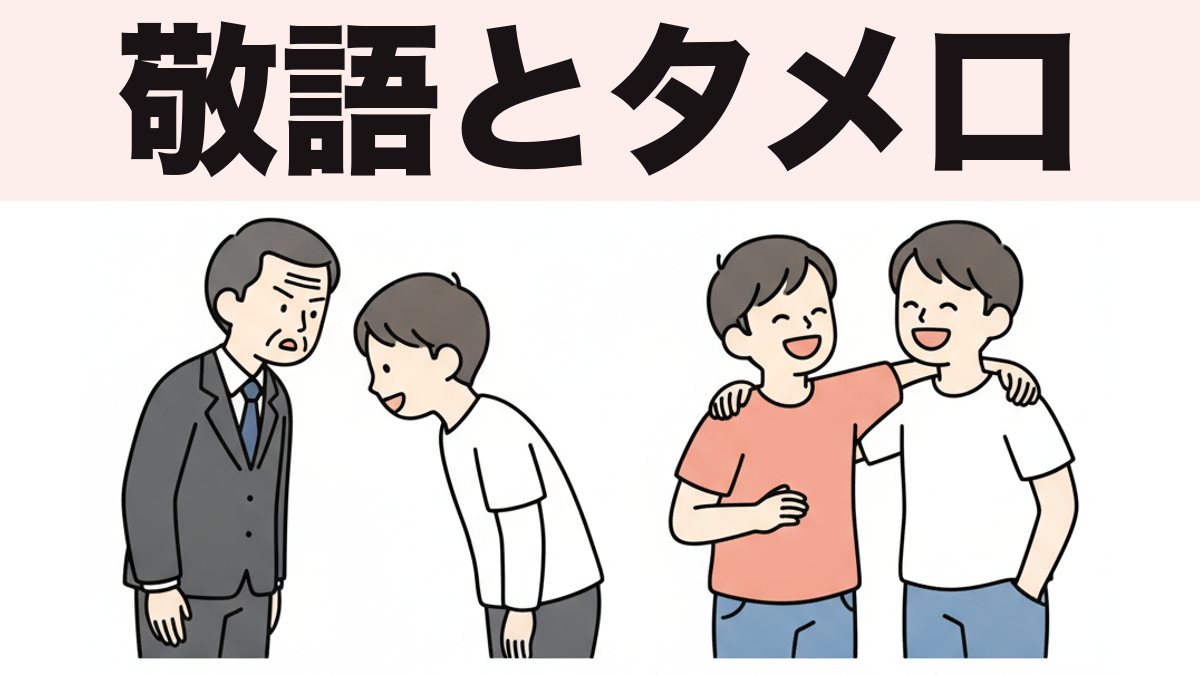
Japanese politeness has three separate tools above plain speech — teineigo (polite), sonkeigo (raises someone else's action), and kenjougo (lowers your own) — and which one you need depends on whose action you're describing, not how formal the room feels.
日本語のていねいさには、普通の話し方の上に3つの道具があります。丁寧語(ていねいな言い方)、尊敬語(相手を高める)、謙譲語(自分を低める)です。どれを使うかは、「誰の動作を話しているか」で決まります。
Our post on だ vs です covers the first switch: plain speech versus the polite です/ます form. That gets you through most conversations. Keigo (敬語) is what sits above それ — a second, sharper layer that native speakers reach for with teachers, customers, and anyone clearly senior to them. It looks like one intimidating system from the outside. It is actually three small systems with three different jobs.
The basics
What is keigo, and why is it three things instead of one?
Keigo is the umbrella term for "respectful language," but it splits into three tools that do different work:
- 丁寧語 (teineigo) — polite language. Raises the formality of the sentence. This is です/ます.
- 尊敬語 (sonkeigo) — respectful language. Raises the other person's action.
- 謙譲語 (kenjougo) — humble language. Lowers your own action, which indirectly raises theirs.
The confusion almost always comes from treating these as one dial you turn up. They're not a dial — they're a question: whose action is this sentence describing? Yours, or someone you're showing respect to?
先生が来ます。 — The teacher is coming. (teineigo only — polite, but plain about who's doing it) 先生がいらっしゃいます。 — The teacher is coming. (sonkeigo — the teacher's action is raised)
Same fact, same teacher, two different levels of respect for the same verb — because 尊敬語 isn't about the sentence's formality, it's about whose feet are moving.
How does sonkeigo actually work?
Sonkeigo (尊敬語) is what you use for the actions of someone above you — a teacher, a customer, your boss, a stranger you're being polite to. Some common verbs have a completely separate respectful form instead of a regular conjugation:
いらっしゃる — to go / come / be (respectful form of 行く・来る・いる) おっしゃる — to say (respectful form of 言う) 召し上がる — to eat / drink (respectful form of 食べる・飲む) ご覧になる — to see / look (respectful form of 見る)
For verbs without a special form, the pattern is お + verb stem + になる:
先生がお読みになった本です。 — This is the book the teacher read. (sonkeigo — お + 読み + になる)
The rule that trips people up: you never use sonkeigo for your own actions. Saying おっしゃいました about something you said yourself is a genuine, noticeable error — like accidentally bowing to yourself.
How does kenjougo actually work?
Kenjougo (謙譲語) is the mirror image: it lowers your own action to make the other person's position look relatively higher. You use it when talking about what you do for or to someone you respect.
参ります。 — I'll go / come. (humble form of 行く・来る) 申します。 — I say / my name is. (humble form of 言う, used for self-introduction) いたします。 — I'll do. (humble form of する) 伺います。 — I'll ask / visit. (humble form of 聞く・訪ねる, used toward someone senior)
明日、そちらに伺います。 — I'll visit you there tomorrow. (kenjougo — lowers "I visit" toward a senior listener)
Notice the logic: 伺います isn't polite about the visit itself, it's polite about the fact that you're the one doing the visiting, to them. Swap the direction and it stops making sense — you would never use 伺います to describe your boss visiting your house.
When do people actually switch from keigo to casual (タメ口)?
Not on a timer, and not just because two people have talked a few times. The switch usually needs one of these:
- A clear gap closes. A coworker becomes a friend, a classmate becomes a close one.
- An explicit invitation. Someone senior says タメ口でいいよ ("casual is fine") — until they do, staying polite is the safe assumption.
- Context resets it. The same two people might use keigo at work and casual speech at an after-work bar, switching back the next morning without comment.
タメ口でいいよ。 — Casual is fine, you don't have to be so formal. (casual, an invitation from someone senior to relax the register)
Age alone doesn't grant permission — a senpai one year older at a part-time job might still get です/ます from a younger coworker for months. What changes it is relationship, not clock time.
Beyond the basics
Why do anime characters suddenly drop into casual speech mid-scene?
This is one of the most useful tells in anime dialogue, and it's built on exactly the mechanic above. A character who has been careful and polite all episode — です/ます, maybe even sonkeigo toward a superior — drops every honorific the instant they're overwhelmed: furious, terrified, or suddenly, deeply sincere.
The drop reads as "the mask came off." It works precisely because keigo is a performed social distance, and dropping it mid-sentence signals that the performance just broke. A villain who has spoken in immaculate keigo the whole fight switching to plain, blunt speech right before the final blow is a very deliberate writing choice, not a slip.
お前、いい加減にしろよ。 — That's it, cut it out. (very casual/rough — a register shift used for a character finally snapping)
If you notice a character do this, it's worth rewinding — the moment they drop keigo usually marks the emotional turning point of the scene.
Does keigo mean the same thing as "being cold" or "distant"?
Not necessarily — and this trips up a lot of learners. In Japanese customer service, hospitality, and formal correspondence, dense keigo is warmth expressed through care, not coldness. A shopkeeper using layered sonkeigo and kenjougo toward a customer isn't being standoffish; they're performing hospitality (おもてなし) at a high level. The emotional read depends entirely on context — the same density of keigo toward a friend would feel like a wall going up, while toward a stranger at a hotel front desk it reads as excellent service.
What about the honorifics attached to names — do they fit into this system?
They're related but separate. San, kun, chan, and sama attach to names, while keigo changes the verbs and grammar of the sentence. You can combine both: 田中様がいらっしゃいました uses the honorific 様 on the name and sonkeigo on the verb, stacking two different respect systems in one sentence. For the name-honorific side specifically, see our guide to san, kun, chan, and sama.
Common mistakes
- Using sonkeigo for yourself. お読みになりました about your own reading is backwards — sonkeigo is reserved for other people's actions, never your own.
- Mixing kenjougo into a sentence about someone senior's action. 伺いました should describe your visit, not theirs — for their visit, you need sonkeigo (いらっしゃいました), not kenjougo.
- Assuming keigo is just です/ます, louder. Reaching only for teineigo and never sonkeigo/kenjougo when the situation calls for it (a job interview, addressing a teacher's parent, formal customer service) reads as underdressed, not wrong exactly, but noticeably plain.
- Switching to casual without an invitation. Dropping keigo before someone senior signals it's okay can land as presumptuous, even if your grammar is otherwise perfect.
The four-level ladder
| Level | Job | Example (the verb 行く "to go") |
|---|---|---|
| 尊敬語 (sonkeigo) | Raises someone else's action | いらっしゃる |
| 丁寧語 (teineigo) | Raises the formality of the sentence | 行きます |
| 謙譲語 (kenjougo) | Lowers your own action | 参ります |
| 普通体 (plain / タメ口) | No distance at all | 行く |
Practice
Answers are hidden — build yours first, then open. Questions 2 and 3 are a pair: the same teacher, and who gets raised decides the verb.
1. What are the three parts of keigo?
Show answer
Teineigo (polite), sonkeigo (respectful), kenjougo (humble) — teineigo is the です/ます layer; the other two move people up or down relative to each other.
2. Say "the teacher is coming," politely but with no honorific verb.
Show answer
先生が来ます — teineigo only. Polite, but plain about the action itself.
3. Now raise the teacher's action.
Show answer
先生がいらっしゃいます — sonkeigo. This is the pair to question 2: the politeness level did not change, the person being raised did.
4. Which is the humble verb for 行く and 来る, and when do you use it?
Show answer
参ります — for your own movement, toward someone senior — kenjougo lowers you rather than raising them.
5. Introduce yourself using the humble verb for 言う.
Show answer
〜と申します — the standard self-introduction. 申す is the humble form of 言う.
6. Something is wrong here: 先生が参ります。
Show answer
先生がいらっしゃいます — 参る lowers the subject, so using it for the teacher demotes them. Humble forms are for you and your side only.
7. Someone senior says タメ口でいいよ. What just happened?
Show answer
They invited you to drop the polite register — the switch is theirs to offer, not yours to take.
8. Say "I'll visit you there tomorrow," humbly.
Show answer
明日、そちらに伺います — 伺う is the humble form for visiting or asking.
9. Why does an anime character suddenly switch to rough speech mid-scene?
Show answer
The register shift is the drama — dropping politeness signals that the relationship, or the character's patience, has just changed.
10. Which honorific verb means "to eat," and who does it apply to?
Show answer
召し上がる — the other person — it raises their action. For yourself, you would stay plain or use いただく.
FAQ
Do I need sonkeigo and kenjougo as a beginner? Not urgently. です/ます (teineigo) will carry you through nearly every learner-level situation safely. Sonkeigo and kenjougo matter more as you advance into workplace Japanese, job interviews, or formal customer-facing contexts.
Is it rude to use teineigo with a close friend? It's not rude exactly, but it reads as odd or distant — like suddenly saying "I would appreciate it if you could" to your roommate. Among close friends, plain form is the expected register.
How do I know if someone wants me to switch to casual speech? Wait for a clear signal — they use casual speech with you first, or say something like タメ口でいいよ. Switching first, especially with someone older or senior to you, is the riskier move.
Are sonkeigo and kenjougo used in casual conversation at all? Rarely between friends, but you'll hear kenjougo phrases like いたします or 伺います used casually in service industries, even toward customers who are themselves speaking politely but not formally.
What happens if I mix up sonkeigo and kenjougo? Native speakers will usually still understand you, but it's one of the more noticeable errors — like using "may I" when you meant "might you." It's worth learning the direction (self vs. other) rather than memorizing verbs as an unordered list.
Is keigo the same in every region of Japan? The core system (teineigo, sonkeigo, kenjougo) is standard nationwide, though Kansai and other regions have their own additional polite forms layered on top of local dialect — a separate topic from what's covered here.
Vocabulary from this article
Tap the block to select all of it, then copy. In Anki: File → Import, note type Basic, separator Tab — the first column becomes the front, the second the back.
先生	せんせい — teacher
来る	くる — to come
行く	いく — to go
言う	いう — to say
食べる	たべる — to eat
飲む	のむ — to drink
見る	みる — to see
読む	よむ — to read
本	ほん — book
明日	あした — tomorrow
聞く	きく — to ask, to hear
参る	まいる — to go/come (humble)
申す	もうす — to say (humble)
伺う	うかがう — to ask, to visit (humble)
召し上がる	めしあがる — to eat (respectful)
覧	らん — look (in ご覧になる)
加減	かげん — degree, moderation
I'm Yuuki, a Japanese teacher based in Tokyo. I've taught on italki as a Top 1% teacher and watched over 1,500 anime, and keigo is consistently the point where students go from "I can hold a conversation" to "I sound like I actually work here" — it's worth the discomfort of the first few weeks.
Sources: the author's own lessons and standard reference grammars.
だ・です の記事では、最初の切りかえ(普通体とです・ます体)を説明しました。それで、ほとんどの会話はできます。敬語は、その上にあるもう1つの道具です。先生やお客さん、目上の人と話すときに使います。外から見ると1つの難しいシステムに見えますが、実は仕事がちがう3つの小さいシステムです。
基本の形
敬語には、なぜ3つの種類があるの?
敬語は「ていねいな言葉」全体の名前です。でも、仕事がちがう3つに分かれます。
- 丁寧語 — ていねいな言葉。文全体を「ていねい」にします。です・ます がこれです。
- 尊敬語 — 相手の動作を高める言葉。
- 謙譲語 — 自分の動作を低める言葉。それによって、相手が高く見えます。
まちがえやすいのは、これを1つのダイヤルだと思ってしまうことです。実はダイヤルではなく、「この文は誰の動作を話しているか」という質問です。自分か、相手か。
先生が来ます。 — The teacher is coming. (丁寧語だけ・ていねいだが、誰がするかはふつうの言い方) 先生がいらっしゃいます。 — The teacher is coming. (尊敬語・先生の動作を高めている)
同じ事実、同じ先生、同じ動詞ですが、2つのレベルがあります。尊敬語は文のていねいさではなく、「誰が動くか」についての言葉だからです。
尊敬語は、どうやって使う?
尊敬語は、自分より上の人(先生、お客さん、上司、知らない人へのていねいな言い方)の動作に使います。いくつかの動詞には、特別な形があります。
いらっしゃる — to go / come / be (行く・来る・いる の尊敬語) おっしゃる — to say (言う の尊敬語) 召し上がる — to eat / drink (食べる・飲む の尊敬語) ご覧になる — to see / look (見る の尊敬語)
特別な形がない動詞は、「お+動詞の形+になる」を使います。
先生がお読みになった本です。 — This is the book the teacher read. (尊敬語・お+読み+になる)
気をつけるのは、自分の動作には尊敬語を絶対に使わないことです。自分がしたことに「おっしゃいました」を使うのは、はっきりわかるまちがいです。自分にお辞儀するようなものです。
謙譲語は、どうやって使う?
謙譲語は反対です。自分の動作を低くして、相手の立場を高く見せます。相手のために何かをするとき、または相手に対して何かをするときに使います。
参ります。 — I'll go / come. (行く・来る の謙譲語) 申します。 — I say / my name is. (言う の謙譲語・自己紹介で使う) いたします。 — I'll do. (する の謙譲語) 伺います。 — I'll ask / visit. (聞く・訪ねる の謙譲語・目上の人に使う)
明日、そちらに伺います。 — I'll visit you there tomorrow. (謙譲語・目上の相手への「訪ねる」を低くしている)
伺います は「訪ねること」自体がていねいなのではなく、「自分が」訪ねる、という向きがていねいなのです。向きを反対にすると意味が通じません。上司が自分の家に来ることを「伺います」とは言いません。
敬語からタメ口に切りかわるのは、いつ?
時間で決まるわけではありません。2人が何回か話しただけでも、まだ切りかわりません。だいたい次のどれかが必要です。
- 距離が近くなる。 同僚が友だちになる、クラスメートが親しい人になる。
- はっきりした招待がある。 目上の人が「タメ口でいいよ」と言う。それまでは、ていねいなままが安全です。
- 場面が変わる。 同じ2人でも、職場では敬語、仕事の後の飲み会ではタメ口、ということがあります。次の朝は、また敬語にもどります。
タメ口でいいよ。 — Casual is fine, you don't have to be so formal. (カジュアル・目上の人からの「くつろいでいいよ」という招待)
年齢だけでは許可になりません。アルバイト先の1歳上の先輩でも、何か月もです・ます体のままのことがあります。変えるのは時間ではなく、関係です。
もっと深く
アニメのキャラが、急にタメ口になるのはなぜ?
これは、アニメのセリフを見るときにとても役立つサインです。上のしくみをそのまま使っています。エピソードの間ずっとていねい(です・ますや、目上の人への尊敬語)だったキャラが、追いつめられた瞬間(怒り、恐怖、強い本音)に、全部の敬語を落とします。
これは「仮面がはずれた」と聞こえます。敬語は演じられた社会的な距離だからです。文の途中でそれを落とすと、その演技が壊れたサインになります。悪役がずっと完ぺきな敬語で話していて、最後の一撃の直前に普通の、ぶっきらぼうな話し方に変わるのは、よくある演出です。ミスではありません。
お前、いい加減にしろよ。 — That's it, cut it out. (とてもカジュアル・キャラがついに我慢の限界に達したときの言い方)
キャラがこれをしたら、少し戻して見る価値があります。敬語を落とした瞬間が、その場面の感情の転換点であることが多いからです。
敬語は「冷たさ」「距離」と同じ意味?
必ずしもそうではありません。ここで、多くの学習者がつまずきます。日本の接客、おもてなし、正式な文書では、たくさんの敬語は「気づかいの表れ」であって、冷たさではありません。店員がお客さんに対して尊敬語と謙譲語を重ねて使うのは、よそよそしいのではなく、高いレベルのおもてなしを表しています。感じ方は場面によって変わります。同じ量の敬語でも、友だちに使えば壁を作るように感じますが、ホテルのフロントで使えば、良いサービスに感じます。
名前につく「さん」「くん」なども、このしくみの一部?
関係はありますが、別のものです。さん・くん・ちゃん・さまは「名前」につきます。敬語は「動詞や文法」を変えます。両方を組み合わせることもできます。「田中様がいらっしゃいました」は、名前に「様」、動詞に尊敬語が入っています。2つの別のしくみが1つの文で重なっています。名前の敬称については、さん・くん・ちゃん・さまの記事を見てください。
よくあるまちがい
- 自分に尊敬語を使ってしまう。 自分が読んだことに「お読みになりました」を使うのは反対です。尊敬語は相手の動作専用で、自分には絶対に使いません。
- 目上の人の動作に謙譲語を使ってしまう。 「伺いました」は自分の訪問に使う言葉です。相手が訪ねてきたときは、尊敬語(いらっしゃいました)が必要です。
- 敬語敬語です・ます体を大きい声で言うことだと思ってしまう。 場面(就職の面接、先生の保護者との会話、正式な接客)で尊敬語・謙譲語が必要なのに丁寧語だけを使うと、まちがいではなくても、少し軽装に聞こえます。
- 招待なしにタメ口に切りかえてしまう。 目上の人が「大丈夫だよ」というサインを出す前に敬語を落とすと、文法が正しくても、出すぎた感じに聞こえることがあります。
4段階のはしご
| レベル | 仕事 | 例(動詞「行く」) |
|---|---|---|
| 尊敬語 | 相手の動作を高める | いらっしゃる |
| 丁寧語 | 文全体のていねいさを上げる | 行きます |
| 謙譲語 | 自分の動作を低める | 参ります |
| 普通体(タメ口) | 距離をなくす | 行く |
練習
答えはかくれています。まず自分で作ってから開いてください。2番と3番が対です。同じ先生で、だれを上げるかで動詞が変わります。
1. 敬語の3つの部分は?
答えを見る
ていねい語・そんけい語・けんじょう語 — ていねい語は「です・ます」、あとの2つは人の上下を動かします。
2. 「先生が来ます」— これはどの部分ですか。
答えを見る
ていねい語だけ — ていねいですが、動作そのものは上げていません。
3. 先生の動作を上げてください。
答えを見る
先生がいらっしゃいます — そんけい語です。2番と対で、ていねいさではなく「だれを上げるか」が変わりました。
4. 「行く」「来る」のけんじょう語は?
答えを見る
参ります — 自分の動きに使って、自分を下げます。
5. 「言う」のけんじょう語で、自こしょうかいをしてください。
答えを見る
〜と申します
6. 直してください: 先生が参ります。
答えを見る
先生がいらっしゃいます — 「参る」は主語を下げるので、先生に使うと下げてしまいます。
7. 目上の人に「タメ口でいいよ」と言われました。何が起きましたか。
答えを見る
ていねいな形をやめていい、とさそわれた — 切りかえるのは、目上の人が出すものです。
8. 「明日そちらに行きます」をけんじょう語で言ってください。
答えを見る
明日、そちらに伺います
9. アニメでとちゅうから話し方が急にらんぼうになるのはなぜですか。
答えを見る
その切りかえがドラマだから — かんけいや気もちが変わったしるしです。
10. 「食べる」のそんけい語は? だれに使いますか。
答えを見る
召し上がる — 相手に使います — 自分にはふつうの形か「いただく」です。
FAQ
初心者でも尊敬語・謙譲語が必要? 急ぎではありません。です・ます体(丁寧語)で、学習者レベルのほとんどの場面は安全に過ごせます。尊敬語・謙譲語は、職場の日本語、就職の面接、正式な接客の場面に進んでから重要になります。
親しい友だちに丁寧語を使うのは失礼? 失礼ではありませんが、変な、距離のある感じに聞こえます。ルームメイトに急に「していただけますか」と言うようなものです。親しい友だちの間では、普通体が期待されます。
相手がタメ口でいいと思っているか、どうわかる? はっきりしたサインを待ちましょう。相手が先にタメ口で話してくる、または「タメ口でいいよ」と言う、などです。特に年上や目上の人に対しては、自分から先に切りかえるほうがリスクが高いです。
尊敬語・謙譲語は、カジュアルな会話でも使う? 友だち同士ではあまり使いません。でも、接客業では「いたします」「伺います」のような謙譲語の言い回しが、ていねいだけど正式ではないお客さんに対しても、カジュアルに使われることがあります。
尊敬語と謙譲語をまちがえると、どうなる? たいていの場合、日本語話者には伝わりますが、目立つまちがいの1つです。「may I」と「might you」をまちがえるようなものです。動詞をばらばらに覚えるより、向き(自分か相手か)を覚えるほうがよいです。
敬語は日本のどこでも同じ? 丁寧語・尊敬語・謙譲語という中心のしくみは、全国どこでも同じです。ただし、関西などの地域には、方言の上に重なる独自のていねいな言い方もあります。それは、この記事とは別の話です。
この記事に出た単語
ブロックをタップすると全部選べます。そのままコピーしてください。Anki では ファイル → 読み込み、ノートタイプ 基本、区切り タブ。1列目が表、2列目が裏になります。
先生	せんせい — teacher
来る	くる — to come
行く	いく — to go
言う	いう — to say
食べる	たべる — to eat
飲む	のむ — to drink
見る	みる — to see
読む	よむ — to read
本	ほん — book
明日	あした — tomorrow
聞く	きく — to ask, to hear
参る	まいる — to go/come (humble)
申す	もうす — to say (humble)
伺う	うかがう — to ask, to visit (humble)
召し上がる	めしあがる — to eat (respectful)
覧	らん — look (in ご覧になる)
加減	かげん — degree, moderation
More drills like the ones above, plus a timed JLPT-style mock test: Practice · N4上のような練習問題と、時間つきのJLPT形式のもぎ試験: 練習ページ · N4
Want to try this in a real conversation?
本当の会話で、ためしてみませんか?
30-minute trial lesson, $13. Times shown in your own timezone.
30分の体験レッスン、$13。時間はあなたのタイムゾーンで表示されます。
Book a trial lesson · $13