The two questions that keep a Japanese conversation alive日本語の会話を止めない2つの質問
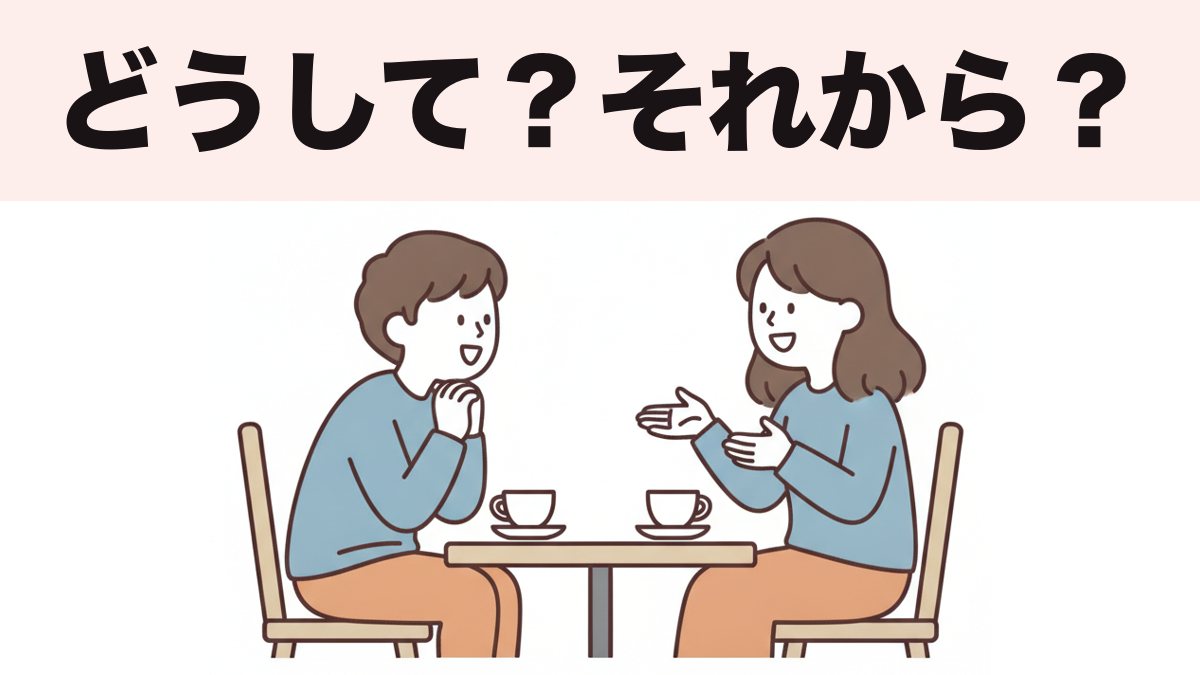
If you only memorise two sentences before your first conversation in Japanese, make them these:
はじめて日本語で会話する前に、2つの文だけ覚えるなら、これにしてください。
〜は どういう いみですか? What does 〜 mean?
〜は 日本語で なんですか? How do you say 〜 in Japanese?
I write these at the top of every student's notes, in the first lesson, before anything else. Not because they're advanced — they're beginner grammar — but because they're the only two tools that let a conversation repair itself.
Why conversations actually die
Most people think they stop speaking Japanese because their vocabulary is too small. That's rarely what happens.
What happens is this: you hit a word you don't know, and the conversation stops while you decide what to do about it. Reach for the dictionary and you've left the room. Nod and pretend, and the next sentence lands on sand. Either way, the talking stopped.
A native speaker hits unknown words too. The difference is they don't stop — they ask, get the answer in three seconds, and keep going.
These two sentences buy you that.
How to use them
Coming in — you heard something you didn't catch:
Me: 今日は いそがしいですか? ?You: いそがしい は どういう いみですか? Me: Busy. いそがしい=busy. You: ああ、はい、すこし いそがしいです。
Four seconds. The conversation never left Japanese.
Going out — you know what you want to say but not the word:
You: "7:30" は 日本語で なんですか? Me: しちじ さんじゅっぷん。 You: しちじ さんじゅっぷんです!
This one matters more than it looks. It turns every gap in your vocabulary into a question you can ask in Japanese — instead of a moment where you switch to English and quietly give up on the lesson.
The part people get wrong
Say them fast and without apology. A lot of learners bury the question in an apology — すみません、あの、ちょっと、わからないんですけど… — and by the time it arrives, the momentum is gone.
You don't need to apologise for not knowing a word. Nobody does. Ask flat, get the answer, move on.
Try it in your first lesson
I'll say something you don't know within the first two minutes. That's on purpose — it's the safest possible place to practise asking.
Bring these two sentences. That's the only homework for lesson one.
〜は どういう いみですか? What does 〜 mean?
〜は 日本語で なんですか? How do you say 〜 in Japanese?
わたしは、最初のレッスンで、他の何よりも先に、この2つを生徒のノートのいちばん上に書きます。むずかしいことばだからではありません。むしろ初級文法です。でも、会話が 自分で自分を立て直す ための道具は、この2つしかないからです。
会話が止まってしまう本当の理由
多くの人は、語彙が足りないから話せなくなると思っています。でも、実際はそうではないことが多いです。
本当に起きているのはこうです。知らないことばに出会って、どうするか決めているあいだに、会話が止まってしまいます。辞書に手をのばせば、その場から離れてしまいます。分かったふりでうなずけば、次の文が不安定な足場の上に乗ってしまいます。どちらにしても、会話は止まります。
ネイティブでも、知らないことばには出会います。ちがうのは、そこで止まらないことです。聞いて、3秒で答えをもらって、そのまま続けます。
この2つの文は、あなたにもそれを可能にしてくれます。
使い方
相手の話を聞き取れなかったとき:
わたし: 今日は いそがしいですか? ?あなた: いそがしい は どういう いみですか? わたし: Busy。いそがしい=busy。 あなた: ああ、はい、すこし いそがしいです。
4秒です。会話は一度も日本語から外れませんでした。
言いたいことは分かっていて、ことばが分からないとき:
あなた: "7:30" は 日本語で なんですか? わたし: しちじ さんじゅっぷん。 あなた: しちじ さんじゅっぷんです!
これは見た目以上に大事です。語彙のすきまが、英語に切りかえて静かにあきらめる瞬間ではなく、日本語のまま 質問できる瞬間に変わるからです。
みんなが間違えるところ
早く、あやまらずに言ってください。 多くの学習者は、この質問をあやまりことばの中にうずめてしまいます。「すみません、あの、ちょっと、わからないんですけど…」。そうやっているうちに、勢いがなくなってしまいます。
知らないことばがあっても、あやまる必要はありません。だれでも知らないことばはあります。まっすぐ聞いて、答えをもらって、次に進んでください。
はじめてのレッスンで試してみてください
最初の2分以内に、わたしはわざと知らないことばを使います。それは、質問の練習をするのに、いちばん安全な場面だからです。
この2つの文を持ってきてください。それが、最初のレッスンでの唯一の宿題です。
More drills like the ones above, plus a timed JLPT-style mock test: Practice · N5上のような練習問題と、時間つきのJLPT形式のもぎ試験: 練習ページ · N5
Want to try this in a real conversation?
本当の会話で、ためしてみませんか?
30-minute trial lesson, $13. Times shown in your own timezone.
30分の体験レッスン、$13。時間はあなたのタイムゾーンで表示されます。
Book a trial lesson · $13