Sensei meaning: 先生 is not quite "teacher," and you never call yourself one「先生」の意味: teacher とは少し違う・自分には使わない
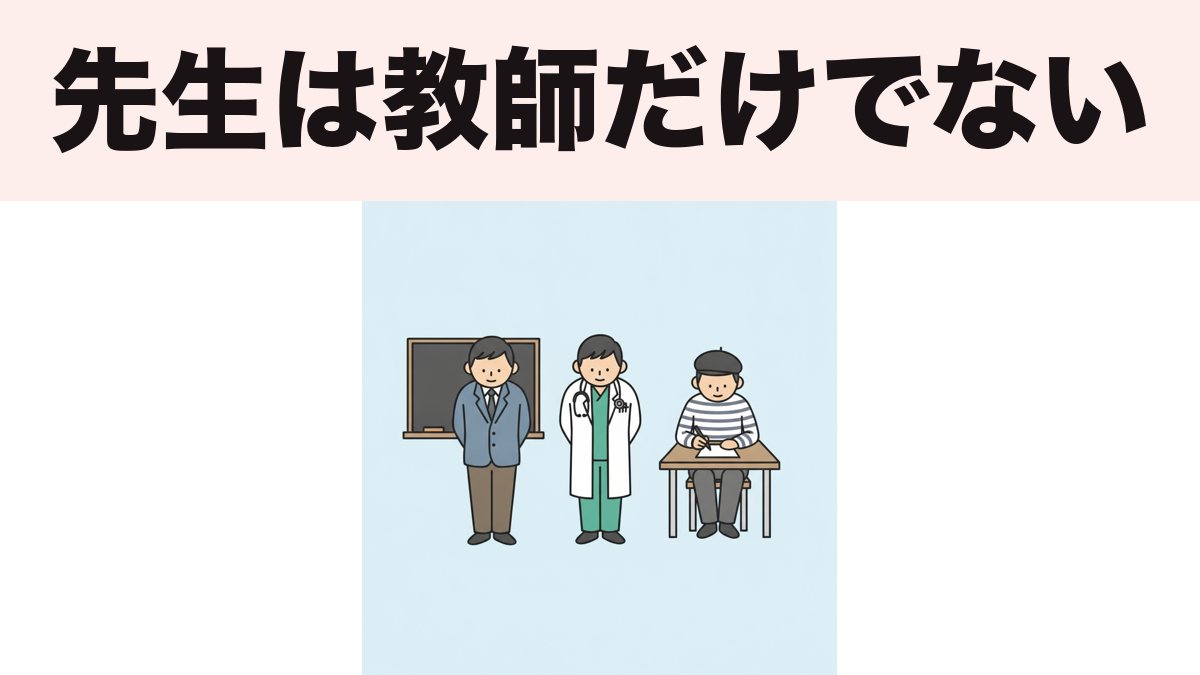
先生 means "one who was born before you" — someone further along the road. "Teacher" is only its most common use, and the rule that actually matters is that you cannot use it about yourself.
「先生」は「先に生まれた人」という意味です。同じ道を先に歩いている人、ということです。「teacher」はその一つの使い方にすぎません。そして大事な決まりは、自分には使わないことです。
It is one of the first Japanese words English speakers learn, usually from a dojo or from anime, and almost everyone arrives with the meaning slightly too narrow and the usage rules missing entirely.
The basics
What does 先生 literally mean?
Two characters:
- 先 (せん) — before, ahead, previous
- 生 (せい) — born, life
Together: born before. The image is not "person who instructs" but "person who got there first" — someone with more road behind them on whatever path you are both on.
That is why the word stretches so much further than the English "teacher."
田中先生に聞いてみます。 — I'll ask Tanaka-sensei. (polite — could be a teacher, a doctor, or a lawyer) 先生、質問があります。 — Sensei, I have a question. (polite — used alone, no name needed)
Who gets called 先生?
Far more people than you would guess:
| Profession | Called 先生? | Note |
|---|---|---|
| School teacher | Yes | The default case |
| Doctor | Yes | 医者 is the job; 先生 is how you address them |
| Dentist | Yes | Same as doctor |
| Lawyer | Yes | Standard in legal settings |
| Politician | Yes | Often with a faint edge to it |
| Manga artist | Yes | 鳥山先生, and it is genuine respect |
| Novelist | Yes | Same convention as manga |
| Martial arts instructor | Yes | The dojo usage English borrowed |
| Music or tea teacher | Yes | Any 習い事 instructor |
| Driving instructor | Usually | 教官 also exists |
| Your boss | No | 部長 or 社長 — a different axis |
| A senior colleague | No | 先輩 — see below |
The common thread is a body of expertise that you are being admitted into. It is not about age and not about employment.
The one rule you must not break
You never call yourself 先生. It is a title others give you, like "Doctor" in English — and saying 私は先生です lands as claiming status for yourself.
私は日本語を教えています。 — I teach Japanese. (polite — the natural self-introduction) 日本語教師です。 — I'm a Japanese teacher. (polite — 教師 is the job word) 私は先生です。 — (unnatural — do not say this)
This is the single most common mistake learners make with the word, and it is easy to avoid once you know that 教師 exists for exactly this purpose.
Beyond the basics
It works alone, which most titles do not
Most Japanese titles need a name in front. 先生 does not — you can call across a room with just 先生! and it functions as a complete form of address, the way お母さん does.
先生!こっちです。 — Sensei! Over here. (casual, calling out) すみません先生、もう一度お願いします。 — Excuse me sensei, could you say that again? (polite)
This is worth noticing because さん, くん, ちゃん and さま all require a name to attach to. 先生 is in a small group that can stand on its own.
Never 先生さん
先生 is the honorific. Stacking another one on top is wrong.
田中先生 — correct correct田中先生さん — wrong wrong先生さん — wrong
Same logic as 社長さん being awkward in most settings: the title already carries the respect.
先生, 教師, 講師, 教授 — which is which?
| Word | What it is | Where it appears |
|---|---|---|
| 先生 | How you address them | Speech, to their face |
| 教師 | The occupation | Forms, self-introductions |
| 講師 | Lecturer, instructor | Universities, language schools, job titles |
| 教授 | Professor (an academic rank) | Universities, on business cards |
A university professor is 教授 by rank, 先生 when you speak to them. On a form they write 教授; you never address them as 教授さん.
山田先生は経済学の教授です。 — Yamada-sensei is a professor of economics. (polite — both words, each doing its own job)
先生 vs 先輩 — a different axis
先輩 (せんぱい) is someone ahead of you in the same institution — school year, company intake, club. It is about sequence, not expertise. Your 先輩 may know less than you; they simply arrived first.
先生 implies a body of knowledge being passed on. 師匠 (ししょう) is the stronger, older version of that: a master in a craft or traditional art, with an apprentice relationship attached. You will meet 師匠 mostly in rakugo, martial arts, traditional crafts, and anime about any of those.
How it sounds in anime
Three things worth listening for.
First, students address teachers as 先生 constantly, and the name is usually dropped — which is why it can feel like a character's actual name to a viewer.
Second, manga artists are called 先生 by editors and fans, and this is real: it is the ordinary convention in publishing, not a fictional flourish.
Third, it can be used with a sneer. あの先生 with the right tone means roughly "that so-called expert." Politicians attract this usage in particular. The word carries deference by default, which is exactly what makes withdrawing the deference audible — the same mechanism described in why anime Japanese sounds rude.
The English word "sensei" is not the Japanese one
English borrowed 先生 through martial arts, and it narrowed on the way in. In English, a sensei is a martial arts instructor, and it is often used as a standalone noun ("my sensei," "he's a sensei"). In Japanese, 先生 is a form of address covering doctors, lawyers and novelists, and using it as a bare noun about a third party sounds odd without context.
So if you learned the word in a dojo, the meaning you have is real but roughly a fifth of the Japanese one.
Common mistakes
- 私は先生です. Use 教師です or 日本語を教えています. The title is given, not claimed.
- 田中先生さん. 先生 is already the honorific — nothing stacks on it.
- Calling any older person 先生. Age is not the criterion. An older neighbour is 〜さん.
- Calling a senior colleague 先生. That is 先輩, and the two are not interchangeable.
- Writing 先生 on a form where the job is asked. Forms want 教師, 講師 or 教授.
- Assuming it is gendered. It is not. 先生 applies to anyone, and there is no separate female form.
FAQ
Can I call my online Japanese tutor 先生? Yes, and most expect it. If they ask you to use their given name instead, that is them choosing a friendlier register — follow their lead, as with any politeness switch.
Why are doctors called 先生? Because the word marks specialist knowledge, not classroom teaching. 医者 or 医師 is the profession; 先生 is what you say to their face. The same split exists for lawyers: 弁護士 on paper, 先生 in the room.
Is 先生 formal? It is respectful but completely ordinary — children use it to their teachers every day. It is not stiff or ceremonial.
What is the difference between 先生 and 師匠? 師匠 is a master in a traditional craft or art, with an apprentice relationship implied, and it is much narrower. A school teacher is never 師匠; a rakugo master is.
Do I add anything when writing to a teacher? 先生 alone is correct in the address line of an email — 田中先生 is complete. Adding 様 to it is a mistake people make in business email and it reads as over-correction.
Is it strange that politicians are called 先生? It is a genuine convention, and it is also frequently mocked. The mocking exists precisely because the honorific implies expertise the speaker may not believe is there.
Practice
Questions 1 and 2 are a pair: the same person, spoken to and written about.
1. Address your teacher Tanaka politely.
Show answer
田中先生。 — 先生 is itself the honorific, so nothing else attaches. 田中先生さん is wrong.
2. Introduce yourself as a Japanese teacher, politely.
Show answer
日本語教師です。 — or 日本語を教えています. 私は先生です claims a title that others give you, like announcing yourself as "Doctor."
3. Call out to your teacher across a room.
Show answer
先生! — 先生 works alone, without a name, unlike さん・くん・ちゃん which all need one.
4. You are at a hospital. How do you address the doctor?
Show answer
先生. — 医者 and 医師 are the profession words; 先生 is what you say to their face. Same split as lawyers.
5. Say "Yamada-sensei is a professor of economics," politely.
Show answer
山田先生は経済学の教授です。 — 教授 is the academic rank, 先生 is the form of address. Both appear because they do different jobs.
6. Someone joined your company two years before you and has no special expertise. What do you call them?
Show answer
先輩. — 先輩 is about arriving first; 先生 is about knowledge being passed on. They are different axes, not degrees of the same thing.
7. A form asks for your occupation and you teach at a school. What do you write?
Show answer
教師. — Forms want the occupation, not the form of address. 講師 and 教授 are the other options depending on the post.
8. What does 先生 literally mean, character by character?
Show answer
先 (before) + 生 (born) — "born before." Someone further along the same path. That is why it covers doctors, lawyers and novelists, not just teachers.
9. You are writing an email to your teacher. What goes on the address line?
Show answer
田中先生 — and nothing else. 田中先生様 is an over-correction that appears often in business email and is still wrong.
10. Fix this: 私の先生さんは先生です。
Show answer
私の先生は日本語を教えています。 — 先生さん stacks two honorifics, and 先生です as a description of what someone does is better carried by the verb or by 教師.
Vocabulary from this article
Tap the block to select all of it, then copy. In Anki: File → Import, note type Basic, separator Tab — the first column becomes the front, the second the back.
先生	せんせい — teacher, doctor, expert (form of address)
教師	きょうし — teacher (occupation)
講師	こうし — lecturer, instructor
教授	きょうじゅ — professor (academic rank)
師匠	ししょう — master (traditional craft)
先輩	せんぱい — senior (by arrival, not expertise)
後輩	こうはい — junior
医者	いしゃ — doctor
医師	いし — physician (formal)
弁護士	べんごし — lawyer
漫画家	まんがか — manga artist
小説家	しょうせつか — novelist
議員	ぎいん — assembly member, politician
習い事	ならいごと — lessons, a skill one studies
質問	しつもん — question
経済学	けいざいがく — economics
I'm Yuuki, a Japanese teacher based in Tokyo. I've taught on italki as a Top 1% teacher and watched over 1,500 anime. Students usually meet this word in a dojo or in anime and arrive with about a fifth of its range — and with the one rule missing, which is that it is a title you are given, never one you take.
Sources: the author's own lessons and standard reference grammars.
英語を話す人が早いうちに覚える日本語の一つです。道場かアニメで覚えることが多く、たいてい意味がせまくて、使い方の決まりを知らないまま来ます。
基本
「先生」の字の意味
- 先(せん) — 前、先
- 生(せい) — 生まれる
合わせて「先に生まれた」です。「教える人」ではなく「先にそこへ行った人」という絵です。だから英語の teacher よりずっと広く使えます。
田中先生に聞いてみます。 — I'll ask Tanaka-sensei. (polite — could be a teacher, a doctor, or a lawyer) 先生、質問があります。 — Sensei, I have a question. (polite — used alone, no name needed)
だれを「先生」と呼ぶか
思ったよりずっと多いです。
| 仕事 | 先生と呼ぶ? | メモ |
|---|---|---|
| 学校の先生 | はい | いちばんふつうの場合 |
| 医者 | はい | 仕事は「医者」、呼ぶ時は「先生」 |
| 歯医者 | はい | 医者と同じ |
| 弁護士 | はい | 法律の場ではふつう |
| 政治家 | はい | 少し皮肉が混じることもある |
| 漫画家 | はい | 「鳥山先生」。本当の敬意です |
| 小説家 | はい | 漫画家と同じ |
| 武道の指導者 | はい | 英語が借りたのはこの使い方 |
| 音楽・茶道の先生 | はい | 習い事の先生はみんな |
| 自動車教習所 | たいてい | 「教官」とも言う |
| 会社の上司 | いいえ | 「部長」「社長」。別の軸です |
| 先に入った同僚 | いいえ | 「先輩」。下を見てください |
共通しているのは、「自分が入れてもらう専門の世界がある」ことです。年齢でも、雇われ方でもありません。
守ってほしい一つの決まり
自分を「先生」と呼びません。 人からもらう呼び方です。英語の Doctor と同じで、「私は先生です」は自分で位を名乗る感じになります。
私は日本語を教えています。 — I teach Japanese. (polite — the natural self-introduction) 日本語教師です。 — I'm a Japanese teacher. (polite — 教師 is the job word) 私は先生です。 — (unnatural — do not say this)
学習者がいちばんよくする間違いです。「教師」という言葉があると知っていれば避けられます。
もう少し先
名前なしで使えます
日本語の多くの呼び方は、前に名前が要ります。「先生」は要りません。部屋の向こうから「先生!」と呼ぶだけで、呼びかけとして完成します。「お母さん」と同じです。
先生!こっちです。 — Sensei! Over here. (casual, calling out) すみません先生、もう一度お願いします。 — Excuse me sensei, could you say that again? (polite)
「さん」「くん」「ちゃん」「さま」は名前が必要です。「先生」は自分で立てる、少ない仲間です。
「先生さん」は言いません
「先生」がもう敬称です。その上にもう一つ重ねません。
田中先生 — 正しい 正しい田中先生さん — 間違い 間違い先生さん — 間違い
「社長さん」が場によって変に聞こえるのと同じ理屈です。呼び方の中にもう敬意が入っています。
先生・教師・講師・教授
| 語 | 何か | どこで出るか |
|---|---|---|
| 先生 | 呼び方 | 話す時・本人に向かって |
| 教師 | 職業 | 書類・自己紹介 |
| 講師 | 講師・インストラクター | 大学・語学学校・肩書 |
| 教授 | 大学の位 | 大学・名刺 |
大学の先生は、位は「教授」、話しかける時は「先生」です。書類には「教授」と書き、「教授さん」とは呼びません。
山田先生は経済学の教授です。 — Yamada-sensei is a professor of economics. (polite — both words, each doing its own job)
「先生」と「先輩」は別の軸
「先輩」は、同じ学校や会社に先に入った人です。順番の話で、専門の話ではありません。自分より知らない先輩もいます。先に来ただけだからです。
「先生」は、渡される知識があることを表します。「師匠」はその強い形で、職人や伝統芸の世界で、弟子との関係がある時に使います。落語・武道・伝統工芸と、それを描くアニメでよく聞きます。
アニメでの聞こえ方
三つ聞いてみてください。
一つ目。生徒は先生を「先生」と呼び続け、名前を言いません。だから見ている人には、それが名前のように聞こえます。
二つ目。漫画家は編集者やファンから「先生」と呼ばれます。これは本当の習慣で、作り話ではありません。
三つ目。ばかにする使い方があります。「あの先生」を、ある言い方で言うと「あの自称専門家」という意味になります。政治家に対してよく使われます。もともと敬意のある言葉だからこそ、それを外したのが耳で分かります。
英語の sensei は日本語の先生ではありません
英語は武道を通じてこの語を借りました。その時に意味がせまくなりました。英語の sensei は武道の指導者で、そのまま名詞として使います(my sensei、he's a sensei)。日本語の「先生」は、医者・弁護士・小説家まで含む呼びかけの言葉で、第三者について名詞のように使うと少し変です。
道場で覚えた意味は本物ですが、日本語の五分の一くらいです。
よくある間違い
- 「私は先生です」。 「教師です」「日本語を教えています」にします。もらう呼び方で、名乗る呼び方ではありません。
- 「田中先生さん」。 「先生」がもう敬称です。重ねません。
- 年上の人をみんな先生と呼ぶ。 年齢は関係ありません。近所の年上の人は「〜さん」です。
- 先に入った同僚を先生と呼ぶ。 それは「先輩」です。入れ替えられません。
- 書類の職業欄に「先生」と書く。 「教師」「講師」「教授」です。
- 男女で違うと思う。 違いません。別の形はありません。
よくある質問
オンラインの日本語の先生を「先生」と呼んでいいですか。 はい。たいていそれを想定しています。下の名前で呼んでほしいと言われたら、それは親しい言い方を選んでいるので、合わせてください。
なぜ医者を「先生」と呼ぶのですか。 教室で教えるからではなく、専門の知識を持っているからです。「医者」「医師」は職業、「先生」は本人に向かって言う言葉です。弁護士も同じで、書類では「弁護士」、その場では「先生」です。
「先生」はかたい言葉ですか。 敬意はありますが、まったくふつうです。子どもが毎日使っています。
「先生」と「師匠」の違いは。 「師匠」は伝統的な芸や職人の世界の親方で、弟子の関係が入ります。ずっとせまい言葉です。学校の先生を「師匠」とは言いません。
先生へのメールでは何と書きますか。 「田中先生」だけで完成しています。そこに「様」を足すのは、仕事のメールでよくある間違いで、やりすぎです。
政治家を「先生」と呼ぶのは変ですか。 本当の習慣ですが、よくからかわれもします。敬称が「専門家である」と言ってしまうので、そう思っていない人が皮肉に使うのです。
練習
1と2は組です。同じ人を、呼ぶ時と書く時で。
1. 先生の田中さんに、ていねいに呼びかけてください。
答えを見る
田中先生。 — 「先生」がもう敬称なので、ほかに何も付けません。「田中先生さん」は間違いです。
2. 自分を日本語の先生として、ていねいに紹介してください。
答えを見る
日本語教師です。 — または「日本語を教えています」。「私は先生です」は、人からもらう呼び方を自分で名乗ることになります。
3. 部屋の向こうの先生を呼んでください。
答えを見る
先生! — 「先生」は名前なしで使えます。「さん・くん・ちゃん」は名前が必要です。
4. 病院です。お医者さんを何と呼びますか。
答えを見る
先生。 — 「医者」「医師」は職業の言葉で、本人に向かっては「先生」です。弁護士も同じです。
5. 「山田先生は経済学の教授です」とていねいに言ってください。
答えを見る
山田先生は経済学の教授です。 — 「教授」は大学の位、「先生」は呼び方です。仕事が違うので両方出ます。
6. 2年先に会社に入った人で、特別な専門はありません。何と呼びますか。
答えを見る
先輩。 — 「先輩」は先に来たこと、「先生」は渡される知識のことです。強さの違いではなく、別の軸です。
7. 書類の職業欄です。学校で教えています。何と書きますか。
答えを見る
教師。 — 書類は職業を聞いています。呼び方ではありません。立場によって「講師」「教授」もあります。
8. 「先生」を字ごとに見ると、どういう意味ですか。
答えを見る
先(前に)+生(生まれた))「先に生まれた」。 同じ道を先に歩いている人です。だから医者や弁護士や小説家まで入ります。
9. 先生へのメールの宛名は何と書きますか。
答えを見る
田中先生だけです。「田中先生様」は、仕事のメールでよく見かけますが間違いです。
10. 直してください: 私の先生さんは先生です。
答えを見る
私の先生は日本語を教えています。 — 「先生さん」は敬称が二重です。何をしている人かは、動詞か「教師」で言います。
この記事に出た単語
このブロックをタップして全部選び、コピーしてください。Anki では File → Import、ノートタイプ 基本、区切り タブ を選びます。1列目が表、2列目が裏になります。
先生	せんせい — teacher, doctor, expert (form of address)
教師	きょうし — teacher (occupation)
講師	こうし — lecturer, instructor
教授	きょうじゅ — professor (academic rank)
師匠	ししょう — master (traditional craft)
先輩	せんぱい — senior (by arrival, not expertise)
後輩	こうはい — junior
医者	いしゃ — doctor
医師	いし — physician (formal)
弁護士	べんごし — lawyer
漫画家	まんがか — manga artist
小説家	しょうせつか — novelist
議員	ぎいん — assembly member, politician
習い事	ならいごと — lessons, a skill one studies
質問	しつもん — question
経済学	けいざいがく — economics
More drills like the ones above, plus a timed JLPT-style mock test: Practice · N5上のような練習問題と、時間つきのJLPT形式のもぎ試験: 練習ページ · N5
Want to try this in a real conversation?
本当の会話で、ためしてみませんか?
30-minute trial lesson, $13. Times shown in your own timezone.
30分の体験レッスン、$13。時間はあなたのタイムゾーンで表示されます。
Book a trial lesson · $13