San, kun, chan, sama: the honorifics guide anime fans actually needさん くん ちゃん さま アニメファンに必要な敬称ガイド
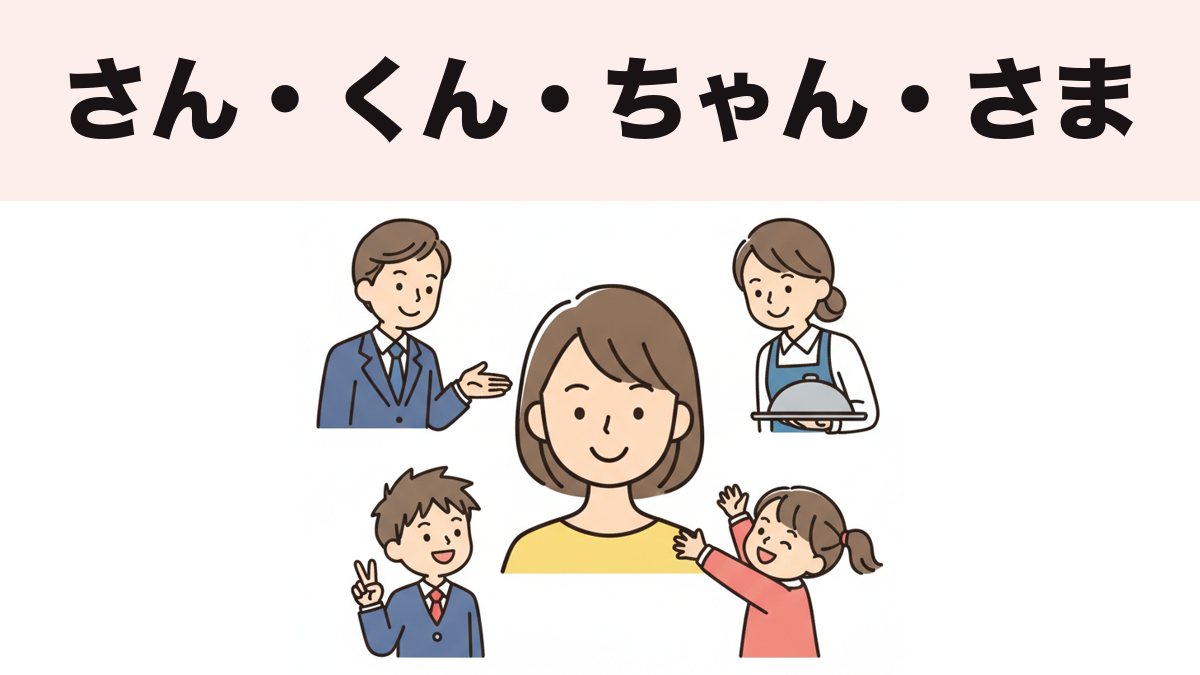
Honorifics are not politeness levels. They are relationship markers.
さん・くん・ちゃん・さまは、ていねいさの段階ではありません。関係を表すしるしです。
Learners are usually taught a ladder — さん polite, ちゃん cute, さま very polite — and the ladder is wrong often enough to get you into trouble. What these suffixes actually encode is how close you are and which direction the relationship runs.
The working set
〜さん — the default. Anyone, any gender, any age, colleague or stranger. 〜くん — younger or junior, usually male. Also used by bosses to staff. 〜ちゃん — close and affectionate. Children, close friends, family, pets. 〜さま — customers, gods, and addresses on envelopes. 〜先生 — teachers, doctors, lawyers, manga artists.
If you learn only さん you will be correct almost always. Nobody has ever been offended by さん.
Where anime misleads you
くん is not "boy". A department head calling a 40-year-old woman 田中くん is using it correctly — it marks junior to me, not male. Anime rarely shows you this because anime rarely shows you middle management.
さま is not "extra polite さん". You do not upgrade someone you respect to さま. It is for customers (お客さま), for deities, and for the kind of aristocratic distance that only exists in fiction and formal letters. Calling your friend's mother 〜さま is not extra courteous; it is strange.
先生 is a suffix, not a job. Anyone who teaches or professes something gets it. Your Japanese teacher, your dentist, and Eiichiro Oda are all 先生.
Dropping the suffix
This is the part worth understanding, because it is where real feeling lives.
Calling someone by their name with nothing attached is 呼び捨て (yobisute). Between close friends and within families, it is intimacy — it says we are past formality. Aimed at someone you are not close to, it is a deliberate slap.
This is why the moment a character drops the suffix in a show is a moment. The subtitles cannot render it, so it usually passes English viewers by entirely. Once you notice it, you will see it everywhere.
The rule for you: do not drop it until they drop yours. That is the actual social signal, and it is safe to just wait for it.
Given name or family name?
Second big difference from English. In Japanese, family name + さん is the neutral default for adults. Jumping to a given name is closer than English "first-name basis" — it is a step, not a starting point.
田中さん — normal, correct, safe ゆうきさん — friendly, a bit closer ゆうき — close friends only
Foreign names get a pass. If you introduce yourself as Michelle, people will say ミシェルさん and think nothing of it.
What about 先生 and 先輩?
These belong to the same system but behave differently: they are titles rather than suffixes, and both can stand alone as a form of address.
先生 attaches to a name the way さん does — 田中先生 — but it never stacks with one, so 田中先生さん is wrong. It also works by itself: calling 先生! across a room is complete, which さん can never do. And it covers far more than teachers — doctors, lawyers and manga artists are all 先生. The full range, and the rule that you never use it about yourself, is in 先生 meaning.
先輩 marks someone who arrived before you in the same school or company. It is about sequence, not expertise, and it is also usable alone: 先輩、ちょっといいですか is a normal sentence.
The two mistakes almost everyone makes
1. Adding a suffix to your own name. ゆうきさんです is a small comedy. You are です; the さん comes from other people.
2. Using ちゃん to sound friendly with someone you just met. It reads as either condescending or flirtatious, depending on the pair, and neither is what you meant.
In a lesson
Ninety percent of this is one habit: default to family name + さん, and let the other person set the pace.
The remaining ten percent is timing, which is exactly the kind of thing that is hard to read about and easy to practise. In a trial lesson I will call you the wrong thing on purpose so you can hear the difference.
学習者はよく「さんはていねい、ちゃんはかわいい、さまはとてもていねい」というはしごの形で教わります。でも、このはしごは、よく間違いのもとになります。これらの敬称が本当に表しているのは、「どれだけ近いか」「どちらの立場から見た関係か」ということだからです。
よく使う敬称
〜さん — 基本の形。相手がだれでも、どんな年齢でも、同僚でも知らない人でも使えます。 。〜くん — 自分より年下、または立場が下の人に。男性に使われることが多いです。上司が部下に使うこともあります。 。〜ちゃん — 近くて、親しみがある相手に。子ども、親しい友だち、家族、ペット。 。〜さま — お客さん、神様、手紙のあて名に。 。〜先生 — 先生、医者、弁護士、マンガ家などに。
さんだけ覚えておけば、ほとんどいつも正解です。さんで気を悪くする人はいません。
アニメがかんちがいさせるところ
くんは「男の子」という意味ではありません。 部長が40歳の女性を「田中くん」と呼ぶのは、正しい使い方です。これは「自分より下」という意味であって、「男性」という意味ではありません。アニメではあまり見かけません。会社の中間管理職の場面が、アニメにはあまり出てこないからです。
さまは「もっとていねいなさん」ではありません。 尊敬している人を、さまに「格上げ」するわけではありません。さまは、お客さん(お客さま)、神様、そしてフィクションや正式な手紙の中だけにある、貴族のようなきょりのために使います。友だちのお母さんを「〜さま」と呼ぶのは、ていねいなのではなく、変です。
先生は、職業ではなく、敬称です。 何かを教えたり、その道の専門家である人にはだれでもつけられます。あなたの日本語の先生も、歯医者さんも、有名なマンガ家も、みんな先生です。
敬称をつけない呼び方
ここは、理解する価値があるところです。本当の気持ちが表れる部分だからです。
敬称を何もつけずに名前を呼ぶことを 呼び捨て といいます。親しい友だちや家族の間では、これは親しさを表します。「もう、かたい言い方はいらない」という意味です。でも、親しくない相手に対してだと、わざとの冷たい一言になります。
だから、アニメの中でキャラクターが敬称を落とす瞬間は、大事な瞬間なのです。字幕では表現できないので、英語で見ている人はほとんど気づきません。一度気づくと、あちこちで目につくようになります。
自分のためのルール: 相手が先に敬称を落とすまで、自分から落とさないこと。これが本当のサインで、そのサインが来るまで待っていれば安全です。
名字?名前?
英語との2つ目の大きなちがいです。日本語では、大人に対しては 名字+さん が基本です。いきなり下の名前で呼ぶのは、英語の「ファーストネームで呼び合う」よりも、もっと近い関係を意味します。1つの段階であって、最初の一歩ではありません。
田中さん — ふつう、正しい、安全 安全ゆうきさん — 親しみがある、少し近い 近いゆうき — 親しい友だちだけ
外国人の名前は、少し特別あつかいされます。ミシェルと自己紹介すれば、みんな「ミシェルさん」と呼び、それが自然に感じられます。
ほとんどの人がするまちがい
1. 自分の名前に敬称をつけること。 「ゆうきさんです」は、ちょっとしたコメディになります。さんは、他の人がつけてくれるものだからです。
2. 初対面の人に、親しみをこめて「ちゃん」を使うこと。 相手によって、上から目線に聞こえたり、なれなれしく聞こえたりします。どちらも、あなたの意図とはちがいます。
レッスンでは
このことの9割は、1つの習慣です。「名字+さん」を基本にして、あとは相手のペースに合わせること。
残りの1割はタイミングです。これは本を読んでもわかりにくく、練習すればすぐにつかめることです。体験レッスンでは、わざとまちがった呼び方をして、そのちがいを耳で覚えてもらいます。
More drills like the ones above, plus a timed JLPT-style mock test: Practice · N5上のような練習問題と、時間つきのJLPT形式のもぎ試験: 練習ページ · N5
Want to try this in a real conversation?
本当の会話で、ためしてみませんか?
30-minute trial lesson, $13. Times shown in your own timezone.
30分の体験レッスン、$13。時間はあなたのタイムゾーンで表示されます。
Book a trial lesson · $13