のせいで and のおかげで: the two Japanese words for "because of you「のせいで」と「のおかげで」: どちらも「あなたのために」だが意味は反対
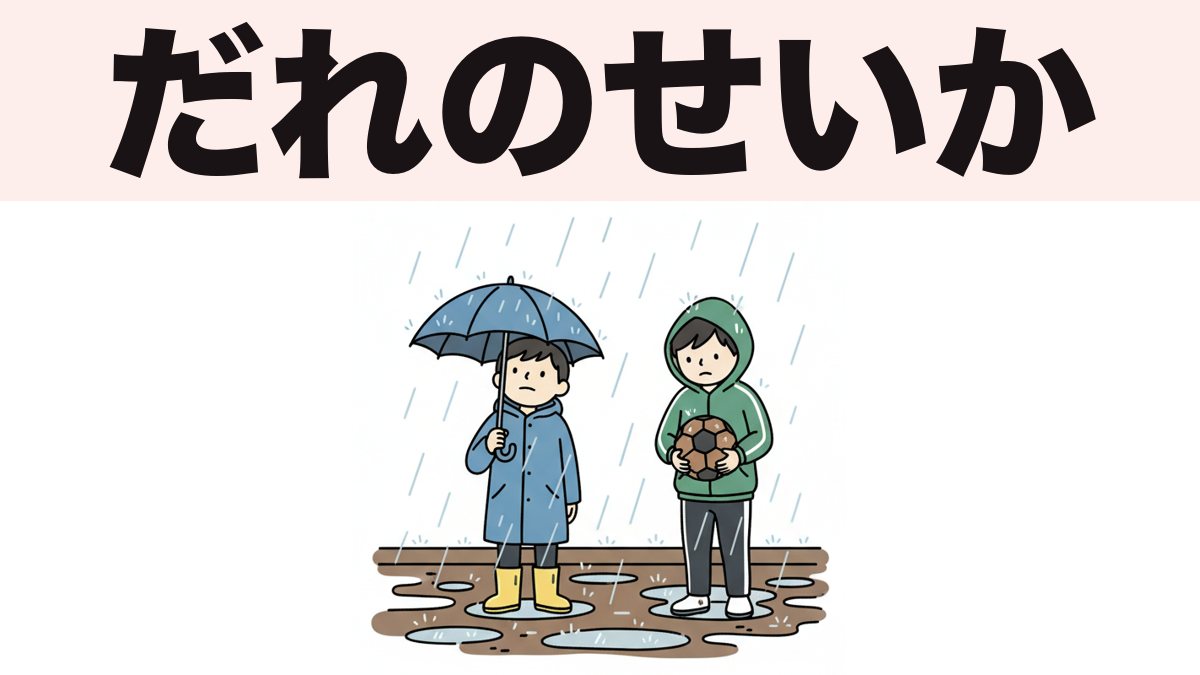
のせいで assigns blame and のおかげで assigns credit. They are the same construction with opposite charges, and neither one is neutral — if you want a plain "because" with no finger pointing at anyone, you want から or ので instead.
「のせいで」は悪いことの原因をさします。「のおかげで」はよいことの原因をさします。形は同じで、気もちだけが反対です。だれのせいでもない、ただの理由を言いたいときは「から」「ので」を使います。
English mostly gets away with one phrase. "Because of the rain" and "because of you" use the same words whether the outcome was a disaster or a rescue, and the listener works out the rest from context. Japanese decides in the grammar. Pick the wrong one and you have not made a small stylistic error — you have thanked someone for ruining your day, or blamed them for saving it.
The basics
How do you build のせいで?
Take whatever caused the problem, attach のせいで, then say what went wrong.
雨のせいで試合が中止になりました。 — The game was cancelled because of the rain. (polite, neutral-negative) 君のせいで遅刻した。 — I was late because of you. (casual, accusatory)
せい on its own is a noun meaning "fault" or "cause of something bad", so のせいで is literally "by the fault of". That is why it cannot be used for good outcomes: 合格したのは先生のせいです would be telling your teacher that passing the exam was their fault.
And のおかげで?
Identical shape, opposite charge. おかげ is a noun meaning "favour" or "benefit received", and it carries a small note of gratitude with it.
先生のおかげで合格しました。 — I passed thanks to my teacher. (polite, grateful) みんなのおかげで楽しかったです。 — It was fun thanks to everyone. (polite — a very common closing line)
おかげさまで, the set phrase built from the same word, is what people actually say when you ask how they are: it credits the listener for your wellbeing without specifying how, and it is closer to a ritual than a statement.
What can you attach it to?
Nouns take の. Verbs and adjectives attach in their plain form, with no の for い-adjectives and verbs.
寝坊したせいで電車に乗り遅れた。 — I missed the train because I overslept. (casual — plain-form verb, no の) 暑いせいで眠れなかった。 — I couldn't sleep because it was hot. (casual — い-adjective)
The の only appears after a noun or a な-adjective: 雨のせいで, 下手なせいで. This is the same joint that most N3 grammar points use, so if you know it from のに or ので, nothing new is happening here.
Beyond the basics
で becomes だ when you stop the sentence
Both words can sit at the end of a sentence instead of in the middle, and the ending changes to だ or です.
全部あいつのせいだ。 — It's all his fault. (casual, accusatory) みなさんのおかげです。 — It's thanks to all of you. (polite — standard at the end of a speech)
This is the version you hear most in drama and anime, because it is a complete accusation or a complete thank-you in three words. The middle-of-sentence で version explains an outcome; the final だ version delivers a verdict.
のせいにする: to pin it on someone
Swap で for にする and the phrase stops describing a cause and starts describing an act of blaming.
人のせいにするな。 — Don't blame other people. (casual, blunt — a common scolding) 失敗を天気のせいにした。 — He blamed the failure on the weather. (neutral narration)
The difference matters: 雨のせいで負けた says the rain caused the loss, while 負けたのを雨のせいにした says someone chose to call the rain the cause, with the implication that it was an excuse.
The sarcastic のおかげで
Because おかげで is so clearly positive, it can be turned against the listener with tone alone.
君のおかげで大変だったよ。 — Thanks to you, it was a nightmare. (casual, sarcastic)
This works in Japanese the same way "thanks a lot" works in English, and it is common enough that you should not assume おかげで guarantees a compliment. The tell is the outcome: if what follows is bad, the gratitude is not real.
Why から and ので are not the same thing
から and ので give a reason. せいで and おかげで assign responsibility. The difference shows up most clearly when the cause is a person.
雨が降ったから、試合が中止になりました。 — It rained, so the game was cancelled. (neutral — just a reason) 雨のせいで、試合が中止になりました。 — The game was cancelled because of the rain. (the rain is at fault)
For the rain, the gap is small. For a colleague, it is enormous. If you are explaining a delay to a client, 電車が遅れたので is a fact and 電車のせいで is a complaint — and the full comparison of the neutral options is in から vs ので.
When the cause is you
Turning せいで on yourself is a standard way to apologise without excusing anything.
私のせいで、ご迷惑をおかけしました。 — I caused you trouble; it was my fault. (polite, apologetic)
This is genuinely useful. Japanese apologies tend to work by accepting responsibility rather than by explaining circumstances, so 私のせいで is often the right opening where an English speaker's instinct would be to describe what happened. The vocabulary that usually goes with it is in how to say sorry in Japanese.
Common mistakes
- Using せいで for a good outcome. 先生のせいで合格しました blames your teacher for your success. It is おかげで.
- Adding の after a verb. 寝坊したのせいで is wrong; it is 寝坊したせいで. The の belongs to nouns and な-adjectives only.
- Reaching for せいで when you mean "because". For a plain reason with no blame attached, use から or ので.
- Using おかげで about something trivial. It carries real gratitude, so using it for a stranger holding a door can sound heavier than intended — ありがとうございます is enough.
- Forgetting the で→だ switch at the end of a sentence. 全部あいつのせいで as a complete sentence is unfinished; it is 全部あいつのせいだ.
The three ways to say "because"
| Form | What it does | Charge | Example |
|---|---|---|---|
| 〜から / 〜ので | Gives a reason | Neutral | 雨が降ったので中止です |
| 〜のせいで | Assigns blame | Negative | 雨のせいで中止です |
| 〜のおかげで | Assigns credit | Positive | 先生のおかげで合格しました |
| 〜のせいにする | Acts of blaming | Negative, accusing | 人のせいにするな |
FAQ
Can のせいで be used about myself? Yes, and it is a normal part of apologising — 私のせいで means "it was my fault", and it accepts responsibility rather than explaining it away.
Is おかげで always sincere? No. With a bad outcome following it, it reads as sarcasm, the same way "thanks a lot" does in English.
What is おかげさまで? A set phrase used in reply to "how are you" or "how did it go", crediting the listener in a general, ritual way. It does not require them to have actually done anything.
Which one do I use for a neutral cause like the weather? Either せいで or から works, and the choice sets the tone. 雨のせいで sounds like a complaint about the rain; 雨が降ったので is a flat statement of fact.
Does せい have other uses? Yes — 気のせい, "a trick of the mind", is extremely common. 気のせいだよ is what a character says when someone insists they heard something.
Is のせいで rude? It is not rude in itself, but pointing it at a person in front of you is an accusation. Pointed at rain, trains or your own oversleeping, it is completely ordinary.
Practice
Build each answer before opening it. Questions 1 and 2 are a pair — the only thing that changes is whether the outcome was good.
1. Say "the game was cancelled because of the rain."
Show answer
雨のせいで試合が中止になりました — a bad outcome takes せいで. This is the pair to question 2.
2. Say "I passed thanks to my teacher."
Show answer
先生のおかげで合格しました — a good outcome takes おかげで. 先生のせいで would blame them for it. This is the pair to question 1.
3. Something is wrong here: 寝坊したのせいで電車に乗り遅れた。
Show answer
寝坊したせいで電車に乗り遅れた — plain-form verbs attach directly. The の is only for nouns and な-adjectives.
4. Finish this as a complete sentence: 全部あいつのせい___。
Show answer
だ — 全部あいつのせいだ. At the end of a sentence, で becomes だ or です.
5. Say "don't blame other people."
Show answer
人のせいにするな — にする turns it from "because of" into the act of blaming.
6. Translate: 君のおかげで大変だったよ。
Show answer
Thanks to you, it was awful — sarcasm. The outcome is bad, so the gratitude is not real.
7. Explain a train delay to a client without complaining.
Show answer
電車が遅れたので、遅くなりました — ので gives the reason with no blame. 電車のせいで would read as a complaint.
8. Apologise, taking responsibility.
Show answer
私のせいで、ご迷惑をおかけしました — turning せいで on yourself is how the apology accepts fault.
9. Say "I couldn't sleep because it was hot."
Show answer
暑いせいで眠れなかった — い-adjectives attach directly, with no の.
10. Someone insists they heard a noise. Tell them it's their imagination.
Show answer
気のせいだよ — the same せい, in its most common set phrase.
Vocabulary from this article
Tap the block to select all of it, then copy. In Anki: File → Import, note type Basic, separator Tab — the first column becomes the front, the second the back.
せい	せい — fault, cause of something bad
おかげ	おかげ — thanks to, benefit received
雨	あめ — rain
試合	しあい — game, match
中止	ちゅうし — cancellation
遅刻	ちこく — being late
合格	ごうかく — passing an exam
寝坊	ねぼう — oversleeping
乗り遅れる	のりおくれる — to miss a train or bus
失敗	しっぱい — failure
迷惑	めいわく — trouble, inconvenience
天気	てんき — weather
眠る	ねむる — to sleep
気	き — mind, feeling, spirit
大変	たいへん — tough, awful
全部	ぜんぶ — all, everything
I'm Yuuki, a Japanese teacher based in Tokyo. I've taught on italki as a Top 1% teacher and watched over 1,500 anime. This pair is one of the few grammar points where the wrong choice is not just unnatural but actively insulting — which is exactly why it sticks after one good mistake.
Sources: the author's own lessons and standard reference grammars.
英語では、よいことでも悪いことでも同じ言い方でだいじょうぶです。日本語は文法で決まります。まちがえると、小さなミスではありません。あなたの一日をだめにした人に「ありがとう」と言うことになります。
基本
「のせいで」の作り方
悪いことの原因に「のせいで」を付けて、そのあとに起きたことを言います。
雨のせいで試合が中止になりました。 — The game was cancelled because of the rain. (polite, neutral-negative) 君のせいで遅刻した。 — I was late because of you. (casual, accusatory)
「せい」は「悪いことの原因」という名前の言葉です。だから、よいことには使えません。「合格したのは先生のせいです」は、先生を悪く言っています。
「のおかげで」
形は同じです。気もちが反対です。「おかげ」は「もらった助け」という意味です。
先生のおかげで合格しました。 — I passed thanks to my teacher. (polite, grateful) みんなのおかげで楽しかったです。 — It was fun thanks to everyone. (polite — a very common closing line)
「おかげさまで」は、この言葉から作られたあいさつです。「元気ですか」の答えによく使います。
何に付ける?
名前には「の」が付きます。動詞と「い」の形容詞は、そのままの形に付けます。
寝坊したせいで電車に乗り遅れた。 — I missed the train because I overslept. (casual — plain-form verb, no の) 暑いせいで眠れなかった。 — I couldn't sleep because it was hot. (casual — い-adjective)
「の」が入るのは、名前と「な」の形容詞のあとだけです。「雨のせいで」「下手なせいで」。
もう少しくわしく
文のおわりでは「だ」になる
文のまんなかではなく、おわりにも使えます。そのときは「だ」「です」になります。
全部あいつのせいだ。 — It's all his fault. (casual, accusatory) みなさんのおかげです。 — It's thanks to all of you. (polite — standard at the end of a speech)
ドラマやアニメでよく聞く形です。三つの言葉で、せめる言葉にも、お礼の言葉にもなります。
「のせいにする」
「で」を「にする」にかえると、「原因だ」ではなく「原因だと言う」という意味になります。
人のせいにするな。 — Don't blame other people. (casual, blunt — a common scolding) 失敗を天気のせいにした。 — He blamed the failure on the weather. (neutral narration)
「雨のせいで負けた」は、雨が原因です。「負けたのを雨のせいにした」は、だれかが「雨が原因だ」と言ったという意味です。言いわけの感じが入ります。
ひにくの「おかげで」
「おかげで」はよい言葉なので、ぎゃくに使うこともできます。
君のおかげで大変だったよ。 — Thanks to you, it was a nightmare. (casual, sarcastic)
あとに悪いことが来たら、お礼ではありません。
「から」「ので」とのちがい
「から」「ので」は理由を言います。「せいで」「おかげで」は責任をさします。原因が人のときに、大きなちがいになります。
雨が降ったから、試合が中止になりました。 — It rained, so the game was cancelled. (neutral — just a reason) 雨のせいで、試合が中止になりました。 — The game was cancelled because of the rain. (the rain is at fault)
お客さまに遅れを説明するとき、「電車が遅れたので」は事実です。「電車のせいで」は文句です。→ 「から」と「ので」
原因が自分のとき
自分に「せいで」を使うのは、あやまるときのふつうの形です。
私のせいで、ご迷惑をおかけしました。 — I caused you trouble; it was my fault. (polite, apologetic)
日本語のあやまり方は、じじょうを説明するより、責任をみとめる形が多いです。→ 「ごめんなさい」の言い方
よくあるまちがい
- よいことに「せいで」を使う。「先生のせいで合格しました」は先生を悪く言っています。「おかげで」です。
- 動詞のあとに「の」を付ける。「寝坊したのせいで」はまちがいです。「寝坊したせいで」です。
- ただの理由に「せいで」を使う。 責任の話でなければ「から」「ので」です。
- 小さなことに「おかげで」を使う。 重くなりすぎます。「ありがとうございます」で十分です。
- 文のおわりで「で」のままにする。「全部あいつのせいで」は終わっていません。「せいだ」です。
三つの「だから」
| 形 | はたらき | 気もち | 例 |
|---|---|---|---|
| 〜から・〜ので | 理由を言う | どちらでもない | 雨が降ったので中止です |
| 〜のせいで | 責任をさす(悪い) | マイナス | 雨のせいで中止です |
| 〜のおかげで | 責任をさす(よい) | プラス | 先生のおかげで合格しました |
| 〜のせいにする | 「原因だ」と言う | せめる | 人のせいにするな |
よくある質問
自分に「せいで」を使える? はい。「私のせいで」はあやまるときのふつうの形です。
「おかげで」はいつも本当のお礼? いいえ。あとに悪いことが来たら、ひにくです。
「おかげさまで」とは? 「元気ですか」などの答えに使うあいさつです。相手が何かをしたかどうかは関係ありません。
天気のような原因には、どちらを使う? どちらも使えます。「雨のせいで」は文句のひびき、「雨が降ったので」はただの事実です。
「せい」のほかの使い方は? 「気のせい」がとても多いです。「気のせいだよ」は「そんな音はしていないよ」という意味です。
「のせいで」は失礼? 言葉じたいは失礼ではありません。でも、目の前の人に向けると、せめる言葉になります。
練習
答えを見る前に、自分で作ってください。1番と2番はペアです。
1. 「雨で試合が中止になった」と言う。
答えを見る
雨のせいで試合が中止になりました — 悪いことは「せいで」です。2番とペアです。
2. 「先生のおかげで合格した」と言う。
答えを見る
先生のおかげで合格しました — よいことは「おかげで」です。「先生のせいで」は先生を悪く言うことになります。1番とペアです。
3. まちがいをなおす: 寝坊したのせいで電車に乗り遅れた。
答えを見る
寝坊したせいで電車に乗り遅れた — 動詞にはそのまま付きます。「の」は名前と「な」の形容詞だけです。
4. 文を完成させる: 全部あいつのせい___。
答えを見る
だ — 全部あいつのせいだ。文のおわりでは「で」が「だ」になります。
5. 「人のせいにするな」と言う。
答えを見る
人のせいにするな — 「にする」で「原因だと言う」という意味になります。
6. やくす: 君のおかげで大変だったよ。
答えを見る
ひにくです。あとに悪いことが来ているので、お礼ではありません。
7. お客さまに、文句にならないように電車の遅れを説明する。
答えを見る
電車が遅れたので、遅くなりました — 「ので」は責任をさしません。
8. 責任をみとめてあやまる。
答えを見る
私のせいで、ご迷惑をおかけしました — 自分に「せいで」を向けます。
9. 「暑くてねられなかった」と言う。
答えを見る
暑いせいで眠れなかった — 「い」の形容詞には「の」を付けません。
10. 「音が聞こえた」と言う人に、そうではないと言う。
答えを見る
気のせいだよ — 同じ「せい」の、いちばん多い言い方です。
この記事に出た単語
上のブロックをタップしてぜんぶ選んで、コピーしてください。Ankiでは ファイル → インポート、ノートタイプは 基本、区切りは タブ です。左が表、右がうらになります。
せい	せい — fault, cause of something bad
おかげ	おかげ — thanks to, benefit received
雨	あめ — rain
試合	しあい — game, match
中止	ちゅうし — cancellation
遅刻	ちこく — being late
合格	ごうかく — passing an exam
寝坊	ねぼう — oversleeping
乗り遅れる	のりおくれる — to miss a train or bus
失敗	しっぱい — failure
迷惑	めいわく — trouble, inconvenience
天気	てんき — weather
眠る	ねむる — to sleep
気	き — mind, feeling, spirit
大変	たいへん — tough, awful
全部	ぜんぶ — all, everything
More drills like the ones above, plus a timed JLPT-style mock test: Practice · N3上のような練習問題と、時間つきのJLPT形式のもぎ試験: 練習ページ · N3
Want to try this in a real conversation?
本当の会話で、ためしてみませんか?
30-minute trial lesson, $13. Times shown in your own timezone.
30分の体験レッスン、$13。時間はあなたのタイムゾーンで表示されます。
Book a trial lesson · $13