The Yamanote Line game: rules, rhythm, and how not to lose山手線ゲーム 日本人が飲み会で負けるやつ
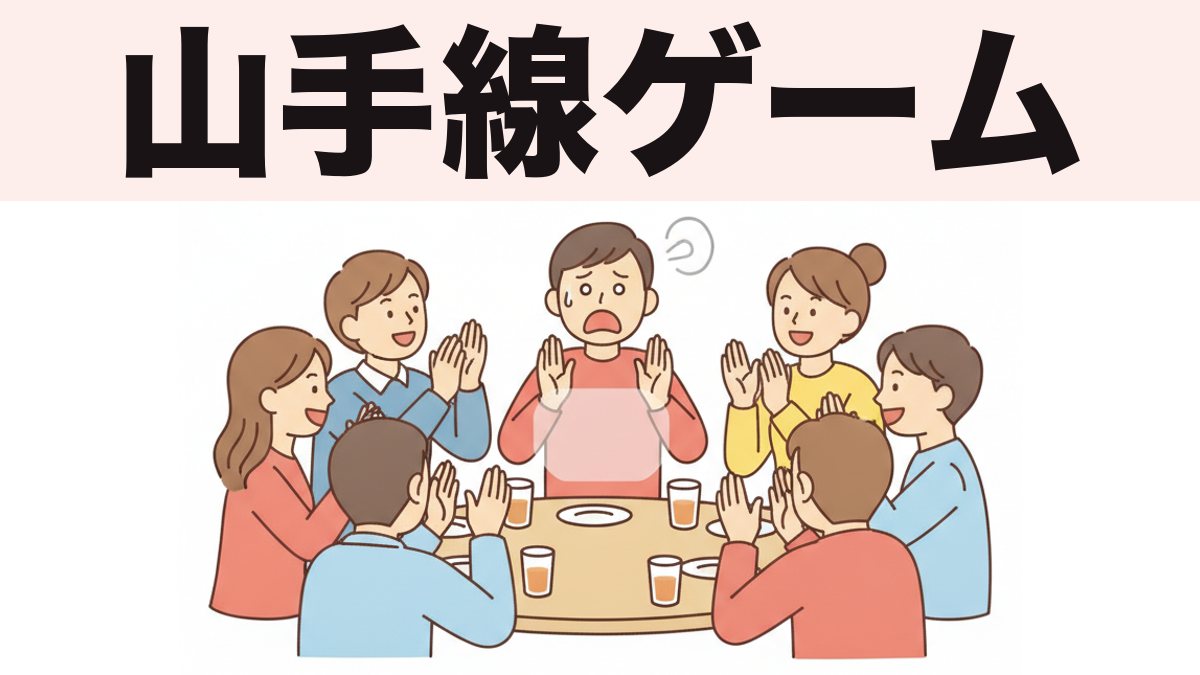
The Yamanote Line game (山手線ゲーム, yamanote-sen gē yamanote-sen gmu) is a category naming game. Someone picks a category, everyone claps a steady rhythm, and each player names something in that category on their beat. You lose if you cannot answer, break the rhythm, or repeat an answer.
山手線ゲームは、テーマを決めて、そのテーマのことばを順番に答えるゲームです。みんなで手をたたいて、リズムに合わせて答えます。答えられないとき、リズムをくずしたとき、同じ答えを言ったときに負けです。
This was episode 7 of my NihonGO podcast, recorded in August 2021. I have rewritten it here, because this is the game you will actually be asked to play if you end up at an izakaya with Japanese friends.
Why is it called the Yamanote Line game?
The original category was the stations of the JR Yamanote Line, the loop line that circles central Tokyo. There are thirty of them, they are in a fixed order that every Tokyo resident half-knows, and running out of them in front of your colleagues is funny. The name stuck even though the category is now almost never the stations.
Most people just call it 山手線 for short, and outside Tokyo groups sometimes swap in their own local line.
What are the rules?
Answer — Pick a category. Clap a slow, steady four-beat rhythm together. Each player, in order, names one thing in that category on their turn in the rhythm. You are out if you cannot answer in time, break the rhythm, or repeat something already said. Play continues until one person is left.
| Step | What happens |
|---|---|
| 1 | Someone announces the category: 「お題は……」 |
| 2 | Everyone starts clapping, usually two claps and two beats |
| 3 | Turn order goes around the circle; each person names one item in rhythm |
| 4 | Miss, repeat or stall → you are out (or you drink) |
| 5 | Last player standing wins |
The rhythm is the part foreigners underestimate. Shiritori gives you as long as you like to think. This game gives you about one second, and the clapping keeps going whether you are ready or not. That pressure is the whole game.
What categories do people actually use?
Common ones, from easy to brutal:
- Countries (国の名前) — safe, everyone can play
- Ramen toppings (ラーメンの具) — surprisingly deep
- Pokémon — the category that never ends
- Convenience store chains — ends in about six answers
- Tokyo wards (東京23区) — locals only
- Yamanote Line stations — the original, in order if you are cruel
For learners, categories are the point. "Vegetables", "things in a classroom", "verbs you use in the morning" — you are being made to retrieve a whole vocabulary field at speed, which is exactly the drill textbooks never quite give you.
What do you say when you lose?
If you are out, the standard is a cheerful 「あー、負けた!」 (ā (, maketa — "ah, I lost") and then you drink, or you do whatever the group decided the penalty is. Nobody keeps score. If nothing is coming to you, 「出てこない!」 (detekonai — "it's not coming to me") is what people actually shout in that half-second before they lose.
Worth knowing: the register in this game is very casual, and if you have only studied polite Japanese it will sound like everyone suddenly changed language. Keigo and casual Japanese, and when to switch covers that gap, and why anime Japanese can sound rude covers the opposite mistake.
Is this a good way to practise Japanese?
Answer — Yes, as speed practice for vocabulary you already half-know. It does nothing for grammar, because you only ever say single words. Use it to convert passive vocabulary into words you can produce under pressure.
Three things it does well:
- Forces retrieval on a clock. The gap between "I know this word" and "I can say this word in one second" is most of what makes conversation hard.
- Maps one vocabulary field at a time. You find out that you have twelve foods and four vegetables.
- Trains listening. You cannot repeat an answer, so you have to actually hear what the four people before you said.
And one thing it does badly: it never makes you build a sentence. Pair it with something that does — the Japanese subtitles method or the two questions that keep a conversation alive.
If you want a slower game with the same recall benefit and no rhythm to keep, shiritori is the one to start with.
Frequently asked questions
Do I have to clap? In a casual game, yes, everyone claps. The rhythm is how the turn timer works. Some groups tap the table instead.
How many people do you need? Three is playable, five to eight is where it is fun. With two people it turns into a staring contest.
Are the Yamanote stations really the original category? That is the standard explanation and why the name exists, but the game is played with the stations relatively rarely now. Treat the name as historical.
Is there a penalty if I lose? Whatever the group agreed, usually a drink. Among students, nothing. You can say 「お酒は飲めません」 (osake wa nomemasen — "I can't drink alcohol") and nobody will mind; there is always a non-alcoholic version of the penalty.
Try it in a lesson before you try it at an izakaya
The first time you play this for real, the rhythm will eat you. Playing it once slowly, with a teacher, and with a category you chose, is the difference between joining in and sitting it out.
I am Yuuki, an online Japanese teacher and an Akihabara anime tour guide. I ran this game in free Discord group lessons for years before it became a podcast episode, and it is still the fastest way I know to find out which vocabulary a student can actually reach.
Sources: this article is a rewrite of episode 7 of my NihonGO podcast (recorded 2021-08-10). Station count for the JR Yamanote Line and the rules described are the common Japanese conventions as I teach them; the game has no official rule set.
これは、僕の Podcast「NihonGO」の第7回です。2021年8月に録音しました。ここでは書き直しています。日本人の友だちと居酒屋に行くと、たぶん一度はさそわれるゲームです。
どうして「山手線」という名前なのか
最初のテーマが、JR山手線の駅の名前だったからです。東京の中心をぐるっと回る電車で、駅は 30あります。順番も決まっていて、東京の人はだいたい覚えています。そして、会社の人の前で答えられなくなるのが、おもしろいわけです。今はほとんど駅の名前で遊びませんが、名前だけ残りました。
みんなは短く「山手線」と呼びます。東京の外では、その土地の電車に変えて遊ぶこともあります。
ルール
答え — テーマを決めます。みんなでゆっくり手をたたきます。順番に、1人 1つ、そのテーマのことばをリズムに合わせて答えます。答えられない、リズムがくずれる、同じ答えを言う。この 3つで負けです。最後に残った人が勝ちです。
| 順番 | 何をするか |
|---|---|
| 1 | だれかがテーマを言う(「お題は……」) |
| 2 | みんなで手をたたきはじめる |
| 3 | 円の順番に、1人 1つ、リズムの中で答える |
| 4 | 答えられない・同じ・リズムをくずす → 負け(お酒を飲む) |
| 5 | 最後の 1人が勝ち |
外国の人が思っているより、リズムがむずかしいです。しりとりは、いくら考えてもいいです。このゲームは 1秒くらいです。そして、こちらの用意ができていなくても、手はたたきつづけます。このいそがしさが、ゲームの中心です。
どんなテーマを使うか
よくあるテーマです。上がやさしくて、下がきびしいです。
- 国の名前 — 安全。だれでも遊べます
- ラーメンの具 — 思ったより深いです
- ポケモン — 終わりません
- コンビニの名前 — 6つくらいで終わります
- 東京 23区 — 東京の人だけ
- 山手線の駅 — もとのテーマ。順番どおりなら、かなりきびしいです
日本語を勉強している人には、このテーマが大事です。1つの分野のことばを、ぜんぶ急いで思い出す練習になります。教科書では、なかなかできない練習です。
負けたときに言うことば
負けたら、明るく「あー、負けた!」と言います。そのあと、お酒を飲むか、グループで決めたことをします。点数はつけません。何も出てこないときは、「出てこない!」と言う人が多いです。
覚えておくこと。このゲームの日本語は、とてもカジュアルです。ていねいな日本語だけ勉強してきた人には、まわりが急に別の言語になったように聞こえます。その差については 敬語とカジュアル、どこで切りかえるか に書きました。はんたいの失敗は アニメの日本語が失礼に聞こえる理由 です。
日本語の練習になるのか
答え — なります。「半分知っていることば」を「言えることば」に変える練習です。1つのことばだけ言うので、文法の練習にはなりません。
よくできること。
- 時間の中で思い出す力。 「知っている」と「1秒で言える」のあいだが、会話のむずかしさのほとんどです。
- 1つの分野のことばが見える。 食べものは 12個あるけれど、やさいは 4個しかない、とわかります。
- 聞く力。 同じ答えは言えないので、前の 4人が言ったことを本当に聞く必要があります。
できないこと。文を作ること。だから、文を作る練習と組み合わせてください。日本語字幕のやり方 や 会話をつづける 2つの質問 がそれです。
リズムなしで、同じ「思い出す練習」をしたいときは、しりとり から始めてください。
よくある質問
手をたたかなくてもいいですか。 ふつうの遊び方では、みんなたたきます。リズムが時計のかわりです。テーブルをたたくグループもあります。
何人いれば遊べますか。 3人でできます。5〜8人がいちばんおもしろいです。2人だと、にらめっこになります。
本当に山手線の駅が最初のテーマですか。 そう説明されていて、名前もそこから来ています。ただ、今は駅の名前で遊ぶことは少ないです。名前は歴史だと思ってください。
負けたら、ばつがありますか。 グループが決めたこと、ふつうはお酒です。学生なら、何もありません。「お酒は飲めません」と言えば、だれも気にしません。お酒なしのばつが、必ず用意されます。
居酒屋の前に、レッスンで一度
はじめて本番で遊ぶと、リズムに負けます。先に、ゆっくり、自分が選んだテーマで、先生と一度遊んでおく。これが「入れる」と「見ているだけ」の差です。
僕はユウキです。オンラインの日本語教師で、秋葉原のアニメツアーガイドもしています。この Podcast になる前、無料の Discord グループレッスンで何年もこのゲームをしていました。生徒がどのことばまで届くのか、いちばん早くわかる方法です。
More drills like the ones above, plus a timed JLPT-style mock test: Practice上のような練習問題と、時間つきのJLPT形式のもぎ試験: 練習ページ
Want to try this in a real conversation?
本当の会話で、ためしてみませんか?
30-minute trial lesson, $13. Times shown in your own timezone.
30分の体験レッスン、$13。時間はあなたのタイムゾーンで表示されます。
Book a trial lesson · $13