〜にあたる: the word you need when two languages do not line up〜にあたる: 二つの言語がぴったり合わないときに使う言葉
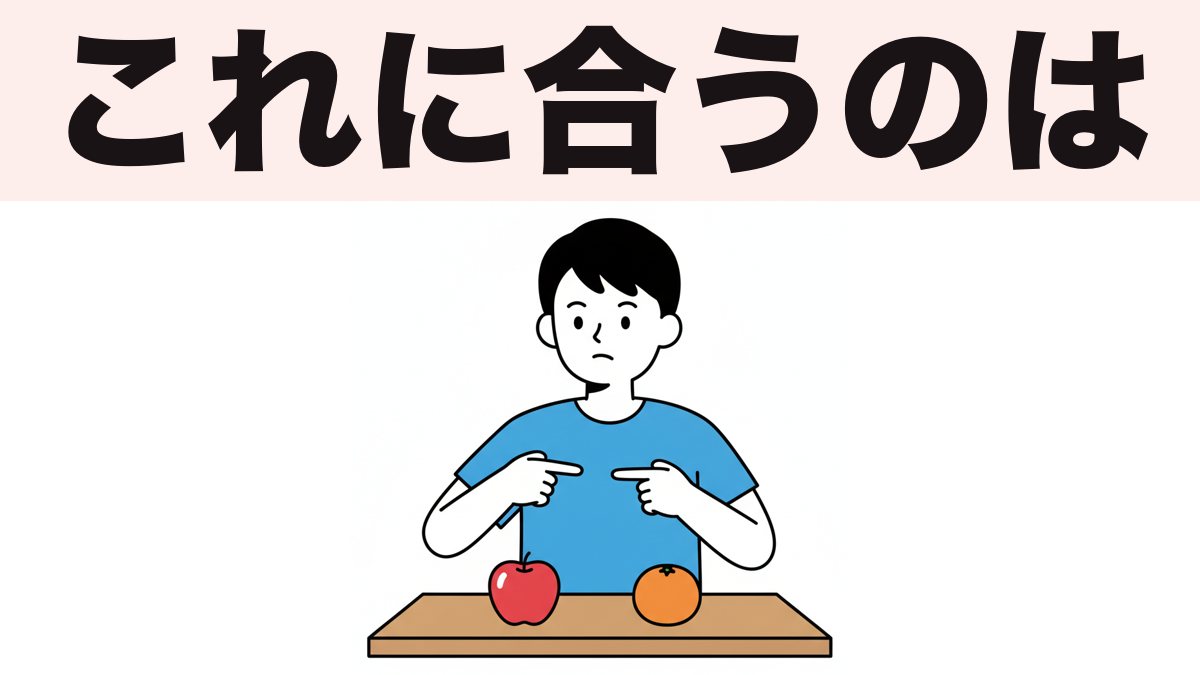
〜にあたる means "corresponds to" or "falls on" — it lines two things up against each other and says this one matches that one. It is the word you need the moment you have to explain something in one language using the other.
「〜にあたる」は「〜と同じ位置にある」という意味です。二つのものをならべて、「これがあれに合う」と言います。ある言語のことばを、もう一つの言語で説明するときに必要になります。
Most learners meet this as an N3 grammar point and file it away as formal and rare. It is neither. にあたる is the single most useful sentence pattern for the conversation every learner has constantly: what is the Japanese for this thing my language has? Without it you end up pointing and repeating; with it you can ask the question properly and understand the answer when a teacher gives it back to you.
The basics
What does にあたる actually mean?
It marks an equivalence. A corresponds to B — in a system, a calendar, a family tree, a language.
「くん」にあたる英語の言葉はありません。 — There is no English word that corresponds to "-kun". (polite, explaining) 父の兄は、私にとって伯父にあたります。 — My father's older brother is my uncle. (polite, explaining a relation)
The verb is 当たる, "to hit / to strike", and the logic runs through the idea of one thing landing on another. Once you see that, the calendar use below stops looking like a separate meaning.
How do you build it?
Noun + にあたる. That is the whole pattern. It takes ordinary verb endings, so にあたります, にあたった and にあたらない are all available.
これは日本のお正月にあたる祝日です。 — This is the holiday that corresponds to Japanese New Year. (polite) その日は日曜日にあたります。 — That day falls on a Sunday. (polite, checking a calendar)
A useful habit: the thing being explained goes in front, and the thing it matches goes before にあたる. 〜にあたるのは〜です flips it when you want the equivalent as the punchline of the sentence.
Why this is the phrase for asking about words
Because the honest answer to most vocabulary questions is "nothing corresponds exactly", and this is the grammar that lets you say so.
英語の "privacy" にあたる日本語は何ですか。 — What is the Japanese word that corresponds to "privacy"? (polite, a genuinely useful question)
Compare this to 〜は日本語で何ですか, which asks for a translation and assumes one exists. にあたる asks what lines up with it, which invites the more accurate answer: a range, a near-match, or nothing. For the simpler everyday version of the question, how do you say ___ in Japanese covers the phrase you will use ten times a day.
Beyond the basics
にあたる vs にあたって
These look almost identical and do completely different jobs. にあたる is equivalence. にあたって means "on the occasion of", marking an important moment that something else is done for.
開店にあたって、挨拶をしました。 — On the occasion of the opening, I gave a speech. (formal, written or ceremonial) これは博士号にあたる資格です。 — This is a qualification equivalent to a doctorate. (polite, explaining)
にあたって belongs to speeches, notices and formal writing, and you will mostly need to recognise it rather than produce it. にあたる, by contrast, is genuinely conversational.
The calendar use
"Falls on" is the same word, and it comes up whenever a date and a day of the week have to be reconciled.
今年のこどもの日は水曜日にあたる。 — This year, Children's Day falls on a Wednesday. (casual, neutral)
If the day-of-the-week vocabulary is not automatic yet, days of the week and dates in Japanese is worth ten minutes before this one.
The family-tree use
Japanese kinship terms are more precise than English ones, and にあたる is how the precision gets explained.
母の妹にあたる人です。 — She is the person who is my mother's younger sister. (polite, careful)
This matters because 叔母 and 伯母 are different words for what English calls one aunt, and the difference is whether she is younger or older than your parent. The whole system, including why 兄 and お兄さん are not the same word, is in Japanese family words.
The negative: にあたらない
にあたらない says something does not qualify as the thing named — which makes it a polite way to decline praise or reject a category.
感謝にはあたりません。 — There's nothing to thank me for. (formal, deflecting thanks) それは違反にはあたらない。 — That doesn't constitute a violation. (neutral, often legal or official)
The second use is common in news and official statements, which is why this grammar point appears on N3 lists in the first place.
Why not just use 同じ?
Because 同じ claims sameness and にあたる only claims correspondence, and for words across two languages sameness is almost never true.
「いただきます」は英語の "bon appétit" と同じです。 — (claims they are the same — they are not) 「いただきます」にあたる英語の表現はありません。 — There is no English expression corresponding to いただきます. (accurate)
This is not pedantry. Saying two words are the same is how learners end up using 頑張って in situations where it lands badly, and にあたる is the grammar that keeps the gap visible. The いただきます case specifically is in いただきます and ごちそうさま.
Common mistakes
- Confusing にあたる with にあたって. Equivalence versus "on the occasion of". They share a stem and share nothing else.
- Using を instead of に. The particle is fixed: 〜にあたる, never 〜をあたる.
- Treating it as too formal for speech. にあたって is formal. にあたる is normal conversational Japanese, especially when explaining relationships or words.
- Reaching for 同じ when explaining a translation. 同じ overclaims. にあたる is both more accurate and more natural.
- Forgetting it conjugates. It is a verb, so にあたりました, にあたらない and にあたる人 all work normally.
The three 当たる that matter
| Form | Meaning | Example |
|---|---|---|
| 〜にあたる | Corresponds to, is equivalent to | 伯父にあたる人 |
| 〜にあたる | Falls on (a date) | 日曜日にあたる |
| 〜にあたって | On the occasion of | 開店にあたって |
| 〜にはあたらない | Does not constitute, is not worth | 感謝にはあたりません |
FAQ
Is にあたる formal? Mildly. It is comfortable in polite conversation and in writing, and it is not stiff the way にあたって is. A teacher will use it with you in an ordinary lesson.
What is the difference between にあたる and に相当する? に相当する is the more technical, written equivalent — you will see it in documents and specifications. にあたる is the one to say out loud.
Can I use it for "A is like B"? Not quite. にあたる claims a structural match, not a resemblance. For "it's like ___", you want みたい or ような — see みたい vs らしい vs ようだ.
Does 当たる on its own mean the same thing? No. Plain 当たる means to hit, to strike, or to win a prize — 宝くじが当たる, "to win the lottery". The correspondence meaning needs the に.
When would I actually say this as a beginner? Any time you want to ask what matches a word from your own language, which is one of the most common things a learner needs to say and one of the last things textbooks teach.
Practice
Build each answer before opening it. Questions 3 and 4 are a pair — same stem, different grammar.
1. Say "there is no English word corresponding to -kun."
Show answer
「くん」にあたる英語の言葉はありません — the thing being matched goes before にあたる.
2. Something is wrong here: 「くん」をあたる英語の言葉。
Show answer
「くん」にあたる英語の言葉 — the particle is fixed as に. を is never used here.
3. Translate: これは博士号にあたる資格です。
Show answer
This is a qualification equivalent to a doctorate — にあたる is equivalence. This is the pair to question 4.
4. Translate: 開店にあたって、挨拶をしました。
Show answer
On the occasion of the opening, I gave a speech — にあたって marks an important moment, not an equivalence. This is the pair to question 3.
5. Say "that day falls on a Sunday."
Show answer
その日は日曜日にあたります — the calendar use, same word.
6. Explain that someone is your father's older brother, in your own family terms.
Show answer
父の兄は、私にとって伯父にあたります — 伯父 is specifically the older one. The younger one is 叔父.
7. Deflect thanks politely.
Show answer
感謝にはあたりません — the negative form says the thing does not qualify as what was named.
8. Ask what Japanese word corresponds to "privacy."
Show answer
英語の "privacy" にあたる日本語は何ですか — this invites a more honest answer than asking for a straight translation.
9. Fix the overclaim: 「いただきます」は英語の "bon appétit" と同じです。
Show answer
「いただきます」にあたる英語の表現はありません — 同じ claims sameness, which is not true here. にあたる keeps the gap visible.
10. What does 宝くじが当たる mean?
Show answer
To win the lottery — plain 当たる without に means to hit or to win, not to correspond.
Vocabulary from this article
Tap the block to select all of it, then copy. In Anki: File → Import, note type Basic, separator Tab — the first column becomes the front, the second the back.
当たる	あたる — to hit; to win; to correspond
言葉	ことば — word, language
表現	ひょうげん — expression
伯父	おじ — uncle (older than your parent)
叔母	おば — aunt (younger than your parent)
祝日	しゅくじつ — public holiday
日曜日	にちようび — Sunday
開店	かいてん — opening of a shop
挨拶	あいさつ — greeting, speech
資格	しかく — qualification
博士号	はかせごう — doctorate
感謝	かんしゃ — gratitude
違反	いはん — violation
相当	そうとう — equivalent, considerable
宝くじ	たからくじ — lottery
正月	しょうがつ — New Year
I'm Yuuki, a Japanese teacher based in Tokyo. I've taught on italki as a Top 1% teacher and watched over 1,500 anime. にあたる is filed under N3 and taught late, which is backwards — it is the grammar a beginner needs on day one, the moment they want to ask what their own language's word turns into over here.
Sources: the author's own lessons and standard reference grammars.
多くの人は、これをN3の文法としておぼえて、「かたい」「あまり使わない」と思います。どちらもちがいます。「にあたる」は、学ぶ人がいちばんよくする会話のための言葉です。「自分の国のあの言葉は、日本語で何ですか」という会話です。
基本
「にあたる」の意味
「AがBに合う」という関係をあらわします。せいど、カレンダー、家ぞく、言語の中でです。
「くん」にあたる英語の言葉はありません。 — There is no English word that corresponds to "-kun". (polite, explaining) 父の兄は、私にとって伯父にあたります。 — My father's older brother is my uncle. (polite, explaining a relation)
もとの動詞は「当たる」で、「ぶつかる」という意味です。一つのものが、もう一つの上に「当たる」と考えると分かりやすいです。
作り方
名前+「にあたる」。これだけです。動詞なので「にあたります」「にあたった」「にあたらない」も使えます。
これは日本のお正月にあたる祝日です。 — This is the holiday that corresponds to Japanese New Year. (polite) その日は日曜日にあたります。 — That day falls on a Sunday. (polite, checking a calendar)
説明したいものを前に、合うものを「にあたる」の前に置きます。
言葉について聞くときに使う
多くの場合、正しい答えは「ぴったり合う言葉はありません」です。それを言えるのが、この文法です。
英語の "privacy" にあたる日本語は何ですか。 — What is the Japanese word that corresponds to "privacy"? (polite, a genuinely useful question)
「〜は日本語で何ですか」は「答えがある」と思って聞いています。「にあたる」は「近いものは何ですか」と聞きます。だから、より正しい答えが返ってきます。→ 「〜は日本語で何ですか」
もう少しくわしく
「にあたる」と「にあたって」
形はにていますが、意味はぜんぜんちがいます。「にあたる」は「同じ位置」です。「にあたって」は「大事な時に合わせて」です。
開店にあたって、挨拶をしました。 — On the occasion of the opening, I gave a speech. (formal, written or ceremonial) これは博士号にあたる資格です。 — This is a qualification equivalent to a doctorate. (polite, explaining)
「にあたって」はスピーチやお知らせの言葉です。分かればいいです。「にあたる」は会話でも使います。
カレンダーの使い方
日づけと曜日を合わせるときに使います。
今年のこどもの日は水曜日にあたる。 — This year, Children's Day falls on a Wednesday. (casual, neutral)
→ 曜日と日づけ
家ぞくの言い方
日本語の家ぞくの言葉は、英語よりこまかいです。そのせつめいに使います。
母の妹にあたる人です。 — She is the person who is my mother's younger sister. (polite, careful)
「叔母」と「伯母」は、親より年下か年上かでちがいます。→ 日本語の家ぞくの言葉
「にあたらない」
「それには当てはまりません」という意味です。ほめられたときや、そうではないと言うときに使います。
感謝にはあたりません。 — There's nothing to thank me for. (formal, deflecting thanks) それは違反にはあたらない。 — That doesn't constitute a violation. (neutral, often legal or official)
ニュースや公式の発表でよく聞きます。
「同じ」を使わない理由
「同じ」は「まったく同じ」と言っています。「にあたる」は「近い位置」と言うだけです。二つの言語の言葉が「まったく同じ」になることは、ほとんどありません。
「いただきます」は英語の "bon appétit" と同じです。 — (claims they are the same — they are not) 「いただきます」にあたる英語の表現はありません。 — There is no English expression corresponding to いただきます. (accurate)
「同じ」と考えると、使う場面をまちがえます。→ いただきますとごちそうさま
よくあるまちがい
- 「にあたる」と「にあたって」をまぜる。 一つは「同じ位置」、もう一つは「大事な時に」です。
- 「を」を使う。 「〜にあたる」です。「〜をあたる」はありません。
- かたすぎると思う。「にあたって」はかたいですが、「にあたる」は会話で使えます。
- 説明に「同じ」を使う。「同じ」は言いすぎです。
- 動詞だと忘れる。「にあたりました」「にあたらない」「にあたる人」も使えます。
四つの形
| 形 | 意味 | 例 |
|---|---|---|
| 〜にあたる | 同じ位置にある | 伯父にあたる人 |
| 〜にあたる | (日づけが)その曜日になる | 日曜日にあたる |
| 〜にあたって | 大事な時に合わせて | 開店にあたって |
| 〜にはあたらない | 当てはまらない | 感謝にはあたりません |
よくある質問
「にあたる」はかたい? 少しだけです。丁寧な会話にも書き言葉にも使えます。先生はふつうのレッスンで使います。
「にあたる」と「に相当する」のちがいは? 「に相当する」は書き言葉で、しりょうやしようしょに出ます。話すときは「にあたる」です。
「AはBのようだ」の意味でも使える? 少しちがいます。「にあたる」は位置が合うという意味で、「にている」ではありません。→ みたい・らしい・ようだ
「当たる」だけでも同じ意味? いいえ。「当たる」だけなら「ぶつかる」「くじが当たる」です。「に」が必要です。
はじめたばかりでも使う場面はある? あります。自分の国の言葉が日本語で何になるか聞くときです。とてもよく使う場面です。
練習
答えを見る前に、自分で作ってください。3番と4番はペアです。
1. 「『くん』にあたる英語の言葉はありません」と言う。
答えを見る
「くん」にあたる英語の言葉はありません — 合わせたいものを「にあたる」の前に置きます。
2. まちがいをなおす: 「くん」をあたる英語の言葉。
答えを見る
「くん」にあたる英語の言葉 — じょしは「に」です。「を」は使いません。
3. やくす: これは博士号にあたる資格です。
答えを見る
これは博士号と同じくらいの資格です — 「にあたる」は同じ位置という意味です。4番とペアです。
4. やくす: 開店にあたって、挨拶をしました。
答えを見る
開店の時に、あいさつをしました — 「にあたって」は大事な時に合わせるという意味です。3番とペアです。
5. 「その日は日曜日です」とカレンダーを見て言う。
答えを見る
その日は日曜日にあたります — カレンダーの使い方です。
6. 父の兄が自分にとって何になるか言う。
答えを見る
父の兄は、私にとって伯父にあたります — 「伯父」は親より年上です。年下は「叔父」です。
7. お礼を言われて、丁寧にことわる。
答えを見る
感謝にはあたりません — 「当てはまりません」という言い方です。
8. 英語の "privacy" に合う日本語を聞く。
答えを見る
英語の "privacy" にあたる日本語は何ですか — より正しい答えが返ってきます。
9. 言いすぎをなおす: 「いただきます」は英語の "bon appétit" と同じです。
答えを見る
「いただきます」にあたる英語の表現はありません — 「同じ」は言いすぎです。
10. 「宝くじが当たる」はどんな意味?
答えを見る
くじに勝つ — 「に」がない「当たる」は「ぶつかる」「勝つ」です。
この記事に出た単語
上のブロックをタップしてぜんぶ選んで、コピーしてください。Ankiでは ファイル → インポート、ノートタイプは 基本、区切りは タブ です。左が表、右がうらになります。
当たる	あたる — to hit; to win; to correspond
言葉	ことば — word, language
表現	ひょうげん — expression
伯父	おじ — uncle (older than your parent)
叔母	おば — aunt (younger than your parent)
祝日	しゅくじつ — public holiday
日曜日	にちようび — Sunday
開店	かいてん — opening of a shop
挨拶	あいさつ — greeting, speech
資格	しかく — qualification
博士号	はかせごう — doctorate
感謝	かんしゃ — gratitude
違反	いはん — violation
相当	そうとう — equivalent, considerable
宝くじ	たからくじ — lottery
正月	しょうがつ — New Year
More drills like the ones above, plus a timed JLPT-style mock test: Practice · N3上のような練習問題と、時間つきのJLPT形式のもぎ試験: 練習ページ · N3
Want to try this in a real conversation?
本当の会話で、ためしてみませんか?
30-minute trial lesson, $13. Times shown in your own timezone.
30分の体験レッスン、$13。時間はあなたのタイムゾーンで表示されます。
Book a trial lesson · $13