いただきます and ごちそうさま: what you actually say before and after eatingいただきますとごちそうさま: 食べる前と後に言う言葉
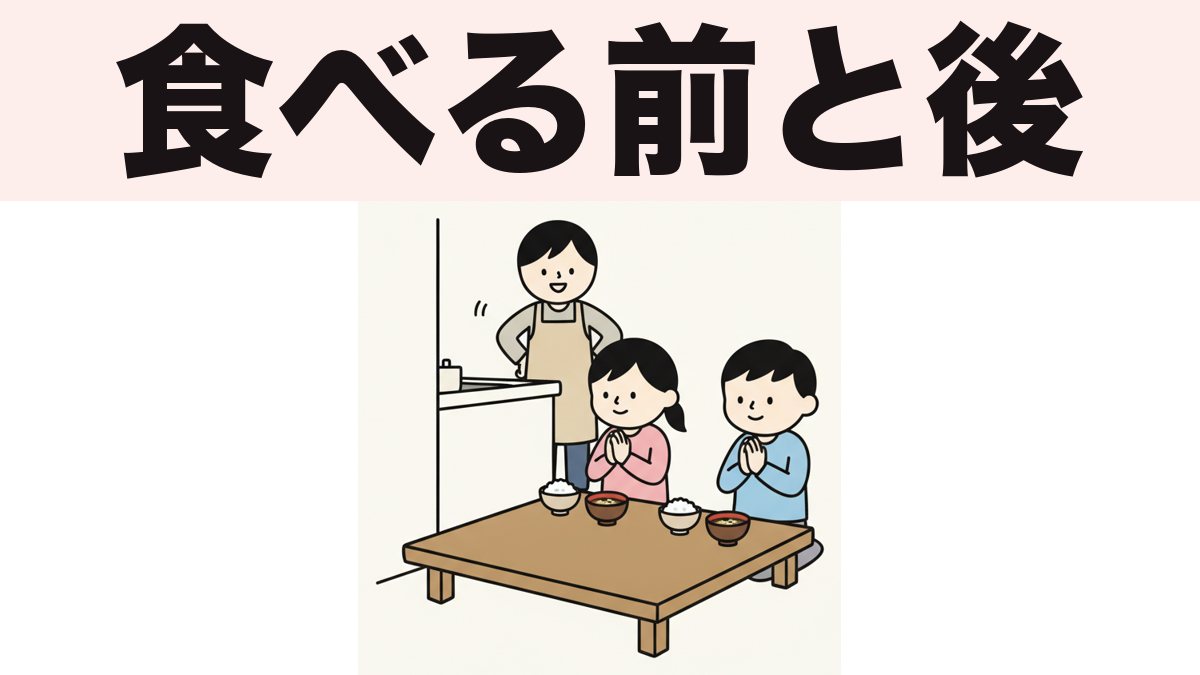
いただきます is the humble form of "to receive," said before eating; ごちそうさまでした thanks whoever ran around to put the meal in front of you. Neither one is about the food being good.
「いただきます」は「もらう」のけんじょう語で、食べる前に言います。「ごちそうさまでした」は、その食事のために動いてくれた人へのお礼です。どちらも「おいしい」という意味ではありません。
The usual translations — "bon appétit" and "thanks for the meal" — get you through a dinner and hide what the words are doing. I teach them as a pair because they mark different moments in a meal. Both can be used alone at home with nobody listening, and the shorter forms belong alongside the polite versions in a learner’s vocabulary.
The basics
いただきます is a verb, not an exclamation
いただく is the humble form of もらう, "to receive." いただきます is simply that verb in the polite present: "I receive."
いただきます。 — I gratefully receive this meal. (a contextual translation; said before eating) お先にいただきます。 — I'll start before you. (polite; when you must begin while others are still being served)
What you are receiving is the food, and — depending on who you ask — the life that went into it and the effort of whoever prepared it. You do not need to hold a view on that to use the word correctly. You do need to know it is a verb, because it shows up constantly outside meals.
これ、いただいてもいいですか。 — May I take this? (polite; at a shop counter with free samples, or offered snacks) ありがたくいただきます。 — I'll gratefully accept. (polite; receiving a gift)
The giving-and-receiving verbs are a system, and いただく is the humble corner of it — the whole map is in あげる, くれる, もらう.
ごちそうさま is about the effort, not the flavour
ご馳走 (ごちそう) means a feast, and the 馳 and 走 characters both mean to run. The image is of someone running around gathering ingredients to feed you. ごちそうさまでした thanks that running.
ごちそうさまでした。 — Thank you for the meal. (said after eating; polite) ごちそうさま。 — Thanks for the meal. (casual; at home or with people you know well)
Because it thanks effort rather than taste, you say it whether the meal was extraordinary or a convenience-store rice ball eaten standing up. If you want to say the food was good, that is a separate sentence: おいしかったです.
Who do you say them to?
Both work when you are alone. People say いただきます to an empty room, to a vending-machine coffee, to instant noodles at 2am. They are not addressed to a person in the way "thank you" is.
When there is a person — a host, a cook, someone paying — ごちそうさまでした is aimed at them and lands as real gratitude. In a restaurant, saying it to the staff on the way out is normal and appreciated.
ごちそうさまでした。おいしかったです。 — Thank you for the meal. It was delicious. (polite; leaving a restaurant or a host's home)
Beyond the basics
The casual and the contracted
いただきます is already the polite form, so what shrinks is everything around it. Among family and close friends you will hear a quick いただきまーす with a long vowel, or nothing at all beyond a small nod and hands together.
ごちそうさま shortens further: ごちそうさまでした → ごちそうさま → ごちそうさん in some regions and registers, which sounds friendly and slightly old-fashioned.
ごちそうさまでした。 — Thank you for the meal. (polite; to a host or restaurant staff) ごちそうさま。 — Thanks for the meal. (casual; home, friends)
Hands together, or not
The gesture of putting your palms together before a meal is common but not universal, and the words can be used without that gesture. At a shared table, I pay more attention to whether the other people are ready to begin.
At a shared meal, waiting for the others is a useful starting point. どうぞ ("go ahead") from the host, or a shared いただきます, is the starting gun. I look for that cue before beginning, much as I wait for 乾杯 at a drinking party.
The verbs for eating, ranked by politeness
いただく also serves as the humble verb for eating and drinking, which is why it can sound confusing in conversation.
| Register | Eat | Example |
|---|---|---|
| Humble (about yourself) | いただく | おいしくいただきました |
| Neutral polite | 食べます | もう食べました |
| Honorific (about someone else) | 召し上がる | 召し上がりましたか |
もう召し上がりましたか。 — Have you eaten yet? (honorific; asking a guest or a superior) はい、いただきました。 — Yes, I have. (humble; answering about yourself)
That pair — 召し上がる for them, いただく for you — is one of the cleanest examples of how Japanese honorifics work in opposite directions at once, which is the underlying system described in keigo vs casual.
ごちそうする — to treat someone
ごちそう takes する and becomes "to treat someone to a meal," which is how you offer to pay.
今日はごちそうします。 — It's on me today. (polite; offering to pay) ごちそうになりました。 — Thank you for treating me. (polite; said afterwards, and it names what happened)
ごちそうになりました also works when you next see the person who paid. I treat it as a useful way to acknowledge their generosity again, rather than a rule that every relationship follows in exactly the same way.
What about "bon appétit"?
I avoid translating いただきます as "bon appétit" without explaining who is speaking. いただきます belongs to the person about to eat. A host inviting a guest to begin can say どうぞ or 召し上がってください ("please eat"). English and French meal wishes do not map neatly onto this exchange. If I am helping a learner play the host, I start with どうぞ and then add the longer invitation when the situation calls for more politeness.
A meal as a short exchange
I find the timing easier to remember when the expressions appear in a small conversation. The following examples are written for practice. They show the speaker’s role without requiring a story about any particular person.
どうぞ、召し上がってください。 — Please go ahead and eat. (a host inviting a guest to begin) ありがとうございます。いただきます。 — Thank you. I gratefully receive this meal. (a guest accepting the invitation) おいしいです。 — This is delicious. (a comment while eating) ごちそうさまでした。おいしかったです。 — Thank you for the meal. It was delicious. (thanks and praise after eating)
These lines do different jobs. The invitation makes it clear that the guest can start. ありがとうございます directly thanks the host, while いただきます marks the beginning of eating. おいしいです evaluates the food. At the end, ごちそうさまでした closes the meal, and おいしかったです adds a comment about taste. I keep those functions separate even when the words appear in the same breath.
This also explains why there is no contradiction in saying ごちそうさまでした after a simple meal. The phrase does not claim that the food was an elaborate feast or that every bite was wonderful. It acknowledges receiving the meal. I do not need to add praise that I do not mean, and I do not need to turn a routine expression of thanks into a review of the cooking.
Starting early and eating alone
お先にいただきます contains 先に, meaning "ahead" or "first." I use that part to explain why it fits a situation where someone else has not started. It acknowledges the difference in timing. It is still worth checking the situation: if everyone is waiting for the host, simply announcing an early start does not settle whether starting is appropriate. If the host has already invited me to eat while the other food arrives, the phrase makes sense.
Eating alone removes the need to coordinate with other diners, but it does not remove the meaning of the meal expressions. I can say いただきます before beginning and ごちそうさま when I finish. There is no missing conversation partner whose answer completes the grammar. That is why I do not teach either expression as a question or a request for permission.
Receiving, eating, and choosing the subject
The connection between receiving and eating is useful, but I keep the fixed greeting separate from ordinary verb practice. いただきます before a meal is a conventional expression. In これ、いただいてもいいですか, the same verb appears inside a permission question. The speaker asks whether receiving the item is acceptable; the sentence is not announcing the start of lunch.
For eating, 食べます is neutral polite language. いただく adds a humble perspective to the speaker’s action, while 召し上がる respectfully describes someone else’s action. "Polite" is therefore not a single ladder where I can replace every verb with whichever sounds most elaborate. I first identify who is eating, then choose the perspective. The distinction also applies to drinking, though the surrounding conversation must make the intended action clear.
I would not change いただきます into 召し上がります as a personal meal greeting. That would use the respectful verb for my own action and lose the established expression. Likewise, a question directed respectfully to a guest uses 召し上がりましたか, rather than treating the guest’s eating as my humble action. For a fuller explanation of how receiving works, I connect this to the giving-and-receiving verbs linked above.
Thanking someone who treats you
ごちそうします and ごちそうになりました describe opposite sides of a treat. In the first, I offer to provide or pay for the meal. In the second, I acknowledge receiving that hospitality. The shared word ごちそう helps connect them, but the endings tell me which role the speaker has.
今日はごちそうします。 — I’ll treat you today. (the person offering) ごちそうになりました。ありがとうございます。 — Thank you for treating me. I appreciate it. (the person who was treated)
I use ごちそうさまでした for the immediate meal-ending thanks, and ごちそうになりました when I want to name the fact that someone treated me. They can overlap in a conversation. Learning the difference gives me a reason to choose a phrase instead of memorising several expressions as interchangeable versions of "thank you."
Common mistakes
- Treating いただきます as praise for the food. It is a verb meaning "I receive." Praise is おいしいです, said while eating.
- Using ごちそうさま only for big meals. A sandwich at your desk gets one. It is about the effort behind it, which exists in every case.
- Saying いただきます after eating. The order is fixed: いただきます before, ごちそうさま after.
- Expecting a required reply to いただきます. It can acknowledge a meal in someone’s presence, but it does not demand a response. A host can answer どうぞ.
- Missing a chance to acknowledge a treat later. ごちそうになりました lets me thank the person again when we next meet. How much follow-up is appropriate depends on the relationship.
The phrases, in order
| When | Say | Register |
|---|---|---|
| Before eating | いただきます | Universal, including alone |
| Starting before others | お先にいただきます | Polite |
| Host inviting you to start | どうぞ / 召し上がってください | Polite / honorific |
| While eating | おいしいです | Optional but welcome |
| After eating | ごちそうさまでした | Polite |
| After eating, at home | ごちそうさま | Casual |
| Offering to pay | 今日はごちそうします | Polite |
| Next time you meet them | ごちそうになりました | Polite; follow-up thanks |
Practice
Build each answer before opening it. Questions 5 and 6 are a pair — one is about you, the other about them.
1. What do you say before eating?
Show answer
いただきます — the humble form of もらう, "I receive." It is a verb, not an exclamation about the food.
2. What do you say after eating, politely?
Show answer
ごちそうさまでした — thanking the running-around that produced the meal, not the flavour.
3. You must start eating while others are still being served. What do you say?
Show answer
お先にいただきます — "I'll start ahead of you." Same 先に as in 先に失礼します.
4. Ask politely whether you may take a free sample.
Show answer
これ、いただいてもいいですか — いただく outside a meal is simply the humble "to receive."
5. Ask a guest, honorifically, whether they have eaten.
Show answer
もう召し上がりましたか — 召し上がる is the honorific for eating, used about other people. This is the pair to question 6.
6. Answer that you have eaten, humbly.
Show answer
はい、いただきました — いただく is the humble form, used about yourself. This is the pair to question 5.
7. Offer to pay for the meal.
Show answer
今日はごちそうします — ごちそう plus する: to treat someone.
8. You meet again the person who paid last week. What do you say?
Show answer
ごちそうになりました — this acknowledges having been treated. It is a useful follow-up when meeting the person again.
9. You are the host and want your guest to start. What do you say?
Show answer
どうぞ(召し上がってください) — the host is inviting the guest to begin, so どうぞ or 召し上がってください fits that role. いただきます belongs to the eater.
10. Say the meal was delicious, as a separate sentence.
Show answer
おいしかったです — ごちそうさま does not say this, which is why the two often appear together.
FAQ
Do I have to put my hands together? No. The gesture is common but not universal. I teach the timing of the words first, then suggest following the setting for the gesture.
Is it strange to say them when eating alone? No. Both expressions can be used without a listener. I would not assume that everyone says them aloud at every meal, but being alone does not make them inappropriate.
What do I say to the restaurant staff when leaving? ごちそうさまでした. It is the standard exit line and is often answered with ありがとうございました.
Can I say ごちそうさま to someone who did not cook or pay? Yes, for example to staff who served the meal. It can acknowledge hospitality beyond cooking or paying. Used as a meal-closing expression, it also needs no particular listener.
Is いただきます religious? It can carry gratitude for the life and effort behind food, including a religious interpretation for some speakers. I teach its everyday use without treating it as a declaration of religious belief or assigning it a single origin.
What does 頂く written in kanji change? 頂く is a kanji spelling of いただく. The character 頂 also means "summit." Kana is a practical choice for the meal greeting; the spelling does not move it from before the meal to after it. Humble auxiliary uses are generally written in kana.
Vocabulary from this article
Tap the block to select all of it, then copy. In Anki: File → Import, note type Basic, separator Tab.
いただきます	いただきます — said before eating
ごちそうさま	ごちそうさま — thanks for the meal
ご馳走	ごちそう — a feast; a meal someone provides
頂く	いただく — to receive, eat, or drink (humble)
もらう	もらう — to receive
召し上がる	めしあがる — to eat or drink (honorific)
先に	さきに — first, ahead
おいしい	おいしい — delicious
どうぞ	どうぞ — please; go ahead
乾杯	かんぱい — cheers; a toast
ごちそうする	ごちそうする — to treat someone to a meal
I'm Yuuki, a Japanese teacher based in Tokyo. I've taught on italki as a Top 1% teacher and watched over 1,500 anime. I teach these expressions through the order of a meal: receive, eat, then acknowledge what was provided. My aim is to make the words usable at a shared table, at a restaurant, and at home.
Sources
The author's own lessons and standard reference grammars.
英語の訳は「bon appétit」「thanks for the meal」です。食事は進みますが、言葉のはたらきは見えなくなります。どちらも一人のときにも言います。そして、教科書の形より短い形のほうを、よく聞きます。
基本
「いただきます」は動詞です
「いただく」は「もらう」のけんじょう語です。「いただきます」は、その「ていねいな今の形」です。意味は「受け取ります」です。
いただきます。 — (said before eating, hands together or not) お先にいただきます。 — I'll start before you. (polite; when you must begin while others are still being served)
食事以外でも使います。
これ、いただいてもいいですか。 — May I take this? (polite; at a shop counter with free samples, or offered snacks) ありがたくいただきます。 — I'll gratefully accept. (polite; receiving a gift)
「ごちそうさま」は、動いてくれたことへのお礼
「ご馳走(ごちそう)」の「馳」も「走」も、走るという意味です。食べ物を集めるために走り回る、という絵です。
ごちそうさまでした。 — (said after eating; polite, past) ごちそうさま。 — (casual, and what most people actually say at home)
味の話ではないので、コンビニのおにぎりでも言います。おいしかったと言いたいときは、べつの文です。「おいしかったです」。
だれに言いますか
一人のときも言います。人に向けた「ありがとう」とは少しちがいます。
作ってくれた人や、はらってくれた人がいるときは、その人へのお礼になります。店を出るときに店の人に言うのも、ふつうです。
ごちそうさまでした。おいしかったです。 — Thank you for the meal. It was delicious. (polite; leaving a restaurant or a host's home)
もう少し先へ
みじかい形
「いただきます」はもうていねいな形なので、のばして「いただきまーす」と言う人が多いです。
「ごちそうさまでした」→「ごちそうさま」→「ごちそうさん」。さいごの形は、したしい言い方です。
ごちそうさまでした。 — (polite; a host, a restaurant, a superior) ごちそうさま。 — (casual; home, friends)
手を合わせますか
合わせる人は多いですが、しない人もいます。どちらでも大丈夫です。
大事なのは、みんなで始めることです。「どうぞ」や、みんなの「いただきます」が合図です。一人で先に食べ始めるほうが、気になります。
食べる動詞のていねいさ
| ていねいさ | 言葉 | 例 |
|---|---|---|
| けんじょう(自分) | いただく | おいしくいただきました |
| ふつうのていねい | 食べます | もう食べました |
| そんけい(相手) | 召し上がる | 召し上がりましたか |
もう召し上がりましたか。 — Have you eaten yet? (honorific; asking a guest or a superior) はい、いただきました。 — Yes, I have. (humble; answering about yourself)
相手には「召し上がる」、自分には「いただく」。日本語のていねいさが、反対の方向に動く例です。
「ごちそうする」
「ごちそう」に「する」をつけると、「ごはんをおごる」という意味になります。
今日はごちそうします。 — It's on me today. (polite; offering to pay) ごちそうになりました。 — Thank you for treating me. (polite; said afterwards, and it names what happened)
「ごちそうになりました」は、次に会ったときに言う言葉です。言わないと、気づかれます。
「bon appétit」は日本語にありますか
ありません。作った人が言うのは「どうぞ」「召し上がってください」です。「いただきます」は食べる人が言う言葉なので、方向が反対です。
よくあるまちがい
- 「いただきます」を「おいしい」の意味だと思う。 「受け取ります」という動詞です。
- 大きな食事のときだけ「ごちそうさま」と言う。 小さい食事でも言います。
- 順番をまちがえる。 前が「いただきます」、後が「ごちそうさま」です。
- 作った人に「いただきます」と言って返事を待つ。 だれかに向けた言葉ではありません。返事は「どうぞ」です。
- 次に会ったとき「ごちそうになりました」を言わない。 そこまでがセットです。
順番
| いつ | 言う言葉 | ていねいさ |
|---|---|---|
| 食べる前 | いただきます | 一人のときも |
| 先に始めるとき | お先にいただきます | ていねい |
| 作った人が言う | どうぞ/召し上がってください | ていねい/そんけい |
| 食べながら | おいしいです | 言うとよろこばれる |
| 食べた後 | ごちそうさまでした | ていねい |
| 家で | ごちそうさま | くだけた形 |
| おごるとき | 今日はごちそうします | ていねい |
| 次に会ったとき | ごちそうになりました | 言うのがふつう |
FAQ
手を合わせないといけませんか。 いりません。言葉のほうが大事です。
一人のとき言うのはへんですか。 へんではありません。ほとんどの人が言います。
店を出るとき、何と言いますか。 「ごちそうさまでした」。「ありがとうございました」と返ってきます。
作っていない人に「ごちそうさま」と言えますか。 その人に向けると、少しへんです。だれにも向けないで言うのはふつうです。
「いただきます」は宗教の言葉ですか。 いのちをいただく、という考えがもとにあります。今は毎日のしゅうかんとして言う人が多いです。
漢字で「頂く」と書くと何が変わりますか。 意味は同じです。今は、けんじょうの助動詞なら「いただく」、本当に受け取るときは「頂く」と書き分けることが多いです。
練習
答えを見る前に、自分で作ってください。5と6は組です。
1. 食べる前に何と言いますか。
答えを見る
いただきます — 「もらう」のけんじょう語です。食べ物のかんそうではありません。
2. 食べた後、ていねいに何と言いますか。
答えを見る
ごちそうさまでした — 走り回ってくれたことへのお礼で、味の話ではありません。
3. ほかの人がまだなのに、先に食べ始めます。何と言いますか。
答えを見る
お先にいただきます — 「先に失礼します」と同じ「先に」です。
4. 試食をもらっていいか、ていねいに聞いてください。
答えを見る
これ、いただいてもいいですか — 食事以外の「いただく」は、ただの「受け取る」です。
5. お客さんに、そんけい語で「もう食べましたか」と聞いてください。
答えを見る
もう召し上がりましたか — 相手のことは「召し上がる」です。6と組です。
6. 自分のことを、けんじょう語で「食べました」と答えてください。
答えを見る
はい、いただきました — 自分のことは「いただく」です。5と組です。
7. 「今日はおごります」と言ってください。
答えを見る
今日はごちそうします — 「ごちそう」+「する」です。
8. 先週おごってくれた人に、また会いました。何と言いますか。
答えを見る
ごちそうになりました — 次に会ったときのお礼です。ここまでがセットです。
9. 自分が作った側です。お客さんに始めてもらうとき、何と言いますか。
答えを見る
どうぞ(召し上がってください) — 「bon appétit」にあたる言葉はないので、「どうぞ」で十分です。
10. 「おいしかった」と、べつの文で言ってください。
答えを見る
おいしかったです — 「ごちそうさま」には味の意味がないので、二つならべて言います。
この記事に出た単語
ブロックをタップして全部を選んでから、コピーしてください。Anki では ファイル → 読み込み、ノートタイプは 基本、区切りは タブ です。左が表、右が裏になります。
いただきます	いただきます — said before eating ("I receive")
ごちそうさま	ごちそうさま — said after eating
ご馳走	ごちそう — a feast; a meal someone provides
頂く	いただく — to receive (humble); to eat (humble)
召し上がる	めしあがる — to eat (honorific)
食べる	たべる — to eat
飲む	のむ — to drink
先に	さきに — first, ahead
美味しい	おいしい — delicious
料理	りょうり — cooking, a dish
食事	しょくじ — a meal
作る	つくる — to make
払う	はらう — to pay
店	みせ — shop, restaurant
客	きゃく — guest, customer
手	て — hand
私はユウキです。東京で日本語を教えています。 italki の Top 1% の先生で、アニメは1,500本以上見ました。この2つは、生徒が初日から日本人に使える言葉です。店を出るときの「ごちそうさまでした」は、みじかいのにいちばん効く文だと思います。
More drills like the ones above, plus a timed JLPT-style mock test: Practice · N5上のような練習問題と、時間つきのJLPT形式のもぎ試験: 練習ページ · N5
Want to try this in a real conversation?
本当の会話で、ためしてみませんか?
30-minute trial lesson, $13. Times shown in your own timezone.
30分の体験レッスン、$13。時間はあなたのタイムゾーンで表示されます。
Book a trial lesson · $13