〜まま: "as it is," and why it takes the past form〜まま: どうしてかこの形につくのか
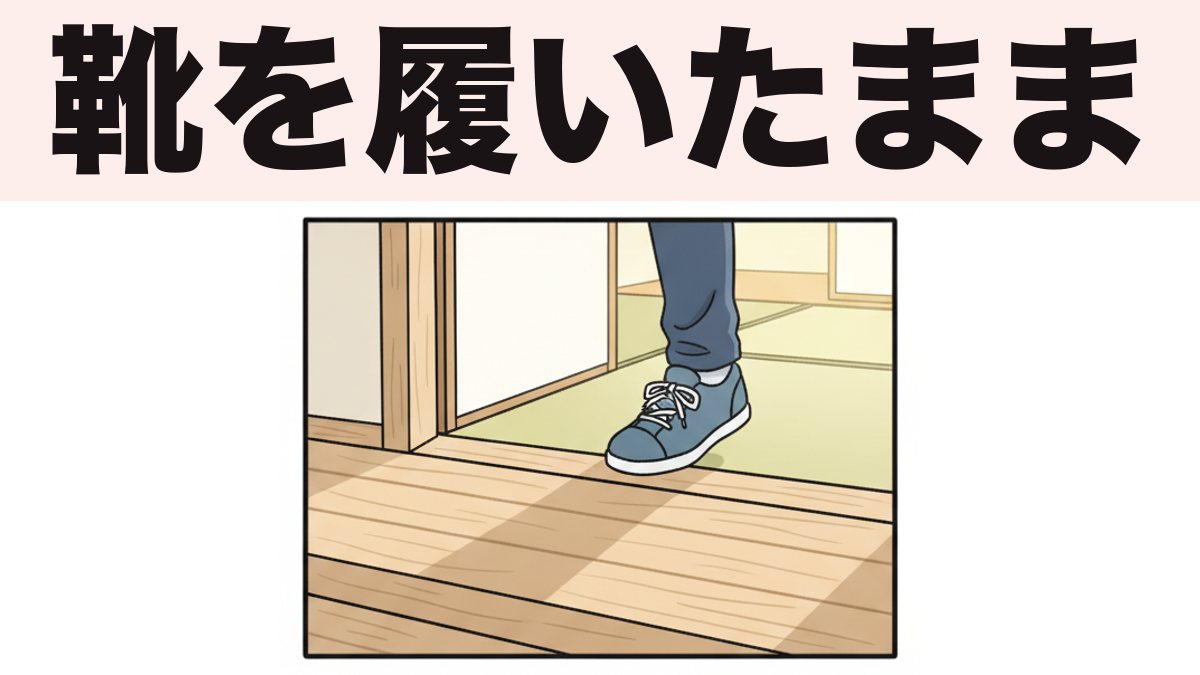
まま means "in that state, unchanged." With verbs it takes the **past** form — 靴を履いたまま入る ("go in with your shoes still on") — because the action that produced the state is already finished. 履くまま is not a sentence.
「まま」は「そのじょうたいのまま、変わらない」です。動詞では**かこの形**につきます。「靴を履いたまま入る」。「履くまま」とは言いません。そのじょうたいを作った動作は、もう終わっているからです。
The single most useful thing here is そのまま, which is a complete phrase on its own and one of the most-used expressions in everyday Japanese.
The basics
What attaches to まま
| Word type | Form | Example |
|---|---|---|
| Verb (positive) | past plain | 靴を履いたまま |
| Verb (negative) | ない | 何も言わないまま |
| Noun | の | 昔のまま |
| い-adjective | plain | 熱いまま |
| な-adjective | な | 静かなまま |
| Demonstrative | — | そのまま, このまま |
靴を履いたまま入らないでください。 — Please don't come in with your shoes on. (polite request) 電気をつけたまま寝てしまいました。 — I fell asleep with the light on. (polite past)
Both sentences describe a state that was created earlier and is still in place. That is why the verb is in the past: 履いた, つけた.
そのまま: the phrase to learn first
そのままにしておいてください。 — Please leave it as it is. (polite request) そのままでいいです。 — It's fine as it is. (polite)
そのまま covers "as is," "don't change it," "keep going," and "straight ahead," depending on context. Combined with 〜ておく, そのままにしておく is the standard way to tell someone not to tidy something up.
The negative version
何も言わないまま、帰ってしまいました。 — He went home without saying anything. (polite past)
ないまま means an expected action never happened and its absence persisted. It is heavier than 言わないで — the latter is just "without saying," the former adds "and that state stayed."
Beyond the basics
まま vs ながら
Both can look like "while," and they are different:
| Form | What it describes |
|---|---|
| 〜ながら | Two actions happening at once |
| 〜たまま | One state persisting while something else happens |
音楽を聞きながら勉強します。 — I study while listening to music. (polite — two ongoing actions) 立ったまま食べました。 — I ate standing up. (polite past — a posture, not a second action)
The test: if the first half is something you are actively doing throughout, use ながら. If it is a state you got into and stayed in, use まま.
まま as a noun
まま is a noun, so it can end a sentence with だ/です:
部屋は昔のままです。 — The room is exactly as it was. (polite) あの店、閉まったままですね。 — That shop is still shut, isn't it. (polite)
〜たままだ is very useful for describing something that has not changed when it should have.
このまま and そのまま and あのまま
- このまま — as things are now, going forward: このままだと間に合いません ("at this rate we won't make it")
- そのまま — as it is / as you were
- あのまま — as it was back then
このままでは終われません。 — We can't end it like this. (polite — a very common dramatic line)
このままでは is worth having: it introduces a warning about a trajectory rather than a fact.
まま in signs and instructions
You will see it constantly in written instructions:
靴のままお上がりください。 — Please come in with your shoes on. (polite — a sign in a Western-style building)
The noun + の + まま shape is standard for these.
It is not the same as 〜ている
The teiru form also describes a resulting state — 電気がついています ("the light is on"). The difference is that まま carries "and it should not be," or at least "and nothing has changed it." 電気がついています is a report; 電気をつけたまま寝た is a small confession.
Common mistakes
- 履くまま. Verbs take the past form: 履いたまま.
- 昔まま. Nouns need の: 昔のまま.
- 静かまま. な-adjectives need な: 静かなまま.
- Using まま for two simultaneous actions. 音楽を聞いたまま勉強する is odd; use ながら.
- Treating そのまま as only "straight ahead." It is much broader: "as is," "leave it," "keep going."
- Missing the judgement. 〜たままだ usually implies the state has gone on too long.
Practice
Answers are hidden — build yours first, then open. Questions 4 and 5 are a pair: two kinds of "while," and only one of them is a second action.
1. Something is wrong here: 靴を履くまま入らないでください。
Show answer
履いたまま — verbs take the past form, because the action that created the state is already finished.
2. Say "I fell asleep with the light on."
Show answer
電気をつけたまま寝てしまいました — つけた for the state, and てしまう for the regret.
3. Ask someone to leave something as it is.
Show answer
そのままにしておいてください — そのまま plus ておく is the standard way to say "don't tidy that."
4. Say "I study while listening to music."
Show answer
音楽を聞きながら勉強します — two things you are actively doing, so ながら.
5. Say "I ate standing up."
Show answer
立ったまま食べました — standing is a posture you got into and stayed in, not a second action. This is the pair to question 4.
6. Something is wrong here: 部屋は昔ままです。
Show answer
昔のまま — nouns take の before まま.
7. Say "he went home without saying anything."
Show answer
何も言わないまま、帰ってしまいました — ないまま means the expected action never happened and its absence persisted.
8. Warn someone that things won't work out on the current trajectory.
Show answer
このままだと間に合いません — このまま is about how things are going, not how they are.
9. Say "that shop is still shut."
Show answer
あの店、閉まったままですね — 〜たままだ, with the usual implication that it has gone on too long.
10. What does 電気をつけたまま寝た add over 電気がついています?
Show answer
A confession — the teiru form reports a state; まま implies nothing changed it and probably should have.
FAQ
Is まま written in kanji? 儘 exists and is rare. Use kana.
Can まま follow the te-form? No. 履いてまま is wrong. It takes the plain past.
What is 〜がまま? 思うがまま ("as one pleases") and あるがまま ("as it is") are set literary phrases. Recognise them; they are not productive grammar.
Is そのまま polite? It is register-neutral. そのままで is fine anywhere; politeness comes from what follows.
Does まま work with いる? Yes: 座ったままでいてください ("please stay seated"). まま + でいる is the "remain in that state" pattern.
What is ままに? Slightly literary, meaning "in accordance with": 言われるままに ("just as told"). Common in narration.
Vocabulary from this article
Tap the block to select all of it, then copy. In Anki: File → Import, note type Basic, separator Tab — the first column becomes the front, the second the back.
靴	くつ — shoes
履く	はく — to put on (footwear)
入る	はいる — to enter
電気	でんき — light, electricity
寝る	ねる — to sleep
昔	むかし — the past, long ago
熱い	あつい — hot
静か	しずか — quiet
部屋	へや — room
店	みせ — shop
閉まる	しまる — to close
音楽	おんがく — music
聞く	きく — to listen
勉強	べんきょう — study
立つ	たつ — to stand
食べる	たべる — to eat
言う	いう — to say
帰る	かえる — to go home
間に合う	まにあう — to be in time
終わる	おわる — to end
座る	すわる — to sit
I'm Yuuki, a Japanese teacher based in Tokyo. I've taught on italki as a Top 1% teacher and watched over 1,500 anime. そのまま is the phrase I would hand a learner on day one if I could only give them one. It answers half the questions a shop assistant or a host will ask you, and it costs four syllables.
Sources: the author's own lessons and standard reference grammars.
いちばん役に立つのは「そのまま」です。1つで完せいな言い方で、毎日の日本語でとてもよく使います。
基本
「まま」の前の形
| しゅるい | 形 | れい |
|---|---|---|
| 動詞(ふつう) | かこの形 | 靴を履いたまま |
| 動詞(うちけし) | ない | 何も言わないまま |
| 名詞 | の | 昔のまま |
| い形容詞 | ふつうの形 | 熱いまま |
| な形容詞 | な | 静かなまま |
| 指示語 | — | そのまま・このまま |
靴を履いたまま入らないでください。 — Please don't come in with your shoes on. 電気をつけたまま寝てしまいました。 — I fell asleep with the light on.
どちらも、前に作られたじょうたいが今もつづいています。だから動詞はかこです。
まず「そのまま」
そのままにしておいてください。 — Please leave it as it is. そのままでいいです。 — It's fine as it is.
「そのまま」は「変えないで」「そのとおりに」「まっすぐ」など、場めんで意味が変わります。「そのままにしておく」は「かたづけないで」の定番です。
うちけしの形
何も言わないまま、帰ってしまいました。 — He went home without saying anything.
「ないまま」は、するはずだったことがされないまま、そのじょうたいがつづいたことです。「言わないで」より重いです。
もう少しくわしく
「まま」と「ながら」
| 形 | 何を言うか |
|---|---|
| 〜ながら | 2つの動作を同時にする |
| 〜たまま | 1つのじょうたいがつづいている |
音楽を聞きながら勉強します。 — I study while listening to music. 立ったまま食べました。 — I ate standing up.
テスト: 前半をずっと「している」なら「ながら」。そのじょうたいに「なって、そのまま」なら「まま」です。
「まま」は名詞
だから「だ・です」で文を終われます。
部屋は昔のままです。 — The room is exactly as it was. あの店、閉まったままですね。 — That shop is still shut, isn't it.
「〜たままだ」は、変わるはずなのに変わっていない時に便利です。
「このまま」「そのまま」「あのまま」
- このまま — 今のままで、これから
- そのまま — そのとおりに
- あのまま — あの時のままで
このままでは終われません。 — We can't end it like this.
「このままでは」は、じじつではなく「この先どうなるか」への注意です。
かんばんや説明書
靴のままお上がりください。 — Please come in with your shoes on.
「名詞+の+まま」が、こういう文の定番です。
「〜ている」とはちがいます
「電気がついています」はじょうたいの報こくです。「電気をつけたまま寝た」は、小さなこくはくです。「まま」には「変えなかった」という気もちが入っています。
よくある間違い
- 履くまま。 動詞はかこの形です。
- 昔まま。 名詞は「の」がいります。
- 静かまま。 な形容詞は「な」がいります。
- 同時の動作に「まま」。 「音楽を聞いたまま勉強する」はへんです。「ながら」です。
- 「そのまま」を「まっすぐ」だけだと思う。 もっと広いです。
- 気もちを見落とす。 「〜たままだ」は「長すぎる」を含みます。
練習
答えはかくれています。まず自分で作ってから開いてください。4番と5番が対です。同じ「while」でも、片方だけが2つ目の動作です。
1. 直してください: 靴を履くまま入らないでください。
答えを見る
履いたまま — じょうたいを作った動作はもう終わっているので、かこの形です。
2. 「電気をつけて寝てしまいました」を「まま」で言ってください。
答えを見る
電気をつけたまま寝てしまいました — 「つけた」でじょうたい、「てしまう」でざんねんさです。
3. 「かたづけないでください」を「そのまま」で言ってください。
答えを見る
そのままにしておいてください — 「そのまま」+「ておく」が定番です。
4. 「音楽を聞いて、勉強します」を正しく言ってください。
答えを見る
音楽を聞きながら勉強します — 2つとも「している」ので「ながら」です。
5. 「立って食べました」を「まま」で言ってください。
答えを見る
立ったまま食べました — 立つのは動作ではなく、姿勢(しせい)です。4番と対です。
6. 直してください: 部屋は昔ままです。
答えを見る
昔のまま — 名詞のあとには「の」がいります。
7. 「何も言わないで帰ってしまった」を「まま」で言ってください。
答えを見る
何も言わないまま、帰ってしまいました — するはずのことがされないまま、という意味です。
8. 「このままだとまにあわない」と注意してください。
答えを見る
このままだと間に合いません — 「このまま」は今のじょうたいではなく、この先の話です。
9. 「あの店はまだ閉まっています」を「まま」で言ってください。
答えを見る
あの店、閉まったままですね — 「長すぎる」という気もちが入ります。
10. 「電気がついています」と「電気をつけたまま寝た」のちがいは?
答えを見る
報こく/小さなこくはく — 「まま」には「変えなかった」が入っています。
この記事に出た単語
ブロックをタップすると全部選べます。そのままコピーしてください。Anki では ファイル → 読み込み、ノートタイプ 基本、区切り タブ。1列目が表、2列目が裏になります。
靴	くつ — shoes
履く	はく — to put on (footwear)
入る	はいる — to enter
電気	でんき — light, electricity
寝る	ねる — to sleep
昔	むかし — the past, long ago
熱い	あつい — hot
静か	しずか — quiet
部屋	へや — room
店	みせ — shop
閉まる	しまる — to close
音楽	おんがく — music
聞く	きく — to listen
勉強	べんきょう — study
立つ	たつ — to stand
食べる	たべる — to eat
言う	いう — to say
帰る	かえる — to go home
間に合う	まにあう — to be in time
終わる	おわる — to end
姿勢	しせい — posture
私はユウキです。東京で日本語を教えています。 italki の Top 1% の先生で、アニメは1,500本以上見ました。1つだけことばをわたせるなら、初日に「そのまま」をわたします。お店の人やホストに聞かれることの半分に答えられて、4音しかかかりません。
More drills like the ones above, plus a timed JLPT-style mock test: Practice · N3上のような練習問題と、時間つきのJLPT形式のもぎ試験: 練習ページ · N3
Want to try this in a real conversation?
本当の会話で、ためしてみませんか?
30-minute trial lesson, $13. Times shown in your own timezone.
30分の体験レッスン、$13。時間はあなたのタイムゾーンで表示されます。
Book a trial lesson · $13