〜ている: why 知っている means "I know" and not "I am knowing〜ている: なぜ「知っている」は「今、知る作業中」ではないのか
〜ている does two completely different jobs: an action still happening, and a state left behind by an action that already finished. Which one you get is decided by the verb, not by you — and that is why 知っている means "I know" and 行っている means "has gone."
「〜ている」は、ぜんぜんちがう2つの仕事をします。1つは「今している動作」、もう1つは「もう終わった動作がのこした状たい」です。どちらになるかを決めるのは動詞です。だから「知っている」は「知っています」で、「行っている」は「もう行った(今そこにいる)」です。
Textbooks introduce this as the Japanese present continuous, which works for about a week. Then you meet 結婚しています and translate it as "is getting married," and the sentence quietly means the opposite of what you thought.
The basics
How to build it
Take the te-form and add いる. That is the whole conjugation.
| Verb | Te-form | 〜ている |
|---|---|---|
| 食べる | 食べて | 食べている |
| 読む | 読んで | 読んでいる |
| する | して | している |
| 来る | 来て | 来ている |
If your te-form is solid, there is nothing new to conjugate here. Polite: 食べています. Past: 食べていました. Negative: 食べていません.
Meaning one: the action is still happening
With verbs that describe an activity taking time — eating, reading, running, waiting — 〜ている is the straightforward progressive.
今、ご飯を食べています。 — I'm eating right now. 雨が降っている。 — It's raining. 何をしていますか。 — What are you doing?
This is the meaning every learner gets for free, and it is roughly half of what 〜ている does.
Meaning two: the state left behind
With verbs that describe an instant change — dying, marrying, arriving, going — the action finishes in a moment, so there is no "in progress." What 〜ている gives you instead is the situation after.
結婚しています。 — I'm married. (not "getting married" — the wedding already happened) 東京に住んでいます。 — I live in Tokyo. 本を持っています。 — I have a book. 知っています。 — I know. 彼は死んでいる。 — He's dead.
死んでいる is the clearest case: nobody is in the process of dying over a long afternoon. The verb happens in an instant, so 〜ている describes the state that instant produced.
How do you know which one a verb gives you?
Ask whether the action takes time or happens all at once.
| Verb type | Examples | 〜ている means |
|---|---|---|
| Takes time | 食べる, 読む, 走る, 待つ, 降る | Action in progress |
| Instant change | 死ぬ, 結婚する, 着く, 行く, 来る, 知る | The state afterwards |
| Always a state | 住む, 持つ | The state |
You do not need a rule for every verb. You need the habit of asking the question, plus a short list of the ones that catch everybody — which is the next section.
Beyond the basics
行っている does not mean "is going"
This one is worth its own heading, because the mistake is invisible.
彼は東京に行っています。 — He has gone to Tokyo (and is there now). ✗ He is on his way to Tokyo.
行く is an instant change — you either departed or you did not — so 〜ている gives the state after departure, which is "is away, is there." For someone currently travelling, use 向かっています ("is heading there") or just 行きます for the plan.
来ている works the same way: 田中さんが来ています means Tanaka has arrived and is here now, not that he is on his way.
知っている has no negative
This is the single most common 〜ている error, and it is a one-word fix.
✗ 知っていません。 。○ 知りません。 — I don't know.
The positive is 知っています and the negative is 知りません — they do not match, and that is simply how it is. Learn them as a pair rather than deriving one from the other.
分かる behaves in the opposite way: it takes no 〜ている at all in the positive (分かります, not 分かっています, for "I understand"), though 分かっている exists with a distinct nuance of "I already get it" — often slightly impatient.
〜てる: what people actually say
In speech, い drops. Universally.
何してる? — What are you doing? (casual) 今、行ってる。 — I'm on my way. / I've gone. 知ってる? — Do you know? 食べてます。 — I'm eating. (polite, still contracted — very common)
Even 〜てます is normal in polite conversation. Writing 〜ている and saying 〜てる is exactly the right split, and it is the same pattern as ので shrinking to んで in speech.
Habits and track records
〜ている covers two more jobs that are neither progressive nor resultant.
毎日走っています。 — I run every day. (habit — not right now) 京都には三回行っている。 — I've been to Kyoto three times. (record of experience)
The habit use is why 日本語を勉強しています is the natural answer to "do you study Japanese?" even if you are not studying at this instant. Answering 勉強します would sound like a plan rather than a practice.
〜ている vs 〜てある
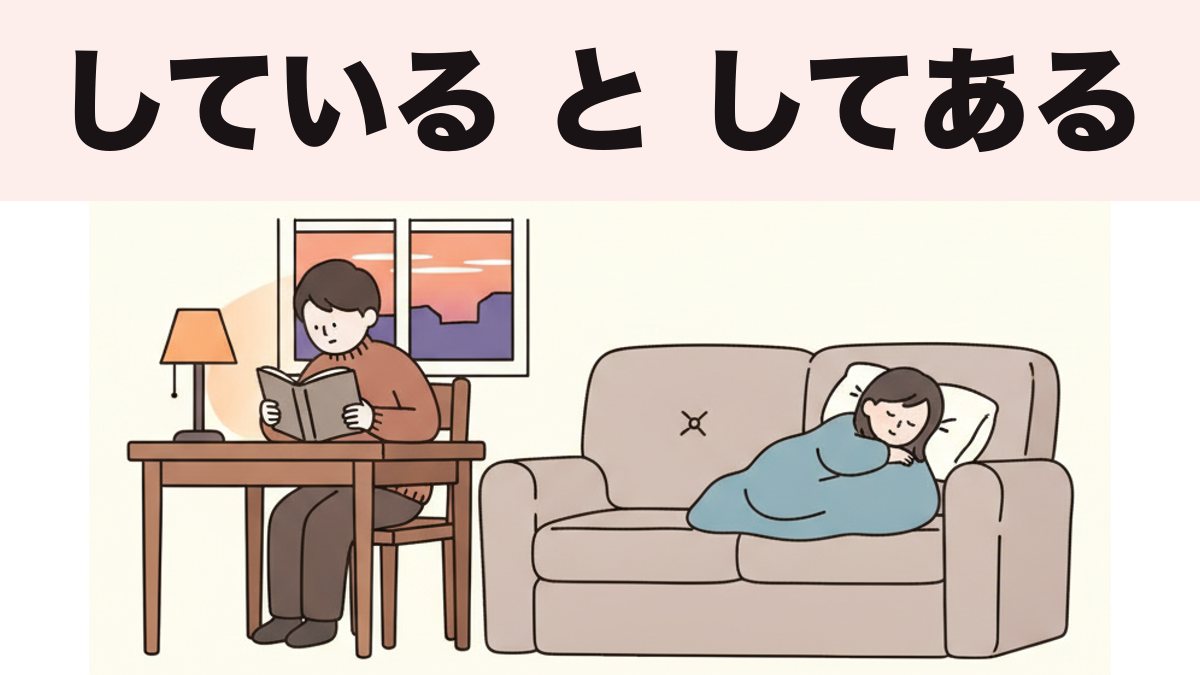
Both describe a state, and the difference is whether someone did it on purpose.
窓が開いている。 — The window is open. (just describing it) 窓が開けてある。 — The window has been opened. (someone opened it, and left it that way deliberately)
〜てある uses the transitive verb (開ける) and implies intention and preparation. 〜ている with the intransitive (開く) just reports the state. In practice you will produce 〜ている far more, but 〜てある turns up constantly in descriptions of rooms and preparations: 予約してあります ("a reservation has been made").
Why is it 住んでいます and not 住みます?
Because 住む is a change-of-state verb, and "I live in Tokyo" is the result of having moved there — exactly the second meaning above. 東京に住みます is not wrong as a sentence, but it means "I will move to Tokyo", a future action, which is almost never what a learner intends.
東京に住んでいます。 — I live in Tokyo. (polite; the state you are currently in) 来月から大阪に住みます。 — I'll be living in Osaka from next month. (polite; a future move)
This is worth separating from another pair learners collapse: 住んでいました ("I used to live there") describes residence, while 行ったことがあります ("I have been there") describes a visit. A three-day trip is 行ったことがある; three years is 住んでいた. Mixing them is one of the most common sources of confusion in a conversation about where someone has been, because the listener genuinely cannot tell which one you mean.
The same logic covers 勤めている (be employed at), 結婚している (be married) and 持っている (own): in English these are simple present, and in Japanese they are all states left behind by a completed change.
How does it sound in anime?
The contracted forms carry almost all dialogue, and two in particular are everywhere:
知ってる。 — I know. 分かってる。 — I know already. (often impatient) 何やってるんだ。 — What are you doing?! (exasperated)
分かってる deserves attention: it is not a neutral "I understand." Depending on tone it ranges from reassurance ("I've got it") to snapping at someone who keeps explaining. 分かりました is the neutral, polite one.
Common mistakes
- 知っていません. The negative of 知っています is 知りません. No 〜ている on the negative side.
- Reading 行っている as "is going." It means "has gone and is there." For being on the way, 向かっています.
- Reading 結婚しています as "is getting married." It means "is married." The same goes for 着いています ("has arrived") and 死んでいます ("is dead").
- Never contracting. Saying 食べています in casual conversation sounds like a textbook. 食べてる and 食べてます are what people say.
- Using 〜ている for a plan. 明日行っています is not "I'm going tomorrow." Japanese uses the plain non-past for future plans: 明日行きます.
- Forcing English aspect onto it. 〜ている is not the present continuous with a Japanese hat on; it is an aspect marker that lands differently depending on the verb.
Practice
Answers are hidden — build yours first, then open. Questions 3 and 4 are a pair: identical grammar, and the verb type flips the meaning.
1. Make 読む into the 〜ている form.
Show answer
読んでいる — te-form 読んで plus いる. Polite: 読んでいます. Casual spoken: 読んでる.
2. What does 雨が降っています mean?
Show answer
It's raining — 降る takes time, so 〜ている is the straightforward progressive.
3. What does 彼は東京に行っています mean?
Show answer
He has gone to Tokyo and is there now — 行く is an instant change, so 〜ている gives the state after it, not the journey.
4. How do you say "he is on his way to Tokyo"?
Show answer
東京に向かっています — 向かう is the verb for heading somewhere. This is the pair to question 3: 行っている cannot express travel in progress.
5. Something is wrong here: 知っていません。
Show answer
知りません — the positive is 知っています and the negative is 知りません. They do not match; learn them as a pair.
6. What does 結婚しています mean?
Show answer
I'm married — the wedding is an instant event, so 〜ている describes the state it left behind. Not "getting married."
7. Make 何をしていますか casual and spoken.
Show answer
何してる? — the い drops in speech. Even politely, 何してますか is completely normal.
8. Why is 毎日走っています correct even though you aren't running right now?
Show answer
It's the habitual use — 〜ている also covers repeated actions. 毎日走ります would sound more like a plan than a practice.
9. What is the difference between 窓が開いている and 窓が開けてある?
Show answer
Whether someone did it on purpose — 開いている just reports that the window is open. 開けてある says someone opened it and left it that way deliberately.
10. How do you say "I'm going tomorrow"?
Show answer
明日行きます — Japanese uses the plain non-past for future plans. 〜ている is about now, not later.
FAQ
Is there a quick way to guess which meaning a verb gives? Ask whether you could watch it happening for a minute. You can watch someone eat, read or run, so those are progressive. You cannot watch someone "arrive" for a minute — arrival is instantaneous — so those give a state.
Why does 住んでいる need 〜ている at all? Because 住む as a plain non-past would read as a plan or a general truth. 東京に住みます sounds like "I will live in Tokyo." For the fact of currently living somewhere, 住んでいます is the only natural form.
What about 持っている? Same logic: 持つ is the act of picking something up, so 持っている is the state of having it. "I have a car" is 車を持っています, never 車を持ちます.
Is 〜ていた just the past continuous? For the progressive verbs, yes — 食べていました, "I was eating." For the state verbs it means the state held in the past: 結婚していました means "I was married" (and presumably am not now), which is a much heavier sentence than it looks.
When do I need 〜てある instead? When you want to signal that someone prepared it deliberately. 予約してあります ("the reservation is made") reassures someone that it was taken care of, where 予約しています would be describing your own ongoing act of booking.
Does 〜ている ever mean the immediate future? Not on its own. Japanese uses the plain non-past for plans, and 〜ようとしている ("is about to") for the moment right before something happens: 出ようとしている, "is just about to leave."
Vocabulary from this article
Tap the block to select all of it, then copy. In Anki: File → Import, note type Basic, separator Tab — the first column becomes the front, the second the back.
食べる	たべる — to eat
読む	よむ — to read
走る	はしる — to run
待つ	まつ — to wait
降る	ふる — to fall (rain, snow)
雨	あめ — rain
結婚	けっこん — marriage
住む	すむ — to live, to reside
持つ	もつ — to hold, to have
知る	しる — to know, to find out
分かる	わかる — to understand
死ぬ	しぬ — to die
着く	つく — to arrive
向かう	むかう — to head toward
毎日	まいにち — every day
京都	きょうと — Kyoto
三回	さんかい — three times
窓	まど — window
開く	あく — to open (by itself)
開ける	あける — to open (something)
予約	よやく — reservation
勉強	べんきょう — study
明日	あした — tomorrow
車	くるま — car
I'm Yuuki, a Japanese teacher based in Tokyo. I've taught on italki as a Top 1% teacher and watched over 1,500 anime. Nobody struggles with 食べています — they struggle six months later, when they say 彼は行っています meaning "he's on his way" and nobody corrects it, because the sentence they said was perfectly fine and simply described something else.
Sources: the author's own lessons and standard reference grammars.
教科書は、これを「英語の present continuous」として出します。1週間はうまくいきます。それから「結婚しています」を見て「結婚のじゅんび中」と読んでしまい、反対の意味になります。
基本
作り方
「て形」に「いる」をつけます。それだけです。
| 動詞 | て形 | 〜ている |
|---|---|---|
| 食べる | 食べて | 食べている |
| 読む | 読んで | 読んでいる |
| する | して | している |
| 来る | 来て | 来ている |
「て形」ができれば、新しく覚えることはありません。ていねいは「食べています」、過去は「食べていました」、否定は「食べていません」です。
意味1: 今その動作をしている
時間のかかる動作(食べる・読む・走る・待つ)では、そのままの意味です。
今、ご飯を食べています。 — I'm eating right now. 雨が降っている。 — It's raining. 何をしていますか。 — What are you doing?
これは、みんながすぐ分かる意味です。「〜ている」の半分くらいがこれです。
意味2: のこった状たい
一しゅんで終わる動作(死ぬ・結婚する・着く・行く)では、「している間」がありません。だから「〜ている」は、その後の状たいを表します。
結婚しています。 — I'm married. (結こん式はもう終わりました) 東京に住んでいます。 — I live in Tokyo. 本を持っています。 — I have a book. 知っています。 — I know. 彼は死んでいる。 — He's dead.
「死んでいる」がいちばん分かりやすいです。午後ずっと「死ぬ作業中」の人はいません。一しゅんで終わるので、「〜ている」はその後の状たいになります。
どちらになるか、どう分かりますか?
「その動作に時間がかかるか」を聞いてください。
| 動詞の種類 | 例 | 〜ている の意味 |
|---|---|---|
| 時間がかかる | 食べる・読む・走る・待つ・降る | 今している |
| 一しゅんで変わる | 死ぬ・結婚する・着く・行く・来る・知る | その後の状たい |
| いつも状たい | 住む・持つ | 状たい |
ぜんぶの動詞のルールはいりません。「時間がかかるか」を聞くくせと、みんながつまずく少しのリストがあればいいです。
もう少し先へ
「行っている」は「向かっている」ではありません
これは見えないまちがいなので、見出しを1つ使います。
彼は東京に行っています。 — He has gone to Tokyo (and is there now). .✗ 東京へ向かっているところ。
「行く」は一しゅんの変化です。出発したか、していないかだけです。だから「〜ている」は「出発した後後そこにいる」になります。今、道の上にいるなら「向かっています」か、予定なら「行きます」です。
「来ている」も同じです。「田中さんが来ています」は「もう着いて、ここにいます」です。
「知っている」に否定形はありません
いちばん多いまちがいで、直すのは1語です。
✗ 知っていません。 。○ 知りません。 — I don't know.
肯定は「知っています」、否定は「知りません」です。形が合っていませんが、そういうものです。2つでセットにして覚えてください。
「分かる」は反対です。肯定では「〜ている」をつけません(分かります)。「分かっている」はありますが、「もう分かってる」という少しいらついた意味になります。
〜てる: 本当に話す形
話す時は「い」が落ちます。いつもです。
何してる? — What are you doing? 今、行ってる。 — I'm on my way. / I've gone. 知ってる? — Do you know? 食べてます。 — I'm eating. (ていねいでも short)
ていねいな会話でも「〜てます」はふつうです。書く時は「〜ている」、話す時は「〜てる」でちょうどいいです。「ので」が「んで」になるのと同じです。
習かんと、けいけんの数
「〜ている」には、もう2つ仕事があります。
毎日走っています。 — I run every day. (今走っていません) 京都には三回行っている。 — I've been to Kyoto three times.
だから「日本語を勉強していますか」の答えは「勉強しています」です。今このしゅんかん勉強していなくてもいいです。「勉強します」だと、これからの予定に聞こえます。
〜ている と 〜てある
どちらも状たいですが、「だれかがわざとやったか」がちがいます。
窓が開いている。 — The window is open. (見たままです) 窓が開けてある。 — The window has been opened. (だれかが開けて、そのままにしました)
「〜てある」は他動詞(開ける)を使って、「じゅんびした」という意味を足します。「〜ている」は自動詞(開く)で、状たいを言うだけです。自分で使うのは「〜ている」の方が多いですが、「予約してあります」のような形はよく聞きます。
なぜ「住みます」ではなく「住んでいます」?
「住む」は変化の動詞です。「東京に住んでいます」は、引っこしたあとの状たいです。上の「意味2」です。「東京に住みます」もまちがいではありませんが、「これから引っこします」という意味になります。
東京に住んでいます。 — I live in Tokyo. (the state you are in now) 来月から大阪に住みます。 — I'll be living in Osaka from next month. (a future move)
もう1つ、まざりやすいものがあります。「住んでいました」は住んでいたこと、「行ったことがあります」は旅行です。3日なら「行ったことがある」、3年なら「住んでいた」です。
「勤めている」「結婚している」「持っている」も同じです。英語では今の形ですが、日本語では全部「変化のあとの状たい」です。
アニメではどう聞こえますか?
短くした形が、せりふのほとんどです。とくにこの2つです。
知ってる。 — I know. 分かってる。 — I know already. (いらついていることが多い) 何やってるんだ。 — What are you doing?!
「分かってる」に気をつけてください。ふつうの「分かりました」ではありません。声によって、「だいじょうぶ、分かってる」から「もう言わなくていい」まで動きます。
よくある間違い
- 知っていません。 否定は「知りません」です。
- 「行っている」を「向かっている」と読むこと。 「もう行って、そこにいる」です。
- 「結婚しています」を「じゅんび中」と読むこと。 「結こんしています」です。「着いています」「死んでいます」も同じ形です。
- 短くしないこと。 ふつうの会話で「食べています」と言うと、教科書みたいです。「食べてる」「食べてます」です。
- 予定に「〜ている」を使うこと。 「明日行っています」は変です。予定はふつうの形で「明日行きます」です。
- 英語の形をそのまま当てること。 「〜ている」は present continuous に日本語のぼうしをかぶせたものではありません。
練習
答えはかくれています。まず自分の答えを作ってから開いてください。3番と4番は対になっています。
1. 「読む」を「〜ている」の形にしてください。
答えを見る
読んでいる — て形「読んで」+「いる」です。ていねいは「読んでいます」、話す形は「読んでる」。
2. 「雨が降っています」はどんな意味ですか。
答えを見る
今、雨が降っています — 「降る」は時間がかかるので、そのままの意味です。
3. 「彼は東京に行っています」はどんな意味ですか。
答えを見る
もう東京に行って、今そこにいます — 「行く」は一しゅんの変化なので、その後の状たいになります。
4. 「彼は今、東京へ向かっている」はどう言いますか。
答えを見る
東京に向かっています — 「向かう」がその動詞です。3番と対です。「行っている」では道の上を表せません。
5. 直してください: 知っていません。
答えを見る
知りません — 肯定は「知っています」、否定は「知りません」です。形が合いませんが、セットで覚えます。
6. 「結婚しています」はどんな意味ですか。
答えを見る
結こんしています(している状たい) — 結こん式は一しゅんなので、「〜ている」はその後の状たいです。
7. 「何をしていますか」を、話す形にしてください。
答えを見る
何してる? — 話す時は「い」が落ちます。ていねいでも「何してますか」はふつうです。
8. 今走っていないのに「毎日走っています」が正しいのはなぜですか。
答えを見る
習かんの使い方だからです — 「〜ている」はくり返す動作にも使います。「毎日走ります」だと予定に聞こえます。
9. 「窓が開いている」と「窓が開けてある」はどうちがいますか。
答えを見る
わざとかどうか — 「開いている」は見たままです。「開けてある」は、だれかが開けて、そのままにしました。
10. 「明日行きます」と言いたい時、「〜ている」は使えますか。
答えを見る
使えません。「明日行きます」です — 日本語は予定にふつうの形を使います。「〜ている」は今の話です。
よくある質問
どちらの意味か、すぐ分かる方法はありますか。 「1分間ずっと見ていられるか」を聞いてください。食べる・読む・走るは見ていられます(今している)。「着く」は一しゅんなので見ていられません(状たい)。
「住んでいる」はなぜ「〜ている」が必要ですか。 「住みます」だと予定や一ぱん的な話になります。「東京に住みます」は「これから住みます」に聞こえます。今住んでいる事実は「住んでいます」だけです。
「持っている」はどうですか。 同じです。「持つ」は手に取る動作なので、「持っている」は持っている状たいです。「車を持っています」で、「車を持ちます」ではありません。
「〜ていた」は過去進行形ですか。 時間のかかる動詞ではそうです(食べていました)。状たいの動詞では「その時そうだった」です。「結婚していました」は「その時は結こんしていた(今はしていない)」になるので、見た目より重い文です。
「〜てある」はいつ使いますか。 だれかがわざとじゅんびした、と言いたい時です。「予約してあります」は「ちゃんと取ってあります」という安心の文です。「予約しています」だと、今取っている作業の話になります。
「もうすぐ〜する」の意味になりますか。 なりません。予定はふつうの形です。「今まさに〜しようとしている」なら「〜ようとしている」です(出ようとしている)。
この記事に出た単語
ブロックをタップすると全部選べます。そのままコピーしてください。Anki では ファイル → 読み込み、ノートタイプ 基本、区切り タブ。1列目が表、2列目が裏になります。
食べる	たべる — to eat
読む	よむ — to read
走る	はしる — to run
待つ	まつ — to wait
降る	ふる — to fall (rain, snow)
雨	あめ — rain
結婚	けっこん — marriage
住む	すむ — to live, to reside
持つ	もつ — to hold, to have
知る	しる — to know, to find out
分かる	わかる — to understand
死ぬ	しぬ — to die
着く	つく — to arrive
向かう	むかう — to head toward
毎日	まいにち — every day
京都	きょうと — Kyoto
三回	さんかい — three times
窓	まど — window
開く	あく — to open (by itself)
開ける	あける — to open (something)
予約	よやく — reservation
勉強	べんきょう — study
明日	あした — tomorrow
車	くるま — car
私はユウキです。東京で日本語を教えています。 italki の Top 1% の先生で、アニメは1,500本以上見ました。「食べています」でつまずく人はいません。つまずくのは半年後です。「彼は行っています」を「向かっています」のつもりで言って、だれも直しません。言った文は正しくて、ただ別のことを言っていたからです。
More drills like the ones above, plus a timed JLPT-style mock test: Practice · N4上のような練習問題と、時間つきのJLPT形式のもぎ試験: 練習ページ · N4
Want to try this in a real conversation?
本当の会話で、ためしてみませんか?
30-minute trial lesson, $13. Times shown in your own timezone.
30分の体験レッスン、$13。時間はあなたのタイムゾーンで表示されます。
Book a trial lesson · $13