〜ながら: "while doing" — and why the second verb is the real one〜ながら: 「〜しながら」と、本当の動詞は2つめ
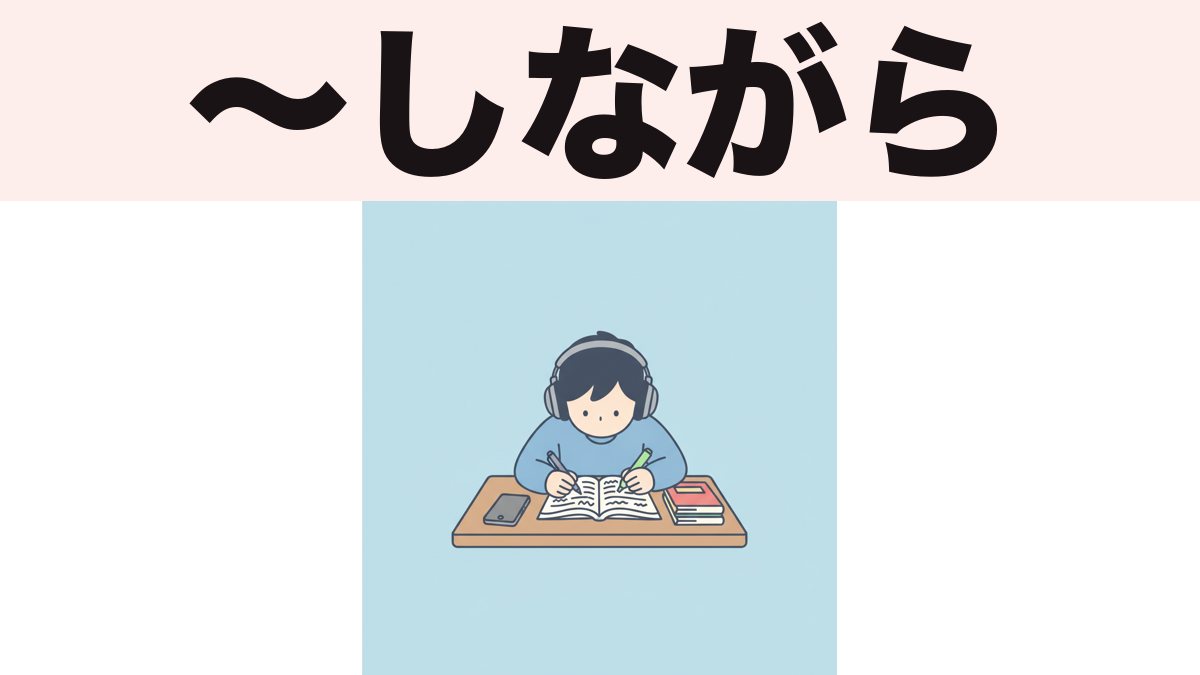
〜ながら means "while doing," with two rules attached: both actions must be done by the same person, and the *second* clause is the main action. 音楽を聞きながら勉強する is studying, with music in the background — not listening to music with some studying attached.
「〜ながら」は「〜しながら」という意味です。ルールが2つあります。2つの動作は**同じ人**がすること、そして**2つめの文**が本当の動作であることです。「音楽を聞きながら勉強する」は「勉強する」話で、「音楽を聞く」話ではありません。
That second rule is the one learners get backwards, and it changes what a sentence is about. Once you have it, ながら becomes one of the easiest patterns in Japanese — the conjugation has no exceptions at all.
The basics
How to build it
Take the ます-stem and add ながら. That is the entire rule, with no irregular forms.
| Verb | ます form | 〜ながら |
|---|---|---|
| 聞く | 聞きます | 聞きながら |
| 食べる | 食べます | 食べながら |
| する | します | しながら |
| 来る | 来ます | 来ながら |
| 歩く | 歩きます | 歩きながら |
音楽を聞きながら勉強します。 — I study while listening to music. 歩きながら電話しないでください。 — Please don't phone while walking. テレビを見ながらご飯を食べた。 — I ate while watching TV.
The second verb is the main one
This is what the grammar actually encodes. The ながら clause is the background; the final verb is what the sentence is about.
音楽を聞きながら勉強します。 — I study, with music on. 勉強しながら音楽を聞きます。 — I listen to music, with some studying going on.
Both are grammatical. Only one of them is a sentence about studying. If a teacher says 勉強しながら音楽を聞く, they are describing someone who is mostly listening to music — which is probably not what you meant to admit.
Both actions must be the same person
ながら cannot join two different people. This is the rule that sends you to a different grammar point.
✗ 私が料理しながら、彼がテレビを見ていた。 。○ 私が料理している間に、彼はテレビを見ていた。 — While I was cooking, he watched TV.
〜間に (あいだに) is the form for two different subjects, and it also works for a period of time rather than a continuous overlap: 寝ている間に雨が降った ("it rained while I was asleep").
| Form | Same person? | Meaning |
|---|---|---|
| 〜ながら | Yes, required | Doing both at once |
| 〜間に | No, either way | During the time that… |
| 〜ている時に | No, either way | At the moment when… |
Beyond the basics
It needs two things that take time
ながら joins two ongoing actions. A momentary action cannot sit in it.
✗ 起きながらコーヒーを飲む。 。○ 起きてからコーヒーを飲む。 — I drink coffee after getting up.
Waking up happens in an instant, so there is no "while" available — the same instant-versus-ongoing split that decides what 〜ている means for a given verb. If a verb gives you a state with ている, it usually cannot take ながら either.
The other ながら: "although"
There is a second ながら, unrelated in feel, that means "although." It attaches to the ます-stem, to い-adjectives, and to nouns, and it is literary.
残念ながら、行けません。 — Regrettably, I can't go. 知っていながら、言わなかった。 — He knew, and still didn't say. 子供ながら、よく分かっている。 — Young as he is, he understands well.
残念ながら is the one to learn first — it is the standard polite opener for bad news in email and announcements, and you will meet it long before you meet the grammar behind it. 〜ながらも is the emphatic version: 小さいながらも、いい店です ("small though it is, it's a good shop").
How do you tell the two apart? By whether the two halves conflict. If they sit together comfortably, it is "while." If one contradicts the other, it is "although."
〜つつ: the formal twin
つつ is ながら's written cousin. Same ます-stem, same two meanings, much more formal.
考えつつ歩いた。 — I walked, thinking. 知っていつつ黙っていた。 — Knowing, he stayed silent.
You will see it in essays and news writing and essentially never hear it in conversation. There is also 〜つつある, which is a different thing entirely: it means a process is underway — 増えつつある ("is in the process of increasing") — and it is common in formal reporting.
How does it sound in anime and real life?
The "while" ながら turns up in ordinary description, and there is one fixed phrase worth having:
ながら見。 — Watching with half your attention. (a noun, made from the grammar) 歩きスマホ。 — Phone-walking. (the thing 歩きながら describes, as a compound noun) 泣きながら笑った。 — She laughed through tears.
ながら見 and 歩きスマホ show the pattern becoming vocabulary. 歩きスマホ in particular is on signs in every station in Japan, and knowing what it is built from makes the sign readable at a glance.
ながら and the verbs that refuse it
A quick way to test whether a verb takes ながら: try putting it in the middle of a sentence about ten minutes. If ten minutes of it makes sense, ながら works.
| Verb | Ten minutes of it? | ながら |
|---|---|---|
| 歩く, 食べる, 聞く, 話す | Yes | ✓ |
| 起きる, 着く, 死ぬ, 始まる | No — instantaneous | ✗ |
| 住む, 持つ | It is a state, not an action | ✗ |
For the second row, use 〜てから ("after") or 〜た時に ("when"). For the third, the sentence usually does not need a connector at all — 東京に住んでいた時 ("when I lived in Tokyo") already says everything ながら would have.
This is the same instant-versus-ongoing test that decides what 〜ても can attach to and what conditionals do with a verb, which is why it is worth internalising once rather than three times.
Common mistakes
- Getting the order backwards. The final verb is the main action. 勉強しながら音楽を聞く is a sentence about listening to music.
- Two different people. ながら requires one subject. Use 〜間に for two.
- Using the plain form. 聞くながら is wrong; it is the ます-stem, 聞きながら.
- Momentary verbs. 起きながら, 着きながら, 死にながら do not work. ながら needs actions with duration.
- Missing the "although" meaning. 知っていながら is not "while knowing" in any useful sense — it is "even though he knew."
- Using つつ in conversation. It is correct and it sounds like you are reading from a report.
Practice
Answers are hidden — build yours first, then open. Questions 1 and 2 are a pair: the same two activities, and the order decides what the sentence is about.
1. What is 音楽を聞きながら勉強します a sentence about?
Show answer
Studying — the final verb is the main action, and the ながら clause is background. Music is on; studying is what you are doing.
2. What is 勉強しながら音楽を聞きます a sentence about?
Show answer
Listening to music — same two activities, reversed. This is the pair to question 1: you are mostly listening, with some studying happening. Probably not what you meant.
3. Make 食べる into the ながら form.
Show answer
食べながら — ます-stem 食べ plus ながら. There are no irregular forms in this conjugation.
4. Something is wrong here: 私が料理しながら、彼がテレビを見ていた。
Show answer
私が料理している間に、彼はテレビを見ていた — ながら requires both actions to be done by the same person. Two subjects need 間に.
5. Something is wrong here: 起きながらコーヒーを飲む。
Show answer
起きてからコーヒーを飲む — 起きる is momentary, so there is no "while" to be inside. ながら needs two actions that take time.
6. What does 残念ながら mean, and which ながら is it?
Show answer
"Regrettably" — the "although" ながら — the standard polite opener for bad news in email. The two halves conflict, which is the tell.
7. What does 知っていながら、言わなかった mean?
Show answer
"He knew, and still didn't say" — not "while knowing." When the two halves contradict each other, ながら means "although."
8. Say "please don't use your phone while walking."
Show answer
歩きながらスマホを使わないでください — and the noun for it, 歩きスマホ, is on signs in every station in Japan.
9. What is つつ, and where would you use it?
Show answer
The formal written twin of ながら — same ます-stem, same meanings, essays and news writing only. In speech it sounds like reading from a report.
10. What does 増えつつある mean?
Show answer
"Is in the process of increasing" — 〜つつある is a separate pattern meaning a process is underway, common in formal reporting. Not the same as plain つつ.
FAQ
Can ながら take a negative? Not in the "while" sense — 食べないながら is not a form. For "without doing," Japanese uses 〜ないで: 何も言わないで出て行った ("he left without saying anything").
Is ながら casual or formal? Neutral. It appears everywhere from conversation to signage. The formality question only arises with つつ, which is the written option.
What is ながら族? A slightly dated word for people who habitually do two things at once — study with the TV on, eat while reading. It comes straight from this grammar and still turns up in writing about attention and multitasking.
How do I say "while I was in Japan"? Not with ながら — that is a period of time, so it takes 間: 日本にいる間に、たくさん旅行しました ("while I was in Japan, I travelled a lot"). ながら is for two simultaneous actions, not for a span.
Can I use ながら with adjectives? Only in the "although" sense: 小さいながら, 若いながら. For "while," ながら attaches only to verbs.
Why is the second verb the main one? Because Japanese puts the main clause last, consistently. Everything before the final verb is modifying it — that is the same principle behind relative clauses and conditionals, and once you trust it, a lot of long sentences become readable from the end backwards.
Vocabulary from this article
Tap the block to select all of it, then copy. In Anki: File → Import, note type Basic, separator Tab — the first column becomes the front, the second the back.
音楽	おんがく — music
聞く	きく — to listen
勉強	べんきょう — study
歩く	あるく — to walk
電話	でんわ — telephone, phone call
食べる	たべる — to eat
料理	りょうり — cooking
彼	かれ — he, him
寝る	ねる — to sleep
起きる	おきる — to get up
残念	ざんねん — regrettable, a shame
知る	しる — to know
言う	いう — to say
子供	こども — child
小さい	ちいさい — small
考える	かんがえる — to think
黙る	だまる — to stay silent
増える	ふえる — to increase
泣く	なく — to cry
笑う	わらう — to laugh
旅行	りょこう — travel
間	あいだ — interval, while
I'm Yuuki, a Japanese teacher based in Tokyo. I've taught on italki as a Top 1% teacher and watched over 1,500 anime. The conjugation takes one minute and the word order takes months — learners keep saying 勉強しながら音楽を聞く about their study habits, which is a more honest sentence than they intended.
Sources: the author's own lessons and standard reference grammars.
2つめのルールを反対にしている人が多いです。それで、文が何の話かが変わります。分かってしまえば、日本語でいちばんかんたんな形の1つです。作り方にれいがいがありません。
基本
作り方
「ます」の形に「ながら」をつけます。それだけで、ふきそくはありません。
| 動詞 | ますの形 | 〜ながら |
|---|---|---|
| 聞く | 聞きます | 聞きながら |
| 食べる | 食べます | 食べながら |
| する | します | しながら |
| 来る | 来ます | 来ながら |
| 歩く | 歩きます | 歩きながら |
音楽を聞きながら勉強します。 — I study while listening to music. 歩きながら電話しないでください。 — Please don't phone while walking. テレビを見ながらご飯を食べた。 — I ate while watching TV.
2つめの動詞が本当の動作です
これが、この文法がしるしていることです。「ながら」の部分は背けいで、最後の動詞が「何の話か」を決めます。
音楽を聞きながら勉強します。 — 勉強しています。音楽は背けいです。 。勉強しながら音楽を聞きます。 — 音楽を聞いています。勉強は少しです。
どちらも文法は正しいです。でも、勉強の話をしているのは1つめだけです。
2つの動作は同じ人
「ながら」は、ちがう2人をつなげません。ここでべつの文法が必要になります。
✗ 私が料理しながら、彼がテレビを見ていた。 。○ 私が料理している間に、彼はテレビを見ていた。 — While I was cooking, he watched TV.
「〜間(あいだ)に」が、ちがう2人の形です。時間のはばにも使えます。「寝ている間に雨が降った」。
| 形 | 同じ人? | 意味 |
|---|---|---|
| 〜ながら | はい・必ず | 2つを同時にする |
| 〜間に | どちらでも | その間に |
| 〜ている時に | どちらでも | そのしゅんかんに |
もう少し先へ
時間のかかる動作が2つ必要です
「ながら」は続いている動作を2つつなぎます。一しゅんの動作は入れません。
✗ 起きながらコーヒーを飲む。 。○ 起きてからコーヒーを飲む。 — I drink coffee after getting up.
「起きる」は一しゅんなので、「〜している間」がありません。「〜ている」で状たいになる動詞は、だいたい「ながら」にも使えません。
もう1つの「ながら」: 「〜なのに」
意味のちがう「ながら」があります。「〜なのに」です。「ます」の形にも、「い形容詞」にも、名詞にもつきます。書きことばです。
残念ながら、行けません。 — Regrettably, I can't go. 知っていながら、言わなかった。 — He knew, and still didn't say. 子供ながら、よく分かっている。 — Young as he is, he understands well.
まず「残念ながら」を覚えてください。メールやお知らせで、悪い話を切り出すときの決まった形です。文法より先に出会います。「〜ながらも」は強めた形です。「小さいながらも、いい店です」。
見分け方は、前後がぶつかっているかどうかです。いっしょにいられるなら「〜しながら」、反対なら「〜なのに」です。
〜つつ: かたい方の形
「つつ」は「ながら」の書きことば版です。同じ「ます」の形で、意味も同じで、ずっとかたいです。
考えつつ歩いた。 — I walked, thinking. 知っていつつ黙っていた。 — Knowing, he stayed silent.
論文やニュースで見ますが、会話ではほとんど聞きません。「〜つつある」はべつの形で、「今その方向へ進んでいる」という意味です。「増えつつある」。かたい報告によく出ます。
アニメや生活ではどう聞こえますか?
ふつうのせつめいに出ます。決まった言い方も1つあります。
ながら見。 — ちゃんと見ないで見ること。(この文法からできた名詞) 歩きスマホ。 — 歩きながらスマホを見ること。 。泣きながら笑った。 — She laughed through tears.
「ながら見」「歩きスマホ」は、文法がことばになった例です。「歩きスマホ」は日本中の駅の看板にあるので、作り方が分かると、看板が一目で読めます。
「ながら」が使えない動詞
かんたんなテストがあります。「10分間それをする」と言えるかどうかです。言えるなら「ながら」が使えます。
| 動詞 | 10分間できる? | ながら |
|---|---|---|
| 歩く・食べる・聞く・話す | はい | ✓ |
| 起きる・着く・死ぬ・始まる | いいえ・一しゅん | ✗ |
| 住む・持つ | 動作ではなく状たい | ✗ |
2行目は「〜てから」「〜た時に」を使います。3行目は、そもそもつなぎことばがいりません。「東京に住んでいた時」で、もう言いたいことが言えています。
これは「〜ても」につく動詞や、条件の形が動詞をどう扱うかと同じテストです。だから3回ではなく1回、体に入れておくと得です。
よくある間違い
- じゅんばんを反対にすること。 最後の動詞が本当の動作です。「勉強しながら音楽を聞く」は音楽の話です。
- ちがう2人をつなぐこと。 「ながら」は同じ人だけです。2人なら「〜間に」です。
- ふつうの形を使うこと。 「聞くながら」は間ちがいです。「聞きながら」です。
- 一しゅんの動詞。 「起きながら」「着きながら」は使えません。
- 「〜なのに」の意味を知らないこと。 「知っていながら」は「知っていたのに」です。
- 会話で「つつ」を使うこと。 正しいですが、報告書を読んでいるように聞こえます。
練習
答えはかくれています。まず自分の答えを作ってから開いてください。1番と2番は対になっています。
1. 「音楽を聞きながら勉強します」は、何の話ですか。
答えを見る
勉強の話です — 最後の動詞が本当の動作で、「ながら」の部分は背けいです。
2. 「勉強しながら音楽を聞きます」は、何の話ですか。
答えを見る
音楽の話です — 同じ2つですが、じゅんばんが反対です。1番と対で、勉強は少ししかしていません。
3. 「食べる」を「ながら」の形にしてください。
答えを見る
食べながら — 「ます」の形「食べ」+「ながら」です。ふきそくはありません。
4. 直してください: 私が料理しながら、彼がテレビを見ていた。
答えを見る
私が料理している間に、彼はテレビを見ていた — 「ながら」は同じ人だけです。2人なら「間に」です。
5. 直してください: 起きながらコーヒーを飲む。
答えを見る
起きてからコーヒーを飲む — 「起きる」は一しゅんなので、「その間」がありません。
6. 「残念ながら」はどんな意味で、どちらの「ながら」ですか。
答えを見る
「ざんねんですが」— 「〜なのに」の方です — メールで悪い話を切り出す決まった形です。前後がぶつかっているのが見分け方です。
7. 「知っていながら、言わなかった」はどんな意味ですか。
答えを見る
知っていたのに、言わなかった — 「知っている間に」ではありません。前後が反対の時は「〜なのに」です。
8. 「歩きながらスマホを使わないでください」と言ってください。
答えを見る
歩きながらスマホを使わないでください — 名詞にすると「歩きスマホ」で、日本中の駅の看板にあります。
9. 「つつ」は何で、どこで使いますか。
答えを見る
「ながら」のかたい書きことば版です — 同じ「ます」の形で、意味も同じです。論文やニュースだけです。
10. 「増えつつある」はどんな意味ですか。
答えを見る
今、増えている方向に進んでいます — 「〜つつある」はべつの形で、かたい報告によく出ます。
よくある質問
「ながら」に否定形はありますか。 「〜しながら」の意味ではありません。「食べないながら」という形はありません。「〜しないで」を使ってください。「何も言わないで出て行った」。
「ながら」はかたいですか、くだけていますか。 中立です。会話にも看板にも出ます。かたさが問題になるのは「つつ」だけです。
「ながら族」は何ですか。 2つのことを同時にする人、という少し古いことばです。テレビを見ながら勉強する人などです。この文法から来ています。
「日本にいる間に」はなぜ「ながら」ではないのですか。 時間のはばだからです。「日本にいる間に、たくさん旅行しました」。「ながら」は同時の2つの動作で、はばには使いません。
形容詞にも使えますか。 「〜なのに」の意味だけです。「小さいながら」「若いながら」。「〜しながら」は動詞だけです。
なぜ2つめの動詞が本当の動作ですか。 日本語は、いつも主になる文を最後に置くからです。最後の動詞より前は、ぜんぶそれをせつめいしています。関係する文(修飾の文)も条件の文も同じです。そう信じると、長い文が後ろから読めるようになります。
この記事に出た単語
ブロックをタップすると全部選べます。そのままコピーしてください。Anki では ファイル → 読み込み、ノートタイプ 基本、区切り タブ。1列目が表、2列目が裏になります。
音楽	おんがく — music
聞く	きく — to listen
勉強	べんきょう — study
歩く	あるく — to walk
電話	でんわ — telephone, phone call
食べる	たべる — to eat
料理	りょうり — cooking
彼	かれ — he, him
寝る	ねる — to sleep
起きる	おきる — to get up
残念	ざんねん — regrettable, a shame
知る	しる — to know
言う	いう — to say
子供	こども — child
小さい	ちいさい — small
考える	かんがえる — to think
黙る	だまる — to stay silent
増える	ふえる — to increase
泣く	なく — to cry
笑う	わらう — to laugh
旅行	りょこう — travel
間	あいだ — interval, while
私はユウキです。東京で日本語を教えています。 italki の Top 1% の先生で、アニメは1,500本以上見ました。作り方は1分で終わりますが、じゅんばんは何か月もかかります。みんな自分の勉強の話をするとき「勉強しながら音楽を聞く」と言います。思っていたより正直な文です。
More drills like the ones above, plus a timed JLPT-style mock test: Practice · N4上のような練習問題と、時間つきのJLPT形式のもぎ試験: 練習ページ · N4
Want to try this in a real conversation?
本当の会話で、ためしてみませんか?
30-minute trial lesson, $13. Times shown in your own timezone.
30分の体験レッスン、$13。時間はあなたのタイムゾーンで表示されます。
Book a trial lesson · $13