〜くなる and 〜になる: how Japanese says "become〜くなる・〜になる: 「なる」の作り方
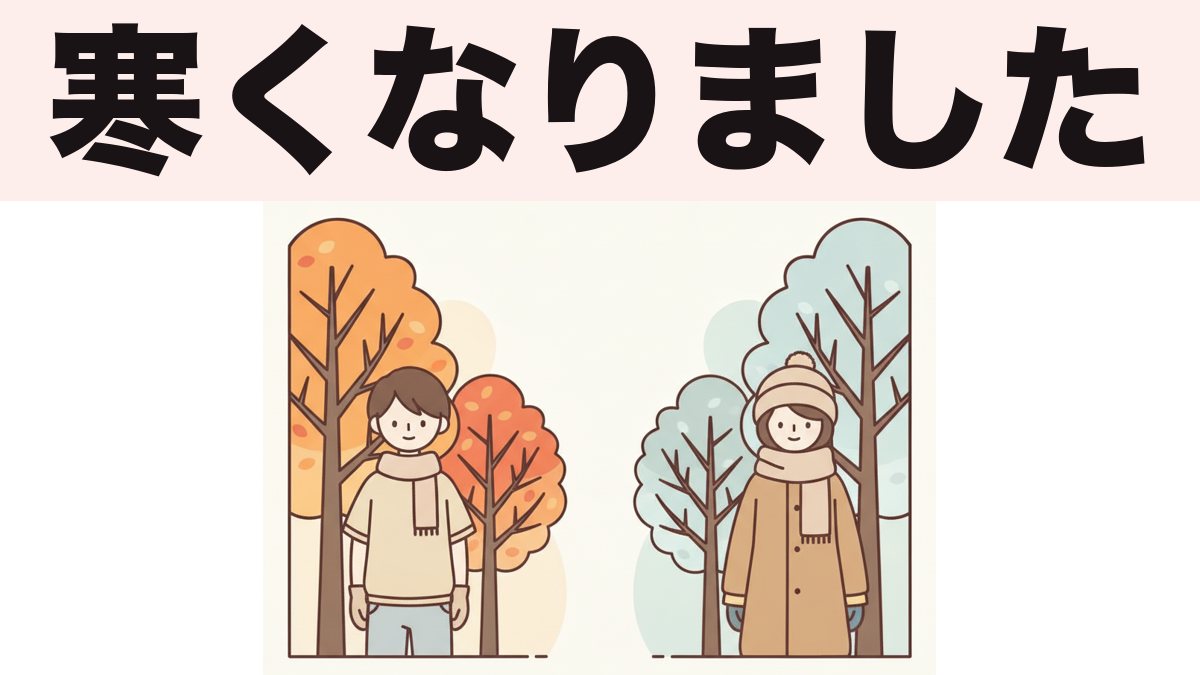
Japanese builds "become" with なる, and the word in front of it has to change shape first: い-adjectives take く, な-adjectives and nouns take に. 忙しく**なる**, 静かに**なる**, 先生に**なる**. The error is 忙しい**になる**, and nearly every learner makes it.
日本語の「become」は「なる」です。前のことばは、先に形を変えます。い形容詞は「く」、な形容詞と名詞は「に」。「忙しくなる」「静かになる」「先生になる」。間違いは「忙しいになる」で、ほとんどの人が一度はやります。
Once the shape is automatic, this one verb covers an enormous range of everyday sentences — weather, prices, skills, moods, jobs — and its partner する gives you the deliberate version of every single one.
The basics
The three shapes
| Word type | Change | Example |
|---|---|---|
| い-adjective | い → く | 高い → 高くなる |
| な-adjective | + に | 静か → 静かになる |
| Noun | + に | 先生 → 先生になる |
寒くなりましたね。 — It's got cold, hasn't it. (polite past — the standard autumn greeting) 日本語が上手になりました。 — Your Japanese has got good. (polite past — な-adjective takes に)
The one thing to memorise is that い-adjectives drop their い for く. Everything else takes に. If い-adjective conjugation is already automatic for you, this is the same く you use in 高くない.
なる is a change that happens to you
なる describes a change, not an action someone performs. Nobody makes the weather cold; it becomes cold.
来年、大学生になります。 — I'll be a university student next year. (polite — a change of state over time) もう遅くなったので、帰ります。 — It's got late, so I'll head home. (polite — 遅い → 遅く)
That last one is a very common real sentence: 遅くなる ("to get late," and also "to be late") shows up constantly in apologies — 遅くなってすみません.
する is the deliberate twin
Swap なる for する and the change becomes something you do on purpose. The shape in front stays identical.
音を小さくしてください。 — Please turn the volume down. (polite request — literally "make it small") 部屋を静かにしてください。 — Please make the room quiet. (polite request)
なる / する is one of the cleanest pairs in Japanese: 大きくなる (it grows) vs 大きくする (you enlarge it), 綺麗になる (it gets clean) vs 綺麗にする (you clean it). Learn them together and you get two sentences for the price of one.
Beyond the basics
上手になる takes が, not を
This trips people up because the English is "I got good at Japanese" — an object. In Japanese, 上手 is an adjective describing the skill itself, so the skill is the subject:
弟はギターが上手になりました。 — My brother has got good at guitar. (polite past — が, not を)
The same applies to 好きになる ("come to like"): 彼女が好きになった, not 彼女を. This is the standard が with adjectives of ability and feeling, and it survives into the なる form.
〜なくなる: to stop doing / no longer be
Negatives are い-adjectives too (ない ends in い), so they take く just like the rest:
最近、テレビを見なくなりました。 — I've stopped watching TV lately. (polite past — 見ない → 見なく + なる) 雨が降らなくなりました。 — It's stopped raining. (polite past)
This is one of the most useful applications of the pattern, because English needs a whole different verb ("stop") where Japanese just negates and applies なる.
With verbs, you need ようになる or ことになる
なる cannot attach directly to a dictionary-form verb. 話すなる is not a sentence. For a change in what you can do or habitually do, Japanese inserts ように:
日本語が話せるようになりました。 — I've become able to speak Japanese. (polite past)
That is a grammar point of its own — see 〜ようになる for how it splits from 〜ことになる. The short version: ように covers ability and habit, ことに covers decisions.
The polite ceremony forms
You will hear なる in service Japanese in shapes that look strange at first:
こちらがメニューになります。 — Here is the menu. (overly polite restaurant Japanese)
Grammatically this is odd — the menu is not becoming anything — and many Japanese speakers dislike it. Recognise it, don't copy it. The plain です is correct and sounds better.
~になっている: the resulting state
Adding the teiru form gives you "has become and now is":
駅の前は工事中になっています。 — The area in front of the station is under construction. (polite — a state that resulted from a change)
This is extremely common in explanations and signage, and it is the same "resulting state" sense of the teiru form you already know from 結婚しています.
Common mistakes
- 忙しいになる. い-adjectives never take に. It is 忙しくなる.
- 静かくなる. な-adjectives never take く. It is 静かになる.
- Using を with 上手になる and 好きになる. Both take が.
- Attaching なる to a verb. 話すなる is broken. You need 話せるようになる.
- Copying 〜になります from restaurant staff. こちらがメニューになります is a stylistic quirk, not a model sentence.
Practice
Answers are hidden — build yours first, then open. Questions 1 and 2 are a pair: the same idea, different word type.
1. Say "it's got cold" politely, in the past.
Show answer
寒くなりました — 寒い is an い-adjective, so い drops and く appears.
2. Say "it's got quiet" politely, in the past.
Show answer
静かになりました — 静か is a な-adjective, so it takes に. This is the pair to question 1: only the word type changed.
3. Something is wrong here: 最近、忙しいになりました。
Show answer
忙しくなりました — い-adjectives take く. This is the single most common error with this grammar.
4. Say "I'll be a university student next year."
Show answer
来年、大学生になります — a noun takes に, the same as a な-adjective.
5. Ask someone to turn the volume down.
Show answer
音を小さくしてください — する instead of なる, because you are asking someone to cause the change. The く stays the same.
6. Something is wrong here: 日本語を上手になりました。
Show answer
日本語が上手になりました — 上手 is an adjective, so the skill is the subject and takes が, not を.
7. Say "I've stopped watching TV lately."
Show answer
最近、テレビを見なくなりました — ない ends in い, so it becomes なく and takes なる. Japanese needs no separate word for "stop."
8. Something is wrong here: 日本語が話すなりました。
Show answer
話せるようになりました — なる cannot attach to a verb directly. ように is the bridge, and the potential form carries "became able to."
9. What is the difference between 綺麗になる and 綺麗にする?
Show answer
It gets clean vs you clean it — なる is a change that happens, する is a change you cause. The shape in front is identical.
10. Why is こちらがメニューになります odd?
Show answer
Nothing is becoming anything — it is over-polite service Japanese. こちらがメニューです is correct and sounds better. Recognise it, don't copy it.
FAQ
Is なる a る-verb or a う-verb? A う-verb: なる → なります → なった → ならない. It looks like a る-verb but conjugates as a う-verb, like 帰る and 走る.
How do I say "become" in the future? なります already covers it — Japanese does not have a separate future tense. 来年、先生になります is next year.
What about "want to become"? なりたい: 医者になりたいです ("I want to be a doctor"). The verb is regular, so all the usual endings attach.
Can I use なる with a person as the object of change? Yes, if it's a role or state: 友達になる ("become friends"), 好きになる ("come to like"), 大人になる ("grow up").
Why do I hear 〜ことになりました at work? That is the decision version: 転勤することになりました ("it has been decided I'll transfer"). なる makes the decision sound like it arrived rather than being chosen, which is deliberately modest.
Is なる ever written in kanji? 成る exists but is rare in ordinary writing. Kana is standard.
Vocabulary from this article
Tap the block to select all of it, then copy. In Anki: File → Import, note type Basic, separator Tab — the first column becomes the front, the second the back.
寒い	さむい — cold
高い	たかい — high, expensive
忙しい	いそがしい — busy
静か	しずか — quiet
上手	じょうず — skilled, good at
先生	せんせい — teacher
大学生	だいがくせい — university student
来年	らいねん — next year
遅い	おそい — late, slow
音	おと — sound
小さい	ちいさい — small
大きい	おおきい — big
部屋	へや — room
綺麗	きれい — clean, beautiful
弟	おとうと — younger brother
最近	さいきん — recently
雨	あめ — rain
降る	ふる — to fall (rain)
駅	えき — station
工事中	こうじちゅう — under construction
医者	いしゃ — doctor
大人	おとな — adult
友達	ともだち — friend
転勤	てんきん — job transfer
I'm Yuuki, a Japanese teacher based in Tokyo. I've taught on italki as a Top 1% teacher and watched over 1,500 anime. 忙しいになる comes out of nearly every beginner at some point, and it is worth drilling early, because なる is one of the highest-traffic verbs in the language — you will use it several times in any real conversation.
Sources: the author's own lessons and standard reference grammars.
形が自動で出るようになると、この動詞1つで、天気・値段・じょうず・気もち・仕事のことがぜんぶ言えます。そして「する」が、その全部の「わざとやる版」をくれます。
基本
3つの形
| しゅるい | 変え方 | れい |
|---|---|---|
| い形容詞 | い → く | 高い → 高くなる |
| な形容詞 | +に | 静か → 静かになる |
| 名詞 | +に | 先生 → 先生になる |
寒くなりましたね。 — It's got cold, hasn't it. 日本語が上手になりました。 — Your Japanese has got good.
おぼえることは1つだけです。い形容詞は「い」をとって「く」。ほかはぜんぶ「に」。
「なる」は、自ぜんに変わること
「なる」は、だれかがする動作ではありません。変わることです。天気を寒くする人はいません。寒くなるだけです。
来年、大学生になります。 — I'll be a university student next year. もう遅くなったので、帰ります。 — It's got late, so I'll head home.
「遅くなる」はとてもよく使います。「遅くなってすみません」はあやまる時の定番です。
「する」は、わざとやる方
「なる」を「する」にかえると、自分でする変化になります。前の形は同じです。
音を小さくしてください。 — Please turn the volume down. 部屋を静かにしてください。 — Please make the room quiet.
「大きくなる(そだつ)/大きくする(大きくする)」「綺麗になる/綺麗にする」。ペアでおぼえると、文が2つできます。
もう少しくわしく
「上手になる」は「が」
英語だと「got good at Japanese」で目てき語に見えます。でも「上手」は形容詞なので、日本語ではそれがしゅごです。
弟はギターが上手になりました。 — My brother has got good at guitar.
「好きになる」も同じです。「彼女が好きになった」で、「彼女を」ではありません。
「〜なくなる」=しなくなる
「ない」も「い」で終わるので、い形容詞と同じです。「なく」になります。
最近、テレビを見なくなりました。 — I've stopped watching TV lately. 雨が降らなくなりました。 — It's stopped raining.
英語は「stop」という別の動詞がいりますが、日本語はうちけしにして「なる」をつけるだけです。
動詞には「ようになる」「ことになる」
「なる」は、じしょ形の動詞に直接つきません。「話すなる」は文になりません。
日本語が話せるようになりました。 — I've become able to speak Japanese.
「ように」はできることやしゅうかん、「ことに」はきまったことです。
お店のていねいすぎる「なります」
こちらがメニューになります。 — Here is the menu.
文法としてはへんです。メニューは何にもなっていません。日本人でもきらいな人が多いです。分かればいいです。まねしなくていいです。「こちらがメニューです」が正しくて、きれいです。
「〜になっている」=そうなったじょうたい
駅の前は工事中になっています。 — The area in front of the station is under construction.
せつめいやかんばんによく出ます。
よくある間違い
- 忙しいになる。 い形容詞は「に」をとりません。「忙しくなる」です。
- 静かくなる。 な形容詞は「く」をとりません。「静かになる」です。
- 「上手になる」「好きになる」に「を」を使う。 どちらも「が」です。
- 動詞に直接つける。 「話すなる」は間違い。「話せるようになる」です。
- お店の「〜になります」をまねする。 あれはくせで、お手本ではありません。
練習
答えはかくれています。まず自分で作ってから開いてください。1番と2番が対です。同じ考えで、ことばのしゅるいだけがちがいます。
1. 「寒くなった」をていねいに言ってください。
答えを見る
寒くなりました — 「寒い」はい形容詞なので、「い」がとれて「く」になります。
2. 「静かになった」をていねいに言ってください。
答えを見る
静かになりました — 「静か」はな形容詞なので「に」です。1番と対で、しゅるいだけがちがいます。
3. 直してください: 最近、忙しいになりました。
答えを見る
忙しくなりました — い形容詞は「く」です。この文法でいちばん多い間違いです。
4. 「来年、大学生になります」の「に」は、どうしてつきますか。
答えを見る
名詞だから — 名詞はな形容詞と同じで「に」をとります。
5. 「音を小さくしてください」— どうして「なる」ではなく「する」ですか。
答えを見る
人にやってもらうから — 「する」はわざとやる方です。前の「く」は同じです。
6. 直してください: 日本語を上手になりました。
答えを見る
日本語が上手になりました — 「上手」は形容詞なので、「日本語」がしゅごで「が」です。
7. 「最近テレビを見ません」を「なる」で言ってください。
答えを見る
最近、テレビを見なくなりました — 「ない」も「い」で終わるので「なく」になります。
8. 直してください: 日本語が話すなりました。
答えを見る
話せるようになりました — 「なる」は動詞に直接つきません。「ように」が橋です。
9. 「綺麗になる」と「綺麗にする」のちがいは?
答えを見る
きれいになる/きれいにする — 「なる」は自ぜんに変わること、「する」は自分でやることです。
10. 「こちらがメニューになります」はどうしてへんですか。
答えを見る
何も変わっていないから — お店のていねいすぎる言い方です。「こちらがメニューです」が正しいです。
この記事に出た単語
ブロックをタップすると全部選べます。そのままコピーしてください。Anki では ファイル → 読み込み、ノートタイプ 基本、区切り タブ。1列目が表、2列目が裏になります。
寒い	さむい — cold
高い	たかい — high, expensive
忙しい	いそがしい — busy
静か	しずか — quiet
上手	じょうず — skilled, good at
先生	せんせい — teacher
大学生	だいがくせい — university student
来年	らいねん — next year
遅い	おそい — late, slow
音	おと — sound
小さい	ちいさい — small
大きい	おおきい — big
部屋	へや — room
綺麗	きれい — clean, beautiful
弟	おとうと — younger brother
最近	さいきん — recently
雨	あめ — rain
降る	ふる — to fall (rain)
駅	えき — station
工事中	こうじちゅう — under construction
値段	ねだん — price
天気	てんき — weather
私はユウキです。東京で日本語を教えています。 italki の Top 1% の先生で、アニメは1,500本以上見ました。「忙しいになる」は、ほとんどの初級の人から出ます。早めに直しておく価値があります。「なる」は使う回数がとても多い動詞で、ふつうの会話でも何回も出てくるからです。
More drills like the ones above, plus a timed JLPT-style mock test: Practice · N5上のような練習問題と、時間つきのJLPT形式のもぎ試験: 練習ページ · N5
Want to try this in a real conversation?
本当の会話で、ためしてみませんか?
30-minute trial lesson, $13. Times shown in your own timezone.
30分の体験レッスン、$13。時間はあなたのタイムゾーンで表示されます。
Book a trial lesson · $13