Jealous in Japanese: urayamashii, shitto or yakimochi?羨ましい・嫉妬・やきもち: 「ジェラシー」の言い方
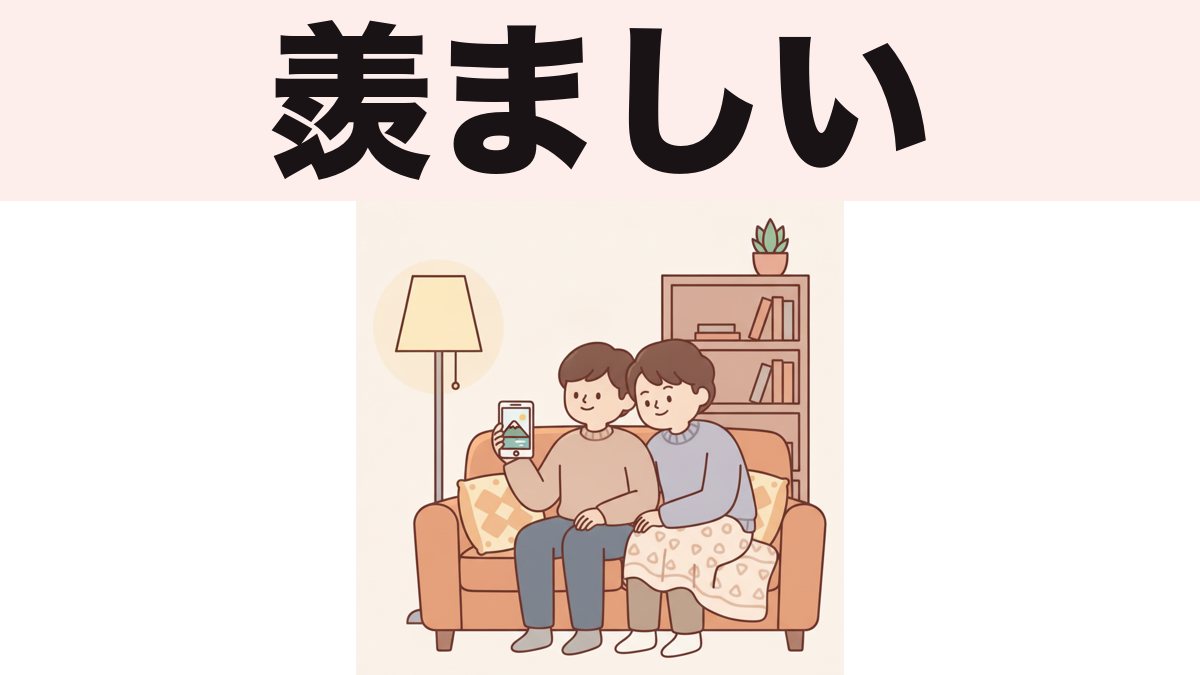
For "I'm jealous" in the everyday, friendly sense — "lucky you, I wish I had that" — Japanese uses 羨ましい (urayamashii). 嫉妬 (shitto) is the heavier word for real jealousy or resentment, and やきもち (yakimochi) is the jealousy of someone in love.
友だちに「いいなあ、私もそうだったらいいのに」と言うときは、羨ましい を使います。嫉妬 は本気のジェラシーで、重い言葉です。やきもち は恋愛のジェラシーです。
English stretches "jealous" over all three. You can tell a friend "I'm so jealous!" about their holiday photos and mean nothing but a compliment. If you translate that with 嫉妬, your friend hears something closer to "I resent you for this." Picking the right word is less about grammar and more about how much bite you want.
The basics
What does 羨ましい mean?
羨ましい is an い-adjective: "envious," "I wish I were in your place." It is by far the most common way to react to good news that isn't yours, and it is usually a compliment.
一週間も休みがあるの?羨ましい! — You get a whole week off? I'm so jealous! (casual, friendly) 毎日おいしいものが食べられて、羨ましいです。 — You get to eat good food every day — I envy you. (polite)
The thing you envy is marked with が: 〇〇が羨ましい. The person can go in the same slot: あなたが羨ましい, "I envy you."
What does 嫉妬 mean?
嫉妬 is a noun that becomes a verb with する. It is real jealousy — the uncomfortable feeling that someone has what you want, or might take what you have. It is not a compliment.
同期が先に昇進して、正直ちょっと嫉妬した。 — My colleague who started with me got promoted first, and honestly I was a bit jealous. (casual, admitting a real feeling) 彼は才能のある後輩に嫉妬している。 — He's jealous of his talented junior. (neutral, describing someone else)
The target of 嫉妬する takes に: 後輩に嫉妬する.
What is やきもち?
やきもち literally means "grilled mochi," and やきもちを焼く — "to grill mochi" — means being jealous in a relationship. It is softer and more playful than 嫉妬, and it is the word you will hear when a partner gets a little upset about someone else.
他の人と話してただけで、やきもち焼いてるの? — You're jealous just because I was talking to someone else? (casual, teasing) 彼女はすぐやきもちを焼くタイプです。 — She's the type who gets jealous easily. (polite)
Beyond the basics
What is いいなあ, and why is it everywhere?
If 羨ましい is the textbook word, いいなあ is what people actually say most of the time. It literally means "that's nice," and the long なあ turns it into a sigh of envy.
え、北海道行くの?いいなあ。 — Wait, you're going to Hokkaido? Lucky you. (casual)
いいなあ and 羨ましい often come together: いいなあ、羨ましい! It is warm, not bitter, and it invites the other person to tell you more.
What does うらやま mean?
うらやま is an online shortening of 羨ましい, and you will see it in comments and chat all the time. It is often written as the pun 裏山 — literally "the mountain out back," which happens to be read うらやま too.
新しいPC買ったの?うらやま〜。 — You bought a new PC? Jealous~ (very casual, chat)
Use it only in text or with close friends. It sounds like internet talk, because it is.
What about 妬む and 妬ましい?
妬む (netamu) is the dark end of the scale: resentful envy, wanting the other person to lose what they have. 妬ましい is the adjective. You will meet these in novels, dramas and villain monologues more than in daily conversation.
人の成功を妬んでも、何も変わらない。 — Resenting other people's success changes nothing. (neutral, a piece of advice)
If you use 妬ましい to react to a friend's news, it will sound like you mean it.
How do you talk about someone else being envious?
羨ましい, like other feeling adjectives, is for your own feelings. For a third person, add がる: 羨ましがる, "to show envy, to act envious."
弟は私の新しいゲームを羨ましがっている。 — My little brother is envious of my new game. (neutral, describing his behaviour)
The same pattern works for 欲しい → 欲しがる. If that rule is new, hoshii vs tai explains why Japanese draws the line there.
How does anime play with jealousy?
Romantic comedies run on やきもち. A character sees the person they like talking to someone else, sulks, and when asked, snaps べ、別に嫉妬なんかしてないし! — "I-it's not like I'm jealous or anything!" The joke works because they picked the heavy word 嫉妬 to deny it. Friends in slice-of-life shows, on the other hand, say いいなあ and ずるい! ("no fair!") to each other constantly, and both are affectionate.
ずるい!私も行きたかった! — No fair! I wanted to go too! (casual, playful envy)
Common mistakes
- Using 嫉妬 as a compliment. 旅行の写真、嫉妬する! sounds bitter, not cute. Use 羨ましい or いいなあ.
- Using 羨ましい for romantic jealousy. If your partner is upset that you talked to someone, that is やきもち, not 羨ましい — 羨ましい would mean they wish they were you.
- Wrong particle. 羨ましい takes が (友達が羨ましい). 嫉妬する takes に (友達に嫉妬する). 友達を羨ましい is a common slip.
- Using 羨ましい for other people. 弟は羨ましい means "my brother is enviable," not "my brother is envious." You need 羨ましがる.
- Using うらやま out loud with strangers. It is net slang and sounds oddly childish in person.
Which word fits?
| Word | Strength | Typical use | Example |
|---|---|---|---|
| いいなあ | Light | Casual "lucky you" | いいなあ、私も行きたい |
| 羨ましい | Light to medium | Friendly envy, often a compliment | 休みが多くて羨ましい |
| うらやま | Light | Net slang, chat only | うらやま〜 |
| ずるい | Light | Playful "no fair!" | ずるい、一人だけ! |
| やきもち | Medium | Jealousy in love, often cute | すぐやきもちを焼く |
| 嫉妬 | Heavy | Real jealousy, rivalry | 才能に嫉妬する |
| 妬む / 妬ましい | Very heavy | Resentful envy | 人の成功を妬む |
Practice
Answers are hidden — try your own sentence first, then open. Questions 1 and 2 are a pair: same situation, different feeling.
1. A friend shows you photos from a trip. React warmly: "I'm so jealous!"
Show answer
いいなあ、羨ましい! — friendly envy is a compliment, so 羨ましい or いいなあ.
2. A rival at work gets the project you wanted. Admit it honestly: "I was a bit jealous."
Show answer
ちょっと嫉妬した。 — this is real, uncomfortable jealousy, so 嫉妬. 羨ましい would sound too light here.
3. Tease your partner: "Are you jealous?"
Show answer
やきもち焼いてるの? — jealousy inside a relationship is やきもち, and it keeps the tone playful.
4. Fix the particle: 友達を羨ましい。
Show answer
友達が羨ましい。 — 羨ましい is an adjective, so the object of the feeling takes が, not を.
5. Fix the particle: 後輩が嫉妬した (meaning "I was jealous of my junior").
Show answer
後輩に嫉妬した。 — 嫉妬する marks the person you are jealous of with に. With が, the junior becomes the one who is jealous.
6. Describe your little brother: "He's envious of my new game."
Show answer
弟は私の新しいゲームを羨ましがっている。 — for someone else's feeling, 羨ましい becomes 羨ましがる, and the object takes を.
7. In a group chat, reply to "I got a new PC" in net slang.
Show answer
うらやま〜 — short for 羨ましい. Fine in chat, odd out loud.
8. Your friend went to a concert without you. Say "No fair!" playfully.
Show answer
ずるい! — ずるい literally means "sly," but between friends it is a light, affectionate complaint.
9. Which word would a villain use: "I resent his success"?
Show answer
彼の成功が妬ましい。 — 妬ましい is resentful envy, the darkest word on the scale.
FAQ
Is 羨ましい rude? No. Said to a friend about their good news, it is a warm reaction. Only in a tone of complaint would it sound sour.
What is the kanji for urayamashii? 羨ましい. The kanji 羨 is hard to write, so you will often see it in hiragana: うらやましい.
Is やきもち the same as 嫉妬? Both are jealousy, but やきもち is softer and mostly about love. A partner "grilling mochi" can be cute; 嫉妬 sounds more serious.
How do I say "don't be jealous"? In a relationship, やきもち焼かないで. Among friends teasing each other, 羨ましがらないで works too.
Is ずるい an insult? It can be — ずるい人 is "a sly, unfair person." Between friends reacting to good luck, ずるい! is playful. The context carries the meaning.
What is the adjective for "jealous" in the sense of a jealous person? 嫉妬深い — "deeply jealous, possessive." 彼は嫉妬深い means he gets jealous easily and strongly.
Vocabulary from this article
Tap the block to select all of it, then copy. In Anki: File → Import, note type Basic, separator Tab — the first column becomes the front, the second the back.
羨ましい	うらやましい — envious; I wish I had that
羨ましがる	うらやましがる — (someone else) acts envious
嫉妬	しっと — jealousy
嫉妬深い	しっとぶかい — jealous by nature, possessive
やきもちを焼く	やきもちをやく — to be jealous in love
妬む	ねたむ — to resent, to envy bitterly
妬ましい	ねたましい — resentfully envious
うらやま	うらやま — (net slang) jealous~
ずるい	ずるい — unfair, sly; "no fair!"
同期	どうき — colleague who joined the same year
後輩	こうはい — junior
昇進	しょうしん — promotion
才能	さいのう — talent
成功	せいこう — success
I'm Yuuki, a Japanese teacher based in Tokyo. I've taught on italki as a Top 1% teacher and watched over 1,500 anime. Envy words come up when a student hears a friend's good news and has to react on the spot — and most of the time, the answer they want is just いいなあ. For more words that live in chat and comments, see otaku slang.
Sources: the author's own lessons and standard reference grammars.
英語の "jealous" は、この3つを全部ふくみます。友だちの旅行の写真に "I'm so jealous!" と言っても、ほめているだけです。これを嫉妬で訳すと、友だちには「あなたのことが気に入らない」に近く聞こえます。文法の問題ではなく、どれだけ強く言いたいかの問題です。
基本の形
羨ましい の意味は?
羨ましい は い形容詞です。「自分もそうだったらいいのに」という気持ちです。人のいいニュースを聞いたときの、いちばんふつうの反応で、多くはほめ言葉です。
一週間も休みがあるの?羨ましい! — You get a whole week off? I'm so jealous! (カジュアル・明るい) 毎日おいしいものが食べられて、羨ましいです。 — You get to eat good food every day — I envy you. (ていねい)
羨ましいと思うものには「が」を使います。「〇〇が羨ましい」。人も同じです。「あなたが羨ましい」。
嫉妬 の意味は?
嫉妬 は名詞で、「する」をつけると動詞になります。本気のジェラシーです。相手が自分のほしいものを持っている、または自分のものを取られそう、という苦しい気持ちです。ほめ言葉ではありません。
同期が先に昇進して、正直ちょっと嫉妬した。 — My colleague who started with me got promoted first, and honestly I was a bit jealous. (カジュアル・本当の気持ちを言う) 彼は才能のある後輩に嫉妬している。 — He's jealous of his talented junior. (ふつう・ほかの人のこと)
嫉妬する相手には「に」を使います。「後輩に嫉妬する」。
やきもち とは?
やきもち は「焼いたおもち」です。「やきもちを焼く」は、恋愛でジェラシーを感じることです。嫉妬よりやわらかく、少しかわいい言葉です。恋人がほかの人のことで少し怒るときに、よく聞きます。
他の人と話してただけで、やきもち焼いてるの? — You're jealous just because I was talking to someone else? (カジュアル・からかう) 彼女はすぐやきもちを焼くタイプです。 — She's the type who gets jealous easily. (ていねい)
もっと深く
いいなあ はどうしてよく聞く?
羨ましい が教科書の言葉なら、いいなあ は会話でいちばんよく使う言葉です。意味は「いいね」ですが、長い「なあ」でため息のような羨ましさになります。
え、北海道行くの?いいなあ。 — Wait, you're going to Hokkaido? Lucky you. (カジュアル)
「いいなあ、羨ましい!」と一緒に言うこともよくあります。あたたかい言い方で、「もっと聞かせて」という気持ちも伝わります。
うらやま とは?
うらやま は 羨ましい を短くしたネットの言葉です。コメントやチャットでよく見ます。「裏山」と書くこともあります。読みが同じ「うらやま」なので、しゃれです。
新しいPC買ったの?うらやま〜。 — You bought a new PC? Jealous~ (とてもカジュアル・チャット)
文字の会話か、とても親しい友だちだけに使ってください。ネットの言葉に聞こえます。
妬む・妬ましい は?
妬む(ねたむ)は、いちばん暗い言葉です。相手がそれを失えばいいと思うような羨ましさです。形容詞は 妬ましい です。ふだんの会話より、小説やドラマ、悪役のセリフでよく出ます。
人の成功を妬んでも、何も変わらない。 — Resenting other people's success changes nothing. (ふつう・アドバイス)
友だちのいいニュースに「妬ましい」と言うと、本気に聞こえます。
ほかの人が羨ましがっているときは?
羨ましい は、ほかの気持ちの形容詞と同じで、自分の気持ちに使います。ほかの人のことは「がる」をつけて「羨ましがる」です。
弟は私の新しいゲームを羨ましがっている。 — My little brother is envious of my new game. (ふつう・様子を言う)
欲しい → 欲しがる と同じ形です。このルールが初めての人は、欲しい と たい の記事を見てください。
アニメではどう使う?
ラブコメは やきもち で動きます。好きな人がほかの人と話しているのを見て、キャラがすねる。聞かれると「べ、別に嫉妬なんかしてないし!」と言います。わざわざ重い「嫉妬」を使って否定するところがおもしろいのです。日常系のアニメでは、友だちどうしが「いいなあ」「ずるい!」とよく言います。どちらも仲のいい言い方です。
ずるい!私も行きたかった! — No fair! I wanted to go too! (カジュアル・明るい羨ましさ)
よくあるまちがい
- ほめるときに嫉妬を使う。 「旅行の写真、嫉妬する!」は、かわいくなく、苦く聞こえます。羨ましい か いいなあ を使います。
- 恋愛のジェラシーに羨ましいを使う。 恋人がほかの人と話して怒るのは やきもち です。羨ましい だと「あなたになりたい」の意味になります。
- 助詞をまちがえる。 羨ましい は「が」(友達が羨ましい)、嫉妬する は「に」(友達に嫉妬する)です。「友達を羨ましい」はよくあるまちがいです。
- ほかの人に羨ましいを使う。 「弟は羨ましい」は「弟は羨ましがられる人だ」の意味です。「羨ましがる」が必要です。
- 知らない人に口で「うらやま」と言う。 ネットの言葉なので、会って話すと子どもっぽく聞こえます。
どの言葉を使う?
| 言葉 | 強さ | よく使う場面 | 例 |
|---|---|---|---|
| いいなあ | 軽い | カジュアルな「いいね」 | いいなあ、私も行きたい |
| 羨ましい | 軽い〜ふつう | 明るい羨ましさ・ほめ言葉 | 休みが多くて羨ましい |
| うらやま | 軽い | ネットの言葉・チャットだけ | うらやま〜 |
| ずるい | 軽い | 明るい「ずるい!」 | ずるい、一人だけ! |
| やきもち | ふつう | 恋愛のジェラシー・かわいい | すぐやきもちを焼く |
| 嫉妬 | 重い | 本気のジェラシー・ライバル | 才能に嫉妬する |
| 妬む/妬ましい | とても重い | 相手の不幸を願うような羨ましさ | 人の成功を妬む |
練習
答えはかくしてあります。先に自分で文を作ってから開けてください。1と2はペアです。同じような場面で、気持ちがちがいます。
1. 友だちが旅行の写真を見せてくれた。明るく「羨ましい!」と言う。
答えを見る
いいなあ、羨ましい! — 明るい羨ましさはほめ言葉なので、羨ましい か いいなあ。
2. 仕事のライバルが、自分のほしかった仕事をもらった。正直に「ちょっとジェラシーを感じた」と言う。
答えを見る
ちょっと嫉妬した。 — 本気の苦しい気持ちなので嫉妬。羨ましい だと軽すぎます。
3. 恋人をからかう: 「ジェラシー?」
答えを見る
やきもち焼いてるの? — 恋愛のジェラシーは やきもち。明るい感じのままです。
4. 助詞を直す: 友達を羨ましい。
答えを見る
友達が羨ましい。 — 羨ましい は形容詞なので、気持ちの相手は「を」ではなく「が」です。
5. 助詞を直す: 後輩が嫉妬した(「私が後輩に」の意味で)。
答えを見る
後輩に嫉妬した。 — 嫉妬する相手は「に」。「が」だと、後輩が嫉妬した人になります。
6. 弟のことを言う: 「私の新しいゲームを羨ましく思っている」。
答えを見る
弟は私の新しいゲームを羨ましがっている。 — ほかの人の気持ちは「羨ましがる」。相手には「を」を使います。
7. グループチャットで「新しいPC買った」にネットの言葉で返す。
答えを見る
うらやま〜 — 羨ましい を短くした言葉。チャットならいいですが、口で言うと変です。
8. 友だちが自分をさそわずにコンサートに行った。明るく文句を言う。
答えを見る
ずるい! — 仲のいい友だちの間では、軽くて明るい文句です。
9. 悪役なら「彼の成功がくやしくて、にくい」をどう言う?
答えを見る
彼の成功が妬ましい。 — 妬ましい は、いちばん暗い羨ましさです。
FAQ
羨ましい は失礼? 失礼ではありません。友だちのいいニュースに言うのは、あたたかい反応です。文句のような言い方をしたときだけ、いやな感じになります。
羨ましい の漢字は? 羨ましい です。「羨」は書くのがむずかしいので、ひらがなで「うらやましい」と書くこともよくあります。
やきもち と 嫉妬 は同じ? どちらもジェラシーですが、やきもち のほうがやわらかく、ほとんど恋愛の話です。「やきもちを焼く」はかわいく聞こえることもあります。嫉妬 はもっと本気です。
「ジェラシーを感じないで」は何と言う? 恋人には「やきもち焼かないで」。友だちどうしなら「羨ましがらないで」も使えます。
ずるい は悪口? 悪口にもなります。「ずるい人」は「ずるくて、フェアではない人」です。友だちのいいことに「ずるい!」と言うのは明るい言い方です。場面で意味が決まります。
「ジェラシーが強い人」は何と言う? 嫉妬深い です。「彼は嫉妬深い」は、すぐに強くジェラシーを感じる人のことです。
この記事に出た単語
ブロックをタップすると全部選べます。そのままコピーしてください。Anki では ファイル → 読み込む、ノートタイプは 基本、区切りは タブ です。1列目が表、2列目が裏になります。
羨ましい	うらやましい — envious; I wish I had that
羨ましがる	うらやましがる — (someone else) acts envious
嫉妬	しっと — jealousy
嫉妬深い	しっとぶかい — jealous by nature, possessive
やきもちを焼く	やきもちをやく — to be jealous in love
妬む	ねたむ — to resent, to envy bitterly
妬ましい	ねたましい — resentfully envious
うらやま	うらやま — (net slang) jealous~
ずるい	ずるい — unfair, sly; "no fair!"
同期	どうき — colleague who joined the same year
後輩	こうはい — junior
昇進	しょうしん — promotion
才能	さいのう — talent
成功	せいこう — success
More drills like the ones above, plus a timed JLPT-style mock test: Practice · N4上のような練習問題と、時間つきのJLPT形式のもぎ試験: 練習ページ · N4
Want to try this in a real conversation?
本当の会話で、ためしてみませんか?
30-minute trial lesson, $13. Times shown in your own timezone.
30分の体験レッスン、$13。時間はあなたのタイムゾーンで表示されます。
Book a trial lesson · $13