Sneezing in Japanese: ハクション, and why nobody says "bless youくしゃみ: 日本語に「bless you」が無い理由
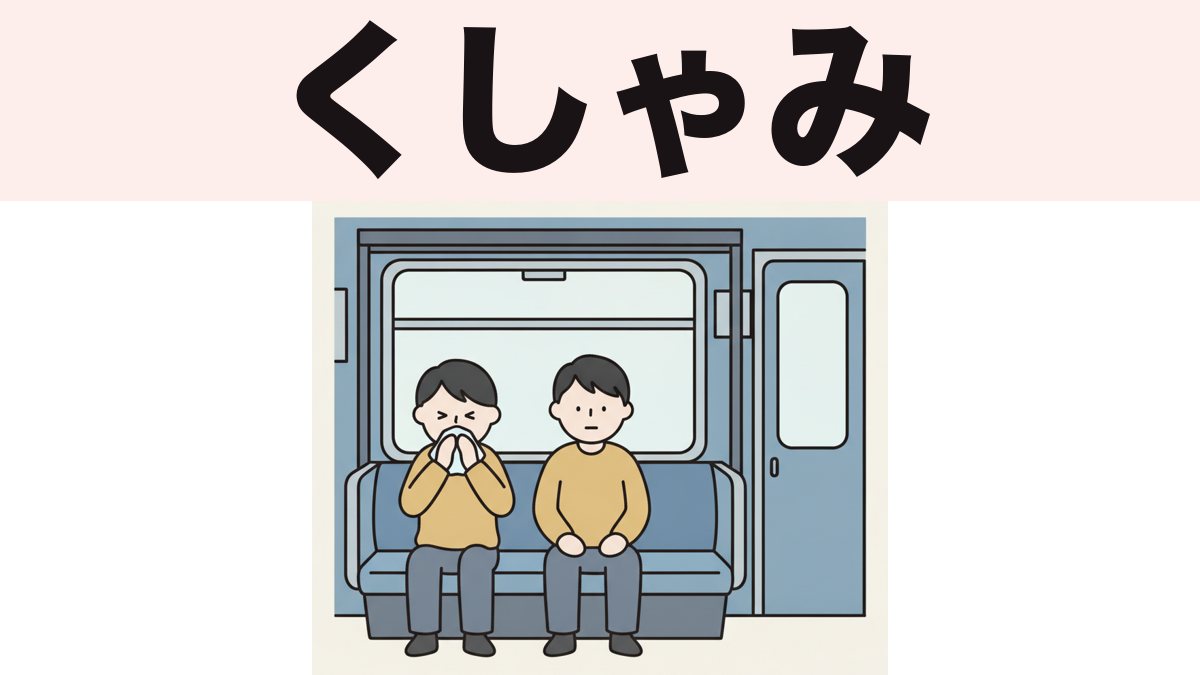
Japanese has no everyday equivalent of "bless you." Someone sneezes, and the normal, polite response is silence. If they keep sneezing and look unwell, you can say 大丈夫ですか or お大事に — but reaching for a set phrase after every single sneeze will mark you as a foreigner faster than almost anything else.
日本語には「bless you」にあたる言葉がありません。だれかがくしゃみをしたら、ふつうは何も言いません。それがていねいです。何回もくしゃみをして、具合が悪そうなら「大丈夫ですか」「お大事に」と言えます。でも、1回ごとに何か言うと、すぐに外国の人だと分かります。
This is a small thing that produces a genuinely awkward moment, because the English habit is automatic. Learners often keep saying something for months after they know the rule, simply because the reflex is faster than the knowledge.
The basics
The words
| Japanese | Reading | English |
|---|---|---|
| くしゃみ | くしゃみ | a sneeze |
| くしゃみをする | くしゃみをする | to sneeze |
| くしゃみが出る | くしゃみがでる | a sneeze comes out |
| ハクション | はくしょん | the sound of a sneeze |
| 鼻水 | はなみず | runny nose |
| 咳 | せき | cough |
| 風邪 | かぜ | a cold |
| 花粉症 | かふんしょう | hay fever |
| ティッシュ | てぃっしゅ | tissues |
| マスク | ますく | face mask |
くしゃみが出ました。 — I sneezed. (polite, neutral — literally "a sneeze came out") さっきからくしゃみが止まりません。 — I haven't been able to stop sneezing. (polite, explaining yourself)
くしゃみをする vs くしゃみが出る
Both are correct, and the difference is the same transitive/intransitive split that runs through the whole language.
- くしゃみをする — to sneeze (you as the doer)
- くしゃみが出る — a sneeze comes out (it happened to you)
Japanese strongly prefers the second when you are talking about yourself, because it frames the sneeze as something outside your control — which it is. 花粉症でくしゃみが出るんです ("I have hay fever so I keep sneezing") is the natural way to explain yourself. くしゃみをしました sounds oddly deliberate, as though you chose to.
ハクション is the sound
Japanese writes the sneeze itself as ハクション, in katakana, the way it writes most sound effects.
ハクション! — Achoo! (the written sound, in manga and subtitles)
You will also see ハックション with a small ッ for a bigger sneeze, and くしゃん or くちゅん for a small, cute one — the kind a character in anime produces to signal they are cold or fragile. This is onomatopoeia doing characterization work, and the size of the written sneeze tells you something about the character sneezing.
Beyond the basics
So what do you actually say?
Usually nothing. If the person is a stranger, silence is correct and not cold.
If they are someone you know and the sneezing is clearly part of feeling unwell, these fit:
大丈夫ですか。 — Are you okay? (polite, checking in — use if they sneeze several times) お大事に。 — Take care of yourself. (polite, when parting from someone who is unwell) 風邪ですか。 — Do you have a cold? (polite, mild concern — fine with colleagues)
お大事に is a parting phrase, not a response to the sneeze itself. You say it as you leave, or at the end of a conversation. Saying it immediately after a single sneeze is over-reacting, the way "get well soon" would be in English.
For the full set of illness vocabulary, see how to say "I'm sick" — including the trap that 病気です usually is not the sentence you want.
The superstition: someone is talking about you
There is an old, widely-known belief that a sneeze means someone somewhere is talking about you. It survives mostly as a joke now, but everyone knows it.
誰かが噂してるのかな。 — Maybe someone's talking about me. (casual, said half-jokingly after sneezing)
There is also a counting version, usually given as 一誹り、二笑い、三惚れ、四風邪 — one sneeze means someone is criticizing you, two means someone is laughing at you, three means someone has fallen for you, and four means you actually just have a cold. Nobody believes it, but it is common enough that a character in anime sneezing three times is a setup, and the audience knows it.
Apologizing for the sneeze
This is the piece most learners miss. Japanese does not bless the sneezer — the sneezer apologizes.
失礼しました。 — Excuse me. (polite, after sneezing loudly in a quiet room) すみません。 — Sorry. (polite, the all-purpose version)
In a quiet office or a train, a sneeze is treated as a small disruption you caused, so a quick 失礼しました is the socially smooth move. This is the inverse of the English convention and worth practising, because the instinct to wait for someone else to speak is strong.
Masks and the social contract
Wearing a mask when you have a cold predates the pandemic in Japan by decades and is read as consideration, not as illness signalling. If you are sneezing repeatedly in public, putting one on is the expected courtesy.
風邪気味なので、マスクしてます。 — I'm a bit under the weather, so I'm wearing a mask. (polite-casual, a normal explanation)
風邪気味 (かぜぎみ) is a useful word: 〜気味 attaches to a noun and means "slightly, showing signs of." 疲れ気味 is "a bit tired," 太り気味 is "slightly overweight."
花粉症 season is a national event
From roughly February to April, cedar pollen makes a large share of the country sneeze at once, and 花粉症 becomes small talk in the way weather is.
花粉、ひどいですね。 — The pollen's terrible, isn't it? (polite, small talk in spring)
This is a genuinely useful conversation opener in March, and it works on almost anyone, which is what you want from small talk.
Common mistakes
- Saying something after every sneeze. There is no ブレスユー. Silence is the correct, polite default.
- Using お大事に as an immediate response. It is a parting phrase for someone who is unwell, not a reply to a sneeze.
- Saying くしゃみをしました about yourself. Grammatical, but it sounds chosen. くしゃみが出ました is natural.
- Writing くしゃみ in katakana. The noun is normally hiragana; the sound ハクション is katakana. Mixing them up is a small but visible tell.
- Treating 風邪 and 花粉症 as the same complaint. They produce similar symptoms but are socially different — one is contagious and slightly apologetic, the other is a shared seasonal grievance.
- Reading 風邪 as ふうじゃ. It is かぜ, the same reading as 風 (wind) plus an extra character. This is a jukujikun — an irregular whole-word reading.
What to say, and when
| Situation | What to say | Notes |
|---|---|---|
| A stranger sneezes once | nothing | Silence is correct |
| You sneeze loudly in a quiet room | 失礼しました | You apologize, not them |
| A colleague sneezes repeatedly | 大丈夫ですか | Genuine concern, not reflex |
| Parting from someone unwell | お大事に | Only as you leave |
| Half-joking about yourself | 誰か噂してるのかな | The old superstition |
| Explaining ongoing sneezing | 花粉症なんです | Everyone will sympathize in spring |
Practice
Questions 1 and 2 are the pair worth getting right: what the sneezer says versus what the listener says.
1. You sneeze loudly in a quiet meeting. What do you say?
Show answer
失礼しました。 — In Japanese the sneezer apologizes. This is the reverse of the English convention.
2. A stranger next to you sneezes once. What do you say?
Show answer
(何も言わない) — Nothing. There is no equivalent of "bless you," and silence is the polite default.
3. Say "I sneezed," naturally.
Show answer
くしゃみが出ました。 — The intransitive version. くしゃみをしました sounds like you chose to.
4. Say "I can't stop sneezing."
Show answer
くしゃみが止まりません。 — 止まる is intransitive too, which fits: this is not under your control.
5. A colleague has been sneezing for ten minutes. Check in on them.
Show answer
大丈夫ですか。 — Real concern after repeated sneezing, not a reflex after one.
6. You are leaving a friend who clearly has a cold. What do you say?
Show answer
お大事に。 — A parting phrase. Do not use it as an immediate reply to a sneeze.
7. Explain that you have hay fever, so you keep sneezing.
Show answer
花粉症でくしゃみが出るんです。 — で for the cause, and んです to connect it to the situation the listener can see.
8. Say "I'm a bit under the weather, so I'm wearing a mask."
Show answer
風邪気味なので、マスクしてます。 — 〜気味 means "showing slight signs of." It attaches straight to the noun.
9. Make the old joke after sneezing.
Show answer
誰かが噂してるのかな。 — "Maybe someone's talking about me." Everyone knows it; nobody believes it.
10. How do you read 風邪, and why is it irregular?
Show answer
かぜ — It is a jukujikun: the reading belongs to the whole two-character word, not to either character separately.
FAQ
Is there really no "bless you" in Japanese? There is no standard one. Some people jokingly say ブレスユー in English, and a few regional or family habits exist, but nothing you should expect or produce. Silence is the default and it is not rude.
What if I sneeze and someone stares? They are probably waiting to see whether you are ill, not judging you. A quick 失礼しました and, if relevant, 花粉症です settles it completely.
Is it rude to sneeze loudly? Loud sneezing is treated as mildly disruptive rather than rude, in the same category as a loud phone call. Turning away and a brief apology covers it entirely.
Is 花粉症 small talk really that common? In spring, yes. 花粉、ひどいですね works on colleagues, shop staff and strangers in a lift throughout March, and it is one of the safest openers in the language at that time of year.
What does 〜気味 attach to? Nouns and verb stems: 風邪気味 ("coming down with something"), 疲れ気味 ("a bit tired"), 遅れ気味 ("running slightly late"). It always means "slightly, tending toward" and always carries a mildly negative tone.
How do I say "cover your mouth"? 口を押さえてください is the direct version, though you would rarely say this to an adult. In practice the social pressure does the work and nobody needs to ask.
Vocabulary from this article
Tap the block to select all of it, then copy. In Anki: File → Import, note type Basic, separator Tab — the first column becomes the front, the second the back.
くしゃみ	くしゃみ — a sneeze
鼻水	はなみず — runny nose
咳	せき — cough
風邪	かぜ — a cold
花粉症	かふんしょう — hay fever
花粉	かふん — pollen
マスク	ますく — face mask
ティッシュ	てぃっしゅ — tissues
出る	でる — to come out
止まる	とまる — to stop
大丈夫	だいじょうぶ — okay, all right
お大事に	おだいじに — take care (when ill)
失礼	しつれい — rudeness, excuse me
噂	うわさ — rumour, talk about someone
誰か	だれか — someone
気味	ぎみ — slightly, showing signs of
口	くち — mouth
押さえる	おさえる — to cover, to hold down
I'm Yuuki, a Japanese teacher based in Tokyo. I've taught on italki as a Top 1% teacher and watched over 1,500 anime. This one comes up because it happens live in lessons — someone sneezes mid-sentence, and there is a small pause where both sides are waiting for the other to say something. The rule is easy; the reflex takes about six months to unlearn.
Sources: the author's own lessons and standard reference grammars.
小さいことですが、気まずくなります。英語の習慣は体が勝手に動くからです。ルールを知ってからも、何か月も言ってしまう人が多いです。
基本
ことば
| 日本語 | 読み方 | 英語 |
|---|---|---|
| くしゃみ | くしゃみ | a sneeze |
| くしゃみをする | くしゃみをする | to sneeze |
| くしゃみが出る | くしゃみがでる | a sneeze comes out |
| ハクション | はくしょん | the sound of a sneeze |
| 鼻水 | はなみず | runny nose |
| 咳 | せき | cough |
| 風邪 | かぜ | a cold |
| 花粉症 | かふんしょう | hay fever |
| ティッシュ | てぃっしゅ | tissues |
| マスク | ますく | face mask |
くしゃみが出ました。 — I sneezed. (polite, neutral — literally "a sneeze came out") さっきからくしゃみが止まりません。 — I haven't been able to stop sneezing. (polite, explaining yourself)
「くしゃみをする」と「くしゃみが出る」
どちらも正しいです。ちがいは、自分でするか、勝手に出るかです。
- くしゃみをする — 自分がする
- くしゃみが出る — 出てしまう
自分のことを言う時は、下のほうが自然です。くしゃみは自分で決められないからです。「花粉症でくしゃみが出るんです」がふつうの言い方です。「くしゃみをしました」は、わざとしたように聞こえます。
音は「ハクション」
音はカタカナで書きます。
ハクション! — Achoo! (the written sound, in manga and subtitles)
大きいくしゃみは「ハックション」、小さいくしゃみは「くしゃん」「くちゅん」です。アニメでは、くしゃみの大きさでキャラクターの性格を見せます。
もう少し先へ
では、何と言えばいいですか
ふつうは何も言いません。知らない人なら、黙っているのが正しいです。冷たくありません。
知っている人で、具合が悪そうな時は、こう言えます。
大丈夫ですか。 — Are you okay? (polite, checking in — use if they sneeze several times) お大事に。 — Take care of yourself. (polite, when parting from someone who is unwell) 風邪ですか。 — Do you have a cold? (polite, mild concern — fine with colleagues)
「お大事に」は、別れる時のことばです。くしゃみ1回のすぐあとに言うと、大げさです。
古い言い伝え
くしゃみが出ると「だれかが自分の噂をしている」と言われます。今はじょうだんですが、みんな知っています。
誰かが噂してるのかな。 — Maybe someone's talking about me. (casual, said half-jokingly after sneezing)
数える言い方もあります。「一誹り、二笑い、三惚れ、四風邪」。1回はけなされている、2回は笑われている、3回は好かれている、4回はただの風邪、という意味です。だれも信じていませんが、アニメでキャラクターが3回くしゃみをしたら、見ている人は意味が分かります。
くしゃみをした人があやまります
ここが大事です。日本では、くしゃみをした人が「すみません」と言います。
失礼しました。 — Excuse me. (polite, after sneezing loudly in a quiet room) すみません。 — Sorry. (polite, the all-purpose version)
静かな部屋や電車では、くしゃみは「自分が出した音」です。だから短くあやまります。英語と反対です。
マスク
日本では、風邪の時にマスクをします。何十年も前からの習慣です。「病気です」という合図ではなく、「気をつかっています」という合図です。
風邪気味なので、マスクしてます。 — I'm a bit under the weather, so I'm wearing a mask. (polite-casual, a normal explanation)
「風邪気味」の「〜気味」は「少しそういう感じ」という意味です。「疲れ気味」「太り気味」も同じです。
花粉症の季節
2月から4月ごろ、すぎの花粉でたくさんの人がくしゃみをします。天気と同じくらい、ふつうの話題になります。
花粉、ひどいですね。 — The pollen's terrible, isn't it? (polite, small talk in spring)
3月なら、だれにでも使えます。
よくある間違い
- くしゃみのたびに何か言う。 「ブレスユー」はありません。黙っているのが正しいです。
- すぐに「お大事に」と言う。 これは別れる時のことばです。
- 自分のことを「くしゃみをしました」と言う。 「くしゃみが出ました」が自然です。
- 「くしゃみ」をカタカナで書く。 ことばはひらがな、音「ハクション」はカタカナです。
- 風邪と花粉症を同じにする。 症状は似ていますが、意味がちがいます。
- 「風邪」を「ふうじゃ」と読む。 「かぜ」です。2文字で1つの読み方になります。
何と言うか
| 場面 | 言うこと | メモ |
|---|---|---|
| 知らない人が1回くしゃみ | 何も言わない | それが正しいです |
| 自分が静かな所で大きなくしゃみ | 失礼しました | 自分があやまります |
| 同僚が何回もくしゃみ | 大丈夫ですか | 本当に心配な時だけ |
| 具合の悪い人と別れる時 | お大事に | 別れる時だけ |
| 自分でじょうだんを言う | 誰か噂してるのかな | 古い言い伝え |
| ずっとくしゃみが出る時 | 花粉症なんです | 春はみんな分かります |
練習
1番と2番が組です。くしゃみをした人と、聞いた人でちがいます。
1. 静かな会議で大きなくしゃみをしました。何と言いますか。
答えを見る
失礼しました。 — 日本では、くしゃみをした人があやまります。英語と反対です。
2. となりの知らない人がくしゃみを1回しました。何と言いますか。
答えを見る
(何も言わない) — 何も言いません。「bless you」はありません。
3. 「くしゃみが出ました」と言ってください。
答えを見る
くしゃみが出ました。 — 「くしゃみをしました」は、わざとしたように聞こえます。
4. 「くしゃみが止まりません」と言ってください。
答えを見る
くしゃみが止まりません。 — 「止まる」も自分で決められない動詞です。
5. 同僚が10分くしゃみをしています。声をかけてください。
答えを見る
大丈夫ですか。 — 何回も続いた時だけです。
6. 風邪の友だちと別れます。何と言いますか。
答えを見る
お大事に。 — 別れる時のことばです。
7. 「花粉症でくしゃみが出る」と説明してください。
答えを見る
花粉症でくしゃみが出るんです。 — 理由は「で」、そして「んです」で今の場面につなげます。
8. 「風邪気味なのでマスクをしています」と言ってください。
答えを見る
風邪気味なので、マスクしてます。 — 「〜気味」は名詞にそのままつきます。
9. くしゃみのあとに、古いじょうだんを言ってください。
答えを見る
誰かが噂してるのかな。 — みんな知っていますが、だれも信じていません。
10. 「風邪」は何と読みますか。
答えを見る
かぜ — 2文字で1つの読み方です。1文字ずつではありません。
よくある質問
本当に「bless you」はありませんか。 決まった言い方はありません。じょうだんで英語のまま言う人はいますが、覚えなくていいです。
くしゃみをして、見られたらどうしますか。 病気かどうか見ているだけです。「失礼しました」と言い、春なら「花粉症です」と足せば十分です。
大きなくしゃみは失礼ですか。 うるさい電話と同じくらいです。横を向いて、短くあやまれば大丈夫です。
花粉症の話は本当によく使いますか。 春はよく使います。「花粉、ひどいですね」は、3月ならだれにでも言えます。
「〜気味」は何につきますか。 名詞と動詞のもとの形につきます。「風邪気味」「疲れ気味」「遅れ気味」。いつも少し悪い意味です。
「口をおさえて」は何と言いますか。 「口を押さえてください」です。でも、大人に言うことはほとんどありません。
この記事に出た単語
このブロックを長く押して全部選び、コピーしてください。Ankiでは ファイル → 読み込み、ノートタイプは 基本、区切りは タブ にします。左が表、右が裏になります。
くしゃみ	くしゃみ — a sneeze
鼻水	はなみず — runny nose
咳	せき — cough
風邪	かぜ — a cold
花粉症	かふんしょう — hay fever
花粉	かふん — pollen
マスク	ますく — face mask
ティッシュ	てぃっしゅ — tissues
出る	でる — to come out
止まる	とまる — to stop
大丈夫	だいじょうぶ — okay, all right
お大事に	おだいじに — take care (when ill)
失礼	しつれい — rudeness, excuse me
噂	うわさ — rumour, talk about someone
誰か	だれか — someone
気味	ぎみ — slightly, showing signs of
口	くち — mouth
押さえる	おさえる — to cover, to hold down
日本語教師のユウキです。東京にいます。 italkiで Top 1% の教師をしています。アニメは1,500本以上見ました。これはレッスン中に本当に起きます。話している時にくしゃみが出て、どちらが何か言うのか、少しの間ができます。ルールは簡単ですが、体が覚え直すまで半年くらいかかります。
More drills like the ones above, plus a timed JLPT-style mock test: Practice · N5上のような練習問題と、時間つきのJLPT形式のもぎ試験: 練習ページ · N5
Want to try this in a real conversation?
本当の会話で、ためしてみませんか?
30-minute trial lesson, $13. Times shown in your own timezone.
30分の体験レッスン、$13。時間はあなたのタイムゾーンで表示されます。
Book a trial lesson · $13