How to say "I''m sick" in Japanese — and why 病気です is usually the wrong one「具合が悪い」: 「病気です」はたいてい、正しくありません
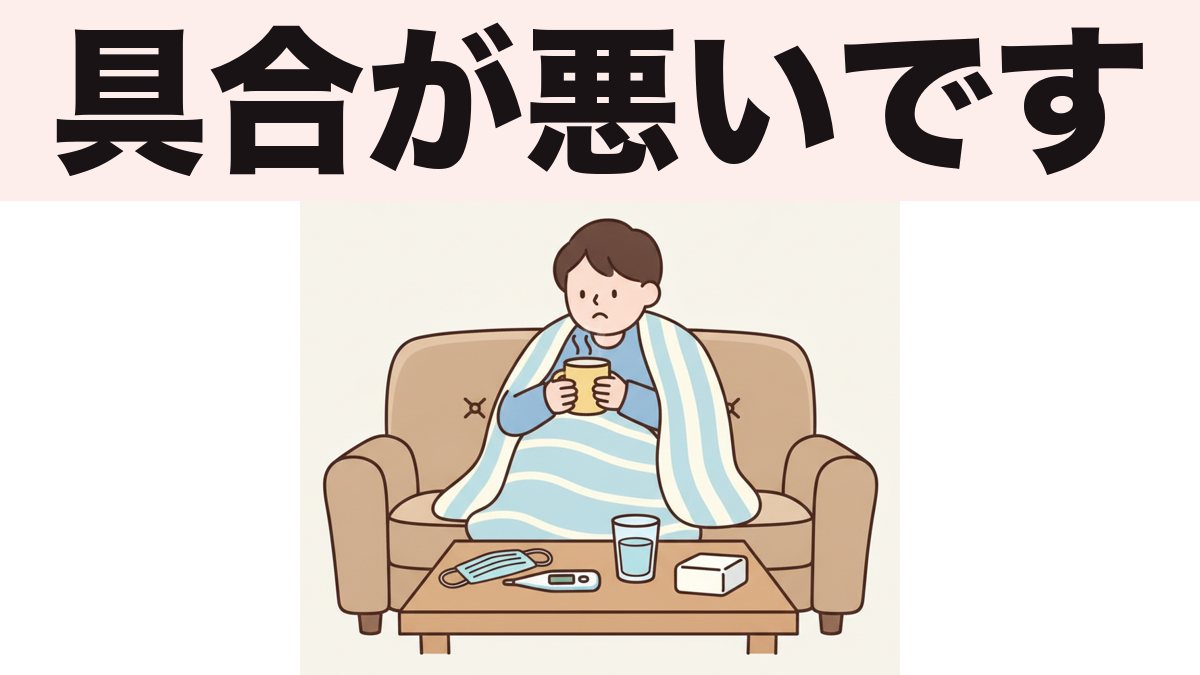
"I'm sick" is not one phrase in Japanese. 病気です means you have an illness — a condition, possibly a serious one — while everyday "I'm not feeling well" is 具合が悪い or 体調が悪い. Reaching for 病気 when you have a cold is the single most common version of this mistake.
英語の "I'm sick" は、日本語では1つではありません。「病気です」は「びょうきがある」という意味で、少し重いです。ふだんの「調子がよくない」は「具合が悪い」「体調が悪い」です。かぜの時に「病気です」と言うのが、いちばん多いまちがいです。
This matters more than most vocabulary choices, because the words are used at moments when you need to be understood immediately: calling in to work, sitting in a clinic, or telling someone you need to go home.
The basics
The four ways to say you feel bad
| Phrase | Reading | What it actually means |
|---|---|---|
| 具合が悪い | ぐあいがわるい | I'm unwell (general, physical) |
| 体調が悪い | たいちょうがわるい | My condition is off (slightly more formal) |
| 気分が悪い | きぶんがわるい | I feel nauseous / sick to my stomach |
| 病気です | びょうきです | I have an illness (a condition) |
今日はちょっと具合が悪いです。 — I'm not feeling well today. (polite, the everyday default) 体調が悪いので、休ませていただきます。 — I'm not well, so I'll take the day off. (polite, workplace)
気分が悪い is the trap. It sounds like "I'm in a bad mood" and it is not — it is closer to "I feel like I might throw up". If you mean your mood, say 機嫌が悪い (きげんがわるい) about someone else, or 落ち込んでいる about yourself.
How do you catch a cold?
With the verb ひく, not なる:
風邪をひきました。 — I've caught a cold. (polite, standard) 風邪をひいているので、マスクをしています。 — I have a cold, so I'm wearing a mask. (polite, explaining yourself)
風邪になる is not how it is said. This is one of those verb–noun pairings that must be learned as a unit — the same category as 写真を撮る or お風呂に入る.
How do you describe symptoms?
Two patterns cover almost everything:
- 〜が痛い — "my ~ hurts". 頭が痛い, 喉が痛い, お腹が痛い.
- 熱がある — "I have a fever". Not 熱です.
喉が痛くて、熱もあります。 — My throat hurts and I have a fever too. (polite, describing symptoms at a clinic) 咳が止まりません。 — My cough won't stop. (polite)
Notice 痛い is an い-adjective, so it conjugates: 痛かったです (it hurt), 痛くないです (it doesn't hurt). If adjective conjugation is still shaky, past-tense adjectives is the thing to fix before a doctor's visit, not vocabulary.
Beyond the basics
How do you call in sick to work?
Japanese workplace absence messages have a predictable shape: apologise, state the condition, state what you will do, apologise again.
申し訳ありません。熱があるため、本日はお休みをいただきたく存じます。 — I'm very sorry. I have a fever, so I would like to take today off. (formal, message to a manager)
Three useful words around this:
- 休む (やすむ) — to rest, to take time off. 休ませていただきます is the polite "I'll be taking time off".
- 早退 (そうたい) — leaving early. 早退してもよろしいでしょうか.
- 欠勤 (けっきん) — being absent from work (formal, HR-flavoured).
The register here is high, which is why the humble forms from service keigo show up: いただく, 存じます, 申し訳ありません.
What do people say to you when you are ill?
お大事に (おだいじに) — the standard "take care / get well". It is said by doctors, pharmacists, coworkers and shop staff, and it ends the conversation. There is no expected reply beyond ありがとうございます.
お大事にしてください。 — Please take care of yourself. (polite, said to someone unwell) 無理しないでね。 — Don't push yourself. (casual, to a friend)
無理しないで is worth having ready — Japanese sympathy for illness leans heavily on telling people to rest rather than asking for details.
大丈夫ですか — and how to answer it
大丈夫ですか is "are you okay?", and the answer is a genuine fork:
大丈夫です。 — I'm fine. (declining help, or reassuring) すみません、ちょっと… — Sorry, I'm a bit... (trailing off = not fine, said softly)
大丈夫です also means "no thank you" when someone offers you something, which is why it can be ambiguous. In a health context, tone carries the difference.
Nuance: 気持ち悪い vs 気分が悪い
Both involve feeling bad, and they are not interchangeable:
- 気分が悪い — you feel ill, typically nauseous.
- 気持ち悪い — something is gross or unsettling, and casually it is a general "ew". It can also mean nauseous, which is exactly why context matters.
Saying 気持ち悪い while looking at someone's food is a comment about the food. Saying it while holding your stomach is a comment about you.
At the clinic
You will be asked どうしましたか ("what's wrong?"), and the answer is symptoms in plain order. Bring your 保険証 (health insurance card), expect to be handed a 処方箋 (prescription) for a nearby pharmacy, and know that 薬 (くすり) is taken with 飲む — even when it is a powder.
三日前から、熱と咳があります。 — I've had a fever and a cough since three days ago. (polite; 〜から for the starting point)
Common mistakes
- Saying 病気です for a cold. It implies a real illness or condition. Use 具合が悪い or 風邪をひきました.
- Saying 気分が悪い to mean "I'm in a bad mood". It means nauseous. Native listeners will look for somewhere to sit you down.
- 風邪になる. The verb is ひく: 風邪をひく.
- 熱です. Fever uses ある: 熱があります.
- Using 薬を食べる. Medicine is 飲む, regardless of form.
- Answering 大丈夫ですか with 大丈夫です when you are not. It is a real answer, not a politeness ritual — people will take it at face value and stop helping.
Practice
Say each answer out loud first. Questions 2 and 3 are a pair: two words that look like the same idea and are not.
1. You have a cold and want to tell a colleague. Which phrase?
Show answer
風邪をひきました / 具合が悪いです — 病気です would suggest something considerably more serious.
2. What does 気分が悪い mean?
Show answer
I feel sick / nauseous — not "I'm in a bad mood", despite what the words look like.
3. What does 気持ち悪い usually mean?
Show answer
That's gross / unsettling — it describes the thing, not you, unless context makes clear you mean nausea.
4. Fix this: 昨日、風邪になりました。
Show answer
昨日、風邪をひきました — the verb for catching a cold is ひく. Learn the pair as one unit.
5. Say "I have a fever."
Show answer
熱があります — fever exists (ある); it is not something you are (です).
6. Translate: 喉が痛くて、咳が止まりません。
Show answer
My throat hurts and my cough won't stop — 〜が痛い for pain, 止まる for stopping by itself.
7. A pharmacist says お大事に. What do you say?
Show answer
ありがとうございます — that is the whole exchange. お大事に closes the conversation.
8. Write a one-line message telling your manager you need the day off.
Show answer
申し訳ありません。熱があるため、本日はお休みをいただきたく存じます。 — apologise, give the reason, state what you will do. Formal register is expected here.
9. How do you say you need to leave work early?
Show answer
早退してもよろしいでしょうか — 早退 is the specific word for leaving early. よろしいでしょうか is the formal way to ask permission.
10. Your friend looks unwell. Say something casual and supportive.
Show answer
大丈夫?無理しないでね。 — "You okay? Don't push yourself." 無理しないで is the standard casual sympathy line.
FAQ
Is 病気です ever right? Yes — for an actual illness or chronic condition, and in medical contexts. It is not wrong as a word; it is wrong as a translation of "I feel sick today".
How do I say "I think I'm getting sick"? 風邪をひきそうです ("it seems I'm about to catch a cold") or なんだか具合が悪いです ("I feel somehow off"). なんだか is useful whenever you cannot name the symptom.
What do I need to bring to a clinic in Japan? Your 保険証 (insurance card) and ID. You will usually fill in a 問診票 (symptom questionnaire) before being seen, which is mostly checkboxes.
Do I say お大事に to a coworker who is not leaving? お大事に is a parting phrase — it works when someone is going home or you are ending the conversation. Mid-conversation, 無理しないでください or 大丈夫ですか fits better.
What is the difference between 休む and 休憩する? 休む is taking time off or resting, including a whole day. 休憩する is taking a short break within an activity. Calling in sick uses 休む.
How direct can I be about symptoms? Very. Medical Japanese is refreshingly plain — symptoms are listed directly, and there is no expectation of softening. The politeness lives in the framing (申し訳ありません), not in hiding the information.
Vocabulary from this article
Tap the block to select all of it, then copy. In Anki: File → Import, note type Basic, separator Tab — the first column becomes the front, the second the back.
具合	ぐあい — condition, state of health
体調	たいちょう — physical condition
気分	きぶん — feeling, mood; nausea
病気	びょうき — illness
風邪	かぜ — a cold
熱	ねつ — fever
喉	のど — throat
咳	せき — cough
痛い	いたい — painful
薬	くすり — medicine
休む	やすむ — to rest, take time off
早退	そうたい — leaving early
欠勤	けっきん — absence from work
大丈夫	だいじょうぶ — okay, fine
無理	むり — overdoing it, the impossible
保険証	ほけんしょう — health insurance card
処方箋	しょほうせん — prescription
お大事に	おだいじに — take care, get well
I'm Yuuki, a Japanese teacher based in Tokyo. I've taught on italki as a Top 1% teacher and watched over 1,500 anime. 気分が悪い is the one I correct most often — it is the rare mistake where being misunderstood gets you a chair and a glass of water you did not need.
Sources: the author's own lessons and standard reference grammars.
この言葉は、大事な時に使います。会社に連絡する時、病院にいる時、早く帰りたい時。だから、はやく正しくおぼえたほうがいいです。
基本
4つの言い方
| 言い方 | 読み方 | 本当の意味 |
|---|---|---|
| 具合が悪い | ぐあいがわるい | 調子がよくない(ふつう) |
| 体調が悪い | たいちょうがわるい | 体の調子が悪い(少しかたい) |
| 気分が悪い | きぶんがわるい | はきそう・気持ちがわるい |
| 病気です | びょうきです | 病気がある |
今日はちょっと具合が悪いです。 — I'm not feeling well today. (polite, the everyday default) 体調が悪いので、休ませていただきます。 — I'm not well, so I'll take the day off. (polite, workplace)
気をつけるのは「気分が悪い」です。「きげんが悪い(bad mood)」ではありません。「はきそう」に近いです。気持ちの話なら「落ち込んでいる」を使います。
かぜは「ひく」
風邪をひきました。 — I've caught a cold. (polite, standard) 風邪をひいているので、マスクをしています。 — I have a cold, so I'm wearing a mask. (polite)
「風邪になる」とは言いません。「写真を撮る」「お風呂に入る」と同じで、セットでおぼえます。
症状(しょうじょう)の言い方
- 〜が痛い — 頭が痛い、喉が痛い、お腹が痛い。
- 熱がある — 「熱です」ではありません。
喉が痛くて、熱もあります。 — My throat hurts and I have a fever too. (polite, at a clinic) 咳が止まりません。 — My cough won't stop. (polite)
「痛い」はい形容詞です。「痛かったです」「痛くないです」。形が不安なら、形容詞の過去形を先に見てください。
もう少し先へ
会社に休みの連絡をする
形が決まっています。あやまる → 理由 → どうするか → もう一度あやまる。
申し訳ありません。熱があるため、本日はお休みをいただきたく存じます。 — I'm very sorry. I have a fever, so I would like to take today off. (formal, message to a manager)
- 休む — 休みを取る。「休ませていただきます」。
- 早退(そうたい) — 早く帰ること。
- 欠勤(けっきん) — 会社を休むこと(かたい言葉)。
ここではお店の敬語と同じ、けんじょう語が出ます。
言われる言葉
お大事に — お医者さん、薬局の人、会社の人が言います。会話の最後の言葉です。返事は「ありがとうございます」だけで大丈夫です。
お大事にしてください。 — Please take care of yourself. (polite) 無理しないでね。 — Don't push yourself. (casual, to a friend)
「大丈夫ですか」の答え方
大丈夫です。 — I'm fine. (also "no thank you") すみません、ちょっと… — Sorry, I'm a bit... ((大丈夫ではない)
「大丈夫です」は「いりません」の意味にもなります。だから、声の感じが大事です。
「気持ち悪い」と「気分が悪い」
- 気分が悪い — 自分の体が悪い(はきそう)。
- 気持ち悪い — 物や様子が「いやだ」。自分の体のことも言えます。
食べ物を見ながら言えば、食べ物の話です。お腹をおさえながら言えば、自分の話です。
病院で
「どうしましたか」と聞かれます。症状をそのまま言います。保険証を持って行きます。薬は「飲む」です(粉でも)。
三日前から、熱と咳があります。 — I've had a fever and a cough since three days ago. (polite)
よくあるまちがい
- かぜの時に「病気です」と言う。 「具合が悪いです」「風邪をひきました」です。
- 「気分が悪い」で bad mood のつもり。 「はきそう」の意味です。
- 「風邪になる」。 「風邪をひく」です。
- 「熱です」。 「熱があります」です。
- 「薬を食べる」。 「薬を飲む」です。
- 本当は大丈夫じゃないのに「大丈夫です」と言う。 そのまま信じられて、だれも助けてくれません。
練習
まず声に出してから、答えを見てください。2番と3番はペアです。
1. かぜをひいたと同僚に言います。何と言いますか。
答えを見る
風邪をひきました/具合が悪いです — 「病気です」は重すぎます。
2. 「気分が悪い」の意味は?
答えを見る
はきそう・体の調子が悪い — bad mood ではありません。
3. 「気持ち悪い」の意味は?
答えを見る
いやだ・気持ちがわるい(物のこと) — 自分の体のことにも使えますが、ふつうは物の話です。
4. 直してください: 昨日、風邪になりました。
答えを見る
昨日、風邪をひきました — 「ひく」を使います。
5. 「熱がある」と言ってください。
答えを見る
熱があります — 「熱です」ではありません。
6. 「喉が痛くて、咳が止まりません」の意味は?
答えを見る
のどが痛くて、せきが止まらない — 「〜が痛い」と「止まる」。
7. 薬局で「お大事に」と言われました。何と言いますか。
答えを見る
ありがとうございます — これで終わりです。
8. 上司に休みの連絡を1文で書いてください。
答えを見る
申し訳ありません。熱があるため、本日はお休みをいただきたく存じます。 — あやまる・理由・どうするか。
9. 早く帰りたい時は?
答えを見る
早退してもよろしいでしょうか — 「早退」が専用の言葉です。
10. 友だちが元気がありません。カジュアルに声をかけてください。
答えを見る
大丈夫?無理しないでね。 — 日本語のなぐさめは「休んで」が中心です。
よくある質問
「病気です」は使いませんか。 本当の病気や、長く続く病気の時には使います。「今日は調子が悪い」の意味では使いません。
「かぜをひきそう」は何と言いますか。 「風邪をひきそうです」「なんだか具合が悪いです」。「なんだか」は、症状が言えない時に便利です。
病院に何を持って行きますか。 保険証と身分証です。さいしょに問診票(もんしんひょう)を書きます。
「お大事に」はいつ言いますか。 別れる時です。会話のとちゅうなら「無理しないでください」「大丈夫ですか」のほうが合います。
「休む」と「休憩する」のちがいは? 「休む」は1日など、休みを取ることです。「休憩する」は少しの間、休むことです。
症状ははっきり言っていいですか。 はい。日本語の医りょうの場面は、とてもはっきりしています。ていねいさは、症状ではなく、前後の言葉で出します。
この記事に出た単語
下のブロックをタップして全部えらび、コピーしてください。Anki では ファイル → 読み込み、ノートの種類は 基本、区切りは タブ です。
具合	ぐあい — condition, state of health
体調	たいちょう — physical condition
気分	きぶん — feeling, mood; nausea
病気	びょうき — illness
風邪	かぜ — a cold
熱	ねつ — fever
喉	のど — throat
咳	せき — cough
痛い	いたい — painful
薬	くすり — medicine
休む	やすむ — to rest, take time off
早退	そうたい — leaving early
欠勤	けっきん — absence from work
大丈夫	だいじょうぶ — okay, fine
無理	むり — overdoing it, the impossible
保険証	ほけんしょう — health insurance card
処方箋	しょほうせん — prescription
お大事に	おだいじに — take care, get well
私はユウキです。東京で日本語を教えています。 italki の Top 1% の先生で、アニメは1,500本以上見ました。いちばんよく直すのは「気分が悪い」です。まちがえると、いらないイスと水が出てくる、めずらしいまちがいです。
More drills like the ones above, plus a timed JLPT-style mock test: Practice · N4上のような練習問題と、時間つきのJLPT形式のもぎ試験: 練習ページ · N4
Want to try this in a real conversation?
本当の会話で、ためしてみませんか?
30-minute trial lesson, $13. Times shown in your own timezone.
30分の体験レッスン、$13。時間はあなたのタイムゾーンで表示されます。
Book a trial lesson · $13