Japanese dialects: 関西弁, 博多弁, 津軽弁 — and why standard Japanese is only about 150 years old日本語の方言: 関西弁・博多弁・津軽弁と、150年ほどの標準語
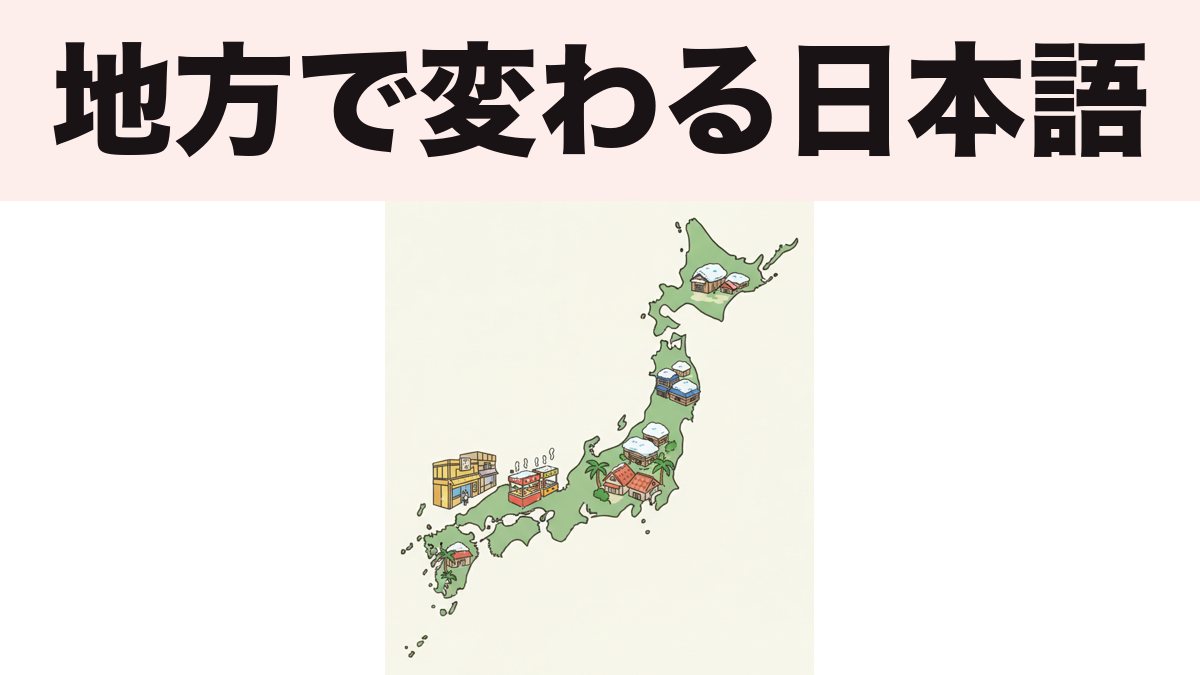
The Japanese in your textbook is 標準語 — a constructed standard based on Tokyo speech, settled in the Meiji period and spread by schools and broadcasting. Everything else is 方言, and some of it is different enough that Japanese television adds subtitles.
教科書の日本語は「標準語」です。明治時代に東京の言葉をもとに作られ、学校と放送で広がりました。それ以外は「方言」です。中には、日本のテレビでも字幕が付くほど違うものがあります。
Learners usually discover this the hard way: two years of study, a trip outside Tokyo, and a conversation that sounds like a different language. It is not you. The difference is real, it is systematic, and once you know which knobs a dialect turns, most of it becomes readable.
The basics
What is 方言 and what is 標準語?
方言 (ほうげん) is a regional dialect. 標準語 (ひょうじゅんご), "standard language," is the variety taught in schools, used in national broadcasting and written almost everywhere. It was shaped in the Meiji era from the speech of educated Tokyo, at a time when the country needed one variety that everyone could be taught.
You will also see 共通語 (きょうつうご), "common language," which many people prefer: it names the thing everyone can use without implying the other varieties are substandard.
Practically: learn 標準語. It works everywhere and nobody will find it odd. Dialects are for listening, and eventually for warmth.
What actually changes between dialects?
Four things, in roughly this order of importance:
| What changes | Standard | Kansai | Hakata (Fukuoka) |
|---|---|---|---|
| Copula ("is") | だ / です | や | や / じゃ |
| Negative | 〜ない | 〜へん / 〜ん | 〜ん |
| Question particle | 〜の? | 〜の? | 〜と? |
| Sentence ending | 〜よ / 〜ね | 〜で / 〜がな | 〜ばい / 〜たい |
| Vocabulary | だめ / とても | あかん / めっちゃ | でたん / ばり |
The copula is the single biggest tell. If someone says そうや instead of そうだ, you are hearing Kansai. Everything else follows from there.
これ、めっちゃうまいで。 — This is seriously good. (Kansai, casual) これ、とてもおいしいよ。 — This is very good. (standard, casual)
関西弁 — the one you will hear most
Kansai-ben covers Osaka, Kyoto, Kobe and the surrounding region, and it is by far the dialect with the most national presence: comedians, variety television and a large share of anime characters use it.
The features worth recognizing:
- だ → や: そうだ → そうや
- 〜ない → 〜へん / 〜ん: わからない → わからへん
- 〜ている → 〜とる / 〜てる: 知っている → 知っとる
- いい → ええ: いい人 → ええ人
- だめ → あかん: これはあかん
- ありがとう → おおきに (mostly Kyoto, and increasingly old-fashioned)
なんでやねん。 — What the hell are you talking about? (Kansai, casual — the standard comedic retort) わからへんわ。 — I don't get it. (Kansai, casual)
なんでやねん deserves its own line: it is the retort half of Japanese double-act comedy, the line the straight man delivers when the other one says something absurd. It has spread far beyond Kansai as a set phrase.
Kyushu, Tōhoku, and the rest
博多弁 / 福岡 — と? as the question particle, ばい and たい as sentence endings. とっとーと? ("are you saving that seat?") is the famous tongue-twister, built from とっている + とー + と.
なにしよーと? — What are you doing? (Hakata, casual)
広島弁 — じゃ for the copula, けん for "because." Heavily associated with yakuza films, which is why it reads as tough.
そうじゃけん、行くんじゃ。 — That's why I'm going. (Hiroshima, casual)
東北弁 — known for vowel and consonant mergers that make し and す, い and え hard to tell apart. 津軽弁, at the northern tip of Honshu, is the extreme case: it is routinely subtitled when it appears on national television, for a Japanese audience.
沖縄 — a special case. The traditional languages of Okinawa are Ryukyuan, related to Japanese but not mutually intelligible, and genuinely separate languages rather than dialects. What most visitors hear is ウチナーヤマトグチ, Okinawan-flavoured Japanese. めんそーれ ("welcome") and なんくるないさ ("it'll work out somehow") come from there.
Beyond the basics
Pitch accent changes too, and it is invisible in writing
Japanese distinguishes some words by pitch, not stress. The standard-language pair everyone cites is はし: 箸 (chopsticks) and 橋 (bridge) carry different pitch patterns, which is how listeners tell them apart — see Japanese homophones for how much work pitch does here.
In Kansai, many of those patterns are simply different, and for a good number of two-mora words they run opposite to Tokyo. This is why a Kansai speaker using perfectly standard words can still sound unmistakably not-from-Tokyo: the vocabulary is standard and the melody is not.
You cannot learn this from text. It is one of the few genuine arguments for listening to a lot of unscripted speech.
Why do anime characters speak in dialect?
Because Japanese fiction uses 役割語 (やくわりご), "role language" — speech patterns that instantly signal a character type without any description. Dialects are part of that toolkit, and they are used as shorthand:
- Kansai-ben — loud, funny, money-conscious, fast-talking
- Tōhoku-ben — rural, slow, warm, sometimes a country-bumpkin joke
- Hiroshima-ben — tough, criminal, ex-military
These are stereotypes, and real speakers are understandably tired of them. But knowing the convention is useful, because it tells you what a writer intended the moment a character opens their mouth. The same system produces the elderly-professor じゃ and のう that no actual elderly person uses — for more of this, see why the Japanese you learned from anime sounds rude.
Should a learner speak in dialect?
Generally no, with one exception.
Using a dialect you have not grown up in reads as costume. It can come off as mockery, and it usually lands badly when you do not yet have the ear to control the register. A learner who suddenly deploys なんでやねん gets a laugh, but the laugh is at the incongruity.
The exception is if you live somewhere and absorb it naturally over years. That is not a decision, it is what happens. Until then: understand it, do not perform it.
What you should do is learn to recognize the copula swap. If そうや, ちゃう, あかん and へん stop throwing you, you have covered most of what will trip you up in a real conversation.
Is 標準語 dying out, or are dialects?
Both claims get made and neither is quite right. What is measurable is that broadcasting and internal migration have flattened a lot of regional difference over the last century, and that younger speakers in most regions use something closer to standard Japanese than their grandparents did.
At the same time, regional speech has real prestige in some places — Kansai in particular is not retreating, and Kansai speakers frequently do not switch to standard Japanese when they move to Tokyo, which is not true of most other regions.
方言 in text: where you will actually meet it
Written Japanese is almost entirely standard, so dialect in text is a deliberate choice and always means something: quoted speech in a novel, a character's dialogue in manga, a regional shop sign, a comedian's social media. When you see や where だ should be, the writer is telling you who is speaking.
Common mistakes
- Assuming dialect means "bad Japanese." It is not broken standard Japanese; several regional varieties are older than the standard. 標準語 is the constructed one.
- Trying to speak Kansai-ben after a week of anime. Recognition first. Production, if ever, after years in the region.
- Thinking Okinawan is a dialect. Ryukyuan languages are separate languages, not mutually intelligible with Japanese. The Japanese spoken in Okinawa today is a different thing again.
- Expecting a dialect to be only vocabulary. The copula, the negative and the pitch all change. Learning a word list of 方言 words will not let you follow a conversation.
- Confusing 標準語 with 丁寧語. Standard vs dialect is a regional axis; polite vs casual is a social one, and they are independent. You can speak perfectly polite Kansai-ben — see keigo vs casual.
Quick reference
| Standard | Kansai | Hakata | Hiroshima |
|---|---|---|---|
| そうだ | そうや | そうたい | そうじゃ |
| わからない | わからへん | わからん | わからん |
| だめ | あかん | いかん | いけん |
| とても | めっちゃ | ばり | ぶち |
| 〜だから | 〜やから | 〜やけん | 〜じゃけん |
| 違う | ちゃう | ちがうと | ちがう |
| 捨てる | ほかす | ほーる | ほる |
FAQ
Which dialect should I learn? None, at first. Learn 標準語 and get good at recognizing Kansai-ben, because it has the largest presence in media and the most speakers outside its home region.
Can Japanese people always understand each other? Mostly, because everyone is schooled in the standard. But strong 津軽弁 or 鹿児島弁 spoken at natural speed genuinely defeats listeners from other regions, which is why national television subtitles it.
Is 関西弁 rude? No. It sounds blunter to a Tokyo ear because of its directness and speed, and it has fewer of the softening habits Tokyo speech uses, but it has a full polite register of its own.
What is the difference between 方言 and アクセント? 方言 covers everything — grammar, vocabulary, sounds. アクセント in Japanese means pitch pattern specifically. A speaker can use entirely standard words with a regional pitch pattern, which is what "having an accent" usually means here.
Do dialects have their own polite forms? Yes. Kyoto's 〜はる is a regional honorific with no standard equivalent — 先生が来はった ("the teacher came," respectful) is doing the same job as 来られた in standard Japanese.
Will using dialect make me sound more natural? No, the opposite. Fluent standard Japanese sounds excellent. Half-learned dialect sounds like a costume, and the gap between your accent and the dialect's rhythm makes it more noticeable, not less.
Practice
Questions 1 and 2 are a pair: the same sentence on both sides of the copula swap.
1. Say "that's right" in standard Japanese, casually.
Show answer
そうだ。 — だ is the standard plain copula, and it is the single feature most dialects change.
2. Say the same thing in Kansai-ben.
Show answer
そうや。 — や replaces だ. If you learn one dialect feature, learn this one; it identifies Kansai instantly.
3. Turn わからない into Kansai-ben.
Show answer
わからへん。 — 〜へん replaces 〜ない. わからん also works and is shorter and blunter.
4. A character says これはあかん. What is the standard equivalent?
Show answer
これはだめだ。 — あかん is the Kansai word for "no good, not allowed." It also appears in 〜たらあかん, the Kansai version of 〜てはいけない.
5. Someone asks なにしよーと? Which region, and what does it mean?
Show answer
Hakata (Fukuoka) — "What are you doing?" The と? question particle is the giveaway; standard Japanese would be なにしてるの?
6. You are in Osaka and want to say "very delicious," casually, without pretending to be local.
Show answer
とてもおいしいです。 — Standard Japanese is correct everywhere and never reads as costume. Understanding めっちゃうまい is the goal; saying it is not.
7. A grandfather in an anime says わしが行くんじゃ. Is that a real regional dialect?
Show answer
No — it is 役割語, role language. わし and じゃ mark "old man" to a reader instantly. Real elderly speakers in Tokyo do not talk like this.
8. Why can you not learn pitch accent differences from a textbook?
Show answer
Because writing does not record pitch. The same written word carries different melodies in Tokyo and Kansai, and only listening exposes it.
9. What does 〜はる do in Kyoto speech?
Show answer
It is a regional honorific. 来はった shows respect for the subject, doing the job that 来られた does in standard Japanese. Dialects have their own polite registers.
10. Fix this claim: "Okinawan is a Japanese dialect."
Show answer
The Ryukyuan languages are separate languages, not dialects — they are related to Japanese but not mutually intelligible. What visitors usually hear is ウチナーヤマトグチ, Japanese with Okinawan influence, which is a different thing again.
Vocabulary from this article
Tap the block to select all of it, then copy. In Anki: File → Import, note type Basic, separator Tab — the first column becomes the front, the second the back.
方言	ほうげん — dialect
標準語	ひょうじゅんご — standard language
共通語	きょうつうご — common language
関西弁	かんさいべん — Kansai dialect
役割語	やくわりご — role language (fiction)
あかん	あかん — no good (Kansai)
めっちゃ	めっちゃ — very (Kansai)
ちゃう	ちゃう — that's wrong (Kansai)
ほんま	ほんま — really (Kansai)
おおきに	おおきに — thank you (Kyoto)
なんでやねん	なんでやねん — what are you talking about (Kansai)
地方	ちほう — region
発音	はつおん — pronunciation
字幕	じまく — subtitles
訛り	なまり — accent, regional speech
言葉遣い	ことばづかい — way of speaking
I'm Yuuki, a Japanese teacher based in Tokyo. I've taught on italki as a Top 1% teacher and watched over 1,500 anime. Learners ask about 津軽弁 far more often than you would expect — the sound of it travels well on video, even when the meaning does not.
Sources: the author's own lessons and standard reference grammars.
学習者はたいてい、旅行先で気づきます。二年勉強したのに、別の言葉に聞こえます。あなたのせいではありません。違いは本当にあります。そして、どこが変わるかを知ると、かなり読めるようになります。
基本
「方言」と「標準語」
「方言(ほうげん)」は、地方の言葉です。「標準語(ひょうじゅんご)」は、学校で教え、全国の放送で使い、ほとんどの文章で書く日本語です。明治時代に、東京の教育を受けた人の言葉をもとに作られました。国中で一つの言葉を教える必要があった時代です。
「共通語(きょうつうご)」という言い方もあります。「ほかの言葉が正しくない」という感じが出ないので、こちらを好む人も多いです。
学習者は標準語を勉強してください。どこでも通じますし、変に思われません。方言は、聞いて分かればいいです。
何が変わるか
大事な順に四つです。
| 変わるもの | 標準語 | 関西 | 博多(福岡) |
|---|---|---|---|
| コピュラ(〜だ) | だ/です | や | や/じゃ |
| 否定 | 〜ない | 〜へん/〜ん | 〜ん |
| 質問の助詞 | 〜の? | 〜の? | 〜と? |
| 文の終わり | 〜よ/〜ね | 〜で/〜がな | 〜ばい/〜たい |
| 単語 | だめ/とても | あかん/めっちゃ | でたん/ばり |
いちばん分かりやすいのはコピュラです。「そうだ」ではなく「そうや」と言ったら、関西です。
これ、めっちゃうまいで。 — This is seriously good. (Kansai, casual) これ、とてもおいしいよ。 — This is very good. (standard, casual)
関西弁——いちばんよく聞く方言
大阪・京都・神戸とその周りの言葉です。テレビのお笑いやバラエティ、アニメのキャラクターによく出るので、全国で聞きます。
覚えておきたい特徴です。
- だ → や: そうだ → そうや
- 〜ない → 〜へん/〜ん: わからない → わからへん
- 〜ている → 〜とる/〜てる: 知っている → 知っとる
- いい → ええ: いい人 → ええ人
- だめ → あかん: これはあかん
- ありがとう → おおきに(主に京都。今は少し古い感じ)
なんでやねん。 — What the hell are you talking about? (Kansai, casual — the standard comedic retort) わからへんわ。 — I don't get it. (Kansai, casual)
「なんでやねん」は漫才のつっこみの言葉です。おかしなことを言われた時に返します。関西以外でも決まり文句として使われます。
九州・東北・その他
博多弁(福岡) — 質問の「と?」、文の終わりの「ばい」「たい」。「とっとーと?」(席を取っているの?)が有名です。
なにしよーと? — What are you doing? (Hakata, casual)
広島弁 — コピュラの「じゃ」、理由の「けん」。やくざ映画でよく使われるので、こわい感じがします。
そうじゃけん、行くんじゃ。 — That's why I'm going. (Hiroshima, casual)
東北弁 — 「し」と「す」、「い」と「え」が近くなります。本州の北の端の「津軽弁」は特に難しく、全国放送では日本人向けにも字幕が付きます。
沖縄 — 特別です。沖縄のもとの言葉は「琉球諸語」で、日本語と関係はありますが、通じません。方言ではなく別の言語です。旅行者が聞くのは「ウチナーヤマトグチ」(沖縄の影響がある日本語)です。「めんそーれ」「なんくるないさ」はここから来ています。
もう少し先
音の高さ(アクセント)も変わる。文字では見えない
日本語は、強さではなく高さで単語を分けることがあります。有名なのは「はし」です。「箸」と「橋」は高さのパターンが違うので、聞いて分かります。
関西では、そのパターンが標準語と違う単語がたくさんあります。二拍の言葉では逆になることも多いです。だから、標準語の単語を使っていても、「東京の人ではない」とすぐ分かります。単語は同じで、メロディーが違うからです。
これは文字では学べません。たくさん聞くしかありません。
なぜアニメのキャラクターは方言を話すか
日本のフィクションには「役割語(やくわりご)」があります。話し方だけで、どんな人物かが分かる仕組みです。方言もその道具です。
- 関西弁 — にぎやか・おもしろい・お金に細かい・早口
- 東北弁 — いなか・ゆっくり・あたたかい
- 広島弁 — こわい・悪い人
もちろん、これは決めつけです。実際に住んでいる人はうんざりしています。でも、知っておくと、作者が何を伝えたいかがすぐ分かります。アニメの博士の「〜じゃ」「〜のう」も同じ仕組みです。本物のお年寄りはこう話しません。
学習者は方言を話した方がいいですか
ふつうは、いいえ。
育っていない土地の方言を使うと、衣装のように見えます。ばかにしているように聞こえることもあります。そして、まだ耳ができていないので、場面に合わせて使い分けられません。急に「なんでやねん」と言うと笑われますが、笑いの理由は「合っていない」からです。
例外は、その土地に住んで、何年もかけて自然に移った場合です。それは決めることではなく、そうなることです。
やるべきなのは、コピュラの入れ替えに慣れることです。「そうや」「ちゃう」「あかん」「へん」でつまずかなくなれば、会話で困るところの大部分は越えられます。
標準語と方言、どちらが消えていきますか
どちらの説もありますが、どちらも正確ではありません。はっきりしているのは、放送と人の移動で、この100年で地方の違いがかなり小さくなったことです。若い人の言葉は、祖父母より標準語に近いです。
ただ、地方の言葉に強い誇りがある場所もあります。特に関西は弱くなっていません。関西の人は東京に来ても標準語に変えないことが多いです。ほかの地方では、あまりないことです。
文章の中の方言
書く日本語はほとんど標準語です。だから、文章に方言が出たら、それは作者が選んでいます。小説の会話、マンガのせりふ、地方の店の看板、芸人のSNSなどです。「だ」の場所に「や」があったら、「これはこういう人です」と言っているのです。
よくある間違い
- 方言は「まちがった日本語」だと思う。 違います。標準語より古い地方の言葉もあります。作られたのは標準語の方です。
- アニメを一週間見て関西弁を話す。 まず聞いて分かること。話すのは、住んでから何年もあとです。
- 沖縄の言葉を方言だと思う。 琉球諸語は別の言語です。通じません。
- 方言は単語だけだと思う。 コピュラも否定も音の高さも変わります。単語表を覚えても会話は追えません。
- 標準語と丁寧語を混ぜる。 標準語か方言かは地方の話、ていねいかカジュアルかは人間関係の話です。ていねいな関西弁もあります。
かんたん対照表
| 標準語 | 関西 | 博多 | 広島 |
|---|---|---|---|
| そうだ | そうや | そうたい | そうじゃ |
| わからない | わからへん | わからん | わからん |
| だめ | あかん | いかん | いけん |
| とても | めっちゃ | ばり | ぶち |
| 〜だから | 〜やから | 〜やけん | 〜じゃけん |
| 違う | ちゃう | ちがうと | ちがう |
| 捨てる | ほかす | ほーる | ほる |
よくある質問
どの方言を勉強すればいいですか。 最初はどれもです。標準語を勉強して、関西弁が聞いて分かるようになってください。メディアに多く、地元の外でも話す人が多いからです。
日本人はいつも通じますか。 だいたい通じます。学校で標準語を習うからです。ただ、強い津軽弁や鹿児島弁を自然な速さで話されると、ほかの地方の人は本当に分かりません。だから全国放送では字幕が付きます。
関西弁は失礼ですか。 いいえ。東京の耳にはまっすぐで速く聞こえますし、やわらかくする言い方が東京より少ないですが、ていねいな形もちゃんとあります。
「方言」と「アクセント」の違いは。 「方言」は文法も単語も音も全部です。「アクセント」は日本語では音の高さのことです。標準語の単語を、地方の高さで話すこともあります。
方言にも敬語はありますか。 あります。京都の「〜はる」は、標準語にない地方の敬語です。「先生が来はった」は、標準語の「来られた」と同じ仕事をしています。
方言を使うと自然に聞こえますか。 逆です。きれいな標準語はとてもよく聞こえます。中途半端な方言は衣装に見えますし、発音とリズムが合わないので、かえって目立ちます。
練習
1と2は組です。コピュラが変わるだけです。
1. 標準語で「そうだ」とカジュアルに言ってください。
答えを見る
そうだ。 — 「だ」は標準語のふつうのコピュラで、ほとんどの方言が変える場所です。
2. 同じことを関西弁で言ってください。
答えを見る
そうや。 — 「だ」が「や」になります。一つだけ覚えるなら、これです。
3. 「わからない」を関西弁にしてください。
答えを見る
わからへん。 — 「〜ない」が「〜へん」になります。「わからん」も使えます。短くて強い言い方です。
4. 「これはあかん」を標準語にしてください。
答えを見る
これはだめだ。 — 「あかん」は関西の「だめ」です。「〜たらあかん」は標準語の「〜てはいけない」です。
5. 「なにしよーと?」はどこの言葉で、意味は何ですか。
答えを見る
博多(福岡)。「何をしているの?」 質問の「と?」が目印です。標準語なら「なにしてるの?」です。
6. 大阪で「とてもおいしい」と、地元の人のふりをしないで言ってください。
答えを見る
とてもおいしいです。 — 標準語はどこでも正しく、衣装に見えません。「めっちゃうまい」は分かればいいです。
7. アニメのおじいさんが「わしが行くんじゃ」と言いました。本当の方言ですか。
答えを見る
いいえ。役割語です。 「わし」と「じゃ」で、読む人に「お年寄り」とすぐ伝えています。東京の本当のお年寄りはこう話しません。
8. なぜ音の高さの違いは教科書で学べないのですか。
答えを見る
文字には高さが書かれていないからです。 同じ字でも、東京と関西でメロディーが違います。聞くしかありません。
9. 京都の「〜はる」は何をする言葉ですか。
答えを見る
地方の敬語です。 「来はった」は、標準語の「来られた」と同じ仕事をします。方言にもていねいな形があります。
10. 直してください: 「沖縄の言葉は日本語の方言です。」
答えを見る
琉球諸語は方言ではなく別の言語です。 日本語と関係はありますが、通じません。旅行者が聞くのは「ウチナーヤマトグチ」で、それはまた別のものです。
この記事に出た単語
このブロックをタップして全部選び、コピーしてください。Anki では File → Import、ノートタイプ 基本、区切り タブ を選びます。1列目が表、2列目が裏になります。
方言	ほうげん — dialect
標準語	ひょうじゅんご — standard language
共通語	きょうつうご — common language
関西弁	かんさいべん — Kansai dialect
役割語	やくわりご — role language (fiction)
あかん	あかん — no good (Kansai)
めっちゃ	めっちゃ — very (Kansai)
ちゃう	ちゃう — that's wrong (Kansai)
ほんま	ほんま — really (Kansai)
おおきに	おおきに — thank you (Kyoto)
なんでやねん	なんでやねん — what are you talking about (Kansai)
地方	ちほう — region
発音	はつおん — pronunciation
字幕	じまく — subtitles
訛り	なまり — accent, regional speech
言葉遣い	ことばづかい — way of speaking
More drills like the ones above, plus a timed JLPT-style mock test: Practice · N3上のような練習問題と、時間つきのJLPT形式のもぎ試験: 練習ページ · N3
Want to try this in a real conversation?
本当の会話で、ためしてみませんか?
30-minute trial lesson, $13. Times shown in your own timezone.
30分の体験レッスン、$13。時間はあなたのタイムゾーンで表示されます。
Book a trial lesson · $13