〜じゃなくて: how to say "not this, but that〜じゃなくて: 「これではなくて、あれです」の言い方
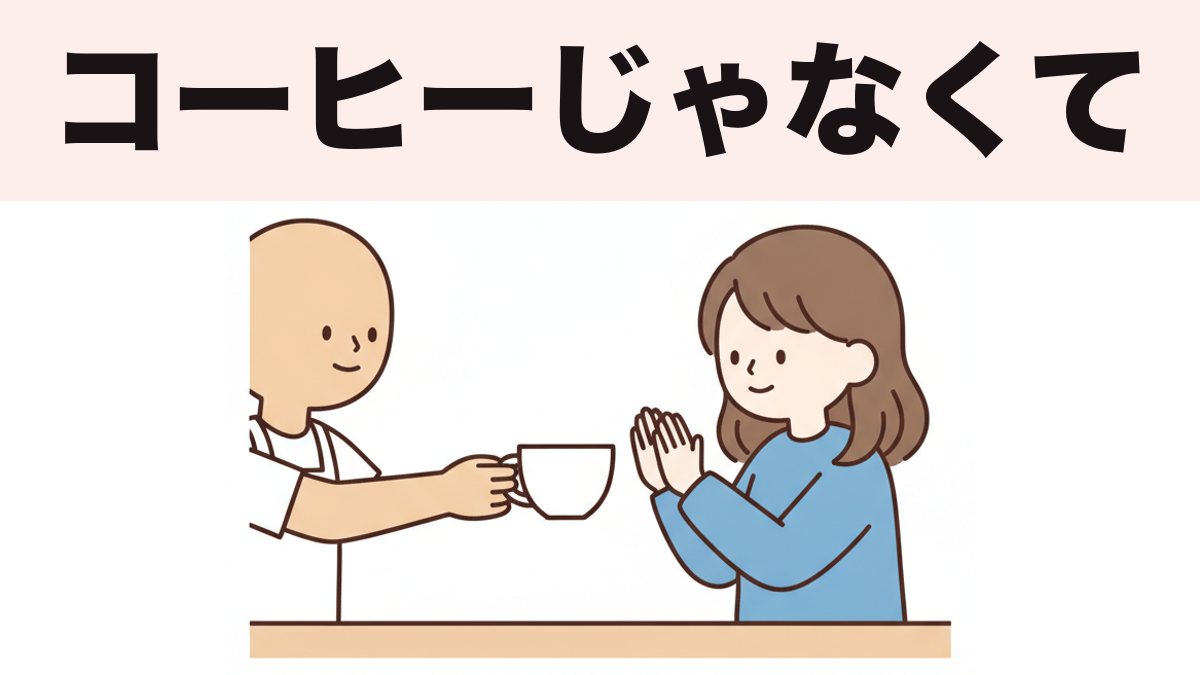
じゃなくて is the connecting form of じゃない. It lets a negative carry on into the next clause instead of ending the sentence: 学生**じゃなくて**、先生です ("not a student — a teacher"). い-adjectives use くなくて, and verbs split into two forms depending on what you mean.
「じゃなくて」は「じゃない」のつなぐ形です。うちけしで文を止めずに、次へつづけられます。「学生**じゃなくて**、先生です」。い形容詞は「くなくて」、動詞は意味によって2つに分かれます。
This is a small piece of grammar with an outsized effect on how fluent you sound, because correcting a misunderstanding is something you do constantly as a learner — and without it you can only manage 学生じゃないです。先生です, which stops and restarts.
The basics
The three negative te-forms
| Word type | Plain negative | Connecting form |
|---|---|---|
| Noun | 学生じゃない | 学生じゃなくて |
| な-adjective | 便利じゃない | 便利じゃなくて |
| い-adjective | 高くない | 高くなくて |
| Verb | 行かない | 行かなくて / 行かないで |
学生じゃなくて、先生です。 — Not a student — a teacher. (polite) この店は高くなくて、おいしいです。 — This place isn't expensive, and it's good. (polite)
The pattern is the same one you already know from the positive: the te-form connects, the plain form ends. じゃなくて is simply the negative version of で.
The correction use
This is what you will use it for most:
これはコーヒーじゃなくて、お茶です。 — This isn't coffee, it's tea. (polite) 明日じゃなくて、明後日です。 — Not tomorrow — the day after. (polite)
The shape is fixed: [wrong thing] + じゃなくて + [right thing]. It is the polite, complete way to correct someone, and it is far smoother than saying いいえ and starting again.
ではなくて is the formal version
じゃ is a contraction of では. In writing and formal speech, use ではなくて or ではなく:
問題は値段ではなく、時間です。 — The issue isn't the price, it's the time. (formal — ではなく, no て, common in writing)
Dropping the て entirely (ではなく) is standard written style.
Beyond the basics
Verbs: なくて vs ないで
Both are negative te-forms of a verb, and they are not interchangeable.
| Form | Use | Example |
|---|---|---|
| 〜ないで | Without doing / instead of doing | 朝ごはんを食べないで出かけました |
| 〜なくて | Because it didn't happen; a state | バスが来なくて、遅れました |
傘を持たないで出かけました。 — I went out without an umbrella. (polite past — ないで) 雨が降らなくて、よかったです。 — I'm glad it didn't rain. (polite — なくて, giving a reason)
The rough test: if you can insert "without" in the English, use ないで. If you can insert "because," use なくて. Requests always take ないで: 食べないでください.
It stacks with other clauses
忙しくなくて、暇でもなくて、ちょうどいいです。 — Not busy, not idle either — just right. (polite)
Chaining negatives with なくて is how you describe a middle ground, and it is more natural than a string of ですが.
The learner sentence this fixes
A very common intermediate sentence looks like this: 普通のロボットなく、… — built by attaching a bare なく to a noun. The natural version is 普通のロボットじゃなくて.
The underlying issue is usually that negatives as a set are shaky: なくて, ないで, じゃなくて and くなくて all get flattened into one shape. Learning them as a table, once, fixes several errors at the same time.
じゃない on its own has other jobs
これ、いいじゃない。 — Hey, this is pretty good. (casual — a positive, despite the negative form)
With rising or falling intonation, じゃない becomes a tag question or an exclamation of approval. It is the same word as the plain negative of です, doing something quite different with tone.
Before a noun, じゃない attaches directly
To modify a noun, the negative attaches like an い-adjective — because ない is one:
学生じゃない人も来られます。 — People who aren't students can come too. (polite)
No な, no の. じゃない behaves as an adjective in front of a noun.
Common mistakes
- 学生くなくて. Nouns take じゃなくて, not くなくて.
- 高いじゃなくて. い-adjectives take くなくて: 高くなくて.
- じゃないで. Not a form. It is じゃなくて for nouns, ないで only for verbs.
- Using なくて for a request. 食べなくてください is wrong; it is 食べないでください.
- Using ないで for a reason. バスが来ないで遅れました is odd; use 来なくて.
- Stopping instead of connecting. 学生じゃないです。先生です works, but じゃなくて is what a native speaker says.
Practice
Answers are hidden — build yours first, then open. Questions 6 and 7 are a pair: the same verb, and the meaning decides the form.
1. Correct someone: this is tea, not coffee.
Show answer
これはコーヒーじゃなくて、お茶です — [wrong thing] + じゃなくて + [right thing]. Smoother than saying いいえ and starting again.
2. Something is wrong here: この店は高いじゃなくて、安いです。
Show answer
高くなくて — い-adjectives take くなくて. じゃなくて is for nouns and な-adjectives.
3. Something is wrong here: 学生くなくて、先生です。
Show answer
学生じゃなくて — the mirror of question 2: nouns take じゃなくて.
4. Say "not tomorrow — the day after."
Show answer
明日じゃなくて、明後日です — the correction shape, with no verb needed.
5. Rewrite これは値段じゃなくて、時間の問題です for formal writing.
Show answer
問題は値段ではなく、時間です — ではなく (no て) is standard written style.
6. Say "I went out without an umbrella."
Show answer
傘を持たないで出かけました — ないで, because you can insert "without" in the English.
7. Say "I'm glad it didn't rain."
Show answer
雨が降らなくて、よかったです — なくて, because it is giving a reason. This is the pair to question 6.
8. Something is wrong here: 食べなくてください。
Show answer
食べないでください — requests always take ないで.
9. Say "people who aren't students can come too."
Show answer
学生じゃない人も来られます — no な and no の. じゃない behaves as an い-adjective in front of a noun, because ない is one.
10. What does これ、いいじゃない mean?
Show answer
"Hey, this is pretty good" — with the right intonation the negative form becomes approval. Same word, different job.
FAQ
Is じゃ ever wrong? Only in formal writing, where では is expected. In speech じゃ is completely standard.
Can I say じゃなくって? Yes, casually. The doubled consonant adds emphasis, like ばっかり from ばかり.
What about 〜ないくて? Not a form. The negative te-form of a verb is なくて or ないで.
Is 〜なくてもいい related? Yes — it is なくて plus もいい, "it's fine even if you don't." The なくて there is the same connecting negative.
How do I say "not A and not B"? Chain them: AでもなくてBでもない. For two nouns, も replaces the particles.
Why does ない conjugate like an adjective? Because it is one. That is also why the negative past is なかった and the te-form is なくて.
Vocabulary from this article
Tap the block to select all of it, then copy. In Anki: File → Import, note type Basic, separator Tab — the first column becomes the front, the second the back.
学生	がくせい — student
先生	せんせい — teacher
店	みせ — shop
高い	たかい — expensive
安い	やすい — cheap
便利	べんり — convenient
明日	あした — tomorrow
明後日	あさって — the day after tomorrow
値段	ねだん — price
時間	じかん — time
問題	もんだい — problem, issue
傘	かさ — umbrella
持つ	もつ — to carry, to hold
出かける	でかける — to go out
雨	あめ — rain
降る	ふる — to fall (rain)
朝ごはん	あさごはん — breakfast
食べる	たべる — to eat
遅れる	おくれる — to be late
忙しい	いそがしい — busy
暇	ひま — free, idle
来る	くる — to come
普通	ふつう — ordinary
人	ひと — person
I'm Yuuki, a Japanese teacher based in Tokyo. I've taught on italki as a Top 1% teacher and watched over 1,500 anime. Negatives as a set — なくて, ないで, じゃなくて, くなくて — tend to collapse into one shape in a learner's head, and the sentences that come out are understandable and slightly broken. Half an hour with the table fixes several errors at once.
Sources: the author's own lessons and standard reference grammars.
小さな文法ですが、聞こえ方が大きく変わります。学習者は「ちがいます」と直す場めんがとても多いからです。これがないと「学生じゃないです。先生です」と、いちど止まってから言い直すことになります。
基本
3つのうちけしのて形
| しゅるい | ふつうのうちけし | つなぐ形 |
|---|---|---|
| 名詞 | 学生じゃない | 学生じゃなくて |
| な形容詞 | 便利じゃない | 便利じゃなくて |
| い形容詞 | 高くない | 高くなくて |
| 動詞 | 行かない | 行かなくて / 行かないで |
学生じゃなくて、先生です。 — Not a student — a teacher. この店は高くなくて、おいしいです。 — This place isn't expensive, and it's good.
しくみは「て形」と同じです。て形はつなぎ、ふつうの形は止めます。「じゃなくて」は「で」のうちけし版です。
直す時に使います
これはコーヒーじゃなくて、お茶です。 — This isn't coffee, it's tea. 明日じゃなくて、明後日です。 — Not tomorrow — the day after.
形はきまっています。[ちがう方]+じゃなくて+[正しい方]。「いいえ」と言ってから言い直すより、ずっとなめらかです。
かたい形は「ではなくて」
「じゃ」は「では」のちぢんだ形です。書きことばでは「ではなくて」「ではなく」を使います。
問題は値段ではなく、時間です。 — The issue isn't the price, it's the time.
「て」を落とした「ではなく」が、書きことばのふつうの形です。
もう少しくわしく
動詞の「なくて」と「ないで」
どちらも動詞のうちけしのて形ですが、入れかえられません。
| 形 | 使い方 | れい |
|---|---|---|
| 〜ないで | 〜しないで(そのかわりに) | 朝ごはんを食べないで出かけました |
| 〜なくて | 〜しなかったので/じょうたい | バスが来なくて、遅れました |
傘を持たないで出かけました。 — I went out without an umbrella. 雨が降らなくて、よかったです。 — I'm glad it didn't rain.
テスト: 英語で "without" が入るなら「ないで」。"because" が入るなら「なくて」。おねがいはいつも「ないで」です(食べないでください)。
いくつもつなげられます
忙しくなくて、暇でもなくて、ちょうどいいです。 — Not busy, not idle either — just right.
この形が直す文
中級でよく見る文があります。「普通のロボットなく、…」。名詞にはだかの「なく」をつけた形です。自ぜんなのは「普通のロボットじゃなくて」です。
もとの原いんは、うちけし全体があやふやなことです。「なくて」「ないで」「じゃなくて」「くなくて」が1つの形にまざっています。表で一度おぼえると、いくつもの間違いが同時に直ります。
「じゃない」だけの別の仕事
これ、いいじゃない。 — Hey, this is pretty good.
言い方によって、「〜だよね?」やほめことばになります。形は同じで、音がちがう仕事をしています。
名詞の前
学生じゃない人も来られます。 — People who aren't students can come too.
「な」も「の」もいりません。「ない」は い形容詞なので、そのまま名詞の前に来ます。
よくある間違い
- 学生くなくて。 名詞は「じゃなくて」です。
- 高いじゃなくて。 い形容詞は「くなくて」です。
- じゃないで。 そんな形はありません。
- おねがいに「なくて」。 「食べないでください」です。
- 理由に「ないで」。 「バスが来なくて」です。
- つながずに止める。 「学生じゃないです。先生です」も通じますが、「じゃなくて」が自ぜんです。
練習
答えはかくれています。まず自分で作ってから開いてください。6番と7番が対です。同じ動詞で、意味が形を決めます。
1. 「コーヒーではなくお茶です」と直してください。
答えを見る
これはコーヒーじゃなくて、お茶です — [ちがう方]+じゃなくて+[正しい方]です。
2. 直してください: この店は高いじゃなくて、安いです。
答えを見る
高くなくて — い形容詞は「くなくて」です。
3. 直してください: 学生くなくて、先生です。
答えを見る
学生じゃなくて — 2番の反対で、名詞は「じゃなくて」です。
4. 「明日ではなく、あさってです」を言ってください。
答えを見る
明日じゃなくて、明後日です — 動詞がなくても使えます。
5. 「問題は値段ではなく時間です」— これはどんな場めんのことばですか。
答えを見る
書きことば・かたい場めん — 「ではなく」(て なし)が書きことばのふつうの形です。
6. 「かさを持たずに出かけました」を言ってください。
答えを見る
傘を持たないで出かけました — 英語で "without" が入るので「ないで」です。
7. 「雨がふらなくてよかった」を言ってください。
答えを見る
雨が降らなくて、よかったです — 理由なので「なくて」です。6番と対です。
8. 直してください: 食べなくてください。
答えを見る
食べないでください — おねがいはいつも「ないで」です。
9. 「学生ではない人も来られます」を言ってください。
答えを見る
学生じゃない人も来られます — 「な」も「の」もいりません。「ない」は い形容詞です。
10. 「これ、いいじゃない」はどういう意味ですか。
答えを見る
「これ、いいね」 — 言い方によって、うちけしの形がほめことばになります。
この記事に出た単語
ブロックをタップすると全部選べます。そのままコピーしてください。Anki では ファイル → 読み込み、ノートタイプ 基本、区切り タブ。1列目が表、2列目が裏になります。
学生	がくせい — student
先生	せんせい — teacher
店	みせ — shop
高い	たかい — expensive
安い	やすい — cheap
便利	べんり — convenient
明日	あした — tomorrow
明後日	あさって — the day after tomorrow
値段	ねだん — price
時間	じかん — time
問題	もんだい — problem, issue
傘	かさ — umbrella
持つ	もつ — to carry, to hold
出かける	でかける — to go out
雨	あめ — rain
降る	ふる — to fall (rain)
朝ごはん	あさごはん — breakfast
食べる	たべる — to eat
遅れる	おくれる — to be late
忙しい	いそがしい — busy
暇	ひま — free, idle
来る	くる — to come
普通	ふつう — ordinary
人	ひと — person
私はユウキです。東京で日本語を教えています。 italki の Top 1% の先生で、アニメは1,500本以上見ました。「なくて」「ないで」「じゃなくて」「くなくて」は、頭の中で1つの形にまざりがちです。出てくる文は通じますが、少しこわれています。表を30分見るだけで、いくつもの間違いが同時に直ります。
More drills like the ones above, plus a timed JLPT-style mock test: Practice · N5上のような練習問題と、時間つきのJLPT形式のもぎ試験: 練習ページ · N5
Want to try this in a real conversation?
本当の会話で、ためしてみませんか?
30-minute trial lesson, $13. Times shown in your own timezone.
30分の体験レッスン、$13。時間はあなたのタイムゾーンで表示されます。
Book a trial lesson · $13