どれくらいかかりますか: how to ask "how long does it take" in Japanese「どれくらいかかりますか」: 時間もお金も、同じ文で聞けます
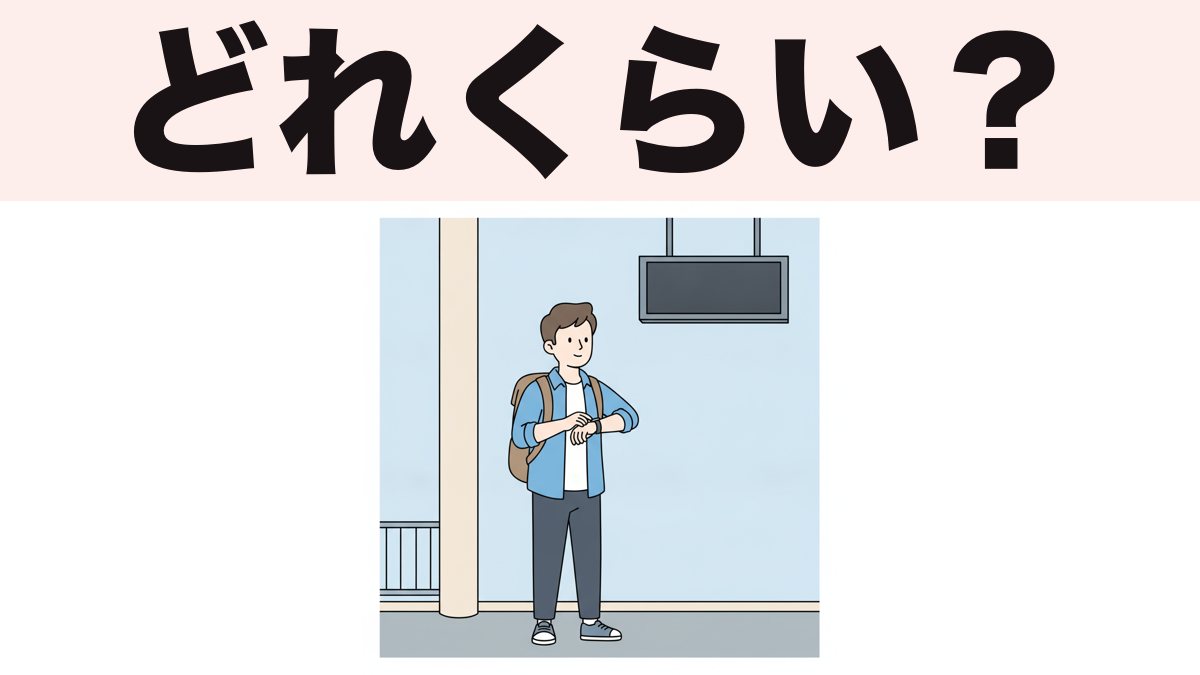
どれくらいかかりますか is the sentence you want: "how much does it take?" The verb かかる means something is consumed — time or money — and the same question shape works for both, so 東京までどれくらいかかりますか can mean either "how long to Tokyo" or "how much to Tokyo" depending on what you are standing in front of.
「どれくらいかかりますか」で大丈夫です。「かかる」は「時間やお金が使われる」という意味です。だから、時間を聞く時も、お金を聞く時も、同じ形が使えます。
This is one of the highest-value questions a beginner can learn, because it is the question you need at exactly the moments you cannot improvise: a station, a counter, a taxi, a doctor's waiting room. It is also a good first look at a verb that does not behave the way English speakers expect.
The basics
What does かかる actually mean?
かかる is not "to take" in the English sense of a person taking something. It describes a cost being incurred — time draining away, money being spent — with the thing consumed as the subject.
So in Japanese, time does the verb. You do not take thirty minutes; thirty minutes happens to the trip.
三十分かかります。 — It takes thirty minutes. (neutral, polite) お金がかかりますよ。 — It costs money, you know. (polite, the よ warns the listener)
That framing matters for one reason: it explains why the particle is が and not を. 時間がかかる, not 時間をかかる. The time is the subject, not the object.
How do you build the question?
Front-load the route or the task, then ask どれくらいかかりますか.
駅までどれくらいかかりますか。 — How long does it take to the station? (polite, asking a stranger) 修理にどれくらいかかりますか。 — How long will the repair take? (polite, at a shop counter)
The pieces are:
- まで — "as far as," marks the destination
- に — marks the activity or purpose the time is spent on
- どれくらい — "how much / how many," the question word
- かかりますか — the polite question form of かかる
どれくらい and どのくらい are the same word with the same meaning; you will hear both, and neither is more correct. Some speakers feel どのくらい is a touch softer, but nobody will notice which one you picked.
How do you answer one?
With a number and a counter, plus くらい if you want to hedge — and in real life almost everyone hedges.
十五分くらいです。 — About fifteen minutes. (polite, the standard answer) 二時間半かかりました。 — It took two and a half hours. (polite, past — reporting what happened)
Notice that the answer often drops かかる entirely. 十五分くらいです is a complete, natural reply. The verb was in the question; you do not have to repeat it. If your counters are shaky, that is the real bottleneck here — the counter system decides whether your answer is understandable, not the grammar of かかる.
Beyond the basics
時間がかかる vs 時間をかける — the pair that flips responsibility
These two look almost identical and mean opposite things about who is in control.
- 時間がかかる — it takes time (nobody chose this; it just does)
- 時間をかける — to spend time on something deliberately
この料理は時間がかかります。 — This dish takes a long time. (polite, a fact about the dish) この料理には時間をかけたいです。 — I want to take my time with this dish. (polite, a choice you are making)
This is the transitive/intransitive pair pattern showing up again, and Japanese leans hard on the intransitive version. Saying 時間がかかってすみません ("sorry it is taking a while") is the normal apology at a counter — it puts the delay on the situation rather than on a person, which is exactly the register Japanese prefers.
The money version is the same sentence
Because かかる covers any resource being consumed, you do not need a different verb for price.
いくらかかりますか。 — How much does it cost? (polite — いくら instead of どれくらい) 送料もかかりますか。 — Does shipping cost extra too? (polite, the も means "on top of what we discussed")
いくら is the specifically-money question word, so いくらかかりますか is unambiguous. どれくらいかかりますか is the one that depends on context — at a train station it will be heard as time, at a repair counter it could be either, and people will often clarify by answering both.
How does it shrink in real speech?
The polite ending is the first casualty, and どれくらい gets shortened.
どれくらいかかる? — How long does it take? (casual, friends) どんくらい? — How long? (very casual, spoken — the verb is dropped entirely)
どんくらい is a spoken contraction of どのくらい. You will hear it constantly in anime and in real conversation, and almost never see it written outside of dialogue. Recognizing it is more useful than producing it.
What if you want to ask about a specific unit?
Swap どれくらい for the question word that matches the unit you care about. This gets you a more precise answer.
何分かかりますか。 — How many minutes does it take? (polite, you expect a short answer) 何日かかりますか。 — How many days will it take? (polite, you expect a multi-day answer)
Choosing the unit is a soft signal about your expectations. Asking 何日かかりますか about a ten-minute errand sounds faintly sarcastic, in the same way "how many weeks will this take?" does in English.
The 〜のに version, for asking about a task
When the thing consuming time is an action rather than a destination, attach 〜のに to the plain form.
日本語を覚えるのにどれくらいかかりましたか。 — How long did it take you to learn Japanese? (polite, past — asking about someone's experience)
This is the shape you need for the question learners most want to ask each other. のに here is not the "even though" のに — it is の (nominalizer) plus に (purpose), literally "for the act of."
Common mistakes
- Using を instead of が. 時間をかかります is ungrammatical. The time is the subject: 時間がかかります. The を version only exists with かける, the deliberate one.
- Saying どれくらい時間ですか. This is not a sentence. The question word attaches to the verb, not to the noun — どれくらいかかりますか.
- Translating "it takes me thirty minutes" with a 私は subject. 私は三十分かかります is understandable but unnatural; Japanese normally leaves the person out entirely and says 三十分かかります, with context supplying who.
- Using かかる for effort in general. 大変 or 疲れる cover "it is hard work." かかる is specifically about time or money being consumed, not about difficulty.
- Forgetting that the answer is usually past tense. If you are reporting a completed trip, it is かかりました, not かかります. Learners often freeze the verb in the present because that is the form they memorized.
Which question word do I use?
| You want to know | Question word | Example |
|---|---|---|
| Duration, unspecified | どれくらい / どのくらい | 駅までどれくらいかかりますか |
| Duration, in minutes | 何分 | 何分かかりますか |
| Duration, in days | 何日 | 何日かかりますか |
| Cost, in money | いくら | いくらかかりますか |
| A finishing time, not a duration | 何時 | 何時に終わりますか |
That last row is the one worth memorizing as a contrast: 何時 asks when, not how long. See telling time in Japanese for the readings that break.
Practice
Say each answer out loud before you open it. Questions 3 and 4 are a pair — the same sentence with が and を, and the meaning flips.
1. Ask politely how long it takes to get to the airport (空港).
Show answer
空港までどれくらいかかりますか。 — まで marks the destination, and the question word attaches to the verb, not to a noun.
2. Answer: about forty minutes.
Show answer
四十分くらいです。 — くらい hedges the number, and かかる can be dropped because the question already supplied it.
3. Say "this work takes time" — as a fact about the work.
Show answer
この仕事は時間がかかります。 — が, because the time is the subject. Nobody chose this.
4. Now say "I want to take my time over this work" — as a choice.
Show answer
この仕事には時間をかけたいです。 — かける with を is the deliberate version. Same two nouns, opposite responsibility.
5. Ask politely how much the repair costs.
Show answer
修理はいくらかかりますか。 — いくら is the money-specific question word, so there is no ambiguity.
6. Report that yesterday's trip took three hours.
Show answer
三時間かかりました。 — Past tense. A completed trip is かかりました, not かかります.
7. Ask a friend casually how long it takes.
Show answer
どれくらいかかる? — Drop ますか for the plain form, and let rising intonation carry the question.
8. Ask politely how long it took someone to learn Japanese.
Show answer
日本語を覚えるのにどれくらいかかりましたか。 — のに attaches to the plain form when the time is spent on an action rather than a route.
9. Apologize at a counter for the wait, without blaming anyone.
Show answer
時間がかかってすみません。 — The intransitive かかる puts the delay on the situation. This is the standard service-counter apology.
10. Ask whether shipping costs extra as well.
Show answer
送料もかかりますか。 — も means "on top of what we already discussed," which is exactly the nuance you want here.
FAQ
Is どれくらい or どのくらい more correct? Neither. They are the same word and both are standard. どのくらい can feel marginally more formal in writing, but in speech they are interchangeable and nobody tracks which one you used.
Can I just say 時間はどれくらいですか? It is understandable, but it sounds like you are asking about time as a topic rather than about duration. どれくらいかかりますか is the natural sentence, and it is no harder to say.
Why is it が and not を? Because かかる is intransitive — the time is what does the verb. The transitive partner かける does take を, but it means deliberately spending time, which is a different sentence.
How do I ask "how far," not "how long"? どれくらいの距離ですか, or more commonly 何キロですか. かかる is about consumption, so it will always be read as time or money, never as distance.
Does かかる work for "it takes effort"? Not directly. 手間がかかる ("it takes trouble/effort") is a set phrase that works, but for general difficulty you want 大変です. かかる needs a countable resource attached to it.
What is the difference between かかる and 要る? 要る means "to be needed" and is about requirement — パスポートが要ります, "you need a passport." かかる is about something being consumed by the process. A trip 要る nothing and かかる thirty minutes.
Vocabulary from this article
Tap the block to select all of it, then copy. In Anki: File → Import, note type Basic, separator Tab — the first column becomes the front, the second the back.
かかる	かかる — to take (time), to cost (money)
かける	かける — to spend (time) on purpose
時間	じかん — time
どれくらい	どれくらい — how much, how long
いくら	いくら — how much (money)
何分	なんぷん — how many minutes
何日	なんにち — how many days
駅	えき — station
空港	くうこう — airport
修理	しゅうり — repair
送料	そうりょう — shipping cost
距離	きょり — distance
覚える	おぼえる — to learn, to memorize
終わる	おわる — to end, to finish
手間	てま — trouble, effort
要る	いる — to be needed
半	はん — half (as in 二時間半)
くらい	くらい — about, approximately
I'm Yuuki, a Japanese teacher based in Tokyo. I've taught on italki as a Top 1% teacher and watched over 1,500 anime. The が/を swap in this one comes up in lessons constantly — students who have never seen an intransitive verb pair before meet their first one here, usually while trying to apologize for being late.
Sources: the author's own lessons and standard reference grammars.
これは、初めのうちに覚えると得をする文です。駅、お店、タクシー、病院。その場で考える時間がない場所で、必ず使います。
基本
「かかる」の意味
「かかる」は、人が何かを「取る」のではありません。時間やお金が「使われる」という意味です。
日本語では、時間が主語になります。あなたが30分を使うのではなく、30分が「かかる」のです。
三十分かかります。 — It takes thirty minutes. (neutral, polite) お金がかかりますよ。 — It costs money, you know. (polite, the よ warns the listener)
だから助詞は「が」です。「時間がかかる」です。「時間をかかる」とは言いません。
質問の作り方
先に場所や用事を言って、最後に「どれくらいかかりますか」をつけます。
駅までどれくらいかかりますか。 — How long does it take to the station? (polite, asking a stranger) 修理にどれくらいかかりますか。 — How long will the repair take? (polite, at a shop counter)
- まで — どこまで行くか
- に — 何のために使う時間か
- どれくらい — どのくらいの量か
- かかりますか — ていねいな質問の形
「どれくらい」と「どのくらい」は同じです。どちらを使っても大丈夫です。
答え方
数字と助数詞を言います。「くらい」をつけると、だいたいの数になります。実は、みんな「くらい」をつけます。
十五分くらいです。 — About fifteen minutes. (polite, the standard answer) 二時間半かかりました。 — It took two and a half hours. (polite, past — reporting what happened)
答えの時は「かかる」を言わなくてもいいです。「十五分くらいです」だけで、ちゃんとした答えです。
もう少し先へ
「時間がかかる」と「時間をかける」
形は似ていますが、意味は反対です。
- 時間がかかる — しかたなく時間が使われる
- 時間をかける — 自分で決めて、ゆっくりやる
この料理は時間がかかります。 — This dish takes a long time. (polite, a fact about the dish) この料理には時間をかけたいです。 — I want to take my time with this dish. (polite, a choice you are making)
日本語では「かかる」のほうをよく使います。お店で「時間がかかってすみません」と言うのがふつうです。人のせいにしないで、状況のせいにする言い方です。
お金も同じ文です
いくらかかりますか。 — How much does it cost? (polite — いくら instead of どれくらい) 送料もかかりますか。 — Does shipping cost extra too? (polite, the も means "on top of what we discussed")
「いくら」はお金の質問の言葉です。だから、まちがえられません。
話す時は短くなります
どれくらいかかる? — How long does it take? (casual, friends) どんくらい? — How long? (very casual, spoken — the verb is dropped entirely)
「どんくらい」は話す時だけの形です。アニメでよく聞きます。自分で使わなくても、聞いて分かれば十分です。
単位を決めて聞く
何分かかりますか。 — How many minutes does it take? (polite, you expect a short answer) 何日かかりますか。 — How many days will it take? (polite, you expect a multi-day answer)
「〜のに」の形
行き先ではなく、することについて聞く時は、動詞の後ろに「のに」をつけます。
日本語を覚えるのにどれくらいかかりましたか。 — How long did it take you to learn Japanese? (polite, past — asking about someone's experience)
よくある間違い
- 「を」を使ってしまう。 「時間をかかります」は間違いです。「時間がかかります」です。
- 「どれくらい時間ですか」と言う。 これは文になりません。「どれくらいかかりますか」です。
- 「私は」をつける。 「三十分かかります」だけで十分です。
- 難しさに「かかる」を使う。 難しい時は「大変です」です。
- 答えを現在の形のままにする。 終わったことなら「かかりました」です。
どの質問の言葉を使うか
| 知りたいこと | 質問の言葉 | 例 |
|---|---|---|
| だいたいの長さ | どれくらい / どのくらい | 駅までどれくらいかかりますか |
| 何分か | 何分 | 何分かかりますか |
| 何日か | 何日 | 何日かかりますか |
| お金 | いくら | いくらかかりますか |
| 終わる時刻 | 何時 | 何時に終わりますか |
いちばん下は、意味がちがいます。「何時」は「いつ」で、「どれくらい」は「長さ」です。
練習
声に出してから、答えを見てください。3番と4番は組です。「が」と「を」で意味が反対になります。
1. 空港までの時間を、ていねいに聞いてください。
答えを見る
空港までどれくらいかかりますか。 — 「まで」で行き先を言います。質問の言葉は動詞につきます。
2. 「四十分くらい」と答えてください。
答えを見る
四十分くらいです。 — 「くらい」でだいたいの数にします。「かかる」は言わなくていいです。
3. 「この仕事は時間がかかる」と言ってください。
答えを見る
この仕事は時間がかかります。 — 時間が主語なので「が」です。
4. 「この仕事にはゆっくり時間を使いたい」と言ってください。
答えを見る
この仕事には時間をかけたいです。 — 自分で決める時は「を」と「かける」です。
5. 修理のお金を、ていねいに聞いてください。
答えを見る
修理はいくらかかりますか。 — お金の質問は「いくら」です。
6. 「昨日は三時間かかった」と言ってください。
答えを見る
三時間かかりました。 — 終わったことなので「かかりました」です。
7. 友だちに、ふつうの形で聞いてください。
答えを見る
どれくらいかかる? — 「ますか」を取って、上げる言い方にします。
8. 「日本語を覚えるのにどれくらいかかったか」を聞いてください。
答えを見る
日本語を覚えるのにどれくらいかかりましたか。 — することについて聞く時は「のに」です。
9. お店で、待たせたことをあやまってください。
答えを見る
時間がかかってすみません。 — 人ではなく、状況のせいにする言い方です。
10. 「送料もかかりますか」と聞いてください。
答えを見る
送料もかかりますか。 — 「も」は「それに加えて」という意味です。
よくある質問
「どれくらい」と「どのくらい」はどちらが正しいですか。 どちらも正しいです。同じ言葉です。
「時間はどれくらいですか」でもいいですか。 通じますが、少し変です。「どれくらいかかりますか」のほうが自然です。
どうして「が」ですか。 「かかる」は、時間が主語になる動詞だからです。「かける」だけが「を」を取ります。
「どれくらいの距離ですか」は使えますか。 使えます。でも「何キロですか」のほうがよく使います。「かかる」は距離には使いません。
「大変」と「時間がかかる」はちがいますか。 ちがいます。「大変」は難しい・つらいです。「時間がかかる」は長いだけです。
「要る」とのちがいは何ですか。 「要る」は「必要だ」です。「パスポートが要ります」。「かかる」は「使われる」です。
この記事に出た単語
このブロックを長く押して全部選び、コピーしてください。Ankiでは ファイル → 読み込み、ノートタイプは 基本、区切りは タブ にします。左が表、右が裏になります。
かかる	かかる — to take (time), to cost (money)
かける	かける — to spend (time) on purpose
時間	じかん — time
どれくらい	どれくらい — how much, how long
いくら	いくら — how much (money)
何分	なんぷん — how many minutes
何日	なんにち — how many days
駅	えき — station
空港	くうこう — airport
修理	しゅうり — repair
送料	そうりょう — shipping cost
距離	きょり — distance
覚える	おぼえる — to learn, to memorize
終わる	おわる — to end, to finish
手間	てま — trouble, effort
要る	いる — to be needed
半	はん — half (as in 二時間半)
くらい	くらい — about, approximately
日本語教師のユウキです。東京にいます。 italkiで Top 1% の教師をしています。アニメは1,500本以上見ました。この「が」と「を」のちがいは、レッスンでよく出ます。遅れたことをあやまろうとして、初めて出会う人が多いです。
More drills like the ones above, plus a timed JLPT-style mock test: Practice · N4上のような練習問題と、時間つきのJLPT形式のもぎ試験: 練習ページ · N4
Want to try this in a real conversation?
本当の会話で、ためしてみませんか?
30-minute trial lesson, $13. Times shown in your own timezone.
30分の体験レッスン、$13。時間はあなたのタイムゾーンで表示されます。
Book a trial lesson · $13