How to tell time in Japanese: 時, 分, and the readings that break時間の言い方: 時・分と、こわれる読み方
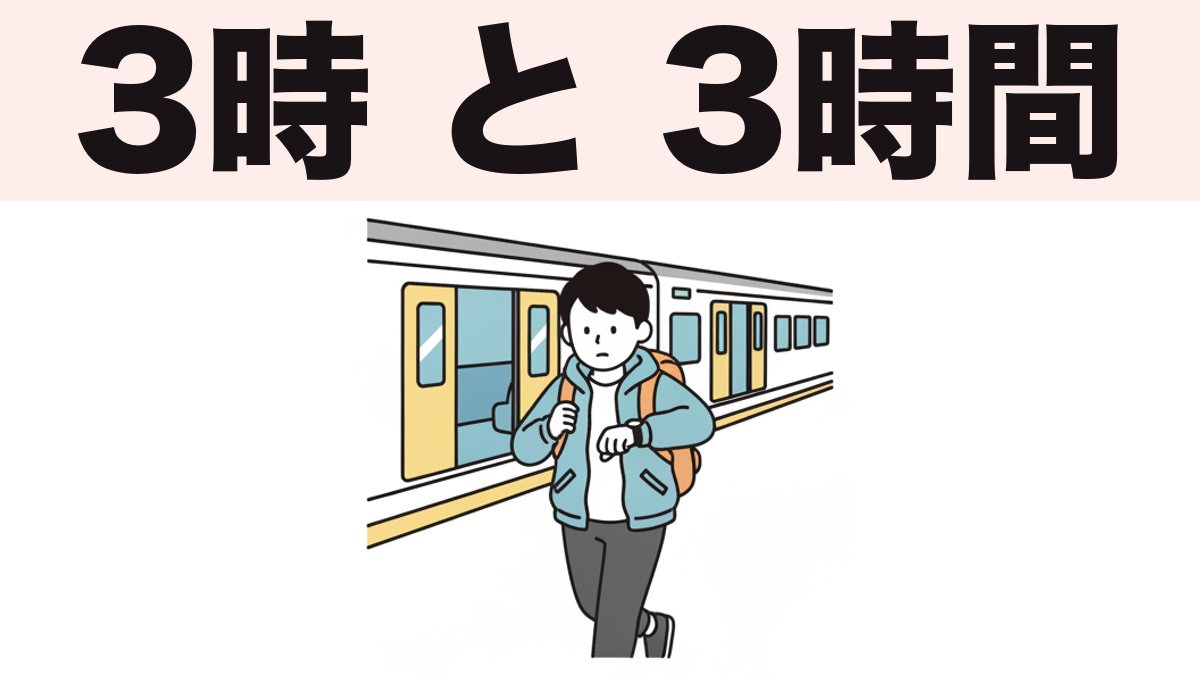
Telling time in Japanese is two counters — 時 for the hour and 分 for the minute — plus about eight irregular readings you simply have to memorise. The one that costs real money is 3時 versus 3時間: three o'clock and three hours are not the same word.
日本語の時間は、助数詞が2つです。時間の「時」と、分の「分」。それに、覚えるしかない読み方が8つくらいあります。本当にこまるのは「3時」と「3時間」です。3時と3時間は、ちがうことばです。
Numbers feel like the safe part of a language, which is exactly why this catches people. You can count to a hundred perfectly and still say よんじ for four o'clock, which is not a word.
The basics
The hours — and the three that break
| Hour | Reading | Hour | Reading |
|---|---|---|---|
| 1時 | いちじ | 7時 | しちじ |
| 2時 | にじ | 8時 | はちじ |
| 3時 | さんじ | 9時 | くじ |
| 4時 | よじ | 10時 | じゅうじ |
| 5時 | ごじ | 11時 | じゅういちじ |
| 6時 | ろくじ | 12時 | じゅうにじ |
Three to memorise: 4時 = よじ (never よんじ), 7時 = しちじ, 9時 = くじ (never きゅうじ).
今、3時です。 — It's three o'clock. 9時に会いましょう。 — Let's meet at nine.
The minutes and their sound changes
分 is read ふん or ぷん depending on the number, following the same pattern as other counters: 1, 3, 4, 6, 8 and 10 take ぷん.
| Min | Reading | Min | Reading |
|---|---|---|---|
| 1分 | いっぷん | 6分 | ろっぷん |
| 2分 | にふん | 7分 | ななふん |
| 3分 | さんぷん | 8分 | はっぷん |
| 4分 | よんぷん | 9分 | きゅうふん |
| 5分 | ごふん | 10分 | じゅっぷん |
7時15分です。 — It's 7:15. (しちじ じゅうごふん) 8時40分に出ます。 — I'm leaving at 8:40.
半 is half past, and it is easier than the minutes
7時半。 — Half past seven. 12時半に昼ご飯を食べます。 — I eat lunch at half past twelve.
半 never changes sound and never takes 分. It is the one part of this that is purely easy, so use it wherever you can.
午前 and 午後 go before the time
This is the reverse of English, and it is the most common structural mistake.
✗ 3時午後 午後○ 午後3時。 — 3 PM. ○ 午前7時に起きます。 — I get up at 7 AM.
In conversation, though, Japanese usually skips them entirely and uses time-of-day words instead: 朝7時 ("seven in the morning"), 夜8時 ("eight at night"), 昼の1時 ("one in the afternoon"). 午前/午後 sound formal — timetables, announcements, business.
Beyond the basics
3時 and 3時間 are not the same word
This is the one that actually causes misunderstandings.
3時に会いましょう。 — Let's meet at three o'clock. 3時間かかります。 — It takes three hours.
時 is a point on the clock. 時間 is a length of time. Saying 3時かかります would be telling someone the task takes "three o'clock," which is not a thing.
Duration counters follow the same pattern across the board: 一日 (one day) vs 一日間, 二週間 (two weeks), 三ヶ月 (three months), 四年間 (four years). Minutes are the exception — 5分 covers both "five past" and "five minutes' duration," with context deciding.
The に rule: specific times take it, relative times do not
Attach に to a time on the clock or the calendar. Do not attach it to words like today, tomorrow, now, or every day.
○ 3時に行きます。 — I'll go at three. ○ 月曜日に行きます。 — I'll go on Monday. .✗ 明日に行きます。 。○ 明日行きます。 — I'll go tomorrow.
The test: if the word tells you a fixed point on a clock or calendar, it takes に. If it is relative to now — 今日, 明日, 昨日, 今, 毎日, 来週 — it does not. 今週末 and 来月 are in the second group too, which surprises people.
Asking the time, and asking about a time
Two different questions, one particle apart.
今、何時ですか。 — What time is it now? 何時に会いますか。 — What time shall we meet? 何時から何時までですか。 — From what time to what time?
何時 is built the same way as every other question word, and 何時間 asks about duration: 何時間かかりますか ("how many hours does it take?").
Making an appointment
The time words become useful the moment you attach them to a plan. These four shapes cover almost every scheduling conversation:
何時がいいですか。 — What time works for you? 3時からでもいいですか。 — Would three onwards be all right? 1時間ぐらいかかります。 — It'll take about an hour. 10時に予約しました。 — I booked it for ten.
Note 3時から — から and まで attach to times exactly as they do to places, which makes 〜から〜まで one of the most reusable frames you have: 9時から5時まで働きます ("I work from nine to five").
And when you need to move something, 〜に変更 is the word: 4時に変更できますか ("could we change it to four?").
Approximate and precise
3時ごろ。 — Around three. (ごろ — for points in time) 3時間ぐらい。 — About three hours. (ぐらい/くらい — for amounts) 3時ちょうど。 — Exactly three. 3時5分前。 — Five to three. 3時5分過ぎ。 — Just after three.
ごろ versus ぐらい is worth keeping straight: ごろ attaches to a point in time, ぐらい to a quantity or duration. 3時ごろ ("around three o'clock"), 3時間ぐらい ("about three hours").
〜後 and 〜前: in ten minutes, ten minutes ago
Attach 後 (ご) or 前 (まえ) to a duration and you get relative time, which is what most conversation actually needs.
10分後に出ます。 — I'm leaving in ten minutes. 30分前に着きました。 — I arrived thirty minutes ago. 2時間後に電話します。 — I'll call in two hours.
Note that these attach to durations (時間, 分, 日), not to clock times — 3時後 is not a sentence. And 前 has the same double life as English "before": 3時前 means "before three o'clock," while 3時間前 means "three hours ago."
The everyday versions are すぐ ("right away"), 後で ("later") and さっき ("just now"), and they carry far more conversation than any exact figure: 後で電話します is what people actually say.
How does it sound in anime and real life?
Short forms dominate, and 半 does a lot of work:
何時集合? — What time are we meeting? (casual) 7時半ね。 — Half seven, then. もうこんな時間。 — Look at the time. (literally "already this time") 時間ないよ。 — There's no time.
もうこんな時間 is the standard thing to say when you realise you have stayed too long, and it is far more natural than announcing the actual number.
午前0時 and 正午: the two edges
Midnight and noon have their own words, and the ordinary numbers get slippery around them.
正午(しょうご) — noon. 午前0時 — midnight, in official writing. 深夜2時 — 2 AM. (literally "deep night two") 夜中に目が覚めた。 — I woke up in the middle of the night.
深夜 is the useful one: it covers roughly midnight to dawn and is how timetables label late trains. You will also see venues advertising hours like 25時 rather than 深夜1時 — same moment, different convention, and both are normal.
Common mistakes
- よんじ for 4時. It is よじ. Likewise くじ for 9時, not きゅうじ.
- 3時かかります. Duration needs 時間: 3時間かかります.
- 明日に行きます. Relative time words take no に. 明日行きます.
- 3時午後. 午前 and 午後 come first: 午後3時.
- いちふん, さんふん. The sound changes are いっぷん, さんぷん, よんぷん, ろっぷん, はっぷん, じゅっぷん.
- Using 午前/午後 in casual conversation. They sound like a timetable. Say 朝7時 or 夜8時 instead.
Practice
Answers are hidden — build yours first, then open. Questions 5 and 6 are a pair: one character apart, and the meaning changes completely.
1. Read 4時 out loud.
Show answer
よじ — never よんじ. Along with くじ (9時) and しちじ (7時), this is one of the three hour readings you have to memorise.
2. Read 9時 out loud.
Show answer
くじ — not きゅうじ. If you say きゅうじ you will be understood, but it is not the standard reading.
3. Read 8分 out loud.
Show answer
はっぷん — 1, 3, 4, 6, 8 and 10 take ぷん. 2, 5, 7 and 9 take ふん.
4. Say "half past seven."
Show answer
7時半 — 半 never changes sound and never takes 分. Use it wherever you can.
5. Say "let's meet at three o'clock."
Show answer
3時に会いましょう — 時 is a point on the clock, and a specific time takes に.
6. Say "it takes three hours."
Show answer
3時間かかります — duration needs 時間, not 時. This is the pair to question 5: one character, and the sentence goes from a meeting time to a length of time.
7. Something is wrong here: 明日に行きます。
Show answer
明日行きます — relative time words (今日, 明日, 今, 毎日, 来週) take no に. Fixed points on a clock or calendar do.
8. Say "3 PM."
Show answer
午後3時 — 午前 and 午後 come before the time, the reverse of English. In conversation, 昼の3時 is more natural.
9. What is the difference between 3時ごろ and 3時間ぐらい?
Show answer
ごろ is for points in time, ぐらい for amounts — 3時ごろ is "around three o'clock"; 3時間ぐらい is "about three hours."
10. Ask how many hours something takes.
Show answer
何時間かかりますか — 何時 asks the clock time, 何時間 asks the duration. The same 時/時間 split as questions 5 and 6.
FAQ
Is 7時 ever read ななじ? You will hear it, especially when someone is being careful to avoid confusion with 1時 over the phone, but しちじ is the standard reading. Produce しちじ and recognise ななじ.
How do I say "from 9 to 5"? 9時から5時まで. から and まで work for times exactly as they do for places, and 〜から〜まで is one of the most reusable frames in Japanese.
Does Japan use the 24-hour clock? On timetables, tickets and official schedules, yes — 18時 (じゅうはちじ). In speech people use 12-hour time with 朝/昼/夜 attached. Bars and late-night venues sometimes go past 24, so 25時 means 1 AM.
What about "o'clock sharp"? ちょうど: 3時ちょうど ("exactly three"). It can also go first — ちょうど3時です ("it's just gone three"). Both are natural.
Are the minute sound changes really necessary? Yes. いちふん and さんふん are not words, in the same way "a three-o'clock" is not English. The pattern is identical to 本 and 杯, so you are only learning it once.
How do I say "every day at seven"? 毎日7時に. 毎日 takes no に but 7時 does, so both rules apply in the same sentence — which is a useful thing to say out loud a few times until it feels normal.
Vocabulary from this article
Tap the block to select all of it, then copy. In Anki: File → Import, note type Basic, separator Tab — the first column becomes the front, the second the back.
時	じ — o'clock
分	ふん — minute
半	はん — half past
時間	じかん — hour (duration); time
4時	よじ — four o'clock
7時	しちじ — seven o'clock
9時	くじ — nine o'clock
1分	いっぷん — one minute
8分	はっぷん — eight minutes
午前	ごぜん — AM
午後	ごご — PM
何時	なんじ — what time
何時間	なんじかん — how many hours
朝	あさ — morning
昼	ひる — noon, daytime
夜	よる — night
今	いま — now
明日	あした — tomorrow
毎日	まいにち — every day
月曜日	げつようび — Monday
起きる	おきる — to get up
出る	でる — to leave, to go out
会う	あう — to meet
かかる	かかる — to take (time)
ちょうど	ちょうど — exactly
ごろ	ごろ — around (a point in time)
ぐらい	ぐらい — about (an amount)
I'm Yuuki, a Japanese teacher based in Tokyo. I've taught on italki as a Top 1% teacher and watched over 1,500 anime. Numbers feel safe, which is why 3時 and 3時間 slip past for so long — and it is the one mistake here that can actually make someone wait for you at the wrong time.
Sources: the author's own lessons and standard reference grammars.
数字は「安全なところ」に見えます。だからこそ、ここでつまずきます。100まで数えられる人でも、4時を「よんじ」と言ってしまいます。そういうことばはありません。
基本
時 — こわれる3つ
| 時 | 読み方 | 時 | 読み方 |
|---|---|---|---|
| 1時 | いちじ | 7時 | しちじ |
| 2時 | にじ | 8時 | はちじ |
| 3時 | さんじ | 9時 | くじ |
| 4時 | よじ | 10時 | じゅうじ |
| 5時 | ごじ | 11時 | じゅういちじ |
| 6時 | ろくじ | 12時 | じゅうにじ |
覚えるのは3つです。4時時よじ(「よんじ」ではありません)、7時時しちじ、9時時くじ(「きゅうじ」ではありません)。
今、3時です。 — It's three o'clock. 9時に会いましょう。 — Let's meet at nine.
分 と 音の変化
「分」は「ふん」か「ぷん」です。助数詞と同じきまりで、1・3・4・6・8・10 が「ぷん」になります。
| 分 | 読み方 | 分 | 読み方 |
|---|---|---|---|
| 1分 | いっぷん | 6分 | ろっぷん |
| 2分 | にふん | 7分 | ななふん |
| 3分 | さんぷん | 8分 | はっぷん |
| 4分 | よんぷん | 9分 | きゅうふん |
| 5分 | ごふん | 10分 | じゅっぷん |
7時15分です。 — It's 7:15. 8時40分に出ます。 — I'm leaving at 8:40.
「半」はかんたんです
7時半。 — Half past seven. 12時半に昼ご飯を食べます。 — I eat lunch at half past twelve.
「半」は音が変わりませんし、「分」もつきません。ここだけは本当にかんたんなので、使えるところでは使ってください。
午前・午後は時間の前です
英語と反対です。いちばん多い形のまちがいです。
✗ 3時午後 午後○ 午後3時。 — 3 PM. ○ 午前7時に起きます。 — I get up at 7 AM.
でも会話では、ふつう使いません。かわりに時間帯のことばを使います。「朝7時」「夜8時」「昼の1時」。「午前・午後」はかたくて、時こく表やアナウンスや仕事の場面のことばです。
もう少し先へ
「3時」と「3時間」はちがうことばです
ここが本当に事こになります。
3時に会いましょう。 — Let's meet at three o'clock. 3時間かかります。 — It takes three hours.
「時」は時計の上の点です。「時間」は長さです。「3時かかります」と言うと、「3時がかかります」になってしまいます。
長さのことばは、ほかも同じです。「二週間」「三ヶ月」「四年間」。分だけはれいがいで、「5分」が「5分の時こく」も「5分の長さ」も表します。
「に」のルール: 決まった時こくにはつけ、今からの時間にはつけない
時計やカレンダーの点には「に」をつけます。「今日」「明日」「今」「毎日」にはつけません。
○ 3時に行きます。 — I'll go at three. ○ 月曜日に行きます。 — I'll go on Monday. .✗ 明日に行きます。 。○ 明日行きます。 — I'll go tomorrow.
見分け方は「時計やカレンダーの決まった点か」です。今からの相対的なことば(今日・明日・昨日・今・毎日・来週)にはつけません。「今週末」「来月」も同じグループです。
時こくを聞く、時間を聞く
助詞1つでちがう質問になります。
今、何時ですか。 — What time is it now? 何時に会いますか。 — What time shall we meet? 何時から何時までですか。 — From what time to what time?
「何時間」は長さを聞きます。「何時間かかりますか」。
予定を決める
時間のことばは、予定につけると役に立ちます。この4つで、ほとんどの予定の話ができます。
何時がいいですか。 — What time works for you? 3時からでもいいですか。 — Would three onwards be all right? 1時間ぐらいかかります。 — It'll take about an hour. 10時に予約しました。 — I booked it for ten.
「3時から」の「から」に注目してください。「から」「まで」は場所と同じように時間にも使えます。「9時から5時まで働きます」。
時間を動かしたい時は「変更」です。「4時に変更できますか」。
だいたいと、ちょうど
3時ごろ。 — Around three. (「ごろ」は時こく) 3時間ぐらい。 — About three hours. (「ぐらい」は量・長さ) 3時ちょうど。 — Exactly three. 3時5分前。 — Five to three. 3時5分過ぎ。 — Just after three.
「ごろ」と「ぐらい」は分けてください。「ごろ」は時こくの点、「ぐらい」は量や長さです。
〜後 と 〜前: 10分後、10分前
長さに「後(ご)」や「前(まえ)」をつけると、今からの時間になります。会話ではこちらの方をよく使います。
10分後に出ます。 — I'm leaving in ten minutes. 30分前に着きました。 — I arrived thirty minutes ago. 2時間後に電話します。 — I'll call in two hours.
つくのは長さ(時間・分・日)で、時こくにはつきません。「3時後」とは言いません。それから「前」には2つの意味があります。「3時前」は「3時になる前」、「3時間前」は「3時間まえ」です。
毎日の形は「すぐ」「後で」「さっき」です。正かくな数字より、こちらの方がずっと会話を運びます。「後で電話します」が、みんなの言い方です。
アニメや本当の会話ではどう聞こえますか?
短い形が多くて、「半」がよく働きます。
何時集合? — What time are we meeting? 7時半ね。 — Half seven, then. もうこんな時間。 — Look at the time. 時間ないよ。 — There's no time.
「もうこんな時間」は、長くいすぎたと気づいた時の決まったことばです。数字を言うより、ずっと自然です。
午前0時 と 正午: 両はし
真夜中と正午には、じぶんのことばがあります。
正午(しょうご) — noon. 午前0時 — midnight(公式な書き方) )深夜2時 — 2 AM. 夜中に目が覚めた。 — I woke up in the middle of the night.
役に立つのは「深夜」です。だいたい真夜中から朝までで、おそい電車の時こく表もこう書きます。お店が「25時まで」と書くこともあります。「深夜1時」と同じ時間で、書き方がちがうだけです。どちらもふつうです。
よくある間違い
- 4時を「よんじ」。 「よじ」です。9時も「くじ」で、「きゅうじ」ではありません。
- 「3時かかります」。 長さは「時間」です。「3時間かかります」。
- 「明日に行きます」。 今からのことばに「に」はつけません。
- 「3時午後」。 「午後3時」です。
- 「いちふん」「さんふん」。 「いっぷん」「さんぷん」です。
- 会話で「午前・午後」。 時こく表みたいです。「朝7時」「夜8時」にします。
練習
答えはかくれています。まず自分の答えを作ってから開いてください。5番と6番は対になっています。
1. 「4時」を声に出してください。
答えを見る
よじ — 「よんじ」ではありません。「くじ」(9時)「しちじ」(7時)といっしょに、覚えるしかない3つです。
2. 「9時」を声に出してください。
答えを見る
くじ — 「きゅうじ」ではありません。言っても通じますが、正しい読み方ではありません。
3. 「8分」を声に出してください。
答えを見る
はっぷん — 1・3・4・6・8・10 が「ぷん」、2・5・7・9 が「ふん」です。
4. 「7時30分」を「半」で言ってください。
答えを見る
7時半 — 「半」は音が変わらず、「分」もつきません。
5. 「3時に会いましょう」と言ってください。
答えを見る
3時に会いましょう — 「時」は時計の上の点で、決まった時こくには「に」がつきます。
6. 「3時間かかります」と言ってください。
答えを見る
3時間かかります — 長さは「時間」です。5番と対で、1文字で「待ち合わせの時こく」から「かかる長さ」に変わります。
7. 直してください: 明日に行きます。
答えを見る
明日行きます — 今からのことば(今日・明日・今・毎日・来週)に「に」はつきません。
8. 「午後3時」と言ってください。
答えを見る
午後3時 — 「午前・午後」は時間の前です。会話なら「昼の3時」の方が自然です。
9. 「3時ごろ」と「3時間ぐらい」はどうちがいますか。
答えを見る
「ごろ」は時こく、「ぐらい」は量 — 「3時ごろ」は3時あたり、「3時間ぐらい」は3時間くらいの長さです。
10. 「どのくらいかかりますか(何時間?)」と聞いてください。
答えを見る
何時間かかりますか — 「何時」は時こく、「何時間」は長さです。5番・6番と同じ分け方です。
よくある質問
「7時」を「ななじ」と読むことはありますか。 聞くことはあります。電話などで「1時」とまちがえたくない時です。でも正しい読み方は「しちじ」です。
「9時から5時まで」はどう言いますか。 「9時から5時まで」です。「から」「まで」は場所と同じように時間にも使えます。とても使いやすい形です。
日本は24時間の言い方を使いますか。 時こく表・切符・公式の予定では使います(18時時じゅうはちじ)。話す時は12時間で、「朝・昼・夜」をつけます。夜おそいお店では「25時」(深夜1時)のような書き方もします。
「ちょうど」はどう使いますか。 「3時ちょうど」です。前に置いて「ちょうど3時です」とも言えます。どちらも自然です。
分の音の変化は本当に必要ですか。 必要です。「いちふん」「さんふん」ということばはありません。「本」「杯」と同じきまりなので、覚えるのは1回だけです。
「毎日7時に」はどう言いますか。 「毎日7時に」です。「毎日」に「に」はつきませんが、「7時」にはつきます。同じ文で2つのルールが働くので、何回か声に出してみてください。
この記事に出た単語
ブロックをタップすると全部選べます。そのままコピーしてください。Anki では ファイル → 読み込み、ノートタイプ 基本、区切り タブ。1列目が表、2列目が裏になります。
時	じ — o'clock
分	ふん — minute
半	はん — half past
時間	じかん — hour (duration); time
4時	よじ — four o'clock
7時	しちじ — seven o'clock
9時	くじ — nine o'clock
1分	いっぷん — one minute
8分	はっぷん — eight minutes
午前	ごぜん — AM
午後	ごご — PM
何時	なんじ — what time
何時間	なんじかん — how many hours
朝	あさ — morning
昼	ひる — noon, daytime
夜	よる — night
今	いま — now
明日	あした — tomorrow
毎日	まいにち — every day
月曜日	げつようび — Monday
起きる	おきる — to get up
出る	でる — to leave, to go out
会う	あう — to meet
かかる	かかる — to take (time)
ちょうど	ちょうど — exactly
ごろ	ごろ — around (a point in time)
ぐらい	ぐらい — about (an amount)
私はユウキです。東京で日本語を教えています。 italki の Top 1% の先生で、アニメは1,500本以上見ました。数字は安全に見えます。だから「3時」と「3時間」は長い間そのままになります。そして、これはここで唯一、人をちがう時間に待たせてしまうまちがいです。
More drills like the ones above, plus a timed JLPT-style mock test: Practice · N5上のような練習問題と、時間つきのJLPT形式のもぎ試験: 練習ページ · N5
Want to try this in a real conversation?
本当の会話で、ためしてみませんか?
30-minute trial lesson, $13. Times shown in your own timezone.
30分の体験レッスン、$13。時間はあなたのタイムゾーンで表示されます。
Book a trial lesson · $13