Japanese counters: the six you need and the escape hatch for everything else助数詞: 6つ覚えれば、あとはにげ道がある
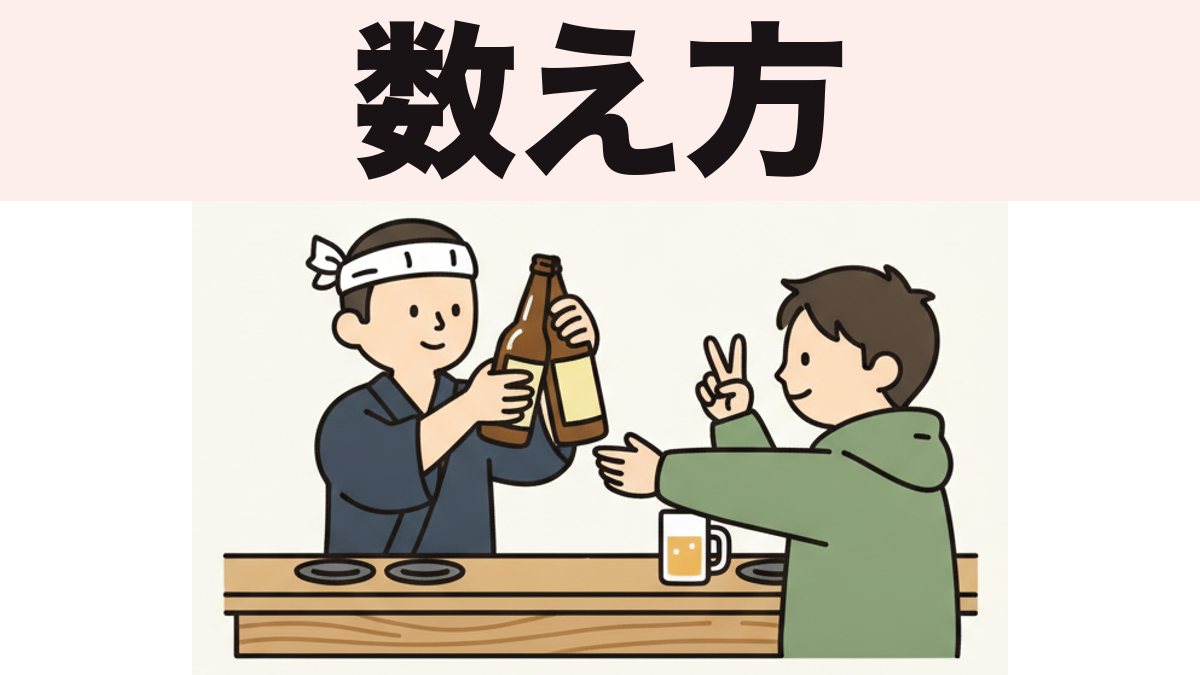
Japanese will not let you attach a bare number to a noun. ビールを二ください is not a sentence. You need a counter — a small word that says what kind of thing you are counting — and there are dozens. The good news is that six of them cover most of daily life, and there is an escape hatch for the rest.
日本語は、数字をそのまま名詞につけさせません。「ビールを二ください」は文になりません。「何を数えているか」を言う小さなことばなことば助数詞が必要です。数はたくさんありますが、6つで毎日のほとんどが足ります。そして、忘れた時のにげ道もあります。
English does this too, just less often: you say "two slices of bread," not "two breads." Japanese applies that logic to everything, and then adds sound changes that make 一本 into いっぽん.
The basics
The six that cover most situations
| Counter | For | Example |
|---|---|---|
| 〜つ | Anything (1–10 only) | りんごを三つ |
| 〜人 (にん) | People | 四人 |
| 〜本 (ほん) | Long thin things — bottles, pens, umbrellas | ビールを二本 |
| 〜枚 (まい) | Flat things — paper, shirts, tickets, plates | 切符を二枚 |
| 〜個 (こ) | Small solid objects | たまごを六個 |
| 〜杯 (はい) | Cupfuls and bowlfuls | コーヒーを一杯 |
ビールを二本ください。 — Two beers, please. 切符を二枚お願いします。 — Two tickets, please. コーヒーを一杯ください。 — One coffee, please.
Notice the word order: noun + を + number + counter. The counter phrase comes after the thing, not before it. 二本のビール is grammatical but sounds stiff and written.
The escape hatch: 〜つ
ひとつ, ふたつ, みっつ… is the native Japanese number series, and it works for almost any object up to ten. If you have forgotten the right counter, use it — nobody will blink.
| 1 | 2 | 3 | 4 | 5 |
|---|---|---|---|---|
| ひとつ | ふたつ | みっつ | よっつ | いつつ |
| 6 | 7 | 8 | 9 | 10 |
| むっつ | ななつ | やっつ | ここのつ | とお |
すみません、これを三つください。 — Excuse me, three of these please.
Above ten, つ runs out and you need 〜個 or the specific counter. But for ordering and shopping, ten is almost always enough.
People are irregular, and you cannot avoid it
一人 and 二人 do not follow the pattern, and they are the two you will say most.
| 1 | 2 | 3 | 4 | 5 |
|---|---|---|---|---|
| ひとり | ふたり | さんにん | よにん | ごにん |
二人です。 — Two people. (walking into a restaurant — a complete sentence) 一人で行きました。 — I went alone.
四人 is よにん, not しにん — because しにん is a homophone of 死人 ("dead person"). Japanese avoids し in counting for exactly this reason, which is also why 四 is usually よん.
Beyond the basics
The sound changes that actually trip you up
Counters starting with h- change sound after certain numbers. This is not decoration — いちほん is simply not a word.
| 本 | 杯 | 匹 | |
|---|---|---|---|
| 1 | いっぽん | いっぱい | いっぴき |
| 2 | にほん | にはい | にひき |
| 3 | さんぼん | さんばい | さんびき |
| 6 | ろっぽん | ろっぱい | ろっぴき |
| 8 | はっぽん | はっぱい | はっぴき |
| 10 | じゅっぽん | じゅっぱい | じゅっぴき |
The pattern is consistent: 1, 6, 8 and 10 double the consonant and go to p; 3 goes to b. Learn it once on 本 and it transfers to 杯, 匹 and 分.
枚 and 個 have no sound changes at all, which is part of why they are good beginner counters: いちまい, にまい, さんまい, all regular.
The ones worth recognising
You do not need to produce these, but you will meet them constantly.
| Counter | For | Example |
|---|---|---|
| 〜冊 (さつ) | Books | 本を三冊 |
| 〜台 (だい) | Machines, cars, bikes | 車が二台 |
| 〜匹 (ひき) | Small animals | 猫が三匹 |
| 〜杯 (はい) | Also squid and octopus, oddly | イカ二杯 |
| 〜足 (そく) | Pairs of footwear | 靴下を二足 |
| 〜軒 (けん) | Houses and shops | 二軒目 |
| 〜羽 (わ) | Birds and rabbits | 鳥が二羽 |
二軒目 is worth knowing socially: it means "the second bar of the night," and 二軒目行く? is one of the most common invitations in Japan.
〜回 and 〜番: times and order
Two more counters earn their place because they are not about objects at all.
〜回 (かい) counts occasions — how many times something happened.
日本に二回行きました。 — I've been to Japan twice. 週に三回、走ります。 — I run three times a week.
〜番 (ばん) marks position in a sequence — your number in a queue, a platform, a ranking.
三番のホームです。 — It's platform three. 一番好きな食べ物は何ですか。 — What's your favourite food? (literally "number-one liked")
一番 is worth pulling out: attached to an adjective it means "most," and it is how Japanese forms the superlative. 一番安い ("cheapest"), 一番近い ("nearest"). There is no separate superlative ending — comparison is handled entirely by these little words.
Asking "how many?"
Each counter has its own question word, built on 何.
何人ですか。 — How many people? 何本ありますか。 — How many (bottles) are there? いくつですか。 — How many? (generic — and also "how old are you?")
いくつ is the question form of つ, so it inherits the same generic usefulness. Note the double meaning: おいくつですか asked of a person means "how old are you," politely.
〜目 makes it an ordinal
Add 目 to turn "two" into "the second."
二本目のビール — the second beer 三回目です。 — It's my third time. 一人目 — the first person
三回目 in particular is worth having: 日本は三回目です ("this is my third time in Japan") is a sentence almost every visitor needs.
Age has its own counter, and one famous exception
〜歳 (さい) counts years of age, and it behaves like the others — except for twenty.
二十歳(はたち) — twenty years old. 三十歳です。 — I'm thirty. 何歳ですか。 — How old are you?
はたち is a survival from the older number system, and it is the only age with its own word. It carries weight beyond arithmetic: twenty is the traditional age of adulthood in Japan, marked by a national coming-of-age ceremony, so 二十歳 turns up in conversation far more often than any other number of years.
You will also see 才 written instead of 歳 — it is a simplified stand-in used on forms and in children's writing, and it means exactly the same thing.
Counting time: why 12時間 and 12日 are different shapes
Duration is where counters quietly break, because Japanese marks how long differently from which one:
| Unit | A point in time | A length of time |
|---|---|---|
| Hour | 12時 (twelve o'clock) | 12時間 (twelve hours) |
| Day | 12日 (the 12th) | 12日間 (twelve days) |
| Week | 第2週 (week 2) | 2週間 (two weeks) |
| Month | 2月 (February) | 2か月 (two months) |
| Year | 2026年 (the year 2026) | 2年間 (two years) |
12時間、寝ました。 — I slept for twelve hours. (polite; 時間 makes it a duration) 12日間、旅行しました。 — I travelled for twelve days. (polite; 間 makes it a duration)
Two traps live here. First, 間 is what turns a date into a length — without it, 12日 is the twelfth of the month, not twelve days. Second, 月 is the odd one out: 2月 is February, and two months is 2か月 (also written 2ヶ月 or 2カ月), never 2月. Saying 2月前 when you mean "two months ago" produces "before February", which is a real sentence and completely the wrong one.
時間 is doubly confusing because it is both the word for "time" and the counter for hours. 何時間 is "how many hours"; 何時 is "what time".
How does it sound in anime?
Counters mostly appear in the ordinary places, but two patterns are worth listening for:
一人で大丈夫? — Are you okay on your own? もう一杯。 — One more drink. 三人分、お願い。 — Three portions, please. (〜人分 — servings for that many people)
〜分 (ぶん) after a counter means "worth of" or "a portion for": 二人分 ("enough for two"), 一日分 ("a day's worth"). It is quietly one of the most useful suffixes in the language.
Common mistakes
- Using a bare number. ビールを二ください is not a sentence. It needs 二本 or 二つ.
- にんにん for one and two people. 一人 is ひとり and 二人 is ふたり. 三人 onward is regular.
- しにん for four people. It is よにん. Japanese avoids し in counting because of 死.
- いちほん, いちはい. They become いっぽん and いっぱい. The 1/6/8/10 doubling is the pattern.
- Putting the counter before the noun. 二本のビール is stiff. Say ビールを二本.
- Panicking when you forget one. Use 〜つ up to ten, or 〜個. Both are understood everywhere, and using the generic counter is far better than freezing.
Practice
Answers are hidden — build yours first, then open. Questions 1 and 2 are a pair: the same request, one specific counter and one generic.
1. Order two beers.
Show answer
ビールを二本ください — 本 is the counter for long thin things, including bottles. Word order: noun + を + number + counter.
2. You've forgotten 本. Order two of them anyway.
Show answer
ビールを二つください — つ works for almost anything up to ten. This is the pair to question 1: less precise, completely understood.
3. You walk into a restaurant with one other person. What do you say?
Show answer
二人です — ふたり, not ににん. A complete sentence on its own, and exactly what the staff are waiting for.
4. How do you say "four people," and why not しにん?
Show answer
よにん — し is avoided in counting because it sounds like 死. This is also why 四 is usually よん rather than し.
5. Say "one bottle" out loud. What happens to the sound?
Show answer
いっぽん — 1, 6, 8 and 10 double the consonant and shift h to p. 3 shifts to b: さんぼん.
6. Buy two tickets.
Show answer
切符を二枚お願いします — 枚 is for flat things: tickets, paper, plates, shirts. It has no sound changes at all.
7. Ask how many people there are.
Show answer
何人ですか — question words are built on 何 plus the counter: 何本, 何枚, 何回. The generic one is いくつ.
8. Say "this is my third time."
Show answer
三回目です — 目 turns a count into an ordinal. 日本は三回目です is a sentence almost every visitor needs.
9. What does 二軒目 mean, and why does it matter socially?
Show answer
The second bar of the night — 軒 counts buildings and shops. 二軒目行く? is one of the most common invitations you will hear in Japan.
10. What does 二人分 mean?
Show answer
Enough for two people — 分 after a counter means "worth of" or "a portion for." 一日分 is a day's worth.
FAQ
Do I really have to learn all of them? No. Learn つ, 人, 本, 枚, 個 and 杯 properly, recognise 冊, 台 and 匹, and use つ or 個 for everything else. Native speakers occasionally hesitate over obscure counters themselves.
Is it rude to use the wrong counter? Not at all. It marks you as a learner, nothing more, and Japanese speakers will usually just repeat the sentence with the right one — which is a free lesson. Freezing is worse than guessing.
Why is squid counted with 杯? Historically, because an octopus or squid was imagined as a vessel. It is genuinely irregular, and it is the standard example Japanese people give when asked about strange counters — along with rabbits taking 羽, the bird counter.
What about very large numbers? The counters stay the same; only the number changes: 二十本 (にじゅっぽん), 百枚 (ひゃくまい). The sound-change rules still apply to whatever the final digit does.
How do I ask someone's age politely? おいくつですか. It is literally "how many?", using the generic いくつ, and it is softer than 何歳ですか. As with any age question, read the situation before asking.
Does the counter always come after the noun? In normal speech, yes: ビールを二本. The alternative 二本のビール exists but sounds written and formal. Stick with the noun-first order and you will always sound natural.
Vocabulary from this article
Tap the block to select all of it, then copy. In Anki: File → Import, note type Basic, separator Tab — the first column becomes the front, the second the back.
一つ	ひとつ — one (thing)
二つ	ふたつ — two (things)
三つ	みっつ — three (things)
一人	ひとり — one person, alone
二人	ふたり — two people
四人	よにん — four people
一本	いっぽん — one (long thin thing)
三本	さんぼん — three (long thin things)
一枚	いちまい — one (flat thing)
一個	いっこ — one (small object)
一杯	いっぱい — one cupful
一冊	いっさつ — one book
一台	いちだい — one machine or vehicle
一匹	いっぴき — one small animal
二軒目	にけんめ — the second bar or shop
いくつ	いくつ — how many; how old
何人	なんにん — how many people
ビール	ビール — beer
切符	きっぷ — ticket
卵	たまご — egg
靴下	くつした — socks
鳥	とり — bird
猫	ねこ — cat
車	くるま — car
I'm Yuuki, a Japanese teacher based in Tokyo. I've taught on italki as a Top 1% teacher and watched over 1,500 anime. Learners treat counters as a memorisation problem and they are really a confidence problem — the fix is knowing that 〜つ and 〜個 will carry you through any shop in Japan, so you never have to stop mid-sentence.
Sources: the author's own lessons and standard reference grammars.
英語も少しやります。"two slices of bread" で、"two breads" とは言いません。日本語はそれをぜんぶにやって、その上に音の変化をのせます。だから「一本」は「いっぽん」になります。
基本
ほとんどをカバーする6つ
| 助数詞 | 何に使うか | 例 |
|---|---|---|
| 〜つ | 何でも(1〜10だけ) | りんごを三つ |
| 〜人(にん) | 人 | 四人 |
| 〜本(ほん) | 細長いもの(びん・ペン・かさ) | ビールを二本 |
| 〜枚(まい) | うすくて平らなもの(紙・シャツ・切符・皿) | 切符を二枚 |
| 〜個(こ) | 小さくてかたまりのもの | たまごを六個 |
| 〜杯(はい) | コップ・おわん | コーヒーを一杯 |
ビールを二本ください。 — Two beers, please. 切符を二枚お願いします。 — Two tickets, please. コーヒーを一杯ください。 — One coffee, please.
じゅんばんに注意してください。名詞+を+数+助数詞です。助数詞は、ものの後ろです。「二本のビール」も文法は正しいですが、かたくて、書きことばです。
にげ道: 〜つ
「ひとつ・ふたつ・みっつ…」は日本の古い数え方で、10までならほとんどのものに使えます。助数詞を忘れたら、これを使ってください。だれも変な顔をしません。
| 1 | 2 | 3 | 4 | 5 |
|---|---|---|---|---|
| ひとつ | ふたつ | みっつ | よっつ | いつつ |
| 6 | 7 | 8 | 9 | 10 |
| むっつ | ななつ | やっつ | ここのつ | とお |
すみません、これを三つください。 — Excuse me, three of these please.
10より多いと「つ」は終わるので、「〜個」か本当の助数詞が必要です。でも買い物や注文なら、10でほとんど足ります。
人はふきそくで、にげられません
「一人」と「二人」はルールから外れます。そして、いちばんよく言う2つです。
| 1 | 2 | 3 | 4 | 5 |
|---|---|---|---|---|
| ひとり | ふたり | さんにん | よにん | ごにん |
二人です。 — Two people. (お店に入る時。これで1つの文です) 一人で行きました。 — I went alone.
「四人」は「よにん」です。「しにん」ではありません。「死人」と同じ音になるからです。数える時に「し」をさけるのは、この理由です。「四」がふつう「よん」なのも同じです。
もう少し先へ
つまずくのは音の変化
「h」で始まる助数詞は、数によって音が変わります。かざりではありません。「いちほん」ということばはありません。
| 本 | 杯 | 匹 | |
|---|---|---|---|
| 1 | いっぽん | いっぱい | いっぴき |
| 2 | にほん | にはい | にひき |
| 3 | さんぼん | さんばい | さんびき |
| 6 | ろっぽん | ろっぱい | ろっぴき |
| 8 | はっぽん | はっぱい | はっぴき |
| 10 | じゅっぽん | じゅっぱい | じゅっぴき |
きまりは同じです。1・6・8・10 は音がつまって「ぱ行」、3 は「ば行」になります。「本」で1回覚えれば、「杯」「匹」「分」にもそのまま使えます。
「枚」と「個」は音が変わりません。いちまい・にまい・さんまい。だから、はじめに覚えるのにいい助数詞です。
見て分かればいいもの
自分で使わなくても、よく見ます。
| 助数詞 | 何に | 例 |
|---|---|---|
| 〜冊(さつ) | 本 | 本を三冊 |
| 〜台(だい) | 機械・車・自転車 | 車が二台 |
| 〜匹(ひき) | 小さい動物 | 猫が三匹 |
| 〜杯(はい) | イカ・タコにも使います | イカ二杯 |
| 〜足(そく) | くつ・くつ下 | 靴下を二足 |
| 〜軒(けん) | 家・お店 | 二軒目 |
| 〜羽(わ) | 鳥・うさぎ | 鳥が二羽 |
「二軒目」は覚えておくと便利です。「今夜の2つめのお店」という意味で、「二軒目行く?」は日本でいちばんよく聞くさそい方の1つです。
〜回 と 〜番: 回数とじゅんばん
もう2つ、ものを数えない助数詞があります。
〜回(かい) は回数です。
日本に二回行きました。 — I've been to Japan twice. 週に三回、走ります。 — I run three times a week.
〜番(ばん) はじゅんばんです。列の番号、ホーム、じゅんい。
三番のホームです。 — It's platform three. 一番好きな食べ物は何ですか。 — What's your favourite food?
「一番」は大事です。形容詞の前につけると「いちばん〜」という意味になります。「一番安い」「一番近い」。日本語には最上級の語びがなく、このことばがぜんぶやります。
「いくつですか」の聞き方
助数詞ごとに、「何」をつけた質問の形があります。
何人ですか。 — How many people? 何本ありますか。 — How many (bottles) are there? いくつですか。 — How many?
「いくつ」は「つ」の質問の形なので、同じように何にでも使えます。人に「おいくつですか」と聞くと「何さいですか」になります。
「〜目」で「〜番目」になります
「目」をつけると、「2つめ」になります。
二本目のビール — the second beer 三回目です。 — It's my third time. 一人目 — the first person
「日本は三回目です」は、旅行する人がほとんど必要になる文です。
年れいにも助数詞があり、1つだけ有名なれいがいがあります
「〜歳(さい)」は年れいを数えます。ほかと同じ形ですが、20だけちがいます。
二十歳(はたち) — twenty years old. 三十歳です。 — I'm thirty. 何歳ですか。 — How old are you?
「はたち」は古い数え方の名ごりで、じぶんのことばを持っている年れいはこれだけです。日本では20歳が大人になる年とされていて、成人式もあります。だから「二十歳」はほかの年より、ずっとよく話に出ます。
「歳」のかわりに「才」と書くこともあります。書るいや子どもの字で使う、かんたんな形です。意味は同じです。
時間の数え方: 「12時間」と「12日」はちがう形
長さ(duration)は、時こく(point)とちがう形になります。
| たんい | 時こく | 長さ |
|---|---|---|
| 時 | 12時 | 12時間 |
| 日 | 12日(12日づけ) | 12日間 |
| 週 | 第2週 | 2週間 |
| 月 | 2月(February) | 2か月 |
| 年 | 2026年 | 2年間 |
12時間、寝ました。 — I slept for twelve hours. (時間 makes it a duration) 12日間、旅行しました。 — I travelled for twelve days. (間 makes it a duration)
気をつけることが2つあります。1つ目は、「間」が「長さ」にすることです。「12日」だけだと、月の12日づけです。2つ目は、「月」だけ形がちがうことです。2か月(2ヶ月)は「2月」とは書きません。「2月前」と言うと「February より前」になってしまいます。
「時間」は「time」と「hours」の両方なので、よけいにまざります。「何時間」」how many hours、「何時」」what time です。
アニメではどう聞こえますか?
ふつうの場面に出ますが、2つ聞いてほしい形があります。
一人で大丈夫? — Are you okay on your own? もう一杯。 — One more drink. 三人分、お願い。 — Three portions, please.
助数詞の後の「〜分(ぶん)」は「〜のぶん」という意味です。「二人分」(2人ぶん)、「一日分」(1日ぶん)。静かにとても役に立つことばです。
よくある間違い
- 数字だけを使うこと。 「ビールを二ください」は文になりません。「二本」か「二つ」です。
- 「一人」「二人」を「にん」で読むこと。 「ひとり」「ふたり」です。三人からはふつうです。
- 「四人」を「しにん」と読むこと。 「よにん」です。
- 「いちほん」「いちはい」。 「いっぽん」「いっぱい」です。
- 助数詞を名詞の前に置くこと。 「二本のビール」はかたいです。「ビールを二本」です。
- 忘れてこまること。 10までは「〜つ」、あとは「〜個」でだいじょうぶです。止まるより、ずっといいです。
練習
答えはかくれています。まず自分の答えを作ってから開いてください。1番と2番は対になっています。
1. ビールを2つ注文してください。
答えを見る
ビールを二本ください — 「本」は細長いもの(びんもふくむ)の助数詞です。じゅんばんは「名詞+を+数+助数詞」です。
2. 「本」を忘れました。それでも注文してください。
答えを見る
ビールを二つください — 「つ」は10までなら何にでも使えます。1番と対で、正かくではありませんが、ちゃんと通じます。
3. 2人でお店に入りました。何と言いますか。
答えを見る
二人です — 「ふたり」で、「ににん」ではありません。これだけで1つの文になります。
4. 「4人」はどう読みますか。なぜ「しにん」ではありませんか。
答えを見る
よにん — 「し」は「死」と同じ音なので、数える時にさけます。「四」がふつう「よん」なのも同じ理由です。
5. 「1本」を声に出してください。音はどうなりますか。
答えを見る
いっぽん — 1・6・8・10 は音がつまって「ぱ行」になります。3は「さんぼん」で「ば行」です。
6. 切符を2まい買ってください。
答えを見る
切符を二枚お願いします — 「枚」はうすくて平らなものです。音の変化がありません。
7. 「何人いますか」と聞いてください。
答えを見る
何人ですか — 質問の形は「何」+助数詞です。何本、何枚、何回。何にでも使えるのは「いくつ」です。
8. 「3回目です」と言ってください。
答えを見る
三回目です — 「目」をつけると「〜番目」になります。「日本は三回目です」はよく使います。
9. 「二軒目」はどんな意味ですか。
答えを見る
今夜2つめのお店 — 「軒」は家やお店の助数詞です。「二軒目行く?」は日本でとてもよく聞くさそい方です。
10. 「二人分」はどんな意味ですか。
答えを見る
2人のぶん — 助数詞の後の「分」は「〜のぶん」です。「一日分」は1日ぶんです。
よくある質問
ぜんぶ覚えないといけませんか。 いりません。「つ・人・本・枚・個・杯」をしっかり覚えて、「冊・台・匹」は見て分かるようにして、あとは「つ」か「個」でいいです。日本の人も、めずらしい助数詞では止まります。
まちがえると失礼ですか。 ぜんぜん失礼ではありません。「学習者だな」と分かるだけです。たいてい、正しい形で言い直してくれます。それがそのままレッスンになります。
イカはなぜ「杯」ですか。 むかし、イカやタコを「入れもの」と考えたからです。本当にふきそくで、日本の人も「変な助数詞」の代表としてよく話します。うさぎが鳥の「羽」で数えられるのも同じです。
大きい数はどうなりますか。 助数詞は同じで、数だけ変わります。「二十本(にじゅっぽん)」「百枚(ひゃくまい)」。音の変化は、最後のけたのルールがそのまま効きます。
年れいはどう聞きますか。 「おいくつですか」です。「何歳ですか」よりやわらかいです。ただ、年れいを聞く時は場面を見てください。
助数詞はいつも名詞の後ろですか。 話す時はそうです。「ビールを二本」。「二本のビール」もありますが、書きことばでかたいです。
この記事に出た単語
ブロックをタップすると全部選べます。そのままコピーしてください。Anki では ファイル → 読み込み、ノートタイプ 基本、区切り タブ。1列目が表、2列目が裏になります。
一つ	ひとつ — one (thing)
二つ	ふたつ — two (things)
三つ	みっつ — three (things)
一人	ひとり — one person, alone
二人	ふたり — two people
四人	よにん — four people
一本	いっぽん — one (long thin thing)
三本	さんぼん — three (long thin things)
一枚	いちまい — one (flat thing)
一個	いっこ — one (small object)
一杯	いっぱい — one cupful
一冊	いっさつ — one book
一台	いちだい — one machine or vehicle
一匹	いっぴき — one small animal
二軒目	にけんめ — the second bar or shop
いくつ	いくつ — how many; how old
何人	なんにん — how many people
ビール	ビール — beer
切符	きっぷ — ticket
卵	たまご — egg
靴下	くつした — socks
鳥	とり — bird
猫	ねこ — cat
車	くるま — car
私はユウキです。東京で日本語を教えています。 italki の Top 1% の先生で、アニメは1,500本以上見ました。みんな助数詞を「暗記の問題」だと思いますが、じつは「自信の問題」です。「つ」と「個」があれば日本のどのお店も通れる、と知っていれば、文のとちゅうで止まらなくなります。
More drills like the ones above, plus a timed JLPT-style mock test: Practice · N4上のような練習問題と、時間つきのJLPT形式のもぎ試験: 練習ページ · N4
Want to try this in a real conversation?
本当の会話で、ためしてみませんか?
30-minute trial lesson, $13. Times shown in your own timezone.
30分の体験レッスン、$13。時間はあなたのタイムゾーンで表示されます。
Book a trial lesson · $13