Ganbatte meaning: 頑張って, 頑張れ, and the one person you should not say it to「頑張って」の意味: 頑張れ・頑張ります・言ってはいけない相手
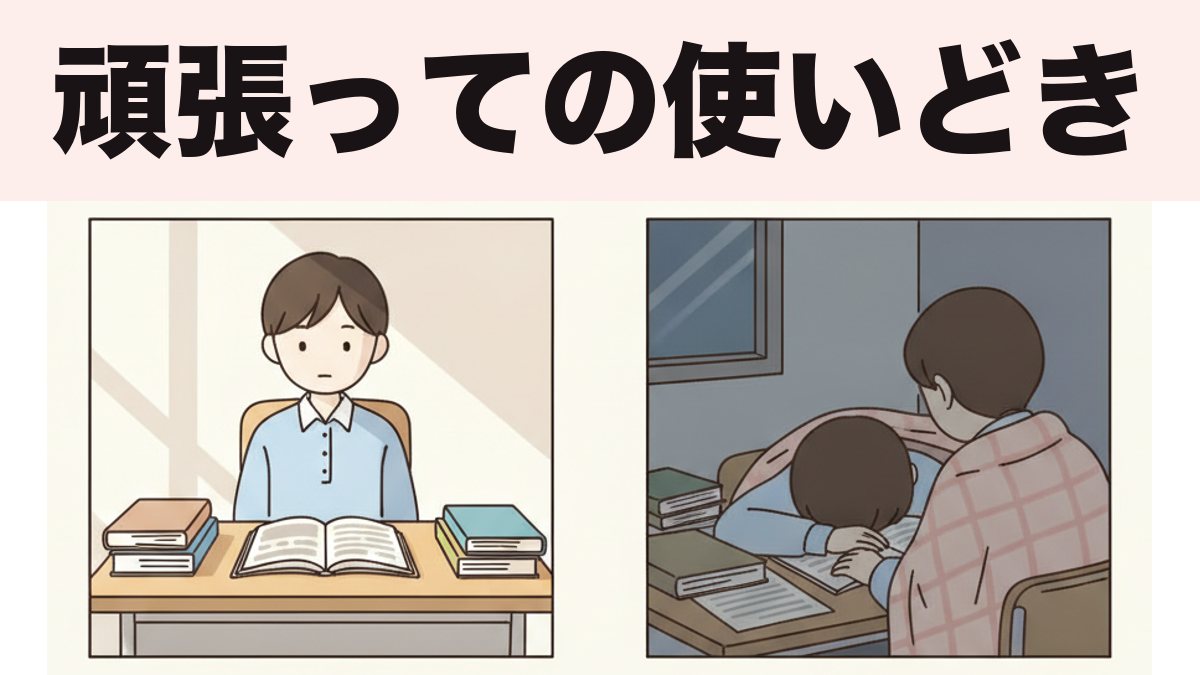
頑張って means "do your best" — but grammatically it is a command, and that is why it lands badly on someone who is already at their limit.
「頑張って(がんばって)」は「do your best」です。でも、文法は命令の形です。だから、もう限界まで頑張っている人に言うと、きつく聞こえます。
It is one of the first words learners pick up, and one of the last they learn to place. The dictionary gives you "good luck," which is close enough to get you through a textbook and wrong enough to hurt a friend. The word does not wish someone luck. It tells them to apply effort.
The basics
What does 頑張る actually mean?
頑張る (がんばる) is a verb meaning to persist, to hold out, to push through. It is about applied effort over time, not about a lucky outcome. Nothing in it points at fortune, chance, or the universe being kind to you — all of which "good luck" implies in English.
That difference is the whole article. English "good luck" hands the outcome to fate. Japanese 頑張って hands the outcome to the listener.
明日のテスト、頑張ってね。 — Do your best on tomorrow's test. (casual, friendly — the standard send-off) お仕事、頑張ってください。 — Work hard at your job. (polite, to someone heading out)
How do you build the forms?
頑張る is a う-verb, so it follows the ordinary verb group rules. The three forms you will hear constantly:
| Form | What it is | Feel |
|---|---|---|
| 頑張って | te-form, the shortened 頑張ってください | Standard, friendly, everyday |
| 頑張ってください | te-form + ください | Polite, a touch formal |
| 頑張れ | plain imperative | Blunt, loud, cheering from a distance |
| 頑張ります | polite non-past, about yourself | "I'll do my best" |
| 頑張ろう | volitional | "Let's do our best" / "I'm going to" |
| 頑張った | past | "You worked hard" — praise, not instruction |
頑張って is a clipped 〜てください request. That is worth sitting with: the encouraging word every learner reaches for is, structurally, you asking someone to do something.
頑張って vs 頑張れ — what is the difference?
Same meaning, very different volume. 頑張れ is the bare imperative, the form you shout. It appears on banners, in sports stadiums, in shō in shnen anime at the exact moment a character is about to lose.
頑張れ! — Go! Come on! (shouted, at a game or a race) 頑張ってね。 — Do your best, okay? (said quietly to one person)
Use 頑張れ when there is distance and noise between you and the person. Use 頑張って when there is not. A direct imperative said softly across a table to a friend is not warm — it is a little startling, the way "Try harder" would be in English.
頑張ります — talking about yourself
When the effort is yours, the verb conjugates normally and becomes a statement of intent. This is the one form with no social risk attached.
はい、頑張ります。 — Yes, I'll do my best. (polite — the standard answer to encouragement or to being given a task) 今日も頑張ろう。 — Let's do our best today too. (casual, to yourself or a group)
If someone says 頑張って to you and you have no idea what to say back, 頑張ります is always correct. It is the closest thing Japanese has to a reflex.
Beyond the basics
Why does 頑張って sometimes hurt?
Because it assumes the listener has effort left in reserve. To someone who has not started yet, that assumption is encouraging. To someone who has been pushing for months and is nearly out, it reads as you are not trying hard enough yet.
This is not a subtle nuance that only linguists notice. It is a live topic in Japanese — people who are exhausted, ill, or grieving often say plainly that 頑張って is the last thing they want to hear, precisely because the word means apply more effort and that is the one thing they cannot do.
So the practical rule is about the listener's state, not your intent:
- Hasn't started, is about to → 頑張って is perfect
- Is deep in it and struggling → find something else
What do you say instead?
The alternatives all move the sentence off the listener's effort and onto something else — your presence, their limits, or what they have already done.
無理しないでね。 — Don't push yourself too hard. (casual — the most common substitute) 見守ってるよ。 — I'm watching over you. (casual, warm — support without instruction) 応援してるよ。 — I'm cheering for you. (casual — puts the effort on your side, not theirs) もう十分頑張ってるよ。 — You're already working hard enough. (casual — the direct rebuttal)
見守ってる is the one worth memorizing. 見守る means to watch over, to keep an eye on someone protectively — a parent watching a child cross a street. It promises attention rather than demanding output, which is exactly the swap you want.
And note the past form: 頑張ったね ("you worked hard") is praise and carries none of the problem, because it looks backward at effort already spent instead of forward at effort still demanded.
Can you say 頑張って to your boss?
Carefully. Because the form is an instruction, telling a superior to work hard has an awkward top-down flavour, the same way it would in English. The standard workarounds:
お疲れ様です。 — Thank you for your work. (polite — the all-purpose workplace phrase) 応援しております。 — I'm supporting you. (formal, humble — safe upward)
If you want the encouraging function without the register problem, お疲れ様です does most of the job and never misfires. See the keigo switch for why the direction of a sentence matters this much in Japanese.
How does it shrink in real speech?
Like most things, it loses syllables. がんばって becomes がんばっ、 and in fast casual speech you will hear a flat ガンバ or the doubled ガンバガンバ at a sports event. On written signs and merchandise the katakana ガンバレ is common because it reads louder than the kanji.
You will also hear 頑張れよ (masculine, rough, warm between friends) and 頑張ってな (Kansai-flavoured, soft). None of these change the meaning — they change who is speaking.
What about in anime?
頑張れ is a load-bearing word in shō is a load-bearing word in shnen. It usually arrives at the lowest point of a fight, shouted by someone who cannot help, which tells you something real about the word: it is what Japanese offers when there is nothing practical left to give.
Listen for the pair 頑張れ! from the crowd and 頑張ります from the character. The switch from imperative to first-person polite is the moment the character accepts the encouragement, and it happens constantly.
Common mistakes
- Translating it as "good luck" and using it that way. "Good luck with your surgery" is a normal English sentence. 手術、頑張ってください is a strange Japanese one — you are telling a patient to try hard at being operated on. お大事に ("take care of yourself") is the phrase for that.
- Saying 頑張れ to one person, quietly. The bare imperative needs distance or volume. Up close it sounds like an order.
- Saying 頑張って to someone who has just failed. They tried. Use お疲れ様 or 頑張ったね instead.
- Answering 頑張って with ありがとう and nothing else. It works, but 頑張ります is the expected return and sounds far more natural.
- Saying 頑張って to a boss or client. Structurally you are giving them an instruction. お疲れ様です or 応援しております instead.
Which one do I use?
| Situation | Say | Not |
|---|---|---|
| Friend has an exam tomorrow | 頑張ってね | — |
| Friend is at the exam, you're outside | 頑張れ! | — |
| Friend has been studying for six months and is fried | 無理しないでね / もう十分頑張ってるよ | 頑張って |
| Someone is ill or in hospital | お大事に | 頑張って |
| Someone just failed | お疲れ様 / 頑張ったね | 頑張って |
| Your boss is heading into a hard meeting | お疲れ様です / 応援しております | 頑張れ |
| You've been told to do something | 頑張ります | — |
| Starting the day with a team | 頑張ろう | — |
Practice
Questions 1 and 2 are a pair: the same encouragement at two different moments.
1. Your friend's exam is tomorrow. Encourage them, casually.
Show answer
明日のテスト、頑張ってね。 — They have not started, so the instruction to apply effort is welcome. ね softens it into shared feeling.
2. The same friend has now studied every night for two months and tells you they are exhausted.
Show answer
無理しないでね。 — 頑張って here implies they are not yet trying hard enough. 無理しないで moves the sentence onto their limits instead.
3. Answer someone who has just said 頑張ってね to you, politely.
Show answer
はい、頑張ります。 — The verb conjugates normally when the effort is your own. This is the expected reply, not ありがとう alone.
4. Shout encouragement across a stadium.
Show answer
頑張れ! — The bare imperative. It needs distance and volume; said quietly to one person it sounds like an order.
5. Tell a colleague you are cheering for them, casually, without telling them to try harder.
Show answer
応援してるよ。 — 応援する puts the effort on your side of the sentence. Nothing is demanded of the listener.
6. Your friend is going into hospital tomorrow. What do you say?
Show answer
お大事に。 — 頑張って would be telling them to work hard at being ill. お大事に means "take care of yourself."
7. Praise someone for effort already spent, casually.
Show answer
頑張ったね。 — The past form looks backward at effort already made, so it praises instead of demanding. This is safe even when 頑張って is not.
8. Start the workday with your team.
Show answer
今日も頑張ろう。 — The volitional includes you in the effort, which is why it never lands as an order.
9. Your manager is about to walk into a difficult negotiation. Encourage them.
Show answer
お疲れ様です。 — or 応援しております. 頑張ってください is an instruction pointed upward, which is the awkward direction.
10. Fix this: 手術、頑張ってください。
Show answer
お大事に。 — Surgery is not something the patient performs, so there is no effort to apply. English "good luck" can cover this; 頑張って cannot.
FAQ
Is 頑張って rude? Not in itself. It is the default encouragement and most people hear it dozens of times a week. It only misfires when the listener is already at their limit, or when it is pointed at someone above you.
Why does it feel like a command? Because it is one. 頑張って is 頑張ってください with the ください dropped — a request form, shortened. The encouraging feel comes from context and tone, not from the grammar.
Is 頑張れ the male version of 頑張って? No. 頑張れ is the imperative and anyone can use it; it is about volume and distance, not gender. 頑張れよ is the part that reads as masculine and rough.
What is the difference between 頑張って and ファイト? ファイト (from English "fight") is wasei-eigo used exactly like 頑張れ — a cheer, often written on banners. It is lighter and more casual, and carries none of the "apply more effort" weight, which makes it a useful escape hatch.
Can I say 頑張って to myself? Use 頑張ろう or 頑張らなきゃ ("I've got to push"). 頑張って points at a listener, so turning it on yourself sounds like you are two people.
What does お疲れ様 have to do with this? It is the workplace catch-all that covers most moments where you want to acknowledge someone's effort without instructing them. When in doubt about register, direction, or whether the person is spent, お疲れ様です is the phrase that never misfires.
Vocabulary from this article
Tap the block to select all of it, then copy. In Anki: File → Import, note type Basic, separator Tab — the first column becomes the front, the second the back.
頑張る	がんばる — to do one's best, to persist
頑張って	がんばって — do your best (standard)
頑張れ	がんばれ — go! (shouted imperative)
頑張ります	がんばります — I'll do my best
頑張ろう	がんばろう — let's do our best
無理	むり — impossible, overdoing it
無理しないで	むりしないで — don't push yourself
見守る	みまもる — to watch over
応援する	おうえんする — to cheer for, to support
お疲れ様	おつかれさま — thank you for your work
お大事に	おだいじに — take care (to someone ill)
十分	じゅうぶん — enough, sufficient
手術	しゅじゅつ — surgery
仕事	しごと — work, job
明日	あした — tomorrow
試験	しけん — exam
I'm Yuuki, a Japanese teacher based in Tokyo. I've taught on italki as a Top 1% teacher and watched over 1,500 anime. This is the word I most often have to un-teach: students arrive knowing it means "good luck," and the first time they use it on someone who is genuinely struggling, they can hear that something went wrong without knowing what.
Sources: the author's own lessons and standard reference grammars.
学習者が最初に覚える言葉の一つです。でも、使う場所を覚えるのは最後になります。辞書には「good luck」と書いてあります。しかし「頑張って」は運を祈る言葉ではありません。「力を出してください」と言う言葉です。
基本
「頑張る」の意味
「頑張る」は、あきらめないで続ける、という意味の動詞です。運は関係ありません。英語の「good luck」は結果を運にわたします。日本語の「頑張って」は結果を相手にわたします。
明日のテスト、頑張ってね。 — Do your best on tomorrow's test. (casual, friendly — the standard send-off) お仕事、頑張ってください。 — Work hard at your job. (polite, to someone heading out)
形
| 形 | 何か | 感じ |
|---|---|---|
| 頑張って | て形(頑張ってくださいの短い形) | ふつう・やさしい |
| 頑張ってください | て形+ください | ていねい |
| 頑張れ | 命令形 | 強い・大きい声 |
| 頑張ります | 自分のこと | 「私がやります」 |
| 頑張ろう | 意志の形 | 「一緒にやろう」 |
| 頑張った | 過去 | 「よくやったね」=ほめる |
「頑張って」は「頑張ってください」の「ください」を取った形です。つまり、応援の言葉ですが、形はお願いです。
「頑張って」と「頑張れ」
意味は同じです。でも声の大きさが違います。「頑張れ」は命令形で、大きい声で言う形です。スポーツの試合や、アニメの戦いの場面で使います。
頑張れ! — Go! Come on! (shouted, at a game or a race) 頑張ってね。 — Do your best, okay? (said quietly to one person)
遠くにいる人、うるさい場所では「頑張れ」。近くにいる一人には「頑張って」。近くで静かに「頑張れ」と言うと、命令に聞こえます。
「頑張ります」」自分のこと
自分が頑張る時は、ふつうに動詞を変えます。この形だけは、失礼になりません。
はい、頑張ります。 — Yes, I'll do my best. (polite — the standard answer to encouragement or to being given a task) 今日も頑張ろう。 — Let's do our best today too. (casual, to yourself or a group)
「頑張って」と言われて、何と返すか分からない時は、「頑張ります」でいいです。
もう少し先
なぜ「頑張って」がつらい時があるか
「頑張って」は「あなたにはまだ力が残っている」と考えている言葉だからです。まだ始めていない人には、うれしい言葉です。でも、何か月も続けて、もう限界の人には、「まだ足りない」と聞こえます。
これは細かい話ではありません。日本でもよく言われます。病気の人、つらい人が「頑張ってと言われるのがいちばんつらい」と言います。「もっと力を出して」という意味の言葉だからです。
- まだ始めていない人 → 「頑張って」でいい
- もう限界の人 → 別の言葉
代わりに言う言葉
どれも、相手の力ではなく、こちらの気持ちや、相手がもうやったことに目を向けます。
無理しないでね。 — Don't push yourself too hard. (casual — the most common substitute) 見守ってるよ。 — I'm watching over you. (casual, warm — support without instruction) 応援してるよ。 — I'm cheering for you. (casual — puts the effort on your side, not theirs) もう十分頑張ってるよ。 — You're already working hard enough. (casual — the direct rebuttal)
覚えてほしいのは「見守ってる」です。「見守る」は、そばで見ている、という意味です。何もしろと言いません。だから使いやすいです。
過去の「頑張ったね」は、ほめる言葉です。もう終わったことを見るので、問題になりません。
上司に言ってもいいか
気をつけてください。形が命令なので、上の人に「頑張ってください」と言うと、上から言っているように聞こえます。
お疲れ様です。 — Thank you for your work. (polite — the all-purpose workplace phrase) 応援しております。 — I'm supporting you. (formal, humble — safe upward)
「お疲れ様です」は、ほとんどの場面で使えます。失敗しません。
話し言葉の形
早く話すと短くなります。スポーツの場では「ガンバ」「ガンバガンバ」と言います。看板やグッズでは、カタカナの「ガンバレ」がよく使われます。大きく見えるからです。
「頑張れよ」(男の人の友だちの言い方)、「頑張ってな」(関西の言い方)もあります。意味は同じです。話す人が違うだけです。
アニメでは
「頑張れ」は少年アニメの大事な言葉です。負けそうな場面で、助けられない人が叫びます。つまり、ほかに何もできない時に出てくる言葉です。
「頑張れ!」と言われて「頑張ります」と返す場面をよく聞いてください。命令形から自分の形に変わるところが、その人が応援を受け取った場面です。
よくある間違い
- 「good luck」と同じに使う。 「手術、頑張ってください」は変です。手術は本人がするものではありません。「お大事に」を使います。
- 近くで静かに「頑張れ」と言う。 命令形は、遠くか、大きい声のためのものです。
- 失敗した人に「頑張って」と言う。 その人はもうやりました。「お疲れ様」「頑張ったね」を使います。
- 「頑張って」に「ありがとう」だけで返す。 間違いではありませんが、「頑張ります」の方が自然です。
- 上司に「頑張れ」と言う。 「お疲れ様です」「応援しております」にします。
どれを使うか
| 場面 | 言う言葉 | 言わない言葉 |
|---|---|---|
| 友だちが明日テスト | 頑張ってね | — |
| 友だちが試験中・外で待つ | 頑張れ! | — |
| 友だちが半年勉強して限界 | 無理しないでね/もう十分頑張ってるよ | 頑張って |
| 病気の人・入院する人 | お大事に | 頑張って |
| 失敗した人 | お疲れ様/頑張ったね | 頑張って |
| 上司が大事な会議へ | お疲れ様です/応援しております | 頑張れ |
| 仕事をたのまれた時 | 頑張ります | — |
| チームで一日を始める | 頑張ろう | — |
練習
1と2は組です。同じ応援を、二つの場面で。
1. 友だちのテストが明日です。カジュアルに応援してください。
答えを見る
明日のテスト、頑張ってね。 — まだ始めていないので、力を出してという言葉がうれしいです。「ね」でやわらかくなります。
2. 同じ友だちが、二か月毎晩勉強して「もう疲れた」と言いました。
答えを見る
無理しないでね。 — ここで「頑張って」と言うと「まだ足りない」に聞こえます。相手の限界に目を向ける言葉に変えます。
3. 「頑張ってね」と言われました。ていねいに返してください。
答えを見る
はい、頑張ります。 — 自分のことなので、動詞をふつうに変えます。「ありがとう」だけより自然です。
4. スタジアムで大きい声で応援します。
答えを見る
頑張れ! — 命令形です。遠くと大きい声のための形なので、近くで静かに言うと命令に聞こえます。
5. 同僚に「応援している」と、カジュアルに伝えます。相手に「もっとやれ」と言わない形で。
答えを見る
応援してるよ。 — 「応援する」のは自分です。相手には何も求めていません。
6. 友だちが明日入院します。何と言いますか。
答えを見る
お大事に。 — 「頑張って」は「病気を頑張れ」になってしまいます。「お大事に」は take care of yourself の意味です。
7. もう終わったことをほめます。カジュアルに。
答えを見る
頑張ったね。 — 過去の形は、もうやったことを見ます。だから「頑張って」が使えない場面でも使えます。
8. チームで仕事の一日を始めます。
答えを見る
今日も頑張ろう。 — 意志の形は自分も入ります。だから命令になりません。
9. 上司が難しい交渉に行きます。応援してください。
答えを見る
お疲れ様です。 — または「応援しております」。「頑張ってください」は上に向けた命令になってしまいます。
10. 直してください: 手術、頑張ってください。
答えを見る
お大事に。 — 手術は本人がするものではないので、出す力がありません。英語の good luck は使えますが、「頑張って」は使えません。
よくある質問
「頑張って」は失礼ですか。 いいえ。ふつうの応援の言葉で、日本人は毎週何度も聞きます。相手がもう限界の時と、目上の人に言う時だけ気をつけてください。
なぜ命令のように感じるのですか。 本当に命令の形だからです。「頑張って」は「頑張ってください」の短い形です。やさしく聞こえるのは、場面と声のおかげです。
「頑張れ」は男の人の言い方ですか。 いいえ。命令形なので、だれでも使えます。男の人の感じになるのは「頑張れよ」の「よ」です。
「頑張って」と「ファイト」の違いは。 「ファイト」は英語から作った日本語で、「頑張れ」と同じように使います。軽くて、「もっと力を出せ」という重さがありません。だから使いやすいです。
自分に「頑張って」と言えますか。 「頑張ろう」「頑張らなきゃ」を使います。「頑張って」は相手に言う形です。
「お疲れ様」との関係は。 相手の努力を認めたいけれど、命令したくない時の言葉です。場面や相手の状態に迷ったら、「お疲れ様です」が安全です。
この記事に出た単語
このブロックをタップして全部選び、コピーしてください。Anki では File → Import、ノートタイプ 基本、区切り タブ を選びます。1列目が表、2列目が裏になります。
頑張る	がんばる — to do one's best, to persist
頑張って	がんばって — do your best (standard)
頑張れ	がんばれ — go! (shouted imperative)
頑張ります	がんばります — I'll do my best
頑張ろう	がんばろう — let's do our best
無理	むり — impossible, overdoing it
無理しないで	むりしないで — don't push yourself
見守る	みまもる — to watch over
応援する	おうえんする — to cheer for, to support
お疲れ様	おつかれさま — thank you for your work
お大事に	おだいじに — take care (to someone ill)
十分	じゅうぶん — enough, sufficient
手術	しゅじゅつ — surgery
仕事	しごと — work, job
明日	あした — tomorrow
試験	しけん — exam
More drills like the ones above, plus a timed JLPT-style mock test: Practice · N5上のような練習問題と、時間つきのJLPT形式のもぎ試験: 練習ページ · N5
Want to try this in a real conversation?
本当の会話で、ためしてみませんか?
30-minute trial lesson, $13. Times shown in your own timezone.
30分の体験レッスン、$13。時間はあなたのタイムゾーンで表示されます。
Book a trial lesson · $13