和製英語: the English words in Japanese that are not English和製英語: 英語に見えて英語じゃないことば
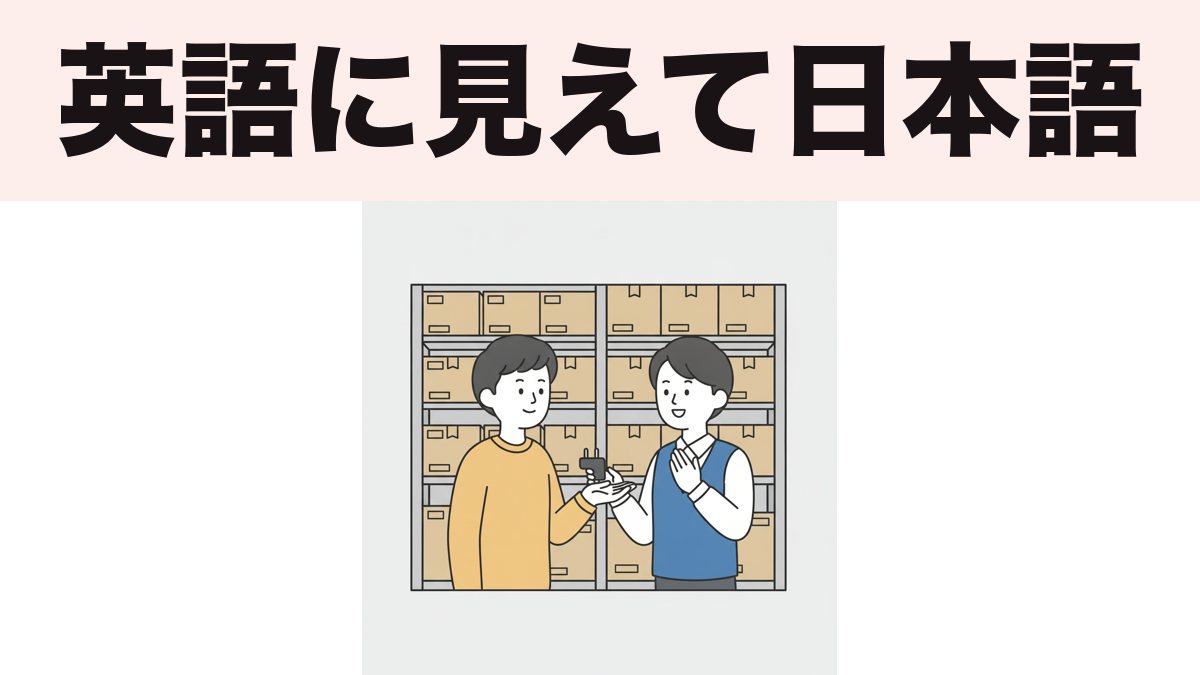
和製英語 are words built out of English parts inside Japan, for Japanese speakers. They are not mistakes and not broken English — they are Japanese vocabulary that happens to be spelled in katakana, and treating them as English is what makes them dangerous.
和製英語は、日本の中で、日本語のために、英語の部品で作られたことばです。まちがった英語ではありません。カタカナで書く日本語のことばです。英語だと思うと、そこであぶなくなります。
Every learner has the same moment: someone says they live in a マンション, and you picture a mansion. They mean a concrete apartment block. The word is doing its job perfectly — it is just not doing the job you assumed.
English speakers have a specific disadvantage here. A learner from a non-English background sees マンション as a new word to learn. You see a word you already know, so you skip it, and the misunderstanding lasts for years.
The basics
What is 和製英語?
和製英語 (わせいえいご) literally means "English made in Japan." These are words assembled from English-derived parts by Japanese speakers, for use in Japanese. Some were coined a century ago and some last year.
They are written in katakana, which is also how genuine loanwords are written — so katakana tells you a word came from somewhere else, but not whether an English speaker will recognise it.
新しいマンションに引っ越しました。 — I moved into a new apartment. コンセントはどこですか。 — Where's the power outlet? 彼はサラリーマンです。 — He's an office worker.
None of those would be understood by an English speaker who hasn't learned them.
The four types
Sorting them makes them much easier to hold.
1. Real English words with a shifted meaning. The word exists in English; the meaning has moved.
| Word | What it means in Japanese | English |
|---|---|---|
| マンション | Apartment building, condo | (not "mansion") |
| クレーム | A complaint | (not "claim") |
| テンション | Mood, energy level | (not "tension") |
| ナイーブ | Sensitive, delicate | (not "naive") |
| スマート | Slim, trim | (not "clever") |
| カンニング | Cheating on a test | (from "cunning") |
| バイキング | Buffet | (not "viking") |
2. English parts assembled in Japan. Each piece is English; the combination is not.
| Word | Meaning |
|---|---|
| サラリーマン | Salaried office worker |
| ペーパードライバー | Someone with a licence who never drives |
| ノートパソコン | Laptop |
| ガソリンスタンド | Petrol station |
| モーニングコール | Wake-up call |
| ベビーカー | Pushchair, stroller |
| オーダーメイド | Made to order, custom |
| スキンシップ | Physical closeness, affectionate contact |
3. Brand names that became the generic word. English does this too — "hoover," "biro."
| Word | Meaning | From |
|---|---|---|
| ホッチキス | Stapler | The Hotchkiss brand |
| シャーペン | Mechanical pencil | "Ever-Sharp" pencil |
| セロテープ | Sticky tape | Sellotape |
| ウォシュレット | Bidet toilet seat | A TOTO product name |
4. Shortenings. Japanese clips long loanwords hard, usually to four morae.
| Word | Full form | Meaning |
|---|---|---|
| リモコン | リモートコントロール | Remote control |
| エアコン | エアコンディショナー | Air conditioner |
| パソコン | パーソナルコンピューター | PC, computer |
| コンビニ | コンビニエンスストア | Convenience store |
| スタバ | スターバックス | Starbucks |
| ファミレス | ファミリーレストラン | Family restaurant, diner |
That four-mora pattern is a real rule, not a coincidence — it is why スマートフォン becomes スマホ and not スマフォン.
Why does this matter in conversation?
Two directions, and both cost you.
Hearing: you understand a word you have not actually learned, and quietly build a wrong picture. マンション for "large house" is the classic.
Speaking: you assume an English word will work in Japanese, and it does not. If you ask for a "stapler," you will usually get a blank look — the word is ホッチキス.
Beyond the basics
The ones most likely to actually cause trouble
Some are merely amusing. These few can genuinely derail a conversation:
クレームを入れる — to make a complaint. (Not "claim." In a work context this is a customer complaint, and getting it wrong is an expensive misunderstanding.) ナイーブな人 — a sensitive, delicate person. (In Japanese this is broadly sympathetic. In English "naive" is an insult.) テンションが高い — in high spirits, energetic. (Not "tense." A person with high テンション is having a great time.) ハーフ — a person of mixed heritage. (Neutral to positive in Japanese; the direct English translation sounds jarring, and many people now prefer ミックス or ダブル.)
ナイーブ is the one most worth memorising. Calling someone ナイーブ in Japanese is close to calling them sensitive; translating your Japanese sentence straight into English will insult someone by accident.
Which ones will you hear in anime?
A specific cluster shows up constantly in sports scenes, group scenes and anything with encouragement:
ドンマイ! — Never mind, don't worry about it. (from "don't mind" — said after someone messes up) ファイト! — You can do it! (from "fight" — encouragement, not aggression) ナイス! — Nice one! (said on a good play) リベンジする — to try again, to get a rematch. (from "revenge," but with none of the darkness) テンション上がる! — I'm getting excited! ガッツポーズ — a fist pump. (from "guts pose")
ドンマイ and ファイト are probably the two highest-frequency 和製英語 in all of anime, and both are impossible to guess from English. ファイト in particular sounds alarming to an English ear and means nothing more than "go for it."
Is 和製英語 "wrong" English?
No, and the framing is the problem. These are Japanese words. English gave Japanese the raw material the way Latin gave English "television" — nobody calls that bad Latin.
Where it does become a real issue is for Japanese learners of English, who reasonably assume a katakana word will work in English and find that half of them will not. That is one of the most common things to come up when a Japanese speaker starts studying English seriously, and it runs in exactly the opposite direction to your problem.
How do you tell if a katakana word is safe?
You cannot, reliably, from the word itself — but three habits help:
- If it is short and compound, be suspicious. サラリーマン, ペーパードライバー and ガソリンスタンド all have that assembled feel.
- If it describes daily life in Japan, be suspicious. Housing, appliances, school, and office vocabulary are dense with 和製英語.
- Check it before you use it in English. The direction that embarrasses you is Japanese → English, not the other way.
For shopping and everyday errands the practical fix is just to learn the Japanese words as words — which is the same approach that makes shop phrases work.
Common mistakes
- Assuming マンション means a large house. It means an apartment in a concrete building. A detached house is 一戸建て, and a wooden-built apartment is アパート — which, confusingly, is a cheaper class of building than マンション.
- Using "stapler," "outlet," or "laptop" and expecting to be understood. ホッチキス, コンセント, ノートパソコン.
- Translating ナイーブ as "naive" in English. You will insult someone who was being described kindly.
- Hearing ファイト as aggression. It is encouragement, roughly "you've got this."
- Assuming every katakana word is 和製英語. Plenty are straightforward loans (テーブル, コーヒー, ホテル), and plenty come from other languages entirely: アルバイト comes from ドイツ語 (Arbeit, "work"), パン is Portuguese, and ズボン is French.
- Correcting a Japanese speaker's 和製英語 in Japanese. It is not an error in Japanese. It only becomes one when they are speaking English — and even then, only if they asked.
Practice
Answers are hidden — work out your guess first, then open. Questions 1 and 2 are a pair: both are real English words whose Japanese meanings have drifted.
1. What does マンション mean?
Show answer
An apartment or condo in a concrete building — not a mansion. A detached house is 一戸建て, and アパート is a cheaper, usually wooden-built apartment.
2. What does クレーム mean?
Show answer
A complaint — not a claim. クレームを入れる is to make a complaint, and in a work context this is the meaning that matters. This is the pair to question 1: a real English word with a shifted meaning.
3. Someone says テンション高いね. Are they saying you look tense?
Show answer
No — they're saying you're in high spirits — テンション in Japanese means mood or energy level. テンションが高い is upbeat and excited; テンションが低い is flat or down.
4. You need a stapler. What do you ask for?
Show answer
ホッチキス — from the Hotchkiss brand name, which became the generic word. "Stapler" will usually not be understood.
5. What is a ペーパードライバー?
Show answer
Someone who has a driving licence but never drives — "paper" plus "driver": a driver on paper only. Every piece is English and the combination is purely Japanese.
6. What does リモコン come from, and what is the rule?
Show answer
リモートコントロール, clipped to four morae — Japanese shortens long loanwords to roughly four morae. Same rule gives エアコン, パソコン, スマホ and コンビニ.
7. A teammate drops the ball and someone shouts ドンマイ. What just happened?
Show answer
They said "don't worry about it" — from "don't mind." It is encouragement after a mistake, and it is one of the most common 和製英語 you will hear in anime.
8. Why is it risky to translate ナイーブ as "naive"?
Show answer
In Japanese it means sensitive or delicate, and it is sympathetic — the English word is an insult. Translating straight across turns a kind description into a criticism.
9. Is アルバイト 和製英語?
Show answer
No — it comes from ドイツ語 — from Arbeit, "work." Not every katakana word comes from English. パン is Portuguese and ズボン is French.
10. Is 和製英語 incorrect English?
Show answer
No — it's Japanese vocabulary — English supplied the parts, the way Latin supplied the parts of "television." It only causes a problem when a Japanese speaker assumes the word will also work in English.
FAQ
Are new 和製英語 still being created? Constantly, especially around technology, work and social media. リモートワーク, サブスク (subscription), and タイパ (time performance, i.e. time efficiency) are all recent. The four-mora clipping rule is still doing most of the work.
Why is it called 和製英語 and not just katakana words? 和製 means "made in Japan," so the term specifically points at words built in Japan out of English parts. A plain loanword like ホテル or テーブル is 外来語 (a foreign loanword) but not 和製英語.
Is アパート different from マンション? Yes, and it is a real distinction in the rental market rather than a difference in English. マンション is a reinforced-concrete building, usually with more floors and more security. アパート is typically a smaller, wooden or light-steel building, and cheaper.
Should I avoid using 和製英語? No — they are the normal words. Avoiding them means avoiding the ordinary way to say "air conditioner" or "part-time job." Learn them as Japanese vocabulary, and just don't carry them back into English.
What's the trap in the other direction? An English word you use that happens to be a 和製英語 with a different meaning. Saying you have a "claim" about a product will be understood as a complaint. Saying someone is "smart" in katakana (スマート) says they are slim.
Do Japanese speakers know which words are 和製英語? Some are widely known as such, and others surprise people. It is a common topic in English classes in Japan precisely because the words feel English from the inside, and that feeling is exactly what makes them hard to spot.
Vocabulary from this article
Tap the block to select all of it, then copy. In Anki: File → Import, note type Basic, separator Tab — the first column becomes the front, the second the back.
和製英語	わせいえいご — English words coined in Japan
外来語	がいらいご — loanword from a foreign language
マンション	マンション — apartment, condo (not "mansion")
アパート	アパート — apartment (smaller, cheaper building)
一戸建て	いっこだて — detached house
コンセント	コンセント — power outlet
サラリーマン	サラリーマン — salaried office worker
ペーパードライバー	ペーパードライバー — licensed driver who never drives
ノートパソコン	ノートパソコン — laptop
ガソリンスタンド	ガソリンスタンド — petrol station
モーニングコール	モーニングコール — wake-up call
ベビーカー	ベビーカー — pushchair, stroller
ホッチキス	ホッチキス — stapler
シャーペン	シャーペン — mechanical pencil
リモコン	リモコン — remote control
エアコン	エアコン — air conditioner
コンビニ	コンビニ — convenience store
クレーム	クレーム — a complaint (not "claim")
テンション	テンション — mood, energy level
ナイーブ	ナイーブ — sensitive, delicate
バイキング	バイキング — buffet
カンニング	カンニング — cheating on a test
ドンマイ	ドンマイ — never mind, don't worry about it
ファイト	ファイト — you can do it!
リベンジ	リベンジ — a second attempt, a rematch
アルバイト	アルバイト — part-time job
引っ越す	ひっこす — to move house
I'm Yuuki, a Japanese teacher based in Tokyo. I've taught on italki as a Top 1% teacher and watched over 1,500 anime. English-speaking learners are the ones who get caught by these, because the words look like something you already know — and a word you think you know is the one word you will never look up.
Sources: the author's own lessons and standard reference grammars.
学習者はみんな同じ経験をします。だれかが「マンションに住んでいます」と言います。頭の中に大きな家が出てきます。でも意味はコンクリートのアパートです。ことばはちゃんと仕事をしています。ただ、あなたが思った仕事ではありません。
英語が母語の人には、とくべつな問題があります。ほかの国の人は「マンション」を新しいことばとして覚えます。英語の人は「知っていることば」だと思って、調べません。だからまちがいが何年も続きます。
基本
和製英語とは何ですか?
「和製英語(わせいえいご)」は「日本で作られた英語」という意味です。英語から来た部品を、日本語を話す人が組み立てたことばです。100年前のものも、去年のものもあります。
カタカナで書きます。でも、本当の外来語もカタカナで書きます。だからカタカナを見ても、英語の人に通じるかどうかは分かりません。
新しいマンションに引っ越しました。 — I moved into a new apartment. コンセントはどこですか。 — Where's the power outlet? 彼はサラリーマンです。 — He's an office worker.
3つとも、英語の人には通じません。
4つの種類
分けると覚えやすくなります。
1. 英語にもあるけれど、意味が動いたもの
| ことば | 日本語での意味 | 英語では |
|---|---|---|
| マンション | アパート・コンドミニアム | mansion(大きな家)ではない |
| クレーム | 苦情 | claim ではない |
| テンション | 気分・元気の高さ | tension ではない |
| ナイーブ | すなお・きずつきやすい | naive ではない |
| スマート | やせている | 頭がいい、ではない |
| カンニング | 試験の不正 | cunning から |
| バイキング | 食べ放題 | viking ではない |
2. 英語の部品を日本で組み立てたもの
| ことば | 意味 |
|---|---|
| サラリーマン | 会社員 |
| ペーパードライバー | 免許はあるが運転しない人 |
| ノートパソコン | ラップトップ |
| ガソリンスタンド | ガソリンを入れる所 |
| モーニングコール | 起こしてもらう電話 |
| ベビーカー | 赤ちゃんを乗せる車 |
| オーダーメイド | 注文して作るもの |
| スキンシップ | ふれあい |
3. 商品の名前が、ふつうのことばになったもの
| ことば | 意味 | もと |
|---|---|---|
| ホッチキス | ステープラー | Hotchkiss という会社の名前 |
| シャーペン | 芯を出して書くえんぴつ | Ever-Sharp pencil |
| セロテープ | テープ | Sellotape |
| ウォシュレット | おしりを洗うトイレ | TOTO の商品名 |
4. 短くしたもの
| ことば | もとの形 | 意味 |
|---|---|---|
| リモコン | リモートコントロール | remote control |
| エアコン | エアコンディショナー | air conditioner |
| パソコン | パーソナルコンピューター | PC |
| コンビニ | コンビニエンスストア | convenience store |
| スタバ | スターバックス | Starbucks |
| ファミレス | ファミリーレストラン | family restaurant |
4はく(4つの音)にするのは、本当のルールです。だから「スマートフォン」は「スマホ」になります。
なぜ会話で大事ですか?
2つの向きで、どちらも高くつきます。
聞く時: 知らないことばを「知っている」と思って、まちがった絵をかきます。「マンションマンション大きな家」がその代表です。
話す時: 英語のことばが通じると思って、通じません。「ステープラー」と言っても分かりません。「ホッチキス」です。
もう少し先へ
本当に困るもの
おもしろいだけのものもあります。でも、この4つは会話をこわします。
クレームを入れる — 苦情を言う。(claim ではありません。仕事でまちがえると高くつきます) ナイーブな人 — すなおで、きずつきやすい人。(日本語ではやさしい意味です。英語の naive は悪口です) テンションが高い — 元気で、楽しそう。(「きんちょうしている」ではありません) ハーフ — 両親の国がちがう人。(日本語では悪い意味ではありませんが、英語にそのまま直すときつく聞こえます。今は「ミックス」「ダブル」を使う人もいます)
「ナイーブ」がいちばん大事です。日本語でだれかを「ナイーブ」と言うのは、やさしい言い方です。そのまま英語にすると、悪口になります。
アニメではどれを聞きますか?
スポーツの場面、みんなでいる場面、はげます場面によく出ます。
ドンマイ! — Never mind, don't worry about it. (don't mind から。しっぱいした後に言います) ファイト! — You can do it! (fight から。けんかではありません) ナイス! — Nice one! リベンジする — もう一度ちょうせんする。(revenge から。こわい意味はありません) テンション上がる! — I'm getting excited! ガッツポーズ — こぶしを上げるポーズ。(guts pose から)
「ドンマイ」と「ファイト」は、アニメでいちばんよく聞く和製英語です。どちらも英語から想ぞうできません。
和製英語は「まちがった英語」ですか?
ちがいます。これは日本語のことばです。英語が部品をあげただけです。英語が「television」をラテン語の部品で作ったのと同じです。だれもそれを「へたなラテン語」とは言いません。
本当に問題になるのは、日本の人が英語を勉強する時です。カタカナのことばが英語でも通じると思って、半分は通じません。あなたの問題と、ちょうど反対の向きです。
安全かどうか、どう分かりますか?
ことばだけを見ても分かりません。でも、3つのくせが助けになります。
- 短くて、2つの部品でできていたらあやしい。 サラリーマン、ペーパードライバー、ガソリンスタンド。
- 日本の生活のことばならあやしい。 家、電気の道具、学校、会社のことばに多いです。
- 英語で使う前に調べる。 はずかしいのは「日本語 → 英語」の向きです。
買い物や毎日の用事では、日本語のことばとして覚えるのがいちばん早いです。
よくある間違い
- 「マンション」を大きな家だと思うこと。 コンクリートの建物のアパートです。一けんの家は「一戸建て」、木造の安いアパートは「アパート」です。
- 「ステープラー」「アウトレット」「ラップトップ」と言うこと。 ホッチキス、コンセント、ノートパソコンです。
- 「ナイーブ」を英語で naive と言うこと。 やさしい説明が悪口になります。
- 「ファイト」をこわいことばだと思うこと。 「がんばって」です。
- カタカナをぜんぶ和製英語だと思うこと。 「テーブル」「コーヒー」「ホテル」はふつうの外来語です。「アルバイト」はドイツ語、「パン」はポルトガル語、「ズボン」はフランス語です。
- 日本語を話している人の和製英語を直すこと。 日本語では正しいことばです。
練習
答えはかくれています。まず考えてから開いてください。1番と2番は対になっています。
1. 「マンション」はどんな意味ですか。
答えを見る
コンクリートの建物のアパート — 大きな家ではありません。一けんの家は「一戸建て」、安い木造のアパートは「アパート」です。
2. 「クレーム」はどんな意味ですか。
答えを見る
苦情 — claim ではありません。「クレームを入れる」は「苦情を言う」です。1番と同じで、英語にもあることばの意味が動いた例です。
3. 「テンション高いね」と言われました。「きんちょうしている」という意味ですか。
答えを見る
ちがいます。元気だ、という意味です — 日本語の「テンション」は気分の高さです。「テンションが低い」は元気がない、です。
4. ステープラーがほしい時、何と言いますか。
答えを見る
ホッチキス — Hotchkiss という会社の名前が、ふつうのことばになりました。
5. 「ペーパードライバー」はどんな人ですか。
答えを見る
免許はあるが運転しない人 — 「紙の上だけの運転手」です。部品はぜんぶ英語ですが、組み合わせは日本のものです。
6. 「リモコン」はどこから来ましたか。ルールは何ですか。
答えを見る
リモートコントロール・4はくに短くする — 長い外来語は4つの音にします。エアコン、パソコン、スマホ、コンビニも同じです。
7. 味方がボールを落として、だれかが「ドンマイ」と言いました。何が起きましたか。
答えを見る
「気にしないで」と言いました — don't mind から来ています。しっぱいの後のはげましです。
8. 「ナイーブ」を英語で naive と言うと、なぜあぶないですか。
答えを見る
日本語では「すなお・きずつきやすい」でやさしい意味だからです — 英語の naive は悪口です。そのまま直すと、ほめことばが悪口になります。
9. 「アルバイト」は和製英語ですか。
答えを見る
ちがいます。ドイツ語です — Arbeit(仕事)から来ました。カタカナがぜんぶ英語からではありません。
10. 和製英語は「まちがった英語」ですか。
答えを見る
ちがいます。日本語のことばです — 英語が部品をあげただけです。問題になるのは、英語でも通じると思った時だけです。
よくある質問
新しい和製英語は今も生まれますか。 たくさん生まれます。とくに技じゅつ・仕事・SNS のことばです。「リモートワーク」「サブスク」「タイパ」などです。
なぜ「カタカナのことば」と言わないのですか。 「和製」は「日本で作った」という意味です。だから、日本で組み立てたことばだけを指します。「ホテル」「テーブル」は外来語ですが、和製英語ではありません。
「アパート」と「マンション」はちがいますか。 ちがいます。「マンション」はコンクリートの建物で、かいが多くて、せいきゅりてぃもあります。「アパート」は木や軽い鉄の、小さくて安い建物です。
和製英語は使わない方がいいですか。 いいえ。ふつうのことばです。使わないと、「エアコン」や「アルバイト」がふつうに言えません。日本語として覚えて、英語に持って行かなければいいです。
反対の向きの落とし穴は何ですか。 自分が使う英語が、じつは和製英語で、意味がちがう時です。商品について「クレーム」と言うと「苦情」になります。人に「スマート」と言うと「やせている」になります。
日本の人は、どれが和製英語か分かりますか。 よく知られているものもありますし、おどろくものもあります。英語の授業でよく話題になります。中から見ると英語に感じるからです。
この記事に出た単語
ブロックをタップすると全部選べます。そのままコピーしてください。Anki では ファイル → 読み込み、ノートタイプ 基本、区切り タブ。1列目が表、2列目が裏になります。
和製英語	わせいえいご — English words coined in Japan
外来語	がいらいご — loanword from a foreign language
マンション	マンション — apartment, condo (not "mansion")
アパート	アパート — apartment (smaller, cheaper building)
一戸建て	いっこだて — detached house
コンセント	コンセント — power outlet
サラリーマン	サラリーマン — salaried office worker
ペーパードライバー	ペーパードライバー — licensed driver who never drives
ノートパソコン	ノートパソコン — laptop
ガソリンスタンド	ガソリンスタンド — petrol station
モーニングコール	モーニングコール — wake-up call
ベビーカー	ベビーカー — pushchair, stroller
ホッチキス	ホッチキス — stapler
シャーペン	シャーペン — mechanical pencil
リモコン	リモコン — remote control
エアコン	エアコン — air conditioner
コンビニ	コンビニ — convenience store
クレーム	クレーム — a complaint (not "claim")
テンション	テンション — mood, energy level
ナイーブ	ナイーブ — sensitive, delicate
バイキング	バイキング — buffet
カンニング	カンニング — cheating on a test
ドンマイ	ドンマイ — never mind, don't worry about it
ファイト	ファイト — you can do it!
リベンジ	リベンジ — a second attempt, a rematch
アルバイト	アルバイト — part-time job
引っ越す	ひっこす — to move house
私はユウキです。東京で日本語を教えています。 italki の Top 1% の先生で、アニメは1,500本以上見ました。英語が母語の人ほど、ここでつまずきます。知っていることばに見えるからです。そして「知っている」と思ったことばは、一生調べません。
More drills like the ones above, plus a timed JLPT-style mock test: Practice · N4上のような練習問題と、時間つきのJLPT形式のもぎ試験: 練習ページ · N4
Want to try this in a real conversation?
本当の会話で、ためしてみませんか?
30-minute trial lesson, $13. Times shown in your own timezone.
30分の体験レッスン、$13。時間はあなたのタイムゾーンで表示されます。
Book a trial lesson · $13