〜べき: the "should" that judges, and when not to use it〜べき: 「正しいかどうか」の should
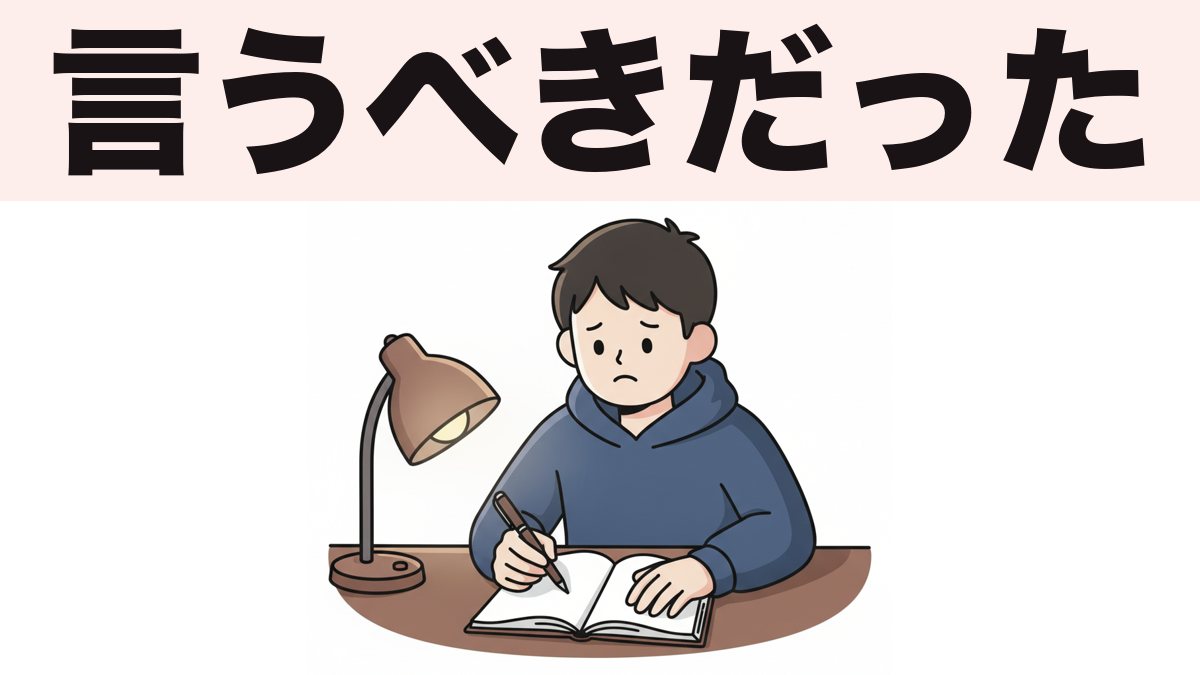
べき means "ought to" in the moral sense: this is the right thing to do. It is not advice and not a rule. Aimed at another person it lands as a lecture, which is why Japanese speakers reach for ほうがいい instead nine times out of ten.
「べき」は「そうするのが正しい」という意味の should です。アドバイスでもルールでもありません。人に向けると「せっきょう」に聞こえます。だから日本人は、10回のうち9回は「ほうがいい」を使います。
Learners who discover べき tend to over-use it, because it maps so cleanly onto English "should." The mapping is the problem: English "should" is mostly soft, and べき is not.
The basics
The form
dictionary form + べき + だ/です
| Verb | べき form |
|---|---|
| 行く | 行くべき |
| 読む | 読むべき |
| 考える | 考えるべき |
| する | すべき (also するべき) |
もっと早く相談するべきでした。 — I should have consulted them sooner. (polite past — about myself) これは全員が知るべきことです。 — This is something everyone ought to know. (polite — before a noun, no だ)
する has two accepted forms. すべき is the older and more formal one and dominates in writing; するべき is common in speech. Both are correct.
Before a noun
べき attaches directly, with no な or の:
今日やるべきことをリストにしました。 — I made a list of what I need to do today. (polite past)
やるべきこと ("things that should be done") is close to a fixed phrase and very useful.
The negative
そんなことを言うべきではありません。 — You shouldn't say that sort of thing. (polite — a genuine reproach)
べきではない is strong. It is a judgement that an action is wrong, not a suggestion that it is unwise.
Beyond the basics
べき vs はず: two different "should"s
English uses one word for both, and they are unrelated:
| Form | Meaning | Example |
|---|---|---|
| 〜べきだ | Ought to (moral) | 言うべきだ |
| 〜はずだ | Should be (prediction) | 来るはずだ |
彼はもう着いているはずです。 — He should have arrived by now. (polite — expectation)
言うべきでした is "I should have said something (it was the right thing)"; 来るはずでした is "he was supposed to come (and didn't)". 〜はず covers the prediction side in full.
The full advice ladder
| Form | What it does | Aim it at |
|---|---|---|
| 〜たらどうですか | Why not…? | Anyone |
| 〜ほうがいい | It'd be better to | Anyone |
| 〜必要がある | There is a need to | Anyone |
| 〜なければならない | It must be done | A rule, not a person |
| 〜べきだ | It is right to | Yourself, or a situation |
For everyday advice, 〜ほうがいい is almost always the better tool. For an obligation imposed from outside, use 〜なければならない. べき is for stating what is right — which is a claim about values, and Japanese conversation is careful with those.
Use it about yourself freely
The safe home for べき is self-reflection:
もっと勉強するべきだったと思います。 — I think I should have studied more. (polite — regret about myself)
Nobody minds you judging your own past. The awkwardness only appears when the subject is the listener.
It is at home in writing and argument
Editorials, proposals, reviews and debates use べき constantly, because their whole job is arguing about what is right:
政府はもっと支援するべきだ。 — The government should provide more support. (written, plain — an argument)
Aimed at an institution rather than a person in the room, it is completely normal.
べきではなかった
あんなことを言うべきではありませんでした。 — I shouldn't have said that. (polite past — a real apology)
This is one of the more sincere apologies available in Japanese, because it concedes the action was wrong rather than merely unfortunate.
Common mistakes
- Using べき to give a colleague advice. 早く帰るべきです sounds like a moral instruction. Say 早く帰ったほうがいいですよ.
- Using べき for rules. A rule from outside is なければなりません. べき is your judgement.
- Attaching な before a noun. It is やるべきこと, not やるべきなこと.
- Confusing it with はず. べき is right and wrong; はず is expectation.
- Assuming するべき is wrong. Both するべき and すべき are correct; すべき is more formal.
- Using べき for personal preference. 早く寝るべきだ about your own bedtime is fine; about what film to watch, it is odd.
Practice
Answers are hidden — build yours first, then open. Questions 2 and 3 are a pair: two English "should have"s, two different Japanese words.
1. Something is wrong here: 今日やるべきなことをリストにしました。
Show answer
やるべきこと — べき attaches directly to a noun with no な and no の.
2. Say "I should have consulted them sooner" — it was the right thing to do.
Show answer
もっと早く相談するべきでした — べき, because this is about what was right.
3. Say "he should have arrived by now" — you expected him.
Show answer
彼はもう着いているはずです — はず, because this is a prediction. This is the pair to question 2: English says "should" for both.
4. Give a colleague friendly advice to go home early.
Show answer
早く帰ったほうがいいですよ — 早く帰るべきです would sound like a moral instruction.
5. What are the two accepted べき forms of する?
Show answer
すべき and するべき — すべき is older and more formal, and dominates in writing.
6. Apologise sincerely for having said something you shouldn't have.
Show answer
あんなことを言うべきではありませんでした — it concedes the action was wrong, not merely unfortunate.
7. Where is べき completely at home?
Show answer
Writing, argument, and talking about yourself — editorials and self-reflection. The awkwardness is only when the subject is the listener.
8. Rank by force: 〜たらどうですか / 〜べきだ / 〜ほうがいい / 〜なければならない.
Show answer
たらどうですか → ほうがいい → なければならない → べきだ — suggestion, advice, external rule, moral judgement.
9. Say "the government should provide more support," as an argument in writing.
Show answer
政府はもっと支援するべきだ — aimed at an institution rather than someone in the room, this is completely normal.
10. Say "you shouldn't say that sort of thing."
Show answer
そんなことを言うべきではありません — a genuine reproach, not a suggestion. Use it deliberately.
FAQ
Is べき written in kanji? No. It is always kana.
Can べき follow an adjective? Rarely, and it sounds odd. It is a verb ending. For adjectives, rephrase: もっと安くするべきだ.
What about べきである? The formal written copula. Editorials use it: 〜べきである.
Is 〜べきだと思う softer? Yes, noticeably. Wrapping it in 思う makes the judgement your opinion rather than a fact, which takes most of the edge off.
What is 〜べからず? An archaic prohibition, seen on old signs: 立入るべからず ("no entry"). Recognise it as a period flavour.
Does べき work in the past for someone else? Grammatically yes — 彼は行くべきでした — but it is a criticism of them, so use it knowingly.
Vocabulary from this article
Tap the block to select all of it, then copy. In Anki: File → Import, note type Basic, separator Tab — the first column becomes the front, the second the back.
行く	いく — to go
読む	よむ — to read
考える	かんがえる — to think
早く	はやく — sooner, early
相談	そうだん — consultation
全員	ぜんいん — everyone
知る	しる — to know
今日	きょう — today
言う	いう — to say
着く	つく — to arrive
勉強	べんきょう — study
帰る	かえる — to go home
政府	せいふ — government
支援	しえん — support
必要	ひつよう — necessary
寝る	ねる — to sleep
安い	やすい — cheap
思う	おもう — to think
立入る	たちいる — to enter
I'm Yuuki, a Japanese teacher based in Tokyo. I've taught on italki as a Top 1% teacher and watched over 1,500 anime. べき is the fastest way for a polite learner to accidentally sound stern. The fix is not to avoid it — it is to notice who the subject is, and to keep it pointed at yourself or at the world rather than at the person in front of you.
Sources: the author's own lessons and standard reference grammars.
「べき」を知ると使いすぎる人が多いです。英語の "should" にきれいに合うからです。でも、そこが問題です。英語の "should" はたいていやわらかく、「べき」はやわらかくありません。
基本
形
じしょ形 + べき + だ/です
| 動詞 | べきの形 |
|---|---|
| 行く | 行くべき |
| 読む | 読むべき |
| 考える | 考えるべき |
| する | すべき(するべき も可) |
もっと早く相談するべきでした。 — I should have consulted them sooner. これは全員が知るべきことです。 — This is something everyone ought to know.
「する」は2つの形があります。「すべき」は古くてかたく、書きことばに多いです。「するべき」は会話に多いです。どちらも正しいです。
名詞の前
「な」も「の」もいりません。
今日やるべきことをリストにしました。 — I made a list of what I need to do today.
「やるべきこと」はほとんどかたまりの言い方で、とても便利です。
うちけし
そんなことを言うべきではありません。 — You shouldn't say that sort of thing.
「べきではない」は強いです。「よくない考えだ」ではなく「それは正しくない」と言っています。
もう少しくわしく
「べき」と「はず」
英語はどちらも "should" ですが、べつのことばです。
| 形 | 意味 | れい |
|---|---|---|
| 〜べきだ | そうするのが正しい | 言うべきだ |
| 〜はずだ | そうなるはず | 来るはずだ |
彼はもう着いているはずです。 — He should have arrived by now.
アドバイスのはしご
| 形 | 何をするか | だれに向けるか |
|---|---|---|
| 〜たらどうですか | してみたら? | だれにでも |
| 〜ほうがいい | した方がいい | だれにでも |
| 〜必要がある | 必要がある | だれにでも |
| 〜なければならない | しなければいけない | ルールに |
| 〜べきだ | そうするのが正しい | 自分か、世の中に |
ふだんのアドバイスは、ほとんど「ほうがいい」の方がいいです。外から来るぎむは「なければならない」。「べき」は「正しさ」の話で、日本語の会話は「正しさ」の話にとても気をつかいます。
自分のことなら自由に使えます
もっと勉強するべきだったと思います。 — I think I should have studied more.
自分のかこをはんだんするぶんには、だれもいやがりません。気まずくなるのは、しゅごが聞いている人になった時だけです。
書きことば・意見文では自ぜん
政府はもっと支援するべきだ。 — The government should provide more support.
しゃせつ・ていあん・レビューでは、正しさを言うのが仕事なので、ふつうに使います。
「べきではなかった」
あんなことを言うべきではありませんでした。 — I shouldn't have said that.
日本語の中でも、かなりしんけんなあやまり方です。「ざんねんだった」ではなく「正しくなかった」とみとめているからです。
よくある間違い
- 同りょうへのアドバイスに使う。 「早く帰るべきです」はせっきょうに聞こえます。「早く帰ったほうがいいですよ」です。
- ルールに使う。 外から来るぎむは「なければなりません」です。
- 名詞の前に「な」を入れる。 「やるべきこと」です。
- 「はず」とまぜる。 「べき」は正しさ、「はず」はよそうです。
- 「するべき」を間違いだと思う。 どちらも正しいです。
- こうみに使う。 何の映画を見るか、に「べき」はへんです。
練習
答えはかくれています。まず自分で作ってから開いてください。2番と3番が対です。英語ではどちらも "should have" です。
1. 直してください: 今日やるべきなことをリストにしました。
答えを見る
やるべきこと — 名詞の前に「な」も「の」もいりません。
2. 「もっと早く相談すればよかった(それが正しかった)」を言ってください。
答えを見る
もっと早く相談するべきでした — 正しさの話なので「べき」です。
3. 「彼はもう着いていると思っていた」を言ってください。
答えを見る
彼はもう着いているはずです — よそうなので「はず」です。2番と対です。
4. 同りょうに「早く帰った方がいい」とやさしく言ってください。
答えを見る
早く帰ったほうがいいですよ — 「帰るべきです」はせっきょうに聞こえます。
5. 「する」の「べき」の形を2つ言ってください。
答えを見る
すべき・するべき — 「すべき」の方がかたく、書きことばに多いです。
6. 言ってはいけないことを言ってしまいました。しんけんにあやまってください。
答えを見る
あんなことを言うべきではありませんでした — 「正しくなかった」とみとめています。
7. 「べき」が自ぜんに使える場めんは?
答えを見る
書きことば・意見文・自分のこと — 気まずいのは、しゅごが聞いている人の時だけです。
8. よわい方からならべてください: たらどうですか / べきだ / ほうがいい / なければならない
答えを見る
たらどうですか → ほうがいい → なければならない → べきだ
9. 「政府はもっと支援するべきだ」— これは失礼ですか。
答えを見る
いいえ、ふつうです — 目の前の人ではなく、そしきに向けているからです。
10. 「そんなことを言うべきではありません」は、アドバイスですか。
答えを見る
いいえ、はっきりした注意です — 「よくない考え」ではなく「正しくない」と言っています。
この記事に出た単語
ブロックをタップすると全部選べます。そのままコピーしてください。Anki では ファイル → 読み込み、ノートタイプ 基本、区切り タブ。1列目が表、2列目が裏になります。
行く	いく — to go
読む	よむ — to read
考える	かんがえる — to think
早く	はやく — sooner, early
相談	そうだん — consultation
全員	ぜんいん — everyone
知る	しる — to know
今日	きょう — today
言う	いう — to say
着く	つく — to arrive
勉強	べんきょう — study
帰る	かえる — to go home
政府	せいふ — government
支援	しえん — support
必要	ひつよう — necessary
思う	おもう — to think
映画	えいが — film
私はユウキです。東京で日本語を教えています。 italki の Top 1% の先生で、アニメは1,500本以上見ました。「べき」は、ていねいな学習者がいちばん早く「きびしい人」に聞こえてしまう形です。直し方は、使わないことではありません。しゅごがだれかを見て、自分か世の中に向けたままにしておくことです。
More drills like the ones above, plus a timed JLPT-style mock test: Practice · N3上のような練習問題と、時間つきのJLPT形式のもぎ試験: 練習ページ · N3
Want to try this in a real conversation?
本当の会話で、ためしてみませんか?
30-minute trial lesson, $13. Times shown in your own timezone.
30分の体験レッスン、$13。時間はあなたのタイムゾーンで表示されます。
Book a trial lesson · $13