Hiragana, katakana, kanji: which to learn first, and how long each takesひらがな カタカナ 漢字 どの順番で覚える
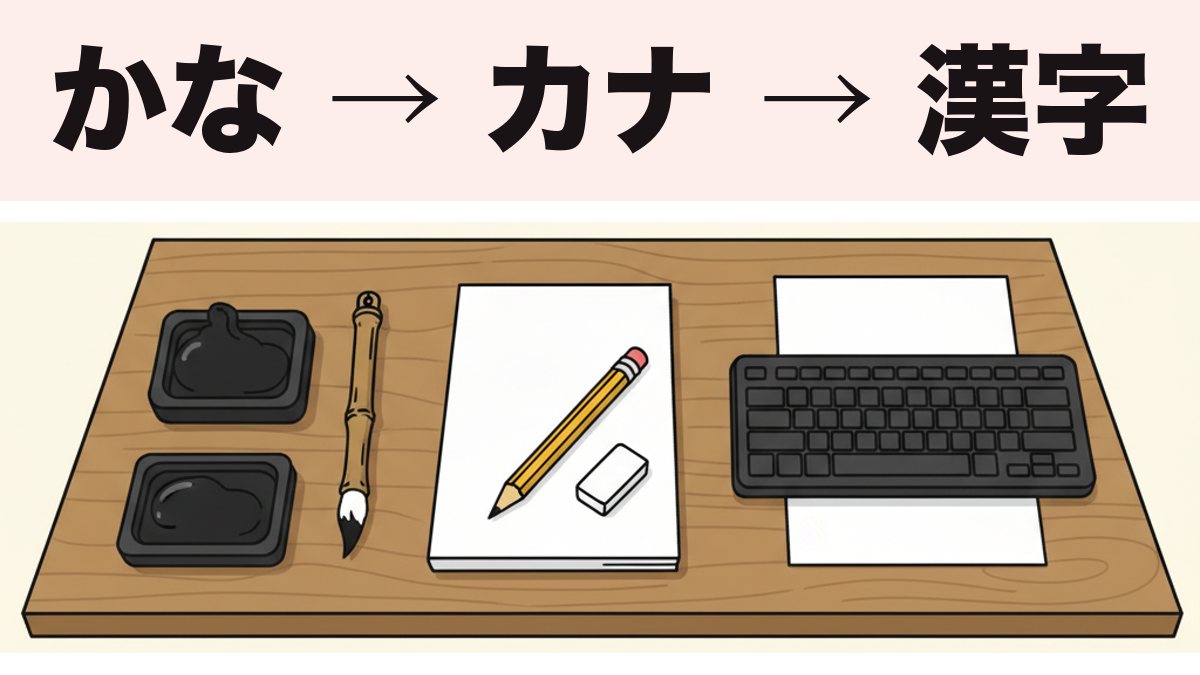
Japanese uses three writing systems at once. This is the fact that scares people off, and it is much less bad than it sounds.
日本語には、3つの文字が同時にあります。これを聞いておどろく人が多いですが、思っているほど大変ではありません。
Two of them are small alphabets you can finish this month. The third is large and never really finishes — but you need far less of it than you think to start.
What each one is for
Hiragana (ひらがな) — 46 characters. The grammatical glue: verb endings, particles, and any Japanese word without a kanji. If you learn one thing, learn this.
Katakana (カタカナ) — 46 characters, same sounds, different shapes. Foreign words, names, sound effects, emphasis. Your own name is written in katakana.
Kanji (漢字) — thousands, borrowed from Chinese. Carry the meaning of words. About 2,000 are in general use; a few hundred cover most everyday reading.
The order
1. Hiragana. Non-negotiable, and first.
Everything else depends on it. Furigana — the small hiragana printed above kanji in manga and children's books — means that once you have hiragana, a surprising amount of real Japanese becomes readable.
Realistic time: one to two weeks at twenty minutes a day.
2. Katakana. Immediately after, and slightly annoying.
Same sounds, so no new pronunciation. It feels harder than hiragana for two reasons: the shapes are more similar to each other (ツ and シ, ソ and ン), and you see it less often, so it fades.
The payoff is immediate though. Katakana turns out to be a huge amount of vocabulary you already know: コーヒー, ホテル, チケット, ゲーム, アニメ.
Realistic time: one to two weeks, plus a few months of it being slightly slower to read than hiragana. That is normal and it does pass.
3. Kanji. Slowly, forever, starting later than you think.
Here is the part that gets argued about, so I will be direct: you can hold a conversation in Japanese knowing almost no kanji.
Kanji is a reading skill. It is essential if you want to read a menu, a sign, a novel, or a website. It contributes very little to whether you can talk to a person.
So if your goal is conversation, kanji can wait, or run gently in the background. If your goal is reading manga in Japanese, it starts sooner and matters more. Both goals are legitimate — just be honest with yourself about which one you have, because the study plans genuinely differ.
How to actually learn the two alphabets
Not with an app that lets you tap the right answer from four options. Recognition is the easy half.
Write them. By hand, on paper, saying the sound out loud as you write. Ten characters a day, reviewing everything from previous days. It is dull for eight days and then it is done forever.
Then read something immediately. Anything with furigana — a children's book, a shounen manga, the lyrics to a song you like. Reading real material slowly is what turns "I know the chart" into "I can read."
The mistake to avoid
Do not learn rōmaji as a stage. Learning Japanese in Latin letters first builds a habit you then have to break, and it locks in English pronunciation for sounds that are not English sounds.
Start with hiragana on day one, even though it is slower for two weeks. It is faster by month two.
What "finished" looks like
- Hiragana: you can read a hiragana word without decoding letter by letter
- Katakana: you can work out what コンビニ means, slowly
- Kanji: you recognise the fifty or so that appear on signs, and you stop panicking at the rest
That is enough to start reading real material with furigana, and it is roughly a month of light work.
In a lesson
I do not spend lesson time drilling kana — that is homework, and you can do it alone.
What lesson time is for is the moment after: taking something real, in Japanese, and reading it together slowly enough that it sticks. Bring the first thing you want to be able to read, and we will start on it.
そのうち2つは小さな表で、今月中に終わらせられます。3つ目は大きくて、本当の意味では終わりません。でも、始めるために必要な量は、思っているよりずっと少ないです。
それぞれの役目
ひらがな(ひらがな) — 46文字。文法をつなぐ文字です。動詞の終わり方、助詞、漢字のない日本語のことば。1つだけ覚えるなら、これです。
カタカナ(カタカナ) — 46文字。音はひらがなと同じで、形だけがちがいます。外国から来たことば、名前、音の表現、強調に使います。あなたの名前も、カタカナで書きます。
漢字(漢字) — 何千文字もあり、中国から来た文字です。ことばの意味を表します。一般的に使われるのは約2,000文字ですが、日常の読み物のほとんどは、数百文字でカバーできます。
覚える順番
1. ひらがな。ゆずれません。まず最初です。
他のすべてが、この上に成り立っています。マンガや子ども向けの本で、漢字の上に小さく書いてある「ふりがな」のおかげで、ひらがなを覚えただけで、読める本物の日本語がぐっと増えます。
現実的な目安は1〜2週間、1日20分くらいです。
2. カタカナ。ひらがなのすぐあと。少しめんどうです。
音はひらがなと同じなので、新しい発音を覚える必要はありません。でも、ひらがなより難しく感じる理由が2つあります。形が似ているものが多いこと(ツとシ、ソとン)、そして見る機会が少ないので、忘れやすいことです。
でも、覚えるとすぐに得をします。カタカナは、すでに知っていることばの宝庫です。コーヒー、ホテル、チケット、ゲーム、アニメ。
現実的な目安は1〜2週間。そのあと数か月は、ひらがなよりちょっと読むのが遅いままですが、それはふつうのことで、そのうち追いつきます。
3. 漢字。ゆっくり、ずっと、思っているより後からでいい。
ここはよく議論になるところなので、はっきり言います。漢字をほとんど知らなくても、日本語で会話はできます。
漢字は「読む力」です。メニューや看板、小説、ウェブサイトを読みたいなら欠かせません。でも、人と話せるかどうかには、あまり関係がありません。
だから、目標が「会話」なら、漢字はあとまわしでも、ゆっくり並行して進めても大丈夫です。目標が「日本語でマンガを読むこと」なら、もっと早く、もっと重点的に始めましょう。どちらの目標も正しいので、自分がどちらなのかを正直に見つめてください。勉強の計画がまったく変わってきます。
2つの表の覚え方
4択から正しい答えをタップするアプリだけでは足りません。「見て分かる」だけなら、簡単なほうの半分です。
手で書いてください。 紙に、声に出して読みながら書きます。1日10文字、前の日までの復習もしながら。最初の8日間は退屈ですが、そのあとはずっと使える力になります。
そしてすぐに何かを読んでください。 ふりがな付きなら何でもいいです。子ども向けの本、少年マンガ、好きな歌の歌詞。実際のものをゆっくり読むことで、「表を覚えた」から「読める」に変わります。
避けたいまちがい
ローマ字を、覚える段階として使わないでください。日本語を先にローマ字で覚えると、あとで直さないといけないくせがついてしまいますし、日本語にない発音を英語の音で固定してしまいます。
最初の1日目からひらがなで始めてください。最初の2週間は遅く感じても、2か月目には、そのほうが早くなっています。
「終わった」と言える状態
- ひらがな: 1文字ずつ解読しなくても、ひらがなのことばが読める
- カタカナ: コンビニという文字を見て、ゆっくりでも意味がわかる
- 漢字: 看板でよく見る50文字くらいがわかり、それ以外の漢字を見てもパニックにならない
これができれば、ふりがな付きの本物の日本語を読み始めるのに十分です。だいたい1か月、軽い勉強で届きます。
レッスンでは
レッスンの時間を、文字の暗記練習には使いません。それは宿題としてひとりでできることだからです。
レッスンの時間を使うのは、そのあとの瞬間です。本物の日本語を、身につくくらいゆっくり、いっしょに読みます。最初に読めるようになりたいものを持ってきてください。そこから始めましょう。
More drills like the ones above, plus a timed JLPT-style mock test: Practice · N5上のような練習問題と、時間つきのJLPT形式のもぎ試験: 練習ページ · N5
Want to try this in a real conversation?
本当の会話で、ためしてみませんか?
30-minute trial lesson, $13. Times shown in your own timezone.
30分の体験レッスン、$13。時間はあなたのタイムゾーンで表示されます。
Book a trial lesson · $13