ところ: how Japanese says "about to", "in the middle of" and "just didところ: 「これからする」「している」「今した」を1つのことばで
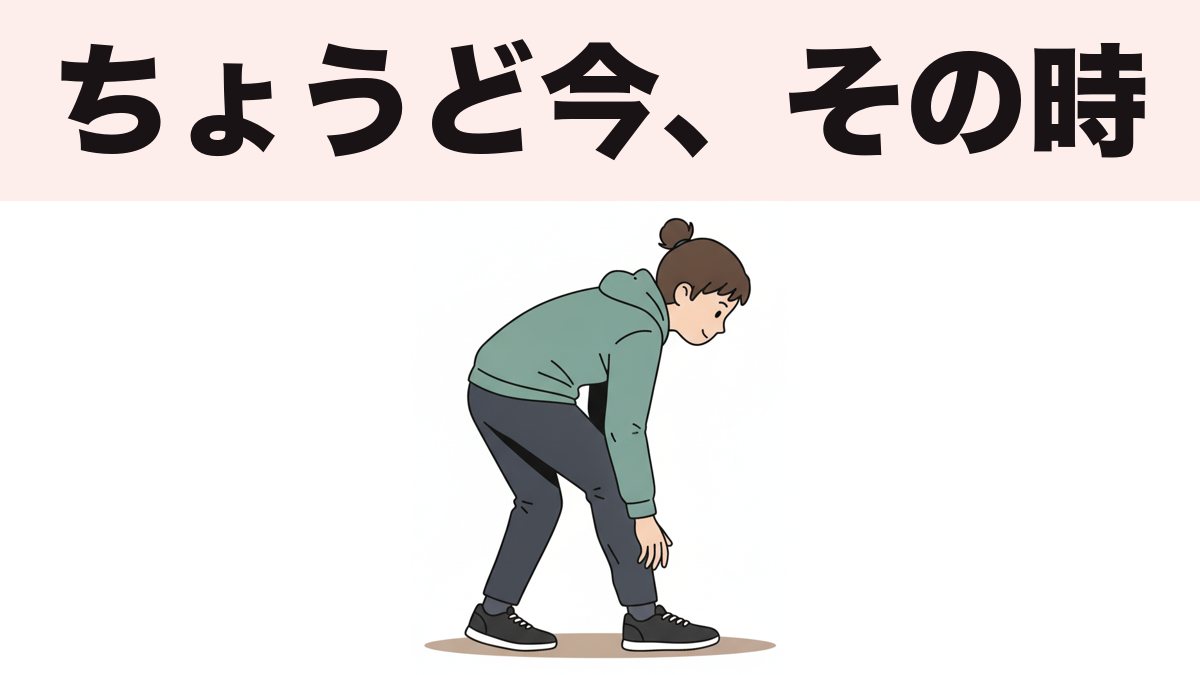
ところ means "place," but attached to a verb it stops meaning place and starts meaning *moment*. Change the form of the verb in front of it and you move along a timeline: 帰るところ (about to leave), 帰っているところ (in the middle of leaving), 帰ったところ (just left).
「ところ」は「場所」という意味です。でも、動詞のうしろに付くと、意味が「時の一点」に変わります。前の動詞の形を変えると、時間の上を動きます。帰るところ(これから帰る)、帰っているところ(今かえっている)、帰ったところ(今かえった)。
English needs three different constructions for those — "about to," "in the middle of," "just." Japanese uses one noun and lets the verb carry the timing. Once you see that, the whole set is a single thing to learn rather than three, and you stop reaching for 今 and そろそろ to do a job the grammar already does.
The basics
The three positions on the timeline
The verb form directly in front of ところ decides where on the action you are standing.
| Verb form + ところ | Where you are | English |
|---|---|---|
| 食べるところ | Right before it starts | About to eat |
| 食べているところ | Inside it | In the middle of eating |
| 食べたところ | Right after it ends | Just ate |
今から出かけるところです。 — I'm just about to head out. (polite, the action has not started) 今、書いているところです。 — I'm in the middle of writing it right now. (polite, very common in a work reply) たった今、着いたところです。 — I've only just arrived. (polite, the arrival is seconds old)
Notice that all three are answers to the same question — 今何してる? — and which one you pick tells the other person how long they have to wait.
Why not just use 今 or 〜たばかり?
You can, and people do, but they say less. 今書いています tells someone you are writing. 今書いているところです tells them you are writing right now, at this point in the process, which usually carries an unspoken "so give me a minute."
今、準備しているところなので、少し待ってください。 — I'm in the middle of getting ready, so please wait a moment. (polite, the ところ is what makes this a reasonable request)
The past one has a close neighbour worth separating. 〜たところ means the action finished moments ago on the clock. 〜たばかり means it feels recent, which can be weeks or years — 日本に来たばかりです works after three months in the country, while 日本に来たところです would mean you walked out of the airport just now. The full contrast is in 〜ばかり.
It still means "place" too
The original meaning has not gone anywhere, and beginners meet it first as a noun.
静かなところに住みたいです。 — I want to live somewhere quiet. (polite, ところ = place) いいところですね。 — It's a nice place, isn't it. (polite, said about a town or a shop)
You tell the two apart by what comes in front. An adjective or の in front means place; a verb form in front means moment. 静かなところ is a location. 帰るところ is a point in time.
Beyond the basics
〜ところだった: the one that did not happen
Put ところ into the past with だった after a dictionary-form verb and you get the near miss — the thing that almost happened and then did not.
危ない、ぶつかるところだった。 — That was close, I almost hit it. (casual, the collision did not occur) もう少しで忘れるところでした。 — I very nearly forgot. (polite, softened with もう少しで)
This is one of the most useful spoken patterns in the whole set, and it is invisible to learners who only learn the three-tense table. The literal reading helps: "it was the point of hitting it" — you were standing at that moment on the timeline, and then you stepped off it.
〜ているところに / 〜ているところへ: interrupted
Add に or へ and ところ becomes a moment that something else walks into.
ご飯を食べているところに電話がかかってきました。 — The phone rang right when I was in the middle of eating. (polite, the call interrupts) 出かけようとしているところへ、雨が降り出した。 — Just as I was about to go out, it started raining. (plain, written or narrated)
Anime and drama lean on this constantly, because it is the grammar of bad timing — the door opens at exactly the wrong moment, and the sentence describing it is almost always 〜ているところに.
〜どころじゃない: "this is no time for that"
A sound change turns ところ into どころ, and the meaning flips from a moment to a rejection of one.
忙しくて、旅行どころじゃないです。 — I'm so busy that travel is out of the question. (polite, dismissive) それどころじゃない! — This is no time for that! (casual, sharp — a very common anime line)
The feel is not "I don't want to" but "the situation does not allow it." A character says それどころじゃない while the building is on fire, not while declining an invitation politely.
ところで and ところが are different words
Two conjunctions look like they belong to this family and do not behave like it at all.
- ところで — "by the way." It changes the subject, with no connection to the previous sentence. ところで、昼ご飯は? (By the way, what about lunch?)
- ところが — "however," and specifically a surprising however. It introduces a result that contradicts what you expected.
天気予報は晴れでした。ところが、大雨でした。 — The forecast said sunny. But it poured. (plain, the ところが marks the surprise)
Learners mix ところが up with でも and しかし. でも is a neutral "but"; ところが carries "and then, against expectation." If nothing was unexpected, ところが sounds odd. For the everyday "but," けど is the workhorse.
How does it sound in anime?
Two of these dominate. それどころじゃない appears in every crisis scene, and 〜ところだった appears every time someone narrowly survives something. You will also hear the mid-action one shortened in casual speech — 今行くとこ ("on my way now"), with ところ clipped to とこ and です gone entirely.
今、向かってるとこ。 — On my way right now. (casual, ところ→とこ, ている→てる)
That とこ contraction is worth recognising rather than producing at first; it is comfortable, friendly speech, and it lands strangely in a polite context. The same logic that governs だ vs です applies here.
Common mistakes
- Using 〜ているところ for a state rather than an action. 結婚しているところです does not mean "I'm married" — it tries to mean "I am in the middle of getting married," mid-ceremony. The state reading of ている is a separate use of the same form, and ところ forces the action reading.
- Stretching 〜たところ. It means seconds-to-minutes ago. 去年日本に来たところです is wrong; that is 〜たばかり.
- Writing 〜ますところ. ところ attaches to plain forms, always: 食べるところです, never 食べますところです. The politeness lives in the です at the end.
- Treating ところが as a neutral "but." It needs a genuine surprise in front of it. For plain contrast, use けど or でも.
- Reading どころじゃない as "I don't like that." It is about impossibility, not preference — the situation forbids it.
The whole set on one card
| Pattern | Meaning | Example |
|---|---|---|
| Vる + ところ | About to do | 出かけるところです |
| Vている + ところ | In the middle of doing | 食べているところです |
| Vた + ところ | Just did | 着いたところです |
| Vる + ところだった | Almost did (and didn't) | 忘れるところだった |
| Vている + ところに/へ | Interrupted mid-action | 寝ているところに来た |
| N/Vる + どころじゃない | No time for that | それどころじゃない |
| ところで | By the way (new topic) | ところで、明日は? |
| ところが | However (surprising) | ところが、違いました |
Practice
Answers are hidden — build yours first, then open. Questions 1 to 3 are a set: the same verb at three points on the timeline.
1. Say "I'm about to eat" using ところ, politely.
Show answer
今から食べるところです — dictionary form in front of ところ puts you just before the action. 食べているところ would mean you already started.
2. Say "I'm in the middle of eating," politely.
Show answer
今、食べているところです — ている + ところ is inside the action. This is the one that implies "so give me a minute."
3. Say "I've just finished eating," politely.
Show answer
今、食べたところです — た form + ところ means the action ended moments ago. If it was an hour ago, use 食べたばかり instead.
4. Something is wrong here: 食べますところです。
Show answer
食べるところです — ところ only attaches to plain forms. The politeness is carried by です at the end, never by ます in the middle.
5. You nearly forgot your wallet. Say it casually.
Show answer
財布を忘れるところだった — dictionary form + ところだった is the near miss. It means you did not forget it, which is the part learners get backwards.
6. Translate: "The phone rang while I was in the bath."
Show answer
お風呂に入っているところに電話がかかってきました — ているところに marks the moment that got interrupted. ところで would be wrong; that changes the subject.
7. A friend suggests a holiday during your busiest week. Turn them down with どころ.
Show answer
忙しくて、旅行どころじゃない — どころじゃない says the situation rules it out, not that you dislike the idea.
8. Which connector: 「雨だと思っていました。____、晴れました。」
Show answer
ところが — the result contradicts the expectation, which is exactly what ところが is for. でも would work but loses the surprise.
9. Which connector: 「はい、わかりました。____、明日の予定は?」
Show answer
ところで — a clean change of subject with no logical link to the previous sentence. This is the "by the way" one.
10. Something is wrong here: 三ヶ月前に日本に来たところです。
Show answer
三ヶ月前に日本に来たばかりです — たところ is clock-time recent, seconds or minutes. ばかり is felt-recent and stretches to months.
FAQ
Is ところ the same as 場所? As a noun they overlap, but 場所 is only ever a physical location, while ところ also covers abstract ones — いいところがある ("he has good points") uses ところ and could not use 場所.
Can ところ take だ instead of です? Yes — 食べるところだ is the plain version, and it is what you will hear in casual speech and read in narration. In conversation it is often clipped further to とこ.
What is the difference between 〜たところ and 〜たばかり? Clock time versus feeling. 〜たところ is minutes at most; 〜たばかり is however recent it feels to the speaker, which can be months. Only 〜たところ works with たった今.
Does 〜ているところ work with every verb? No. Verbs that describe a state rather than an action — 知っている, 住んでいる, 結婚している — do not take ところ, because there is no ongoing process to stand inside.
Is どころじゃない rude? It is blunt rather than rude. It works fine with friends and family; in a business setting soften it to 〜どころではありません or avoid it and say 難しいです.
How do I remember ところで versus ところが? ところが is the one with が, and が is the particle that so often introduces a contrast — "however." ところで changes the subject. If you can replace it with "by the way," it is で.
Vocabulary from this article
Tap the block to select all of it, then copy. In Anki: File → Import, note type Basic, separator Tab — the first column becomes the front, the second the back.
ところ	ところ — place; point, moment
出かける	でかける — to go out
着く	つく — to arrive
準備	じゅんび — preparation
忘れる	わすれる — to forget
ぶつかる	ぶつかる — to collide, to bump into
電話	でんわ — telephone, phone call
旅行	りょこう — travel, trip
忙しい	いそがしい — busy
天気予報	てんきよほう — weather forecast
大雨	おおあめ — heavy rain
晴れる	はれる — to clear up, to be sunny
向かう	むかう — to head toward
財布	さいふ — wallet
風呂	ふろ — bath
危ない	あぶない — dangerous; close call
静か	しずか — quiet
住む	すむ — to live, to reside
予定	よてい — plan, schedule
結婚	けっこん — marriage
I'm Yuuki, a Japanese teacher based in Tokyo. I've taught on italki as a Top 1% teacher and watched over 1,500 anime. This one comes up in lessons as 途中です — students reach for "halfway" and get a noun, when what they wanted was 〜ているところです and the small "please wait" that comes free with it.
Sources: the author's own lessons and standard reference grammars.
英語は3つのちがう言い方が必要です。about to、in the middle of、just です。日本語は「ところ」1つでできます。動詞の形が時間を決めるからです。これが分かると、3つではなく1つのルールとして覚えられます。
基本
時間の上の3つの場所
「ところ」の前の動詞の形が、あなたの立っている場所を決めます。
| 動詞の形 + ところ | どこにいるか | 英語 |
|---|---|---|
| 食べるところ | 始まる直前 | About to eat |
| 食べているところ | 中にいる | In the middle of eating |
| 食べたところ | 終わった直後 | Just ate |
今から出かけるところです。 — I'm just about to head out. (polite, the action has not started) 今、書いているところです。 — I'm in the middle of writing it right now. (polite, very common in a work reply) たった今、着いたところです。 — I've only just arrived. (polite, the arrival is seconds old)
3つとも「今何してる?」の答えです。どれを使うかで、相手は「どのくらい待つか」が分かります。
「今」や「〜たばかり」ではだめですか
だめではありません。でも、意味が少なくなります。「今書いています」は、書いていることだけ伝えます。「今書いているところです」は、「今この作業の中にいます」と伝えます。だいたい「だから少し待ってください」の気持ちが入ります。
今、準備しているところなので、少し待ってください。 — I'm in the middle of getting ready, so please wait a moment. (polite, the ところ is what makes this a reasonable request)
過去の形は、にている言い方があります。「〜たところ」は、時計で数分前です。「〜たばかり」は、気持ちが「さいきん」です。何か月でも使えます。「日本に来たばかりです」は3か月後でも言えます。「日本に来たところです」は、今空港を出たという意味になります。くわしくは 〜ばかり を見てください。
「場所」の意味もあります
もとの意味も残っています。初級ではこちらを先に習います。
静かなところに住みたいです。 — I want to live somewhere quiet. (polite, ところ = place) いいところですね。 — It's a nice place, isn't it. (polite, said about a town or a shop)
見分け方は、前にあるものです。形容詞や「の」が前にあれば「場所」です。動詞の形が前にあれば「時」です。「静かなところ」は場所。「帰るところ」は時です。
もう少し先へ
〜ところだった: しなかったこと
動詞の辞書形+「ところだった」で、「もう少しでする」でも実際はしなかった、という意味になります。
危ない、ぶつかるところだった。 — That was close, I almost hit it. (casual, the collision did not occur) もう少しで忘れるところでした。 — I very nearly forgot. (polite, softened with もう少しで)
話しことばでとても便利です。3つの表だけ覚えた人は、これを見のがします。言葉のとおりに読むと分かります。「ぶつかる時の一点にいた」。そして、そこから外れました。
〜ているところに / 〜ているところへ: じゃまが入る
「に」や「へ」を付けると、「そこに別のことが入ってくる」という意味になります。
ご飯を食べているところに電話がかかってきました。 — The phone rang right when I was in the middle of eating. (polite, the call interrupts) 出かけようとしているところへ、雨が降り出した。 — Just as I was about to go out, it started raining. (plain, written or narrated)
アニメやドラマでよく使います。タイミングの悪い場面の文法だからです。いちばん悪い時にドアが開く場面は、ほとんど「〜ているところに」です。
〜どころじゃない: 「それどころではない」
音が変わって「どころ」になります。意味は「時の一点」から「むり」に変わります。
忙しくて、旅行どころじゃないです。 — I'm so busy that travel is out of the question. (polite, dismissive) それどころじゃない! — This is no time for that! (casual, sharp — a very common anime line)
「したくない」ではありません。「今の状況ではできない」です。アニメでは、建物が燃えている時に「それどころじゃない」と言います。ていねいに断る時には使いません。
「ところで」と「ところが」は別のことば
形はにていますが、はたらきがちがいます。
- ところで — by the way。話題を変えます。前の文とつながりません。「ところで、昼ご飯は?」
- ところが — however。ただし「おどろき」がある時だけです。思っていたことと、ちがう結果が来ます。
天気予報は晴れでした。ところが、大雨でした。 — The forecast said sunny. But it poured. (plain, the ところが marks the surprise)
「でも」「しかし」とまちがえやすいです。「でも」はふつうの「but」です。「ところが」は「思っていたのと反対だった」です。おどろきがない時は変に聞こえます。ふつうの「but」は けど を使ってください。
アニメではどう聞こえますか
2つが多いです。「それどころじゃない」は、こまった場面でいつも出ます。「〜ところだった」は、あぶない所をぎりぎり助かった場面で出ます。話しことばでは短くなります。「今行くとこ」のように「ところ」が「とこ」になり、「です」は消えます。
今、向かってるとこ。 — On my way right now. (casual, ところ→とこ, ている→てる)
まずは「聞いて分かる」だけで十分です。とても親しい言い方なので、ていねいな場面では合いません。だ と です と同じ考え方です。
よくあるまちがい
- 状態の「ている」に「ところ」を付ける。 「結婚しているところです」は「結婚式の途中」という意味になります。「ている」には状態の意味もありますが、「ところ」は動作の意味にします。
- 「〜たところ」を長くのばす。 数秒から数分前だけです。「去年日本に来たところです」はまちがいです。「〜たばかり」を使います。
- 「〜ますところ」と書く。 「ところ」はいつも普通形に付きます。「食べるところです」が正しく、「食べますところです」は言いません。ていねいさは最後の「です」が出します。
- 「ところが」をふつうの「but」に使う。 前におどろきが必要です。ふつうは「けど」「でも」です。
- 「どころじゃない」を「きらい」の意味に取る。 好き嫌いではなく、「できない状況」の話です。
全部を1つの表に
| 形 | 意味 | 例 |
|---|---|---|
| Vる + ところ | これからする | 出かけるところです |
| Vている + ところ | している最中 | 食べているところです |
| Vた + ところ | 今した | 着いたところです |
| Vる + ところだった | もう少しでするところだった | 忘れるところだった |
| Vている + ところに/へ | 途中でじゃまが入る | 寝ているところに来た |
| N/Vる + どころじゃない | それができる状況ではない | それどころじゃない |
| ところで | ところで(話題を変える) | ところで、明日は? |
| ところが | ところが(おどろき) | ところが、違いました |
練習
答えはかくしてあります。先に自分で作ってから開いてください。1から3は1つのセットです。同じ動詞を3つの場所に置きます。
1. 「これから食べます」を、ていねいに「ところ」で言ってください。
答えを見る
今から食べるところです — 辞書形を前に置くと、動作の直前になります。「食べているところ」だと、もう始まっています。
2. 「食べている最中です」を、ていねいに言ってください。
答えを見る
今、食べているところです — 「ている+ところ」は動作の中です。「だから少し待ってください」の気持ちが入ります。
3. 「今、食べ終わりました」を、ていねいに言ってください。
答えを見る
今、食べたところです — 「た形+ところ」は、終わった直後です。1時間前なら「食べたばかり」を使います。
4. まちがいを直してください: 食べますところです。
答えを見る
食べるところです — 「ところ」は普通形にしか付きません。ていねいさは最後の「です」が出します。文の中の「ます」ではありません。
5. さいふを忘れそうになりました。カジュアルに言ってください。
答えを見る
財布を忘れるところだった — 辞書形+ところだった は「もう少しで」です。実際は忘れていません。ここを反対に取る人が多いです。
6. 「おふろに入っている時に電話が鳴りました」を日本語で言ってください。
答えを見る
お風呂に入っているところに電話がかかってきました — 「ているところに」は、じゃまが入った一点です。「ところで」はまちがいです。あれは話題を変えます。
7. いちばん忙しい週に旅行にさそわれました。「どころ」で断ってください。
答えを見る
忙しくて、旅行どころじゃない — 「どころじゃない」は、きらいではなく「状況がゆるさない」です。
8. どちらですか: 「雨だと思っていました。____、晴れました。」
答えを見る
ところが — 思っていたことと反対の結果です。これが「ところが」の仕事です。「でも」も使えますが、おどろきが消えます。
9. どちらですか: 「はい、わかりました。____、明日の予定は?」
答えを見る
ところで — 前の文とつながりがない、新しい話題です。これが「by the way」の方です。
10. まちがいを直してください: 三ヶ月前に日本に来たところです。
答えを見る
三ヶ月前に日本に来たばかりです — 「たところ」は時計で数分前まで。「ばかり」は気持ちの「さいきん」なので、何か月でも使えます。
よくある質問
「ところ」と「場所」は同じですか。 名詞としては近いです。でも「場所」は物理的な場所だけです。「ところ」は抽象的なものにも使えます。「いいところがある」(いい点がある)は「場所」では言えません。
「です」の代わりに「だ」も使えますか。 使えます。「食べるところだ」が普通形です。カジュアルな会話やナレーションで出ます。話すときはさらに短く「とこ」になります。
「〜たところ」と「〜たばかり」のちがいは何ですか。 時計か、気持ちかです。「〜たところ」は長くても数分。「〜たばかり」は話す人が「さいきん」と感じていればよく、何か月でも使えます。「たった今」と一緒に使えるのは「〜たところ」だけです。
「〜ているところ」はどの動詞でも使えますか。 使えません。「知っている」「住んでいる」「結婚している」のような状態の動詞には付きません。中に立つ「動作の時間」がないからです。
「どころじゃない」は失礼ですか。 失礼ではなく、強い言い方です。友だちや家族には問題ありません。仕事の場では「〜どころではありません」にするか、「難しいです」と言う方が安全です。
「ところで」と「ところが」を覚える方法はありますか。 「ところが」には「が」があります。「が」は反対のことを出す助詞です。だから「however」です。「ところで」は話題を変えます。「by the way」に置きかえられたら「で」です。
この記事に出た単語
ブロックをタップして全部を選び、コピーしてください。Anki では File → Import、ノートタイプは Basic、区切りは Tab です。左が表、右が裏になります。
ところ	ところ — place; point, moment
出かける	でかける — to go out
着く	つく — to arrive
準備	じゅんび — preparation
忘れる	わすれる — to forget
ぶつかる	ぶつかる — to collide, to bump into
電話	でんわ — telephone, phone call
旅行	りょこう — travel, trip
忙しい	いそがしい — busy
天気予報	てんきよほう — weather forecast
大雨	おおあめ — heavy rain
晴れる	はれる — to clear up, to be sunny
向かう	むかう — to head toward
財布	さいふ — wallet
風呂	ふろ — bath
危ない	あぶない — dangerous; close call
静か	しずか — quiet
住む	すむ — to live, to reside
予定	よてい — plan, schedule
結婚	けっこん — marriage
私はユウキです。東京で日本語を教えています。 italki の Top 1% の先生で、アニメは1,500本以上見ました。レッスンでは「途中です」という形でよく出ます。学習者は「halfway」を言おうとして名詞を選びますが、本当に言いたいのは「〜ているところです」です。「少し待ってください」の気持ちも一緒に付いてきます。
More drills like the ones above, plus a timed JLPT-style mock test: Practice · N4上のような練習問題と、時間つきのJLPT形式のもぎ試験: 練習ページ · N4
Want to try this in a real conversation?
本当の会話で、ためしてみませんか?
30-minute trial lesson, $13. Times shown in your own timezone.
30分の体験レッスン、$13。時間はあなたのタイムゾーンで表示されます。
Book a trial lesson · $13