から vs ので: two ways to say "because" in Japaneseから と ので: 「だから」の言い方が2つある理由
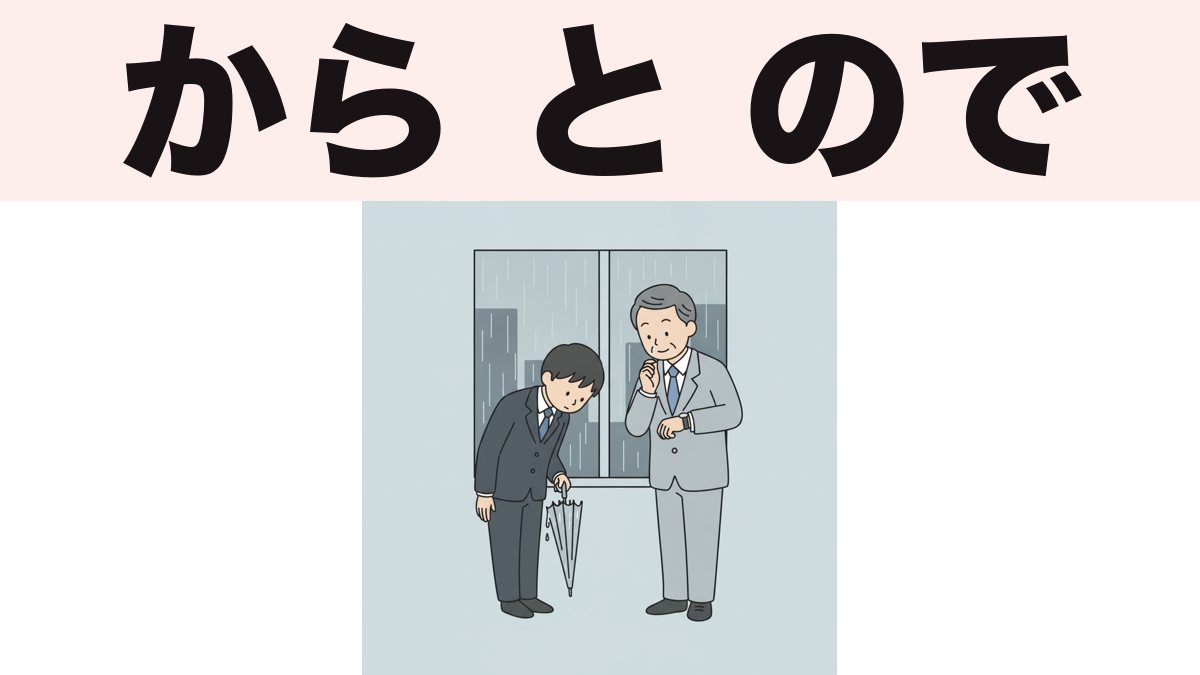
から presents a reason as *your* reason; ので presents it as a circumstance that simply exists. That is why ので is the one you want when you are apologising, and から is the one you want when you are arguing.
「から」は「これが私の理由です」と言います。「ので」は「そういう状きょうなんです」と言います。だから、あやまる時は「ので」を使います。強く言いたい時は「から」を使います。
Both translate to "because," so most textbooks put them on the same page and say ので is "more polite." That explanation is not wrong, but it is too small to be useful — it does not tell you why 学生だので is broken, why you cannot answer どうして? with ので, or why から can make a perfectly reasonable excuse sound like talking back.
The basics
What is the actual difference between から and ので?
から points at a reason and says this is why, and I stand behind it. ので puts a reason on the table and steps away from it — the situation is what it is, and the speaker is not pushing.
雨が降っているから、行きません。 — It's raining, so I'm not going. (my reason, my decision) 雨が降っているので、行きません。 — It's raining, so I'm not going. (the rain decided this, not me)
The information is identical. The posture is not. から puts your hand on the reason; ので leaves it on the table where anyone can see it.
This is also why ので is the default in announcements, signs, and customer service — places where nobody wants to sound like they are making a personal argument at you.
工事中ですので、ご注意ください。 — Construction is in progress, so please take care. (formal, a sign)
How do you attach them to a sentence?
This is where the actual errors happen, and it has nothing to do with politeness.
から attaches to a finished sentence — plain or polite, either is fine.
高いから買いません。 — It's expensive, so I won't buy it. (plain + から) 高いですから買いません。 — It's expensive, so I won't buy it. (polite + から, formal)
ので attaches to the noun-modifying form, the same shape a clause takes when it sits in front of a noun. For verbs and い-adjectives that looks identical to the plain form, so nothing seems to happen:
高いので買いません。 — It's expensive, so I won't buy it. 時間がないので、また今度。 — I don't have time, so let's do it another time.
But for な-adjectives and nouns, だ turns into な:
| Word type | Plain form | With から | With ので |
|---|---|---|---|
| Verb | 行く | 行くから | 行くので |
| い-adjective | 高い | 高いから | 高いので |
| な-adjective | 静かだ | 静かだから | 静かなので |
| Noun + だ | 学生だ | 学生だから | 学生なので |
| Polite verb | 行きます | 行きますから | 行きますので |
学生だので and 静かだので are the single most common mistake with this grammar, and the fix is one character.
Which one is safer for a beginner?
ので, for one blunt reason: it is almost impossible for ので to sound rude, and から can sound rude by accident.
If you are late, apologising, refusing an invitation, or explaining yourself to anyone above you, reach for ので. Save から for conversations with friends and for moments where you actually do want to assert your reason.
電車が遅れたので、遅くなりました。すみません。 — The train was delayed, so I'm late. I'm sorry. (polite, an apology that lands well)
Beyond the basics
Why does ので sound more polite if both can be polite?
Because politeness in Japanese is mostly about how much of yourself you put into the sentence. ですます makes the form polite. から and ので change how much you are visibly pushing.
Say you are late and your boss asks why. Both of these are grammatically polite:
電車が遅れましたから。 — Because the train was delayed. (grammatically fine, but it lands as a defence) 電車が遅れたので… — The train was delayed, so… (the same fact, offered rather than argued)
The first one is not incorrect Japanese. It just carries a faint "and therefore this is not my fault," which is exactly the note you do not want in an apology. This is the same instinct behind the whole polite-vs-casual switch: the more you soften your own presence, the more polite you sound.
What happens to ので in fast speech?
It contracts to んで. Very common, very casual, and invisible in textbooks.
急いでるんで、また後で。 — I'm in a hurry, so, later. (casual, spoken)
You will hear this constantly and see it written almost never. Recognize it; write ので.
Why does から show up at the end of sentences?
Because から can close a sentence and ので cannot. This gives から two jobs that ので simply does not have.
First, it is how you answer a "why" question:
どうして来なかったんですか。 — Why didn't you come? 忙しかったからです。 — Because I was busy.
You cannot say 忙しかったのでです. If someone asks どうして, the answer ends in からです — no exceptions.
Second, から can trail off and leave the conclusion unsaid, which is one of the most Japanese things in this entire grammar point:
もう遅いから… — It's already late, so… (the "so I'm going home" never gets said)
The listener finishes the sentence in their own head. Saying the rest out loud would be heavier and less polite, not clearer.
How does it sound in anime?
から carries emotion, so it is everywhere in dialogue — and usually attached to だ, which makes it audible even if you catch nothing else in the line.
君がいるから、大丈夫。 — Because you're here, it's fine. (casual, warm) だから言ったのに。 — That's why I told you. (casual, exasperated)
だから at the start of a sentence is its own thing: it means "that's why" when calm, and "I told you" when a character is annoyed. Tone does all the work. なので at the start of a sentence does the same job much more neutrally, and has become extremely common in everyday speech even though older style guides dislike it.
When does から beat ので?
Whenever the sentence after it is a command, a warning, an invitation, or a strong statement of will. ので is too passive to carry those.
危ないから、触らないで。 — It's dangerous, so don't touch it. (natural) 時間があるから、ゆっくり行こう。 — We have time, so let's take it slow. (natural)
危ないので、触らないで is not ungrammatical, but it sounds like a recorded announcement rather than a person stopping you. If you are telling someone what they should or shouldn't do, から is the connector with enough push behind it.
Common mistakes
- 学生だので / 静かだので. だ becomes な in front of ので. 学生なので, 静かなので. This one error accounts for most ので mistakes.
- Answering どうして with ので. The answer to a why-question ends in からです. のでです does not exist.
- から in an apology to someone senior. Grammatically fine, socially risky — it reads as a defence. Use ので and let the fact speak.
- ので with a command. 危ないので触るな sounds like a public sign giving orders. から fits a person telling another person.
- Assuming ですから is the polite version of から. It is not a politeness upgrade — it is から attached to a polite sentence, and in a disagreement it can sound more forceful, not less: ですから、無理です lands close to "as I have already said, it's impossible."
から and ので at a glance
| から | ので | |
|---|---|---|
| Feel | My reason, I stand behind it | Just how things are |
| Attaches to | Plain or polite sentence | Noun-modifying form (だ → な) |
| Can end a sentence | Yes — 〜からです | No |
| With commands / invitations | Natural | Stiff, sign-like |
| In apologies | Risky — sounds defensive | The safe choice |
| Casual contraction | だから (sentence-initial) | んで |
Practice
Answers are hidden — build yours first, then open. Questions 3 and 4 are a pair: only the word type changes, but the attachment does too.
1. Join with から: 高い / 買いません
Show answer
高いから買いません — から attaches straight to a finished plain sentence. Nothing changes shape.
2. Join with ので: 高い / 買いません
Show answer
高いので買いません — い-adjectives look identical before ので, so there is nothing to change here.
3. Join with ので: 静かだ / よく寝られます
Show answer
静かなのでよく寝られます — な-adjectives take な, not だ, in front of ので. 静かだので is wrong.
4. Join with ので: 学生だ / お金がありません
Show answer
学生なのでお金がありません — a noun plus だ also becomes な before ので. This is the pair to question 3: same rule, different word type.
5. Answer this question: どうして休んだんですか。
Show answer
病気だったからです — a why-question is answered with からです. のでです is impossible, because ので cannot end a sentence.
6. Something is wrong here: うるさいので、静かにしろ。
Show answer
うるさいから、静かにしろ — the sentence ends in a command, so it needs から. ので in front of an order sounds like a public announcement, not a person.
7. You are 20 minutes late to a meeting with a client. Which do you use, and why?
Show answer
ので — 電車が遅れたので、遅くなりました。から would put your reason forward as a defence, which is the opposite of what an apology is for.
8. What does んで mean in 急いでるんで、失礼します?
Show answer
ので — んで is the casual spoken contraction of ので. Understand it when you hear it; write ので.
9. What is the speaker doing in もう遅いから…?
Show answer
Leaving the conclusion unsaid — から can close a sentence, so the "…so I'm going home" is dropped and the listener supplies it. Finishing it out loud would sound blunter, not clearer.
10. Why can ですから sound forceful in an argument?
Show answer
It restates your reason instead of offering it — ですから、無理です reads close to "as I already said, it's impossible." Polite form, but から is still pointing at your own position.
FAQ
Is ので always more polite than から? It is more neutral, which in most situations reads as more polite. But in a friendly conversation, ので everywhere sounds distant and formal — with friends, から is the natural choice and ので can feel like you are keeping them at arm's length.
Can I use ですので? Yes, and you will see it in announcements and business writing: 本日は休業日ですので. In ordinary polite conversation, なので or ので after the plain form is more common and less heavy.
What is the difference between だから and なので at the start of a sentence? Both mean "so" / "that's why." だから carries more force and can sound impatient depending on tone. なので is flat and neutral, and is now extremely common in speech and casual writing, even though it began as a colloquialism.
Are there other ways to say "because"? Yes — ため(に) is the formal written one (事故のため、電車が遅れています), and もの / もん is the childish, sulky one (だって、忙しいもん = "but I'm busy"). もん in particular is worth recognising from anime, where it marks a character as young or deliberately petulant.
Does から have other meanings? It does, and they are unrelated to reasons: から also marks a starting point in time or space (9時から = from nine o'clock, 東京から = from Tokyo). Which meaning applies is decided by what comes before it — a noun means "from," a full clause means "because."
Vocabulary from this article
Tap the block to select all of it, then copy. In Anki: File → Import, note type Basic, separator Tab — the first column becomes the front, the second the back.
雨	あめ — rain
高い	たかい — expensive, tall
静か	しずか — quiet
学生	がくせい — student
電車	でんしゃ — train
遅れる	おくれる — to be late, to be delayed
忙しい	いそがしい — busy
危ない	あぶない — dangerous
触る	さわる — to touch
急ぐ	いそぐ — to hurry
工事中	こうじちゅう — under construction
注意	ちゅうい — caution
休業日	きゅうぎょうび — closed day, day off
病気	びょうき — illness
事故	じこ — accident
時間	じかん — time
無理	むり — impossible, unreasonable
失礼	しつれい — rudeness, "excuse me"
I'm Yuuki, a Japanese teacher based in Tokyo. I've taught on italki as a Top 1% teacher and watched over 1,500 anime. In lessons, nobody struggles with the meaning of these two — they struggle with 学生だので, and with using から in an apology and wondering why the room got slightly cooler.
Sources: the author's own lessons and standard reference grammars.
どちらも英語では because です。だから多くの本は「ので」の方がていねいです、とだけ書きます。でもそれでは足りません。「学生だので」がなぜ間ちがいなのか、「どうして?」に「ので」で答えられないのはなぜか、それが分からないからです。
基本の形
意味はどうちがいますか?
「から」は理由を指さして、「これが理由です」と言います。「ので」は理由をそこに置いて、自分は下がります。
雨が降っているから、行きません。 — It's raining, so I'm not going. (私が決めました) 雨が降っているので、行きません。 — It's raining, so I'm not going. (雨が決めました)
情報は同じです。気もちがちがいます。
お店のアナウンスや看板は、ほとんど「ので」です。だれも、お客さんに自分の意見を言いたくないからです。
工事中ですので、ご注意ください。 — Construction is in progress, so please take care.
どうやってつなげますか?
ここで間ちがいが起きます。ていねいさとは関係ありません。
「から」は文の形のままつなげます。ふつうの形でも、ていねいな形でも大じょうぶです。
高いから買いません。 — It's expensive, so I won't buy it. 高いですから買いません。 — It's expensive, so I won't buy it.
「ので」は名詞の前に来る形につなげます。動詞と「い形容詞」は形が同じなので、何も変わりません。
高いので買いません。 — It's expensive, so I won't buy it. 時間がないので、また今度。 — I don't have time, so let's do it another time.
でも「な形容詞」と名詞は、「だ」が「な」になります。
| ことばの種類 | ふつうの形 | から | ので |
|---|---|---|---|
| 動詞 | 行く | 行くから | 行くので |
| い形容詞 | 高い | 高いから | 高いので |
| な形容詞 | 静かだ | 静かだから | 静かなので |
| 名詞+だ | 学生だ | 学生だから | 学生なので |
| ていねいな動詞 | 行きます | 行きますから | 行きますので |
「学生だので」「静かだので」は、いちばん多い間ちがいです。直すのは1文字だけです。
はじめはどちらを使うといいですか?
「ので」です。理由は1つです。「ので」は失礼になりにくいですが、「から」はうっかり失礼になります。
おくれた時、あやまる時、さそいをことわる時、目上の人に説明する時は「ので」を使ってください。
電車が遅れたので、遅くなりました。すみません。 — The train was delayed, so I'm late. I'm sorry.
もう少し先へ
どちらもていねいな形にできるのに、なぜ「ので」の方がていねいですか?
日本語のていねいさは、「自分をどれだけ前に出さないか」で決まるからです。「です・ます」は形をていねいにします。「から」と「ので」は、自分の押しの強さを変えます。
おくれて、上司に理由を聞かれたとします。どちらも文法はていねいです。
電車が遅れましたから。 — Because the train was delayed. (言い訳に聞こえます) 電車が遅れたので… — The train was delayed, so… (事実を出すだけです)
上の文も、間ちがいではありません。でも「だから私は悪くありません」という音が少し残ります。あやまる時にいちばん出したくない音です。
速く話す時はどうなりますか?
「んで」になります。とても多いですが、教科書には出てきません。
急いでるんで、また後で。 — I'm in a hurry, so, later.
聞いて分かればいいです。書く時は「ので」を使ってください。
なぜ「から」は文の終わりに来ますか?
「から」は文を終われますが、「ので」は終われません。だから「から」には仕事が2つ多いです。
1つめ。「どうして」の答えになります。
どうして来なかったんですか。 — Why didn't you come? 忙しかったからです。 — Because I was busy.
「忙しかったのでです」とは言えません。
2つめ。後を言わないで終われます。
もう遅いから… — It's already late, so…
「だから帰ります」は言いません。聞く人が心の中で終わらせます。ぜんぶ言う方が、重くて失礼です。
アニメではどう聞こえますか?
「から」は気もちを運ぶので、せりふによく出ます。だいたい「だから」の形なので、聞き取りやすいです。
君がいるから、大丈夫。 — Because you're here, it's fine. だから言ったのに。 — That's why I told you.
文のはじめの「だから」は、落ち着いている時は「そういうわけで」、おこっている時は「言ったでしょ」になります。声で決まります。「なので」は同じ仕事をもっと静かにします。
「から」の方がいいのはどんな時ですか?
後ろが命令・注意・さそい・強い気もちの時です。
危ないから、触らないで。 — It's dangerous, so don't touch it. 時間があるから、ゆっくり行こう。 — We have time, so let's take it slow.
「危ないので触らないで」も間ちがいではありませんが、録音のアナウンスみたいです。人が止めている感じがしません。
よくある間違い
- 学生だので / 静かだので。 「ので」の前では「だ」が「な」になります。学生なので、静かなので。
- 「どうして」に「ので」で答える。 答えは「からです」です。「のでです」はありません。
- 目上の人にあやまる時の「から」。 文法は合っていますが、言い訳に聞こえます。
- 命令の前の「ので」。 「危ないので触るな」は看板の言い方です。
- 「ですから」はていねいな「から」だと思うこと。 ちがいます。言い合いの中では、もっと強く聞こえます。「ですから、無理です」は「さっきも言いましたが」に近いです。
から と ので のちがい
| から | ので | |
|---|---|---|
| 気もち | 私の理由です | そういう状きょうです |
| つなぐ形 | 文のまま | 名詞の前の形(だ→な) |
| 文を終われる | はい(〜からです) | いいえ |
| 命令・さそいの前 | 自然 | かたい |
| あやまる時 | 少しあぶない | 安全 |
| 短くなる形 | だから(文のはじめ) | んで |
練習
答えはかくれています。まず自分の答えを作ってから開いてください。3番と4番は対になっています。
1. 「から」でつなげてください: 高い / 買いません
答えを見る
高いから買いません — 「から」は文の形のままつなげます。何も変えません。
2. 「ので」でつなげてください: 高い / 買いません
答えを見る
高いので買いません — 「い形容詞」は「ので」の前でも形が同じです。
3. 「ので」でつなげてください: 静かだ / よく寝られます
答えを見る
静かなのでよく寝られます — 「な形容詞」は「だ」ではなく「な」になります。「静かだので」は間ちがいです。
4. 「ので」でつなげてください: 学生だ / お金がありません
答えを見る
学生なのでお金がありません — 名詞+「だ」も「な」になります。3番と同じルールで、ことばの種類がちがうだけです。
5. 答えてください: どうして休んだんですか。
答えを見る
病気だったからです — 「どうして」の答えは「からです」です。「ので」は文を終われないので使えません。
6. 直してください: うるさいので、静かにしろ。
答えを見る
うるさいから、静かにしろ — 後ろが命令なので「から」です。「ので」だとアナウンスみたいになります。
7. お客さんとの約束に20分おくれました。どちらを使いますか。
答えを見る
ので — 電車が遅れたので、遅くなりました。「から」だと自分の理由を前に出すので、あやまる気もちが消えます。
8. 「急いでるんで、失礼します」の「んで」は何ですか。
答えを見る
ので — 話す時の短い形です。聞いて分かればいいです。書く時は「ので」にします。
9. 「もう遅いから…」で、話す人は何をしていますか。
答えを見る
後を言わないで終わっています — 「から」は文を終われるので、「だから帰ります」を言いません。聞く人が心の中で終わらせます。
10. 言い合いの中で「ですから」が強く聞こえるのはなぜですか。
答えを見る
理由をもう一度出すからです — 「ですから、無理です」は「さっきも言いましたが」に近い音になります。形はていねいでも、「から」は自分の立場を指しています。
よくある質問
「ので」はいつも「から」よりていねいですか。 「ので」は中立です。多くの場面ではそれがていねいに聞こえます。でも友だちとの会話でずっと「ので」を使うと、遠く感じます。友だちには「から」が自然です。
「ですので」は使えますか。 使えます。アナウンスや仕事の文章でよく見ます。「本日は休業日ですので」。ふつうの会話では「なので」や「ので」の方が軽いです。
文のはじめの「だから」と「なので」はどうちがいますか。 どちらも「そういうわけで」です。「だから」は強くて、声によっては少しいらいらして聞こえます。「なので」は静かで、今はとても多く使われます。
ほかに「because」の言い方はありますか。 あります。「ため(に)」は書きことばでかたい形です(事故のため、電車が遅れています)。「もの・もん」は子どもっぽい形です(だって、忙しいもん)。アニメでは「もん」がよく出ます。
「から」にはほかの意味がありますか。 あります。時間や場所のはじまりです(9時から、東京から)。前が名詞なら「from」、前が文なら「because」です。
この記事に出た単語
ブロックをタップすると全部選べます。そのままコピーしてください。Anki では ファイル → 読み込み、ノートタイプ 基本、区切り タブ。1列目が表、2列目が裏になります。
雨	あめ — rain
高い	たかい — expensive, tall
静か	しずか — quiet
学生	がくせい — student
電車	でんしゃ — train
遅れる	おくれる — to be late, to be delayed
忙しい	いそがしい — busy
危ない	あぶない — dangerous
触る	さわる — to touch
急ぐ	いそぐ — to hurry
工事中	こうじちゅう — under construction
注意	ちゅうい — caution
休業日	きゅうぎょうび — closed day, day off
病気	びょうき — illness
事故	じこ — accident
時間	じかん — time
無理	むり — impossible, unreasonable
失礼	しつれい — rudeness, "excuse me"
私はユウキです。東京で日本語を教えています。 italki の Top 1% の先生で、アニメは1,500本以上見ました。レッスンでは、この2つの意味で止まる人はいません。止まるのは「学生だので」と、あやまる時に「から」を使って、へやの空気が少し冷たくなるところです。
More drills like the ones above, plus a timed JLPT-style mock test: Practice · N4上のような練習問題と、時間つきのJLPT形式のもぎ試験: 練習ページ · N4
Want to try this in a real conversation?
本当の会話で、ためしてみませんか?
30-minute trial lesson, $13. Times shown in your own timezone.
30分の体験レッスン、$13。時間はあなたのタイムゾーンで表示されます。
Book a trial lesson · $13