〜てから: "after doing," and why 食べたから means something completely different〜てから: 「食べたから」とは全然ちがいます
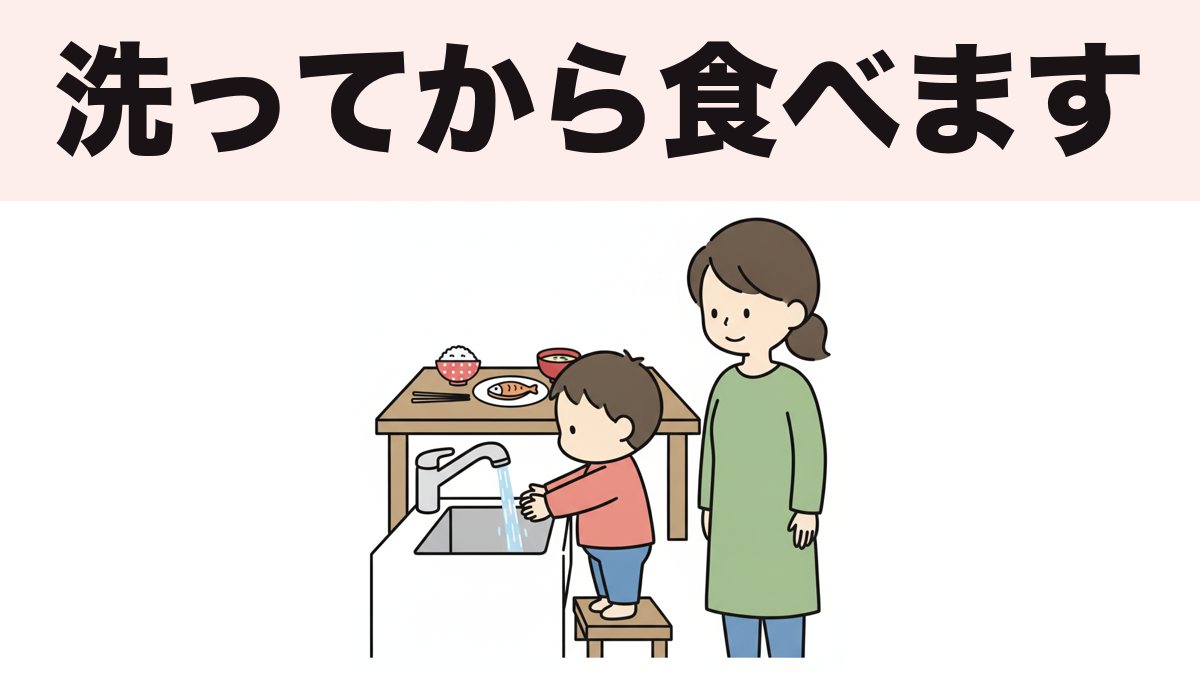
〜てから means "after doing X, then Y," and it insists that X finishes first. The trap is one letter: 食べ**て**から is "after eating," but 食べ**た**から is "because I ate." Same から, completely different sentence.
「〜てから」は「Xをしてから、Yをする」です。Xが終わってからでないとYをしません。わなは1文字です。「食べ**て**から」は "after eating"。「食べ**た**から」は "because I ate"。同じ「から」で、ぜんぜんちがう文です。
Beginners meet から twice within a few weeks — once as "because," once as "after" — and nobody warns them that the difference lives entirely in the syllable before it.
The basics
How do you build it?
Take the te-form and add から.
verb (te-form) + から
手を洗ってから、食べてください。 — Please wash your hands, then eat. (polite request) 仕事が終わってから、電話します。 — I'll call after work finishes. (polite)
The tense of the whole sentence lives on the final verb. 洗ってから食べました is past; 洗ってから食べます is present or future. The てから part never changes shape, which makes it one of the easier connectors to use once your te-form is reliable.
The one-letter trap
| Form | Meaning | Example |
|---|---|---|
| 〜てから | After doing | 食べてから、出かけます |
| 〜たから | Because (did) | 食べたから、お腹がいっぱいです |
ご飯を食べてから、出かけます。 — I'll go out after eating. (polite — sequence) ご飯を食べたから、お腹がいっぱいです。 — I'm full because I ate. (polite — reason)
Read those two out loud a few times. The whole distinction is て versus た, and it flips the sentence from "when" to "why." For the "because" side of the family, see から vs ので.
It emphasises the order
Plain te-form already connects two actions. てから adds the insistence that the first one is complete:
朝ごはんを食べて、学校に行きます。 — I eat breakfast and go to school. (polite — two actions, loosely sequenced)
Compare 食べてから学校に行きます, which says the eating has to be finished first. In instructions, recipes and rules, てから is the natural choice precisely because that insistence is the point.
Beyond the basics
てから vs あとで
Both mean "after," and they are not interchangeable.
| Form | Feel | Example |
|---|---|---|
| 〜てから | A must finish before B; tight link | 手を洗ってから食べる |
| 〜たあとで | Simply later in time; looser | 食べたあとで散歩する |
映画を見たあとで、ご飯を食べました。 — After the film, we ate. (polite past — just the order of events)
てから carries a sense of prerequisite. あとで is neutral about whether one thing enables the other. If you can insert "first" into the English and it still sounds right, てから is your form.
Note also the shapes: あとで takes the past plain form (見たあとで), while から takes the te-form (見てから). Mixing them up produces 見たから, which — as above — means "because I watched."
The second meaning: elapsed time
〜てから also marks the starting point of a duration:
日本に来てから、3年になります。 — It's been three years since I came to Japan. (polite) 日本語を始めてから、半年しか経っていません。 — It's only been six months since I started Japanese. (polite)
This is enormously useful in self-introductions and is probably the sentence pattern you will use most in your first conversations. Note the verbs that pair with it: なる, 経つ, and often a counter for the period.
〜てからでないと
Adding でないと makes it a condition: "not until after."
予約してからでないと、入れません。 — You can't get in unless you book first. (polite)
This is common in rules and shop notices, and it is worth recognising even if you never produce it.
One てから per sentence
Chaining several てから clauses sounds heavy. For a list of ordered steps, use plain te-forms and reserve てから for the step where the order genuinely matters:
顔を洗って、歯を磨いてから、出かけます。 — I wash my face, brush my teeth, and then head out. (polite — one てから, at the point that matters)
Where it shows up in anime
てから is the grammar of thresholds — the moment after which everything changed:
あいつに会ってから、全部変わった。 — Everything changed after I met him. (casual — the elapsed-time sense, used dramatically)
The duration meaning is what gives lines like this their weight. It is not just "after"; it marks a before and an after.
Common mistakes
- Writing たから when you mean てから. 食べたから出かけます means "I'm going out because I ate." Check the syllable.
- Using てから with あとで's shape. 食べたてから and 食べてあとで are both broken. てから takes the te-form; あとで takes the past.
- Stacking three or four てから clauses. Use plain te-forms for the ordinary steps.
- Using てから when there is no real sequence. 日本が好きになってから日本語を勉強します is odd unless you genuinely mean the liking had to come first.
- Forgetting that the tense sits on the last verb. 洗ってからました is not a thing; it is 洗ってから食べました.
Practice
Answers are hidden — build yours first, then open. Questions 2 and 3 are a pair: one letter changes, and the sentence changes meaning entirely.
1. Say "please wash your hands, then eat."
Show answer
手を洗ってから、食べてください — te-form + から, and the request goes on the final verb.
2. What does ご飯を食べてから、出かけます mean?
Show answer
"I'll go out after eating" — て + から is sequence. The eating has to finish first.
3. What does ご飯を食べたから、お腹がいっぱいです mean?
Show answer
"I'm full because I ate" — た + から is reason. This is the pair to question 2: one syllable flips "when" into "why."
4. Something is wrong here: 映画を見てあとで、ご飯を食べました。
Show answer
見たあとで — あとで takes the past plain form. Only から takes the te-form.
5. Say "it's been three years since I came to Japan."
Show answer
日本に来てから、3年になります — the elapsed-time sense. てから marks the starting point and なる measures from it.
6. What is the difference between 食べて、行きます and 食べてから、行きます?
Show answer
Loose sequence vs "the eating must finish first" — てから adds insistence on the order, which is why recipes and rules use it.
7. Say "you can't get in unless you book first."
Show answer
予約してからでないと、入れません — でないと turns the sequence into a condition. Common on shop notices.
8. Something is wrong here: 顔を洗ってから、歯を磨いてから、出かけます。
Show answer
顔を洗って、歯を磨いてから、出かけます — one てから per sentence. Use plain te-forms for the ordinary steps.
9. Where does the tense go in 洗ってから食べました?
Show answer
On the final verb, 食べました — てから never changes shape, whatever the tense of the sentence.
10. Translate: あいつに会ってから、全部変わった。
Show answer
"Everything changed after I met him" — the elapsed-time sense, marking a before and an after rather than a simple sequence.
FAQ
Can てから attach to adjectives or nouns? No — verbs only. For nouns, use 〜のあとで: 授業のあとで.
Is から here the same word as the "because" から? Historically yes, and it also appears as "from" in 東京から. The te-form in front is what selects the "after" reading.
Can I use it with negative verbs? Rarely, and it sounds odd. 食べないでから is not natural. Use 食べる前に ("before eating") instead.
What is 〜て以来? A more formal version of the elapsed-time sense: 卒業して以来 ("since graduating"). Written register.
Does it need a comma? No, but one after the から clause is common and makes longer sentences easier to read.
Is 〜てからというもの a related form? Yes — it is an emphatic literary version meaning "ever since." Recognise it in novels; you will not need to produce it.
Vocabulary from this article
Tap the block to select all of it, then copy. In Anki: File → Import, note type Basic, separator Tab — the first column becomes the front, the second the back.
手	て — hand
洗う	あらう — to wash
食べる	たべる — to eat
仕事	しごと — work, job
終わる	おわる — to end, to finish
電話	でんわ — telephone, phone call
出かける	でかける — to go out
お腹	おなか — stomach
朝ごはん	あさごはん — breakfast
学校	がっこう — school
映画	えいが — film, movie
散歩	さんぽ — a walk
日本	にほん — Japan
来る	くる — to come
始める	はじめる — to begin
半年	はんとし — half a year
経つ	たつ — to pass (of time)
予約	よやく — reservation
入る	はいる — to enter
顔	かお — face
歯	は — tooth
磨く	みがく — to brush, to polish
全部	ぜんぶ — everything
変わる	かわる — to change
授業	じゅぎょう — class, lesson
卒業	そつぎょう — graduation
I'm Yuuki, a Japanese teacher based in Tokyo. I've taught on italki as a Top 1% teacher and watched over 1,500 anime. 食べてから and 食べたから come up in the same beginner lesson and then never get separated again unless someone points at them side by side. Say both out loud once, and the difference sticks.
Sources: the author's own lessons and standard reference grammars.
初級では「から」を数しゅうかんの間に2回ならいます。1回は「because」、1回は「after」。そして、ちがいが前の1音だけにあることは、だれも言ってくれません。
基本
作り方
「て形」に「から」をつけます。
動詞(て形)+ から
手を洗ってから、食べてください。 — Please wash your hands, then eat. 仕事が終わってから、電話します。 — I'll call after work finishes.
文のじかんは、さいごの動詞にあります。「洗ってから食べました」はかこ、「洗ってから食べます」は今かこれからです。「てから」の形は変わりません。
1文字のわな
| 形 | 意味 | れい |
|---|---|---|
| 〜てから | 〜したあとで | 食べてから、出かけます |
| 〜たから | 〜したので | 食べたから、お腹がいっぱいです |
ご飯を食べてから、出かけます。 — I'll go out after eating. ご飯を食べたから、お腹がいっぱいです。 — I'm full because I ate.
声に出して何回か読んでみてください。ちがいは「て」と「た」だけで、「いつ」が「なぜ」に変わります。
順番を強く言います
「て形」だけでも動作はつながります。「てから」は「先のことが終わってから」を強く言います。
朝ごはんを食べて、学校に行きます。 — I eat breakfast and go to school.
「食べてから学校に行きます」は、食べ終わってから行く、という意味です。レシピやルールで「てから」が多いのは、そこが大事だからです。
もう少しくわしく
「てから」と「あとで」
どちらも「after」ですが、同じではありません。
| 形 | 感じ | れい |
|---|---|---|
| 〜てから | Aが終わらないとBをしない | 手を洗ってから食べる |
| 〜たあとで | ただ、あとで | 食べたあとで散歩する |
映画を見たあとで、ご飯を食べました。 — After the film, we ate.
形もちがいます。「あとで」はかこの形(見たあとで)、「から」はて形(見てから)。まぜると「見たから」になって、「見たので」になってしまいます。
2つ目の意味意味それからの時間
日本に来てから、3年になります。 — It's been three years since I came to Japan. 日本語を始めてから、半年しか経っていません。 — It's only been six months since I started Japanese.
自こしょうかいでとてもよく使います。「なる」「経つ」といっしょに使うことが多いです。
「〜てからでないと」
「でないと」をつけると、じょうけんになります。
予約してからでないと、入れません。 — You can't get in unless you book first.
お店のおしらせによく出ます。
1つの文に「てから」は1つ
いくつもならべると重くなります。ふつうの手じゅんは「て形」で、大事なところだけ「てから」にします。
顔を洗って、歯を磨いてから、出かけます。 — I wash my face, brush my teeth, and then head out.
アニメで聞く形
「てから」は、そこから全部が変わった、という時間のさかい目です。
あいつに会ってから、全部変わった。 — Everything changed after I met him.
よくある間違い
- 「てから」のつもりで「たから」と書く。 「食べたから出かけます」は「食べたので出かけます」です。
- 形をまぜる。 「食べたてから」「食べてあとで」はどちらも間違いです。
- 「てから」を3つも4つもならべる。 ふつうのところは「て形」で十分です。
- 順番がないのに使う。 ほんとうに「先に」でないなら、使いません。
- じかんの場しょをまちがえる。 さいごの動詞につけます。
練習
答えはかくれています。まず自分で作ってから開いてください。2番と3番が対です。1文字で意味が変わります。
1. 「手を洗ってから食べてください」を作ってください。前の形は?
答えを見る
て形「洗って」 — そこに「から」がついて、おねがいはさいごの動詞につきます。
2. 「ご飯を食べてから、出かけます」はどういう意味ですか。
答えを見る
食べたあとで出かけます — 「て」+「から」は順番です。
3. 「ご飯を食べたから、お腹がいっぱいです」はどういう意味ですか。
答えを見る
食べたので、おなかがいっぱいです — 「た」+「から」は理由です。2番と対で、1音で「いつ」が「なぜ」になります。
4. 直してください: 映画を見てあとで、ご飯を食べました。
答えを見る
見たあとで — 「あとで」はかこの形です。て形をとるのは「から」だけです。
5. 「日本に来て3年です」を「てから」で言ってください。
答えを見る
日本に来てから、3年になります — 時間のはじまりを「てから」がしめします。
6. 「食べて、行きます」と「食べてから、行きます」のちがいは?
答えを見る
ゆるいつながり/食べ終わってから — 「てから」は順番を強く言います。
7. 「予約しないと入れません」を「てから」で言ってください。
答えを見る
予約してからでないと、入れません — 「でないと」でじょうけんになります。
8. 直してください: 顔を洗ってから、歯を磨いてから、出かけます。
答えを見る
顔を洗って、歯を磨いてから、出かけます — 「てから」は1つの文に1つです。
9. 「洗ってから食べました」のかこは、どこにありますか。
答えを見る
さいごの「食べました」 — 「てから」の形は変わりません。
10. 「あいつに会ってから、全部変わった」はどういう意味ですか。
答えを見る
会ったその時から、ぜんぶ変わった — 「それから今まで」の意味で、さかい目をしめしています。
この記事に出た単語
ブロックをタップすると全部選べます。そのままコピーしてください。Anki では ファイル → 読み込み、ノートタイプ 基本、区切り タブ。1列目が表、2列目が裏になります。
手	て — hand
洗う	あらう — to wash
食べる	たべる — to eat
仕事	しごと — work, job
終わる	おわる — to end, to finish
電話	でんわ — telephone, phone call
出かける	でかける — to go out
お腹	おなか — stomach
朝ごはん	あさごはん — breakfast
学校	がっこう — school
映画	えいが — film, movie
散歩	さんぽ — a walk
日本	にほん — Japan
来る	くる — to come
始める	はじめる — to begin
半年	はんとし — half a year
経つ	たつ — to pass (of time)
予約	よやく — reservation
入る	はいる — to enter
顔	かお — face
歯	は — tooth
磨く	みがく — to brush, to polish
全部	ぜんぶ — everything
変わる	かわる — to change
私はユウキです。東京で日本語を教えています。 italki の Top 1% の先生で、アニメは1,500本以上見ました。「食べてから」と「食べたから」は同じ初級のレッスンに出てきて、そのあとだれもならべて見せてくれません。一度、声に出して2つならべて読むだけで、もう間違えなくなります。
More drills like the ones above, plus a timed JLPT-style mock test: Practice · N5上のような練習問題と、時間つきのJLPT形式のもぎ試験: 練習ページ · N5
Want to try this in a real conversation?
本当の会話で、ためしてみませんか?
30-minute trial lesson, $13. Times shown in your own timezone.
30分の体験レッスン、$13。時間はあなたのタイムゾーンで表示されます。
Book a trial lesson · $13