ただいま and おかえり: the four greetings a Japanese home runs onただいまとおかえり: 家のドアで使う4つのあいさつ
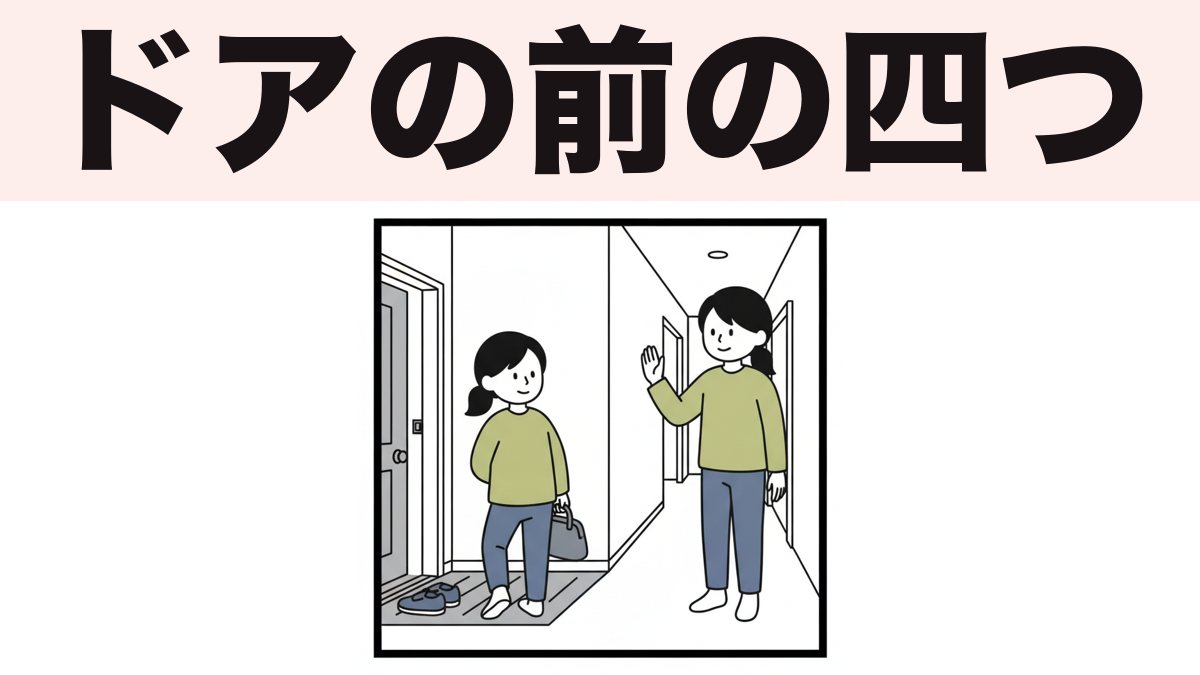
Japanese has four fixed greetings for the front door — two for leaving, two for coming back — and each one is half of a pair that someone else is supposed to finish.
日本語には、家のドアのためだけのあいさつが4つあります。出る時に2つ、帰る時に2つ。どれも「2人で1セット」です。片方を言うと、もう片方を相手が言います。
English has nothing like this. We say "bye" and "hi" and the same two words cover the door, the phone and the supermarket. Japanese splits the door into its own set, and the set is so automatic that a character in anime can say one word and you instantly know they are standing in a genkan with their shoes half off.
The basics
What do ただいま and おかえり literally mean?
Both are sentences with most of the sentence removed.
ただいま is the short form of ただいま帰りました — "I have returned just now." 只今 (ただいま) means "at this very moment," and 帰りました is "returned." Cut the verb off and you are left with a word that means "just now" being used to mean "I'm home," which is why it never mentions a house.
おかえり is the short form of おかえりなさい, which is お + 帰り + なさい — a soft command built from 帰る (to return). Literally it tells the other person to come back, which sounds strange until you realise English does the same thing with "welcome back."
ただいま。 — I'm home. (said by the person walking in) おかえり。 — Welcome back. (said by the person already inside)
They are two halves of one exchange. You never say ただいま to someone who has just walked in, and you never say おかえり about yourself.
And the other two?
The leaving pair works exactly the same way.
いってきます is 行って来ます — "I'll go and come back." The promise to return is built into the grammar, which is why it feels wrong to say it when you are moving out.
いってらっしゃい is 行っていらっしゃい, with the honorific いらっしゃる — "please go and come back."
いってきます。 — I'm off. (said by the person leaving) いってらっしゃい。 — See you, come back safe. (said by the person staying)
So the whole system is four words in two pairs, and the only thing you have to get right is which side of the door you are standing on.
Who says which?
| Situation | The one moving | The one staying |
|---|---|---|
| Leaving the house | いってきます | いってらっしゃい |
| Coming home | ただいま | おかえり/おかえりなさい |
The pattern is worth memorising as a shape, not as four separate vocabulary items. If you are the one whose shoes are moving, you speak first. The person who stays answers.
Do people really say this every day?
Yes, in households that have anyone home to answer. A person living alone often still says ただいま to an empty room, the way English speakers talk to a cat. What is genuinely rare is skipping it while someone is sitting there — silence at the door reads as sulking or as something being wrong.
ただいま。ああ、疲れた。 — I'm home. Ugh, I'm tired. (casual, the greeting comes first and the complaint after) おかえり。ごはん、できてるよ。 — Welcome back. Dinner's ready. (casual, family)
Beyond the basics
おかえり or おかえりなさい — which one?
おかえりなさい is the full form and おかえり is the clipped one, and the choice works like most politeness in Japanese: the shorter it gets, the closer you are.
- おかえり — family, partners, close friends. The default inside a home.
- おかえりなさい — polite, to someone above you, or simply warmer and more careful. A parent might use the full form to a child returning from a long trip.
- おかえりなさいませ — the service-industry version, used by hotel and shop staff. You will never need to say it, but you will hear it.
The same ladder shows up all over polite Japanese, and it is the same instinct described in です and だ: the politeness switch — the form does not change the meaning, it changes the distance.
Why does the anime wife say おかえりなさい、あなた?
Because あなた, in that one specific relationship, is not the textbook "you." A wife addressing her husband as あなた is using it the way English uses "dear" — and it is exactly the line that sends people searching for what おかえりなさい、あなた means.
おかえりなさい、あなた。 — Welcome home, dear. (a wife to her husband; old-fashioned, and very common in fiction)
Two things are worth knowing about it. First, it is dated. Real couples today mostly use each other's names or a nickname, and あなた in this sense belongs to a generation of drama, manga and Showa-era housewives. Second, it is the only common situation where あなた sounds affectionate. Everywhere else, pointing the word あなた at a person you are talking to ranges from distant to openly hostile — Japanese prefers the person's name, their title, or nothing at all. The full picture of why pronouns behave like this is in 俺, 僕, 私: choosing a word for "I"; あなた is the same problem viewed from the other end of the sentence.
おかえりなさいませ、ご主人様
If you have ever seen a maid café scene, you have heard the service version of this greeting aimed at a customer: おかえりなさいませ、ご主人様 — "welcome home, master." The joke, and the entire concept, depends on the door greeting. The café is pretending to be your house, so the staff use the word you would hear at your own front door instead of the いらっしゃいませ that every other shop in Japan uses.
That single swapped word is doing all the work. It is a good example of how fixed these phrases are: change the greeting and you have changed what the building is.
ただいま outside the house
ただいま turns up at work, but in its long form. A colleague coming back from a client visit says:
ただいま戻りました。 — I'm back. (polite, returning to the office) 行ってきます。 — I'm heading out. (said to the office when leaving for an errand)
And separately, ただいま survives with its original meaning of "right now" in announcements and shop talk — ただいま準備中です means "we are preparing at the moment," not that anyone has come home. That split is covered in ただ: free, only, and just now.
What you say when you are the visitor
If you are entering someone else's home, none of these four are yours to use. You are not coming back to your own house, so ただいま would be strange. The visitor's phrase is おじゃまします on the way in and おじゃましました on the way out — see おじゃまします: entering a Japanese home. Your host may well say おかえり to their own family in front of you, and that is the moment to notice you are the one person in the room who does not get to say it.
玄関で「お邪魔します」と言ってから靴を脱ぎます。 — At the entryway, you say ojama shimasu, then take your shoes off. (polite — the visitor's order of operations)
The everyday extras
Real doors have more than four words in them. These are the ones that attach most often:
いってらっしゃい、気をつけてね。 — Off you go, take care. (casual, added almost automatically) おかえり、遅かったね。 — Welcome back, you're late. (casual, family teasing) ただいま、ただいま。 — I'm home, I'm home. (casual, said while carrying bags, half to yourself)
Common mistakes
- Using ただいま when you arrive somewhere for the first time. It means you have returned. Arriving at a friend's house for the first time is おじゃまします, not ただいま.
- Answering ただいま with ただいま. The reply is おかえり. Mirroring the greeting back is the one thing this system does not allow, because the two words describe two different people.
- Saying いってきます when you are not coming back. Leaving a job on your last day, or moving out, calls for 失礼します or お世話になりました. いってきます contains a promise to return.
- Using あなた as a general "you" because you learned it here. The affectionate あなた is a specific, married, somewhat old-fashioned use. Aimed at a stranger or a colleague it sounds cold or accusatory.
- Adding さん or ですか to these. They are complete fixed phrases. おかえりですか exists as a real question ("are you heading home?"), but it is a different sentence, not a politer おかえり.
The four greetings at a glance
| Japanese | Kanji | Literally | When |
|---|---|---|---|
| いってきます | 行って来ます | I'll go and come back | You are leaving |
| いってらっしゃい | 行っていらっしゃい | Please go and come back | Someone else is leaving |
| ただいま | 只今(帰りました) | Just now (I returned) | You are arriving home |
| おかえり/おかえりなさい | お帰りなさい | (Please) come back | Someone else has arrived home |
| ただいま戻りました | 只今戻りました | I have just now returned | You are back at the office |
| おかえりなさいませ | お帰りなさいませ | (Please) come back, humbly | Staff to a customer |
Practice
Answers are hidden — say yours out loud first, then open. Questions 3 and 4 are a pair: the same door, the two different people standing at it.
1. You walk into your own apartment after work. What do you say?
Show answer
ただいま。 — You are the one returning, so you take the returner's half of the pair. It is short for ただいま帰りました.
2. Your roommate walks in. What do you say?
Show answer
おかえり。 — You are the one who stayed, so you answer. With a roommate the clipped form is right; おかえりなさい would sound oddly formal.
3. You are leaving the house in the morning. What do you say?
Show answer
いってきます。 — 行って来ます, "I'll go and come back." The person moving speaks first.
4. Your partner says いってきます. What do you say back?
Show answer
いってらっしゃい。 — The staying half of the same pair. Often with 気をつけて ("take care") attached.
5. You are visiting a Japanese friend's home for the first time. Is ただいま right?
Show answer
No — おじゃまします。 — ただいま means you have returned to your own place. A guest uses おじゃまします going in and おじゃましました going out.
6. You get back to the office after a client meeting. What is the phrase?
Show answer
ただいま戻りました。 — The workplace keeps the full verb. Bare ただいま to your boss is too casual.
7. A shop assistant says ただいま準備中です。 Has someone come home?
Show answer
No. — Here ただいま carries its original meaning, "at this moment." The sentence means "we are getting ready right now."
8. In an anime, a wife says おかえりなさい、あなた。 Who is あなた?
Show answer
Her husband. — In this one relationship あなた works like "dear." It is old-fashioned, and outside it あなた usually sounds distant or confrontational.
9. Why is おかえり a strange thing to say about yourself?
Show answer
Because it is built from 帰る aimed at the other person. — お帰りなさい is a soft command to come back, so it only makes sense pointed at the person who just walked in.
10. It is your last day at a job and you are walking out for good. Is いってきます right?
Show answer
No. — いってきます promises a return. Use 失礼します, or お世話になりました to thank people for having looked after you.
FAQ
What is the difference between おかえり and おかえりなさい? Only politeness and warmth. おかえり is the everyday family form; おかえりなさい is the full one, used to someone above you, to a child back from something big, or by anyone who simply wants to sound a little more careful.
Do Japanese people living alone say ただいま? Many do, to nobody. It is a habit attached to the door rather than to an audience, and plenty of people say it to a pet or to the room.
Is おかえりなさい ever used outside the home? Yes — in hotels, in shops with regular customers, and in maid cafés, always in the おかえりなさいませ form. The point is to make the place feel like the customer's own house, which is why it replaces the normal いらっしゃいませ.
Can I say ただいま to my host family in Japan? Yes, and you should. Once you are living there, you are returning to your own house. Say ただいま at the door and expect おかえり back.
What is the reply to ただいま if I am busy? おかえり on its own is complete. You do not need a sentence, and a call of おかえり〜 from another room is perfectly normal.
Does いってらっしゃい change for a group? No. All four phrases are fixed and do not take plurals, subjects or particles. You can add 気をつけて or 行ってらっしゃいませ for politeness, but the core word stays as it is.
Vocabulary from this article
Tap the block to select all of it, then copy. In Anki: File → Import, note type Basic, separator Tab — the first column becomes the front, the second the back.
ただいま	ただいま — I'm home; just now
おかえり	おかえり — welcome back (casual)
お帰りなさい	おかえりなさい — welcome back (polite)
行ってきます	いってきます — I'm off (and coming back)
行っていらっしゃい	いってらっしゃい — see you, come back safe
帰る	かえる — to return, to go home
戻る	もどる — to go back, to return
お邪魔します	おじゃまします — excuse me for intruding (entering a home)
あなた	あなた — you; dear (wife to husband)
ご主人様	ごしゅじんさま — master (maid café address)
準備中	じゅんびちゅう — in preparation, not open yet
失礼します	しつれいします — excuse me; I'm leaving
気をつけて	きをつけて — take care
疲れた	つかれた — I'm tired
遅い	おそい — late, slow
玄関	げんかん — entryway where shoes come off
I'm Yuuki, a Japanese teacher based in Tokyo. I've taught on italki as a Top 1% teacher and watched over 1,500 anime. These four words are the first ones most learners hear a hundred times before anyone explains them, and the explanation takes about a minute: two pairs, and you only ever get to say half of each.
Sources: the author's own lessons and standard reference grammars.
英語にはこの形がありません。英語は「バイバイ」と「ハーイ」だけで、ドアも電話もお店も同じことばを使います。日本語はドアだけ特別です。とても決まった形なので、アニメでこのことば1つを聞くだけで、その人が玄関に立っていることが分かります。
基本
「ただいま」と「おかえり」は本当は何という意味?
どちらも、長い文の後ろが消えたものです。
ただいまは「ただいま帰りました」の短い形です。「只今(ただいま)」は「今、この時」という意味です。「帰りました」は「もどってきた」です。後ろの動詞が消えたので、「家」ということばが入っていません。
おかえりは「おかえりなさい」の短い形です。「お」+「帰り」+「なさい」で、「帰る」から作ったやさしい命令の形です。
ただいま。 — I'm home. (入ってきた人が言う) おかえり。 — Welcome back. (家にいた人が言う)
この2つで1セットです。入ってきた人に「ただいま」とは言いません。自分のことを「おかえり」とも言いません。
出る時の2つは?
同じ形です。
いってきますは「行って来ます」です。「行って、そして、帰ってきます」という意味が入っています。だから、もう帰らない時には使いません。
いってらっしゃいは「行っていらっしゃい」です。「いらっしゃる」はていねいなことばです。
いってきます。 — I'm off. (出る人が言う) いってらっしゃい。 — See you, come back safe. (家にいる人が言う)
全部で4つ、2セットだけです。自分がどちら側にいるかが分かれば、まちがえません。
だれがどれを言う?
| 場面 | 動く人 | 家にいる人 |
|---|---|---|
| 家を出る時 | いってきます | いってらっしゃい |
| 家に帰った時 | ただいま | おかえり/おかえりなさい |
1つずつ覚えるより、形で覚える方が速いです。くつをはいて動く人が先に言います。家にいる人が答えます。
毎日本当に言う?
家にだれかいる時は言います。1人で住んでいる人も、だれもいない部屋に「ただいま」と言うことがあります。めずらしいのは、だれかがいるのに何も言わないことです。ドアの前でだまっていると、「きげんが悪い」「何かあった」と思われます。
ただいま。ああ、疲れた。 — I'm home. Ugh, I'm tired. (先にあいさつ、後で話) おかえり。ごはん、できてるよ。 — Welcome back. Dinner's ready. (家族・カジュアル)
もう少し先へ
「おかえり」と「おかえりなさい」はどうちがう?
「おかえりなさい」が長い形、「おかえり」が短い形です。日本語では、短くなるほど相手が近いです。
- おかえり — 家族、こいびと、親しい友だち。家の中の普通の形。
- おかえりなさい — ていねい。目上の人に。また、やさしく言いたい時に。
- おかえりなさいませ — お店やホテルの人が使う形。自分が言うことはありません。
これは です と だ の使い分け と同じ考え方です。意味は変わりません。相手との「きょり」が変わります。
アニメの奥さんは、どうして「おかえりなさい、あなた」と言う?
その「あなた」は、教科書の「you」ではありません。奥さんが夫を呼ぶ時の「あなた」は、英語の "dear" に近いです。
おかえりなさい、あなた。 — Welcome home, dear. (妻から夫へ。古い言い方で、物語によく出てくる)
2つ覚えてください。1つ目、これは古い言い方です。今のカップルは名前かニックネームで呼びます。2つ目、「あなた」がやさしく聞こえるのは、この場面だけです。ほかの場面で目の前の人に「あなた」と言うと、冷たく聞こえたり、けんかのように聞こえたりします。日本語では名前や役職で呼ぶか、何も言いません。くわしくは 俺・僕・私の選び方 を見てください。
「おかえりなさいませ、ご主人様」
メイドカフェで、店の人がお客さんに言うことばです。「おかえりなさいませ、ご主人様」」 "welcome home, master"。ほかのお店は全部「いらっしゃいませ」ですが、メイドカフェだけ、家のあいさつを使います。「ここはあなたの家です」というあそびです。
ことばを1つ変えるだけで、建物の意味が変わります。それくらい、このあいさつは決まった形です。
家の外の「ただいま」
会社では、長い形を使います。
ただいま戻りました。 — I'm back. (ていねい。会社にもどった時) 行ってきます。 — I'm heading out. (仕事で外に出る時)
それから、「ただいま」には「今」という元の意味も残っています。「ただいま準備中です」は「今、じゅんびしています」で、だれも家に帰っていません。これは 「ただ」の意味 で説明しています。
お客さんの時のことば
人の家に行く時、この4つは使いません。自分の家に帰ったのではないからです。お客さんは、入る時におじゃまします、出る時におじゃましましたと言います。おじゃまします を見てください。その家の人が家族に「おかえり」と言うのを聞くと思います。その時、それを言えないのは自分だけです。
よくいっしょに使うことば
いってらっしゃい、気をつけてね。 — Off you go, take care. (カジュアル) おかえり、遅かったね。 — Welcome back, you're late. (家族・カジュアル) ただいま、ただいま。 — I'm home, I'm home. (にもつを持ちながら、自分に言う感じ)
よくあるまちがい
- はじめて行く場所で「ただいま」と言う。 「ただいま」は「帰ってきた」という意味です。友だちの家にはじめて行く時は「おじゃまします」です。
- 「ただいま」に「ただいま」と答える。 答えは「おかえり」です。この2つは、ちがう人のことばです。
- もう帰らないのに「いってきます」と言う。 「いってきます」には「帰ってきます」が入っています。会社の最後の日は「失礼します」「お世話になりました」です。
- 「あなた」を普通の "you" として使う。 やさしく聞こえるのは、夫婦の場面だけです。
- 「さん」や「ですか」をつける。 この4つは決まった形です。「おかえりですか」は「家に帰るんですか」という別の質問です。
4つのあいさつ・まとめ
| 日本語 | 漢字 | 元の意味 | いつ |
|---|---|---|---|
| いってきます | 行って来ます | 行って、帰ってきます | 自分が出る時 |
| いってらっしゃい | 行っていらっしゃい | 行って、帰ってきてください | 相手が出る時 |
| ただいま | 只今(帰りました) | 今、帰りました | 自分が帰った時 |
| おかえり/おかえりなさい | お帰りなさい | 帰ってきてください | 相手が帰った時 |
| ただいま戻りました | 只今戻りました | 今、もどりました | 会社にもどった時 |
| おかえりなさいませ | お帰りなさいませ | (とてもていねいな形) | 店の人からお客さんへ |
練習
答えはかくしてあります。先に自分で言ってから開けてください。3と4は同じドアの、2人のことばです。
1. 仕事のあと、自分の家に入ります。何と言いますか。
答えを見る
ただいま。 — 帰ってきたのは自分なので、帰った人のことばを使います。「ただいま帰りました」の短い形です。
2. ルームメイトが入ってきました。何と言いますか。
答えを見る
おかえり。 — 家にいたのは自分なので、答える方です。ルームメイトには短い形が自然です。
3. 朝、家を出ます。何と言いますか。
答えを見る
いってきます。 — 「行って来ます」です。動く人が先に言います。
4. こいびとが「いってきます」と言いました。何と答えますか。
答えを見る
いってらっしゃい。 — 家にいる方のことばです。「気をつけて」をつけることが多いです。
5. 日本の友だちの家に、はじめて行きます。「ただいま」でいいですか。
答えを見る
いいえ、「おじゃまします」です。 — 「ただいま」は自分の家に帰った時のことばです。お客さんは入る時「おじゃまします」、出る時「おじゃましました」。
6. 打ち合わせのあと、会社にもどりました。何と言いますか。
答えを見る
ただいま戻りました。 — 会社では長い形を使います。上司に「ただいま」だけはカジュアルすぎます。
7. 店の人が「ただいま準備中です」と言いました。だれか家に帰りましたか。
答えを見る
いいえ。 — ここの「ただいま」は「今」という元の意味です。「今、じゅんびしています」という意味です。
8. アニメで、妻が「おかえりなさい、あなた」と言いました。「あなた」はだれですか。
答えを見る
夫です。 — この場面の「あなた」は "dear" に近いです。古い言い方で、ほかの場面では冷たく聞こえます。
9. 自分のことを「おかえり」と言わないのは、どうしてですか。
答えを見る
「帰る」を相手に向けたことばだからです。 — 「お帰りなさい」は「帰ってきてください」というやさしい命令です。だから、入ってきた人に向けて言います。
10. 会社の最後の日に出ていきます。「いってきます」でいいですか。
答えを見る
いいえ。 — 「いってきます」は「帰ってきます」という意味です。「失礼します」か「お世話になりました」を使います。
よくある質問
「おかえり」と「おかえりなさい」のちがいは? ていねいさとやさしさだけです。「おかえり」は家族の普通の形、「おかえりなさい」は目上の人に、または少していねいに言いたい時に使います。
1人で住んでいる人も「ただいま」と言いますか。 言う人が多いです。人に言うことばというより、ドアのしゅうかんです。ペットや部屋に言う人もたくさんいます。
「おかえりなさい」は家の外でも使いますか。 はい。ホテル、なじみのお店、メイドカフェでは「おかえりなさいませ」を使います。「ここはあなたの家です」という気持ちで、普通の「いらっしゃいませ」の代わりに使います。
ホストファミリーの家で「ただいま」と言っていいですか。 はい、言ってください。住んでいるなら、自分の家に帰ったのと同じです。「おかえり」が返ってきます。
いそがしい時、「ただいま」に何と答えますか。 「おかえり」だけで十分です。別の部屋から「おかえり〜」と言うのも普通です。
人数が多い時、「いってらっしゃい」は変わりますか。 変わりません。この4つは決まった形で、助詞も主語もつきません。ていねいにしたい時は「気をつけて」「行ってらっしゃいませ」をつけます。
この記事に出た単語
このブロックをタップして全部えらんでから、コピーしてください。Ankiでは File → Import、ノートタイプは Basic、区切りは Tab。左が表、右が裏になります。
ただいま	ただいま — I'm home; just now
おかえり	おかえり — welcome back (casual)
お帰りなさい	おかえりなさい — welcome back (polite)
行ってきます	いってきます — I'm off (and coming back)
行っていらっしゃい	いってらっしゃい — see you, come back safe
帰る	かえる — to return, to go home
戻る	もどる — to go back, to return
お邪魔します	おじゃまします — excuse me for intruding (entering a home)
あなた	あなた — you; dear (wife to husband)
ご主人様	ごしゅじんさま — master (maid café address)
準備中	じゅんびちゅう — in preparation, not open yet
失礼します	しつれいします — excuse me; I'm leaving
気をつけて	きをつけて — take care
疲れた	つかれた — I'm tired
遅い	おそい — late, slow
玄関	げんかん — entryway where shoes come off
ユウキです。東京で日本語を教えています。 italki の Top 1% 講師で、アニメは1,500本以上見ました。この4つは、だれも説明しないうちに100回聞くことばです。説明は1分で終わります。2セットあって、自分が言えるのはいつも片方だけ、それだけです。
More drills like the ones above, plus a timed JLPT-style mock test: Practice · N5上のような練習問題と、時間つきのJLPT形式のもぎ試験: 練習ページ · N5
Want to try this in a real conversation?
本当の会話で、ためしてみませんか?
30-minute trial lesson, $13. Times shown in your own timezone.
30分の体験レッスン、$13。時間はあなたのタイムゾーンで表示されます。
Book a trial lesson · $13