〜たびに: "every time," and why 3日たびに is wrong〜たびに: 「3日たびに」が間違いな理由
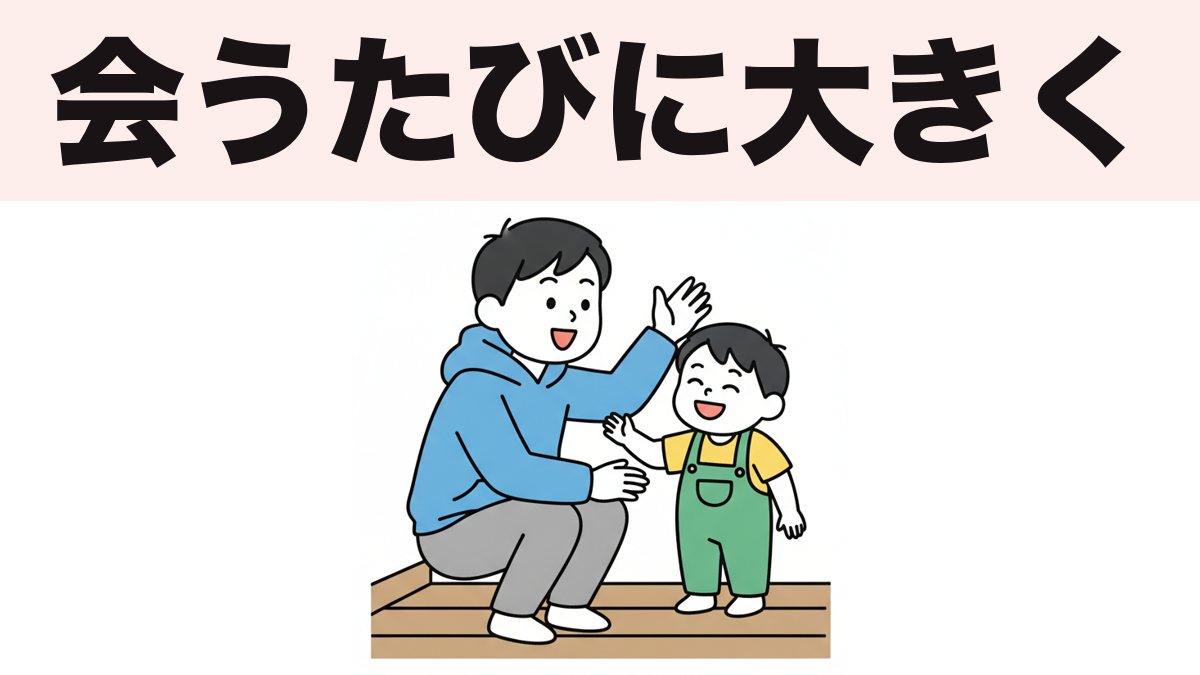
〜たびに means "every time" and it needs an *occasion* — something that happens, like meeting someone or hearing a song. For fixed intervals on a clock or calendar, Japanese uses ごとに instead. 会うたびに is right; 3日たびに is not.
「〜たびに」は「every time」です。ただし、**できごと**がいります。人に会う、歌を聞く、など。時計やカレンダーではかるものには「ごとに」を使います。「会うたびに」は正しく、「3日たびに」は間違いです。
The two forms translate into the same English word, which is why this distinction almost never gets taught. The fix is a single question: is this an event, or a measurement?
The basics
How do you build it?
| In front | Form | Example |
|---|---|---|
| Verb | dictionary form | 会うたびに |
| Noun | + の | 誕生日のたびに |
彼に会うたびに、昔の話をします。 — Every time I meet him, we talk about the old days. (polite) この曲を聞くたびに、高校時代を思い出します。 — Every time I hear this song, I remember high school. (polite)
Note the dictionary form. Even when the sentence is in the past, たびに takes 会う, not 会った — the same relative-tense logic that governs とき clauses.
日本に行くたびに、何か買ってきました。 — Every time I went to Japan, I bought something. (polite past — 行く, not 行った)
たびに vs ごとに
| Form | What it counts | Example |
|---|---|---|
| 〜たびに | Occasions, events | 会うたびに |
| 〜ごとに | Fixed intervals, units | 3日ごとに |
薬は6時間ごとに飲んでください。 — Take the medicine every six hours. (polite — a measured interval) 試合のたびに緊張します。 — I get nervous every match. (polite — an occasion, not an interval)
The test: if you can count it on a clock, a calendar or a ruler, use ごとに. If it is something that happens, use たびに. 3日たびに and 会うごとに are both understandable and both slightly wrong.
It usually goes with a change or a reaction
たびに sentences almost always pair the occasion with something that recurs as a result:
会うたびに、大きくなりますね。 — He gets bigger every time I see him. (polite — the classic thing to say about someone's child)
That sentence is a good template: occasion + たびに + a change, using くなる / になる. It is one of the most natural-sounding things you can say in Japanese, and it costs one grammar point.
Beyond the basics
たびに vs 〜と
Both can mean "whenever." The difference is inevitability.
春になると、桜が咲きます。 — When spring comes, the cherry blossoms bloom. (polite — an automatic natural consequence) 春になるたびに、あの日を思い出します。 — Every time spring comes, I remember that day. (polite — a recurring personal experience)
と states a rule of the world; たびに counts repetitions of an experience. For the full comparison of the conditionals, see たら, れば, と and なら. The short version: と is for laws, たびに is for habits and memories.
たびに vs いつも
いつも means "always" and describes a general state. たびに picks out the individual occasions and links each one to a result.
いつも遅れます。 — He's always late. (polite — a characteristic) 来るたびに遅れます。 — He's late every single time he comes. (polite — occasion by occasion, slightly more pointed)
The second sounds more exasperated, precisely because it counts.
The emotional register
たびに carries a faint weight of accumulation, which is why it shows up so often in nostalgic and romantic contexts:
君の名前を聞くたびに、胸が痛くなる。 — Every time I hear your name, it hurts. (casual, literary — a stock lyric line)
Song lyrics and anime dialogue use this constantly. The grammar itself is neutral, but the shape — a repeated occasion producing a repeated feeling — invites that use.
度 and the たび you already know
たびに is written 度に in kanji, from 度 ("degree, occasion") — the same kanji as in 今度, 一度, 何度. It is unrelated to 旅 (journey), which is also read たび. Context and kanji keep them apart, and the grammar is normally written in kana anyway.
The formal 〜たびごとに
Adding ごと gives an emphatic, slightly legalistic version: 更新のたびごとに ("on each and every renewal"). You will meet it in contracts. You will not need to produce it.
Common mistakes
- Using たびに for clock intervals. 3日たびに, 1時間たびに — use ごとに.
- Using the past form. 会ったたびに is wrong. たびに takes the dictionary form regardless of the sentence's tense.
- Using it for something that happened once. たびに requires repetition, so 生まれるたびに makes no sense for one person.
- Forgetting の after a noun. 誕生日たびに is broken; it is 誕生日のたびに.
- Substituting it for いつも. いつも describes a trait; たびに counts occasions and sounds more pointed.
Practice
Answers are hidden — build yours first, then open. Questions 1 and 2 are a pair: same English word, and the difference is event versus measurement.
1. Say "every time I meet him, we talk about the old days."
Show answer
彼に会うたびに、昔の話をします — meeting is an occasion, so たびに.
2. Say "take the medicine every six hours."
Show answer
薬は6時間ごとに飲んでください — six hours is a measured interval, so ごとに. This is the pair to question 1: English says "every" for both.
3. Something is wrong here: 日本に行ったたびに、何か買ってきました。
Show answer
行くたびに — たびに takes the dictionary form even when the sentence is in the past. The final verb carries the tense.
4. Something is wrong here: 誕生日たびに、写真を撮ります。
Show answer
誕生日のたびに — a noun needs の before たびに.
5. Say "he gets bigger every time I see him."
Show answer
会うたびに、大きくなりますね — occasion + たびに + a change. This template is one of the most natural things you can say.
6. What is the difference between 春になると、桜が咲きます and 春になるたびに、あの日を思い出します?
Show answer
A law of nature vs a recurring personal experience — と states an automatic consequence, たびに counts repetitions.
7. Which sounds more exasperated: いつも遅れます or 来るたびに遅れます?
Show answer
来るたびに遅れます — it counts the individual occasions instead of describing a trait, which makes it more pointed.
8. Something is wrong here: 3日たびに掃除します。
Show answer
3日ごとに掃除します — a calendar interval is a measurement, not an occasion.
9. Which kanji is たびに written with, and what other word shares the reading?
Show answer
度に, and 旅 (journey) shares the reading たび — 度 is the same kanji as in 今度 and 一度. They are unrelated words.
10. Say "every time I hear this song, I remember high school."
Show answer
この曲を聞くたびに、高校時代を思い出します — hearing the song is the occasion; remembering is what recurs.
FAQ
Can たびに attach to a noun without an event meaning? It needs the noun to name an occasion: 試験のたびに, 会議のたびに, 誕生日のたびに. A pure object like 本のたびに makes no sense.
Is 毎回 the same thing? Close. 毎回 is an adverb meaning "every time" and can stand alone: 毎回遅れます. たびに connects two clauses.
Can I use it with negative verbs? Rarely, and it sounds strange. 行かないたびに is not natural.
What about 〜るたび without に? It appears in writing and lyrics — 会うたび — and is a slightly more compact, poetic version. Both are correct.
Is ごとに ever used with events? Yes, occasionally: 試合ごとに強くなる. It sounds a bit more clinical than 試合のたびに, as if counting rather than experiencing.
Does the second clause have to be habitual? Effectively yes. たびに sets up a repeated pairing, so a one-off result reads oddly.
Vocabulary from this article
Tap the block to select all of it, then copy. In Anki: File → Import, note type Basic, separator Tab — the first column becomes the front, the second the back.
度	たび — occasion, time
会う	あう — to meet
昔	むかし — the old days, long ago
話	はなし — story, talk
曲	きょく — song, piece of music
聞く	きく — to hear, to listen
高校	こうこう — high school
時代	じだい — era, period
思い出す	おもいだす — to remember, to recall
誕生日	たんじょうび — birthday
写真	しゃしん — photo
撮る	とる — to take (a photo)
薬	くすり — medicine
時間	じかん — hour, time
飲む	のむ — to drink, to take (medicine)
大きい	おおきい — big
春	はる — spring
桜	さくら — cherry blossom
咲く	さく — to bloom
遅れる	おくれる — to be late
胸	むね — chest, heart
痛い	いたい — painful
試合	しあい — match, game
掃除	そうじ — cleaning
毎回	まいかい — every time
会議	かいぎ — meeting
試験	しけん — exam
I'm Yuuki, a Japanese teacher based in Tokyo. I've taught on italki as a Top 1% teacher and watched over 1,500 anime. 会うたびに大きくなりますね is the sentence I hear Japanese adults say to children constantly, and it is a good one to own early — it is warm, it is natural, and it uses this grammar point exactly as it was designed.
Sources: the author's own lessons and standard reference grammars.
英語ではどちらも "every" になるので、このちがいはほとんど教えてもらえません。直すには、1つ質問すればいいです。「これはできごとですか、はかるものですか」。
基本
作り方
| 前に来るもの | 形 | れい |
|---|---|---|
| 動詞 | じしょ形 | 会うたびに |
| 名詞 | +の | 誕生日のたびに |
彼に会うたびに、昔の話をします。 — Every time I meet him, we talk about the old days. この曲を聞くたびに、高校時代を思い出します。 — Every time I hear this song, I remember high school.
じしょ形です。文がかこでも「会った」にはなりません。
日本に行くたびに、何か買ってきました。 — Every time I went to Japan, I bought something.
「たびに」と「ごとに」
| 形 | 何を数えるか | れい |
|---|---|---|
| 〜たびに | できごと | 会うたびに |
| 〜ごとに | きまったあいだ | 3日ごとに |
薬は6時間ごとに飲んでください。 — Take the medicine every six hours. 試合のたびに緊張します。 — I get nervous every match.
時計・カレンダー・ものさしで数えられるなら「ごとに」。おきることなら「たびに」です。
たいてい「変化」といっしょ
会うたびに、大きくなりますね。 — He gets bigger every time I see him.
これはいい型です。できごと+たびに+変化(〜くなる/〜になる)。日本語でいちばん自ぜんに聞こえる文の1つです。
もう少しくわしく
「たびに」と「〜と」
どちらも「whenever」になります。ちがいは「かならずそうなるか」です。
春になると、桜が咲きます。 — When spring comes, the cherry blossoms bloom. 春になるたびに、あの日を思い出します。 — Every time spring comes, I remember that day.
「と」は世の中のきまり。「たびに」は、くりかえしのけいけんです。
「たびに」と「いつも」
「いつも」はその人のせいしつ。「たびに」は1回1回を数えます。
いつも遅れます。 — He's always late. 来るたびに遅れます。 — He's late every single time he comes.
2つ目の方が、少しきびしく聞こえます。数えているからです。
気もちの色
「たびに」には、つみかさなる感じがあります。だから、なつかしい話やこいの話によく出ます。
君の名前を聞くたびに、胸が痛くなる。 — Every time I hear your name, it hurts.
歌のかしやアニメのせりふでよく使われます。
漢字は「度に」
「たびに」は漢字で「度に」です。「今度」「一度」「何度」と同じ「度」です。「旅」(journey)も「たび」と読みますが、べつのことばです。文法の時はかなで書きます。
かたい「〜たびごとに」
「更新のたびごとに」のように、けいやく書などに出ます。読めればいいです。
よくある間違い
- 時計のあいだに「たびに」。 「3日たびに」「1時間たびに」は「ごとに」です。
- かこの形にする。 「会ったたびに」は間違いです。じしょ形です。
- 1回しかないことに使う。 くりかえしがひつようです。
- 名詞のあとの「の」を落とす。 「誕生日のたびに」です。
- 「いつも」のかわりに使う。 「いつも」はせいしつ、「たびに」は回数です。
練習
答えはかくれています。まず自分で作ってから開いてください。1番と2番が対です。できごとか、はかるものか、のちがいです。
1. 「彼に会うと、いつも昔の話をします」を「たびに」で言ってください。
答えを見る
彼に会うたびに、昔の話をします — 会うことはできごとなので「たびに」です。
2. 「薬は6時間ごとに飲んでください」— どうして「たびに」ではないですか。
答えを見る
6時間ははかるあいだだから — 1番と対で、英語ではどちらも "every" です。
3. 直してください: 日本に行ったたびに、何か買ってきました。
答えを見る
行くたびに — 文がかこでも、たびにの前はじしょ形です。
4. 直してください: 誕生日たびに、写真を撮ります。
答えを見る
誕生日のたびに — 名詞のあとには「の」がいります。
5. 「会うといつも大きくなっています」を「たびに」で言ってください。
答えを見る
会うたびに、大きくなりますね — できごと+たびに+変化の型です。
6. 「春になると桜が咲きます」と「春になるたびにあの日を思い出します」のちがいは?
答えを見る
世の中のきまり/くりかえしのけいけん — 「と」はかならずそうなること、「たびに」は回数です。
7. 「いつも遅れます」と「来るたびに遅れます」— きびしく聞こえるのはどちらですか。
答えを見る
来るたびに遅れます — 1回1回を数えているからです。
8. 直してください: 3日たびに掃除します。
答えを見る
3日ごとに掃除します — カレンダーのあいだは、はかるものです。
9. 「たびに」の漢字は何ですか。同じ読みのべつのことばは?
答えを見る
度に。「旅」も「たび」と読みます — 「度」は「今度」「一度」と同じです。べつのことばです。
10. 「この曲を聞くと高校を思い出します」を「たびに」で言ってください。
答えを見る
この曲を聞くたびに、高校時代を思い出します — 聞くのができごと、思い出すのがくりかえしです。
この記事に出た単語
ブロックをタップすると全部選べます。そのままコピーしてください。Anki では ファイル → 読み込み、ノートタイプ 基本、区切り タブ。1列目が表、2列目が裏になります。
度	たび — occasion, time
会う	あう — to meet
昔	むかし — the old days, long ago
話	はなし — story, talk
曲	きょく — song, piece of music
聞く	きく — to hear, to listen
高校	こうこう — high school
時代	じだい — era, period
思い出す	おもいだす — to remember, to recall
誕生日	たんじょうび — birthday
写真	しゃしん — photo
撮る	とる — to take (a photo)
薬	くすり — medicine
時間	じかん — hour, time
飲む	のむ — to drink, to take (medicine)
大きい	おおきい — big
春	はる — spring
桜	さくら — cherry blossom
咲く	さく — to bloom
遅れる	おくれる — to be late
胸	むね — chest, heart
痛い	いたい — painful
試合	しあい — match, game
掃除	そうじ — cleaning
緊張	きんちょう — nervousness
更新	こうしん — renewal
私はユウキです。東京で日本語を教えています。 italki の Top 1% の先生で、アニメは1,500本以上見ました。「会うたびに大きくなりますね」は、日本の大人が子どもによく言う文です。早くおぼえておくといいです。あたたかくて、自ぜんで、この文法をそのまま使っています。
More drills like the ones above, plus a timed JLPT-style mock test: Practice · N3上のような練習問題と、時間つきのJLPT形式のもぎ試験: 練習ページ · N3
Want to try this in a real conversation?
本当の会話で、ためしてみませんか?
30-minute trial lesson, $13. Times shown in your own timezone.
30分の体験レッスン、$13。時間はあなたのタイムゾーンで表示されます。
Book a trial lesson · $13