The particle の: five jobs, and only one of them is "of助詞「の」: 仕事が5つあって、「of」はそのうち1つだけ
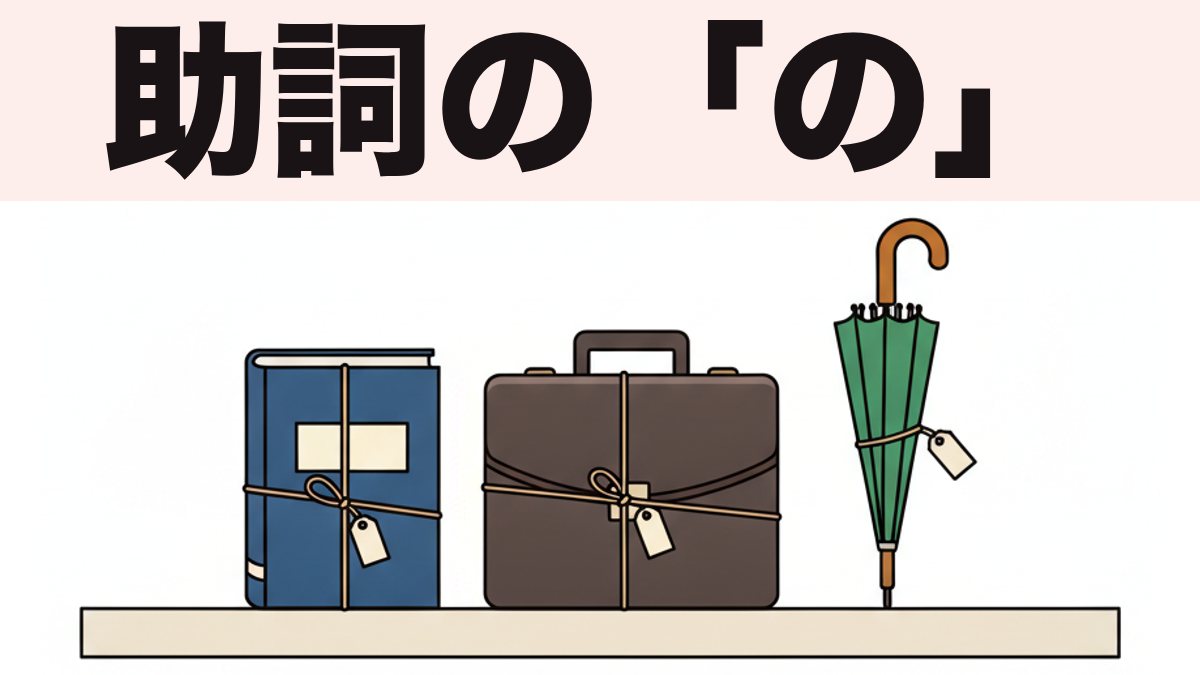
の is the first particle everyone learns and the one they keep using wrong for years, because textbooks teach it as "of" and it is really doing five separate jobs. The one that causes actual errors is this: の links two *nouns*, never an adjective to a noun. 高いの本 is not a sentence.
「の」はいちばん最初に習う助詞で、いちばん長くまちがえ続ける助詞です。教科書が「of」として教えるのに、じつは5つの仕事をしているからです。本当に間ちがいになるのは、これです。「の」は**名詞と名詞**をつなぎます。形容詞と名詞はつなぎません。「高いの本」は文になりません。
Once you can name the five jobs, の stops being a mystery particle that shows up everywhere and becomes a small, well-behaved tool.
The basics
Job one: linking two nouns
This is the "of" everyone learns, and it covers far more than possession.
私の本 — my book (possession) 日本語の先生 — a Japanese teacher (what kind) 木のテーブル — a wooden table (material) 東京の会社 — a company in Tokyo (location) 3時の電車 — the three o'clock train (time)
The order is the reverse of English: the modifier comes first. 日本語の先生 is "Japanese's teacher" — a teacher of Japanese. If you build it the English way (先生の日本語) you get "the teacher's Japanese," which is a different thing entirely.
And の chains happily:
友達のお母さんの車 — my friend's mother's car
The error: adjectives do not take の
い-adjectives attach straight to the noun. な-adjectives take な. Neither takes の.
✗ 高いの本 本○ 高い本 — an expensive book an expensive book✗ 静かの部屋 部屋○ 静かな部屋 — a quiet room
This is the mistake that survives longest, because の feels like glue and learners reach for it whenever two words need joining. The rule: の joins noun to noun. If the first word is an adjective, it needs no glue at all.
Job two: の as "the one"
の can stand in for a noun you have already established. English does this with "one."
赤いのをください。 — I'll take the red one. 大きいのはありますか。 — Do you have a big one? これは私のです。 — This is mine.
Note 私の with nothing after it: "mine." This is the same の, doing the same job — the noun is understood, so it is dropped.
After a な-adjective, this の needs な in front: 静かなのがいい ("I'd like a quiet one").
Beyond the basics
Job three: turning a verb into a noun
Put の after a plain verb and the whole clause becomes a noun you can use as a subject or object.
走るのが好きです。 — I like running. 日本語を勉強するのは楽しい。 — Studying Japanese is fun. 彼が来るのを待っています。 — I'm waiting for him to come.
This is why 好き takes が here — the whole 走るの block is the grammatical subject, exactly as 寿司 is in 寿司が好きです.
There is a rival nominaliser, こと, and they are not always interchangeable:
| Use | Particle | Example |
|---|---|---|
| Something you see, hear or feel directly | の only | 彼が歌うのを聞いた |
| An abstract fact or concept | こと usually | 話すことが大切です |
| Either | Either | 泳ぐのが/ことが好きです |
The rule of thumb: if you were physically present for it, use の. If it is an idea, こと.
Job four: ending a casual question
At the end of a sentence with rising intonation, の makes a soft casual question.
行くの? — Are you going? どうしたの? — What's wrong? 知らないの? — You don't know?
This is the casual form of 〜んですか — the same explanatory の, minus the です. As a statement (行くの。) it sounds softer and is used more by women and children; the neutral casual statement is 行くんだ.
Job five: apposition — "X, the Y"
の can also mean "namely," attaching a name to a role or a role to a name.
友達の田中さん — my friend Tanaka (not "my friend's Tanaka") 社長の山田です。 — I'm Yamada, the company president.
This one is genuinely ambiguous with the possessive reading, and context is all you have. 友達の田中さん could theoretically be "my friend's Tanaka," but nobody would ever mean that, so nobody hears it.
Where the の chain gets confusing
Long の chains are read from the end backwards, like everything else in Japanese.
日本のアニメの歴史の本 — a book (on the history (of anime (of Japan)))
Each の attaches the thing on its left to the thing on its right, and the final noun is what you actually have. This is the same right-edge principle that makes relative clauses readable, and trusting it is what turns long noun phrases from a wall into a sequence.
の in set phrases worth knowing
A handful of extremely common expressions are built on の, and it is easier to learn them whole than to parse them.
| Phrase | Meaning |
|---|---|
| 〜のために | for the sake of; because of |
| 〜のあとで | after |
| 〜のまえに | before |
| 〜のかわりに | instead of |
| 〜のように | like, in the manner of |
家族のために働いています。 — I work for my family. 仕事のあとで食事に行きます。 — I'll go and eat after work. コーヒーのかわりにお茶をください。 — Tea instead of coffee, please.
Each of these is a noun with の in front, which is why the の is there — ため, あと, まえ, かわり and よう are all nouns. Once you see that, the の stops looking like part of an idiom and starts looking like job one, doing its ordinary work.
Note that after a verb these drop the の: 食べたあとで ("after eating"), 食べるまえに ("before eating"). The の only appears when a noun comes first.
Common mistakes
- 高いの本 / 静かの部屋. Adjectives never take の. 高い本, 静かな部屋.
- Reversing the order. 日本語の先生 is a teacher of Japanese; 先生の日本語 is the teacher's Japanese.
- Forgetting な before the pronoun の. "A quiet one" is 静かなの, not 静かの.
- Using こと where you mean の. 彼が歌うことを聞いた is odd — you heard it directly, so の.
- Missing the question の. 行くの? is a real question, not a dropped word. Learners sometimes hear it as an unfinished sentence.
- Assuming の always means "of." It is a noun-linker, a pronoun, a nominaliser, a question ending and an appositive. "Of" is one job out of five.
の with は and が: what can stack
Learners often wonder whether の combines with the other particles. The answer is that の binds tightly to the noun, and the grammatical particle goes outside it.
私の本は高いです。 — My book is expensive. (の inside, は outside) 友達の車がありません。 — My friend's car isn't here. 走るのが好きです。 — I like running.
The order never varies: の finishes building the noun phrase, and only then does は or が or を attach to the whole thing. That is why 私のは高いです ("mine is expensive") works — 私の is a complete noun phrase by itself, and は marks it.
What の cannot do is stack with another の in the same slot, and it cannot follow は or が. If you find yourself writing 私はの or 本のが, something earlier in the sentence has gone wrong.
Practice
Answers are hidden — build yours first, then open. Questions 1 and 2 are a pair: two words that need joining, and only one of them needs の.
1. Join 日本語 and 先生.
Show answer
日本語の先生 — two nouns, so の links them. The modifier comes first: "a teacher of Japanese."
2. Join 高い and 本.
Show answer
高い本 — an い-adjective attaches directly. 高いの本 is the most persistent の error there is. This is the pair to question 1: noun needs の, adjective needs nothing.
3. Something is wrong here: 静かの部屋。
Show answer
静かな部屋 — な-adjectives take な before a noun, never の.
4. In a shop, say "I'll take the red one."
Show answer
赤いのをください — の stands in for a noun you have both established. Same as English "one."
5. Say "I like running."
Show answer
走るのが好きです — の turns the verb into a noun, and the whole 走るの block becomes the subject, which is why 好き takes が.
6. Which is right: 彼が歌うのを聞いた or 彼が歌うことを聞いた?
Show answer
のを聞いた — you heard it directly, with your ears. こと is for abstract facts; の is for what you were present for.
7. What does 行くの? mean?
Show answer
"Are you going?" — a soft casual question. It is the casual form of 行くんですか, not an unfinished sentence.
8. What does 友達の田中さん mean?
Show answer
"My friend Tanaka" — apposition, not possession. の can attach a name to a role: 社長の山田です works the same way.
9. Parse 日本のアニメの歴史の本.
Show answer
A book on the history of Japanese anime — read from the end backwards. The final noun is what you actually have; each の attaches what is on its left.
10. Say "this is mine."
Show answer
これは私のです — 私の with the noun dropped. It is the pronoun の doing exactly what 赤いの does.
FAQ
Is の ever optional? Between two nouns, rarely — but compound words drop it once they fuse: 日本語 itself is 日本 plus 語 with no の. If a pairing is common enough it becomes one word, and then の would be wrong.
How many の can I chain? Grammatically many; readably about three. 日本のアニメの歴史の本 is already at the edge. Beyond that, Japanese rephrases rather than adding another link.
What is 〜のです / 〜んです? The explanatory ending — a different use again, closely related to the question の above. It marks a sentence as an explanation of the situation, and it deserves its own treatment.
When must I use こと instead of の? With a few specific verbs and expressions: 〜ことができる ("can do"), 〜たことがある ("have ever done"), 〜ことにする ("decide to"). These are fixed and do not accept の.
Does the question の sound feminine? As a question (行くの?) it is neutral and used by everyone. As a statement (行くの。) it leans feminine or childlike. The neutral casual statement is 行くんだ.
Why do textbooks call it "possessive"? Because 私の本 is the first example anyone meets, and possession is the easiest gloss. It is accurate for maybe a fifth of の's actual work, which is why the particle keeps surprising people later.
Vocabulary from this article
Tap the block to select all of it, then copy. In Anki: File → Import, note type Basic, separator Tab — the first column becomes the front, the second the back.
本	ほん — book
先生	せんせい — teacher
日本語	にほんご — Japanese (language)
木	き — wood, tree
会社	かいしゃ — company
電車	でんしゃ — train
友達	ともだち — friend
車	くるま — car
部屋	へや — room
赤い	あかい — red
大きい	おおきい — big
走る	はしる — to run
勉強	べんきょう — study
楽しい	たのしい — fun
待つ	まつ — to wait
歌う	うたう — to sing
泳ぐ	およぐ — to swim
大切	たいせつ — important
歴史	れきし — history
社長	しゃちょう — company president
静か	しずか — quiet
I'm Yuuki, a Japanese teacher based in Tokyo. I've taught on italki as a Top 1% teacher and watched over 1,500 anime. 高いの本 is the error I correct most in the first month and still hear in the sixth — の feels like glue, and learners reach for it any time two words need joining.
Sources: the author's own lessons and standard reference grammars.
5つの仕事に名前をつけると、「の」は「どこにでも出てくるなぞの助詞」ではなく、小さくておとなしい道具になります。
基本
仕事1: 名詞と名詞をつなぐ
これがみんなが習う「of」です。でも、持ちものよりずっと広いです。
私の本 — my book (持ちもの) 日本語の先生 — a Japanese teacher (どんな) 木のテーブル — a wooden table (ざいりょう) 東京の会社 — a company in Tokyo (場所) 3時の電車 — the three o'clock train (時間)
じゅんばんは英語と反対です。せつめいする方が先です。「日本語の先生」は「日本語を教える先生」です。英語のじゅんで「先生の日本語」にすると、「先生が話す日本語」になってしまいます。
「の」はつなげていけます。
友達のお母さんの車 — my friend's mother's car
間ちがい: 形容詞に「の」はつきません
「い形容詞」はそのまま名詞につきます。「な形容詞」は「な」です。どちらも「の」ではありません。
✗ 高いの本 本○ 高い本 — an expensive book an expensive book✗ 静かの部屋 部屋○ 静かな部屋 — a quiet room
これがいちばん長く残る間ちがいです。「の」がのりのように感じて、2つのことばをつなぎたい時にいつも出てきてしまいます。ルールは1つです。「の」は名詞と名詞。 前が形容詞なら、のりはいりません。
仕事2: 「〜のもの」の「の」
もう話に出た名詞のかわりに「の」を使えます。英語の "one" と同じです。
赤いのをください。 — I'll take the red one. 大きいのはありますか。 — Do you have a big one? これは私のです。 — This is mine.
「私の」の後ろに何もないことに注意してください。「私のもの」という意味です。名詞が分かっているので落ちています。
「な形容詞」の後では「な」が必要です。「静かなのがいい」。
もう少し先へ
仕事3: 動詞を名詞にする
ふつうの形の動詞に「の」をつけると、その文ぜんぶが名詞になります。
走るのが好きです。 — I like running. 日本語を勉強するのは楽しい。 — Studying Japanese is fun. 彼が来るのを待っています。 — I'm waiting for him to come.
だから「好き」に「が」がつきます。「走るの」のかたまりが主語だからです。「寿司が好きです」と同じです。
にたはたらきの「こと」もありますが、いつも同じではありません。
| 使い方 | どちら | 例 |
|---|---|---|
| 自分の目や耳で直せつ感じたこと | の だけ | 彼が歌うのを聞いた |
| 考えや事実 | ふつう こと | 話すことが大切です |
| どちらでも | どちらでも | 泳ぐのが/ことが好きです |
目安は「その場にいたかどうか」です。いたなら「の」、考えなら「こと」です。
仕事4: くだけた質問の終わり
文の終わりで声を上げると、やわらかいくだけた質問になります。
行くの? — Are you going? どうしたの? — What's wrong? 知らないの? — You don't know?
これは「〜んですか」のくだけた形です。同じ「の」から「です」がなくなっただけです。文(行くの。)にすると、女の人や子どもの話し方に近くなります。中立のくだけた文は「行くんだ」です。
仕事5: 「〜という〜」の「の」
「の」は「つまり」という意味にもなります。名前と役わりをつなぎます。
友達の田中さん — my friend Tanaka (「友達の持ちもの」ではありません) 社長の山田です。 — I'm Yamada, the company president.
これは持ちものの意味と形が同じで、場面でしか分かりません。でも、だれも「友達が持っている田中さん」とは考えないので、こんらんしません。
「の」が長く続く時
長い「の」は、後ろから読みます。日本語のほかの形と同じです。
日本のアニメの歴史の本 — 「日本の」「アニメの」「歴史の」「本」
「の」は左のものを右のものにくっつけます。そして、いちばん最後の名詞が、本当に持っているものです。これを信じると、長い名詞のかたまりが「かべ」ではなく「じゅんばん」になります。
決まった言い方の「の」
とてもよく使う言い方が「の」でできています。ばらばらに考えるより、まるごと覚える方が早いです。
| 形 | 意味 |
|---|---|
| 〜のために | 〜のため・〜が理由で |
| 〜のあとで | after |
| 〜のまえに | before |
| 〜のかわりに | instead of |
| 〜のように | like |
家族のために働いています。 — I work for my family. 仕事のあとで食事に行きます。 — I'll go and eat after work. コーヒーのかわりにお茶をください。 — Tea instead of coffee, please.
どれも「名詞+の」の形です。ため・あと・まえ・かわり・よう は、ぜんぶ名詞だからです。そう見ると、「の」は決まり文句の一部ではなく、仕事1をしているだけだと分かります。
前が動詞の時は「の」が落ちます。「食べたあとで」「食べるまえに」。名詞が前に来る時だけ「の」が入ります。
「の」と「は・が」はどう重なるか
「の」がほかの助詞といっしょに使えるか、みんな気になります。答えは、「の」が名詞にぴったりくっついて、文法の助詞はその外がわに来る、です。
私の本は高いです。 — My book is expensive. (「の」が中、「は」が外) 友達の車がありません。 — My friend's car isn't here. 走るのが好きです。 — I like running.
じゅんばんは変わりません。「の」が名詞のかたまりを作り終えてから、「は」「が」「を」がそのかたまりにつきます。だから「私のは高いです」も言えます。「私の」だけで名詞のかたまりだからです。
「の」ができないのは、同じ場所で「の」を2つ重ねることと、「は」「が」の後ろに来ることです。「私はの」「本のが」と書いていたら、もっと前でまちがえています。
よくある間違い
- 高いの本 / 静かの部屋。 形容詞に「の」はつきません。「高い本」「静かな部屋」です。
- じゅんばんを反対にすること。 「日本語の先生」は日本語を教える先生、「先生の日本語」は先生の話す日本語です。
- 「静かの」。 「〜のもの」の意味でも「な」が必要です。「静かなの」です。
- 「の」の場面で「こと」を使うこと。 「彼が歌うことを聞いた」は変です。直せつ聞いたので「の」です。
- 質問の「の」を知らないこと。 「行くの?」は本当の質問で、とちゅうで切れた文ではありません。
- 「の」をいつも「of」だと思うこと。 名詞をつなぐ・名詞のかわり・動詞を名詞にする・質問の終わり・「つまり」。「of」は5つのうち1つです。
練習
答えはかくれています。まず自分の答えを作ってから開いてください。1番と2番は対になっています。
1. 「日本語」と「先生」をつなげてください。
答えを見る
日本語の先生 — 名詞と名詞なので「の」でつなぎます。せつめいする方が先です。
2. 「高い」と「本」をつなげてください。
答えを見る
高い本 — 「い形容詞」はそのままつきます。「高いの本」は、いちばん長く残る「の」の間ちがいです。1番と対です。
3. 直してください: 静かの部屋。
答えを見る
静かな部屋 — 「な形容詞」は名詞の前で「な」です。「の」ではありません。
4. お店で「赤いのをください」と言ってください。
答えを見る
赤いのをください — 「の」が、もう分かっている名詞のかわりをします。英語の "one" と同じです。
5. 「走るのが好きです」と言ってください。
答えを見る
走るのが好きです — 「の」が動詞を名詞にして、「走るの」が主語になります。だから「好き」に「が」がつきます。
6. 正しいのはどちらですか: 彼が歌うのを聞いた/彼が歌うことを聞いた。
答えを見る
のを聞いた — 耳で直せつ聞いたからです。「こと」は考えや事実に使います。
7. 「行くの?」はどんな意味ですか。
答えを見る
「行きますか」のくだけた形 — やわらかい質問で、とちゅうで切れた文ではありません。「行くんですか」のくだけた形です。
8. 「友達の田中さん」はどんな意味ですか。
答えを見る
「友達である田中さん」 — 持ちものではありません。「社長の山田です」も同じ使い方です。
9. 「日本のアニメの歴史の本」を説明してください。
答えを見る
日本のアニメの歴史についての本 — 後ろから読みます。いちばん最後の名詞が、本当に持っているものです。
10. 「これは私のです」と言ってください。
答えを見る
これは私のです — 「私のもの」の名詞が落ちた形です。「赤いの」と同じはたらきです。
よくある質問
「の」を省けることはありますか。 名詞と名詞の間では、ほとんどありません。でも、よく使う組み合わせは1語になります。「日本語」も「日本」+「語」で、「の」は入りません。
「の」はいくつまで続けられますか。 文法では何個でも、読みやすさでは3つくらいまでです。「日本のアニメの歴史の本」がもうぎりぎりです。
「〜のです/〜んです」は何ですか。 せつめいの形で、また別の使い方です。上の質問の「の」と近いなかまです。
「こと」でなければいけないのはどんな時ですか。 決まった形の中です。「〜ことができる」「〜たことがある」「〜ことにする」。ここに「の」は入りません。
質問の「の」は女性っぽいですか。 質問(行くの?)なら中立で、だれでも使います。文(行くの。)にすると、女の人や子どもの話し方に近くなります。
なぜ教科書は「所有の の」と書くのですか。 「私の本」が最初の例だからです。いちばんかんたんなせつめいですが、「の」の仕事の5分の1くらいしか表していません。
この記事に出た単語
ブロックをタップすると全部選べます。そのままコピーしてください。Anki では ファイル → 読み込み、ノートタイプ 基本、区切り タブ。1列目が表、2列目が裏になります。
本	ほん — book
先生	せんせい — teacher
日本語	にほんご — Japanese (language)
木	き — wood, tree
会社	かいしゃ — company
電車	でんしゃ — train
友達	ともだち — friend
車	くるま — car
部屋	へや — room
赤い	あかい — red
大きい	おおきい — big
走る	はしる — to run
勉強	べんきょう — study
楽しい	たのしい — fun
待つ	まつ — to wait
歌う	うたう — to sing
泳ぐ	およぐ — to swim
大切	たいせつ — important
歴史	れきし — history
社長	しゃちょう — company president
静か	しずか — quiet
私はユウキです。東京で日本語を教えています。 italki の Top 1% の先生で、アニメは1,500本以上見ました。「高いの本」は、最初の1か月でいちばん直す間ちがいで、6か月目にもまだ聞きます。「の」はのりに感じるので、2つのことばをつなぎたくなると、いつも出てきてしまいます。
More drills like the ones above, plus a timed JLPT-style mock test: Practice · N5上のような練習問題と、時間つきのJLPT形式のもぎ試験: 練習ページ · N5
Want to try this in a real conversation?
本当の会話で、ためしてみませんか?
30-minute trial lesson, $13. Times shown in your own timezone.
30分の体験レッスン、$13。時間はあなたのタイムゾーンで表示されます。
Book a trial lesson · $13