Mushiro meaning: how does むしろ flip a sentence in Japanese?むしろ: 文をひっくり返す言葉
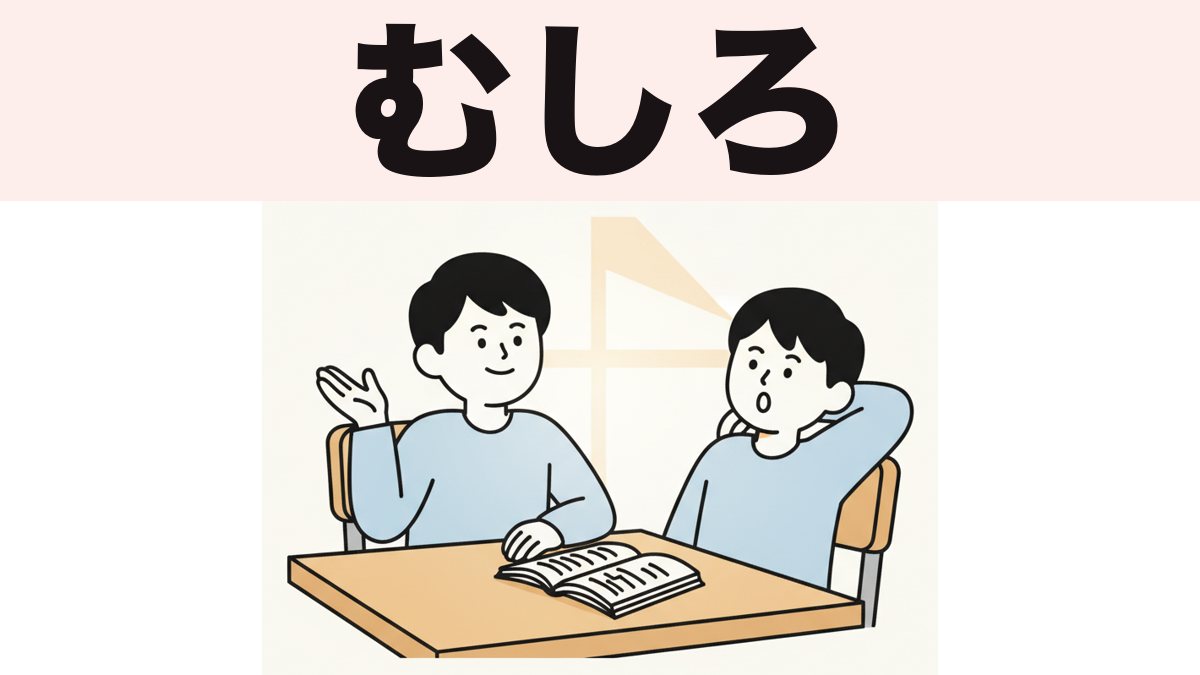
むしろ (mushiro) means "rather," "if anything," or "actually, it's more the opposite." You use it when someone expects one thing and you want to say the truth leans the other way.
むしろ は「相手が思っていることと、本当は反対に近い」と言うときの言葉です。英語の rather や if anything です。
It is a small word with a big job. Someone says 日本語は難しいでしょ? — "Japanese is hard, right?" — and the learner wants to answer: "Not really. If anything, that's why I chose it." In English, that reply needs "actually," "rather" and "if anything" all at once. In Japanese, it needs one word: むしろ.
The basics
What does むしろ mean?
むしろ compares two options and picks the one the listener probably did not expect. It often comes with より, "than": AよりむしろB, "B rather than A."
夏よりむしろ冬のほうが好きです。 — If anything, I prefer winter to summer. (polite, choosing the less expected option) 彼は先生というより、むしろ友達みたいな人です。 — He's less a teacher and more like a friend. (polite, というよりむしろ is a very common pairing)
You will often see a ほう after the second option: むしろBのほうが. It makes the comparison clear.
How do you use it to answer a question?
This is where むしろ is most useful in conversation. Someone assumes something, and you turn it around.
A: 一人で旅行するの、寂しくない? — Isn't it lonely traveling alone? B: ううん、むしろ楽しいよ。 — No, if anything it's fun. (casual)
The pattern is: deny the assumption (ううん, いや, そんなことない), then add むしろ + what is actually true. The むしろ tells the listener, "you had it backwards."
Where does it go in the sentence?
Usually right before the part you want to flip. It can start the reply, or sit in the middle.
むしろ、難しいからやりたかった。 — Actually, I wanted to do it because it was hard. (casual) この店は、高いどころか、むしろ安いくらいだ。 — Far from expensive, this shop is if anything on the cheap side. (neutral)
Beyond the basics
What is the difference between むしろ and かえって?
Both can be translated "on the contrary," so learners mix them up. The difference is simple once you see it:
- むしろ is a judgment. You compare two things and say which one is closer to the truth.
- かえって is a result. You did something, and it caused the opposite of what you intended.
薬を飲んだら、かえって悪くなった。 — I took medicine, and it actually made me worse. (result went the wrong way — かえって) 休むより、むしろ動いたほうが楽になる。 — Rather than resting, moving around actually makes you feel better. (comparison — むしろ)
A quick test: if there is a cause and an unexpected effect, use かえって. If you are choosing between two options, use むしろ.
What does むしろご褒美 mean?
This is a well-known internet phrase: むしろご褒美です, "if anything, that's a reward." A fan uses it when a character they love is cold or mean to them — the "punishment" is something they are happy to receive. It is a joke, and you will see it in comments and chat far more than in real conversation. For more words like this, see otaku slang.
怒られるの?むしろご褒美です。 — I'm getting scolded? If anything, that's a reward. (net joke, not for serious talk)
Is むしろ polite or casual?
It is neutral. It works in business writing, in essays, and with friends. In very casual speech, people sometimes say どっちかっていうと ("if I had to pick") instead, which is softer.
どっちかっていうと、夏のほうが好きかな。 — If I had to pick, I'd say summer. (casual, softer than むしろ)
むしろ is stronger: it corrects the other person's assumption. どちらかというと just leans one way.
How do you build a むしろ reply?
Three steps, and each one is short. First, react to the assumption: いや, ううん, or the politer そんなことないです. Second, say むしろ. Third, give the truth — often with a reason attached by から.
A: 毎日自炊するの、大変じゃない? — Isn't cooking for yourself every day a pain? B: そんなことないよ。むしろ、料理するとストレスがなくなるから好き。 — Not at all. If anything, I like it because cooking gets rid of stress. (casual)
Practise the three steps with any assumption people make about you — your job, your hobby, where you live. It is one of the fastest ways to sound less like a textbook in a real conversation.
How does it sound in anime?
You mostly hear it in replies that surprise the other character. A timid character is asked if they are scared, and says いや、むしろワクワクしてる — "No, if anything I'm excited." The line works as a small reveal of who they are. Listen for the pattern: a denial, then むしろ.
Common mistakes
- Using むしろ without a contrast. むしろ needs something to flip. むしろ今日は晴れです ("rather, today is sunny") sounds strange if nobody expected rain.
- Using むしろ for a cause and effect. "I tried to help, but I made it worse" is かえって: 手伝ったら、かえって迷惑をかけた.
- Putting より on the wrong side. AよりむしろB means "B rather than A." むしろAよりB reverses the logic.
- Confusing it with それより. それより means "more importantly" or "anyway," and changes the topic. むしろ stays on the same topic and corrects it.
- Overusing it. むしろ is a strong word. Using it in every reply makes you sound like you are always correcting people.
むしろ and its neighbours
| Word | What it does | Example |
|---|---|---|
| むしろ | Picks the unexpected option; corrects an assumption | 寂しくない。むしろ楽しい |
| かえって | An action caused the opposite result | 薬を飲んだら、かえって悪くなった |
| どちらかというと | Leans slightly one way, soft | どちらかというと冬が好き |
| それより | Changes the topic: "more importantly" | それより、明日どうする? |
| というより | "More than X, it's Y" — often before むしろ | 先生というより友達 |
Practice
Answers are hidden — try your own sentence first, then open. Questions 1 and 2 are a pair: むしろ versus かえって.
1. A friend asks if living alone is lonely. Answer: "No, if anything it's comfortable."
Show answer
ううん、むしろ楽だよ。 — deny the assumption, then むしろ + what is actually true.
2. "I tried to help, but it actually caused trouble."
Show answer
手伝ったら、かえって迷惑をかけた。 — an action with an unexpected result is かえって, not むしろ.
3. "I prefer winter to summer, if anything." (polite)
Show answer
夏よりむしろ冬のほうが好きです。 — AよりむしろBのほうが is the full comparison.
4. "He's less a teacher and more like a friend."
Show answer
彼は先生というより、むしろ友達みたいな人です。 — というよりむしろ is the classic pairing.
5. Someone says: "Japanese is hard, right?" Reply: "That's actually why I chose it."
Show answer
むしろ、難しいから選びました。 — むしろ flips their worry into your reason.
6. Fix the order: むしろ冬より夏が好き (meaning "summer rather than winter").
Show answer
冬よりむしろ夏が好き。 — より goes after the option you reject, and むしろ comes before the one you pick.
7. Say it softly, just leaning one way: "If I had to pick, summer."
Show answer
どちらかというと、夏かな。 — softer than むしろ, which corrects the other person.
8. Which fits: 「それより」 or 「むしろ」? "More importantly, what are we doing tomorrow?"
Show answer
それより、明日どうする? — それより changes the topic. むしろ would need a contrast on the same topic.
9. A character is asked if they are scared. They answer: "No — if anything, I'm excited."
Show answer
いや、むしろワクワクしてる。 — the denial, then むしろ + the real feeling.
FAQ
What is the kanji for mushiro? 寧ろ, but it is almost always written in hiragana. You will rarely need the kanji.
Is むしろ the same as "instead"? Not quite. "Instead" is often 代わりに — doing one thing in place of another. むしろ is a judgment about which is truer or better.
Can むしろ start a sentence? Yes. むしろ、それがいい ("Actually, that's better") is natural, especially in replies.
Is むしろ used in writing? Very often. It is common in essays, news commentary and business writing, because it signals a clear counter-point.
What does むしろ逆 mean? "If anything, it's the opposite." It is a short, natural reply when someone has it backwards: いや、むしろ逆だよ.
How is むしろ different from 逆に? 逆に means "conversely" or "the other way around," and in casual speech it is used loosely to add a surprising angle. むしろ keeps the comparison between two options. They often overlap, and むしろ逆 combines both.
Vocabulary from this article
Tap the block to select all of it, then copy. In Anki: File → Import, note type Basic, separator Tab — the first column becomes the front, the second the back.
むしろ	むしろ — rather, if anything
寧ろ	むしろ — (kanji form of むしろ, rarely used)
かえって	かえって — on the contrary (an unexpected result)
どちらかというと	どちらかというと — if I had to pick
それより	それより — more importantly; anyway
というより	というより — rather than (saying) X
逆に	ぎゃくに — conversely, the other way around
寂しい	さびしい — lonely
迷惑	めいわく — trouble, bother
ご褒美	ごほうび — reward
代わりに	かわりに — instead
ワクワク	わくわく — excited
I'm Yuuki, a Japanese teacher based in Tokyo. I've taught on italki as a Top 1% teacher and watched over 1,500 anime. むしろ comes up when a learner explains why they chose Japanese: people assume it is a burden, and the honest answer is "if anything, that's the point." For another small word that turns a sentence around, see to ieba and souieba.
Sources: the author's own lessons and standard reference grammars.
小さい言葉ですが、大きい仕事をします。「日本語は難しいでしょ?」と聞かれて、「そうでもない。難しいから選んだんだ」と答えたい。英語だと actually、rather、if anything を全部使いたくなる答えです。日本語は「むしろ」1つで言えます。
基本の形
むしろ の意味は?
むしろ は2つのものをくらべて、相手が思っていなかったほうを選びます。よく「より」と一緒に使います。「AよりむしろB」です。
夏よりむしろ冬のほうが好きです。 — If anything, I prefer winter to summer. (ていねい・意外なほうを選ぶ) 彼は先生というより、むしろ友達みたいな人です。 — He's less a teacher and more like a friend. (ていねい・「というよりむしろ」はよく使う形)
2つ目のあとに「ほう」をつけることも多いです。「むしろBのほうが」で、くらべていることがはっきりします。
質問の答えにどう使う?
会話でいちばん便利な使い方です。相手が何かを思いこんでいて、それをひっくり返します。
A: 一人で旅行するの、寂しくない? — Isn't it lonely traveling alone? B: ううん、むしろ楽しいよ。 — No, if anything it's fun. (カジュアル)
形は、まず相手の思いこみを否定して(ううん・いや・そんなことない)、次に「むしろ+本当のこと」です。むしろ は「逆だったよ」と伝えます。
文のどこに置く?
ふつうは、ひっくり返したい部分の前です。答えの最初でも、文の中でもいいです。
むしろ、難しいからやりたかった。 — Actually, I wanted to do it because it was hard. (カジュアル) この店は、高いどころか、むしろ安いくらいだ。 — Far from expensive, this shop is if anything on the cheap side. (ふつう)
もっと深く
むしろ と かえって のちがいは?
どちらも「反対に」と訳せるので、よくまちがえます。でも、ちがいはかんたんです。
- むしろ は判断です。2つをくらべて、どちらが本当に近いかを言います。
- かえって は結果です。何かをしたら、思っていたのと反対のことが起きた、です。
薬を飲んだら、かえって悪くなった。 — I took medicine, and it actually made me worse. (結果が逆になった・かえって) 休むより、むしろ動いたほうが楽になる。 — Rather than resting, moving around actually makes you feel better. (くらべる・むしろ)
かんたんなテスト: 原因と意外な結果があれば かえって。2つから選ぶなら むしろ。
「むしろご褒美」とは?
ネットでよく知られた言い方です。「むしろご褒美です」は「それはむしろうれしい」という意味です。好きなキャラに冷たくされたとき、ファンが「罰どころか、うれしい」とじょうだんで言います。本当の会話より、コメントやチャットでよく見ます。こういう言葉はオタク用語の記事にもあります。
怒られるの?むしろご褒美です。 — I'm getting scolded? If anything, that's a reward. (ネットのじょうだん・まじめな話では使わない)
むしろ はていねい?カジュアル?
どちらでもありません。ビジネスの文、作文、友だちとの会話、どこでも使えます。とてもくだけた会話では、「どっちかっていうと」を使うこともあります。こちらはやわらかい言い方です。
どっちかっていうと、夏のほうが好きかな。 — If I had to pick, I'd say summer. (カジュアル・むしろ よりやわらかい)
むしろ は強い言葉で、相手の思いこみを直します。「どちらかというと」は少しかたむくだけです。
むしろ の答えの作り方は?
3つのステップです。1つ目、相手の思いこみに反応する(いや・ううん・ていねいなら「そんなことないです」)。2つ目、むしろ と言う。3つ目、本当のことを言う。理由を「から」でつけることも多いです。
A: 毎日自炊するの、大変じゃない? — Isn't cooking for yourself every day a pain? B: そんなことないよ。むしろ、料理するとストレスがなくなるから好き。 — Not at all. If anything, I like it because cooking gets rid of stress. (カジュアル)
自分の仕事、しゅみ、住んでいる場所など、人によく思いこまれることで、この3ステップを練習してください。教科書っぽくない会話にするための近道です。
アニメではどう聞こえる?
相手のキャラをおどろかせる答えでよく聞きます。こわがりのキャラが「こわい?」と聞かれて、「いや、むしろワクワクしてる」と答える。その人がどんな人か、少し見える1行です。「否定、そして むしろ」の形を聞いてみてください。
よくあるまちがい
- くらべるものがないのに むしろ を使う。 むしろ にはひっくり返すものが必要です。だれも雨だと思っていないのに「むしろ今日は晴れです」は変です。
- 原因と結果に むしろ を使う。 「手伝おうとしたけど、悪くなった」は かえって です。「手伝ったら、かえって迷惑をかけた」。
- 「より」の位置をまちがえる。 「AよりむしろB」は「AではなくB」。「むしろAよりB」だと意味が逆になります。
- それより とまちがえる。 それより は「それより大事なのは」「ところで」で、話題を変えます。むしろ は同じ話題の中で直します。
- 使いすぎる。 むしろ は強い言葉です。毎回使うと、いつも相手を直している人に聞こえます。
むしろ と近い言葉
| 言葉 | はたらき | 例 |
|---|---|---|
| むしろ | 意外なほうを選ぶ・思いこみを直す | 寂しくない。むしろ楽しい |
| かえって | したことで反対の結果になった | 薬を飲んだら、かえって悪くなった |
| どちらかというと | 少しかたむく・やわらかい | どちらかというと冬が好き |
| それより | 話題を変える「それより大事なのは」 | それより、明日どうする? |
| というより | 「Xというより、Y」・むしろ の前によく来る | 先生というより友達 |
練習
答えはかくしてあります。先に自分で文を作ってから開けてください。1と2はペアです。むしろ と かえって です。
1. 友だちに「一人暮らしって寂しくない?」と聞かれた。「ううん、むしろ楽」と答える。
答えを見る
ううん、むしろ楽だよ。 — 思いこみを否定して、むしろ+本当のこと。
2. 「手伝おうとしたけど、反対に迷惑をかけてしまった」。
答えを見る
手伝ったら、かえって迷惑をかけた。 — したことで意外な結果になったのは かえって です。むしろ ではありません。
3. ていねいに「夏より冬のほうが好きです」(意外なほうを選ぶ)。
答えを見る
夏よりむしろ冬のほうが好きです。 — 「AよりむしろBのほうが」が全部の形です。
4. 「彼は先生というより友達のような人です」。
答えを見る
彼は先生というより、むしろ友達みたいな人です。 — 「というよりむしろ」はよく使うペアです。
5. 「日本語は難しいでしょ?」に「難しいから選んだ」と答える。
答えを見る
むしろ、難しいから選びました。 — むしろ で、相手の心配を自分の理由に変えます。
6. 順番を直す: むしろ冬より夏が好き(「冬ではなく夏」の意味で)。
答えを見る
冬よりむしろ夏が好き。 — 「より」は選ばないほうのあと、むしろ は選ぶほうの前です。
7. やわらかく、少しかたむくだけ: 「選ぶなら、夏かな」。
答えを見る
どちらかというと、夏かな。 — 相手を直す むしろ より、やわらかい言い方です。
8. 「それより」と「むしろ」、どちら?「それより大事なのは、明日どうする?」
答えを見る
それより、明日どうする? — それより は話題を変えます。むしろ は同じ話題でくらべるときに使います。
9. キャラが「こわい?」と聞かれて「いや、むしろ楽しみ」と答える。
答えを見る
いや、むしろワクワクしてる。 — 否定して、むしろ+本当の気持ち。
FAQ
むしろ の漢字は? 寧ろ です。でも、ほとんどひらがなで書きます。漢字はあまり必要ありません。
むしろ は「代わりに」と同じ? 少しちがいます。「代わりに」は、1つのことをやめて別のことをする、です。むしろ は、どちらが本当に近いか、よいかの判断です。
むしろ で文を始められる? はい。「むしろ、それがいい」は自然です。特に答えの文でよく使います。
むしろ は書き言葉でも使う? よく使います。作文、ニュースの解説、ビジネスの文でよく見ます。反対の意見をはっきり出せるからです。
「むしろ逆」の意味は? 「どちらかというと、反対だよ」です。相手が逆に考えているときの、短くて自然な答えです。「いや、むしろ逆だよ」。
むしろ と 逆に のちがいは? 逆に は「反対に」という意味で、カジュアルな会話では、意外な見方を足すときにゆるく使います。むしろ は2つのくらべを保ちます。重なることも多く、「むしろ逆」は両方を合わせた言い方です。
この記事に出た単語
ブロックをタップすると全部選べます。そのままコピーしてください。Anki では ファイル → 読み込む、ノートタイプは 基本、区切りは タブ です。1列目が表、2列目が裏になります。
むしろ	むしろ — rather, if anything
寧ろ	むしろ — (kanji form of むしろ, rarely used)
かえって	かえって — on the contrary (an unexpected result)
どちらかというと	どちらかというと — if I had to pick
それより	それより — more importantly; anyway
というより	というより — rather than (saying) X
逆に	ぎゃくに — conversely, the other way around
寂しい	さびしい — lonely
迷惑	めいわく — trouble, bother
ご褒美	ごほうび — reward
代わりに	かわりに — instead
ワクワク	わくわく — excited
More drills like the ones above, plus a timed JLPT-style mock test: Practice · N3上のような練習問題と、時間つきのJLPT形式のもぎ試験: 練習ページ · N3
Want to try this in a real conversation?
本当の会話で、ためしてみませんか?
30-minute trial lesson, $13. Times shown in your own timezone.
30分の体験レッスン、$13。時間はあなたのタイムゾーンで表示されます。
Book a trial lesson · $13