こと vs の: two ways to turn a verb into a nounこと と の: 動詞を名詞にする2つの方法
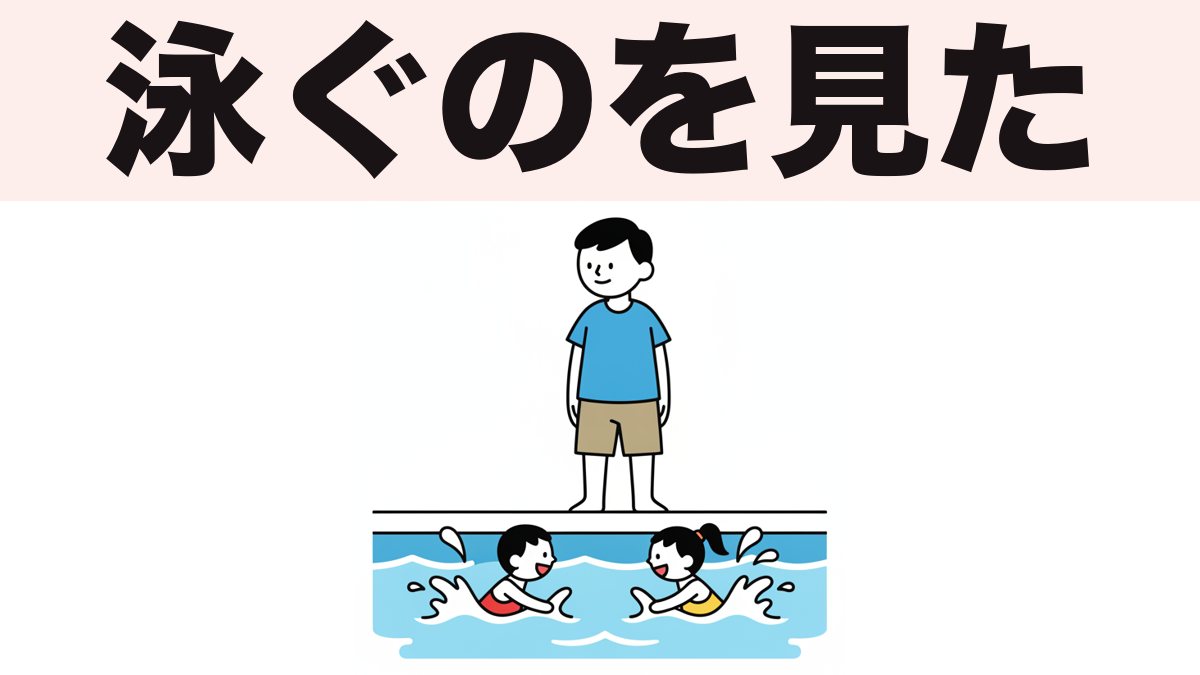
こと and の both turn a verb or a whole clause into a noun. こと is abstract — facts, abilities, decisions. の is concrete — things you perceive directly. 子どもが泳ぐ**の**を見ました is right; 泳ぐことを見ました is not.
「こと」と「の」は、どちらも動詞や文を名詞にします。「こと」はちゅうしょう的(じじつ・できること・決めたこと)。「の」はぐたい的(見たり聞いたりできること)。「子どもが泳ぐ**の**を見ました」が正しく、「泳ぐことを見ました」は言えません。
Plenty of sentences accept either, which is why learners assume they are interchangeable and then produce the handful that are not.
The basics
The split
| こと | の | |
|---|---|---|
| Feel | Abstract, general | Concrete, perceived |
| Typical verbs | できる, ある, にする, になる | 見る, 聞く, 待つ, 手伝う, 感じる |
| Register | Slightly more formal, written | Slightly more spoken |
子どもが泳ぐのを見ました。 — I watched the children swimming. (polite past — you saw it, so の) 日本に住んだことがあります。 — I have lived in Japan. (polite — an abstract fact, so こと)
The こと-only patterns
These four take こと and nothing else:
| Pattern | Meaning |
|---|---|
| 〜ことができる | can do |
| 〜ことがある | have done / sometimes happens |
| 〜ことにする | decide to |
| 〜ことになる | it is decided that |
雨の日は歩いて行くことがあります。 — On rainy days I sometimes walk. (polite — the "sometimes" use)
〜ことができる and 〜ことにする / ことになる are each their own grammar point; what matters here is that の cannot substitute in any of them.
The の-only patterns
Verbs of perception and of waiting or helping take の:
誰かが呼んでいるのが聞こえます。 — I can hear someone calling. (polite — heard directly) 彼が来るのを待っています。 — I'm waiting for him to come. (polite)
The rule underneath is that these verbs act on an event you experience, not on an idea. You cannot see a fact; you see something happening.
Beyond the basics
When either works
For subjects and topics, both are usually fine:
日本語を勉強するのは楽しいです。 — Studying Japanese is fun. (polite — の, slightly more spoken)
日本語を勉強することは楽しいです is equally correct and sounds a shade more formal or written. In conversation, の wins.
好き, 上手, 苦手 prefer の
料理をするのが好きです。 — I like cooking. (polite)
料理をすることが好きです is not wrong, but の is what people say. The same goes for 上手, 下手 and 苦手.
の becomes ん before です
This is where beginners have already met の without knowing it:
道が分からないんです。 — The thing is, I don't know the way. (polite — の + です, contracted)
〜んです is the nominaliser の plus です, contracted in speech. Knowing that explains why んです frames things as explanations: it turns your sentence into a noun and then presents it as the situation.
こと as an ordinary noun
こと also just means "thing (abstract)" and appears everywhere:
大事なことを忘れていました。 — I'd forgotten something important. (polite past)
そのことについて ("about that matter"), いいことがあった ("something good happened"), 私のことが好き ("likes me" — literally "likes the matter of me"). That last one is worth noticing: Japanese often says 私のこと rather than 私 when talking about feelings toward a person.
こと at the end of a sentence
In written rules and instructions, こと functions as a command:
必ず記入すること。 — Be sure to fill this in. (written instruction — impersonal)
You will see this on forms and in workplace notices. It is not used in speech.
もの vs こと
もの is a physical thing, こと an abstract one:
甘いものが好きです。 — I like sweet things. (polite — physical)
甘いことが好きです would mean something bizarre. Where English says "thing" for both, Japanese splits them, and getting this wrong is more noticeable than getting こと/の wrong.
Common mistakes
- 泳ぐことを見ました. Perception verbs take の: 泳ぐのを見ました.
- 泳ぐのができます. できる takes こと: 泳ぐことができます (or just 泳げます).
- 待つのを待っています. The thing waited for takes の, and the pattern is 〜のを待つ: 彼が来るのを待っています.
- 甘いことが好き. Physical things take もの.
- Using こと in casual speech for everything. の is more natural in conversation.
- Forgetting that んです is の. It explains why it sounds explanatory.
Practice
Answers are hidden — build yours first, then open. Questions 1 and 2 are a pair: same verb, and what the main verb does with it decides the nominaliser.
1. Say "I watched the children swimming."
Show answer
子どもが泳ぐのを見ました — a perception verb, so の. You see an event, not a fact.
2. Say "I can swim."
Show answer
泳ぐことができます — できる takes こと and only こと. (泳げます is the shorter everyday version.) This is the pair to question 1.
3. Say "I have lived in Japan."
Show answer
日本に住んだことがあります — an abstract fact about your history, so こと.
4. Say "I'm waiting for him to come."
Show answer
彼が来るのを待っています — 待つ takes の. You wait for an event.
5. Say "I like cooking," the way people actually say it.
Show answer
料理をするのが好きです — 好き, 上手, 苦手 all prefer の. こと is not wrong, just stiffer.
6. What are the four patterns that take こと and nothing else?
Show answer
ことができる, ことがある, ことにする, ことになる — の cannot substitute in any of them.
7. What is んです made of?
Show answer
The nominaliser の plus です — which is why it frames things as explanations: it turns the sentence into a noun and presents it as the situation.
8. Something is wrong here: 甘いことが好きです。
Show answer
甘いものが好きです — もの is physical, こと abstract. English says "thing" for both.
9. Say "on rainy days I sometimes walk."
Show answer
雨の日は歩いて行くことがあります — 〜ことがある also covers "sometimes happens," not only "have done."
10. What does 必ず記入すること mean, and where would you see it?
Show answer
"Be sure to fill this in" — on a form or a workplace notice — sentence-final こと is an impersonal written command. Not used in speech.
FAQ
Is こと written in kanji? 事 exists but the grammatical use is normally kana. The ordinary noun sometimes takes the kanji.
Which should I default to in conversation? の. It is lighter and more spoken, and the こと-only patterns will announce themselves.
Can の be followed by は? Yes: 勉強するのは楽しいです. の behaves as a full noun, so all the particles attach.
What about ところ? Different job — it nominalises a moment: 食べているところです ("I'm in the middle of eating").
Is 〜ということ a separate thing? It means "the fact that," used to summarise a whole statement: 遅れるということです ("what it means is, they'll be late"). Common in business.
Why does 私のことが好き use こと? Japanese softens direct statements about people by referring to "the matter of" them. 私が好き is possible but blunter and can be ambiguous about who likes whom.
Vocabulary from this article
Tap the block to select all of it, then copy. In Anki: File → Import, note type Basic, separator Tab — the first column becomes the front, the second the back.
子ども	こども — child
泳ぐ	およぐ — to swim
見る	みる — to see, to watch
聞こえる	きこえる — to be audible
呼ぶ	よぶ — to call
待つ	まつ — to wait
住む	すむ — to live
日本	にほん — Japan
雨	あめ — rain
歩く	あるく — to walk
勉強	べんきょう — study
楽しい	たのしい — fun
料理	りょうり — cooking
好き	すき — to like
上手	じょうず — good at
苦手	にがて — bad at, not keen on
道	みち — road, way
分かる	わかる — to understand
大事	だいじ — important
忘れる	わすれる — to forget
甘い	あまい — sweet
記入	きにゅう — filling in (a form)
必ず	かならず — without fail
遅れる	おくれる — to be late
I'm Yuuki, a Japanese teacher based in Tokyo. I've taught on italki as a Top 1% teacher and watched over 1,500 anime. The moment worth waiting for in this lesson is when a learner realises んです has been の all along. A grammar point they had been treating as a mysterious politeness noise turns out to be something they already knew.
Sources: the author's own lessons and standard reference grammars.
どちらでもいい文がたくさんあるので、同じだと思ってしまいます。そして、同じではない少数の文で間ちがえます。
基本
分け方
| こと | の | |
|---|---|---|
| 感じ | ちゅうしょう的 | ぐたい的・かんじたこと |
| よく使う動詞 | できる・ある・にする・になる | 見る・聞く・待つ・手伝う |
| かたさ | 少しかたい・書きことば | 少し話しことば |
子どもが泳ぐのを見ました。 — I watched the children swimming. 日本に住んだことがあります。 — I have lived in Japan.
「こと」だけの形
| 形 | 意味 |
|---|---|
| 〜ことができる | できる |
| 〜ことがある | したことがある/時々ある |
| 〜ことにする | 自分で決める |
| 〜ことになる | 決まる |
雨の日は歩いて行くことがあります。 — On rainy days I sometimes walk.
この4つに「の」は入れられません。
「の」だけの形
見る・聞く・待つ・手伝う のような動詞は「の」です。
誰かが呼んでいるのが聞こえます。 — I can hear someone calling. 彼が来るのを待っています。 — I'm waiting for him to come.
理由はかんたんです。これらの動詞は「できごと」にはたらきます。じじつは見えません。起きていることが見えます。
もう少しくわしく
どちらでもいい時
しゅごや話だいでは、たいていどちらでも大じょうぶです。
日本語を勉強するのは楽しいです。 — Studying Japanese is fun.
「勉強することは楽しいです」も正しく、少しかたく聞こえます。会話では「の」です。
「好き」「上手」「苦手」は「の」
料理をするのが好きです。 — I like cooking.
「料理をすることが好きです」も間違いではありませんが、みんな「の」を使います。
「の」+「です」=「んです」
道が分からないんです。 — The thing is, I don't know the way.
「んです」は、この「の」+「です」がつまった形です。だから「せつめいしている感じ」が出ます。文を名詞にして、「これがじょうきょうです」と出しているからです。
ふつうの名詞の「こと」
大事なことを忘れていました。 — I'd forgotten something important.
「そのことについて」「いいことがあった」「私のことが好き」。さいごのものは注目です。人への気もちを言う時、日本語は「私」より「私のこと」と言うことが多いです。
文のさいごの「こと」
書いたルールやしじでは、めいれいになります。
必ず記入すること。 — Be sure to fill this in.
書るいやしょくばのおしらせで見ます。話しことばでは使いません。
「もの」と「こと」
「もの」はぐたいてきなもの、「こと」はちゅうしょうてきなことです。
甘いものが好きです。 — I like sweet things.
「甘いことが好きです」はへんな意味になります。英語はどちらも "thing" ですが、日本語は分けます。
よくある間違い
- 泳ぐことを見ました。 見る・聞くは「の」です。
- 泳ぐのができます。 できるは「こと」です。
- 甘いことが好き。 ぐたいてきなものは「もの」です。
- 会話でぜんぶ「こと」。 会話では「の」が自ぜんです。
- 「んです」が「の」だと知らない。 知ると意味が分かります。
練習
答えはかくれています。まず自分で作ってから開いてください。1番と2番が対です。同じ動詞で、うしろの動詞が決めます。
1. 「子どもが泳いでいるのを見ました」を言ってください。どちらを使いますか。
答えを見る
子どもが泳ぐのを見ました(の) — 見るはできごとにはたらくので「の」です。
2. 「泳げます」を「こと」で言ってください。
答えを見る
泳ぐことができます — できるは「こと」だけです。1番と対です。
3. 「日本に住んだことがあります」— どうして「こと」ですか。
答えを見る
けいけんというちゅうしょう的なじじつだから
4. 「彼が来るのを待っています」— どうして「の」ですか。
答えを見る
待つのは「できごと」だから
5. 「料理が好きです」を、動詞を名詞にして言ってください。
答えを見る
料理をするのが好きです — 「好き」「上手」「苦手」は「の」です。
6. 「こと」だけの4つの形は?
答えを見る
ことができる・ことがある・ことにする・ことになる
7. 「んです」は何でできていますか。
答えを見る
「の」+「です」 — だから「せつめいしている感じ」が出ます。
8. 直してください: 甘いことが好きです。
答えを見る
甘いものが好きです — ぐたいてきなものは「もの」です。
9. 「雨の日はときどき歩きます」を「こと」で言ってください。
答えを見る
雨の日は歩いて行くことがあります — 「ことがある」は「時々ある」の意味にもなります。
10. 「必ず記入すること」はどこで見ますか。
答えを見る
書るいやおしらせ — 文のさいごの「こと」は書きことばのめいれいで、話しことばでは使いません。
この記事に出た単語
ブロックをタップすると全部選べます。そのままコピーしてください。Anki では ファイル → 読み込み、ノートタイプ 基本、区切り タブ。1列目が表、2列目が裏になります。
子ども	こども — child
泳ぐ	およぐ — to swim
見る	みる — to see, to watch
聞こえる	きこえる — to be audible
呼ぶ	よぶ — to call
待つ	まつ — to wait
住む	すむ — to live
日本	にほん — Japan
雨	あめ — rain
歩く	あるく — to walk
勉強	べんきょう — study
楽しい	たのしい — fun
料理	りょうり — cooking
好き	すき — to like
上手	じょうず — good at
苦手	にがて — bad at
道	みち — road, way
分かる	わかる — to understand
大事	だいじ — important
忘れる	わすれる — to forget
甘い	あまい — sweet
記入	きにゅう — filling in (a form)
必ず	かならず — without fail
私はユウキです。東京で日本語を教えています。 italki の Top 1% の先生で、アニメは1,500本以上見ました。このレッスンでいちばんいい時は、「んです」がずっと「の」だったと気づく時です。ふしぎなていねいさの音だと思っていたものが、じつはもう知っていたものだった、と分かります。
More drills like the ones above, plus a timed JLPT-style mock test: Practice · N4上のような練習問題と、時間つきのJLPT形式のもぎ試験: 練習ページ · N4
Want to try this in a real conversation?
本当の会話で、ためしてみませんか?
30-minute trial lesson, $13. Times shown in your own timezone.
30分の体験レッスン、$13。時間はあなたのタイムゾーンで表示されます。
Book a trial lesson · $13