かもしれない: "maybe," and the だ you have to deleteかもしれない: 「かも」と、けす「だ」
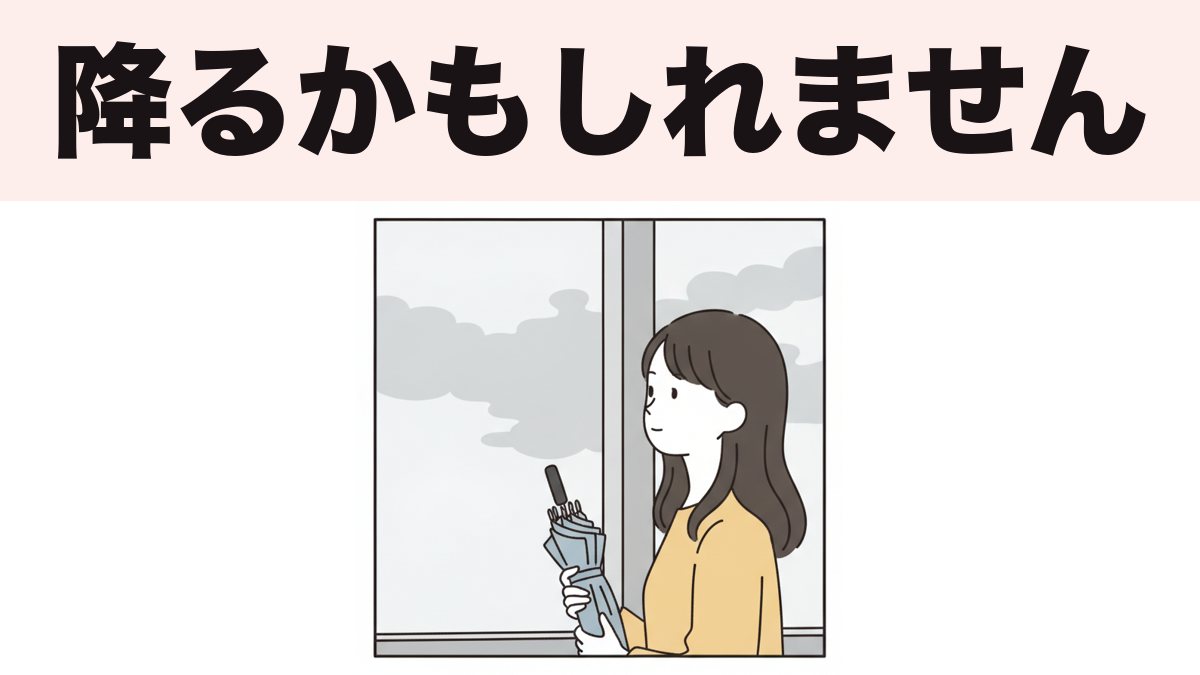
かもしれない means "might" or "maybe," and it attaches to the plain form of anything — except that nouns and な-adjectives lose their だ on the way in. 学生かもしれない, 便利かもしれない, never 学生だかもしれない.
「かもしれない」は「might」「maybe」です。ふつうの形につきます。ただし、名詞と「な形容詞」は「だ」をけしてからつけます。「学生かもしれない」「便利かもしれない」。「学生だかもしれない」は間違いです。
That one deletion is the whole grammatical difficulty. The rest of the work is knowing where かもしれない sits against でしょう, はず and に違いない — and knowing that Japanese speakers use it far more often than English speakers say "maybe," because it is also a politeness tool.
The basics
What attaches to it
| Word type | Form | Example |
|---|---|---|
| Verb | plain form | 来るかもしれない / 来たかもしれない |
| い-adjective | plain form | 高いかもしれない |
| な-adjective | drop だ | 便利かもしれない |
| Noun | drop だ | 学生かもしれない |
明日は雨が降るかもしれません。 — It might rain tomorrow. (polite) 彼はもう帰ったかもしれません。 — He might have already gone home. (polite — past inside, present outside)
Notice the tense: the past lives on the verb inside, not on かもしれない. 帰ったかもしれません is "might have gone"; 帰るかもしれませんでした is not a sentence you need.
The だ deletion
This is where the errors happen, because だ is the plain form of です and learners have just finished being told to use the plain form.
- 学生だかもしれない → wrong
- 学生かもしれない → right
- 便利だかもしれない → wrong
- 便利かもしれない → right
The rule is easy to remember if you think of かもしれない as replacing だ rather than following it. Both are sentence-enders; only one can be there.
Politeness and contraction
| Register | Form |
|---|---|
| Polite | かもしれません |
| Plain | かもしれない |
| Casual | かも |
行けないかも。 — I might not be able to make it. (very casual — かも on its own is extremely common)
かも by itself is one of the most-used words in casual Japanese. You will hear it as a complete reply: そうかも ("maybe so"), 無理かも ("might not work out").
Beyond the basics
Where it sits on the certainty scale
| Form | Confidence | What it rests on |
|---|---|---|
| 〜かもしれない | 30–50% | Bare possibility |
| 〜でしょう | 60–80% | General likelihood |
| 〜はずだ | High | Specific evidence |
| 〜に違いない | Very high | Conviction |
彼はもう知っているはずです。 — He should already know. (polite — I have grounds)
The important contrast is with はず: はず needs a reason, かもしれない needs nothing. If someone asks why you think so and you have no answer, かもしれない was the right word.
It is a politeness tool, not just a probability
This is the part textbooks miss. Japanese speakers attach かもしれない to statements they are actually confident about, to avoid sounding assertive:
それは少し違うかもしれません。 — That might be slightly different. (polite — a soft way to say "that's wrong") 言い過ぎかもしれませんが… — I may be overstating this, but… (polite — a hedge before a strong opinion)
Used this way, かもしれない is closer to English "I could be wrong, but" than to "maybe." Reading it as pure probability will make Japanese colleagues sound much less certain than they are.
かもしれない vs かな
Both express uncertainty, but they point in different directions. かもしれない states a possibility to the listener; かな asks the question of yourself.
雨が降るかな。 — I wonder if it'll rain. (casual — thinking aloud)
かな is also used as a soft request when directed at someone: 手伝ってくれるかな ("could you maybe help?"). かもしれない never does that job.
The negative and the double negative
来ないかもしれません。 — He might not come. (polite — negate the verb inside)
There is no natural way to negate かもしれない itself — かもしれなくない is not a thing. Put the negative on the inner verb.
〜かもしれないけど
Pairing it with けど is the standard way to concede a point before disagreeing:
高いかもしれないけど、いいものですよ。 — It might be expensive, but it's a good one. (casual-polite mix — concede, then push back)
This shape appears constantly in discussion, because Japanese conversation prefers acknowledging the other side before stating your own view.
Where you'll hear it in anime
かも at the end of a line is the sound of a character not committing. It carries hesitation, flirtation, or dread depending on delivery — 好きかも ("I might like you") does a lot of work in exactly three syllables, precisely because it stops short of a statement.
Common mistakes
- Leaving だ in. 学生だかもしれない, 静かだかもしれない — both wrong. Delete the だ.
- Putting the tense on the outside. 帰るかもしれませんでした is unnatural. Say 帰ったかもしれません.
- Using かもしれない when you have evidence. If you have a reason, はず is more informative and sounds more competent.
- Reading every かもしれない as genuine doubt. Often it is a hedge on something the speaker is fairly sure of.
- Trying to negate かもしれない itself. Negate the verb inside instead.
Practice
Answers are hidden — build yours first, then open. Questions 5 and 6 are a pair: same situation, and the evidence decides the word.
1. Say "it might rain tomorrow," politely.
Show answer
明日は雨が降るかもしれません — plain form of the verb, then かもしれません.
2. Something is wrong here: 彼は学生だかもしれません。
Show answer
学生かもしれません — nouns drop だ. かもしれない replaces it rather than following it.
3. Something is wrong here: この店は便利だかもしれない。
Show answer
便利かもしれない — な-adjectives drop だ for the same reason as nouns.
4. Say "he might have already gone home."
Show answer
彼はもう帰ったかもしれません — the past goes on the inner verb, not on かもしれない.
5. You have no reason at all, just a feeling he knows. Say it.
Show answer
彼はもう知っているかもしれません — かもしれない needs no grounds, which is exactly when to use it.
6. You know he was told this morning. Say he probably knows.
Show answer
彼はもう知っているはずです — with evidence, はず is more informative. This is the pair to question 5.
7. Soften a disagreement: you think the other person is wrong.
Show answer
それは少し違うかもしれません — here かもしれない is politeness, not doubt. It means "I could be wrong, but."
8. Say "I might not make it," very casually.
Show answer
行けないかも — negate the inner verb, then shorten to かも. There is no way to negate かもしれない itself.
9. What is the difference between 雨が降るかもしれない and 雨が降るかな?
Show answer
Telling the listener vs asking yourself — かもしれない states a possibility outward; かな is thinking aloud.
10. Concede that something is expensive, then defend it.
Show answer
高いかもしれないけど、いいものですよ — かもしれないけど is the standard shape for acknowledging the other side before pushing back.
FAQ
Is かもしれない one word? Historically it is か + も + 知れない ("cannot even be known"), but treat it as one unit. It is written in kana.
Can I use かもしれない about myself? Yes, and often: 風邪かもしれません ("I might have a cold"). It works fine for your own state.
What about かもしれなかった? It exists — 死んでいたかもしれなかった — but it is rare and heavy. Usually the inner verb carries the past instead.
Is かも rude? Not rude, but casual. In a work email write かもしれません.
How is it different from ようだ? ようだ reports an impression from evidence you have observed. かもしれない claims nothing has been observed at all.
Can it follow another sentence-ender? Not だ or です, but it can follow んだ in casual speech: そうなんかも. This is colloquial and best left to recognition.
Vocabulary from this article
Tap the block to select all of it, then copy. In Anki: File → Import, note type Basic, separator Tab — the first column becomes the front, the second the back.
明日	あした — tomorrow
雨	あめ — rain
降る	ふる — to fall (rain)
帰る	かえる — to go home
学生	がくせい — student
便利	べんり — convenient
静か	しずか — quiet
店	みせ — shop
知る	しる — to know
違う	ちがう — to be different, to be wrong
少し	すこし — a little
高い	たかい — expensive
無理	むり — impossible, too much
手伝う	てつだう — to help
風邪	かぜ — a cold
好き	すき — to like
I'm Yuuki, a Japanese teacher based in Tokyo. I've taught on italki as a Top 1% teacher and watched over 1,500 anime. The だ deletion takes one correction to fix. The harder lesson is that Japanese speakers say かもしれません when they are actually quite sure — and hearing that as real doubt will mislead you in every meeting you sit in.
Sources: the author's own lessons and standard reference grammars.
文法でむずかしいのは、この「だ」をけすところだけです。あとは、「でしょう」「はず」「に違いない」とのちがいと、日本人が英語の "maybe" よりずっとよく使うということ。これはていねいさの道具でもあるからです。
基本
前に来る形
| しゅるい | 形 | れい |
|---|---|---|
| 動詞 | ふつうの形 | 来るかもしれない / 来たかもしれない |
| い形容詞 | ふつうの形 | 高いかもしれない |
| な形容詞 | だ をけす | 便利かもしれない |
| 名詞 | だ をけす | 学生かもしれない |
明日は雨が降るかもしれません。 — It might rain tomorrow. 彼はもう帰ったかもしれません。 — He might have already gone home.
かこは、中の動詞につきます。「帰ったかもしれません」です。
「だ」をけす
ここで間違えます。「ふつうの形にしてください」と習ったばかりだからです。
- 学生だかもしれない → 間違い
- 学生かもしれない → 正しい
- 便利だかもしれない → 間違い
- 便利かもしれない → 正しい
「かもしれない」は「だ」のかわりに来る、と考えるとおぼえやすいです。どちらも文のさいごの形なので、1つしか置けません。
ていねいさとみじかい形
| ていねいさ | 形 |
|---|---|
| ていねい | かもしれません |
| ふつう | かもしれない |
| くだけた | かも |
行けないかも。 — I might not be able to make it.
「かも」だけで答えることもよくあります。「そうかも」「無理かも」。
もう少しくわしく
かくしんのはしご
| 形 | どのくらい | 何をもとに |
|---|---|---|
| 〜かもしれない | 30〜50% | かのうせいだけ |
| 〜でしょう | 60〜80% | ふつうそうだから |
| 〜はずだ | 高い | 根きょがある |
| 〜に違いない | とても高い | 強い思いこみ |
彼はもう知っているはずです。 — He should already know.
大事なのは「はず」とのちがいです。「はず」には理由がいります。「かもしれない」には何もいりません。「どうして?」と聞かれて答えられないなら、「かもしれない」が正しいことばです。
ていねいさの道具でもあります
教科書に書いていないところです。日本人は、かなり自しんがあることにも「かもしれません」をつけます。強く聞こえないようにするためです。
それは少し違うかもしれません。 — That might be slightly different. 言い過ぎかもしれませんが… — I may be overstating this, but…
この使い方は「maybe」より「I could be wrong, but」に近いです。ぜんぶを「たぶん」と読むと、相手が実さいよりずっと自しんがないように見えます。
「かもしれない」と「かな」
どちらもはっきりしませんが、向きがちがいます。「かもしれない」は相手に言います。「かな」は自分に聞きます。
雨が降るかな。 — I wonder if it'll rain.
「かな」は人に向けるとやわらかいおねがいにもなります。「手伝ってくれるかな」。「かもしれない」はこの仕事をしません。
うちけし
来ないかもしれません。 — He might not come.
「かもしれない」自体はうちけしにできません。中の動詞をうちけしにします。
「〜かもしれないけど」
みとめてから反対する、定番の形です。
高いかもしれないけど、いいものですよ。 — It might be expensive, but it's a good one.
日本語の会話は、まず相手をみとめてから自分の考えを言うのがふつうです。
アニメで聞く「かも」
さいごの「かも」は、言いきらない音です。ためらい・すきな気もち・こわさ。「好きかも」は3音でとても大きな仕事をします。言いきっていないからです。
よくある間違い
- 「だ」をのこす。 「学生だかもしれない」「静かだかもしれない」は間違いです。
- 外がわにかこをつける。 「帰るかもしれませんでした」ではなく「帰ったかもしれません」。
- 根きょがあるのに使う。 理由があるなら「はず」の方がよく伝わります。
- ぜんぶを本当のまよいだと読む。 ていねいさのための「かも」も多いです。
- 「かもしれない」をうちけしにする。 中の動詞をうちけしにします。
練習
答えはかくれています。まず自分で作ってから開いてください。5番と6番が対です。根きょがあるかどうかで、ことばが決まります。
1. 「明日は雨がふるかもしれません」を作ってください。前の形は何ですか。
答えを見る
動詞のふつうの形「降る」 — そのあとに「かもしれません」がつきます。
2. 直してください: 彼は学生だかもしれません。
答えを見る
学生かもしれません — 名詞は「だ」をけします。「かもしれない」が「だ」のかわりです。
3. 直してください: この店は便利だかもしれない。
答えを見る
便利かもしれない — な形容詞も名詞と同じで「だ」をけします。
4. 「彼はもう帰ったかもしれません」— かこはどこにありますか。
答えを見る
中の動詞「帰った」 — 「かもしれない」の外がわにはつけません。
5. 理由は何もないけれど、彼は知っている気がします。言ってください。
答えを見る
彼はもう知っているかもしれません — 根きょがいらないのが「かもしれない」です。
6. 今朝つたえたと知っています。言ってください。
答えを見る
彼はもう知っているはずです — 根きょがあるなら「はず」の方がよく伝わります。5番と対です。
7. 相手が間ちがっていると思います。やわらかく言ってください。
答えを見る
それは少し違うかもしれません — ここでの「かもしれない」はまよいではなく、ていねいさです。
8. 「行けないかもしれません」をとてもくだけて言ってください。
答えを見る
行けないかも — 中の動詞をうちけしにしてから、「かも」にします。
9. 「雨が降るかもしれない」と「雨が降るかな」のちがいは?
答えを見る
相手に言う/自分に聞く — 「かな」は考えごとです。
10. 「高い」ことをみとめてから、いいものだと言ってください。
答えを見る
高いかもしれないけど、いいものですよ — 「かもしれないけど」は、みとめてから反対する定番です。
この記事に出た単語
ブロックをタップすると全部選べます。そのままコピーしてください。Anki では ファイル → 読み込み、ノートタイプ 基本、区切り タブ。1列目が表、2列目が裏になります。
明日	あした — tomorrow
雨	あめ — rain
降る	ふる — to fall (rain)
帰る	かえる — to go home
学生	がくせい — student
便利	べんり — convenient
静か	しずか — quiet
店	みせ — shop
知る	しる — to know
違う	ちがう — to be different, to be wrong
少し	すこし — a little
高い	たかい — expensive
無理	むり — impossible, too much
手伝う	てつだう — to help
好き	すき — to like
今朝	けさ — this morning
私はユウキです。東京で日本語を教えています。 italki の Top 1% の先生で、アニメは1,500本以上見ました。「だ」をけすのは、一度直せば終わりです。むずかしいのはこちらです。日本人は、かなり自しんがある時にも「かもしれません」と言います。それを本当のまよいだと読むと、会ぎのたびに相手を読みちがえます。
More drills like the ones above, plus a timed JLPT-style mock test: Practice · N4上のような練習問題と、時間つきのJLPT形式のもぎ試験: 練習ページ · N4
Want to try this in a real conversation?
本当の会話で、ためしてみませんか?
30-minute trial lesson, $13. Times shown in your own timezone.
30分の体験レッスン、$13。時間はあなたのタイムゾーンで表示されます。
Book a trial lesson · $13