限る: 〜に限る, 〜とは限らない and the difference one negative makes限る: 「〜に限る」「〜とは限らない」「〜限り」の使い分け
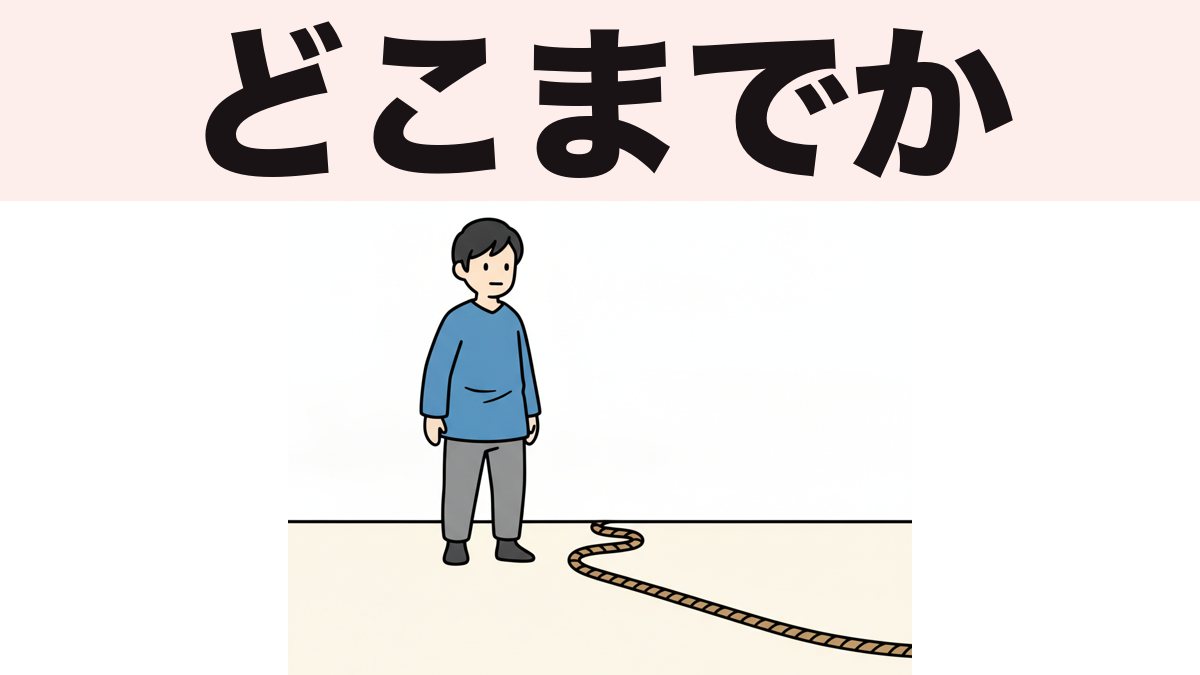
限る means "to limit", and everything built on it is about drawing a line. 〜に限る says nothing beats this; 〜とは限らない says the rule does not always hold; 〜限り marks the edge of a condition. One verb, three very different sentences.
「限る」は「かぎる(線を引く)」という意味です。「〜に限る」は「これがいちばん」、「〜とは限らない」は「いつもそうとはかぎらない」、「〜限り」は「〜のはんいでは」です。一つの動詞で、三つのちがう文になります。
The reason to learn them together is that the negative, 〜とは限らない, is the one you will actually need first. It is how Japanese contradicts a generalisation politely — and in a language that avoids flat disagreement, a ready-made way to say "not necessarily" is worth more than most grammar points at this level.
The basics
〜に限る — nothing beats this
Attach it to a noun or a plain-form verb and you get a strong personal recommendation: this, and nothing else.
夏はビールに限る。 — In summer, nothing beats a beer. (casual — a standard expression) 疲れた時は寝るに限る。 — When you're tired, sleeping is the only answer. (casual)
It is not a neutral comparison. It is a declaration of preference, usually a slightly indulgent one, and it is common in food writing and advertising for exactly that reason.
〜とは限らない — not necessarily
The one to learn first. It attaches to a whole clause and softens a generalisation into "that isn't always true".
高いものがいいとは限らない。 — Expensive things aren't necessarily good. (neutral — a very common sentence shape) 日本人が全員寿司を食べるとは限らない。 — Not every Japanese person eats sushi. (polite, correcting an assumption)
This is how you disagree with a stereotype without calling anyone wrong. You are not saying the statement is false; you are saying it does not always hold, which leaves the other person's face intact. Compare 〜わけではない, which does a related job from a slightly different angle.
〜限り — as far as, as long as
A boundary marker: the limit of what you know, or the condition under which something holds.
私の知る限り、彼は来ません。 — As far as I know, he isn't coming. (polite — hedging a claim) 体が動く限り、働きます。 — As long as my body moves, I'll keep working. (neutral)
私の知る限り is worth memorising whole. It is the standard way to answer a question you are not fully certain about, and it is much better Japanese than guessing confidently.
Beyond the basics
限られる and 限られている
The passive form means "to be limited" — a common, entirely practical word.
時間が限られています。 — Time is limited. (polite) 席に限りがあります。 — Seats are limited. (polite — standard on notices and booking pages)
席に限りがございます is what you will read on almost any Japanese event page. Recognising it saves you from assuming there is no cap on numbers.
必ずしも〜とは限らない
The full, emphatic version pairs とは限らない with 必ずしも, "not always / not necessarily". The two reinforce each other and the combination is extremely common in writing.
必ずしも高いものがいいとは限らない。 — Expensive things are not always better. (neutral, emphatic)
You do not have to use 必ずしも — the sentence works without it — but when you meet it in reading, it is a signal that a generalisation is about to be qualified.
〜限りでは — as far as [source] goes
A variant that limits a claim to a source of information rather than to a condition.
見た限りでは、問題ないです。 — As far as I could see, there's no problem. (polite) 聞いた限りでは、悪くないらしい。 — From what I've heard, it doesn't sound bad. (casual)
The pattern is verb (past or dictionary) + 限りでは, and it is how a careful speaker marks the edge of their own evidence. It pairs naturally with らしい and そうです, covered in みたい, らしい and ようだ.
Why とは limits rather than は
The と in とは限らない is the quotative と — it packages the preceding clause as a statement and then limits that statement. This is why it takes a full clause rather than a noun, and it is the same と that appears in 〜と思う and 〜と言う. Once you see that, the shape stops looking arbitrary — it is "it is not limited to the case that ___", which is exactly what "not necessarily" means. The quotative と is unpacked in 〜という.
Common mistakes
- Using 〜に限る for a neutral comparison. It is emphatic and personal. For a plain comparison, use 〜の方がいい, covered in 〜より〜の方が.
- Dropping the と in とは限らない. は限らない alone is not the pattern. The と is doing structural work.
- Using とは限らない to say something is false. It says "not always", which is weaker and more polite than a denial.
- Confusing 限り with だけ. だけ is "only, just"; 限り is "as far as / as long as", a boundary rather than a quantity.
- Reading 席に限りがあります as "there are no seats". It means seats are limited, which is a warning, not a refusal.
The 限る family
| Form | Meaning | Example |
|---|---|---|
| 〜に限る | Nothing beats this | 夏はビールに限る |
| 〜とは限らない | Not necessarily so | 高いものがいいとは限らない |
| 必ずしも〜とは限らない | Not always so (emphatic) | 必ずしも安全とは限らない |
| 〜限り | As far as; as long as | 私の知る限り |
| 〜限りでは | As far as [evidence] goes | 見た限りでは |
| 限られている | Is limited | 時間が限られています |
FAQ
Which one should I learn first? 〜とは限らない. It is the most useful in conversation because it lets you push back on a generalisation without contradicting anyone directly.
Is 〜に限る formal? No, it is casual and a bit emphatic — closer to "you can't beat a cold beer" than to anything written.
What is the difference between とは限らない and わけではない? とは限らない says the rule does not always apply. わけではない denies a specific inference the listener might have drawn. They overlap, but わけではない is more often correcting a misunderstanding.
How do I answer a question I'm not sure about? 私の知る限り〜. It gives your answer while marking its limits, which is both accurate and polite.
Is 必ずしも needed? No. It adds emphasis and is common in writing, but とは限らない carries the meaning on its own.
What does 今回限り mean? "This time only" — 限り as a boundary applied to an occasion. You will see it on one-off offers and in 今回限りだよ, "just this once".
Practice
Build each answer before opening it. Questions 1 and 2 are a pair — the same verb with and without the negative.
1. Say "in summer, nothing beats a beer."
Show answer
夏はビールに限る — a strong personal recommendation. This is the pair to question 2.
2. Say "expensive things aren't necessarily good."
Show answer
高いものがいいとは限らない — the negative turns it into "not always so". This is the pair to question 1.
3. Something is wrong here: 高いものがいいは限らない。
Show answer
高いものがいいとは限らない — the quotative と packages the clause. Dropping it breaks the pattern.
4. Answer a question you are not fully certain about.
Show answer
私の知る限り、〜 — it gives your answer while marking the edge of what you know.
5. Translate: 席に限りがあります。
Show answer
Seats are limited — a warning about capacity, not a statement that there are none.
6. Say "as far as I could see, there's no problem."
Show answer
見た限りでは、問題ないです — 限りでは limits a claim to your evidence.
7. Add emphasis: 安全とは限らない。
Show answer
必ずしも安全とは限らない — 必ずしも reinforces "not always", and the pair is common in writing.
8. Politely correct someone who assumes every Japanese person eats sushi.
Show answer
日本人が全員寿司を食べるとは限りません — it qualifies the generalisation without calling them wrong.
9. What is the difference between 限り and だけ?
Show answer
だけ is "only" (quantity); 限り is "as far as / as long as" (boundary) — they are not interchangeable.
10. What does 今回限り mean?
Show answer
This time only — 限り as a boundary drawn around one occasion.
Vocabulary from this article
Tap the block to select all of it, then copy. In Anki: File → Import, note type Basic, separator Tab — the first column becomes the front, the second the back.
限る	かぎる — to limit; to be the best
限り	かぎり — limit, as far as
必ずしも	かならずしも — not necessarily (with negative)
全員	ぜんいん — everyone, all members
席	せき — seat
時間	じかん — time
知る	しる — to know
働く	はたらく — to work
問題	もんだい — problem
安全	あんぜん — safety, safe
寿司	すし — sushi
夏	なつ — summer
高い	たかい — expensive; tall
体	からだ — body
動く	うごく — to move
今回	こんかい — this time
I'm Yuuki, a Japanese teacher based in Tokyo. I've taught on italki as a Top 1% teacher and watched over 1,500 anime. とは限らない is the grammar I hand to students who are frustrated that they cannot disagree politely — it is the exact tool that problem needs.
Sources: the author's own lessons and standard reference grammars.
一緒におぼえる理由は、ひていの形「〜とは限らない」を先に使うからです。日本語は、はっきり反対しない言い方をよく使います。「そうとはかぎりません」は、そのための道具です。
基本
〜に限る
名前や動詞のふつう形に付けて、「これがいちばん」と言います。
夏はビールに限る。 — In summer, nothing beats a beer. (casual — a standard expression) 疲れた時は寝るに限る。 — When you're tired, sleeping is the only answer. (casual)
くらべる言葉ではありません。「これがいい」という強い気もちの言い方です。食べものの記事やこうこくによく出ます。
〜とは限らない
先におぼえる形です。文にそのまま付けて、「いつもそうではない」と言います。
高いものがいいとは限らない。 — Expensive things aren't necessarily good. (neutral — a very common sentence shape) 日本人が全員寿司を食べるとは限らない。 — Not every Japanese person eats sushi. (polite, correcting an assumption)
「まちがいです」とは言っていません。「いつもではありません」と言っています。だから、相手をきずつけません。→ 〜わけではない
〜限り
「〜のはんいでは」という意味です。知っているはんい、続くじょうけんをあらわします。
私の知る限り、彼は来ません。 — As far as I know, he isn't coming. (polite — hedging a claim) 体が動く限り、働きます。 — As long as my body moves, I'll keep working. (neutral)
「私の知る限り」はそのままおぼえてください。よく分からないことを聞かれたときの、きほんの答え方です。
もう少しくわしく
限られる・限られている
うけみの形で「かぎりがある」という意味です。とても役に立ちます。
時間が限られています。 — Time is limited. (polite) 席に限りがあります。 — Seats are limited. (polite — standard on notices and booking pages)
「席に限りがございます」は、イベントのページでよく見ます。「せきがない」ではなく「数がきまっている」という意味です。
必ずしも〜とは限らない
強くした形です。書き言葉によく出ます。
必ずしも高いものがいいとは限らない。 — Expensive things are not always better. (neutral, emphatic)
「必ずしも」がなくても意味は同じです。読むときの合図としておぼえてください。
〜限りでは
じょうけんではなく、「自分が知っているはんい」をあらわす形です。
見た限りでは、問題ないです。 — As far as I could see, there's no problem. (polite) 聞いた限りでは、悪くないらしい。 — From what I've heard, it doesn't sound bad. (casual)
「らしい」「そうです」と一緒に使います。→ みたい・らしい・ようだ
なぜ「は」ではなく「とは」なのか
この「と」は、話の中身をまとめる「と」です。「〜と思う」「〜と言う」の「と」と同じです。だから、文ぜんたいに付きます。「〜という場合にかぎらない」という形です。→ 〜という
よくあるまちがい
- くらべるときに「〜に限る」を使う。 強い気もちの言い方です。→ 〜より〜の方が
- 「と」をおとす。「は限らない」だけでは形になりません。
- 「まちがいだ」という意味で使う。「いつもではない」という、やわらかい言い方です。
- 「限り」と「だけ」をまぜる。「だけ」は数、「限り」ははんいです。
- 「席に限りがあります」を「せきがない」と読む。 数がきまっている、という意味です。
「限る」のなかま
| 形 | 意味 | 例 |
|---|---|---|
| 〜に限る | これがいちばん | 夏はビールに限る |
| 〜とは限らない | いつもそうではない | 高いものがいいとは限らない |
| 必ずしも〜とは限らない | いつもそうではない(強い) | 必ずしも安全とは限らない |
| 〜限り | 〜のはんいでは | 私の知る限り |
| 〜限りでは | 見た・聞いたはんいでは | 見た限りでは |
| 限られている | かぎりがある | 時間が限られています |
よくある質問
どれから習う? 「〜とは限らない」です。やわらかく反対できるからです。
「〜に限る」はかたい? いいえ、カジュアルで、気もちの強い言い方です。
「とは限らない」と「わけではない」のちがいは? 「とは限らない」は「いつもではない」。「わけではない」は「そう思われたかもしれないが、ちがう」です。
よく分からないことを聞かれたら? 「私の知る限り〜」です。答えながら、はんいも伝えられます。
「必ずしも」は必要? いりません。強くするだけです。
「今回限り」とは? 「今回だけ」です。一回にかぎる、という意味です。
練習
答えを見る前に、自分で作ってください。1番と2番はペアです。
1. 「夏はビールがいちばん」と言う。
答えを見る
夏はビールに限る — 強い気もちの言い方です。2番とペアです。
2. 「高いものがいいとはかぎらない」と言う。
答えを見る
高いものがいいとは限らない — ひていで「いつもではない」になります。1番とペアです。
3. まちがいをなおす: 高いものがいいは限らない。
答えを見る
高いものがいいとは限らない — 「と」が文をまとめています。
4. よく分からないことを聞かれて答える。
答えを見る
私の知る限り、〜 — 知っているはんいを伝えられます。
5. やくす: 席に限りがあります。
答えを見る
せきの数はきまっています — 「ない」という意味ではありません。
6. 「見たはんいでは、問題ない」と言う。
答えを見る
見た限りでは、問題ないです — 自分が見たはんいだけ、という意味です。
7. 強くする: 安全とは限らない。
答えを見る
必ずしも安全とは限らない — 書き言葉によく出る組み合わせです。
8. 「日本人は全員すしを食べる」と思っている人に、やわらかく伝える。
答えを見る
日本人が全員寿司を食べるとは限りません — まちがいだとは言っていません。
9. 「限り」と「だけ」のちがいは?
答えを見る
「だけ」は数、「限り」ははんい — 入れかえられません。
10. 「今回限り」とは?
答えを見る
今回だけ — 一回にかぎる、という意味です。
この記事に出た単語
上のブロックをタップしてぜんぶ選んで、コピーしてください。Ankiでは ファイル → インポート、ノートタイプは 基本、区切りは タブ です。左が表、右がうらになります。
限る	かぎる — to limit; to be the best
限り	かぎり — limit, as far as
必ずしも	かならずしも — not necessarily (with negative)
全員	ぜんいん — everyone, all members
席	せき — seat
時間	じかん — time
知る	しる — to know
働く	はたらく — to work
問題	もんだい — problem
安全	あんぜん — safety, safe
寿司	すし — sushi
夏	なつ — summer
高い	たかい — expensive; tall
体	からだ — body
動く	うごく — to move
今回	こんかい — this time
More drills like the ones above, plus a timed JLPT-style mock test: Practice · N3上のような練習問題と、時間つきのJLPT形式のもぎ試験: 練習ページ · N3
Want to try this in a real conversation?
本当の会話で、ためしてみませんか?
30-minute trial lesson, $13. Times shown in your own timezone.
30分の体験レッスン、$13。時間はあなたのタイムゾーンで表示されます。
Book a trial lesson · $13