Japanese transportation vocabulary: the words, and the particle that surprises everyone乗り物のことば: みんながおどろく助詞が1つあります
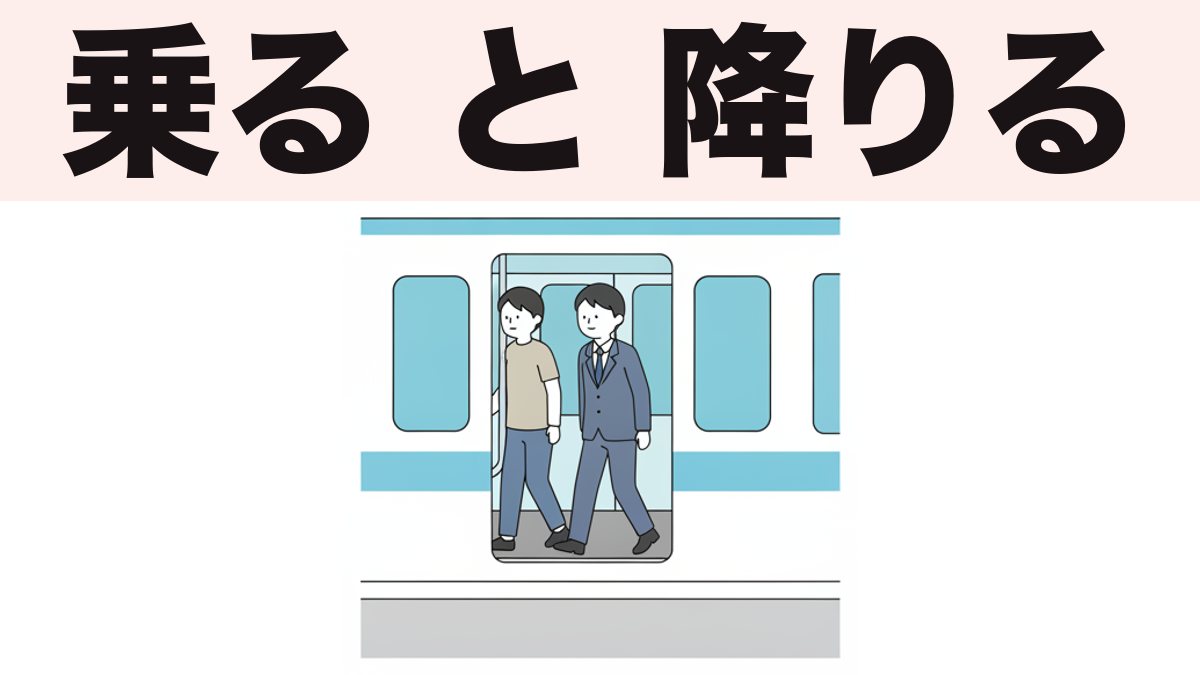
電車, バス, 自転車 and the rest take about ten minutes to learn. The part that takes longer is that you board *into* a train with に (電車に乗る) and get off *from* it with を (電車を降りる) — and to say how you travel, you need a third particle entirely: 電車で行きます.
「電車」「バス」「自転車」は、10分で覚えられます。難しいのは助詞です。乗る時は「電車に乗る」、降りる時は「電車を降りる」。そして「どうやって行くか」を言う時は、もう1つ別の助詞がいります。「電車で行きます」です。
Transportation is the single most useful vocabulary set for a first trip to Japan, because it is the one topic where you cannot point at what you want. You need the words, and you need three particles that do not line up with English at all.
The basics
The vehicles themselves
Most of these are plain nouns with no surprises. A few are wasei-eigo — English words that have taken on their own Japanese shape.
| Japanese | Reading | English |
|---|---|---|
| 電車 | でんしゃ | train (commuter/electric) |
| 新幹線 | しんかんせん | bullet train |
| 地下鉄 | ちかてつ | subway |
| バス | ばす | bus |
| タクシー | たくしー | taxi |
| 車 | くるま | car |
| 自転車 | じてんしゃ | bicycle |
| 飛行機 | ひこうき | airplane |
| 船 | ふね | ship, boat |
| 徒歩 | とほ | on foot |
汽車 (きしゃ) means a steam train and shows up in older songs and anime; nobody uses it for a modern commuter line. If you say 汽車 at a station in Tokyo you will be understood, but you will sound like a character in a period drama.
乗る takes に, not を
This is the particle that catches almost every learner, because in English you "get on" a train, which feels like the train is the thing you act on.
電車に乗ります。 — I get on the train. (polite, neutral) バスに乗って、駅まで行きました。 — I took the bus and went as far as the station. (polite, past)
The logic: 乗る describes arriving into a position, so Japanese marks the destination of that arrival with に — the same に that marks where you go. Think of it as "board into," not "ride."
降りる takes を
And then the opposite verb flips the particle.
次の駅で降ります。 — I'm getting off at the next station. (polite, announcing your stop) バスを降りるとき、ボタンを押します。 — When you get off the bus, you press the button. (polite, explaining a system)
を here marks the place you are leaving through — the same を in 家を出る ("leave the house") and 大学を卒業する ("graduate from university"). It is not the object-marking を you learned first; it is the departure を.
Notice both particles in that second example: 降りる takes を for the vehicle, but the station where you get off takes で, because で marks the location of the action. 次の駅でバスを降ります is the fully-specified version.
Beyond the basics
で marks how you travel
To say the means of transport, use で on the vehicle and a motion verb.
電車で行きます。 — I'll go by train. (polite, stating your method) 歩いて行きます。 — I'll walk there. (polite — note that 徒歩で is the written form; in speech people say 歩いて)
So the same noun takes different particles depending on what you are saying about it:
- 電車に乗る — get on the train (the act of boarding)
- 電車を降りる — get off the train (the act of leaving)
- 電車で行く — go by train (the method)
This is the で vs に distinction in its most practical form. If you want one sentence to carry with you, make it 電車で行きます — it covers most of what a traveller needs.
乗り換える: the word that saves your trip
Transferring between lines is the single hardest part of Japanese train travel, and it has its own verb.
新宿で乗り換えます。 — I transfer at Shinjuku. (polite — で for the place of the action) どこで乗り換えればいいですか。 — Where should I transfer? (polite, asking for help)
That second sentence is worth memorizing whole. It is the most useful question in a Japanese station, and staff hear it constantly, so it will not confuse anyone.
The station vocabulary that actually appears on signs
| Japanese | Reading | English |
|---|---|---|
| 駅 | えき | station |
| 改札 | かいさつ | ticket gate |
| 切符 | きっぷ | ticket |
| 片道 | かたみち | one-way |
| 往復 | おうふく | round trip |
| ホーム | ほーむ | platform |
| 〜行き | 〜ゆき | bound for ~ |
| 各駅停車 | かくえきていしゃ | local (stops at every station) |
| 急行 | きゅうこう | express |
| 特急 | とっきゅう | limited express |
| 上り | のぼり | inbound (toward Tokyo) |
| 下り | くだり | outbound |
| 終電 | しゅうでん | last train |
〜行き is read ゆき, not いき, when it is a destination label: 東京行き is とうきょうゆき. This is one of those readings that trips people who know the verb 行く perfectly well.
終電 is a cultural word, not just a schedule
終電 ("last train") carries social weight that the English does not. 終電で帰る is a normal sentence about an evening ending, and 終電を逃す ("miss the last train") is the setup for an entire genre of anime and drama scenes — because missing it in Tokyo genuinely means a taxi you cannot afford or a night in a manga café.
終電、何時ですか。 — What time is the last train? (polite, and a very normal thing to ask at 11pm)
Counters for vehicles
Vehicles take 〜台 (だい), the counter for machines. Trains as units of service take 〜本 (ほん), the same counter as long thin things, because a train line is conceived as a line.
- 車が二台 — two cars
- 電車が三本 — three trains (three services, e.g. three departures)
If you have not worked through Japanese counters yet, 台 is one of the six worth learning early — it covers cars, bicycles, computers and appliances.
Common mistakes
- Saying 電車を乗る. The verb 乗る takes に. This is the error I correct most in this topic, and it survives well past N5 because English pushes hard in the wrong direction.
- Saying 電車に降りる. The opposite error. 降りる takes を.
- Using に for the means of travel. 電車に行きます is not "I go by train" — it is closer to "I go to the train." The means is で.
- Reading 〜行き as 〜いき. On a destination sign it is ゆき. 東京行き = とうきょうゆき.
- Assuming 汽車 means "train." It means a steam train. Use 電車.
- Using 徒歩 in conversation. It is correct but written-register; say 歩いて.
The three particles, side by side
| What you want to say | Particle | Example |
|---|---|---|
| Get on / board | に | 電車に乗ります |
| Get off / leave | を | 電車を降ります |
| By means of | で | 電車で行きます |
| Where the action happens | で | 次の駅で降ります |
| Where you're going | まで / に | 東京まで行きます |
Practice
Questions 1 and 2 are the pair that matters — same noun, opposite particles.
1. Say "I get on the train," politely.
Show answer
電車に乗ります。 — 乗る takes に, because Japanese treats boarding as arriving into a position.
2. Say "I get off the train," politely.
Show answer
電車を降ります。 — 降りる takes を — the departure を, the same one in 家を出る.
3. Say "I'll go by train."
Show answer
電車で行きます。 — で marks the means. Not に, which would point at the train as a destination.
4. Say "I'm getting off at the next station."
Show answer
次の駅で降ります。 — で for the place where the action happens. Add を電車 if you need to name the vehicle: 次の駅で電車を降ります.
5. Ask politely where you should transfer.
Show answer
どこで乗り換えればいいですか。 — Worth memorizing whole. で marks the place of transferring.
6. Ask what time the last train is.
Show answer
終電、何時ですか。 — 終電 is the last train. The は is commonly dropped in speech, leaving a short pause.
7. Say "I took the bus and went as far as the station."
Show answer
バスに乗って、駅まで行きました。 — に with 乗る, まで for "as far as."
8. Say "I'll walk there" — casually natural, not written-style.
Show answer
歩いて行きます。 — 徒歩で行きます is correct but belongs on a printed map, not in speech.
9. Fix this sentence: 電車を乗ります。
Show answer
電車に乗ります。 — The most common error in this topic. 乗る never takes を.
10. How do you read the sign 東京行き?
Show answer
とうきょうゆき — On a destination label, 行き is read ゆき, not いき.
FAQ
Why does 乗る take に when English says "get on"? Because Japanese frames boarding as ending up inside something, and に is the particle for where you end up. The same に appears in 椅子に座る ("sit on a chair") and 家に入る ("enter a house") — all arrivals, all に.
Can I say 電車に乗って行きます instead of 電車で行きます? Yes, and it is perfectly natural. It is slightly longer and emphasizes the act of boarding; 電車で行きます just states the method. Both are common.
What is the difference between 切符 and 乗車券? 切符 is the everyday word for a ticket. 乗車券 is the formal term printed on the ticket itself and used for long-distance travel, where it may be paired with a separate 特急券 for the express fee.
Is 地下鉄 different from 電車? 地下鉄 specifically means subway. 電車 is the general word and covers subway lines too in casual speech — if you say 電車で行きます and take the Metro, nobody will correct you.
What does 各駅停車 mean on a platform sign? It means the train stops at every station — the slowest service. 急行 skips some, 特急 skips more and often costs extra. Getting on a 特急 when you wanted 各駅停車 is how you end up three towns past your stop.
How do I ask which platform? 何番線ですか ("which track number?"). 線 (せん) means line or track, and platforms are numbered, so this is the question that gets you a number you can act on.
Vocabulary from this article
Tap the block to select all of it, then copy. In Anki: File → Import, note type Basic, separator Tab — the first column becomes the front, the second the back.
電車	でんしゃ — train
新幹線	しんかんせん — bullet train
地下鉄	ちかてつ — subway
自転車	じてんしゃ — bicycle
飛行機	ひこうき — airplane
船	ふね — ship, boat
乗る	のる — to get on, to board
降りる	おりる — to get off
乗り換える	のりかえる — to transfer, to change trains
駅	えき — station
改札	かいさつ — ticket gate
切符	きっぷ — ticket
片道	かたみち — one-way
往復	おうふく — round trip
各駅停車	かくえきていしゃ — local train
急行	きゅうこう — express
特急	とっきゅう — limited express
終電	しゅうでん — last train
徒歩	とほ — on foot
歩く	あるく — to walk
I'm Yuuki, a Japanese teacher based in Tokyo. I've taught on italki as a Top 1% teacher and watched over 1,500 anime. 電車を乗る is the error I hear most in this topic, and it usually appears the first time a student is excited enough to talk fast — which is exactly the moment the English word order takes over.
Sources: the author's own lessons and standard reference grammars.
日本へ来て、いちばん使うことばです。買い物とちがって、指で示すことができません。ことばが必要です。
基本
乗り物のことば
| 日本語 | 読み方 | 英語 |
|---|---|---|
| 電車 | でんしゃ | train (commuter/electric) |
| 新幹線 | しんかんせん | bullet train |
| 地下鉄 | ちかてつ | subway |
| バス | ばす | bus |
| タクシー | たくしー | taxi |
| 車 | くるま | car |
| 自転車 | じてんしゃ | bicycle |
| 飛行機 | ひこうき | airplane |
| 船 | ふね | ship, boat |
| 徒歩 | とほ | on foot |
「汽車」は蒸気の列車です。今の電車には使いません。
「乗る」は「に」です
英語では「get on」なので、「を」を使いたくなります。でも日本語は「に」です。
電車に乗ります。 — I get on the train. (polite, neutral) バスに乗って、駅まで行きました。 — I took the bus and went as far as the station. (polite, past)
「乗る」は「中に入って、そこにいる」という意味です。だから、着く場所を表す「に」を使います。
「降りる」は「を」です
反対の動詞は、助詞も反対です。
次の駅で降ります。 — I'm getting off at the next station. (polite, announcing your stop) バスを降りるとき、ボタンを押します。 — When you get off the bus, you press the button. (polite, explaining a system)
この「を」は、「家を出る」「大学を卒業する」と同じ「を」です。「そこから出る」という意味です。
降りる場所は「で」です。「次の駅でバスを降ります」。
もう少し先へ
「で」は「どうやって」を表します
電車で行きます。 — I'll go by train. (polite, stating your method) 歩いて行きます。 — I'll walk there. (polite — note that 徒歩で is the written form; in speech people say 歩いて)
同じ「電車」でも、言いたいことでちがう助詞になります。
- 電車に乗る — 乗る時
- 電車を降りる — 降りる時
- 電車で行く — 行き方を言う時
1つだけ覚えるなら「電車で行きます」です。
「乗り換える」
日本の電車で、いちばん難しいところです。専用の動詞があります。
新宿で乗り換えます。 — I transfer at Shinjuku. (polite — で for the place of the action) どこで乗り換えればいいですか。 — Where should I transfer? (polite, asking for help)
下の文は、そのまま覚えてください。駅でいちばん役に立つ質問です。
駅の看板のことば
| 日本語 | 読み方 | 英語 |
|---|---|---|
| 駅 | えき | station |
| 改札 | かいさつ | ticket gate |
| 切符 | きっぷ | ticket |
| 片道 | かたみち | one-way |
| 往復 | おうふく | round trip |
| ホーム | ほーむ | platform |
| 〜行き | 〜ゆき | bound for ~ |
| 各駅停車 | かくえきていしゃ | local |
| 急行 | きゅうこう | express |
| 特急 | とっきゅう | limited express |
| 終電 | しゅうでん | last train |
「〜行き」は「ゆき」と読みます。「いき」ではありません。「東京行き」は「とうきょうゆき」です。
「終電」は時間だけのことばではありません
「終電で帰る」はふつうの言い方です。「終電を逃す」は、アニメやドラマでよく出ます。東京で終電をのがすと、タクシーか、朝までまんが喫茶です。
終電、何時ですか。 — What time is the last train? (polite, and a very normal thing to ask at 11pm)
乗り物の数え方
機械なので「〜台」です。電車の本数は「〜本」です。
- 車が二台
- 電車が三本
よくある間違い
- 「電車を乗ります」と言う。 「乗る」は「に」です。これがいちばん多い間違いです。
- 「電車に降ります」と言う。 「降りる」は「を」です。
- 行き方に「に」を使う。 「電車に行きます」は「電車のところへ行く」に近くなります。
- 「〜行き」を「いき」と読む。 看板では「ゆき」です。
- 「汽車」を使う。 今は「電車」です。
- 話す時に「徒歩」を使う。 「歩いて」と言います。
3つの助詞
| 言いたいこと | 助詞 | 例 |
|---|---|---|
| 乗る | に | 電車に乗ります |
| 降りる | を | 電車を降ります |
| 行き方 | で | 電車で行きます |
| することの場所 | で | 次の駅で降ります |
| 行き先 | まで / に | 東京まで行きます |
練習
1番と2番が大事です。同じことばで、助詞が反対になります。
1. 「電車に乗ります」と言ってください。
答えを見る
電車に乗ります。 — 「乗る」は「に」です。中に入る、という意味だからです。
2. 「電車を降ります」と言ってください。
答えを見る
電車を降ります。 — 「降りる」は「を」です。「家を出る」と同じ「を」です。
3. 「電車で行きます」と言ってください。
答えを見る
電車で行きます。 — 行き方は「で」です。
4. 「次の駅で降ります」と言ってください。
答えを見る
次の駅で降ります。 — 場所は「で」です。
5. 「どこで乗り換えればいいですか」と聞いてください。
答えを見る
どこで乗り換えればいいですか。 — そのまま覚えてください。駅でいちばん使います。
6. 終電の時間を聞いてください。
答えを見る
終電、何時ですか。 — 「は」は言わなくても大丈夫です。
7. 「バスに乗って、駅まで行きました」と言ってください。
答えを見る
バスに乗って、駅まで行きました。 — 「に」と「まで」です。
8. 「歩いて行きます」と言ってください。
答えを見る
歩いて行きます。 — 「徒歩で」は地図に書く形です。
9. 直してください: 電車を乗ります。
答えを見る
電車に乗ります。 — 「乗る」に「を」は使いません。
10. 「東京行き」は、どう読みますか。
答えを見る
とうきょうゆき — 行き先の看板では「ゆき」です。
よくある質問
どうして「乗る」は「に」ですか。 「中に入って、そこにいる」という意味だからです。「椅子に座る」「家に入る」と同じです。
「電車に乗って行きます」でもいいですか。 いいです。自然です。「電車で行きます」より少し長く、乗ることを強く言う形です。
「切符」と「乗車券」はちがいますか。 「切符」はふだんのことばです。「乗車券」はかたいことばで、長い旅で使います。
「地下鉄」と「電車」はちがいますか。 「地下鉄」は地下を走る電車です。話す時は、地下鉄でも「電車」と言って大丈夫です。
「各駅停車」は何ですか。 全部の駅に止まる電車です。「急行」はいくつか飛ばします。「特急」はもっと飛ばして、お金がかかることもあります。
ホームの番号を聞く時は何と言いますか。 「何番線ですか」です。
この記事に出た単語
このブロックを長く押して全部選び、コピーしてください。Ankiでは ファイル → 読み込み、ノートタイプは 基本、区切りは タブ にします。左が表、右が裏になります。
電車	でんしゃ — train
新幹線	しんかんせん — bullet train
地下鉄	ちかてつ — subway
自転車	じてんしゃ — bicycle
飛行機	ひこうき — airplane
船	ふね — ship, boat
乗る	のる — to get on, to board
降りる	おりる — to get off
乗り換える	のりかえる — to transfer, to change trains
駅	えき — station
改札	かいさつ — ticket gate
切符	きっぷ — ticket
片道	かたみち — one-way
往復	おうふく — round trip
各駅停車	かくえきていしゃ — local train
急行	きゅうこう — express
特急	とっきゅう — limited express
終電	しゅうでん — last train
徒歩	とほ — on foot
歩く	あるく — to walk
日本語教師のユウキです。東京にいます。 italkiで Top 1% の教師をしています。アニメは1,500本以上見ました。「電車を乗る」は、このテーマでいちばん多い間違いです。楽しくなって早く話し始めた時に出ます。
More drills like the ones above, plus a timed JLPT-style mock test: Practice · N5上のような練習問題と、時間つきのJLPT形式のもぎ試験: 練習ページ · N5
Want to try this in a real conversation?
本当の会話で、ためしてみませんか?
30-minute trial lesson, $13. Times shown in your own timezone.
30分の体験レッスン、$13。時間はあなたのタイムゾーンで表示されます。
Book a trial lesson · $13