Japanese taste words: 甘い, 酸っぱい, しょっぱい and the ones that are not about flavour at all味のことば: 甘い・酸っぱい・しょっぱい、そして「味」ではない味のことば
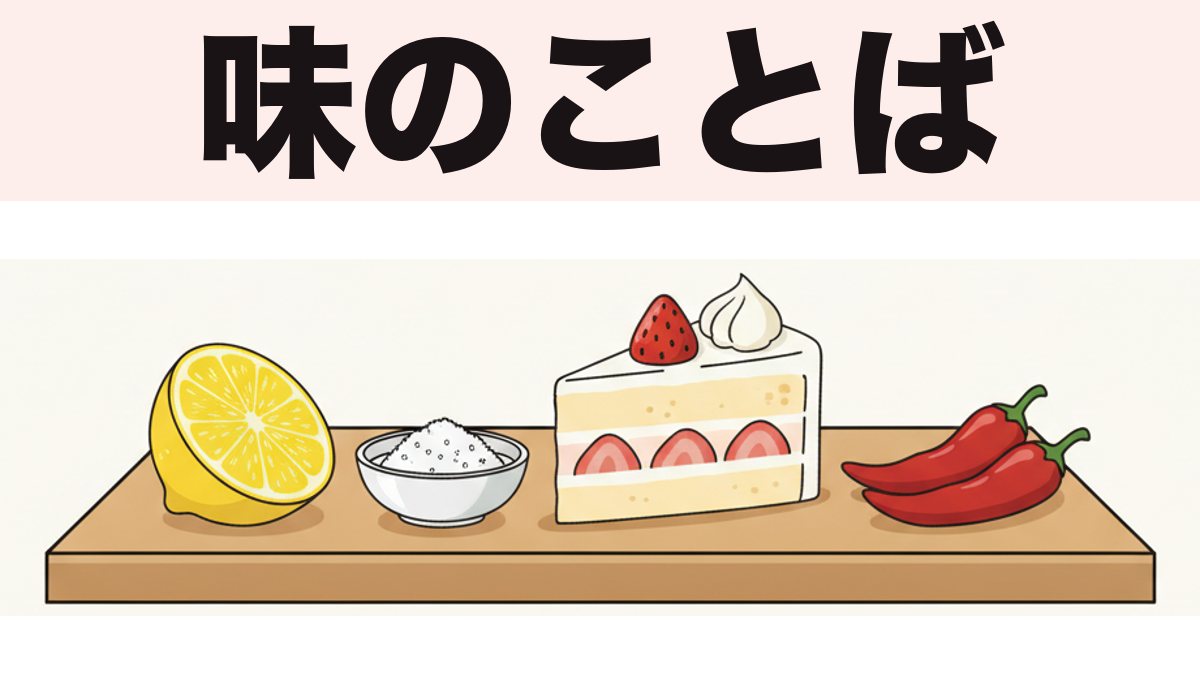
Japanese has the same five basic tastes as English, plus a second layer English mostly lacks: words for richness, lightness and texture that carry as much weight in a food conversation as sweet and salty do.
日本語の基本の味は、英語と同じです。でも、そのうえに、もう1つの層があります。「こってり」「あっさり」「もちもち」——こさ・かるさ・食感のことばです。日本語の食べ物の話は、この層でできています。
This is one of the few areas where a learner can sound noticeably more fluent with about twenty words, because Japanese food conversation is genuinely detailed, and answering おいしいです every single time is the conversational equivalent of nodding.
The basics
The five tastes
| Word | Reading | Meaning |
|---|---|---|
| 甘い | あまい | sweet |
| 酸っぱい | すっぱい | sour |
| しょっぱい / 塩辛い | しょっぱい / しおからい | salty |
| 苦い | にがい | bitter |
| 辛い | からい | spicy (also: salty, regionally) |
| うま味 | うまみ | savoury depth (the fifth taste) |
このケーキ、甘すぎます。 — This cake is too sweet. (polite; 〜すぎる for excess) レモンは酸っぱいです。 — Lemons are sour. (polite, plain statement)
All of these are い-adjectives, so they behave like any other: 甘くない (not sweet), 甘かった (was sweet), 甘くて (sweet and...).
The 辛い problem
辛い is read からい and means spicy — but the same kanji read つらい means "painful, tough" as in a hard situation. Two completely different words sharing one character.
この料理は辛いです。 — This dish is spicy. (からい) 毎日残業でつらいです。 — Overtime every day is rough. (つらい — nothing to do with food)
On top of that, in parts of the country 辛い also covers salty, which is why しょっぱい exists as the unambiguous word. If you want to be understood everywhere, use しょっぱい for salt and 辛い only for spice.
おいしい vs うまい
Same meaning, different register:
おいしいです。 — It's delicious. (polite, neutral, safe for anyone) うまい! — This is great! (casual, blunt; traditionally masculine, widely used now)
うまい in a restaurant with a client is too rough. おいしい in a casual group is completely fine, so there is no situation where you need うまい — it is a recognition word first.
Beyond the basics
The words Japanese uses that English does not
This is the layer worth learning, because it is what a Japanese food conversation is actually made of:
| Word | Reading | What it describes |
|---|---|---|
| 濃い | こい | strong, rich, concentrated flavour |
| 薄い | うすい | weak, thin, under-seasoned |
| あっさり | — | light, clean, not heavy |
| こってり | — | rich, heavy, fatty (in a good way) |
| さっぱり | — | refreshing, cuts through richness |
| 香ばしい | こうばしい | toasty, fragrantly roasted |
このラーメンはこってりしていて、スープが濃いです。 — This ramen is rich and the broth is strong. (polite, describing a dish properly) 夏はさっぱりしたものが食べたいです。 — In summer I want something refreshing. (polite)
あっさり and こってり are the pair you will hear most — ramen shops, menus and reviews are organised around them.
Texture is a taste word too
Japanese treats 食感 (しょっかん, texture) as a headline feature of food, and most texture words are onomatopoeic:
- もちもち — chewy, springy (mochi, good bread)
- さくさく — crisp, light-crunchy (tempura, cookies)
- ふわふわ — fluffy (pancakes, omelette)
- しっとり — moist (cake)
- ぱりぱり — crackly-crisp (gyoza skin, nori)
- とろとろ — melting, thick-flowing (cheese, slow-cooked egg)
このパンケーキ、ふわふわですね。 — These pancakes are so fluffy, aren't they. (polite, the standard compliment)
If these feel arbitrary, they follow the same sound-symbolic patterns as the rest of Japanese onomatopoeia — voiced consonants tend to feel heavier, repeated pairs feel continuous.
How do you say something tastes bad?
Carefully, or not at all. まずい ("it tastes bad") is blunt enough that saying it about food someone made or chose is genuinely rude. The usual strategies:
ちょっと苦手かもしれません。 — It might not be quite for me. (polite, deflects onto yourself) 微妙ですね。 — It's... hmm. (casual, honest, non-committal)
微妙 (びみょう) literally means "subtle" and is used to mean "not great" without ever saying so. It is one of the most useful evasions in the language, and it is used far beyond food.
The other route is to praise something else — the temperature, the look, the portion — which is the same conversational move as a soft refusal in asking permission: say the positive thing and let the omission carry the rest.
Seasoning words you will see on menus
味付け (あじつけ, seasoning), 味が濃い / 薄い (strongly / lightly seasoned), 甘辛い (あまからい, sweet-and-salty — the teriyaki flavour profile), だし (stock, the base of most Japanese savouriness), コク (depth, body).
甘辛い味付けが好きです。 — I like sweet-savoury seasoning. (polite, useful preference to be able to state)
Common mistakes
- Using 辛い for salty. Some speakers do, but しょっぱい is the word that works everywhere.
- Reading 辛い as からい in a non-food sentence. つらい ("tough, painful") shares the kanji and means something entirely different.
- Saying うまい to a client or a teacher. Not offensive, but rough. おいしい covers everything.
- Saying まずい about food you have been served. Use 苦手 or 微妙 unless you actively want to be blunt.
- Ignoring texture words. Japanese food talk is half texture; さくさく and もちもち will get you further than more taste adjectives.
- Translating 薄い as "light". 薄い is a criticism (under-seasoned). あっさり is the positive version of "light".
Practice
Say each answer out loud first. Questions 3 and 4 are a pair: the same kanji, two unrelated words.
1. Say "this cake is too sweet."
Show answer
このケーキは甘すぎます — 甘い + すぎる. The い drops before すぎる.
2. Which word for "salty" works everywhere in Japan?
Show answer
しょっぱい — 辛い can mean salty in some regions, which makes it ambiguous. しょっぱい never is.
3. Read 辛い in この料理は辛いです。
Show answer
からい — spicy. Food context, so the flavour reading.
4. Read 辛い in 毎日残業でつらいです。
Show answer
つらい — tough, painful. Same kanji, completely different word, decided by context.
5. A ramen shop describes a broth as こってり. What are they promising?
Show answer
Rich, heavy, fatty — the opposite of あっさり. Both are positives; they describe a style, not a quality level.
6. Your friend's pancakes are wonderfully fluffy. Say so.
Show answer
ふわふわですね — texture words work as complete compliments in Japanese. No adjective needed.
7. What is the difference between 薄い and あっさり?
Show answer
薄い is a complaint (under-seasoned); あっさり is praise (clean and light) — do not use 薄い when you mean the food is pleasantly light.
8. Someone serves you something you dislike. What do you say?
Show answer
ちょっと苦手かもしれません — deflects onto your own preferences instead of the food. まずい is genuinely rude here.
9. What does 微妙 mean when used about food?
Show answer
"Not great" without saying it — literally "subtle". It is a soft negative and is used well beyond food.
10. Translate: 甘辛い味付けが好きです。
Show answer
I like sweet-savoury seasoning — 甘辛い is one word, the flavour profile of teriyaki and many simmered dishes.
FAQ
Is うま味 a real, separate taste? Yes — it was identified in Japan in 1908 and is now recognised internationally as the fifth basic taste, alongside sweet, sour, salty and bitter. In everyday conversation it usually appears as コク or 深い味.
Why do so many Japanese food words repeat syllables? Because onomatopoeia is a full grammatical category in Japanese, not a decorative extra. Repetition generally signals continuity or repetition of the sensation — a texture that keeps happening as you chew.
Can I just say おいしい every time? You can, and nothing bad happens. But food is one of the safest small-talk topics in Japan, so one texture word or one あっさり/こってり turns a dead-end reply into a conversation.
What is the difference between 甘い about food and 甘い about a person? Applied to a person or a judgement, 甘い means lenient, naive or soft — 考えが甘い means your thinking is naive. Same word, extended metaphorically.
How do I ask if something is spicy before ordering? 辛いですか。 If you cannot eat spice at all, 辛いものが苦手です ("I'm not good with spicy food") is clearer and more polite than saying you don't like it.
Is it rude to leave food, or to ask about ingredients? Asking is completely normal, especially about allergies: 〜が入っていますか ("does it contain ~?"). Leaving food is less ideal than saying up front that a portion is large, but it is not a scandal.
Vocabulary from this article
Tap the block to select all of it, then copy. In Anki: File → Import, note type Basic, separator Tab — the first column becomes the front, the second the back.
甘い	あまい — sweet
酸っぱい	すっぱい — sour
しょっぱい	しょっぱい — salty
苦い	にがい — bitter
辛い	からい — spicy
辛い	つらい — tough, painful
うま味	うまみ — savoury depth
濃い	こい — strong, rich (flavour)
薄い	うすい — weak, under-seasoned
あっさり	あっさり — light, clean-tasting
こってり	こってり — rich, heavy
さっぱり	さっぱり — refreshing
香ばしい	こうばしい — toasty, fragrant
食感	しょっかん — texture
味付け	あじつけ — seasoning
甘辛い	あまからい — sweet and savoury
微妙	びみょう — subtle; "not great"
苦手	にがて — not good with, not fond of
I'm Yuuki, a Japanese teacher based in Tokyo. I've taught on italki as a Top 1% teacher and watched over 1,500 anime. Taste words are where I send students who say they have nothing to talk about — everyone eats three times a day, and Japanese has more words for it than almost any topic a beginner can reach.
Sources: the author's own lessons and standard reference grammars.
20語くらいおぼえるだけで、ぐっと自然になります。毎回「おいしいです」と言うのは、うなずいているのと同じだからです。
基本
5つの味
| ことば | 読み方 | 意味 |
|---|---|---|
| 甘い | あまい | sweet |
| 酸っぱい | すっぱい | sour |
| しょっぱい/塩辛い | しょっぱい/しおからい | salty |
| 苦い | にがい | bitter |
| 辛い | からい | spicy(地方では salty も) |
| うま味 | うまみ | savoury depth |
このケーキ、甘すぎます。 — This cake is too sweet. (polite; 〜すぎる for excess) レモンは酸っぱいです。 — Lemons are sour. (polite, plain statement)
ぜんぶ「い形容詞」です。甘くない、甘かった、甘くて。
「辛い」の2つの読み方
同じ漢字で、まったくちがう言葉です。
この料理は辛いです。 — This dish is spicy. (からい) 毎日残業でつらいです。 — Overtime every day is rough. (つらい — not about food)
さらに、地方によっては「辛い」が「しょっぱい」の意味にもなります。だから、塩の味は「しょっぱい」を使うと、どこでも通じます。
「おいしい」と「うまい」
おいしいです。 — It's delicious. (polite, safe for anyone) うまい! — This is great! (casual, blunt)
仕事の食事では「うまい」は強すぎます。「おいしい」はどこでも使えます。
もう少し先へ
英語にない層
| ことば | 読み方 | 意味 |
|---|---|---|
| 濃い | こい | 味が強い |
| 薄い | うすい | 味が弱い(わるい意味) |
| あっさり | — | かるい・くどくない |
| こってり | — | こくがある・あぶらが多い |
| さっぱり | — | さわやか |
| 香ばしい | こうばしい | こうばしい・焼けたいい香り |
このラーメンはこってりしていて、スープが濃いです。 — This ramen is rich and the broth is strong. (polite) 夏はさっぱりしたものが食べたいです。 — In summer I want something refreshing. (polite)
「あっさり」と「こってり」は、ラーメン屋のメニューでいちばん見ることばです。
食感(しょっかん)も味のことば
- もちもち — おもちやパンのような、やわらかくて弾力がある感じ
- さくさく — てんぷらやクッキーのかるい感じ
- ふわふわ — パンケーキ、たまご
- しっとり — ケーキ
- ぱりぱり — ぎょうざの皮、のり
- とろとろ — チーズ、半熟たまご
このパンケーキ、ふわふわですね。 — These pancakes are so fluffy, aren't they. (polite compliment)
これらはオノマトペの仲間です。
「おいしくない」の言い方
「まずい」はとても強いことばです。作ってくれた人には使いません。
ちょっと苦手かもしれません。 — It might not be quite for me. (polite; blames your own taste) 微妙ですね。 — It's... hmm. (casual, honest, non-committal)
「微妙(びみょう)」は「はっきりしない」という意味ですが、「あまりよくない」を、言わずに伝える形です。食べ物いがいにも使えます。
もう1つの方法は、ほかのことをほめることです。これは「〜てもいいですか」の、やわらかい断り方と同じ考え方です。
メニューのことば
味付け(あじつけ)、味が濃い・薄い、甘辛い(あまからいあまからいてりやきの味)、だし、コク。
甘辛い味付けが好きです。 — I like sweet-savoury seasoning. (polite)
よくあるまちがい
- 塩の味に「辛い」を使う。 「しょっぱい」が安全です。
- 食べ物いがいで「辛い」を「からい」と読む。 「つらい」です。
- お客さんや先生に「うまい」と言う。 「おいしい」を使います。
- 出された料理に「まずい」と言う。 「苦手」「微妙」を使います。
- 食感のことばを使わない。 日本語の食べ物の話の半分は食感です。
- 「薄い」を「かるい」の意味で使う。 「薄い」は文句です。ほめる時は「あっさり」です。
練習
まず声に出してから、答えを見てください。3番と4番はペアです。
1. 「このケーキは甘すぎます」と言ってください。
答えを見る
このケーキは甘すぎます — 甘い+すぎる。「い」が消えます。
2. どこでも通じる「salty」は?
答えを見る
しょっぱい — 「辛い」は地方によって意味が変わります。
3. 「この料理は辛いです」の読み方は?
答えを見る
からい — 食べ物の話なので spicy です。
4. 「毎日残業でつらいです」の読み方は?
答えを見る
つらい — 同じ漢字ですが、まったく別のことばです。
5. ラーメン屋の「こってり」はどんな味ですか。
答えを見る
こくがあって、あぶらが多い — 「あっさり」の反対です。どちらもいい意味です。
6. 友だちのパンケーキがふわふわです。ほめてください。
答えを見る
ふわふわですね — 食感のことばだけで、ほめ言葉になります。
7. 「薄い」と「あっさり」のちがいは?
答えを見る
「薄い」は文句、「あっさり」はほめことば — かるくておいしい時は「あっさり」です。
8. 苦手な物を出されました。何と言いますか。
答えを見る
ちょっと苦手かもしれません — 食べ物ではなく、自分の好みの話にします。
9. 食べ物についての「微妙」の意味は?
答えを見る
あまりよくない — はっきり言わずに伝える形です。
10. 「甘辛い味付けが好きです」の意味は?
答えを見る
甘くてしょっぱい味が好き — てりやきや煮物の味です。
よくある質問
「うま味」は本当に5つ目の味ですか。 はい。1908年に日本で見つかりました。今は世界でみとめられています。会話では「コク」「深い味」と言うことが多いです。
なぜ食べ物のことばは同じ音をくり返すのですか。 オノマトペは日本語の文法の一部だからです。くり返しは「ずっと続く感じ」を表します。
毎回「おいしい」だけではだめですか。 だめではありません。でも食べ物は話しやすい話題なので、1語足すだけで会話が続きます。
人に使う「甘い」は? 「考えが甘い」」あまく見ている、という意味です。同じことばのたとえです。
注文の前に「辛いですか」と聞けますか。 はい。辛いものが苦手なら「辛いものが苦手です」と言うと、はっきり伝わります。
残していいですか。材料を聞いてもいいですか。 材料は聞いて大丈夫です。「〜が入っていますか」。量が多い時は、先に言うほうがいいです。
この記事に出た単語
下のブロックをタップして全部えらび、コピーしてください。Anki では ファイル → 読み込み、ノートの種類は 基本、区切りは タブ です。
甘い	あまい — sweet
酸っぱい	すっぱい — sour
しょっぱい	しょっぱい — salty
苦い	にがい — bitter
辛い	からい — spicy
辛い	つらい — tough, painful
うま味	うまみ — savoury depth
濃い	こい — strong, rich (flavour)
薄い	うすい — weak, under-seasoned
あっさり	あっさり — light, clean-tasting
こってり	こってり — rich, heavy
さっぱり	さっぱり — refreshing
香ばしい	こうばしい — toasty, fragrant
食感	しょっかん — texture
味付け	あじつけ — seasoning
甘辛い	あまからい — sweet and savoury
微妙	びみょう — subtle; "not great"
苦手	にがて — not good with, not fond of
私はユウキです。東京で日本語を教えています。 italki の Top 1% の先生で、アニメは1,500本以上見ました。「話すことがない」と言う生徒には、味のことばをすすめます。だれでも1日3回食べますし、初級で届く話題の中で、日本語のことばがいちばん多いからです。
More drills like the ones above, plus a timed JLPT-style mock test: Practice · N4上のような練習問題と、時間つきのJLPT形式のもぎ試験: 練習ページ · N4
Want to try this in a real conversation?
本当の会話で、ためしてみませんか?
30-minute trial lesson, $13. Times shown in your own timezone.
30分の体験レッスン、$13。時間はあなたのタイムゾーンで表示されます。
Book a trial lesson · $13